
Articles in Wine
In the 1970s, ’80s, and part of the ’90s, Italy’s Soave wines used to have a bad reputation as cheap, insipid, mass production whites, the kind you definitely want to avoid. But in the past couple of decades, a determined younger generation has been reviving the region’s even older tradition of quality. This crisp, almondy 2011 Inama Soave Classico, with its combination of smoky minerality, spicy fruit flavors and mouth-filling texture is a great everyday bianco that’s widely available at a very good price.
Elin McCoy’s Wine of the Week
Price: $12 to $15
Region: Veneto, Italy
Grapes: 100% Garganega
Alcohol: 12%
Serve: As an aperitif, with sushi, salads, vegetable risotto
Zester Daily exclusive wine discount:
More of Elin's wine picks:
» 2010 Brooks Ara Riesling for an Obama state dinner
» Sting's 2010 Il Palagio "When We Dance" Chianti
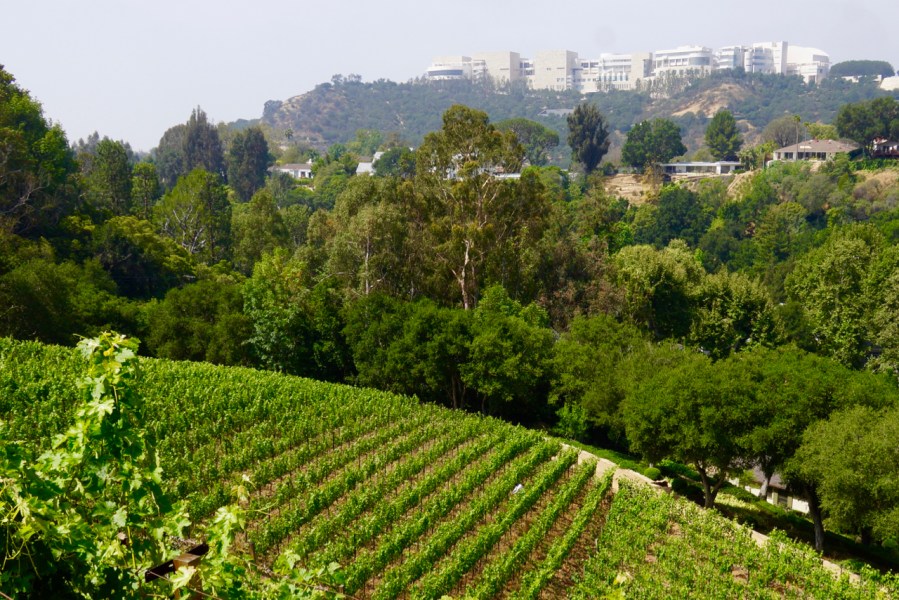
The Veneto region around the city of Verona, in the northeast of Italy, is Soave country. The wines are named for the town of Soave, and the best ones, like this Inama, come from rugged surrounding hillside vineyards of mineral-rich basaltic rock in the Classico zone, the original Soave area mapped in 1927. Only wines made in this zone can use the word Classico on the label.
The grape is late-ripening Garganega, which very much reflects where and how it’s grown. Soaves made from grapes grown on the flat valley floor outside the Classico zone tend to be pretty neutral. Though up to 30% of a Soave can contain Trebbiano or Chardonnay, Stefano Inama sticks to 100% Garganega, from old vines, which he believes give wines more richness and complexity.
Giuseppe Inama, the estate’s founder, began assembling a patchwork of small top vineyards in Classico zone in the mid-1960s, but sold his wine in bulk. Starting in the mid-1990s, his son Stefano shifted to organic viticulture, cut yields and started bottling the wines.
Climbing the Soave ladder
Inama makes three different Soaves; this is their basic, entry-level bottle, fermented and aged in stainless steel. The other two, which come from special parcels and single vineyards on Monte Foscarino, are fermented in barrels.
If you’ve dismissed Soave as just white plonk, it’s time to try again. This 2011 Inama Soave Classico is a low-cost introduction to the good stuff.
Top photo composite:
2011 Inama Soave Classico label. Credit: Elin McCoy
Vineyard. Credit: Courtesy of Inama
Over dinner a few nights ago, I was reminded of how delicious Oregon Rieslings can be. My husband and I were sipping this fresh, incredibly bright 2010 Brooks Ara Riesling, which has wonderful orange blossom and honeysuckle aromas, a sophisticated taste mix of juicy pear and herbs, powerful mineral spine and plenty of zingy acidity.
Elin McCoy’s Wine of the Week
Price: $25
Region: Willamette Valley, Oregon
Grapes: 100% Riesling
Alcohol: 11.5%
Serve with: Dungeness crab, sushi, scallops with lemon, Thai cuisine
Zester Daily exclusive wine discount:
More of Elin's wine picks:
» 2011 Ponzi Tavola Pinot Noir
Brooks winery was founded in Oregon’s Willamette Valley in 1998 by the charismatic, visionary Jimi Brooks, who passed away suddenly in 2004 at the untimely age of 38. He’d made wine at WillaKenzie Estate and Maysara Winery, and practiced organic and biodynamic farming well before many others in Oregon. His own wines have always had a remarkable purity of fruit and are among the most interesting in the state.
Brooks’ son Pascal, now a teenager, inherited the winery, and Jimi’s sister, Jamie Brooks Heuck, took on the role of managing the business until Pascal can take over. That involved acquiring a winery on a hilltop on Eola Hills Road in 2008 that had passed through the hands of several Oregon wine pioneers. The winery’s Eola Hills estate vineyard is 20 acres, but about two-thirds of the grapes come from diverse vineyards in the Willamette Valley.
The name “Ara” is a constellation in the Southern Hemisphere; its name is Latin for “altar,” and the wine is only produced, says the Brooks website, “when the stars are in the right alignment.” They sure were in 2010. The 2006 vintage of Brooks Ara Riesling was served at President Barack Obama’s first state dinner at the White House, honoring Indian prime minister Manmohan Singh.
If you find yourself in Oregon wine country on Memorial Day weekend, Brooks is holding an open house on Saturday, Sunday and Monday where you can taste all their stellar 2012 whites and current releases of their Pinot Noirs. Just don’t miss this 2010 Ara Riesling.
Top photo composite:
Pascal Brooks, heir to the Brooks winery.
Label for 2010 Brooks Ara Riesling.
Credits: Courtesy of brookswine.com
When warm weather finally arrives after a wet, chilly winter, I can hardly wait to park myself on the front porch with a glass of wine, especially if it’s a gorgeous pink one. I’m not talking about the sweet swill I drank in college (anyone remember Boone’s Farm Tickle Pink?), but crisp, sophisticated dry rosé wines.
If you’re familiar with the pale pink wines of Southern France, you know about the fresh simplicity of a thirst-quenching rosé. In Northern California, the style is a little more intense in terms of color and flavors. And these days, it’s a bit more serious than in decades past.
More from Zester Daily:
» The finer points of pairing wine and food
» Don't overanalyze wine, just enjoy it
» Winemakers turn to egg-shaped tanks
Until recently, nearly all California rosé was made as a sort of byproduct of red wine. Wineries would “bleed off” or siphon some red wine juice from the tank after a short period of contact with the grape skins, which would increase the skin-to-juice ratio of the remaining wine in the tank and give it better color. (Wine gets its color from grape skins, so the more skin contact it gets, the deeper its color will be.) The siphoned pink juice was then used to make rosé. The poetic-sounding name for this process is saignée (pronounced sahn-YAY), the French word for “bleed.”
The challenge with the saignée method is that the grapes used are planted, grown and harvested according to red-wine parameters. Whites are typically harvested earlier in the season than reds, which are left to ripen on the vines for weeks after the whites have been picked and crushed. As the season progresses, the grapes develop a higher sugar content, which can lead to rather intense wines with high levels of alcohol. There’s nothing wrong with that if you’re setting out to make red Pinot Noir or Syrah, but it’s not ideal if you’re aiming for a refreshing rosé.
Many California wineries (and French ones, too) still use the saignée process, but in the last several years, a growing contingent of vintners has begun making rosé on purpose, rather than as a happy bonus of red wine production.
Saignée wines can be very good in the right hands, but the wines that really wow me are made exclusively with rosé in mind, from start to finish. Because the grapes are farmed for rosé, the wines generally require less tinkering in the cellar to achieve the right balance of sugar/alcohol and acidity. They’re priced a bit higher than the siphoned-juice versions — often $15 or more per bottle — but there’s a wonderful payback in balance, freshness and complexity.
Here are four sophisticated pink wines to savor on the front porch, patio or wherever the season takes you.
- Beckmen Vineyards Santa Ynez Valley (California) Grenache Rosé 2011 ($18): This Santa Barbara County winery makes terrific Rhône-style wines, including this delicious pink Grenache. The wine has a beautiful light salmon color, and a soft aroma of red berries. It also has a refreshing brightness, with strawberry and lime flavors and a tangy finish. Try it with a salad topped with avocado and grilled shrimp.
- Bonny Doon Vineyard Central Coast (California) Vin Gris de Cigare 2012 ($16): This rosé from pink-wine champion Randall Grahm is made with a “less is more” approach. It’s a Rhône-style blend of Grenache, Mourvèdre, Rousanne, Grenache Blanc and Cinsault. Pale salmon pink in color, it has subtle aromas of fresh strawberries and peaches. It’s crisp and elegant, with some unexpected roundness midway through. This would be great with a grilled turkey burger, or seared ahi tuna.
- Clayhouse Wines Paso Robles (California) Adobe Pink 2011 ($14): Middleton Family Wines, a solid Paso Robles player, makes this fresh-and-tasty wine. It has a light pink color tinged with salmon, and aromas of strawberries and vanilla. It’s crisp and tangy, with bright citrus and strawberry flavors, kissed with soft vanilla.
- Korbel Brut Rosé (California) NV ($12.99): Sparklers are fantastic warm-weather wines, and this one, made from Pinot Noir, Sangiovese, Gamay and Chenin Blanc, is among my go-to pinks. It has a pale salmon color, lively, small bubbles, and flavors of strawberries and black cherries. It’s more on the medium-dry side, but it’s so fresh-tasting and well balanced that you barely notice the sweetness. I’ve seen this wine at retail for less than $10 per bottle — a crazy-good deal.
Bonny Doon Vin Gris de Cigare 2012 . Credit: Tina Caputo
It’s 9 a.m., and I’ve just been poured five glasses of inky purple wine from bottles labeled only with question marks. It’s primeur time in Bordeaux, and I’m sitting in a quiet room in a Médoc château overlooking just-spring vineyards, about an hour’s drive north of the city.
During the primeur week, the top châteaux present their unfinished, unbottled wines from the most recent harvest to wine critics for assessment and evaluation. This helps them determine how the wines will age and their opening prices on the market, as if they were futures. (For more about how this works, see my article Bordeaux Primeurs’ Primer).
My morning’s work will be to assess about 35 of these newly made 2012 wines and I’ve opted, as I always do, to taste them “blind,” that is, without knowing who made them. (It’s the bottles that are blindfolded, not the tasters). Each bottle is wrapped up to the neck so no label or markings give its name away.The 118 French and international wine writers invited to this annual ritual are divided between those who taste blind — about two-thirds of us — and those who prefer to know what they’re tasting as they taste it. The blind tasters get the list of producers after they’ve finished; it’s more fun that way. The only clue we’re given by the Union des Grands Crus de Bordeaux (UGC) — the federation that comprises the 131 top châteaux and organizes these tastings — is the appellation where each wine is produced.
The appellation divisions are geographical, as are the tasting sessions. On Monday, we start with the year’s crop of dessert wines, from Sauternes and Barsac, before moving to the Garonne River’s Right Bank for Saint-Émilion and Pomerol, then back to the Left, tasting and spitting our way up through the Graves area to the Médoc. We end on Friday at Margaux, one of the world’s most iconic production zones. Most of the first-growth châteaux send their wines to the group tastings; others only pour their wines at their château by appointment.
So what’s the point? After all, these are wines that won’t be released for at least another year and may take 10, 20 or more years to reach full maturity.
“The tasters’ first task is to form an opinion about the quality of the vintage,” explains Denis Dubourdieu, professor of oenology at Bordeaux University. “Beyond that, the object is to assess the wines of individual châteaux, giving them scores and valuations ahead of the châteaux’ price declarations. The aim is to decide which wines are worth investing in.”
That sounds straightforward enough, but there’s a catch. These are wines in their infancy whose exuberant fruit and often harsh tannins can easily mislead mouths more accustomed to the finely tuned balance between nose and palate of well-aged wines. Tasters trained in Bordeaux have developed ways to judge the wines fairly and objectively.
Bordeaux Primeurs and the secret to wine
“There’s no magic wand: A wine can only become great with age if it was great in its youth,” says Jean-Marc Quarin, an experienced Bordeaux wine critic who writes a successful wine blog and publishes a vast guide to Bordeaux’s wines (soon to appear in English too). “One of the secrets to understanding wines this young is to concentrate on what happens in the palate rather than in the nose.”
His approach is analytical and instructive: If the nose can deceive at this early stage, the experience of the wine once it’s in the mouth — including its structure and impact — shouldn’t lie and can be a more reliable indicator.
“You have to focus on each stage of the wine’s passage through the mouth, from the initial attack, as we call it, to the mid palate and the finish,” he says. “That’s when you can spot the differences between rough and fine-grained tannins, hollow and full bodies, and short and long finishes.” Quarin gives each wine about 10 seconds in the mouth when he’s tasting, and analyzes every sensation carefully to pick out wines whose potential will be fulfilled over time. It’s a complex art, but his method is helpful.
So how did the 2012 vintage fare? The year’s weather conditions were not simple, but some terrific wines were made nonetheless, especially by estates with the means — in financial and manpower terms — to carry out a lot of extra work in the vineyards to counter the erratic climatic effects. This went from removing under-developed bunches in summer to selecting the ripest berries — one by one, if necessary — before the winemaking.
The new president of the UGC, Olivier Bernard of Domaine de Chevalier, emphasized this ability: “Bordeaux’s viticultural know-how and winemaking skills have come a long way in recent years,” he said. “We are now able to make very good wines even in difficult vintages such as this one, by making choices about how to adapt to the climate’s impact. It takes a lot more effort to produce these good wines, but those who rise to the challenge are seeing very good results.”
Professor Dubourdieu concludes: “Key factors in Bordeaux are our range of soils — from well-draining pebbles to moisture-retaining clay — and our diverse grape varieties: Merlot and Cabernet Sauvignon with Petit Verdot and Cabernet Franc in smaller quantities. They give us the flexibility in our blends to adapt to the vagaries of the weather.”
Indeed, we found silky Merlots that were wonderfully ripe yet not lacking in freshness on the Right Bank, and elegant white wines in the Graves: This was a good vintage for the whites. As for the Left Bank Cabernets, they varied, but in the terroirs where they achieved good maturity, such as at Haut Bailly, in Saint-Julien and parts of Pauillac and Margaux, they have produced finely textured wines when blended with the sweet Merlots. Many of these wines will be at their best in five to 10 years, so we won’t have to wait too long to enjoy them.
Photo: Bottles for blind tastings. Credit: Carla Capalbo
A truly great food and wine pairing can lead the way to nirvana. I can still remember my first time like a first kiss: It was fleeting, but held so much promise.
But matching food with wine can be a tricky business once you get much beyond “red with meat and white with fish.” So I jumped at the opportunity to spend time in the kitchen and at the table with Brian Streeter, culinary director of Cakebread Cellars and their famed American Harvest Workshops.
Cakebread Cellars is one of the most celebrated wineries in California’s Napa Valley. Started by a couple of weekend warriors who planted 22 acres in 1973, the winery has grown into a family dynasty producing elegant vintages from 510 acres. A graduate of the New England Culinary Institute, Streeter joined the tightly knit group 13 years into its odyssey and has been pairing foods and wines almost every day for 27 years.
What are some core principles of food and wine pairing?
It’s all about intensity, acidity, tannins and alcohol. If you can get a handle on these core components, pairing any wine with food is much easier.
Intensity is all about the body or mouth feel of a wine. I might be stating the obvious, but lighter foods really do go best with lighter wines and richer, more complex foods go with richer, more complex wines. Color is the first great visual clue to a wine’s intensity, and knowing if the wine has spent any time barrel aging is a good signal too.
Acidity is the next thing to think about. To be a good food pairing wine, a wine needs to have a certain level of acidity. Wines low in acidity end up being flabby and don’t pair well. If I really want to highlight the bright acidity in a wine, I’ll marry it with a food component that has some natural sweetness to it. That’s why shellfish like shrimp, scallops or lobster goes so well with white wines like Sauvignon Blanc or Chardonnay. The sweetness of the dish makes the acidity pop even more and seem brighter. But if you want to soften the acidity, adding lemon or white wine to the recipe makes the wine seem a little rounder.
With red wines, understanding how much tannin they have and the type of tannin is key to picking recipes that will make good pairings. Tannin is what gives reds their structure. Red wines made from grapes with thinner skins like Pinot Noir yield silkier, softer tannins. Grapes like Cabernet and Merlot have thicker skins and yield firmer, chalkier tannins, particularly when the wines are young. Firm, chalky tannins are going to clash with lighter, more delicate foods, but go wonderfully with an intensely flavored braised dish or a steak that has picked up a little smokiness and char from being grilled.Lastly, consider the alcohol level. A low level of alcohol is a good indication that the wine’s grapes were picked earlier and acidity levels will be higher, so they will naturally go best with lighter food. If the wine is higher in alcohol, it will exhibit bigger, riper flavors. Often the winemaker will age it in new oak barrels, adding another element. These full-flavored wines cry out to be enjoyed with 2-inch thick prime porterhouse. But you want to be careful not to serve anything too spicy or too sweet with them as both tend to accentuate the alcohol in the wine and throw it out of balance.
Speaking of spicy, are there any tricks to pairing with those foods?
Often, spicy foods clash with wines that have seen time in barrel or have alcohol levels above 12.5%. I love Indian food because of its use of so many spices, but in order to make a successful wine pairing, sometimes recipes need to be dialed back or reinterpreted if you want to find a dish that really complements the wine. Once I’ve tasted the wine, then I decide whether I want to accentuate, or even soften, its style by how I season the dish with which I plan to pair it. Off-dry wines and wines with fruit-forward characteristics do best with really spicy food, unless the seasoning is so intense that it will overshadow any wine.
What other foods are risky to pair with wine?
Any ingredient that throws a wine out of balance or alters its natural finish is trouble. Red flags should go up with asparagus, artichokes, vinegar, eggs, soup and dishes that are designed to satisfy a sweet tooth.
Asparagus and artichokes are notorious for being bad partners with most wines. But asparagus just picked from our winery garden and cooked right away is one of the things I look forward to most at this time of year. I will rarely serve asparagus with red wine because it makes the wine taste like overcooked canned vegetables, but I think it’s fabulous with Cakebread’s Sauvignon Blanc.
Artichokes can easily throw a wine out of balance. Roasting them or grilling helps, but the wine might suffer a little for it. Save that really special bottle you’ve been holding onto for another occasion.
When it comes to salads, vinegar or acid is problematic because it can make a wine taste flat. Use sparingly and balance with other ingredients. Incorporating some protein — whether in the form of meat, cheese or nuts — softens the acidity and gives the wine more texture to interact with.
Eggs, particularly hard-boiled, can make a wine taste sulfurous. But if you like deviled eggs like I do, the acidity in Sauvignon Blanc is a good contrast to the richness of the egg.
Soup usually is a difficult course to pair wine with because it’s matching a liquid with a liquid. That said, soups that have some body to them are better than broths.
Sweetness in food accentuates acidity, alcohol and any tannin in a wine. We only make dry wines at Cakebread Cellars, so I’ll look elsewhere for off-dry wines to pair with these kinds of dishes.
What do you think is the most versatile varietal?
I have two favorites, Rosé and Pinot Noir. When it’s hot outside, nothing tastes better than a refreshing glass of Rosé. It’s more complex than white wine, but not as big as red and can be served chilled. I enjoy lighter food during the summer like salads and a lot of fish, so rosé is what I reach for.
When it comes to reds, you can pretty much divide red wine drinkers into two groups: the Pinot camp and the Cabernet camp. Pinot typically shows brighter red fruit, a little higher acidity and softer tannins, so they can pair well with a greater variety of foods. Salmon is a well-known choice for Pinot; pork and poultry work more often than not. When I’m having a big, juicy steak or roast, then I start thinking about Cabernet or Merlot. Firmer tannins match up much better to dark red meats.
Which should be a beginning oenophile’s instinctive choice: Contrast or complement?
Trying to pick a contrasting wine, like a sweeter wine to offset spice, can be a bit tricky, so I’d suggest taking the safer route. Choose a wine that complements a dish and you’ll probably end up with a successful pairing.
Thai Stone Crab Tostadas
Serves 8
This stone crab appetizer was one of many dishes I helped prepare in a recent cooking class at Cakebread Cellars. The sweetness of the crabmeat and the tang of the dressing heightened the bright acidity of the Cakebread Cellars Sauvignon Blanc we drank with it.
Ingredients
For the fried wontons:
8 wonton wrappers, halved on the diagonal to make 16 triangles
Vegetable oil for frying
For the topping:
1 cup stone crab meat (from about 1 pound cooked crab claws) or Dungeness crab meat
1½ cups very finely sliced green cabbage
2 tablespoons minced red onion
2 tablespoons thinly sliced scallions
For the dressing:
2 tablespoons Thai fish sauce
1 tablespoon unseasoned rice vinegar
1 tablespoon fresh lime juice
1 teaspoon sugar
1 teaspoon finely grated fresh ginger
½ jalapeño chile, seeded and minced
Coarsely chopped cilantro for garnish
Directions
1. In a 4-quart saucepan, heat 3 inches of vegetable oil to 375 F. Fry the wonton wrappers a few at a time, turning them once with tongs, until they puff and turn golden, less than a minute. Drain on a rack or paper towels.
2. In a bowl, combine the crabmeat, cabbage, red onion and scallions.
3. In a small bowl, whisk together the fish sauce, rice vinegar, lime juice, sugar, ginger and chile.
4. Add the dressing to the slaw and toss well.
5. Put a spoonful of slaw on each wonton wrapper. Garnish with chopped cilantro and serve immediately.
Top photo: Thai stone crab tostadas. Credit: Caroline J. Beck
Ask expatriates living in Malaysia about their favorite things to do there, and more often than not, their answer is eating the local food. As a Malaysian spending six months in the United States last year, I realized the usual exchange of pleasantries involves asking, “How are you?” In my country, it is a little different. We ask, “Sudah makan?” (translation: “Have you eaten?”) and this applies to friends, family and new acquaintances you meet on the street.
For us in a nation of 28 million, food always brings people together, and it’s the same in cultures all over the world. In our capital, Kuala Lumpur (KL), you can find almost any cuisine — Spanish, Italian, Indian, Chinese, Greek, French, Mediterranean and Middle Eastern. Despite being a Muslim-majority country, alcohol is widely served, from humble cafes on the street to ultra-posh and swanky restaurants in the city. Good wines, in particular, are readily available. Some will be surprised to know that Malaysia is one of the fastest-growing countries in the Asian market for wine consumption.
The Italian restaurant Svago in Kuala Lumpur is one place where you can treat yourself to fine cuisine and wine while taking in the amazing view of the Petronas Twin Towers, which were featured in the 1999 movie “Entrapment.” Svago’s lounge and bar area is an eclectic space of retro and contemporary decor, with parquet flooring, steel beams and floor-to-ceiling glass windows. The low-backed vinyl chairs and terrace encompass modernity.
Planeta wines a perfect complement to dinner
When a chef manages to craft innovative canapés that tantalize your taste buds, it is sacrilege not to have a healthy glass of vino to go with it. That evening at Svago, we were introduced to the five top wines — two whites and three reds — from Planeta, which we were told is one of the premier wineries in Sicily, Italy. The wines we sampled ranged from crisp and light to robust and full-bodied.
Chef Andrea Buson stays true to his Italian heritage but is able to inject Asian influences in his dishes too. The food on the table comprised the likes of Arancini Rossi (a beetroot risotto ball topped with pesto calamari), Smoked Duck Breast With Grilled Ginkgo Nuts, Wagyu Beef Carpaccio on Rocket Topped With Cherry Tomato and Aged Pecorino Romano, Herb-Crusted Lamb Loin prepared Provencal style, and Stuffed Cannelloni With Ricotta and Truffle Mushroom Duxelle.
For our sampling of Planeta wines, we started with the La Segreta Bianco, which takes its name from the wood that surrounds the vineyard at Ulmo. “It is produced mainly from Grecanico grapes and was introduced to Sicily more than 2,000 years ago,” explained Simone Di Domizio, the export manager for the Asian market, who regaled us about the wine’s history and geography and the uniqueness of the flavors. Under the light, this white is clear yellow with slight greenish reflections. It has aromas of citrus, pineapple and white peach. The palate is fresh and balanced, and it is ideal with Mediterranean cuisine and fish dishes.
More from Zester Daily:
Next came the chardonnay. While I more often choose Sauvignon Blanc over chardonnay because I don’t like the high acidity and rich oak texture in the latter, this one was buttery and smooth in all the right places. According to Di Domizio, the chardonnay “illustrates” the changes taking place in Sicilian wines. “Among the five wines, the chardonnay is our flagship wine and has gained the best ratings from reviewers all over the world,” he said. Its fermentation and maturing in French barrels have delivered a graceful and powerful wine. The golden yellow color with lively green glints beckons you, and on the nose there are aromas of peach, golden apple, white figs and vanilla cream as well as hints of hazelnut and Zagara honey. The palate is soft, round, energetic and full.
And enter the vivacious reds. The La Segreta Rosso is a young, fresh wine produced mainly from Nero d’Avola grapes. “This is a perfect approach to Sicilian wine with its excellent relationship between price and quality,” Di Domizio said. It has the brilliant color of ruby red with purple reflections. The explosive aromas of cocoa and tobacco first hit you, followed by bouquets of mulberry, plum and balsamic notes. The palate has ripe tannins with a fresh alcohol structure and is versatile with appetizers and meat dishes.
If you don’t already know, the heat in Malaysia comes with its friend humidity. By this time in the evening, even the air-conditioning was struggling to cool us down, and with the warmth from the wines we were positively toasty. The Maroccoli Syrah made its appearance with its fruity spiciness. “Sicily is a good place for Syrah,” said Di Domizio, because of its sunny dry places. The alcohol strength is subtle, and the aromas you get with this wine are blackcurrant, cinnamon and cloves, making it great with chili or curry. The Syrah would also pair well with the good Indian food in KL, I must say.
Alas, the night had to end, and it did so with a capping of the Sito dell’Ulmo Merlot. We were told it has enjoyed international attention since its first vintage, and the presentation of this noble grape is rich, round and powerful. It is found on the wine lists of some of the most prestigious restaurants and wine bars around the world. The palate is vibrant with a dense texture. “It has a balsamic and chocolate aftertaste which is fresh and complex. It works really well with fusion cuisines as well as mature cheeses and meat,” Di Domizio said.
Origins of Planeta wine
During our dinner, we discussed Planeta’s origins and history. Started by the Planeta family, which has have owned the estate at Sambuca di Sicilia since the 1600s, it is one of the most acclaimed Sicilian winemakers. While Planeta has penetrated the Malaysian market, the dinner was its inaugural wine-pairing event in Kuala Lumpur as an opportunity for consumers to sample the wines .
Planeta has five wineries in Sicily, and a sixth winery is being built. Aside from Malaysia, Planeta is making its mark elsewhere in Asia, including Japan, China, Hong Kong, Singapore, India, Cambodia and Indonesia.
“Malaysian consumers,” Di Domizio said, “have shown the yearning to further develop their wine knowledge” with the increase of international influences.
Top photo: The Planeta wines sampled at the dinner. Credit: Aida Ahmad
I’ve long been a fan of the “other” Cabernet, but most of the ones I prize are French. This spicy, delicious 2011 Broc Cellars Cabernet Franc, with fresh, plummy fruit and savory accents, is, surprisingly, from warm Paso Robles in California. It’s a light, layered, easy red, with hints of olives and the kind of sappy acidity that makes a wine wonderfully food-friendly.
Elin McCoy’s Wine of the Week
2011 Broc Cellars Cabernet Franc
Price: $24
Region: Paso Robles, California
Grapes: 100% Cabernet Franc
Alcohol: 13.2%
Serve with: Blanquette de veau, roast chicken
Zester Daily exclusive wine discount:
More of Elin's wine picks:
» Attractive, fruit-scented 2010 Château Saintongey Vieilles Vignes
Last week, a West Coast wine colleague brought a bottle of this gulpable wine to a lunch at Le Philosophe, a tiny French bistro on Bond Street in New York. Since one wall of the restaurant has large black-and-white photos of famous philosophers, the wine seemed an especially appropriate choice: Broc Cellars’ owner and winemaker Chris Brockway obtained a degree in philosophy before eventually turning to wine. With the restaurant’s creamy blanquette de veau, this Cabernet Franc, his second vintage of the variety, was perfect.
One of the several interesting urban winemakers in the Bay Area, Brockway works out of a 1,400 square foot facility in Berkeley. Committed to a thoughtful wine philosophy of minimal intervention in the cellar, he’s part of the new wave of winemakers who are changing the taste of California wine. He dumps whole clusters of grapes into fermenting vats, relies on indigenous yeasts for fermentation, uses an old fashioned basket press and a tiny percentage of new oak barrels for aging, and adds only a small amount of sulfur for stability. The result is a wine with a pure, transparent, mineral character that speaks of the grapes’ terroir.
Cabernet Franc one part of the experiment
Brockway started making his own wines back in 2004. An experimenter, he offers a dozen or so bottlings, many from varietals popular in southern France such as Counoise and Picpoul. In the way of so many winery startups, he searches out organic vineyards with great terroir and buys the grapes.
On May 11, he’ll be pouring some of them at Bergamot Alley wine bar in Healdsburg, alongside 16 other vintners who make wines from little-known grape varieties. The tasting is billed as the “Seven % Solution,” which refers to the fact that 93% of the vineyard acreage in Northern California are planted to just eight varieties.
Well, Cabernet Franc is hardly an unusual varietal, but the 2011 Broc Cellars version is an unusual example from California, one that I can hardly wait to try again.
Top photo composite:
Broc Cellars Cabernet Franc label and bottle. Credit: Courtesy of Broc Cellars
OK, maybe it’s because I’m a little under the weather as I write this but, dagnabbit I am more than a little bent right now.
What can it take, for the love of Mike, to get a decent, well-priced glass of wine at a restaurant? Time after time, meal after meal, I bring a bottle of wine with me to dinner, seeing as I am in the business. But I always take a look at the list, just in case there is a cool, reasonably-priced by-the-glass option to kick-start the evening. Alas, more often than not, I’m rippin’ out my bottle straight away and gladly paying the $25 corkage fee, realizing I might have to pay that twice knowing the crew I run around with.
How hard can it be? Why do restaurants consistently charge $10 (or more) a glass for a bottle that costs $6 (or less) wholesale? I understand the concept of getting your cost back on the first pour, but c’mon, this is getting silly.
Since I am a wine seller, life for me will go on. I have enough wine street smarts to navigate lists and find something decent or bust out my own bottle if it’s not happening. My concern, however, is for that group of wine drinkers that we fine wine merchants (and, we hope, progressive restaurateurs), are trying to transition over from Two (and a half) Buck Chuck and Yellowtail to another level of wine, one that, while not much more expensive ($10 to $12 a bottle retail instead of $2.49 or $8) delivers another dimension of flavor and styles.
Short-sighted proposition
If restaurants are going to be content with trying to squeeze as many dollars as they can out of a bottle, we will soon lose touch with this new wave of wine drinkers. We won’t be able to bridge the gap and continue to nurture their palates if these people are forced to pay $12 for a glass of mediocre “coastal” Cabernet, when they could be paying $6 for a fabulous Old Vine Grenache from Spain, or Picpoul from the Languedoc. At $12 for an OK glass of Cabernet, I would be reaching for beer provided I didn’t have that wine in my bag.
EXCLUSIVE ZESTER DAILY
WINE DISCOUNTS
For the next eight weeks, Kyle Meyer and Tristen Beamon of Best Wines Online will hand-select a wine they will make available to Zester subscribers at an exclusive 10% discount below the store's already competitive prices.
» Sign up here to receive the wine discount code in the new Zester Daily Weekender newsletter.
And that’s the point. Merchants and restaurateurs have to work together to foster and educate this new generation of wine lovers. There are numerous studies showing that millennials are very curious about wine but, like many folks nowadays, do not have serious money burning a hole in their pockets. That said, these consumers are also curious about craft brews, so they often have a unique, artisan drinking experience for less — simply because there is some kind of archaic formula in place dictating the minimum price for a glass of wine.
What if restaurants charged $6 (the price of a 12-ounce beer, for the most part) for an interesting glass of wine? Not wicker basket Chianti, not corporate Cabernet, not private label Chardonnay sourced from Fresno, but a real, authentic, genuine bottle of wine that could open eyes. Would they lose money or sell more wine? Would they gain customers because they were offering cool wines at great prices? Granted, more restaurants have expanded their wine lists to include many offerings south of $50 a bottle. But let’s be honest, that was born out of necessity based on the economy, and was hardly a peace offering to those of us who couldn’t find a bottle less than $75 just a few short years ago. Why couldn’t restaurants apply that same philosophy to their by-the-glass programs?
Smaller dining establishment, more wine for a fair price
Trust me when I say the corporate wine world wants to keep everything just the way it is. There is a wealth of boring cheap wine tied into the spirits business. This wine is essentially sold for nothing to engage restaurants to purchase bar liquors from these large wine/spirits conglomerates. One thing I’ve noticed is that when the dining establishment is smaller, and has no spirits, the wine selection tends to be stronger. Coincidence? I think not. The “big boys” want the restaurants to do one-stop shopping since, to them, wine is merely a greaser to sell more gin. The problem is, more than a few restaurants are all too happy to comply.
I say to those restaurants, “fight the power!” and don’t let the man keep you down. Take a chance, engage your customers, and show them the world of wine is more than whatever the distributor is closing out that month. Find interesting, food-friendly wines and sell the wine for a fair price. I’ll help you out. Email me, or look at our list of sub-$10 wines on our website. Before you know it, I think your customers may be having a revelatory moment like Steve Martin’s character in “The Jerk”: “Well if this is out there just think how much more is out there!”
Top photo: Kyle Meyer. Credit: Mina Bahadarakhann