Articles in Thanksgiving
When I see the stacks of orange orbs materializing in front of grocery stores, I can’t help but think that pumpkins have been hijacked by October for that trick without a treat, the Halloween jack-o’-lantern.
The hijackees have been bred not for their texture or flavor, but for their color (DayGlo orange) and substantial stems, with the ability to support their weight when lifted by the buyer, and sturdiness so as not to break with multiple ons and offs of the jack-o’-lantern cap. Only after the imposters have been duly smashed, trashed or (ideally) composted, can we turn to truly great pumpkins.
The rule of thumb for finding a delicious pumpkin is to look for the opposite of the typical jack-o’-lantern pumpkin. The best ones are either the small “sugar” or “pie” pumpkins on the one hand, or the quite large “cheese pumpkins” on the other. Their colors range from light cream to taupe to a dark bronze or a dull orange. Their stems may be thin or even broken off. But remember you’re buying this pumpkin for its luscious flesh, not for its appendage.
Nearly lost varieties
The cheese pumpkins are flattened and squat, just like a big round of cheese. Some have vertical pleats running from the stem end to the blossom end. My brother Henry grows the cheese varieties winter luxury, New England, Long Island cheese and Cinderella. He also grows the elongated long pie pumpkin as well as an heirloom variety given to him by a local resident who got it from descendants of the Kickapoo, which was grown for centuries in great swathes of the Midwest.
The long pie looks something like a long, fat, orange (sometimes streaked with green) zucchini. This cultivar has a peripatetic history. Once known as the “Long Island pie pumpkin,” it was first recorded growing on the Isle of St. George in Portugal’s Azores islands, from seed brought there some time previously from the Americas. From the Azores, it was brought back to the New World in 1832 by whalers traveling to Nantucket from whence it was carried north to Maine.
Burpee offered it in 1888 as St. George, and by the 1930s, it was well established in certain areas of the northeast as the pie pumpkin. It was said that a Mainer never heard of a round pumpkin unless they moved away from home. Little by little, though, the long pie’s fame faded, and by the 1980s it had reached total obscurity (though the Penobscot and Abenaki tribes still regularly grew it).
It was “rescued” by LeRoy Souther, a native of Livermore Falls, Maine, who had been maintaining it for more than 30 years. Sometime in the late 1980s he brought seeds to cucurbit aficionado John Navazio at his Common Ground Country Fair squash booth. Navazio took them with him to Garden City Seeds in Montana where he reintroduced them to commerce.
New England pie is the classic orange pie pumpkin. The flesh is a little drier than some of the others, but stringless, making a nice pie consistency without putting it in a blender or food processor.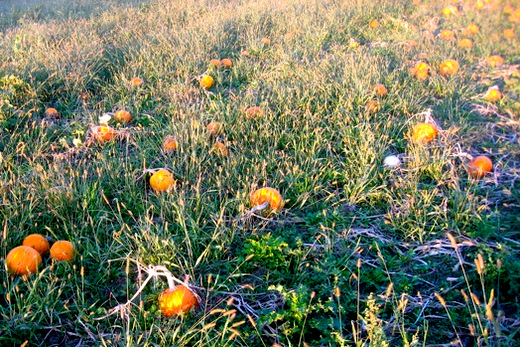
Winter luxury is my favorite culinary pumpkin, and Amy Goldman, author of “The Compleat Squash,” thinks so too. This pumpkin’s beauty comes from the russeted, finely-netted soft orange-gray skin. Goldman advises baking the pumpkin whole, pierced with a few tiny vent holes, until it slumps after about an hour at 350 F. You then scoop out the flesh and put it in a blender to make what Goldman calls “the smoothest and most velvety pumpkin pie I’ve ever had … requiring much less in the way of sugar and eggs than other varieties.” Don’t expect the color of the flesh to be dark orange, though. It is actually quite light but it’s the flavor and texture, not the color, that makes the winter luxury pie pumpkin so exceptional.
A serious heirloom
The Indian or Kickapoo pumpkin is such a serious heirloom that you’ll find it nowhere else than my brother Henry’s farm, unless you are, perhaps, a member of this central Illinois tribe. The seeds of this precious pumpkin were given to Henry by a woman who knows the chief of a local group of Native Americans. His family has grown it as long as anyone can remember. It is a large, flattened, fluted pumpkin that is a delicate beige/orange/tan. It strikes you as almost too beautiful to be real, more of a carved and polished objet d‘art for a large country French oak table, than a thing to carve and eat on a dish upon that table.
But this object is no objet, and eat it you must, for it is a thing of beauty with a practical function, which is to feed us, and feed us well. So find a truly great pumpkin, enjoy its deep beauty for a week or two, then sacrifice it for the enjoyment and nourishment of all.
Start by cutting the pumpkin in half, placing the cut sides down on an oiled baking sheet and baking at 350 degrees F until you can easily pierce it with a fork. From this point you can scoop out the flesh and freeze it for later, or make it into a side dish, soup, stew or dessert. Any way you use it, it will make for a deeply satisfying meal on a chilly autumn evening — another reason to revere the great pumpkin and give thanks.
Grandma Henrietta always had a tray of frozen pumpkin bars ready for quick thawing and icing and serving should a visitor drop by.
Grandma Henrietta’s Pumpkin Raisin Bars
Ingredients
Directions
- Preheat the oven to 350 F.
- Grease a 15½ x 10½ x 1-inch baking sheet.
- Stir the first 8 ingredients in large bowl to blend.
- Add pumpkin, eggs, and oil and beat until blended.
- Mix in raisins.
- Spread batter in prepared pan.
- Bake about 25 minutes.
- Cool in pan on rack.
- Beat cream cheese, powdered sugar and butter in medium bowl to blend into frosting. Spread frosting over cake in thin layer.
- Cut cake into bars. Eat some now and freeze some for later.
Terra Brockman is an author, a speaker and a fourth-generation farmer from central Illinois. Her latest book, “The Seasons on Henry’s Farm,” now out in paperback, was a finalist for a 2010 James Beard Award.
Field of dreamy organic pie pumpkins on Henry’s Farm ready to be harvested in October.
Thanksgiving can be a teaching moment as well as a culinary celebration. The first Thanksgiving, the lore goes, was a harvest celebration with English pilgrims and Wampanoag American Indians. They ate turkey, oysters, venison, corn and other native foods of Massachusetts. Our family likes to stay close to those native foods. The pilgrims did not stuff their turkey with corn bread and jalapenos, and neither do we. It is not the time for the new. Thanksgiving celebrates the old ways.
I was born in Queens. I went to high school and graduate school in New York. I lived for 14 years in Massachusetts with three little children and a wife, and then without a wife. Maybe this is the reason we have such traditional Yankee Thanksgivings even here in California, where we moved 13 years ago. Our family feels that Thanksgiving is not the time for experimentation.
Although I fondly remember Thanksgivings during my childhood, teenage years and 20s, it was about the time I met my former wife, Najwa, in 1978 that Thanksgiving became very special; something more than a holiday in November. Thanksgiving resonated with us because it was a truly secular holiday for us non-religious people. We gave thanks, of course, and when children came we stuck cutouts of pilgrims around the house. More important, our Thanksgiving menu was born, and the expectation of certain dishes became set in stone. It was a very New England Thanksgiving.
After we divorced, the kids went back and forth for Thanksgiving and Christmas, but the menu remained identical in both households year after year. In our house, we never make Thanksgiving food any other time of the year. Although we add dishes to the repertoire, one can only be removed by common consent. Recipes may alter slightly, but the food is the same. Finally, I made a little loose-leaf book of recipes for us to use.
Just a few years ago, after nearly 20 years of divorce, Najwa and I started having Thanksgiving dinners together again. Luckily, the kids, my girlfriend Michelle, Najwa’s husband Larry, and the other usual suspects all get along. The food is the same. Our family has myriad ethnic backgrounds, but you will never see hummus, lasagna, burritos, or blintz at our Thanksgiving table. One does not eat those foods at Thanksgiving.
The foods we choose are absolutely mandatory for a New England Thanksgiving: turkey, bread stuffing, cranberry sauce, pumpkin, sweet potatoes, Brussels sprouts, beets, green beans, onions, corn, muffins, pies and more. Some years we omit some because they’re labor-intensive and we’re too tired or no one wants them. It is not much of an excuse, I admit, but I never want to make the pumpkin flapjacks because they’re too much work and tricky to get right. But they always get made because my son, Seri, wants them. He’s 21 now, so he makes them. He also makes the sardine-stuffed deviled eggs. We started with 12, but now we make about 48 because, incredibly, they all get eaten. We make eggnog from scratch. It’s ridiculous because it’s so rich that all anyone can do is drink a toast, yet we make it every Thanksgiving.
Najwa always makes the pumpkin pie and the pecan pie and the cranberry-orange relish. Corn muffins and corn sticks are always on the menu. Sometimes we make the cranberry butter, which none of us want until we see it in front of us and say, “This should always be on the table.”
I make the turkey and the stuffing. I do not brine the turkey, although I have once; brining just adds more labor than is necessary and you can make a spectacular roast turkey without it. My turkey is never dry and crumbly; it’s always moist, luscious and full of flavor with crispy golden brown skin because I don’t overcook it. You need a quick-read thermometer more than you do a brining bag for perfect turkey. Everyone goes nuts over the stuffing. It’s a bread stuffing made with sausage, celery, chestnuts, fresh herbs and bourbon. Half goes into the turkey and half bakes separately. We do that because everyone wants thirds on the stuffing. Making the non-stuffed stuffing taste like the stuffed stuffing is a challenge.
We also make green beans with pine nuts, gratin of four onions, maple- and apple-cider glazed yams or roast sweet potatoes, hash of Brussels sprouts with bacon and hazelnuts, and plenty else. At the end of the Thanksgiving dinner we go for a walk, a slow walk that seems to do nothing for digestion. Then we fall asleep early and the next day, poach the carcass. This is what we do.
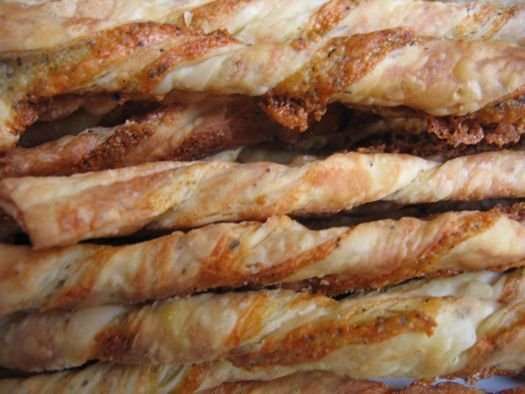
Clifford A. Wright’s Pumpkin Flapjacks
The key to making pumpkin flapjacks is draining as much liquid from the pumpkins as possible. We first put them on our Thanksgiving menu in 1997 when I realized I didn’t want our traditional creamed squash dish because there was already enough cream being used in other dishes. Subsequently, my son Seri became crazy about this dish and finally, around 2006, I made him make it every Thanksgiving. When cooking down the pumpkin flesh, it’s important to make sure much of the moisture is evaporated; otherwise, the flapjacks won’t hold together when you cook them.
Ingredients
3 large eggs
1½ cups unbleached all-purpose flour, sifted
1 teaspoon baking powder
½ cup or more milk
¼ cup heavy cream
Salt and freshly ground black pepper
2 tablespoons unsalted butter or vegetable oil
¼ cup fresh pomegranate seeds
Directions
- Preheat the oven to 425 F.
- If using a whole pumpkin (which you should), place in a 425-degree oven and bake until a skewer can pierce the whole pumpkin without any resistance, about 1 hour. Then cut in half, remove and discard the seeds and scrape out the flesh. Process in a food processor, in batches, then transfer to a strainer set over a large bowl and drain for at least 4 hours, preferably overnight.
- Transfer the pumpkin to a large flame-proof casserole and cook over medium heat until almost all the moisture has evaporated, 1 to 2 hours, stirring occasionally and being careful it doesn’t splatter too much.
- Beat the eggs in a large bowl and stir in the flour, baking powder, pumpkin, milk, cream, and season with salt and pepper. The pumpkin batter can be refrigerated at this point.
- When it is time to cook, heat a lightly greased large griddle over medium-high heat and drop about a ladle full (about ¼ cup) of batter on the griddle, pressing down the top with the bottom of the ladle to form 4-inch diameter flapjacks. Cook until the bottom is nearly black in sections, lowering the heat if it blackens too quickly (as in 3 to 5 minutes), then flip, using a metal spatula to gently loosen the flapjack all around and underneath. If the flapjack looks loose or as if it will break apart, let it cook longer. Once flipped, cook until the other side is nearly black, 6 to 7 minutes a side. As the flapjacks finish cooking, transfer to a greased oval metal serving platter or any pan that can go into the oven. They can be cooked up to this point on Thanksgiving morning and be kept refrigerated. When it’s time to serve, heat in the oven after the turkey comes out and is resting, for 15 minutes, sprinkle with pomegranates and serve.
Zester Daily contributor Clifford A. Wright won the James Beard / KitchenAid Cookbook of the Year Award and the James Beard Award for the Best Writing on Food in 2000 for “A Mediterranean Feast.” His latest book is “Hot & Cheesy” (Wiley) about cooking with cheese.