
Clifford Wright
From:
Santa Monica, California
Books by author
Hot & Cheesy

A Mediterranean Feast

The Best Soups in the World
Bake Until Bubbly: The Ultimate Casserole Book
Some Like It Hot: Spicy favorites from the world’s hot zones
Little Foods of the Mediterranean
Real Stew
One-Pot Wonders
Articles by Author
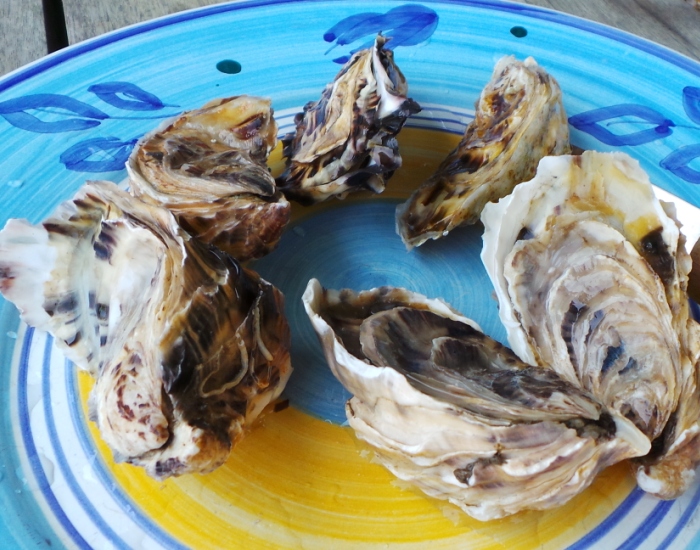
In “For Your Eyes Only,” British super-spy James Bond informs us that the best things in America are chipmunks and oyster stew. We can understand oyster stew on many levels, including its aphrodisiac properties. Like Bond, a gentleman should know how to open oysters for his girl. And a girl should know how to eat the oyster.
The best oysters are those whose life is controlled by a careful balance of estuaries, temperature, salinity and water flow. Opening an oyster requires an oyster knife, of course, and then finding the hinge in the oyster where the two shell halves meet. The knife is wedged in to the little groove of the joint and rather than push hard, which often leads to injury, it is important to twist the knife until you hear the “pop” of the shell halves releasing their grip.
Most people who injure themselves opening oysters do so not with the knife but on one of the sharp edges of the oyster shell itself. Once the pop has occurred, push gently to separate the shells and run the knife around the entire edge of the oyster to separate them entirely. Then the knife is run once again to separate the oyster meat from the adductor muscle that holds it to the shell. The oyster stays in the deeper shell half rather than the flatter shell half as it will hold all the oyster juice too.
When eating raw oysters, I belong to the school of thought that only a few drops of lemon juice are required, and it is best to serve them cold, ideally on ice. Oyster opening and eating is a messy affair and one done without utensils. Once the oyster is opened there’s all manner of ways of serving or cooking it from dipped into a mignonette to baked with a topping to deep-fried. However, the purest way to eat an oyster is to open one and eat it raw.
Advice varies about the proper way to eat an oyster, but the idea that you don’t chew and just let them slide down your throat doesn’t seem right to me. If you do that, I don’t believe you’re tasting anything. The whole point to taste is that you masticate.
The oyster shell with its oyster and liquor is used as the vehicle to bring the oyster to your mouth and you do indeed slide the oyster into your mouth. Then take a couple of bites and, in the words of one poet, you tickle the oyster to death.
The first oysters opened go to the lady friend, and then the shucker slides one down for himself.
Main photo: Open oysters ready to eat. Credit: Clifford A. Wright
You just can’t escape a barbecue grill on the Fourth of July. The holiday demands outdoor cooking followed by fireworks. And the curious thing about Americans’ Independence Day food traditions is that they are not confined to one or two expected dishes. Almost anything goes.
When I lived in Arlington, Mass., July 4 was an especially big deal because my house was about 100 yards from the route taken by William Dawes when he rode the southern route to Lexington while Paul Revere took the northern route on April 18, 1775, (as you know, Revere got all the fame and Longfellow’s poem).
Traditional New England fare
Traditional July 4 fare in New England, especially in the 19th century, was poached salmon with egg sauce, fresh peas and new potatoes, lemonade, and blueberry cobbler. Not once in the 14 years I lived in New England did we have this menu. What we did have was anything we damned pleased — hamburgers and hot dogs being on everybody’s go-to menu, along with potato salad, a bean salad, and, of course beer, plus soda and juice for the kids.
More from Zester Daily:
» Reviving Italian-American classic recipes
» Fire up the grill for the Fourth
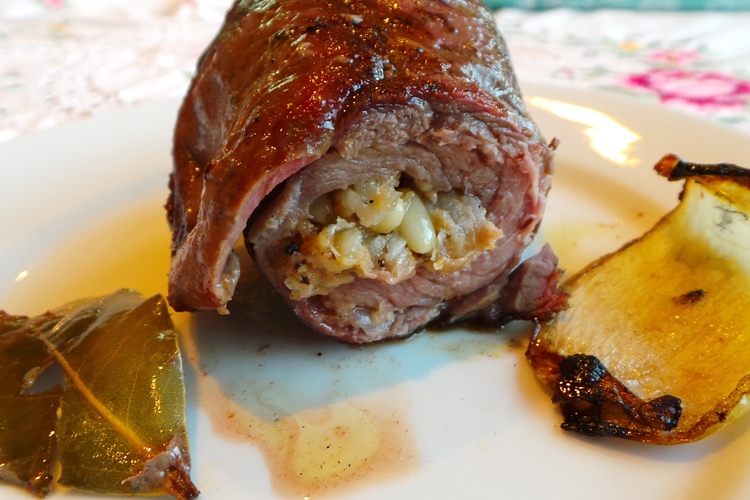
This July 4 perhaps a little innovation is in order such as the favorites of Italian-Americans, braciole, stuffed meat roll-ups. They go by other names such as involtini, but for any Italian-American they’re always known as braciole and they’re always braised in ragù or grilled. But this was not always so. Interestingly, the word braciole derives from the word for charcoal, implying that it was originally cooked alla brace, that is, grilled and that it was a cut of meat with the bone.
Braciole was once synonymous with “cutlet.” The place to begin is with the cut of meat. Not all braciole are cut from the same meat. If you grill the braciole, you might want to use a large piece of beef such as sirloin tip or beef round from which you can slice nice flat steaks that can be pounded thinner in order to roll them up.
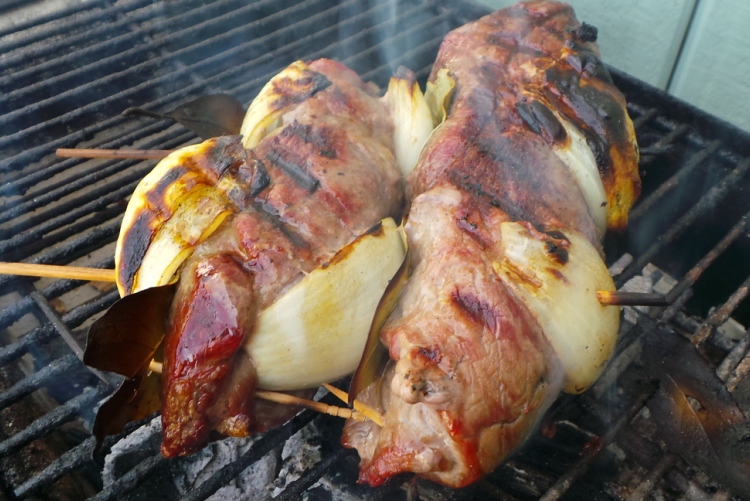
Braciole on the grill. Credit: Clifford A. Wright
Pound them as thin as scaloppini with a mallet or the side of a heavy cleaver. Lay the meat slice in front of you and place a heaping tablespoon of stuffing on the end nearest you. Roll once away from you and, pressing with your fingers so it’s tight, keep rolling and secure the ends or anything that looks loose with toothpicks. Now you’re ready to grill.
Here is a recipe to get you started after which you will only be limited by your imagination. The roll-ups can be prepared the day before and kept refrigerated until time to grill.
These beef roll-ups are stuffed with pecorino cheese, currants, and pine nuts. They are popular fare in the summertime around Palermo in Sicily.
Ingredients
- 12 large bay leaves, preferably fresh
- 1 tablespoon currants
- 1 ¾ pounds beef round, cut into twelve 3×5-inch-slices
- 6 tablespoons fresh bread crumbs
- 2 tablespoons extra-virgin olive oil plus more for basting
- 2 tablespoons freshly grated pecorino cheese
- 1 tablespoon pine nuts
- 6 tablespoons finely chopped onion
- Salt and freshly ground black pepper to taste
- Twelve 8- to 10-inch wooden skewers
- 1 large onion, quartered, and separated
Directions
- Prepare a hot charcoal fire to one side of the firebox or preheat a gas grill on high for 15 minutes.
- If using dried bay leaves, soak them in tepid water for 30 minutes and drain. Soak the currants in tepid water for 15 minutes.
- Place the beef slices between 2 pieces of wax paper or plastic wrap and flatten with a mallet or the side of a heavy cleaver until they are about 1/16 inch thick, being careful you don’t rip the flesh.
- In a small sauté pan, heat 2 tablespoons olive oil over medium-high heat. Add the bread crumbs and cook, stirring, until lightly browned, about 5 minutes. Remove the pan from the heat. Drain the currants and add to the bread crumbs with the pecorino, pine nuts, onion, and salt and pepper. Mix thoroughly and set aside.
- Roll the bread crumb mixture in the beef slices to create beef rolls.
- Double skewer all the ingredients: hold 2 skewers parallel to each other about ½ inch apart between your thumb and forefinger. Slide a bay leaf, an onion slice, and a beef roll onto each set of skewers.
- Place the skewers on the grill close to the fire, if possible, and baste with olive oil. Cook until golden brown, 5 to 7 minutes on each side. Move to the cooler side of the grill if there is too much flare-up. Serve hot.

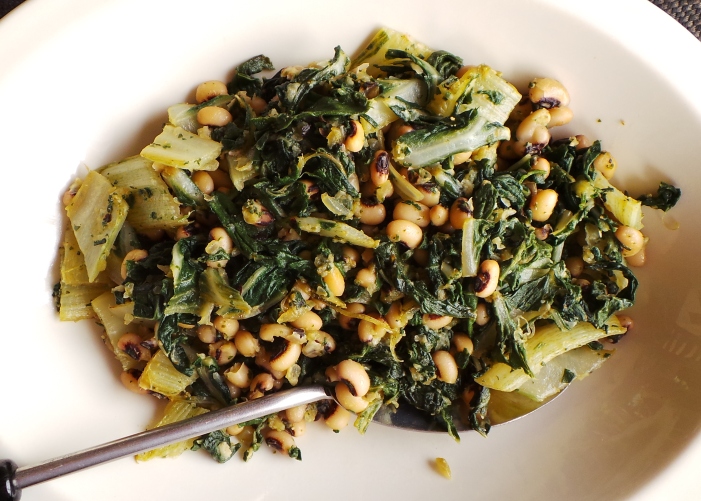
How did the black-eyed pea become a symbol of good luck? No one knows for sure but a good guess is that an ancient farmer, through practical experience knew that spent black-eyed pea plants could enrich his soil and therefore he considered them good luck.
As with all legumes, black-eyed peas have nitrogen-giving nodules on their roots and are for this reason often used as green manure or forage. There are five species of Vigna unguiculata, or black-eyed pea.
More from Zester Daily:
» Celebrate India’s harvest festival with bean salad
» Getting fabulous with fava beans
» How chickpeas became a super food
The black-eyed pea is one of the oldest plants known to agricultural man. It is thought the black-eyed peas were first cultivated in Ethiopia from 4000 to 3000 B.C. In records from the ancient kingdom of Sumer in Mesopotamia about 2350 B.C. a plant called lu-ub-sar, which appears to give the modern Arabic word for bean, lūbya, may have been the black-eyed pea.
It also appears that the ancient Egyptian bean known as iwryt, described from the Old Kingdom (2686 B.C.-2100 B.C.) onward, was the black-eyed pea and workmen at Deir al-Medina received beans as part of their wages. In Pharaonic medicine they were used to treat constipation.
The black-eyed pea arrived in Italy about 300 B.C. where it was grown by the Romans. The depiction of the plant called fasilus in the lavishly illustrated sixth-century codex of the first-century Greek pharmacologist Dioscorides’ work “De material medica” (“On medical matters”) appears to be the black-eyed pea.
And in Africa the black-eyed pea is one of the most important vegetables. The pods containing the seeds are about a foot long and they are known in the American South as cowpea, crowder or Southern pea.
The black-eyed pea likely made its voyage to the New World in the 17th century. It appears in many dishes, but this Syrian and Lebanese one is nice to be served as part of a meze table.
This is a wonderful Lebanese and Syrian dish to make with fresh black-eyed peas, but dried will do just as well. The usually rough taste of Swiss chard is mellowed considerably with the onions and coriander in this preparation.
Ingredients
- 1½ cups (about ¾ pound) dried black-eyed peas, soaked in water to cover overnight or 4 cups fresh black-eyed peas (about 14 ounces)
- 2 pounds Swiss chard, heavy stalks removed, washed well
- 5 tablespoons extra virgin olive oil
- 1 large onion, finely chopped
- 4 to 5 large garlic cloves, peeled and mashed in a mortar with 2 teaspoons salt
- ½ cup finely chopped fresh coriander leaves
- 1 teaspoon freshly ground cumin seeds
Directions
- Place the peas in a pot of cold water to cover and bring to a boil. Cook until tender, about 1 hour for dried peas and about 18 minutes for fresh. Drain and set aside.
- Meanwhile, place the Swiss chard in a large pot with only the water adhering to it from its last rinsing. Turn the heat to high, cover, and wilt, 5 to 7 minutes, turning a few times with long tongs. Drain, and squeeze out excess liquid. Chop coarsely and set aside.
- In a large sauté pan or casserole, heat the olive oil over medium-high heat, then cook the onion until translucent, about 8 minutes, stirring. Add the Swiss chard, garlic mash, coriander, and cumin. Reduce the heat to low and cook until fragrant and tender, about 30 minutes. Stir in the peas and cook until heated through, about 10 minutes, and serve.

Main photo: Black-eyed peas with Swiss chard. Credit: Clifford A. Wright
Put The Spring Back In Your Antipasto Step With Asparagus
by: Clifford A. Wright
in: Vegetables w/recipe
Very few foods, if any, make an indelible impression on you, an impression that you remember 40 years later. But I do remember my first asparagus out of the ground, not bought in a supermarket but pulled by yours truly from the earth.
My first fascination with asparagus occurred in May 1970 in Louisville, Ky., while chatting with the father of a college buddy. A creek ran through their property and his wife had asked him to pick some asparagus by its bank. We strolled to the creek, he showed me how to pick them, and we ate them that night. It was the one of the first times I ever picked my vegetable then ate it, not counting tomatoes that my grandfather always grew.
More from Zester Daily
» A tender love story of asparagus, lilac and lemon
» Stalking wild asparagus, just like Euell Gibbons did
» Grill virgins: Five steps to success for beginners
» Seven new ways to love asparagus
» Which is better? Choosing between green and white asparagus
Planting asparagus is easy, but there is a three-year gap between sowing and harvesting while the plants become established. During harvesting season a family of four would need 12 asparagus plants to feed them.
If you want to plant your own, you need to build a bed of soil about 6 inches above the surrounding earth and about 4 feet wide and as long as you want. The plant, though, does not grow well in hot and humid climates.
Creating a suitable planting bed involves a bit of work. The soil should be well-drained, and there should be plenty of surface area above the plants to encourage thick, succulent spears. The soil should also be dug deeply with organic matter and phosphate. Add some sand to the soil if it is not well-drained.
Seed is sown in early spring, either indoors or in a seed bed outdoors, and the young plants are grown carefully for the first year. Sandy, gritty soil should be spread on the surrounding soil. A top dressing of fertilizer containing nitrogen and potash should be applied after planting.
In the first year, it is desirable to build up a mat of heavy roots that will support many thick spears during the following spring. If you want to grow white asparagus, mound organic mulch over the asparagus beds.
Asparagus is harvested when the spears are about 4 inches above ground and 3 inches below. For the best taste, harvest them only one hour before they are needed for cooking.
Although asparagus appears year round in the supermarket, they deteriorate quickly after being picked and need to be kept cold. In supermarkets, make sure asparagus is refrigerated or standing upright in cold water basins. In farmers markets, asparagus should be sold on ice or, at the very least, in shade away from sunlight.
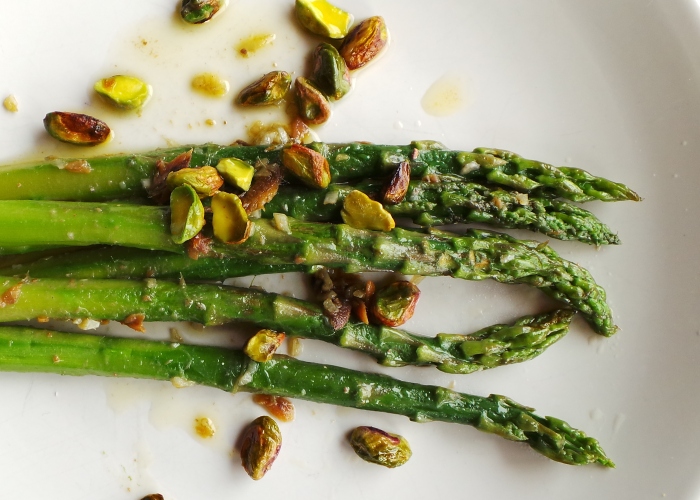
Asparagus with pistachios. Credit: Clifford A. Wright
Look for asparagus spears that are firm with deep green shoots and slightly purple tips that are firmly closed and dense. Tips that appear to be separating are evidence of wilting from aging. Buy asparagus that are firm their entire length, not floppy or twisty. Asparagus with thick stalks are not any less good than thin-stalked asparagus, although most demanding cooks look for an ideal width of about a half inch.
Keep asparagus that has been bought by untying it so the spears are relatively loose and can breath, then wrap the bottom portion of the spears in a wet paper towel and keep in the crisper drawer of your refrigerator. Although asparagus will keep up to a week, its taste diminishes with each passing day, so best to eat it the day you buy it.
Prepare asparagus for cooking by cutting off the tough bottom half-inch of stalk and peel the skin off the bottom portion of the remaining stalk with a vegetable peeler. Asparagus is cooked quickly until crisp-tender, not limp.
Here are two quick and delicious ways to present asparagus. Make both at the same time and serve them on a pair of platters.
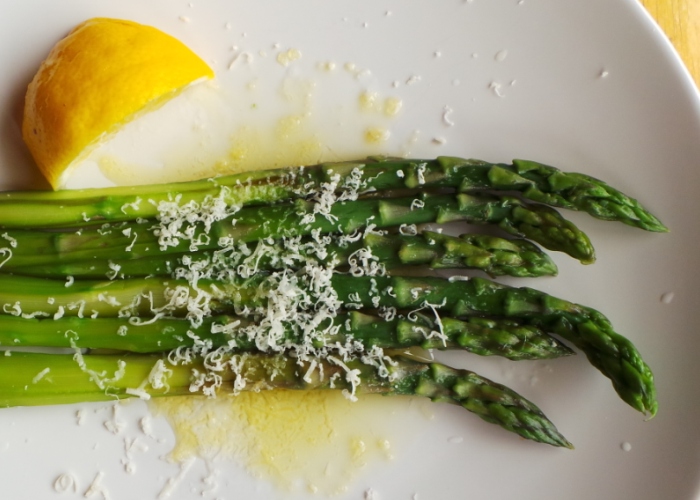
Asparagus With Olive Oil and Lemon
Makes 4 to 6 antipasto servings
Ingredients
1 pound fresh asparagus, trimmed
Extra virgin olive oil for drizzling
Freshly squeezed lemon juice for drizzling
1 tablespoon freshly grated Parmigiano-Reggiano cheese
Salt and freshly ground black pepper to taste
Directions
1. Bring a large saucepan of water to a rolling boil over high heat then cook the asparagus until tender with just a slight crunch, about 6 minutes.
2. Drain and arrange on a serving platter. Sprinkle with olive oil, lemon juice and cheese. Season with salt and pepper. Serve at room temperature.
Asparagus With Pistachios
Makes 4 to 6 antipasto servings
Ingredients
1 pound fresh asparagus, trimmed
3 tablespoons extra virgin olive oil, divided
1 garlic clove, finely chopped
4 salted anchovy fillets, rinsed
3 tablespoons pistachios
Salt and freshly ground black pepper to taste
Directions
1. Bring a large saucepan of water to a rolling boil over high heat then cook the asparagus until tender with just a slight crunch, about 6 minutes. Drain.
2. In a sauté pan, heat 1 tablespoon olive oil over medium heat, then cook the asparagus, garlic, and anchovies until the anchovies have completely melted, about 3 minutes. Remove to a serving plate.
3. In the pan in which you cooked the asparagus, heat the remaining olive oil over medium heat, then cook the pistachios for 3 minutes, stirring, then sprinkle on top of the asparagus and serve.
Main photo: Asparagus With Olive Oil and Lemon. Credit: Clifford A. Wright
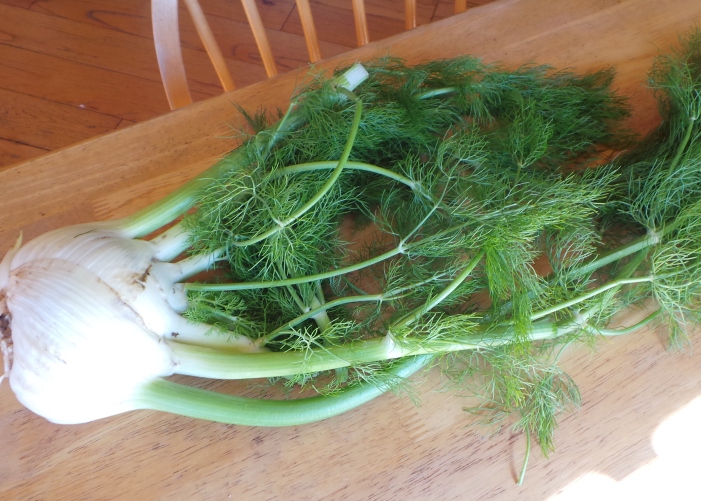
Most home cooks have only a few uses for flavorful fennel, and part of the problem is that many people are using only a small portion of the vegetable.
The cultivar common in the supermarket and farmers markets, the one you’ve been buying all these years, is called Florence fennel. This variety is notable because it has a big, fleshly bulb.
More from Zester Daily:
» Go beyond cabbage with coleslaw
» Escarole, cabbage and spinach
There are all kinds of things you can do with the bulb, but what about those bushy stems, those fronds fragrant with the smell of fennel? I hope you haven’t been clipping them off and throwing them away.
These tops of fennel can be used as an herb to be sprinkled on scrambled eggs, frittatas, spaghetti or just about anything. However, there is no way you’re going to get rid of all those stems by using them as herbs. So here’s a nice little trick. Bring a large pot of water to a boil and boil them until soft and then place them into a blender with enough water to allow the blades to work and make soup.
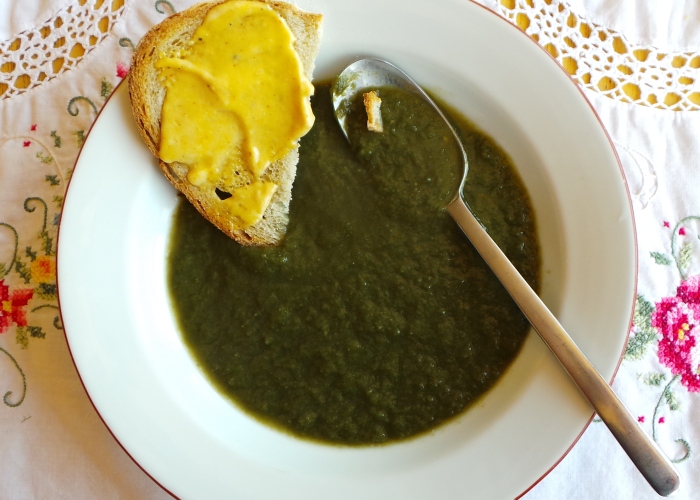
In this recipe, you’ll also make a Provençal-style sauce rouille, which is a kind of fancified garlic mayonnaise to spread on toast points that float in the soup. Sauce rouille is typically used as a condiment for bouillabaisse, but it works very well here.
If you don’t want to go through the trouble of making the sauce, spread some mayonnaise on toast points. The soup itself is very simple, and, for perfect soup, the only thing you’ll need to adjust at the end is the salt.
Purée of Fennel Soup
Ingredients
1 gallon of water
1 pound fennel fronds (tops)
1 carrot, chopped
1 small onion, chopped
1 celery stalk, chopped
Salt and freshly ground black pepper to taste
Directions
1. Bring a gallon of water to a boil over high heat then boil the fennel, carrot, onion, and celery until soft, about 25 minutes. Remove 6 cups water and drain the vegetables.
2. Place the vegetables and water in a blender and purée for 2 minutes. Transfer to a saucepan and heat over low heat for 10 minutes, covered partially if it’s bubbling. Taste and season with salt and pepper.
wright-fenneltops2
Sauce Rouille
Makes 1¼ cups sauce rouille
Ingredients
1½ cups diced French bread, white part only
½ cup fennel broth (see above)
4 large garlic cloves, or to your taste
1 teaspoon salt
½ teaspoon cayenne pepper
Pinch of saffron threads, crumbled
1 large egg yolk
Freshly ground black pepper to taste
1 cup extra virgin olive oil
Directions
1. Soak the diced bread in the fennel broth for 5 minutes. Squeeze the broth out.
2. Mash the garlic cloves in a mortar with the salt until mushy.
3. Place the bread, mashed garlic, cayenne pepper, saffron, egg yolk and black pepper in a food processor and blend for 30 seconds then pour in 1 cup olive oil through the feed tube in a slow, thin, steady stream while the machine is running.
4. Refrigerate for 1 hour before serving. Store whatever you don’t use in the refrigerator for up to a week.
Note: If the rouille is separating, add 2 to 3 tablespoons of the fennel broth and whisk it in until smooth and re-emulsified.
5. Spread the rouille on toast points and lay into the soup bowl to serve with the fennel soup.
Main photo: Fennel bulb with fronds. Credit: Clifford A. Wright
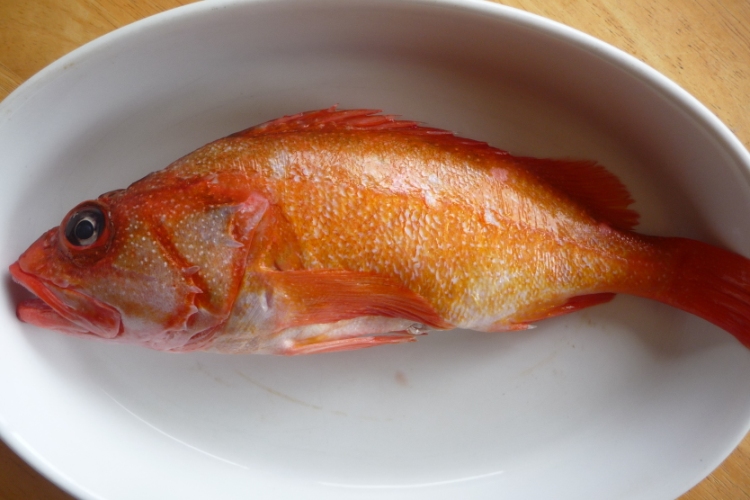
Whenever I think about fresh fish I always picture that old MAD magazine column “Silly Answers to Stupid Questions.” The female customer asks at the fish store, “Is that fish fresh?” And the fishmonger answers, “No, it’s very well-mannered.” Seriously though, the question was fair because it does come down to the fishmonger knowing best.
More from Zester Daily:
» How the Vikings enjoyed dried stockfish
» Enjoying fish stew in Newfoundland
Today’s fishmongers offer a variety of filleted fish, making our lives easier. But this convenience sometimes means customers get lower-quality fish than they did when they bought it unfilleted. Judging whether a fish is fresh is not such an easy thing. It’s not hard for the fishmongers because when they buy it they have access to the fresh-caught fish and knowledge of fish that the consumer does not have.
They often know the fishermen or fish brokers. They have the opportunity to smell and handle the whole fish. Good fishmongers know where the fish was caught and who caught it and they know which areas of the ocean and seas have the right kind of nutrients for particular fish. Not all fishmongers know this, but the good ones do.
Consumers are at a great disadvantage. They cannot even see the whole fish because it often arrives at the fish store from a central processing facility. The fillets are cut into perfect and identical pieces with little to distinguish them from one another.
A fish name doesn’t tell you everything
Furthermore, the fish often have names that have nothing to do with their species. When you buy black cod you’re not buying cod. When you buy Chilean sea bass you’re not buying sea bass. In the first case, black cod is sablefish (Anoplopoma fimbria), which tastes nothing like cod and is the only species in the Anoplopoma genus. The U.S. Food and Drug Administration approved “sablefish” as the only acceptable market name and considered “black cod” a regional name not to be used for statement of identity purposes. In the second case, Chilean sea bass is an invented marketing name for Patagonian toothfish (Dissostichus eleginoides), a deep-dwelling Antarctic Ocean fish.
Only one sure way to test whether it’s fresh fish
The standard techniques for judging whether a fish is fresh — using your senses of sight, smell and touch — often won’t help the average consumer. Along with not having access to whole fish, customers also often find the fish store does not know where the fish was caught and when. When was the last time a supermarket fishmonger answered, “The fish was caught seven days ago off the Alaska coast?” I can answer that — never.
A consumer’s senses also are useless when the fish sometimes has been doused in sodium benzoate that can disguise a poor quality filleted fish.
There is only one way to determine the freshness of filleted fish, and that is through taste. Since this is not convenient when shopping, customers must trust the fishmonger the first time and then repeat their business if they like his or her fish. If the fish you buy at a particular store is consistently good, then that is your guide for fresh fish. Fresh fish should not taste “fishy,” and the store should not smell “fishy.” It should smell like the briny ocean.
Where the quality fishmongers are
Top quality fish will taste good, unadorned with sauces, while lesser quality fish will taste insipid and generic and — in a telltale sign of non-freshness — fishy. Choose the freshest fish before choosing the recipe. I usually find top quality fishmongers in ethnic areas where fish cookery is important to that particular culture, such as Japanese, Chinese, Vietnamese, Italian, Greek, Portuguese or Caribbean neighborhoods.
Lastly, don’t be a boob and ask, “Is this fish fresh?” What do you think they’ll answer?
Main photo: Rock cod (Lotella rhacina) caught off the California coast. Credit: Clifford A. Wright