
David Latt
From:
Los Angeles, California
Books by author
10 Delicious Holiday Recipes

Articles by Author

This year, the gloomy, wet, cold winter seemed to last forever. Happily all that is a dim memory now. With heat and humidity back in our lives, it’s time for ice cold beverages, with new concoctions always welcome. Increasingly, mezcal (also spelled mescal) is appearing in trendsetting bars and liquor stores and inventive mixologists are using it to make fun and refreshing cocktails, perfect for summer.
All tequilas are mezcal but not all mezcals are tequilas
The Mexican government controls how and where mezcal and tequila are produced. It is as diligent in protecting the integrity of those appellations as is the French government in its guarantee that a wine labeled Bordeaux comes from that region.
More from Zester Daily:
» Tequila goes from poolside to fireside
» The world’s best margarita recipe
» Spicy cocktails are hot, hot, hot
There is still a lot of confusion about mezcal, beginning with what exactly is it? To get to the heart of the matter, I talked with mixologist Marcos Tello, who consults with El Silencio, a distillery in Oaxaca, Mexico.
Tello explained that both mezcal and tequila are made from the agave or maguey plant. Although there are dozens of agave varieties that are employed to make mezcal, for a distillate to be licensed by the government as tequila, only the blue agave may be used.
Tequila and mezcal are grown and bottled in different, designated regions but there are some overlaps. Tequila is primarily grown and distilled in the Mexican states of Jalisco, Michoacán, Guanajuato, Nayarit and Tamaulipas.
Mezcal is exclusively manufactured in Durango, Guerrero, San Luis Potosi, Tamaulipas and Zacatecas but both mezcal and tequila are produced in the states of Guanajuato and Oaxaca.
Most mezcal is manufactured from a single type of plant, usually espadin agave. Sometimes agaves are blended to create a balanced flavor as is the case with El Silencio Mezcal, which blends espadin, tobasiche and Mexicano agaves.
Roasted, not steamed
To prepare the agave plant for fermentation, the body of the plant is trimmed of its thick leaves. What is left, the “piña,” looks like a pineapple. To make tequila, the piña is steamed and then fermented. For mezcal, the next step is crucial in creating the spirit’s distinctive flavor. Before fermentation, the piña is roasted in an underground pit. For aficionados, the resulting smoky aroma gives mezcal a quality similar to scotch and whiskey.
Like tequila, mezcal is graded. Joven (“young”), the first grade, indicates a mescal that was bottled within 60 days of being distilled. Reposado (“rested”) is aged longer, between two months and a year. If mezcal is aged in small oak barrels for at least six months and as many as four years, then it is labeled añejo (“aged”).
Among other classifications, there is also pechuga (“breast”), which denotes a small-batch mezcal that after completing two distillations is given a flavor-enhancing step in which fruits (plums, apples, pineapples and plantains), almonds, uncooked rice and a chicken breast with the skin removed are added. Yes, you read that correctly, a raw chicken breast, which is suspended over the fermenting distillate, the juices and fat helping balance the fruit flavors.
Mezcal cannot be substituted for tequila in all recipes. The deeply nuanced smoky flavor can overpower the ingredients used in many tequila cocktails. To illustrate mezcal’s distinctive qualities, Tello created a signature cocktail he calls a Saladito.
As with any cocktail that employs robust flavor components, the least expensive grade of mezcal should be used. Save the reposado, añejo and pechuga to sip and enjoy neat or on the rocks.
Proust wrote that when he was presented with a plate of madeleines, childhood memories of an “exquisite pleasure” consumed him. Saladitos have a similar impact on Tello. The inexpensive Mexican candy originally from China is made from chile-salted, dried plums. Tello was inspired by homemade versions of the candy. On hot summer days, children would press a saladito into the middle of a lemon or lime and drink the juice as relief from the oppressive heat. That flavor memory inspired his creation of a mezcal cocktail that has sweetness lurking behind the smoky citrus notes. To add a salty-heat garnish to the cocktail, Tello uses a popular Mexican prepared seasoning called Tajin, a mixture of salt, dehydrated lime juice and pepper powder. If Tajin is not readily available, a similar effect can be created by mixing your own version as described here.
Ingredients
- ¾ ounce honey syrup (see below)
- 2 ounces mezcal (Tello recommends El Silencio Joven)
- ¾ ounce freshly squeezed lime juice
- ¼ teaspoon Tajin seasoning or combine 2 parts fine granulated sea salt to 1 part cayenne pepper
Directions
- Prepare the honey syrup by combining 3 parts honey with 1 part hot water. Mix well. Refrigerate to cool. Reserve.
- Fill a cocktail shaker or a large (16-ounce) glass with ice.
- Add the mezcal, honey syrup and lime juice.
- Place a lid over the top and shake vigorously.
- Open the shaker, cover the top with a bar strainer (also known as a Hawthorne Strainer) and pour into a cocktail glass.
- Dust the top of the cocktail with Tajin seasoning or the cayenne-salt mix.
- Serve chilled.

Main photo: A mezcal Saladito by Marcos Tello. Credit: David Latt
Which Swiss wines do you love? Hands? Anybody? Nobody? Know why? Only 2% of Switzerland’s wine production is exported. All the rest is consumed domestically. The best way — actually, the only way — to sample Swiss wines is to visit Switzerland. That’s what I did last fall.
The Valais’ microclimate
Having grown up with images of Switzerland as a land of snow-covered mountains, I expected cold weather when I visited the Valais, a French-speaking canton east of Geneva. But the climate was better suited to shorts and T-shirts than to parkas.
More from Zester Daily:
» How the Swiss won the Olympics in catering
» Celebrate Swiss style with fondue
» A crispy Swiss potato pancake
Neatly trellised vineyards climb up steep hills taking advantage of a hot, dry microclimate. With 300 days of sun a year, the Valais feels like Napa and Sonoma except for the Matterhorn looming in the distance.
In Switzerland, family-owned vineyards and wineries (called vignerons-encaveurs) are the rule. Even if unprofitable, they stay in the family. We met one winemaker whose family was regarded as a newcomer. They had worked the vineyard for only three generations, whereas the neighboring farm had been owned by one family for seven generations. Neither winery was self-sustaining. Everyone had a day job.
During a hosted trip we tasted dozens of varietals from local vineyards, some with such a small output that customers who lived in the neighborhood consumed their entire production.
The wine most closely associated with the Valais is Fendant, a white wine made with the Chasselas grape. But it is a red wine, not a white, that is making news these days.
Cornalin, the new kid on the block
Twenty years ago the Swiss government encouraged farmers to plant improved strains of grapes that were indigenous to Switzerland and to pursue new blends with distinctive qualities. The goal was to expand the export market for Swiss wines.
In the Valais that led to the improvement of Cornalin, a grape that had been cultivated since the Roman Empire. Used primarily in blends to make inexpensive table reds, the wine was often bottled without appellation or date of production.
Rouge du Pays
Frequently confused with an Italian grape with a similar name, the Swiss variety (Rouge du Pays or Cornalin du Valais) is genetically distinct. In the 1990s the Agroscope Changins-Wädenswi, a federal agricultural agency, funded research to cultivate promising local strains to improve the quality of the grapes and the survivability of the vines. A group of young vintners adopting the appellation Le Coteaux de Sierre planted the new vines. Over time, the acreage in the Valais devoted to Cornalin has expanded.
latt-cornalin2

The wines have a low-tannin, fruity flavor and a dark cherry red color. Helping market wines made with 100% Cornalin grapes, the wineries of the area have enlisted an unlikely champion.
Antoine Bailly is an internationally respected academic and a Nobel Peace Prize winner (Geography, 2012). A native of Switzerland, Bailly travels the world as a lecturer. These days his passion project is Cornalin.
A Cornalin Museum: Château de Vaas, La Maison des Cornalins
On a tour of the under-renovation Château de Vaas, La Maison des Cornalins in the village of Flanthey, Bailly pointed out details of the building, parts of which were built in the 13th and 16th centuries. Restored at great expense, the building is unique in the area for its history and architectural details. Open to the public in late August 2014, a photographic tour of the museum is available on a French language website.
In the tasting room, products from 17 of the local wineries can be sampled, along with cheeses and charcuterie from local purveyors. To visualize where the grape is grown, Bailly created an interactive map with the locations of the Cornalin vineyards in the Valais. Another interactive display with video screens illustrates the cultivation of the grape.
A temperamental grape
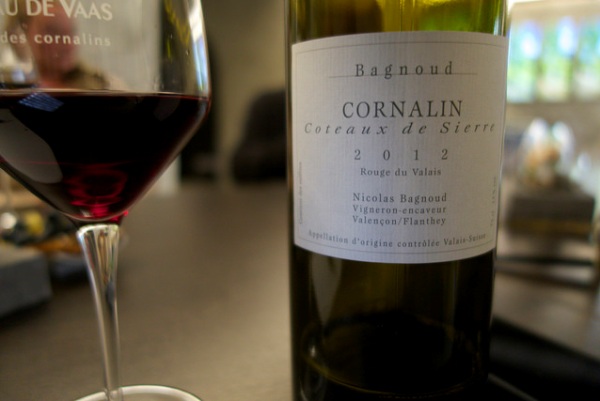
In the tasting room, with Bailly leading an animated discussion accompanied with appetizers of local cheeses and slices of beef sausage from Boucherie La Lienne in the village of Lens, we sampled several of the 100% Cornalin wines. Each of us had our favorite. Mine was the Bagnoud Cornalin, Coteaux de Sierra (2012) Rouge du Valais.
Bailly described the grape as difficult to grow and unstable. Slight variations in heat or rainfall can ruin the harvest. Through trial and error, the vintners have learned how to get the best out of the grape.
So why bother with such a temperamental grape? The answer was pretty direct. The vintners like the wine they’re making with Cornalin. For them, the extra effort and increased risk are worth it.
Cornalin needs three years in the bottle to mature. With the vintages currently offered for sale, these wines will be at their best just about the time the museum opens. Bailly invited us all to come back then. In the meantime, we bought bottles of our favorites to bring home. We had become little agents of export for Swiss wines.
Top photo: The Cornalin Museum, Château de Vaas, La Maison des Cornalins in the village of Flanthey. Credit: David Latt
After a long winter, summer will be welcomed with open arms. Looking ahead to outdoor parties under sunny, blue skies, chef David Padilla’s easy-to-make Drunken Shrimp sautéed in a spicy citrus sauce is the perfect recipe for lunch or an early dinner.
As Padilla describes what he loves about cooking, he remembers his father taking him to the markets in their small town in the Mexican state of Nayarit, on the Pacific coast between Sinaloa and Jalisco. His father would lead him past the fishermen on the beach and ask, “Do you want oysters today, or fish or shrimp?” They would eat what had been in the ocean’s clear waters only a few hours before. And long before farmers markets were fashionable, he and his father shopped in the mercados to buy freshly picked produce from the family farms outside of town.
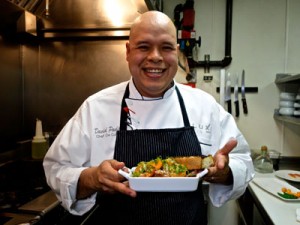
Chef David Padilla in his kitchen at the Beverly Hills Luxe Rodeo Drive Hotel. Credit: David Latt
So when Padilla says he searches out organic, local and seasonal products, he’s not following trends, he’s referencing his childhood in rural Mexico — even if his kitchen is now in a boutique hotel in the heart of Beverly Hills.
Padilla is chef de cuisine at Luxe Rodeo Drive Hotel’s restaurant called On Rodeo Bistro & Lounge. As documented in the recently published “Beverly Hills Centennial Cookbook,” the wealthy city has dozens of restaurants. Surprisingly, only one of those restaurants is on Rodeo Drive, the city’s internationally known, upscale shopping street.
Chef puts a Latin touch on Drunken Shrimp recipe
Given the hotel’s cosmopolitan clientele, Padilla embraces a California-inspired, fusion cuisine. He describes his menu as “a little bit of Asian, Latin, Mediterranean, a little bit of everything because we’re in L.A. and it’s a melting pot of cultures.”
More from Zester Daily
» Heads-on BBQ shrimp take a bow in New Orleans
» Need a pan that’s smoking hot? Reach for carbon steel
At the restaurant, Padilla pulls together Latin, Asian and French influences. The bits and pieces he takes from many cuisines are melded into a balance of flavors and textures. For him, a meal is a journey. As he says, “I want your mind and taste to get lost and then you get to your destination.”
Padilla puts a decidedly Latin spin on Drunken Shrimp. The well-known Chinese dish has many iterations. One decidedly cruel version tosses live shrimp into a pot of liquor. Most commonly, the shrimp are cooked in wine or liquor so shrimp and diner presumably can share the bar tab. The shrimp in Padilla’s dish are flavored with tequila. Citrus sections and freshly squeezed juices give the dish its bright, summery flavor. serrano peppers add fire, and butter mellows and sweetens the dish.
With such a flavorful sauce, Padilla wants every drop to be enjoyed. He serves the shrimp with a thick slice of a soft Italian ciabatta bread, toasted on the grill. He suggests that rice and pasta would be good companions for the shrimp. I think steamed spinach would also be delicious.
Mexican Drunken Shrimp in a Spicy Citrus Sauce
As with any recipe, quality ingredients increase the pleasures of the dish. Use freshly squeezed citrus sections and juice and the freshest raw shrimp available. To sear the shrimp, a frying pan like one made of carbon steel that can tolerate high heat is very helpful. Quick searing is important for flavor and appearance, and also because searing seals in the shrimps’ juices. Because the flavors of the sauce take several minutes to combine, the shrimp simmer along with the other ingredients. Smaller shrimp and ones not seared can dry out and become chewy.
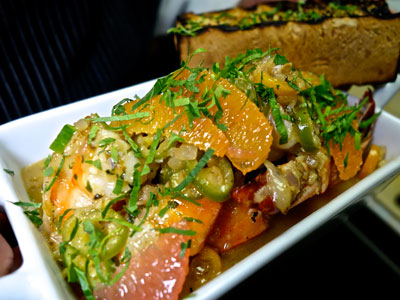
Drunken Shrimp at the Beverly Hills Luxe Rodeo Drive Hotel. Credit: David Latt
While grapefruit and oranges are available year-round, kumquats are seasonal. When they are available, they are a beautiful addition to the dish.
Taste the sauce and adjust to your palate. You may want more lemon or grapefruit juice or less. Do not season with salt during cooking. The shrimp are naturally salty. Padilla dusts the plated dish with a small amount of sea salt crystals to “brighten” the flavors.
Serves 4
Ingredients
12 raw large shrimp (10 to a pound), washed and patted dry
4 tablespoons blended oil, 80% canola oil, 20% olive oil, divided
1 teaspoon black pepper, freshly ground
4 tablespoons chopped garlic
4 teaspoons finely chopped shallots
4 tablespoons Italian parsley, washed, patted dry and finely chopped
12 tablespoons sweet butter, plus more for bread
4 thick slices ciabatta
8 ounces tequila
1 cup orange or Cara Cara orange juice
4 tablespoons freshly squeezed lemon juice
4 tablespoons freshly squeezed grapefruit juice
12 kumquats, washed, patted dry and sliced into rounds with the skin on
4 fresh serrano chilies, washed, patted dry and sliced into rounds
12 grapefruit sections, membranes removed
12 orange sections, preferably Cara Cara oranges, membranes removed
Sea salt as needed
Directions
1. Prepare each shrimp by peeling away the shell, exposing the body. Leave 1 inch of shell covering the tail. Devein and drizzle with 2 tablespoons blended oil, season with black pepper, garlic, shallots and 2 tablespoons parsley. Set aside.
2. Heat a grill. Place a small amount of butter on each side of each piece of ciabatta. Using tongs, grill the slices on both sides. Remove and set aside.
3. Use a large frying pan so the shrimp are not crowded. Place the pan on a burner with a high flame. When the pan lightly smokes, drizzle the remaining 2 tablespoons blended oil into the pan. The oil will smoke in a few seconds. Using metal tongs, place the shrimp into the pan.
4. Each shrimp will sear quickly. Turn to sear the other side. This will not take long.
5. From the marinade, add the garlic, shallots and parsley. Sauté to caramelize.
6. Remove the pan from the burner so the tequila doesn’t catch fire when added. Deglaze the pan with tequila. Stir well to lift the flavor bits off the bottom of the pan.
7. Add the citrus juice and sliced kumquats. Stir to blend together the flavors.
8. Add serrano peppers.
9. Place chunks of butter into the sauce. Stir to melt and mix together.
10. Turn the shrimp over to absorb the sauce. Reduce a few minutes.
11. To plate, use shallow bowls. Place four shrimp in each bowl. Portion out the sauce, covering the shrimp. Garnish each plate with grapefruit and orange segments. Place a slice of grilled bread on the side. Dust with a sprinkling of sea salt crystals. To add color, lightly drizzle the grilled bread with olive oil and dust with parsley.
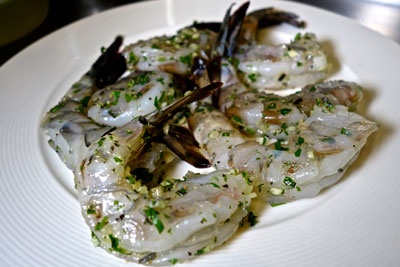
Main photo: Shrimp marinated with shallots, garlic and Italian parsley being prepared for Chef David Padilla ‘s Drunken Shrimp at the Beverly Hills Luxe Rodeo Drive Hotel. Credit: David Latt
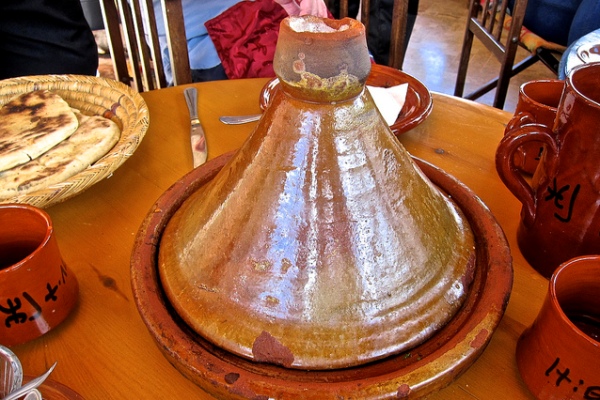
When skies turn dark and temperatures plunge, out come the short lists of dishes to warm body and soul. To those lists should be added an easy-to-make hot, savory, deliciously satisfying Moroccan-style chicken tagine.
Making a tagine sounds exotic, but at its heart, the dish is a one-pot braise, a technique as basic to an American kitchen as beef stew.
More from Zester Daily:
Traveling with half a dozen food writers on a hosted trip to Morocco, at the trekking hotel, Kasbah du Toubkal, we were given a cooking demonstration by Hajjah Rkia ben Houari (“Hajjah” is an honorific given to a woman who has completed a pilgrimage to Mecca) and her assistant Fatima. In her kitchen with a view of the High Atlas Mountains, she showed us how to make classic Moroccan dishes: chicken tagine, preserved lemons and lamb couscous. She started the lesson by reminding us that having quality, fresh ingredients is essential.
The chickens, lamb, fresh vegetables and herbs came from the nearby open-air market in the Berber village of Asni. The spices were from vendors, much like the ones we saw in the Marrakesh and Fez souks with their finely ground spices organized in mounds next to bushels filled to overflowing with olives, dates, dried fruit, dried beans and herbs.
Home cooking in the High Atlas Mountains
In the pantry between Hajjah Rkia’s kitchen and the laundry room, sitting on short stools around a low table, we felt a bit like nursery school kids on a field trip. With our knees bumping against the table, we were her prep chefs. She assigned tasks — peeling onions, garlic, carrots and potatoes — and the translator explained how we would cook the dish according to our host’s Berber traditions.
At the end of the cooking demonstration, Hajjah Rkia’s son made Moroccan-style mint tea, which meant the teapot was held high in the air as a hot stream of black tea flavored with fresh mint was poured into small glass cups. He explained the long stream aerated the tea and gave it added flavor qualities. Without the benefit of a test kitchen, we couldn’t validate that opinion, but we loved the spectacle and the tea was delicious.
latt-chickentagine2
Just before we sat down for dinner, Fatima cooked flat bread on an outdoor clay stove fueled by wood and charcoal. Charred on the outside, the bread was chewy on the inside. To stimulate our appetites, Fatima’s handmade bread arrived at the table warm from the fire with a plate of fresh feta cheese and a bowl of spicy Moroccan olives. Then the table was set with large platters of the dishes made during the cooking demonstration. What a feast.
Translating Moroccan classics in an American kitchen
Back in my own kitchen, facing an inclement day when friends were coming over for dinner, I remembered that wonderful meal at Hajjah Rkia’s. The chicken tagine appealed to me as the perfect way to beat back the cold. I adapted the recipe to my own palate and the realities of a Southern California kitchen.
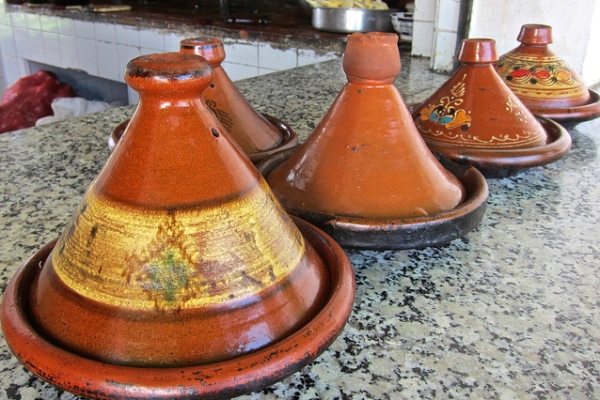
In Morocco the pot used to prepare a tagine is a shallow pan with a distinctive conical top. Lacking a tagine, I find the qualities of the dish can be approximated using a covered pot that has a vented lid to promote the thickening of the sauce through evaporation. I use an inexpensive Chinese clay pot, which works well.
Before using a clay or ceramic pot, always check the manufacturer’s instructions. Some pots should be soaked in cold water before using. For some pots, a diffuser must be placed between the pot and the heat source to prevent cracking.
Chicken With Preserved Lemons, Cracked Olives and Golden Raisins
Preserved lemons give the dish a bright, citrus finish. Easy to make at home, preserved lemons will keep refrigerated for months. The lemons can be used after one week, although the longer they have been preserved, the more they will have their distinctive “perfume” flavor.
As a side dish, Moroccan pickled vegetables provide a tangy complement to the savory tagine. The pickles are fun to make and, like the lemons, will keep refrigerated for months.
This recipe calls for cracked olives, which are olives that have been “cracked” sometimes by hand, sometimes by machine to create a deep cut in one side of the olive reaching to the pit. That allows the brine to reach deep into the olive. In cracked olives, the pits are mostly separated from the “meat” because of the cracking. The advantage of cracked olives in a braised dish is the sauce soaks deeply into the olives and the saltiness of the olive passes into the sauce so the effect is different from using regular olives.
Serves 4
Ingredients
1 whole chicken, 3 to 4 pounds, washed
¼ cup kosher salt
¼ cup golden raisins
1 tablespoon ground black pepper, divided
3 tablespoons lemon juice
4 garlic cloves, peeled
⅓ bunch fresh cilantro, stems and leaves
1 tablespoon olive oil
1 medium red or yellow onion, peeled, finely chopped
1 teaspoon ground ginger
¼ teaspoon of powdered saffron (optional)
⅛ teaspoon cayenne powder (optional)
2 cups chicken stock (preferably homemade)
1 preserved lemon, rinsed, white pith removed, finely chopped
1 cup cracked green olives
Sea salt and black pepper to taste
⅛ teaspoon cayenne powder (optional)
Directions
1. Place the whole chicken in a large container, cover with water. Add the kosher salt. Refrigerate overnight.
2. Place the golden raisins, ¼ teaspoon of the black pepper and lemon juice into a covered container. Allow the raisins to absorb the juice for at least one hour or overnight.
3. Before cooking, rinse the chicken and pat dry. Using a sharp knife, remove the breast meat, legs, thighs and wings from the carcass. Cut apart the wings at the joints. Debone the thighs and legs, taking off the skin.
4. Place the carcass, skin and wing tips into a large pot, cover with water and simmer 60 minutes. Strain the bones. Reserve the stock. The meat on the bones can be picked off and used in a salad or a soup. Refrigerate the chicken stock. When cooled, remove the fat and discard.
5. Finely chop the garlic and cilantro.
6. Cut each chicken breast into four, equal sized pieces. Cut the deboned thighs into four and the legs into two pieces.
7. Over a medium flame, heat the olive oil in a tagine or pot. Add the onions, ground ginger, saffron (optional), garlic and cilantro. For additional heat, dust with cayenne powder (optional). Stir well and cook for two to three minutes.
8. Sauté the wings, thighs and legs in the seasoned oil until lightly browned. Do not add the chicken breasts, which require less cooking time.
9. Finely chop the raisins, which have now absorbed the pepper-flavored lemon juice.
10. Add raisins, remaining black pepper-lemon juice and chicken stock. Stir well to create the sauce. Cover and gently simmer 30 to 40 minutes or until the chicken meat is tender.
11. Add chicken breast pieces, cracked green olives and finely chopped preserved lemon peel.
12. Cover and simmer 20 minutes. Taste and adjust seasoning with sea salt or ground pepper. Serve hot with steamed rice as a side dish.
Variations
- Do not debone the breast, thigh and legs. Traditionally, the chicken is quartered and the wings are kept whole.
- Along with the onions, add other vegetables of your choice such as leeks, peeled potatoes, carrots, cauliflower and turnips, cut into bite-sized pieces.
- For added sweetness, dissolve 1 tablespoon honey in the chicken stock.
- Before adding the vegetables, lightly drizzle them with olive oil and roast for 15 minutes in a 350 degree F oven on a parchment-paper-lined baking tray.
- Serve with steamed spinach instead of rice.
- Serve with boiled or mashed potatoes instead of rice.
Top photo: The distinctive Moroccan ceramic tagine. Credit: David Latt
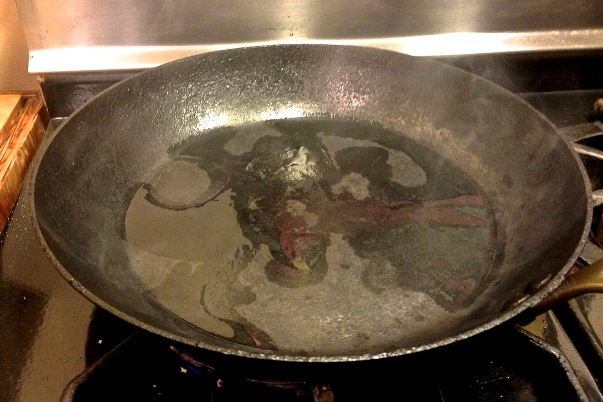
Place a carbon steel pan on a stovetop burner on high heat and stand back. In minutes, the surface temperature will reach 600 to 700 F. When hazy smoke floats into the air, it’s time to drizzle a small amount of oil onto the pan. The oil scatters across the surface, looking for a place to hide from the heat. But there’s no escape. The oil accepts its fate, adds a bit more smoke and waits. Drop a piece of marbled meat or a beautiful medley of farm fresh vegetables into the pan and the sizzling begins. Smokin’ carbon steel is the alchemist’s apprentice, transforming fat and starch into savory sweetness.
To create beautifully charred meats and crispy skin fish filets, restaurant chefs use sauté pans designed to take high heat. Searing caramelizes the outside and locks in flavor. In the home kitchen, cast iron and stainless steel pans are favored by many, but carbon steel has advantages over both. No health issues are associated with using carbon at high heat and cleanup is easy. Like woks, once a carbon steel pan is seasoned, the surface turns black so there is no need to brandish a scouring pad and cleanser.
Working with carbon steel
More on Zester Daily:
» Bring BBQ indoors with a Korean griddle
Some additional care needs to be taken. Never soak a carbon steel pan in water or place in a dishwasher. Simply scrub with a little soap to remove particulates and grease, rinse, then heat the pan on a stove top burner until dry and the pan is ready to use again. Acidic ingredients such as lemon juice and tomatoes can affect the seasoning of the pan, but that is easily remedied by following the manufacturer’s directions.
Available in cooking supply stores, the pans are half the cost of stainless steel and twice the price of cast iron. Once seasoned according to the manufacturer’s directions, the pans are virtually indestructible and designed to last a lifetime.
The pan I use is a French-made de Buyer 12.6-inch Mineral B Element. A bit lighter than a comparably sized cast iron pan, the extra long handle never gets hot when used on the stove top. At high heat, the surface of the carbon steel pan becomes nonstick with the smallest amount of oil.
Very much like Chinese stir-frying, cooking at high heat requires all ingredients to be prepped before cooking begins. To avoid risking a burn, experts suggest using a pair of long metal tongs, 12 inches or longer to manipulate the ingredients in the pan.
Get ready for some serious heat
A good exhaust hood with a fan above the stove is also necessary. High heat’s sweet smoke can turn from pleasure to pain if unvented. Many a meal has been spoiled by the annoying screech of a smoke alarm.
Use an oil that can tolerate high temperatures. A proponent of high-heat cooking to prepare his signature crispy salmon filet, chef Taylor Boudreaux of Napa Valley Grille in West Los Angeles, Calif., recommends a blend of canola (80%) and olive oil (20%).
Keep a premixed bottle on hand in the kitchen and you’ll always be ready for a smokin’ good time.
latt-carbonsteel2
Pan Seared Bone-In Ribeye Steak
I believe a little bit of steak goes a long way, so my preferred portion is 6 to 8 ounces. Quality rather than quantity makes the difference in this supremely easy-to-make, protein-centric dish. Buy the highest quality steak available.
A good steak deserves good accompaniments that are entirely personal in nature. One person draws pleasure from a side of fries, another prefers a baked sweet potato with butter. Some diners wouldn’t eat red meat without a glass of red wine. I enjoy a charred steak with caramelized onions and shiitake mushrooms served alongside garlic-parsley mashed potatoes, a carrot-broccoli sauté and an ice-cold perfect Manhattan up with a twist. But that’s me.
The times indicated in the recipe are estimates. The thickness of the steak will affect how long the meat needs to be cooked to reach the desired level of doneness.
Serves 1
Ingredients
1 bone-in ribeye, T-bone or Porterhouse steak
Sea salt and ground black pepper to taste
½ teaspoon blend of canola oil (80%) and olive oil (20%)
1 teaspoon sweet butter (optional, see variations)
1 garlic clove, peeled, root end trimmed (optional, see variations)
½ teaspoon finely chopped chives, or the green part of a scallion (optional, see variations)
Directions
1. Wash and pat dry the steak. Season lightly with sea salt and black pepper. Set aside.
3. Place the carbon steel pan on a burner on a high flame.
4. When the pan lightly smokes, drizzle the oil into the pan. In seconds the oil will smoke.
5. Using tongs, place the steak in the pan. Press down gently along the edges and the meat next to the bone. Pressing too firmly will force juices out of the steak which would diminish the flavors.
6. Allow to cook and sizzle. Steaks are best served medium-rare. Make adjustments as to time if you prefer yours less or more cooked.
7. After 3 to 5 minutes, turn the steak over. After another 3 to 5 minutes, press against the middle of the steak. If the meat feels solid, it is cooked. If it can be pressed down easily, then it probably requires more cooking. To be certain, use a sharp paring knife to make small cut in the middle of the steak. Inspect and determine if the steak has cooked to the state of doneness you enjoy.
8. Serve hot with your preferred sides and beverage of choice.
Variations
1. Use a combination of stovetop searing and oven baking, as many restaurant chefs do. To do this, sear the steak for 2 minutes on each side, then place in a 400 F oven for 5 minutes. To remove the pan from the oven, remember to use an oven mitt. The handle that rarely gets hot on the stove top will be very hot after spending time in the oven.
2. Test for doneness as before. If not cooked to your preference, place back in the oven.
3. After removal from the oven or the stovetop, drop a teaspoon of sweet butter and a crushed garlic clove (peeled) into the pan. Spoon the butter-garlic mixture over the steak, bathing it in the sauce. Discard the melted butter and garlic before serving. Place the steak on the plate with the sides.
4. Sprinkle 1 teaspoon finely chopped chives or the green part of a scallion over the steak just before serving.
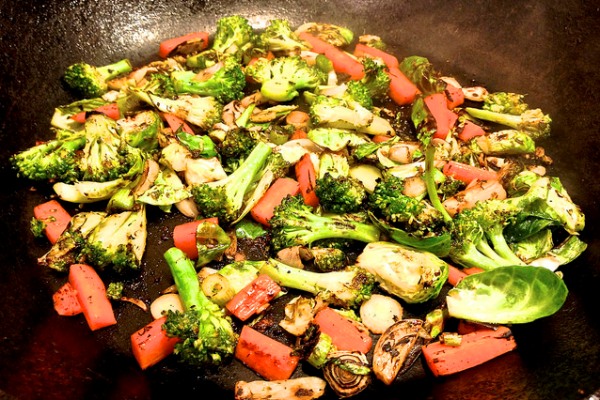
Caramelized Farmers Market Vegetables
Perfect as a side dish or as an entrée with noodles or rice, the vegetables should be charred but not overcooked so their texture is al dente. Using the freshest, highest quality vegetables will create a better tasting dish. Butter is optional, but a small amount can add a level of umami that turns a good plate of vegetables into an outstanding one.
Serves 4
Ingredients
2 large carrots, washed, root and stem ends removed, peeled, cut into rounds or 1 -nch oblongs
1 medium onion, washed, root and stem ends removed, peeled, julienned
3 garlic cloves, skins and root ends removed, smashed, finely diced
2 cups broccoli florets, washed, sliced long ways into bite-sized pieces
2 cups Brussels sprouts, root ends trimmed, cut into quarters or julienned
1 cup shiitake or brown mushrooms, washed, stem ends trimmed, thin sliced long ways
1 teaspoon blend of canola oil (80%) and olive oil (20%)
Sea salt and ground black pepper to taste
1 teaspoon sweet butter (optional)
Pinch of cayenne (optional)
Directions
1. Assemble all the vegetables on the cutting board, ready to use. If serving with steamed rice or cooked pasta, have that prepared as well.
2. Set the burner on the highest setting. Place the carbon steel pan on the burner. Allow to heat until a small amount of smoke begins to form.
3. Drizzle in the blended oil. When it smokes, add all the vegetables.
4. Using the tongs, toss the vegetables frequently to prevent burning. Toss for 3 to 5 minutes or until the vegetables are cooked al dente.
5. Remove the pan from the burner. Because the carbon steel is still very hot, continue tossing the vegetables. Add the butter and cayenne (optional). Toss well. Taste and adjust seasoning with additional sea salt and pepper.
6. Serve hot as a side dish or with the pasta or rice.
Variations
– If caramelized onions are preferred, cook them separately until they take on a golden color, then add the other vegetables.
– Substitute or add vegetables you enjoy, such as zucchini, turnips, kale or kohlrabi. Since some vegetables cook more quickly than others, learn which ones need to go into the pan ahead of the others. For instance, small diced turnips and kohlrabi would go in first before adding the other vegetables.
– Instead of adding butter and cayenne (optional), add 2 tablespoons soy sauce or an Asian sauce (optional), and for added heat, add 3 tablespoons finely chopped Korean kimchi (optional).
Top photo: Carbon steel sauté pan on high heat, smoke rising from the blended oil. Credit: David Latt
One of the delights of eating in a restaurant is enjoying a dish that seems difficult to create at home. Getting crispy skin on a salmon filet is right up there with making flaky pie crust or mastering an airy dessert soufflé that can survive the transfer from oven to table.
More on Zester Daily:
» 5 types of Pacific salmon to know
» Go beyond amandine with fusion salmon recipe
» Substitute wild salmon for turkey this holiday
Helping bring one of those dishes to the home kitchen, executive chef Taylor Boudreaux reveals a restaurant chef’s easy-to-follow technique to create crispy skin on a salmon filet in his kitchen at the Napa Valley Grille in West Los Angeles.
Boudreaux prefers quality ingredients sourced from sustainable purveyors. He also adheres to the “less is more” approach, which he demonstrates with his preparation of Coho salmon. Easy to prepare, the dish is elegant enough to be the centerpiece of a romantic dinner for two, a dinner for friends for New Year’s Eve or any celebration.
Children of military parents often lament having to move frequently, leaving behind friends and schools. Yet, there are those rare individuals for whom the glass-half-full becomes a golden opportunity. Because his dad was assigned to military bases around the country, Boudreaux was able to explore different parts of the United States. Regional food became his passion.
Preferring a country style of cooking instead of the rarefied gastronomic alchemy favored by many fine-dining chefs, Boudreaux likes to feature a few elements, presented as close to their original state as possible.
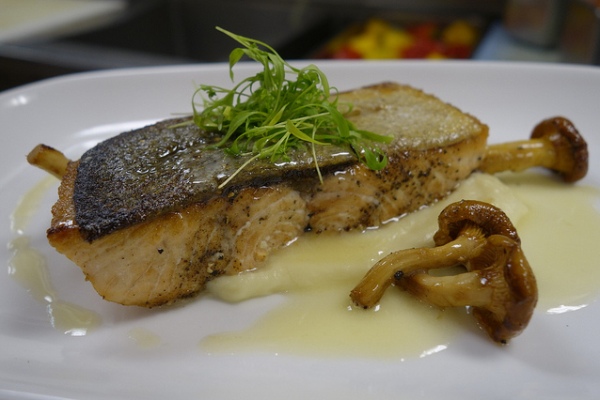
Leaving the chanterelles whole lends a rustic flair to the plate. Parsnips give up their native texture to become a creamy foundation for the filet of moist salmon with its contrasting crisp skin.
Some chefs use deep-frying to turn fish skin into crispy deliciousness. Boudreaux says a healthier way is to employ a sauté pan.
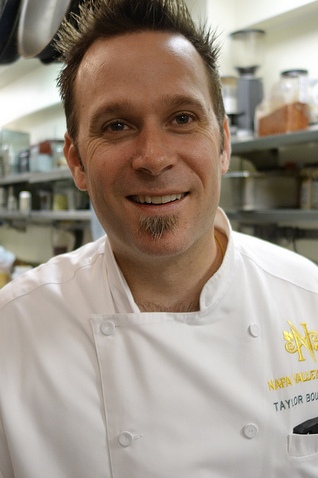
Chef Taylor Boudreaux in the Napa Valley Grille kitchen. Credit: David Latt
Pan-Seared Coho Salmon With Field Foraged Mushrooms and Parsnip Purée
The recipe is portioned for one. Multiply the ingredients by the number of servings. Depending on the size of the sauté pan, two to four filets can be cooked at the same time.
In addition to quality ingredients, Boudreaux stresses the importance of using a pan that can accept high heat. Because high heat is essential to creating crisp skin, chef uses a 20/80 mix of olive and canola oil. Canola oil can tolerate the high heat. Olive oil adds flavor to the sauté. Do not allow the hot oils to catch fire. The flames may be entertaining but they add an unpleasant flavor.
Instead of parsnips, Boudreaux sometimes uses potatoes or turnips, using the same ingredient portions and technique.
Serves 1
Parsnip Purée
Ingredients
1 cup parsnips, washed, peeled, roughly chopped
1 cup heavy cream
Directions
1. Place the chopped parsnips in a saucepan and cover with heavy cream.
2. Simmer till fork tender.
3. Place parsnip in blender and purée till smooth.
4. Add more cream, if necessary, to adjust consistency.
5. Pass through fine mesh and season with salt.
6. Return to a small saucepan. Reheat when the filet has come out of the oven and is ready for plating.
Chanterelle Mushrooms
Ingredients
Extra virgin olive oil
2 ounces chanterelle mushrooms, washed, pat dried
Salt and pepper to taste
1 tablespoon butter
1 sprig thyme
1 clove garlic, washed, peeled, crushed by hand
Directions
1. In a hot sauté pan add 2 teaspoons extra virgin olive oil and sauté mushrooms on high heat.
2. When just caramelized, season with salt and pepper and add 1 tablespoon butter, sprig thyme and 1 fresh garlic clove.
3. Remove from heat and let butter brown, being careful not to burn the butter.
4. Discard thyme and garlic.
5. Set the mushroom dish aside. Reheat just before plating the fish.
Beurre Blanc
Serves 2
Ingredients
2 ounces white wine
1 shallot, washed, peeled, fine chopped
1 thyme sprig, washed, pat dried
4 to 6 black peppercorns, whole
1 garlic clove, washed, peeled, fine chopped
4 tablespoons sweet butter
1 half lemon, seeds removed
Sea salt to taste
Directions
1. In a saucepan, reduce by two-thirds 2 ounces of white wine. Add chopped shallots, garlic, thyme sprig, and peppercorns and simmer.
2. Whisk in 4 tablespoons butter to emulsify.
3. Season with sea salt and pepper.
4. Taste and add acid with a squeeze of fresh lemon.
5. Remove peppercorns
Pan-Seared Salmon
Ingredients
1 skin-on filet of salmon (6 ounce), washed, pat dry
1 teaspoon extra virgin olive oil
4 teaspoons canola oil
2 tablespoons sweet butter
Sea salt and pepper to taste
1 garlic clove, washed, peeled, crushed by hand
1 sprig thyme, washed, pat dried
1 tablespoon microgreens, washed and patted dried or Italian parsley, washed and finely chopped
Directions
1. Place the filet flesh side down on a cutting board. Using a sharp paring knife, in the middle of the filet, make a 4-inch incision in the skin (not the flesh).
2. Heat sauté pan until smoking.
3. Add blended olive oil and canola oil to coat pan.
4. Lightly sprinkle sea salt and freshly ground pepper on both sides of the filet.
5. When oil smokes, lay seasoned fish skin side down. Because the heat will cause the salmon to curl up on the ends, use the fish spatula to lightly press down on the filet.
6. Cook till skin is golden brown, about 2-3 minutes. When the skin has crisped, it will be easy to lift from the pan.
7. Using a fish spatula, turn filet over so flesh side is down. Place in a preheated 350 F oven 6 to 8 minutes or until a temperature thermometer reads 125 F for medium rare.
8. Remove from oven and place pan on burner.
9. On medium heat add 1 tablespoon butter, a crushed garlic clove and thyme sprig.
Using a soup spoon, baste filet with butter as butter browns. Do not over brown butter.
10. Remove from pan to plate.
Directions for plating
1. Using the back of a soup spoon, spread the parsnip purée on the bottom of the plate.
2. Place the salmon filet on the purée in the middle of the plate, crispy skin side up.
3. Scatter the chanterelles along the sides of the filet.
4. Drizzle the beurre blanc on the plate and over the filet.
5. Decorate the top of the filet with microgreens or Italian parsley.
6. Serve hot with a dry white or sparking wine.
Watch Chef Boudreaux demonstrate the dish here:
Coho salmon filet with crispy skin on a bed of parsnip purée with chanterelle mushrooms with a beurre blanc sauce in chef Taylor Boudreaux’s kitchen at the Napa Valley Grille. Credit: David Latt