Articles in Fish
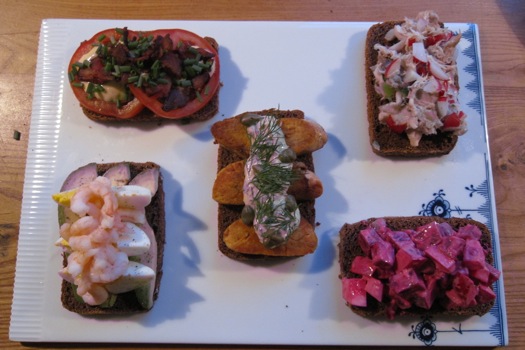
Danish food culture is all about rye bread, and smørrebrød, open-faced sandwiches, are the most popular way to enjoy it. Smørrebrød are made with a slice of rye bread topped with meat, fish or vegetables and different spreads. There are lots of understood rules about what to combine and what not to — some are regional, but on the whole, as a Dane, you just know. On weekends and at special occasions smørrebrød are enjoyed with beer and aquavit.
Smørrebrød (“smørre” means butter, “brød” is bread) started as a very simple food around the 1880s when, in the age of industrialization, more and more Danes worked in factories and had to bring lunch. The lunch box typically contained slices of bread with some salty fat spread, and evolved from there. Often the toppings would be leftovers from dinner the night before — cold cuts or some vegetables like boiled potatoes. In order to get more taste, there might be mustard or preserved beetroots. Restaurants started to serve smørrebrød and the open sandwiches soon became more elaborate and decorated. In the 1920s, they were popular at nightclubs, where the guests did not want to spend hours sitting down to eat a three-course dinner, but instead wanted to spend their time dancing.
Smørrebrød have evolved over more than a hundred years and have become popular again in Denmark. There are plenty of variants, often named after occasions, people or places. Some Danish restaurants, like Restaurant Schonneman Aamans and the Royal Cafe have a long smørrebrød tradition and are well worth a visit — remember, aqua. A visit to some of these places tells you a story about an important part of Danish food culture.
Five Smørrebrød Recipes
Smørrebrød can be cut into smaller pieces and serve as canapés, which we call snitter. They make great party food, especially served with aquavit, white wine and a variety of beers.
Avocado, Egg and Shrimp Smørrebrød
Serves 4
Ingredients
Directions
- Peel the eggs and cut them into wedges.
- Peel avocados and cut into wedges, drain the shrimps.
- Place the rye bread slices on a plate, then put 3 avocado wedges on each slice.
- Squeeze some lemon juice over the avocado.
- Place the egg wedges on top.
- Lastly, place shrimp on top of the eggs, sprinkle with salt and pepper.
Serve right away.
Optional: Use one teaspoon of mayonnaise on each smørrebrød
Pan-Fried Cod Roe With Capers Smørrebrød
Serves 4
Ingredients
For the brine:
For cream topping:
For the garnish:
Directions
- In a large pot add water, lemon, pepper and salt. Bring to a boil and then add the cod roe and bring to a boil again. Let simmer for 30 minutes.
- Mix the cream for the topping.
- Let roe cool before removing from pot. Then cut into slices and pan-fry in butter until golden brown on each side. Place right away on the rye bread, add 1 tablespoon of the cream and garnish with a bit of dill.
Smoked Mackerel Salad Smørrebrød
Serves 4
Ingredients
Directions
- Remove bones and skin of the smoked mackerel, divide into four and place on rye bread.
- Chop the radishes and spring onion and sprinkle over the mackerel. Serve right away.
Beetroot and Apple Salad Smørrebrød
Serves 4
Ingredients
Directions
- Boil the beetroot in lightly salted water for 20 minutes, cool down, then peel and cut into small cubes.
- Cut apples in same size cubes and mix with beetroot, then mix in the yogurt, capers and lemon juice.
- Season to taste with salt and pepper.
- Place on 4 pieces of rye bread and serve right away.
Tomato and Bacon With Anchovy Mayonnaise Smørrebrød
Serves 4
Ingredients
Directions
- Take the basic recipe for mayonnaise and add the garlic, then mince the anchovies and add with lemon juice.
- Pan-fry bacon until crisp, chop medium fine.
- Place sliced tomatoes on bread and add a tablespoon of anchovy mayonnaise on top.
- Sprinkle with bacon and chives.
Basic Mayonnaise
Ingredients
Directions
- Mix egg yolks, mustard and lemon juice in blender or food processor.
- Add oil in light stream while continuing to blend.
Rye Bread
Makes one large loaf
In Denmark, rye bread is part of the everyday diet and available everywhere. To bake your own, you’ll need a sourdough starter and 3 to 5 days to cultivate it for the first time. Then you can keep reusing it. In the U.S., look for German-style rye bread in the supermarket, or for Scandinavian bakeries.
For the sourdough starter:
For the dough:
Directions
For the sourdough starter (start at least 3 days ahead):
Mix the rye flour, buttermilk and salt in a bowl. Cover with foil and leave for 2 days at room temperature (25 to 28 C, or 77 to 82 F). And there you have a sourdough! Note that if the temperature is too low, the sourdough will not develop and instead will go bad. The starter can be tricky to make, so do not give up if it molds the first time.
For the bread (start 1 day ahead):
- In a large bowl, dissolve sourdough in lukewarm water. Add rye flour, wheat flour and salt, and stir with a wooden spoon until you have a runny dough. Cover the bowl with a tea towel and set aside for 12 hours at room temperature. I normally do this around dinnertime so that it can sit overnight, then I can do step 3 the next morning.
- Add the cracked whole rye, lukewarm water and salt to the dough and stir again with a wooden spoon until the rye grains are evenly distributed. Now take 3 tablespoons of the dough, add 2 tablespoons of coarse salt, and save in a container in the refrigerator for the next time you make rye bread. It will last there for up to 8 weeks. Remember to do this every time you make rye bread and you will not need to make the sourdough again.
- Pour the rest of the dough into a non-stick loaf tin measuring 10 centimeters wide by 29 centimeters long by 9 centimeters deep (4 by 11 by 4 inches). If you do not have a non-stick loaf tin, grease the inside with a little oil. Cover the tin with a tea towel and leave the bread to rise for 3 to 6 hours, or until it has reached the rim of the tin. Preheat the oven to 175 C (350 F, Gas 3) and bake for 1 hour 45 minutes. When done, take loaf out of the tin immediately and let it cool on a wire rack.
Trina Hahnemann is a Copenhagen-based chef and caterer and the author of six cookbooks, including “The Scandinavian Kitchen.” She has catered for artists such as the Red Hot Chili Peppers, Soundgarden, Elton John, Pink Floyd, Tina Turner and the Rolling Stones. Her company Hahnemann’s Køkken, which runs in-house canteens, counts the Danish House of Parliament among its clients. Trina writes a monthly column in Denmark’s leading women’s magazine Alt for Damerne.
Every year, from January until April, a particular kind of fish comes — briefly — into season. This is skrei, the Norwegian Arctic cod, which sets off in massive shoals from the icy Barents Sea in the Arctic Circle, headed for the waters around the Lofoten archipelago off the coast of Norway. The name of this winter wandering cod is derived, appropriately, from the Norse word for a “walker” or “wanderer.”
The arrival of the mature fish, which migrate southward to spawn, is greeted with jubilation by the north Norwegian fishermen and their customers. Once strictly a local delicacy, skrei is now found at top tables all over Europe. I recently heard one Spanish chef describe it as “the pata negra of the cod kingdom,” referring to the prized jamón ibérico. The flesh is pearly white and unbelievably succulent, with bold, firm flakes.
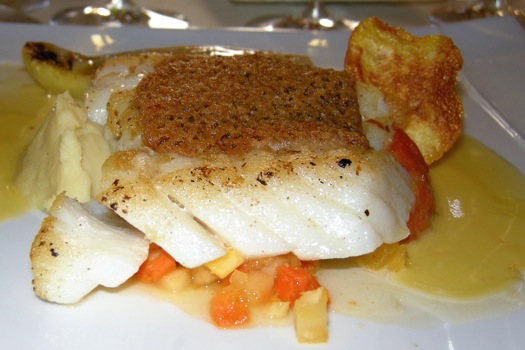
Until a couple of weeks ago, I was a skrei virgin. Then everything changed with a visit to chef Jean-Philippe Guggenbuhl’s restaurant La Taverne Alsacienne in Ingersheim near Colmar, Alsace. Just a taste of Guggenbuhl’s skrei with a citrus crust and orange butter sauce and I was hooked. Chef Guggenbuhl discovered this fine fish some 10 years ago; now he serves it up every year at his restaurant. “I put it on my menu as a special every January till the beginning of April,” he says. “People know about it now, they look out for it.”
Before you round up a lynching party and set off for the Taverne Alsacienne to stage a boycott à la Legal Seafoods, it’s important to realize that there’s cod, and there’s cod. Overfishing of Atlantic cod is a hot topic. The Norwegian Arctic cod from the Barents Sea is another story. Here, the fisheries have been strictly regulated since 1816 when the first regulations governing skrei fishing off the Lofoten Islands were put into place. Today’s regulations cover the type of boat permitted, the size and type of nets, even the time of day fishing may start. Thanks to these measures, Arctic cod stocks are so robust that the International Council for the Exploration of the Sea (ICES) actually increased the recommended permitted skrei catch from 577,500 metric tons in 2010 to 703,000 in 2011.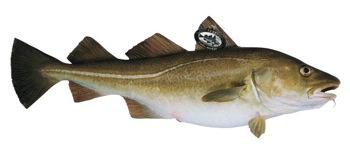
As Karin Olsen of the Norwegian Seafood Export Council explained: “There are several different cod populations in the world, but unfortunately they are often mentioned just as ‘cod’ in the media. Therefore there is a big confusion around the question of whether cod is sustainable or not.” Invoking the careful, fruitful measures that have been taken for almost two centuries to conserve Norway Arctic cod stocks, she adds, “You can serve your skrei with good conscience.”
Guggenbuhl delights in the annual skrei season, buying the whole fish (average weight 4 to 6 kilos, or 8 to 12 pounds) from his supplier in Strasbourg and preparing the fillets in the restaurant kitchen. He loves its firm, snowy white flesh, and the fact that it’s slightly cheaper than the generally less interesting (and endangered) regular cod. This allows him to offer his fine dish at a competitive 23 Euros. And with a clear conscience.
Jean-Philippe Guggenbuhl’s
Skreï de Norvège en Croûte d’agrumes Au Beurre d’oranges
(Arctic Cod With a Citrus Crust and Orange Butter Sauce)
Serves 6
Ingredients
For the citrus crust:
For the orange butter sauce:
For the fish:
Directions
For the citrus crust:
- Take very thin slices of zest off the lemon using a potato peeler.
- Boil a small pan of water and blanch the zests briefly.
- Drain zests, repeat the process four more times, then chop the zest very finely.
- Put the cubes of butter, finely chopped zest, breadcrumbs, grapefruit juice and orange juice in a food processor and process till well mixed.
- Scoop the citrus butter out of the food processor onto a sheet of baking parchment, cover with a second sheet of parchment.
- With a rolling pin, pat and roll out the citrus butter between the sheets of parchment to a large square about 1/8 inch thick – about the thickness of pie crust.
- Refrigerate citrus crust (or freeze – goes faster) till quite firm.
For the orange butter sauce:
- Make a caramel with the sugar and water.
- Deglaze the pan with the orange juice and let it cook down to a syrupy consistency.
- Pull the pan off the heat and beat in the cold butter bit by bit, as if making a beurre blanc, until it emulsifies and thickens.
- Season to taste with salt and white pepper.
- Keep the sauce warm – it will hold for about half an hour.
For the fish:
- Season the fish on both sides with salt and white pepper.
- Heat 1 tablespoon of oil and a small square of butter in a frying pan until sizzling.
- Fry the fish till just done, about 2 to 3 minutes each side, depending on thickness.
- Lift fish pieces onto a lightly oiled baking sheet that will fit under your grill (broiler).
- Heat the grill (broiler) to maximum.
- Cut the chilled citrus crust in squares to fit exactly on top of the fish pieces.
- Lay a square of citrus crust on top of each piece of fish and give them a fierce blast under the grill/broiler until the crust is lightly golden and bubbly.
- Serve with the orange butter sauce and vegetables in season.
Sue Style is the author of nine books, and writes on food, wine and travel from her base in Alsace. Her most recent articles have appeared in FT Weekend, Decanter and on her website www.suestyle.com.
Photos from top:
Jean-Philippe Guggenbuhl’s Skrei de Norvège en croûte d’agrumes au beurre d’orange. Credit: Thierry Meyer
Norwegian Arctic Cod. Credit: Frederike Arndt, © Norwegian Seafood Export Council
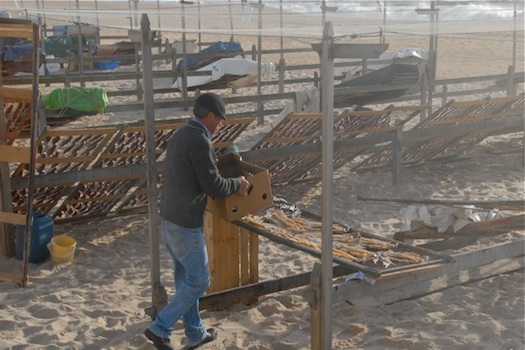
If you’ve ever whiled away weeks in sunny Portugal or just dined at a neighborhood Portuguese or Brazilian restaurant, you’ve undoubtedly come across at least one dish featuring bacalhau. A signature ingredient of Portuguese cooking, bacalhau refers to salt-cured and sun-dried cod. Flaky yet firm and possessing a slight tang, salt cod is a beloved food in this coastal European land.
Although I first encountered it in the 21st century, bacalhau has wowed Portuguese palates since medieval times. In the 16th century, Portuguese explorers and fishermen discovered vast quantities of cod off the coast of Newfoundland. To preserve their huge catches, the men would salt and then sun-dry their bounty. The low-fat cod responded well to salting, lasting longer and tasting better than other preserved fish.
Along with extended shelf life and tastiness, faith propelled the popularity of salt cod. Catholics who observed meatless days needed a stockpile of fish for their meat-free meals. The one that they chose was bacalhau. Portugal wasn’t alone in its use of this preserved fish. Italy, Spain, the Caribbean and parts of France, South America and Africa all had recipes calling for salt cod. Yet none exhibited the same passion for this fiel amigo or faithful friend.
Once abundant, now scarce
Today, Portuguese fishermen no longer sail along the coast of Newfoundland in search of cod to cure. Severely depleted populations caused by overfishing have brought an end to that practice. Instead, Portugal buys the bulk of its bacalhau from Norway.
This change is visible. On a recent vacation in Portugal the rows of wire drying racks that I saw scattered along the coastline brimmed primarily with small, grayish sardines and not big, white slabs of cod. In spite of the depleted supply and the need to import it, bacalhau remains a perennial favorite in Portugal. It has been said that the Portuguese have created at least 365 recipes for their favored fish, one for every day of the year.
One fish, countless dishes
I can believe this claim. Depending on where I travel in the country, I can enjoy such flavorful, regional offerings as bacalhau fritters with spicy piri piri sauce, bacalhau dorado or salt cod with scrambled eggs and potatoes, and bacalhau à moda de Viana, salt cod wrapped in cabbage. You name the ingredients and preparation technique — chances are that there will be a bacalhau recipe to match them.
In Portugal fishmongers may sell up to a dozen different grades of bacalhau. Unfortunately, back at home I don’t have such diversity at my disposal. When selecting salt cod, I look for white flesh, with or without a frost of salt on it. I skip those possessing a yellow tinge or pink hue along the spine.
Preparation takes care
Before cooking my bacalhau, I place it in a large bowl of cold water and allow it to soak for 18 hours. During that period I change the water three times, roughly once every six hours. By soaking the cod in clean, cold water, I not only reconstitute the fish but also reduce its saltiness. If needed, I can always add more salt after cooking. This, however, has never been the case.
By the time I finally remove the bacalhau from the water it will have doubled in volume. It will also be considerably less salty than when I purchased it. If the cod still seems too salty, I can always return it to the bowl and allow it to steep a bit longer. I’ve known cooks who soak their bacalhau for as long as two days or for as little as 12 hours. With salt cod, much depends upon taste.
Once my fish is plumped up and ready for cooking, I remove any remaining bones from it. I also slip off the skin. Depending on how I’m preparing the cod, I may cut it into even-sized filets or I may mince or flake it. From there I can dip the bacalhau in bread crumbs and bake or pan-fry it. I could place it in a baking dish with potatoes and onions and bake a casserole or pie. Minced and mixed with mashed potatoes, parsley and egg, it can be fried as a fritter. The cooking options seem endless.
That’s the beauty of salt cod: One fish. Countless recipes. No wonder the Portuguese remain so smitten with bacalhau.
Salt Cod and Potato Casserole
Serves 6
Ingredients
6 cups boiling water
1 tablespoon unsalted butter
4 tablespoons olive oil
1 yellow onion, finely chopped
2 cloves garlic, grated
2 pounds potatoes, peeled, boiled until just tender and thinly sliced
½ teaspoon ground white pepper
½ teaspoon dried oregano
½ cup bread crumbs, lightly toasted under the broiler
¼ cup grated Romano cheese
Directions
- Preheat the oven to 350 F. Butter a 2-quart casserole or baking dish.
- Place the cod in a saucepan, pour the boiling water over it and then simmer over moderate heat for 10 minutes, until a fork can flake the fish. Drain and rinse the cod and then flake it into small pieces, removing any skin or bones.
- In a large sauté pan melt the butter and 1 tablespoon olive oil. Add the onion and sauté until golden, about 10 minutes. Place the onions in a bowl and then add the remaining 3 tablespoons of olive oil and the sliced potatoes to the pan. Cook for 5 minutes.
- Place half the potatoes in the buttered dish and season them with a bit of ground pepper, dried oregano and parsley. Spoon in half the onion and then the cod. Repeat. Sprinkle the top layer with the grated cheese and bread crumbs and any remaining ground pepper.
- Bake uncovered for 35 to 40 minutes or until brown on top. Scatter the leftover parsley over the top and serve.
Kathy Hunt is a syndicated food writer whose work has appeared in the Chicago Tribune, Los Angeles Times, Baltimore Sun and VegNews, among other publications. She currently is working on her first cookbook. You can follow Kathy’s culinary adventures online @Kitchenkat and at kitchenkat.com.
Photo: Cod drying in Portugal. Credit: Kathy Hunt
Valentine’s Day, a day celebrating love and affection between intimate companions is an opportunity for the gastronomically or romantically inclined, or both, to explore the aphrodisiac quality of foods. In the olden days, the idea that certain foods had aphrodisiac qualities was much more popular than today. Today, there’s too much science telling us it’s hogwash. But love is like religion; it requires faith, not reason. And making believe certain foods are aphrodisiacs is plain fun and does no harm to your reputation as a great lover.
The most celebrated of lovers was Giovanni Giacomo Casanova de Seingalt, arguably the most famous of Venetians, along with Marco Polo. Casanova, whose name is now synonymous with sexual exploits, was an adventurer, soldier, prolific author, international gambler, spy and a lover of women. And women loved him. He was a lover, not a skirt-chaser, although the two are sometimes confused. Nevertheless, his sexual escapades read like operatic plots.
Casanova’s belief in the power of food as an aphrodisiac is well known. “I have always liked highly seasoned food. … As for women, I have always found that the one I was in love with smelled good, and the more copious her sweat the sweeter I found it.” He believed Roquefort cheese was an aphrodisiac. “Lithe as a doe she spread the tablecloth, set two places and then served some Roquefort cheese with a wonderful glazed ham. Oh what an excellent pair are Roquefort and Chambertin [a wine] for stimulating romance and bringing a budding love affair to quick fruition.” About oysters, Casanova, who is reputed to have eaten 50 a day to boost his libido, said they are a spur to the spirit and to love. He often assured the ladies, before bedding them, that he had eaten nothing save a cup of chocolate and a salad of eggs dressed with olive oil from Lucca and vinegar from Marseilles. Eggs are a very popular aphrodisiac in many writings.
Antipasto course: Seduction
So for a Valentine’s Day menu, consider a meal that doesn’t have to be about the art of seduction, though that’s a nice way to think. And remember, both men and women seduce and are seduced. Remember to keep portions very small.
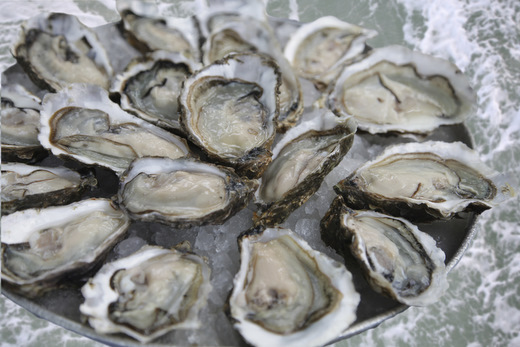
The place to start is an appetizer of raw oysters or a plate of asparagi alla Cupido, asparagus steamed with a sauce of tuna and caper foam. The Greeks, who considered asparagus an aphrodisiac, recommended that it be eaten in moderation. For your romantic evening, it is a light and refined dish best accompanied by a dry white wine and with Debussy’s “Claire de Lune” played in the background. However, raw oysters on the half shell are impossible to resist and their resemblance to the maidenhead is noted by great lovers. To eat it, follow Casanova’s advice: “I placed the shell on the edge of her lips and after a good deal of laughing, she sucked in the oyster, which she held between her lips. I instantly recovered it by placing my lips on hers.”
The oyster or the asparagus should be followed by a small salad, a lovers’ salad, an insalata degli innamorati of avocado stuffed with shrimp, celery and walnuts with pink mayonnaise. This delicious salad is easy and fast, able to be made in anticipation. Your romantic tête à tête can be had over this dish with some sparkling wine or rosé, and of course you will use one spoon and one-half avocado for the both of you.
The next course should be extravagant, but remember we are talking about your lover not your accountant. Foie gras de canard poêlé aux raisins blancs, pan-seared raw fois gras with green grapes is a dish you will both remember. You will not need much.
First course: Macaroni
A romantic dinner without macaroni is unthinkable. What better preparation than a dish we can name after our hero maccheroni alla Casanova. Casanova writes in his autobiography that cultivating and pleasing the senses was for his whole life his main preoccupation. Ho molto amato anche la buona tavola ed insieme tutte le cose che eccitano la curiosità … (I very much loved a good table and everything that excites the curiosity.) Some people have suggested that in Venice, in 1700, macaroni referred to gnocchi, but given that Casanova said Ho amato i piatti dal sapore forte: i maccheroni preparati da un bravo cuoco napoletano, (I love strongly flavored dishes: macaroni prepared by a good Neapolitan cook) it seems that he intended macaroni.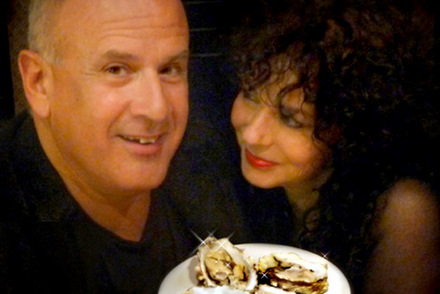
Maccheroni alla Casanova is made with bucatini seasoned with aromatics such as anchovies, tomato, black olives and red chile flakes. Keep in mind Casanova’s preference for spicy foods. A normal primo portion of macaroni would be four ounces. Here you should use less.
Main course: Seared Muscovy duck breast
The main course should not seem main, so again use sensibility in your portions. The seared Muscovy duck breast with Marsala orange sauce with red currants is made by sautéing shallots first in olive oil and butter then searing the duck and finishing it with duck glaze, fresh orange juice, sage, Marsala wine and fresh red currants, garnished with orange zest.
Final thoughts
The smallest portion of Roquefort and apples should be served following the duck and finally, before retiring, a chocolate.
If you take less than three hours to eat or you feel full, you are going too fast and eating too much. Remember, for Valentine’s Day you are inspired by Casanova, not an American teenager.
Zester Daily contributor Clifford A. Wright won the James Beard / KitchenAid Cookbook of the Year Award and the James Beard Award for the Best Writing on Food in 2000 for “A Mediterranean Feast.” His latest book is “Hot & Cheesy” (Wiley) about cooking with cheese.
Photos, from top:
Oysters on the half shell. Credit: Nick Free
Clifford A. Wright’s Valentine’s Day dinner. Credit: Madeline Sitterly
Eating salmon is a long-standing Scandinavian tradition. Twenty to thirty years ago, it was expensive and reserved for parties or fine dining. It was often boiled to pieces and served with a hollandaise sauce. That was a time when we still looked to the French for inspiration, before the trend of reinventing the Scandinavian kitchen.
Gravad or smoked salmon has always been part of the tradition. When I was young, we would indulge and have it for lunch on special occasions. It was almost always part of Christmas party food. Today, salmon has become an everyday food and less expensive than cod.
North Atlantic salmon, both wild and farmed, is one of the top species for cooking. Wild salmon, whose meat is lighter in color and whose taste is at once more delicate and concentrated than farmed, is harder to find in the Scandinavian countries because of overfishing. It is more readily available from February to November, and the meat is at its best from June to September.
Despite a significant movement to restore the wild salmon population in the oceans and rivers, for now, farmed salmon is the more common reality. When choosing farmed salmon, it is important to support sustainable farms, which don’t overcrowd the pens and give the fish room to swim around. Assuming responsibility for the welfare of the fish and environment, these operations don’t use growth promoters or antibiotics. By trying to create conditions as natural as possible, they also produce the best quality salmon.
Scandinavian cured salmon is world famous as “gravad lax,” the traditional and most popular recipe being cured with dill and served with sweet mustard dill sauce. There are endless ways of curing salmon and they are all called “gravad,” which means “buried.” In medieval times, the fish was salted and buried under sand or in soil to preserve it.
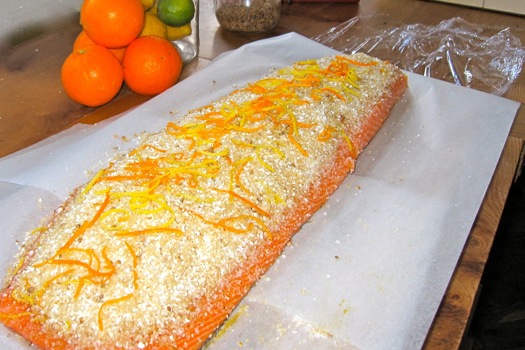
My favorite way to eat salmon is cured or smoked. In the morning, I’ll have smoked salmon with scrambled eggs, or with toasted rye bread and spinach wilted in butter. For lunch, citrus gravad lax with toasted bread and horseradish dressing. The citrus gravad lax has been my signature salmon recipe for many years, and the orange zest complements the salmon beautifully.
Why cure salmon? Because, apart from preservation, curing adds flavor and texture. It is easy, and tastes wonderful. For a piece of salmon of the size described in the recipe below, you can combine all kinds of spices or vegetables, but the amount of sugar and salt should stay the same. For a smaller piece of salmon reduce the sugar and salt.
In lieu of lemon and orange zest, you can use the following combinations for curing:
If you think the salmon filet is too big for your purposes, it can also be used for canapés. After the curing, cut it into small pieces and freeze. The salmon lasts up to two months and still tastes great when defrosted.
Velbekommen!
Citrus Gravad Lax With Horseradish Cream
Serves 20
For the salmon:
For the horseradish cream:
Directions
- If you have a zester, use it to remove the zest from the orange and lemon. Alternatively, finely grate the zest from the fruit. Mix the zests with the sugar and salt.
- Use tweezers to remove any pin-bones from the salmon filet. Spread the zest mixture evenly over the entire surface of the salmon, then wrap it in plastic wrap and refrigerate for 3 days.
- Take the salmon out of the refrigerator, remove the plastic wrap, and wipe off the marinade with a paper towel.
- On the day of serving the salmon, make the horseradish cream. Mix the sour cream, horseradish and sugar together, stirring very gently. Add the lemon juice and season with salt and pepper. Test whether it needs more horseradish; it has to be spicy.
To serve, place the salmon on a board and cut into thin slices with a very sharp knife. The traditional cutting technique starts diagonally at one corner of the salmon and then works back toward the center of the fillet.
Sprinkle the grated zest from the remaining orange and lemon over the salmon.
Serve with horseradish cream, toasted bread and a crunchy green salad.
Trina Hahnemann is a Copenhagen-based chef and caterer and the author of six cookbooks, including “The Scandinavian Kitchen.” She has catered for artists such as the Red Hot Chili Peppers, Soundgarden, Elton John, Pink Floyd, Tina Turner and the Rolling Stones. Her company Hahnemann’s Køkken, which runs in-house canteens, counts the Danish House of Parliament among its clients. Trina writes a monthly column in Denmark’s leading women’s magazine Alt for Damerne.
Photo: Citrus gravad lax. Credit: Trina Hahnemann
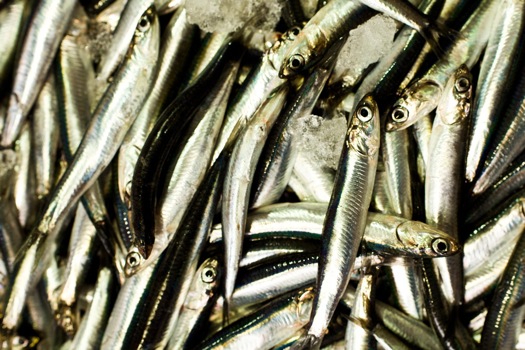
For fish lovers in Turkey, late autumn means one thing: hamsi, or anchovies. Sometime between mid- and late October the forefinger-length black and silver Engranlis encrasicolus (one of a dozen or so anchovy varieties found worldwide) begin appearing in Istanbul’s fish markets. Mounded on platters, spilling from bins, frequently refreshed by vigilant fish sellers with vigorous splashes of ice-cold water, they’re abundant and cheap, less than $2 a pound in most cases. As hamsi season settles in, restaurants specializing in all things piscine add hamsili (literally, anchovy-ey) dishes to their menus and Istanbullu begin debating which establishment serves the best versions of anchovy, tava (dusted with wheat or corn flour and pan-fried), pilav (baked with seasoned rice) and grilled.
The country’s anchovy fix is almost entirely pulled from the frigid waters of the Black Sea, so it’s no surprise that hamsi worship reaches unparalleled heights along Turkey’s northern coast. In season, restaurants in fishing towns like Amasra and Sinop serve little else besides the “little prince” of fishes, as hamsi are described by Turks; even the delectable barbunya, tiny red mullet, comes in a distant second. In Samsun, Trabzon and further east along the coast to the Georgian border, cooks branch out beyond grill and fry pan, incorporating anchovies into bread, omelettes and lemony onion-rich casseroles, mixing them with corn meal, shaping them into balls and deep-frying for a dish called “hamsi birds,” even baking them into desserts.
Like most Black Sea residents, Mert Kanal, a 36-year-old fish seller in Sinop, a city at about the northern coast’s mid-point, is crazy for the oily, flinty fish. In season, he says, “I’ll eat them everyday, even for breakfast.”
On a recent visit to Istanbul, my husband and I got hamsi religion and, in search of further enlightenment, flew to Ankara, rented a car and drove to the Black Sea. Sinop was our last stop. It was there, at a portable card table in the back of the Kanal family fish shop more than a half century old, that we reached our anchovy apex. As Mert’s uncle picked through an endless heap of hamsi (headless, broken and too-tiny specimens jettisoned), we worked our way through at least 2 kilos which had been cleaned, beheaded, tossed in flour and fried brown and crispy by Mert himself in a single skillet balanced on a small gas canister.
After we’d finished eating, one of Mert’s colleagues took over, feeding Mert, his family, shop staff, neighboring merchants and passers-by. All the while, boats pulled into Sinop’s harbor less than a block away and fisherman marched into the shop carrying anchovy-filled Styrofoam coolers.
Are Black Sea anchovies overfished?
In early January in a Black Sea town like Sinop, the supply of hamsi seems bottomless. It’s not, says Mert, who believes that the Black Sea’s cold weather treasure is being overfished. “One day last December, I watched 100 trucks leave this harbor loaded with anchovies. That’s a ton of anchovies a truck, and in just our one small fishing town.”
“The Black Sea is more a lake than an ocean. We can’t keep doing this way.”
In fact the anchovies that Mert cooked for us came not from waters off Sinop, but from Samsun, about 75 miles away. “There’s not enough fish here this year to fill demand,” Mert explained. Every year Turkish fleets move eastward as the season wears on, chasing hamsi. This year the eastward march began earlier than last, Mert says. A little over halfway through the season, some boats were already in Georgian waters another 200 miles away.
Overfishing is a touchy topic in a country like Turkey, where fishing is an important industry. Environmentalists and food advocates believe that the lufer (bluefish) stock in the Bosphorus Straits has been devasted by overfishing and catching younger fish. Most fishing companies blame pollution and sport fishing. Last year Slow Food Istanbul initiated a campaign (“Don’t Let the Lufer Go Extinct”) to convince Istanbullu to forgo eating their beloved lufer long enough to allow stocks to recover.
The answer as to whether or not the Black Sea’s anchovy stocks are declining – and whether or not overfishing is to blame — “is long and complicated,” says Oktay Kiris, head of Kiris Marine Products. Kiris is one of Turkey’s larger marine products companies, with a processing facility in Izmir and one of the few licenses to export Turkish seafood. He points out that reliable long-term figures on fish stocks in Turkish waters are all but nonexistent.
In 2007 a study jointly published by the European Commission and Turkey’s Ministry of Agriculture and Rural Affairs noted extremely low anchovy catches in 2005 compared to the previous year. But the same report also noted a dip in 1990, raising the possibility that natural population cycles in the species might also be to blame for smaller hauls.
For fishermen and fish sellers like Mert, all that matters is what the eye sees. “It’s not like it used to be,” he says. “We’re not getting the hamsi we used to get. I know it, we all of us in Sinop know it.”
A Laz specialty: anchovy pilaf
Back in Istanbul and, like Mert, far from fed up with hamsi, we prevailed upon Turkish journalist and food magazine contributor Ayfer Unsal, who has authored four books on Turkish cuisine, to share a recipe for a dish we’d hoped to find in Sinop but didn’t: anchovy pilaf. “It’s a dish of the Laz [an ethnic group indigenous to Turkey’s two most eastern Black Sea provinces],” Ayfer noted as we leaned over her sink, pulling heads and entrails from 750 grams of anchovies. “I don’t usually make it at home.” By the time we finished cleaning the hamsi I understood why.
For the pilaf, Ayfer made an anchovy “crust” in a thickly-buttered round cake pan by painstakingly arranging half the fillets in a single-layer pinwheel and then stacking them up the sides of the pan. She spooned in a “filling” of rice lightly sautéed with onions, pine nuts and currants and flavored with lemon juice, wheat grass (her own variation) and dill. “Don’t use too much dill,” she cautioned. “It should never overwhelm the flavor of the hamsi.”
Laying more fillets over the surface of the rice, Ayfer noted that it would normally be left bare. But “if they have a lot of butter they rub it on their face,” she said, citing a Turkish proverb that justifies making extravagant use of excess.
After 35 minutes in a hot oven, the hamsili pilavi emerged golden and fragrant, filling the kitchen with the appetizingly un-fishy scent that only the freshest fish can have. After releasing the cake-cum-pilaf from the pan by placing a plate on top and flipping it over, Ayfer sliced it into wedges, releasing a cloud of herbal steam. The fillets had shrunk a bit but were meaty and lightly crisp where they’d touched the pan, a suitable partner for the soft rice.
As I nostalgically recall our anchovy feasts in Mert’s shop and Ayfer’s kitchen, Turkey’s lucky hamsi lovers have at least six more weeks of gorging to look forward to. For now at least, the fish are still running thick off Turkey’s Black Sea coast.
Hamsili Pilav (Anchovy Pilaf) Adapted from Ayfer Unsal’s recipe
Admittedly labor-intensive (unless you can get someone else to fillet the fish for you), this dish is nonetheless worth the effort for those lucky enough to have access to fresh anchovies. Fresh sardines or even very thinly sliced mackerel fillets would make a decent substitute. Or make the rice and bake in a casserole with a good-quality, meaty canned anchovy fillets (oil rinsed off, patted dry) arranged in a seamless layer on top.
If, after baking, there is liquid in the bottom of the pan carefully drain it off and continue baking until dry. It’s not absolutely necessary to flip the “pie” out of the pan onto a plate, the crust of crisped anchovies makes for an attractive presentation.
At Ayfer Unsals, we ate the pilaf with a refreshing arugula, flat-leaf parsley, dill, mint leaf, and pomegranate salad dressed with olive oil, lemon juice, and nar eksisi (pomegranate molasses). And it served only 4.
Ingredients
Directions
1. Soak the rice in water to cover for one hour, then drain.
2. Preheat the oven to 400°F and place a rack in the bottom third. Very thickly butter the bottom and sides of a 12-inch round, heavy cake pan and set it aside.
3. Clean and fillet the anchovies (once you get the hang of this it goes pretty quickly): holding the fish upside down, use your thumb to pry open its belly, then gently work your thumb down its length This can be done with a knife, but it goes faster if you just use your hands. Remove the guts, then reach in about ⅔ to its tail and grasp the spine; gently pull it up and out. The head should come off with the spine; at the same time the fish will flatten into a nice fillet. Pull off the tail or leave it on, if you like.
4. Gently pat the fillets with a paper towel. Set aside.
5. Heat olive oil and buter in skillet or sauté pan over medium heat. Add the onion and reduce the heat to medium low. Saute the onion, stirring, until soft but not browned.
6. Add the drained rice and continue to stir and sauté for a minute or so. Then add 1½ cups hot water, ½ tsp salt and lemon juice. Stir, taste, and adjust for salt if necessary.
7. Add currants and give the rice a stir. Cover, reduce the heat to low, and cook for 8 minutes.
8. Add dill and wheat grass if using, stir once, and turn off the heat.
9. Assemble the pilaf: Starting at the edge of the pan, arrange the fillets with tails facing in, slightly overlapping, in a single-layer pinwheel. Continue until you’ve covered the bottom of the pan, then lay them horizontally against the sides of the pan, stacking them up in a single layer and pressing them gently into the butter. Spoon in the rice and smooth the top of it. Arrange remaining anchovies, again in a pinwheel but this time with gaps between the fillets so that some of the rice will be exposed to the oven’s heat.
10. Loosely cover the pilaf with foil and place in the oven for 20 minutes. Then remove the foil and bake for another 30 to 35 minutes, checking to see that the fish don’t burn (but if they crisp and brown that’s fine).
11. Pull the pilaf from the oven and check to make sure there’s no moisture at the bottom of the pan. If there’s a little, put the pilaf in for another 5 minutes or so (if the top is already brown recover it). If there’s a lot, carefully drain some from the pan and then put the pilaf back in for 5 minutes.
12. When the pilaf is ready to come out of the oven, place a plate larger in circumference than the pan upside down over it and flip plate and cake pan. Place the plate down and tap on the pan to make sure the pilaf has come away from it.
13. Cut into wedges and serve immediately with lemon for squeezing, if you like.
Photo: Hamsi, or anchovies. Credit: David Hagerman
Photo and slideshow credit: David Hagerman
“In the beginning, there was bagna càuda …”
So began “Piemonte, La Via dei Sapori,” a book about Piedmontese cuisine that I found myself thumbing through near the tiny town of Alfiano Natta. In fact, the gray-brown sauce that is bagna càuda does seem akin to primordial soup.
This classic dipping sauce (literally, “hot bath”) for vegetables is a traditional part of the Christmas Eve buffet in homes throughout Italy, with its origins in the Piedmont region. There, along with winter dishes such as brasato al Barolo, Castelmagno cheese risotto, and fonduta with shaved truffles, the hearty flavors of bagna càuda warm the body and the soul.
I fell in love with this deceptively simple combination of garlic, anchovies and olive oil (butter and/or cream are sometimes added) during a recent trip to Piedmont for Slow Food’s biennial Terra Madre conference of farmers. But the beloved’s origins proved elusive. In the beginning, some say, was the supreme condiment of ancient Rome, garum, a sauce derived from fermented fish. Others say that in the beginning there were simply hard-working Piedmontese farmers with families to feed through the winter when only root crops and hardy stored greens such as cabbage were available. Plus there was garlic, plenty of garlic, which every farmer was obligated to grow according to medieval statutes.
The more I heard Italians talk about the origins, recipes and rituals surrounding bagna càuda, the more unclear things became. For starters, how did sea-dwelling anchovies and the oil of sun-loving olives find their way up into the foothills of the Alps?
‘Salt road’ brought key ingredients to Piedmont
As it turns out, this humble sauce has a complex history of farming culture, regional commerce and tax evasion. While rich in garlic, grains, butter and cheese, Piedmont did not have anchovies or olive oil. These they obtained through barter with their neighbors in Liguria to the southwest, where olive oil and fish were cheap and abundant. As was salt.
Salt was probably the first ingredient to make the mountainous trek from the Ligurian coast to Piedmont. It is essential for human and animal health, not to mention food preservation in pre-refrigeration days, and so the Romans built salt routes throughout their empire. One of these “salt roads” was traveled by the industrious and hardy people of the Val Maira (a valley in the province of Cuneo in southern Piedmont). They made regular trading trips through the Maritime Alps to Liguria, their mules loaded down with wheat, butter and cheese on the way to the sea; and salt and fish on the way back.
The precious salt, however, was tightly controlled and heavily taxed. So the farmers, the story goes, would fill their barrels with contraband salt and then top them off with anchovies. If they were stopped and their cargo inspected, the officials saw only tax-free anchovies. This story has a number of variants, but, smuggled or not, anchovies and salt made their way up to Piedmont, and into bagna càuda, for hundreds of years.
The first versions of bagna càuda were most likely made with the region’s rich walnut oil, from the mature walnut groves that used to be found throughout Piedmont and the Val d’Aosta. After vast areas were largely deforested, olive oil too had to be imported from Liguria. Although olive oil and butter now serve as the base of bagna càuda, some families crush a few roasted walnuts into the sauce to remember the ancient flavor of the dish.
Today, bagna càuda is one of the best examples of “cucina povera,” the humble healthy dishes born of necessity and few ingredients. But bagna cauda is more than a meal; it is a ritual, one that, according to the book on Piedmontese cuisine, “abhors solitude and wants a tavern atmosphere — or better, an ancient cantina lit by fire or candle.” It also requires “a triumph of colors of many vegetables” to eat, and the new season’s wine to drink. Most of all, it requires a convivial atmosphere with friends and family gathered around the pot of simmering sauce as if the setting were a rustic cocktail party.
For all of its ritual, bagna càuda is not strictly codified. Recipes seem infinitely variable — both in the vegetables used and in the proportions of oil, butter, anchovies and garlic. Although cardoons (the thick stem of a plant related to the artichoke but resembling celery) are traditional, bagna càuda is also commonly served over roasted bell peppers (including the sweet peppers of Carmagnola), or with a variety of winter roots and greens such as boiled Jerusalem artichokes, beets, turnips, endive and cabbage.
As far as I’m concerned, any vegetable is enhanced by a dip in bagna càuda. So this season, instead of “chestnuts roasting on an open fire,” try “guests gathering ’round a bowl of garlicky oil.” I can’t think of a better way to welcome the holiday season.
Bagna Càuda (Hot Garlic Anchovy Sauce for Vegetables)
The general procedure for making bagna càuda is to gently warm the olive oil with minced garlic and anchovies until the garlic melts and the anchovies dissolve. Some recipes emphasize the olive oil, while others add butter and even cream. As a guide, you can’t do much better than this recipe from Marcella Hazan’s “Essentials of Classic Italian Cooking.”
Ingredients
Directions
- Choose a pot over which you will subsequently be able to rest, double-boiler fashion, the saucepan in which you are making the bagna càuda. Put water in it and bring it to a lively simmer.
- Put the oil and butter in the pot for bagna càuda, turn on the heat to medium low, and heat the butter until it is thoroughly liquefied and just barely begins to foam. If you let it get past this stage, it will become too hot.
- Add the garlic and sauté very briefly. It must not take on any color.
- Place the bagna càuda pot over the pan with simmering water. Add the chopped anchovies and cook, stirring frequently with a wooden spoon while using the back of it to mash the anchovies, until they dissolve into a paste. Add salt, stir and bring to the table over a warming apparatus. Serve with raw or cooked vegetables.
Terra Brockman is an author, a speaker and a fourth-generation farmer from central Illinois. Her latest book, “The Seasons on Henry’s Farm” was a finalist for a James Beard Award.
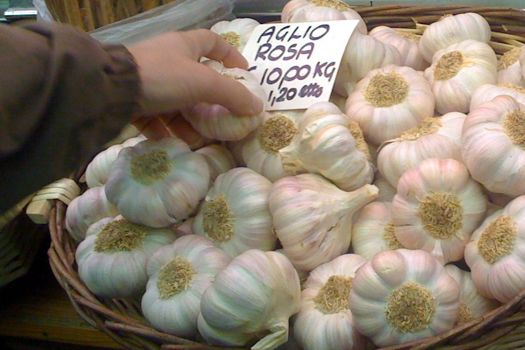
Photo: Garlic, a key ingredient in bagna càuda, at the market. Some old recipes call for an entire head per person.
Credit: Terra Brockman
The screaming headline of the food magazine will usually declare “the best recipe in the world.” You can fill in the blank — the best fish, the best chicken, the best whatever. But how in the world does one determine the best? And is the best really the best for everyone?
I have a different approach. Whenever I think of the best of whatever I’ve eaten it usually is embedded in a story, the story of how I came to eat this particular best food. The trip on which I found the best fish I’ve ever eaten started on a rickety bus in Egypt that rumbled west from Alexandria through the desert, past El Alamein, headed to Marsa Matruh, near the Libyan border.
Marsa Matruh is a dusty coastal town and a major market for the Bedouin of the Western Desert. In October, the beautiful beaches were empty excepting some stray cows. It was here that I had samak mishwi, grilled fish, which was out of this world.
Saharan adventure to work up an appetite
Early the next day my friend Boyd Grove and I took a taxi some miles west to skin-dive at Cleopatra’s Beach, a desolate cove of rough rocks and mesa-like platforms violently washed by waves where the incestuous Ptolemaic queen allegedly swam naked for Marc Antony.
Entry and egress were dangerous as one had to time it with the crashing waves. With a burst of bravado we did it, and after three hours in the crystal-clear Mediterranean we realized we also had a three-hour walk home.
Instantly dry from the desert sun, we climbed over an imposing sand dune and trekked across the desert to reach the road that would take us back to town. We looked ridiculous in our Hawaiian shirts and baseball caps. After all, this was really the Sahara, and we were tired, thirsty and hungry.
As we began our walk, I mentioned to Boyd that I’d read in one of the guidebooks that one should be careful walking on beaches west of Marsa Matruh because the Egyptians had mined them at one time. We continued walking, and at one point wondered whether we should maintain a healthy distance from each other. We began whistling Colonel Bogey’s march at the top of our lungs, marching in lockstep and swinging our arms in British military fashion. We found this hysterical and the pickup truck of construction workers who stopped without our asking must have thought we were certifiably loony.
Griddled fish from the butcher
That evening we walked into town and stumbled upon what we thought was a restaurant. There were no tables. The proprietor, a young man in his 20s, told us that this wasn’t a restaurant, which by then I had realized. He must have taken pity on us because there were no open restaurants in town. Asked whether we would like to eat there anyway, we said yes, indicating to him with looks that we didn’t want to put him out.
He got some chairs and a table and we began to talk in broken Arabic, English and sign language tempered with the universal language of laughter. He suggested samak mishwi, grilled fish. He brought us over to the cooler, where we chose two buri, also called murgan (gray mullet), and six barbuni (red mullet), and some bread, for a total of 20 Egyptian pounds, about $6.50. As the fish cooked on the griddle, we chatted and got to know each other. His name was Khaled Abdel-Karim and he was the butcher whose shop was next door. He was not the fishmonger. His friend was the fishmonger.
Khaled’s friend Zizu, a fisherman, pulled up a chair and I asked about fishing in Marsa Matruh. Zizu had nothing encouraging to say if you wanted to be a fisherman. Zizu said there were no fish. The only seafood in their cooler besides what we ordered was a couple of wa’ar (sea bass) and a few shrimp.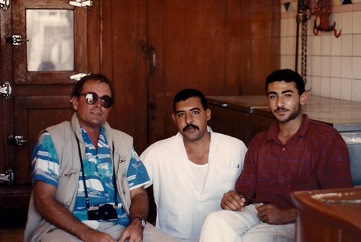
As we talked, our fish cooked slowly on the griddle and Zizu went next door to the qasab sukkar shop where the sugarcane man made us sugarcane juice. He threaded the 6-foot-long ratoons of sugarcane into a huge rolling and pressing machine that squeezed out the frothy and sweet lime-green juice. These were delicious refreshments, served in cold beer mugs.
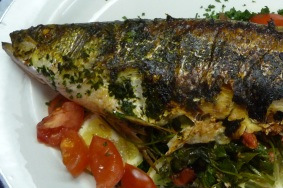
Our fish arrived. The buri had been gutted and stuffed with salt, parsley — stems and all — piquant fresh green chiles and chopped tomatoes and coated with olive oil and more parsley. Both fish were served on a bed of parsley, tomatoes and lemon halves, in a large round metal bowl with low sides. On the side was a platter of girgir (Eruca sylvestris lutea), a leafy green that tasted like a cross between watercress and arugula, very hot fresh green chiles, chopped tomatoes and coarse sea salt. We were given aysh baladi, the ubiquitous whole wheat bran flatbread of Egypt, and took pieces of fish off with our fingers and rolled it up in bread with the garnishes.
The fish was some of the freshest I have ever had. It was griddled for about 40 minutes, until the skin was blackened and crispy. The tender and moist flesh mixed with the crispy black skin mingled with the tomatoes, chile, parsley and lemon all wrapped in warm whole wheat flatbread was about as close to heaven as we could come after that day.
Zester Daily contributor Clifford A. Wright won the James Beard / KitchenAid Cookbook of the Year Award and the James Beard Award for the Best Writing on Food in 2000 for “A Mediterranean Feast.” His latest book is “Hot & Cheesy” (Wiley) about cooking with cheese.
Photos, from top:
Discover why the time for wine is now. Enter here to win one of 10 copies!
Upcoming Events
-
see all of our
Upcoming Events
-
Summer Fancy Food Show June 30th-July 2ndTook place on June 30, 2013Summer Fancy Food Show Presented by Specialty Food North America’s Largest Specialty Food & Beverage Event will be in New York City from June 30…
-
Nathan’s Famous International Hot Dog-Eating Contest July 4Takes place on July 4, 2013Nathan’s Famous International Hot Dog-Eating Contest The men and women will compete separately for the title of Men’s Hot Dog Eating World Champion and Women’s…
-
The Park City Food & Wine Classic July 10-14Takes place on July 10, 2013The Park City Food & Wine Classic THE PARK CITY FOOD & WINE CLASSIC is a premier destination event where master winemakers, culinary greats, and…
SmartBrief