Articles in Healthy Eating
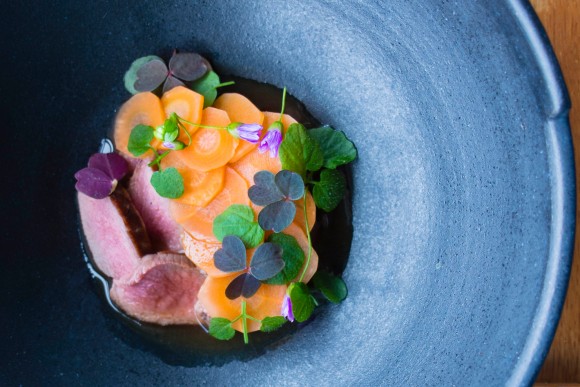
Nordic chef Poul Andrias Ziska offers a fresh way from the Faroe Islands to prepare spring lamb. The tangy carrots give the lamb a nice lift. Ziska, of KOKS restaurant, in the Foroyar Hotel, above Tórshavn, reflects the trend of many Nordic chefs, who are working with the home-fermented vegetables that were once a Scandinavian staple in the days before refrigeration. The vegetables are usually made in big batches and keep well in the refrigerator. But they take at least a week to prepare. For a quicker, easier version of this Faroe Islands recipe, use store-bought pickled or fermented carrots. They’re available from some health-food stores. This recipe also calls for Faroese lamb, but fine organic lamb can be substituted.
Faroese Lamb Fillet With Fermented Carrots,
Wild Herbs And Lamb Bouillon
More from Zester Daily:
» Faroe Islands: Wild Nordic beauty from ocean to plate
» Festival celebrates wonders of Nordic cuisine
Prep time: 15 minutes
Cook time: 20 minutes
Total time: 35 minutes
Yield: 4 servings
Ingredients
3 cups lamb bouillon (use liquid bouillon rather than a stock cube)
1 tablespoon elderflower or other delicately aromatic vinegar
Salt and freshly ground black pepper to taste
2 lamb fillets
2/3 cup fermented or pickled sliced carrots
a handful of edible flowers and leaves, such as oxalis (wood sorrel), cuckoo flower (cardamine pratensis), violets
Directions
1. Preheat the broiler.
2. In a small saucepan, bring the bouillon to the boil and continue cooking until the liquid has reduced by half. Remove from the heat and stir in the vinegar. Taste for seasoning. Keep the sauce warm while you cook the lamb.
3. Broil the lamb fillets for 2 to 3 minutes on each side, turning them 2 or 3 times. The meat should be medium rare. Remove from the pan and allow to stand for 5 minutes before cutting it into thick slices.
4. Divide the lamb slices between 4 shallow serving bowls. Arrange the carrot slices on top, and scatter with the wild leaves and flowers. Spoon the sauce over the lamb and serve.
Main photo: Faroese Lamb Fillet With Fermented Carrots, Wild Herbs and Lamb Bouillon. Credit: Carla Capalbo
After graduating from university, I got a secretarial job in a Tokyo office. Among the many tasks to which I was assigned, including the ridiculous role of serving cups of tea to company guests and my male office colleagues, there was one that I loved to perform every time: finding the best hot pot (nabemono) restaurant for our office New Year’s party. I was always hungry for good food, and the search — long before the Internet — was an interesting and challenging assignment.
Nabemono is a dish in which many varieties of very fresh raw or partially prepared ingredients are cooked in a large pot over a tabletop gas burner at the dining table. The dish is consumed throughout all seasons, but winter is the best time because the dish warms up your entire body.
More from Zester Daily:
» Braised short ribs get a Japanese makeover
» Japan’s wide repertoire of warming winter stews
Unlike most Japanese meals, for which all of the prepared foods are served in individual small plates, empty serving bowls for nabemono are placed in front of each diner. Nabemono dining is a communal affair with the large cooking pot at the center of the table shared among the diners. At the yearly party everyone, even some of my male colleagues who would never dream of setting foot in a kitchen, helped cook the dish at the table while sipping beer or sake. The animated conversation ranged from how to cook the ingredients correctly to critiques of recent ball games. When the food is cooked, each diner carefully fetches the very hot items from the pot, transferring them into their own small bowl. There is often dipping sauce for each diner in small cups. The cooking is done in several batches. After the first batch is cooked and consumed, a second batch of ingredients is added to the pot. This repeated process continues until all is consumed. It’s a body and spirit warming, fun meal.
There are more than a hundred nabemono dishes across Japan, many of regional origin that make use of local ingredients. Some of the popular ones that Americans may recognize include shabu shabu (paper thin sliced beef cooked along with vegetables in kelp stock and served with flavored sauce) and sukiyaki (thinly sliced beef cooked in sweetened soy sauce along with vegetables). Other popular nabemono dishes employ tofu, shelled oysters, chicken, pork, assorted seafood, duck or vegetables.
One attribute common to all nabemono dishes is that they’re filled with plenty of vegetables, typically about 50% protein and 50% vegetables. Nabemono dishes, therefore, are a wonderful way to enjoy more vegetables in your diet. If you wish, a 100% vegetarian or vegan nabemono can be quite good, but I always like to include some protein in my nabemono to make the meal more satisfying in flavor and more balanced nutritionally.
The nabemono dining style originated in rural Japan, particularly the cold north. A large house, typically, was occupied by three or four generations of family members and equipped with an irori hearth at its center. This hearth was large enough so that all family members could sit around the fire for meals and warmth. A long iron pole with a hooked end was hung from the ceiling over the hearth and the hook held a large iron cooking pot that was placed directly over the fire. Meals were cooked in this one pot and shared by all.
However, building an irori hearth in a modern urban house with a single-generation family is not at all practical. In 1969, Iwatani Company invented a table top butane gas burner, thereby allowing Japanese family to enjoy nabemono anytime, anyplace. A slightly improved version of that tabletop gas burner is still in production, and is a very convenient piece of equipment even in American kitchen. I highly recommend that you get one (or even and electric or induction version) and start making nabemono and other tabletop fare at your home.
One special joy of nabemono dining comes at the very end of the meal, when the ingredients have all been cooked. You’ll find a highly flavored, concentrated sauce on the bottom of the pot that is perfect to mix with cooked rice for a very special dish. We add the cooked rice and some water, if necessary, and cook it until each grain of rice absorbs the full flavor of the sauce and is well heated. The rice is wonderfully delicious as is, or you can break one or two eggs into the pot, break the yolks, stir with the rice and cook until the eggs are barely done.
Stovetop Sukiyaki
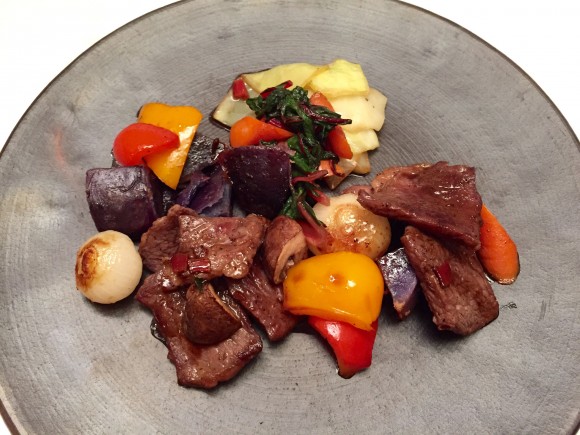
Here is a sukiyaki recipe adopted from “Hiroko’s American Kitchen“ (page 161). I created this recipe so that you can enjoy the traditional full flavor of sukiyaki meal without getting any special tools or ingredients such as table top gas burner and thinly sliced meat. This recipe also has three times more vegetables than meat. You will prepare this sukiyaki meal in a skillet in the kitchen and serve it at the table.
Prep time: 15 minutes
Cook time: 30 minutes
Total time: 45 minutes
Yield: Four servings
Ingredients
6 large cremini mushrooms
2 ounces carrot
6 ounces cabbage
10 ounces purple potato
2 ounces red bell pepper
2 ounces orange bell pepper
7 ounces red Swiss chard
2 boned short-rib (1 pound)
8 cipollini onions, peeled
Sea salt and freshly ground black pepper
2 teaspoons sugar
2 1/2 tablespoons butter
4 to 6 tablespoons shoyu (Japanese soy sauce)
1/2 cup sake
1/2 cup water
Directions
1. Cut each mushroom in quarters. Cut the carrot, cabbage, purple potato, red bell pepper and orange bell pepper into bite sized pieces. Cut the Swiss chard into half lengthwise in the center along the stem, and then, into 2-inch thick slices crosswise. Cut each short-rib into about 10 thin slices (about 2-inch x 2-inch square).
2. Place the potato and cipollini onion in a large pot with cold water to cover over high heat, bring it to a simmer, and cook about 7 minutes. After cooking the potato and cipollini for 7 minutes add the carrot, cabbage and bell peppers to the pot. Cook the vegetables for 3 more minutes. Drain all of the cooked vegetables in a strainer and air dry.
3. Season the beef with salt and pepper on both sides. Heat the butter in a skillet over medium heat and sprinkle half of the sugar over the butter. Add the beef, sprinkle the remaining sugar over the beef, and cook the beef until both sides are golden, or for about 5 to 6 minutes total. Transfer the beef to a platter.
4. In a small saucepan add the sake and shoyu and cook it over high heat until the volume reduces to half. Turn off the heat.
5. Add the mushrooms, stem part of the Swiss chard and drained vegetables to the skillet. Cook the vegetables until the surfaces of each vegetable are lightly golden, or for about 3-4 minutes. Turn the vegetables once over for even browning. Turn off the heat.
6. Push the vegetables to one side of the skillet and return the beef to the skillet. Pour the reduced sake and shoyu over the beef and vegetables and turn on the heat to medium-high heat. Add the leafy part of the Swiss chard to the skillet and cook for 1 to 2 minutes, frequently basting the beef and vegetables with the sauce.
7. Divide the vegetables and beef among deep bowls and serve.
Main photo: Cooked nabemono ingredients. Credit: Hiroko Shimbo
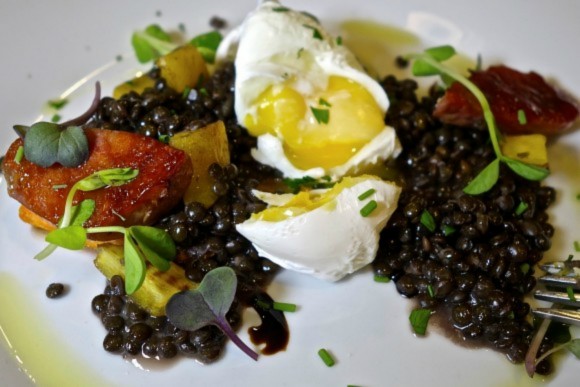
The pursuit of a healthy diet is frequently lamented as an exercise in deprivation. Often the ingredients that must be given up are ones that delight the palate and excite the soul. Chef Paul Fields saw no such deprivation when he signed on to be the chef at the upscale, gluten-free Inn on Randolph in Napa, California. He serves a breakfast of Beluga lentils with roasted vegetables, sausage and a poached egg.
More on Zester Daily:
» Legumes, Mediterranean style
» Warm up to khichuri, Indian comfort food
» A beginner’s guide to Indian dal
The Napa Valley is renowned for quality vineyards and award-winning restaurants. The city of Napa is less well-known. Recently in the news because of an earthquake that caused considerable damage in the downtown commercial district, the city is reviving and becoming a locus for inventive chefs and quality accommodations.
Fields is one of those chefs drawn to the valley’s bounty of agricultural products. He prides himself on being a good purveyor. He collaborates with local farmers and has a garden on the property so the produce he cooks comes fresh and organic to his kitchen. For him, no matter what a guest’s dietary restrictions might be, his goal is to create nutritious, well-plated delicious meals.
In search of a breakfast that would do just that, Fields turned to an old favorite: lentils.
Hungry guests about to begin a day of wine tasting, cycling or hiking in the valley need a hearty meal. Often regarded as low on the culinary totem pole, lentils are a heritage legume, mentioned in the Bible and served around the globe as a source of low-cost protein that is rich in vitamins, minerals and fiber. It is cultivated in a rainbow of colors and sizes including the Red Chief, the brown Pardina, the Crimson and the French Green. For his signature breakfast dish, Fields uses the glossy black Beluga lentil.
Fields accomplishes a bit of magic with what some might call the most prosaic of ingredients — a handful of lentils, a carrot, a piece of squash and an egg. A combination of contrasting flavors and textures, the dish is delicious and visually beautiful, a good way to begin the day.
Beluga Lentil, Roasted Vegetable Gluten-Free Breakfast
In addition to being gluten-free, the dish can be vegetarian-vegan when the butter, sausage and egg are omitted.
The organic Beluga lentils that Fields uses come from the Timeless Food company based in Conrad, Montana. To add heat without spiciness, dried cayenne peppers cook along with the lentils and charred onion.
Adding to the convenience of the dish, the lentils, roasted vegetables and sausages may be cooked beforehand and reheated just before serving. Only the poached egg should be prepared at the last minute.
Prep time: 10 minutes
Cook time: 35 minutes
Total time: 45 minutes
Yield: 4 servings
Ingredients
1 1/2 tablespoons olive oil, divided
1/2 medium yellow onion, washed, peeled, root and stem removed, roughly chopped
1 whole dried cayenne pepper
1 cup black Beluga lentils
2 1/2 cups water
4 carrots, washed, peeled, root and stem removed, cut on the bias or into rounds
1 cup squash (butternut or acorn), washed, peeled, cut into 1/2-inch chunks or long slabs
Sea salt and freshly ground black pepper to taste
4 sausage links, chicken apple sausage or use what you like from your local market
1 tablespoon sweet butter
5 tablespoons sherry vinegar, divided
4 large eggs
1/4 cup balsamic vinegar, heated over a low flame, reduced to 1 tablespoon
2 tablespoons micro-greens (kale, chives, pea shoots), washed, dried and Italian parsley leaves, finely chopped
1/2 cup parsley leaves, washed, dried, roughly chopped
Directions
1. In a large saucepan or small pot, heat ½ tablespoon olive oil. Sauté the onion over medium heat until lightly charred. Add dried cayenne pepper and continue sautéing 5 to 6 minutes. Add lentils and water. Stir well.
2. Bring to a simmer and cook for 25 to 35 minutes uncovered or until the lentils are a little softer than al dente. Set aside.
3. Preheat oven to 450 F. Toss carrots and squash with 1/2 tablespoon olive oil, season with sea salt and black pepper.
4. Place on a baking sheet lined with a Silpat sheet or parchment paper. Using tongs, turn after 10 minutes and cook about a total of 15 to 20 minutes or until al dente. Remove and reserve.
5. Large sausages can be prepared whole, in which case the skin should be punctured all over with a sharp paring knife so the sausages do not swell during cooking, or cut into 1/2-inch rounds or 2-inch bias-cut pieces. Heat a sauté pan over a medium flame. Place the sausages into the pan and sear on all sides, using tongs to turn them frequently. When the sausages are cooked, remove from the pan, drain on a paper-towel-lined plate and reserve.
6. Heat a large sauté pan. Transfer the lentils from the pot to the sauté pan. Simmer to reduce the liquid by half. Add butter and combine with the lentils’ broth to create a sauce. Stir well.
7. Add 1 tablespoon sherry vinegar to brighten the flavors. Taste and adjust the flavors using sea salt, freshly ground black pepper, a bit more butter and vinegar. The sauce should be thick, so, if needed, simmer a few minutes longer to reduce excess liquid.
8. Fill a medium-sized sauce pan or a small pot with a quart of water. Add the remaining 4 tablespoons vinegar, which will help coagulate the egg white around the yolk. Bring to a simmer.
9. If the lentils, roasted vegetables and sausage have been prepared ahead, reheat.
10. Open an egg, being careful not to break the yolk. Stir the hot vinegar water before sliding in the egg. The gentle vortex helps shape the egg.
Cook 3 1/2 minutes for a loose yolk and 4 1/2 to 5 minutes for a medium yolk. Fields suggests using a kitchen timer so the eggs do not overcook.
Using a slotted spoon, remove the poached egg from the water and drain on a paper towel for 2 to 3 seconds.
11. If possible, heat the plates. Drizzle or use the back of a spoon to mark each plate with a small amount of the reduced balsamic vinegar, which is not only decorative but adds another layer of sweet-acidic flavor.
12. Put the carrots into the pan with the lentils and toss well to coat with the sauce. Place the squash on each plate. Spoon the lentils and carrots onto the squash. Add the sausage and top with the poached egg.
13. Dust with sea salt and black pepper. To add color and a little crunch, sprinkle micro-greens and chopped Italian parsley leaves on top. Finish with sea salt and a drizzle of olive oil.
Serve hot.
Main photo: Beluga Lentil, Roasted Vegetable Gluten-Free Breakfast. Credit: David Latt
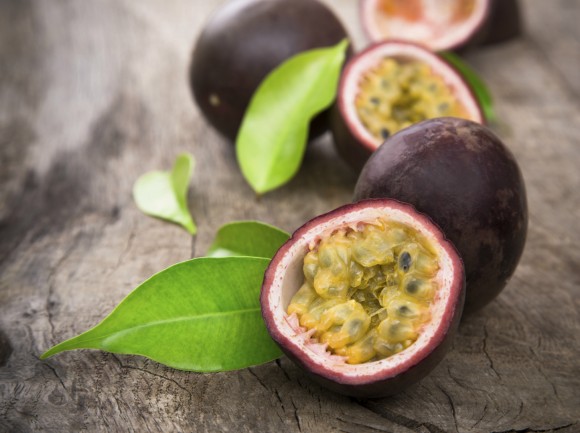
It was in Hawaii that I got my first exhilarating taste of passion fruit. The Maui market vendor’s knife expertly sliced through the mauve skin at the top of the egg-sized fruit, revealing bright orange innards that reminded me of salmon roe. He quickly carved the sliced-off cap of the fruit into a scoop, and dipped it into the glistening orange mass to offer me a taste.
The first thing I noticed was the intoxicating tropical floral aroma. Then, at the first contact with my tongue, came the explosion of bright clean citrus with just enough sweetness to cut the sour. In the tangy gelatinous goo were many small crunchy seeds, which provided a nice textural contrast.
More from Zester Daily:
» What you don’t know about delicious cherimoya
» Catch up with the currant thinking
» Chocolate’s long journey from cacao to candy
» It’s showtime for sweet, gentle dragon fruit
One slurpy bite led to another until the mauve skin was an empty eggshell. But I craved more, and so bought a whole bag of passion fruit, known as liliquoi in Hawaii, and snacked on them the rest of the day.
Later I learned that the passion fruit (Passiflora edulis) is native to South America, probably originating in the southern region of present-day Brazil. It was there, in the 16th century, that Spanish Catholics named it Flor de las cinco llagas, flower of the five wounds. Other missionaries expanded on this, and saw in the beautiful flower’s parts a way to teach indigenous people about the torture (passion) of Christ. The five anthers at the tip of the male parts represented the five wounds of Christ, the vine’s tendrils were the whips, the three female stigmas the three nails in Jesus’ hands and feet, and the 10 petals and sepals were the apostles, excluding Judas (for obvious reasons) and Peter (for not so obvious ones).
High in vitamins
Although the missionaries saw violence and suffering in the passion flower, its huge and elaborate blossoms have more pleasure than pain in their voluptuous beauty. The showy corolla highlights the architecture at the center, where the prominent female parts (stigmas and styles) float over the top of the male stamens. And the fruit that develops from this gorgeous flower is full of goodness — high in vitamins A and C, potassium, dietary fiber and iron.
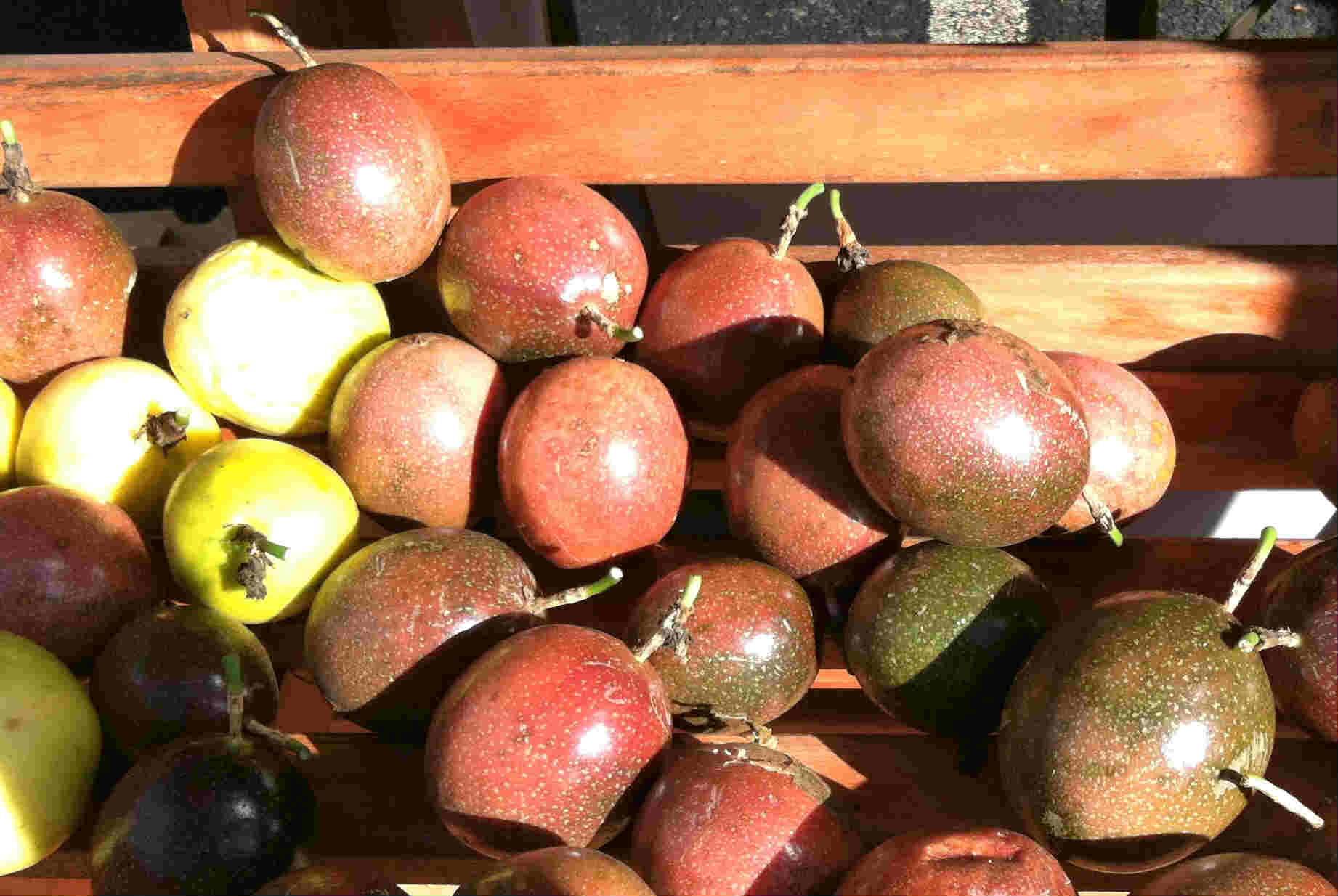
Passion fruit in Hawaii. Credit: Terra Brockman
For all its goodness, however, like so many plants and animals introduced into the delicate Hawaiian ecosystems, the passion fruit had invaded all of the Hawaiian islands a mere 50 years after it was introduced in 1880. Due to a plant virus, and high labor costs, the few passion fruit farms disappeared shortly after they were planted. Although there are no commercial passion fruit plantations in Hawaii today, the vines can still be found in people’s yards and in wild areas, and the fruits are used extensively in foods and drinks. During my Hawaii sojourn, I had the pleasure of drinking fresh liliquoi juice, and also indulged in passion fruit cheesecake, jelly, smoothies and margaritas.
While passion fruit grows well in California, Florida and other southern states, it generally can’t take the cold winters of the temperate zones. The one exception is the Maypop (Passiflora incarnata), which is native to North America, and is the state wildflower of Tennessee. The most cold-hardy of the passion fruit family, it grows well in zones 7-11, and even as far north as zones 5-6, if you mulch it heavily before winter.
Shop around
The name Maypop might have come about because the plant pops out of the ground in May and dies back in winter, ready to pop out again in May. Others say the name comes from “maracock,” which was the Powhatan Indians’ name for this plant.
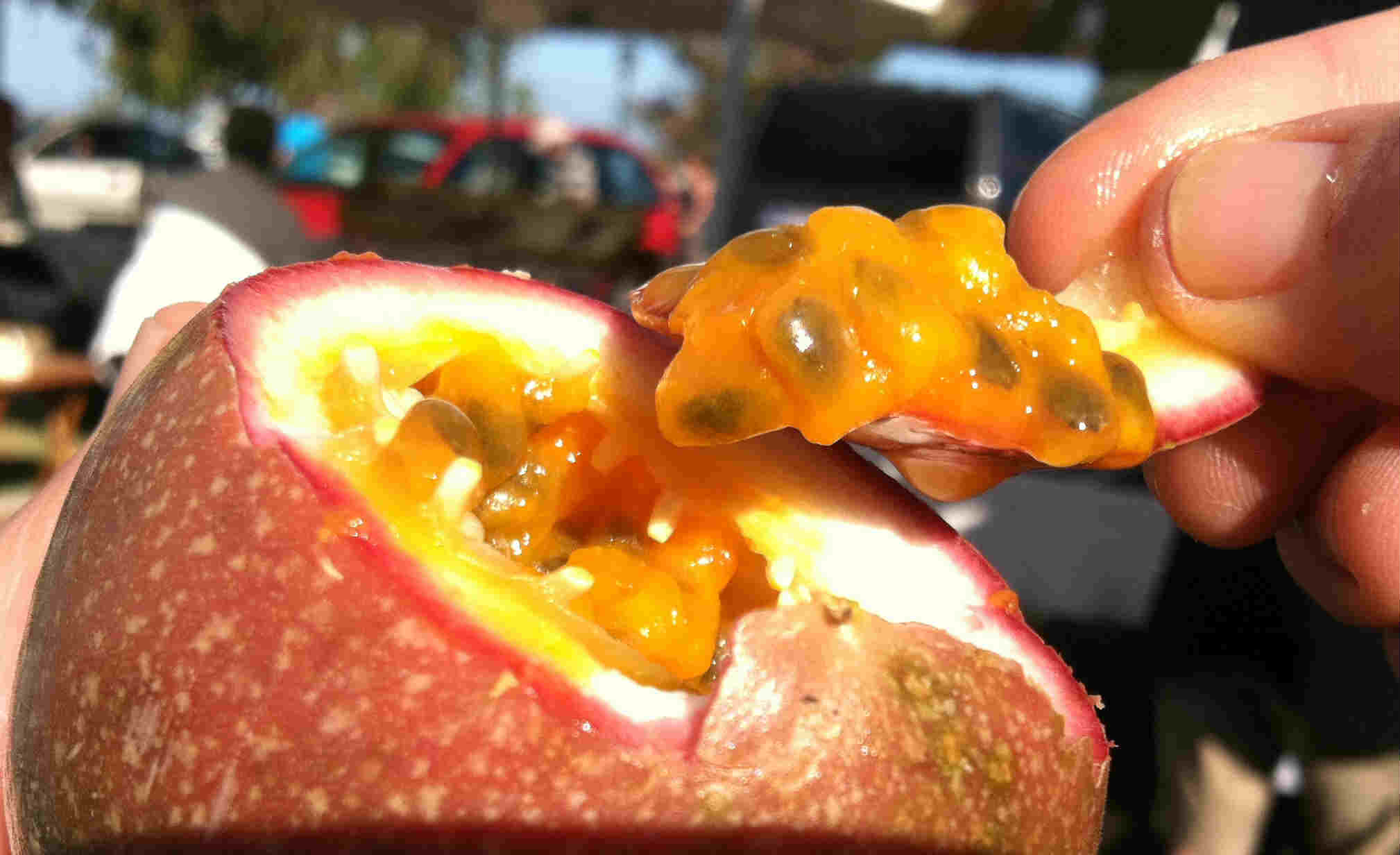
Passion fruit. Credit: Terra Brockman
If you live in the southern U.S., especially California or Florida, you will most likely be able to find passion fruit at your local farmers market. You also have a good chance of finding them in the produce section of ethnic grocery stores. If you strike out, you can find frozen passion fruit pulp in many grocery stores, or order it online.
Or you can grow your own. The vigorous, vining plant is often used as an ornamental screen, or can provide shade cover on a pergola. With its showy flowers and delicious fruit, what’s not to be passionate about?
Passion Fruit Smoothie
The bright, strong taste of passion fruit makes it a great addition to any smoothie. It’s especially good with creamy, custardy fruits such as mango, banana or cherimoya. Of course, you can use whatever fruits or greens you have on hand, but here’s a starter recipe.
Prep time: 10 minutes
Total time: 10 minutes
Yield: About 2 servings
Ingredients
3 passion fruits
1 banana
1 cup cubed apples, pineapples or other fruit
2 cups spinach or other greens
8 ounces coconut water, orange juice, or other juice
Directions
Cut the passion fruits in half and scoop all of the innards into the blender. Add all the other ingredients and blend. Because passion fruit has a lot of seeds, use a powerful blender at its highest speed to get a smooth smoothie.
Main photo: Passion fruit. Credit: iStock/Kesu01
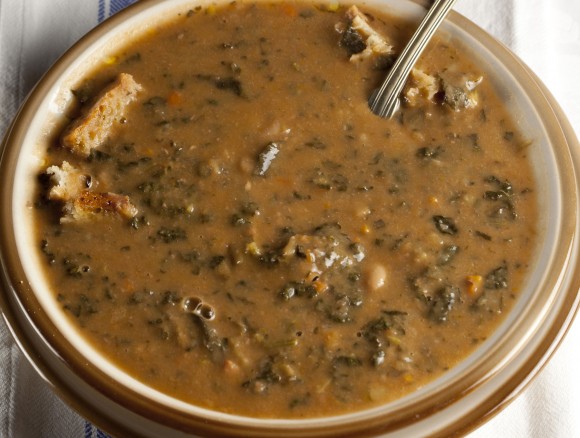
An apple a day might keep the doctor away, but according to studies on diet, a bowl of soup a day can help you keep that New Year’s resolution to lose weight.
When I think of hearty, healthy soups, I think of Tuscany, so I asked chef Aurelio Barattini to share two classic soups of Lucca.
More from Zester Daily:
» Black bean soup with a spicy night life
Zuppa di farro, a thick soup made with dried borlotti beans, features farro, aka spelt, a whole grain that has been popular in Italy since ancient Roman times. “The contrast between the velvety mashed beans and the chewiness of the farro has a wonderful mouthfeel and really showcases the intense natural creaminess of the beans, but without needing any dairy at all,” Barattini says.
The other soup, a rich mix of vegetables and beans, is called zuppa alla frantoiana, named for the Italian word for an olive press because it features a final finish of newly pressed Tuscan olive oil, which “is characterized by an intense flavor, spicy and pungent,” Barattini says. “This soup has all the flavors of Tuscany and we enjoy it accompanied by a local wine like our red Malolina that we make ourselves.”
Zuppa di farro is a thick soup made with borlotti beans and spelt, with a drizzle of olive oil. Credit: Chef Aurelio Barattini
Tuscan Farro Soup (Zuppa di farro)
Courtesy of chef Aurelio Barattini, from the restaurant Locanda Antica de Sesto in Lucca, Italy
Prep time: 10 minutes
Cooking time: 1 1/2 hours, plus overnight resting
Total time: 1 hour, 40 minutes
Yield: 6 to 8 servings
Ingredients
14 ounces dried borlotti beans
4 to 6 sage leaves
6 cloves garlic
Salt
3 tablespoons extra virgin olive oil, preferably from Lucca, plus more to finish
1 small onion, finely minced
1 medium carrot, finely minced
1 stalk celery, finely minced
2 rosemary stems
2 to 3 marjoram stems
2 tablespoons tomato concentrate
7 ounces farro, rinsed
Black pepper
Directions
1. Soak the beans in water overnight in a soup pot.
2. Drain water, cover the beans with clean water and add sage leaves and 2 cloves of garlic. Bring to a boil, then reduce heat and simmer.
3. When almost tender, season to taste with salt and continue simmering until tender. Add more water as needed.
4. Meanwhile, put the olive oil in a pan and sauté the onion, carrot, celery, remaining 4 cloves of garlic, rosemary and marjoram until light golden. Add the tomato concentrate and about 1 cup of the beans’ cooking liquid. Simmer until thick, and then combine with the beans.
5. Pass the bean mixture through a food mill until smooth, then return to the soup pot and bring to a boil.
6. Add the farro and cook on low heat for about 40 minutes, until the farro is tender.
7. Serve in a bowl topped with a drizzle of olive oil and freshly ground black pepper.
Lucca’s Bean and Vegetable Soup (Zuppa alla Frantoiana)
Courtesy of chef Aurelio Barattini of Locanda Antica de Sesto in Lucca, Italy
Prep time: 20 minutes
Cooking time: 1 hour, plus overnight resting
Total time: 1 hour, 20 minutes
Yield: 8 to 10 servings
Ingredients
21 ounces dried beans
3 cloves of unpeeled garlic, plus 1 peeled clove
2 to 3 sage leaves
Salt
3 tablespoons extra virgin olive oil, plus more to finish
1 potato, peeled and diced
1 leek, thinly sliced
3 to 4 tablespoons extra virgin olive oil
2 zucchini, diced
1 bunch Swiss chard, diced
1 bunch kale, diced
2 cups diced cabbage
Red pepper flakes
8 ounces pancetta, minced
1 small onion, very finely minced
2 celery stalks, very finely minced
2 carrots, very finely minced
1 cup finely minced fresh basil, thyme, parsley and rosemary, divided
2 tablespoons tomato concentrate
1 sage leaf
Toasted baguette slices
Directions
1. Soak the beans in water overnight.
2. Drain and put the beans into a soup pot with 1 gallon of water, 3 cloves of unpeeled garlic, 2 sage leaves and a pinch of salt, simmer on medium until tender.
3. Meantime, in a separate pot sauté the potato and leek in oil until half cooked. Add the zucchini, chard, kale and cabbage and cook until tender. Season to taste with red pepper flakes.
4. Put 2/3 of the cooked beans through a food mill and remove any skins. Add the pureed beans, whole beans and the vegetables into the soup pot and simmer for about a half-hour. Season with salt and pepper.
5. Meantime, in a small frying pan, sauté the pancetta with the onion, celery and carrots until tender, about 12 minutes. Stir in 1/2 cup of the herbs and tomato concentrate and simmer another 5 minutes. Add this mixture to the soup pot and bring to a low boil.
6. Mince together the remaining 1/2 cup herbs, sage leaf and remaining garlic clove and stir into the soup.
7. Top the soup with a drizzle of olive oil and serve with bread.
Main photo: Zuppa alla Frantoiana is a rich mix of vegetables and beans. Credit: Chef Aurelio Barattini
This time of year, most of us make a New Year’s resolution to lose weight. To jump-start my own plans, and to help my friends who are all making the same resolution, I host a healthy New Year’s Eve party.
For advice and inspiration, I consulted the experts at Canyon Ranch in Lenox, Mass., one of the country’s premier spas. I asked Stephen Betti, executive chef of Canyon Ranch, what beverages to serve.
He offered up several yummy Canyon Ranch “mocktails” (recipes below) — nonalcoholic, healthy drinks. All can be made ahead of time and set out in pitchers so guests can help themselves. Among my favorites is Almosjito, with a hint of maple sugar and intense citrus tang that’s so delicious that no one will miss the tequila.
More from Zester Daily:
» Beating the winter blahs with dazzling salsas
» These crab cakes are a holiday tradition
Healthy New Year’s party foods
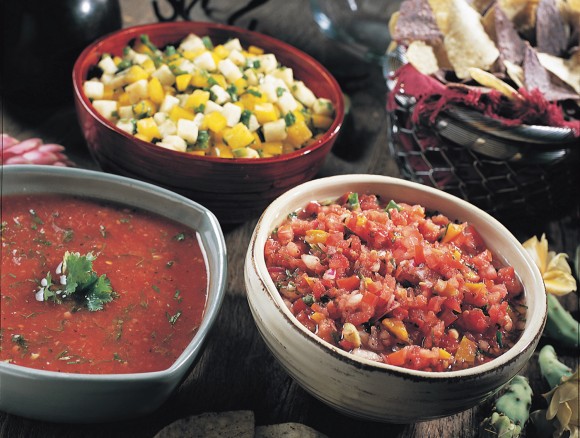
Next onto food: What to serve that’s delicious, fun to eat and good for you? Again, Betti came to the rescue with a slew of great nibble suggestions, starting with an assortment of homemade salsas, low-calorie and low-fat sauces made with chopped veggies, and even fruits that can be served as a dip for raw veggies, tortilla chips or boiled shrimp.
“Salsas are easy to make,” Betti explained. “They are also easy on the host, as salsa ingredients can be chopped in a food processor using the pulse button.” The yellow pepper salsa is delicious and surprising because it doesn’t use tomatoes, one of the most common salsa ingredients. This is an especially good recipe to enjoy in winter when tomatoes can be rock hard and flavorless. Instead, the yellow pepper salsa calls for jicama, a root vegetable. If you’ve never tasted jicama, you’re in for a treat. Jicama’s white crunchy flesh has a sweet, nutty flavor and is delicious served raw or cooked. Use what’s left of the jicama from the salsa recipe as one of the ingredients in a crudités platter.
In addition to the simple-to-make salsas, Betti shared Canyon Ranch recipes for chicken gyoza and spicy crab cakes (recipes below). Both can be made ahead and kept frozen until the day of the event, then heated in the oven just before serving. Both are easy-to-eat two-bite finger foods perfect for a party.
The gyoza, which are effortlessly prepared with ready-made wonton wrappers, are better than any I’ve tried from a restaurant. I used chicken but also leftover turkey, which I had frozen after Thanksgiving, but both are terrific. You can adjust the seasonings to suit your own taste too. For example, I added more ginger, less wasabi and substituted cilantro for the lemongrass in one batch for excellent results. It is one of those recipes that, no matter how much you tweak, the dish is delicious.
Five party tips
OK so let’s say you cannot host your own healthy feast. What can you do to jump-start your New Year’s resolution? I asked for help in how we can avoid overindulging from Lori Reamer, nutrition director for Canyon Ranch in the Berkshires. She had these five tips for coping with holiday parties:
1. Have a healthy snack an hour before arriving to the party
2. Offer to bring a fabulously delicious but low-cal, healthy dish to the event.
3. Eat from a small plate and drink from a small glass to control portion size and avoid overindulging.
4. Select only the most special dishes. Don’t waste calories on supermarket fare!
5. Don’t focus only on the food. Embrace the entire party experience — the company, decorations, music, conversation. Food is just one small part of the fun!
If you do happen to overindulge in food and drink on New Year’s Eve, all is not lost! You can repair come of the damage on New Year’s Day. According to Canyon Ranch’s Kevin Murray, a naturopathic doctor and licensed acupuncturist, “The best ways to rid your body of last night’s alcohol is by drinking lots of water the next day, eating light and getting plenty of sweat-producing exercise.”
Mocktails
Courtesy of Canyon Ranch Spas
Almosjito
Prep time: 5 minutes
Yield: 1 drink
Ingredients
1/2 fresh lime
1/2 fresh orange
4 sprigs fresh mint
1/4 cup white grape juice
1/4 cup sparkling water
1 tablespoon pure maple syrup
1/3 cup crushed ice
Directions
Squeeze lime and orange into cocktail shaker. Add mint, white grape juice, water, maple syrup and ice. Shake and strain into glass.
Bloody Mary
Prep time: 5 minutes
Yield: 6
Ingredients
1 tablespoon horseradish
1 1/2 teaspoons Old Bay seasoning
2 teaspoons celery seed
2 teaspoons distilled white vinegar
4 tablespoons fresh lemon juice
Pinch black pepper
3 tablespoons Worcestershire sauce
4 cups low-sodium tomato juice
Directions
Combine all ingredients except for tomato juice in a blender container. Puree briefly. Add tomato juice and blend well. Serve over ice.
Margarita
Prep time: 5 minutes
Yield: 4
Ingredients
1/3 cup sugar
1 1/2 cups water
2/3 cup lime juice
2/3 cup orange juice
1 tablespoon lemon juice
Directions
Combine sugar and water and allow to dissolve. Add remaining ingredients and mix well. Serve cold or over ice.
Pomatini
Prep time: 5 minutes
Yield: 6
Ingredients
3 cups white grape juice
3/4 cup pomegranate juice
6 tablespoons fresh lime juice
Pinch sea salt
12 fresh mint leaves
Directions
Combine grape juice, pomegranate juice, lime juice and salt in a large pitcher. For each beverage, add 3/4 cup juice mixture to a shaker with 2 mint leaves and 3 ounces of ice. Shake and pour into a glass.
H2 Tini
Prep time: 5 minutes
Yield: 1 drink
Ingredients
1 fresh lime wedge
1/2 cup fresh watermelon juice
1/4 cup sparkling pear or apple cider
4 sprigs cilantro
1/3 cup crushed ice
Directions
Squeeze lime into cocktail shaker and add peel. Add remaining ingredients and shake. Pour into martini glass. Garnish with a thin slice of watermelon.
Party Food Recipes
Adapted from “Canyon Ranch Cooks”
Yellow Pepper Salsa
Prep time: 15 minutes
Yield: 2 cups
Ingredients
1 large yellow bell pepper, diced
1/2 cup diced jicama
1/2 cup chopped scallions
1/4 cup orange juice
1/2 teaspoon minced, canned chipotle pepper
Pinch salt
Pinch pepper
Directions
Combine all ingredients in a medium bowl and mix well.
Pico de Gallo
Prep time: 20 minutes
Yield: 3 cups
Ingredients
4 medium tomatoes, diced
1 1/2 cups canned, diced tomatoes
1/2 cup diced red onion
3 tablespoons chopped scallions
1/2 cup diced yellow bell pepper
1 tablespoon diced jalapeño pepper
1/4 cup chopped cilantro
1 1/2 tablespoons fresh lime juice
1 teaspoon salt
1/4 teaspoon black pepper
1/2 teaspoon dried oregano leaves
1/4 teaspoon garlic powder
Directions
Place all ingredients in a food processor and mix briefly.
Chipotle Salsa
Prep time: 15 minutes
Yield: 2 cups
Ingredients
1 (15-ounce) can whole tomatoes, drained
1/4 cup diced red onion
1 clove garlic, minced
1 teaspoon dried oregano
1 tablespoon chopped cilantro
1/4 teaspoon minced chipotle pepper
1/2 teaspoon salt
1 teaspoon red wine vinegar
1 teaspoon white wine vinegar
Pinch chili flakes
Directions
Place all ingredients in a food processor or blender container and blend until smooth.
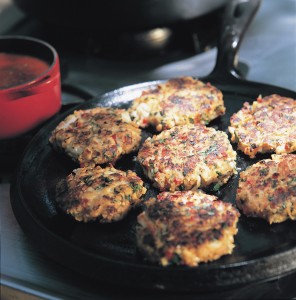
Spicy Crab Cakes can be made ahead and kept frozen until the day of the event. Credit: Canyon Ranch Spa
Spicy Crab Cakes with Tomato Herb Coulis
Prep time: 15 minutes
Cook time: 30 minutes
Yield: 8
Ingredients
4 tablespoons minced garlic
1 tablespoon olive oil
6 Roma tomatoes, about 8 ounces, chopped
1 cup diced red onion
2 tablespoons chopped fresh basil
2 tablespoons chopped fresh thyme
5 tablespoons chopped fresh parsley
1 teaspoon salt
1 teaspoon pepper
1 pound lump crabmeat
1/2 cup minced shallots
2 tablespoons diced scallions
1/4 cup minced red bell pepper
1/2 teaspoon cayenne pepper
1 large egg plus 1 egg white, beaten
2 tablespoons low-sodium tamari or soy sauce
1 cup bread crumbs
1 teaspoon canola oil
Directions
1. To make the coulis, sauté garlic with olive oil in a medium pan over medium heat for about 30 seconds. Add the tomatoes, bring to a simmer,and cook about 5 minutes, until tomatoes begin to break apart. Add the red onion, basil, thyme, 2 tablespoons of the parsley, salt and pepper, reduce heat to low and simmer for 20 minutes.
2. Remove from the heat, allow to cool slightly and transfer to a blender container. Puree the coulis until smooth and reserve.
3. To make the crab cakes, combine the crabmeat, shallots, scallions, red bell pepper, 3 remaining tablespoons of parsley, cayenne pepper, eggs, tamari sauce and bread crumbs in a large bowl and mix well. Make 2-inch patties using about 1/4 cup of mix each.
4. Heat a sauté pan until hot over medium heat. Lightly coat with the canola oil. Place crab cakes in pan and cook until golden brown, about 3 to 5 minutes. Turn and continue to cook to golden brown.
5. Serve crab cakes accompanied with the coulis.
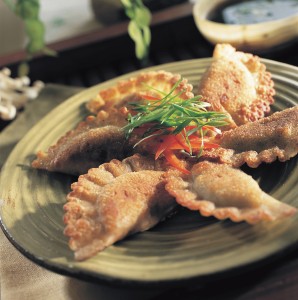
Chicken Gyoza are effortlessly prepared with ready-made wonton wrappers. Credit: Canyon Ranch Spa
Chicken Gyoza With Wasabi Soy Sauce
Prep time: 10 minutes
Cook time: 25 minutes
Yield: 24 servings
Ingredients
3 tablespoons fresh ginger, minced
2 tablespoons chopped garlic
1 tablespoon diced lemongrass
1 tablespoon low-sodium tamari
1 tablespoon seasoned rice vinegar
1 tablespoon lemon juice
1 teaspoon wasabi (Japanese horseradish)
1 sliced chicken breast, boned, skinned and defatted
2 tablespoons chopped scallions
1 large egg white
1/2 teaspoon black pepper
Pinch salt
2 teaspoons olive oil
24 4-inch wonton skins
Canola oil
Directions
1. To make the wasabi soy sauce, bring 3/4 cup of water to a boil in a medium saucepan. Add 2 tablespoons of the ginger and 1 tablespoon of the garlic, reduce heat. and simmer for 15 to 20 minutes.
2. Add the lemongrass and tamari and continue cooking until the liquid reduces to about 1/3 cup. Strain and cool.
3. Blend the sauce in a blender with the rice vinegar, lemon juice and wasabi until well combined. Reserve.
4. In a food processor, chop chicken breast at high speed, until finely minced. Add the remaining tablespoon of ginger and garlic, scallions, egg white, pepper, salt and oil and mix well.
5. Arrange wonton skins on a flat surface. Place 1 heaping teaspoon of chicken mixture in the center of each wonton. Brush edges with water. Fold into half-moons and lightly pinch edges together to ensure a good seal. (May be frozen at this time for future use.)
6. Lightly coat a large sauté pan with canola oil. Arrange wontons in a single layer in sauté pan. Sear bottoms only to a golden brown color. Transfer to steamer and steam for 3 to 5 minutes.
7. Serve the gyoza with the dipping sauce on the side.
Main photo: A trio of salsas — yellow pepper, pico de gallo and chipotle — make for easy, healthy party foods. Credit: Canyon Ranch Spa
It has taken me some analysis of classic side dishes — especially the vegetarian ones — to realize why we tend to get so overwhelmed by Thanksgiving meal planning. We have over-complicated our vegetable dishes.
A green bean casserole or even a sweet potato gratin with marshmallows can be fussier than we realize. The heavy ingredients end up competing with the real taste and appearance of the vegetable.
The summer months, with their ever-flowing bounty of produce from my garden, have taught me to keep it simple, flavorful and fresh. This is also my mantra when I plan my Thanksgiving table.
I have wasted no time in playing around with the harvest table to give it my own personal stamp. This is an interactive process with my children, who like that our Thanksgiving table meshes the traditional with elements of Indian cooking, giving the holiday an Indian-American touch.
Spice up simple side dishes with not-so-simple flavors
My Thanksgiving table gets a nice touch of Indian flavor from all the fragrant spices and herbs at my disposal. I have also worked at simplifying dishes to create an assortment of sides that get done without much fuss — but with that nice boost of flavor.
More from Zester Daily:
Whole fragrant spices, such as fennel or cinnamon, tart citrus flavors, and herbs such as sage and cilantro are easy and healthy. They add loads of flavor and pizzazz to that side dish without much effort.
The purpose of the side on the Thanksgiving table is to showcase the bounty of the year — or at least, of the harvest season — and add some flair and color. I try to do that with dishes that don’t take loads of extra time. That can mean a side of serrano-spiked macaroni and cheese, kale livened up with caramelized onions and cumin, roasted beets with a fresh sprinkle of lime and black salt, and variations of sweet potatoes and winter squashes.
Winter squashes and sweet potatoes are not uncommon to Indian (especially Bengali) harvest celebrations, so I feel right at home with them. They also have been created with the perfect color coding for Thanksgiving, when orange, red and golden hues dominate. Those colors balance out the greens on the table, and they are good for you.
The cooking technique that I often favor for Thanksgiving sides is to roast the vegetables, which works very well for the squashes and roots that abound in markets this time of year. You can pop in the vegetables right alongside the turkey. An added plus: Those vegetables can be prepped and assembled ahead of time and then cooked, just in time for dinner.
Simple sides make for a happy cook
Cooking can be enjoyed best when the cook does not get too worn out or overwhelmed in the process.
I am sharing two of my favorite harvest recipes with you here. Both feature minimal prep time and mostly unattended cooking time. Both can be made ahead of time — and reheated to serve on Thanksgiving Day.
The butternut squash recipe uses sage leaves that are still growing or available in abundance in East Coast gardens — including mine — along with a nice bouquet of flavors from panch phoron or the Bengali Five Spice Blend.
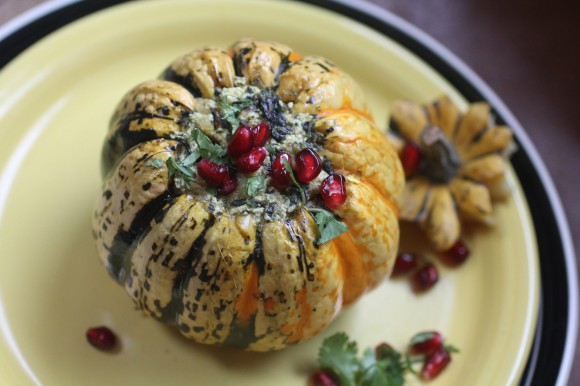
The second dish features acorn squash stuffed with finely crumbled tofu, spinach, collard greens, pecans and some coconut milk. It also can be the perfect main dish for someone who is adhering to a vegan or gluten-free diet. I love to make this sometimes with mini-squashes so that everyone can have a personal squash. A dish that does double duty as a centerpiece and meal all at once!
Whole Spice Roasted Butternut Squash With Sage
(Recipe from my cookbook “Spices & Seasons: Simple, Sustainable Indian Flavors.”)
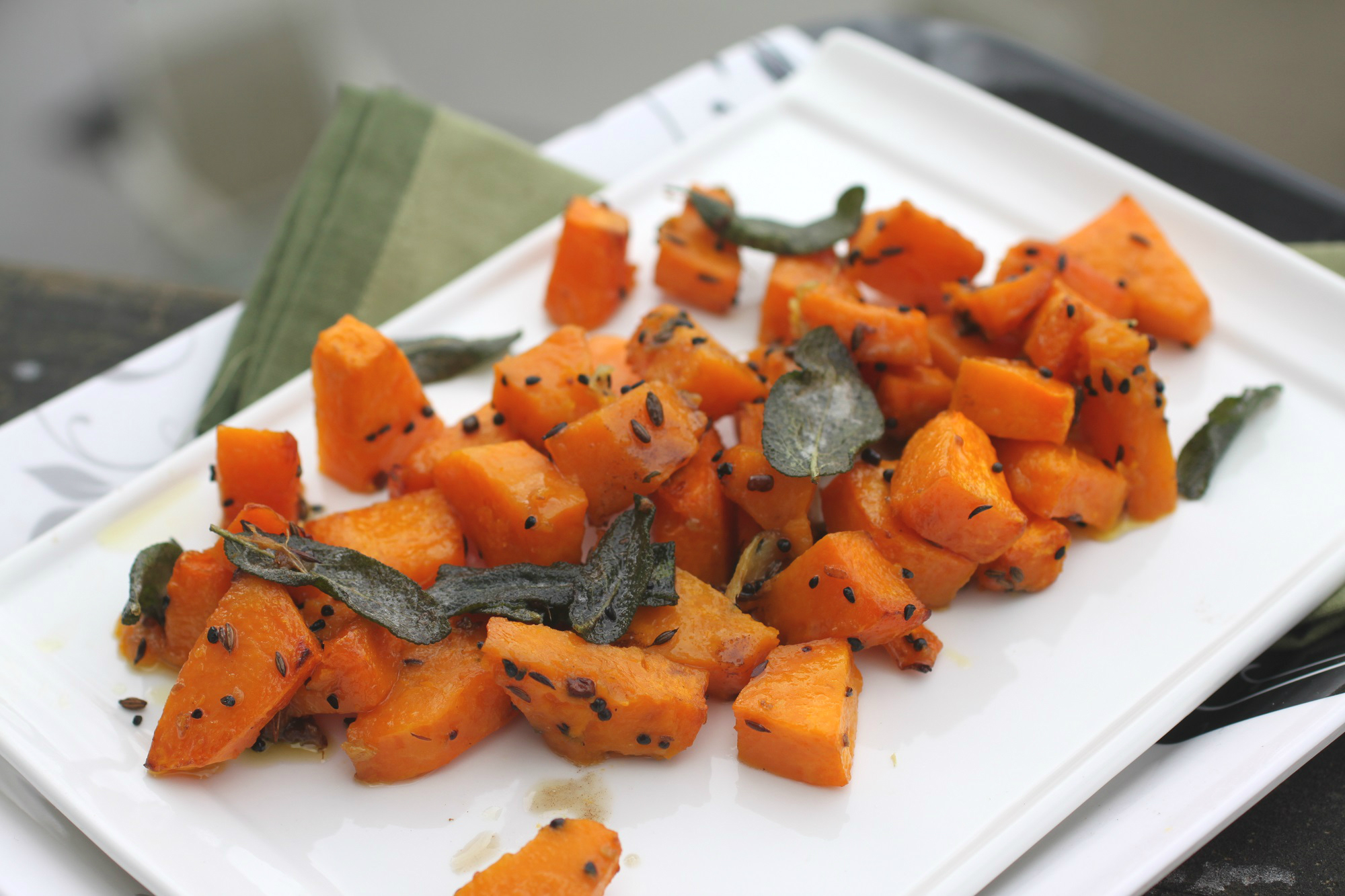
This roasted butternut squash is perfect for simplifying side dishes at Thanksgiving, with just five minutes of prep time. Credit: Rinku Bhattacharya
Prep time: 5 minutes
Cook time: 45 minutes (mostly unattended)
Yield: Serves 6
Ingredients
1 large butternut squash (about 2 pounds)
2 tablespoons oil
1 teaspoon Bengali Five Spice Blend (panch phoron)
1 teaspoon freshly ground black pepper
1 tablespoon ginger paste
Salt to taste (optional, I really do not think that this dish needs it)
1 tablespoon salted butter
15 fresh sage leaves
Directions
1. Heat the oven to 375 F.
2. Peel the squash, remove the seeds and cut the squash into 2-inch chunks.
3. Heat the oil in a skillet. Add the Five Spice Blend and when it crackles, mix in the black pepper and ginger paste and mix well. Add the squash and stir well to coat.
4. Place the seasoned squash on a greased baking sheet.
5. Roast the squash in the oven for about 35 minutes. It should be soft and beginning to get flecks of golden brown at spots. Taste to check if it needs any salt.
6. Heat the butter in a small skillet on low heat for about 2 to 3 minutes until it melts and gradually acquires a shade of pale gold. Add the sage leaves and cook until they turn dark and almost crisp.
7. Pour over the squash and mix lightly.
8. Serve on a flat plate to showcase the spices and sage.
Rainbow Stuffed Acorn Squash
Prep time: 10 minutes
Cook time: 30 minutes (mostly unattended)
Yield: Serves 4 to 6
Ingredients
4 small acorn squash or other winter squash (use evenly shaped, colorful squash)
2 tablespoons oil
1 medium-sized onion, diced
1 teaspoon grated ginger
3 cups of chopped spinach
1 cup (about 12 ounces) crumbled tofu
1 teaspoon garam masala
1 teaspoon cumin coriander powder
1/2 cup chopped pecans
Salt to taste
1/2 cup coconut milk
3 tablespoons fresh lime juice (about 1 juicy lime)
1/2 cup finely chopped cilantro
2 tablespoons pomegranate seeds
Directions
1. Heat the oven to 350 F.
2. Place the squashes in a single layer and bake for 15 minutes. Cool.
3. While the squash is cooking, heat the oil and add in the onion and cook until soft. Add in the ginger and cook for another 2 to 3 minutes. Add in the spinach; cook until just wilted. Add the tofu and mix well.
4. Stir in the garam masala and the cumin-coriander powder with the pecans, salt and coconut milk and mix well. Bring to a simmer.
5. Carefully cut the tops from the squashes using a crisscross motion to follow the grooves of the squash and remove the top.
6. Remove the seeds and scoop out the flesh, leaving the shell intact.
7. Add the flesh to the spinach tofu mixture and mix and mash. Add in the lime juice and cilantro and some of the pomegranate seeds. Turn off the heat.
8. Stuff the prepared filling into the squash shells.
9. This can be served right away or set aside and then heated for 10 minutes in a hot oven before serving.
Main photo: Simplify side dishes on your Thanksgiving table with easy-to-prepare and healthy vegetable dishes like this stuffed acorn squash. Credit: Rinku Bhattacharya
As you’re simmering your cranberries with sweetness this holiday season, you can thank Mother Nature for their astringent qualities.
The compounds that produce the cranberry’s bite — their proanthocyanins (PACs) — not only ward off enemies such as small animals and insects but provide possible health benefits for us human predators.
PACs in cranberries have extremely strong chemical bonds, says Amy Howell, Ph.D., a research scientist at Rutgers University. Instead of being broken down and absorbed into the blood, they appear to travel intact and take their benefits with them, to various parts of your body.
More from Zester Daily:
» Put down the can opener, get bold with cranberries
» 5 ways to make cancer research work for you
While cranberry juice’s ability to efficiently fight infections has been called into question, Jeffrey Blumberg has done research to identify why there may be conflicting results, and Howell is among those who suggest potential health benefits in areas such as these:
- Stomach and bladder: You may already be familiar with how cranberries are reported to benefit these organs. PACs bind to harmful bacteria that cause ulcers and urinary tract infections and thus keep those bugs from adhering to the stomach lining and bladder walls. If the bacteria can’t stick, then they can’t multiply and cause damage, Howell says. “Thus, they harmlessly leave the body.”
- Mouth: The same action happens here. PACs can help bind bacteria that contribute to decay and gum disease.
- Intestines: But it’s new research on how cranberry’s PACs behave in the gut of model animals that’s getting berry scientists excited. PACs can improve the bacteria in the colon, Howell says, and compounds produced by those bacteria have far-reaching effects on your health.
“A top story on cranberry right now, just published in a very prestigious journal [Gut], is beautiful evidence for how compounds in cranberries — PACs in particular — act in the gut,” says Mary Ann Lila, director of the Plants for Human Health Institute at North Carolina State University.
Fermentable fiber and your health
When it comes to fiber, “fermentable” is the latest buzzword. Once foods have been digested in the small intestine, the parts that aren’t digestible — their fiber — then travel to the large intestine. There, healthy bacteria feed on certain plant fibers and ferment them into important fatty acids. In turn, those fatty acids get absorbed into the blood and help control blood sugar, appetite and inflammation. They also help enrich your gut lining, which acts as a barrier to keep harmful particles from leaking out or in.
Some plants provide the raw materials for producing those good bacteria. They’re called “prebiotic” because they are prequels to healthy probiotic bugs.
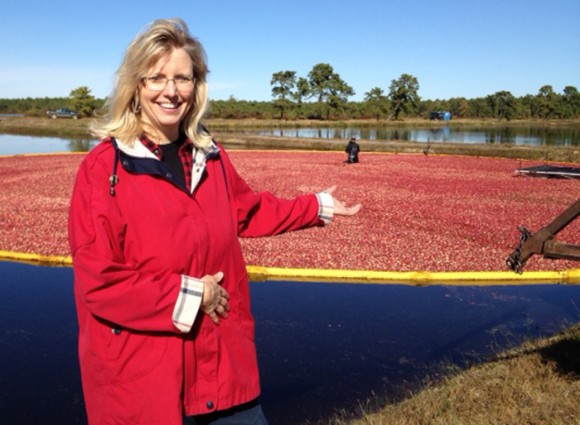
Amy Howell at cranberry harvest. Credit: Emily Bittenbender
And that’s where cranberries come in. “The fiber in cranberry skins serves as a prebiotic to help establish colonies of probiotic bacteria,” Howell says. In addition, she is researching the possibility that cranberry’s PACs may help keep harmful bacteria such as E coli from invading the gut.
“This is very, very, very exciting stuff,” Lila says. “The cranberry PACs were able to create a healthy population of gut bacteria in those animals and protect against obesity, insulin resistance and inflammation caused by a poor diet,” she says.
In addition to PACs, cranberries have about 150 healthy compounds, as identified in research led by Jonathan Bock and Howell on esophageal and pharyngeal cancer — vitamins C and E; anthocyanins, which act as antioxidants and give them their vivid color; quercetin and myricetin, which bind minerals (iron and copper) that promote oxidation. Howell suggests that many of the compounds in cranberries may protect DNA from damage caused by oxidation and help guard against inflammation in body tissues beyond the colon.
- Cardiovascular system: Research suggests that regularly consuming cranberry products “can reduce key risk factors for heart disease,” says Howell, by reducing inflammation and oxidation of harmful LDL cholesterol and by increasing good HDL cholesterol and the flexibility of arteries.
- Brain: Scientists think that some of these anti-inflammatory compounds may also protect the brain against damage caused by stroke or aging, Howell says.
- Cancer: Preliminary studies, all done in lab animals and cell cultures, suggest that cranberry’s compounds have the potential to inhibit tumor growth of some types of cancer, but much research remains to be done, suggests Howell.
If you’re still stirring those cranberries, you may be wondering whether all that cooking will destroy their healthy benefits. Howell suggests that “cranberry PACs are not seriously damaged by cooking or processing.” But other health-promoting compounds may be damaged by heat, and the effects of cooking on foods “is an area that needs considerably more research,” says Ron Prior, a research chemist at the University of Arkansas. In general, harsh cooking methods will result in degradation.
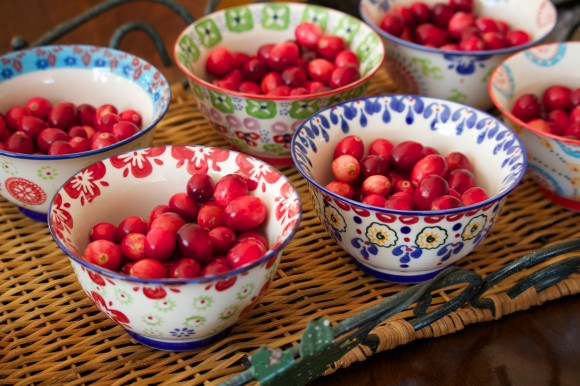
Cranberries in bowls. Credit: Holly Botner / Jittery Cook
With all the scientists out there investigating berries, the dream is that there will be a verdict on cranberries by next season’s holidays. For this year, however, we’re sticking to a quick cooking method — in hopes of pleasing some hungry guts. Should we tell them about the microbes?
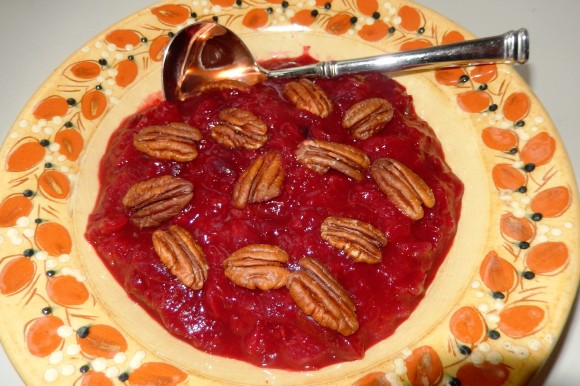
Quick Cranberry Sauce, with healthy bugs
Courtesy of Reveena Rothman-Rudnicki/ Raveena’s Kitchen
Prep time: 5 minutes
Cook time: 5 minutes
Total time: 10 minutes
Yield: 8 servings, 1/2 cup each
Ingredients
4 cups fresh cranberries
1 cup water
1 teaspoon cinnamon
2 oranges, juice and zest
1 teaspoon grated ginger
4 to 6 tablespoons maple syrup
Handful pecans
Directions
1. Put cranberries and water in a medium saucepan, cover and bring to a boil. Lower heat and simmer for 3 to 4 minutes.
2. Take off heat. Add cinnamon, orange juice and zest, ginger and maple syrup. Sprinkle pecans on top.
3. Cranberries have no sugar, so you do have to sweeten them. Start with 4 tablespoons, let the dish sit for a while, then decide whether you want more.
Main photo: Cranberry sauce. Credit: Harriet Sugar Miller