Articles in Healthy Eating
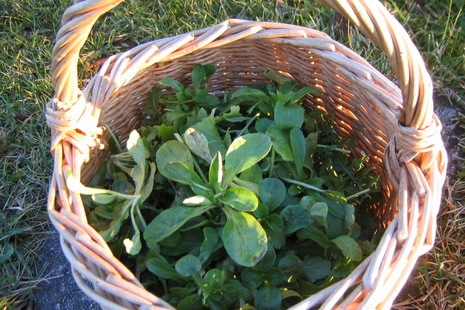
There’s a kind of hush over the vineyards of Alsace in the chill depths of these winter months. Lone viticulteurs move quietly between the rows of dormant vines, snipping away last summer’s spindly growth, restoring order and symmetry with an eye to next year’s crop. All is quiet — well, not quite all. From the bare brown earth among the discarded vine clippings, some exuberant little green rosettes are thrusting upward. Welcome the wild mâche des vignes! Its timely appearance provides me with a reason (if one were needed) to take a winter vineyard walk — preferably armed with a basket and a small sharp knife for severing the mâche (aka corn salad or lamb’s lettuce) just above the root.
Plenty share my fondness for this delectable winter salad, though few nowadays pick it themselves — except perhaps from their own gardens, where they’ve taken care to sow it in the dying days of summer. Its round-edged, deep green leaves, like tiny tongues, have an elusive but distinctive flavor — like all winter salads starved of sunlight and braced by sub-zero temperatures, it has more taste than any of its summer cousins indulged with sunshine and generous splashings of water.
And what does mâche actually taste of? I’ve loved it so long I find its flavor hard to pin down, like someone you’ve known for ages and can no longer find the words to describe. Sometimes I think it tastes a little like walnuts. But that’s probably because somewhere in the back of my mind is its evocative name in Swiss German, Nüsslisalat, or “a salad with hints of nuttiness.” Then I get sweet notes, quite unlike those of bitter winter chicories or peppery arugula — until I have to admit I’m probably influenced by its alternative name in French, doucette or “sweetie.” Maybe it tastes of corn, as one of its names in English suggests? Another English name — lamb’s lettuce — reminds me that just now, when mâche is coming into its own, it’s lambing time in the close-cropped fields of the Sussex Downs and the Yorkshire dales.
 Best of all I like the name they use in some parts of Germany and Austria, Rapunzel, with its fairy-tale suggestions of letting down of hair. It’s true that the plant goes a bit mad once winter is over, bursting into a shower of tiny blue flowers and then wantonly sending out seeds in all directions, thus ensuring a good harvest for me the following winter. The best mâche in my garden is always the self-sown kind; the seeds I place tenderly, expectantly in the soil somehow never do half so well.
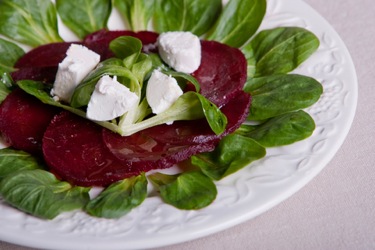
Whatever name it answers to, mâche is so delicious it’s well worth pursuing. (It’s also bursting with B, C and D vitamins, beta-carotene and Omega-3s, but I’m with fellow Zester contributor Clifford A Wright that such talk is the kiss of death for any food, so we won’t go there.) Farmers markets, farm shops and enlightened stores sell these appealing little green rosettes. Often they come mixed with other salad ingredients — radicchio, cut-and-come-again leaves, even arugula. This is a pity. Enjoy mâche by itself and allow its elusive flavor to come into its own. Don’t even think of cooking it — all the flavor will leach out into the water, along with all those vitamins. If we’re talking salads, I sometimes allow myself to be seduced by the classic French addition of a few crisp-cooked bacon cubes. But in the end I have to concede that spring dandelions, coarser and slightly bitter, withstand a bacon onslaught better than the tender, sweeter mâche. A safer garnish is a scattering of finely chopped hard-cooked egg. Twinning mâche with beets is definitely permissible — the beets’ deep ruby flesh looks drop-dead gorgeous set against the deep emerald mâche tongues, especially if you add a counterpoint of cubes of pure white goat’s cheese (not feta, which is too salty).
And what about you? If you’ve foraged, grown or bought mâche and nibbled it thoughtfully, have you the words for the taste?
Carpaccio of Roast Beets on Mâche Leaves
With Fresh Goat Cheese and Balsamic Dressing
For this vibrant ruby red, green and white salad, the beets are roasted, peeled, thinly sliced and arranged on a bed of mâche “tongues.” The salad is drizzled with a balsamic dressing and garnished with soft fresh goat’s cheese.
Serves 4-6
Ingredients
Directions
- Cut greenery from beets. Scrub them well but do not peel or trim the tails or the beets will “bleed.”
- Place beets on a large sheet of foil, sprinkle with oil, salt and pepper and close up the foil to make a snug package.
- Bake in a 350 F/180 C oven for 1½ to 2 hours or until the beets feel slightly soft when pressed, and the skin rubs off easily.
- Remove package from the oven, and let beets cool in the foil.
- When cool, rub off the skins or pull them away with a small sharp knife.
- Pluck the leaves off most of the mâche (reserve some whole rosettes to decorate) and arrange the leaves. around the edge of the plates, like little green tongues.
- Slice the beets very thinly and arrange the slices in concentric circles inside the ring of mâche leaves.
- Mix together the walnut oil and Balsamic vinegar and drizzle this over the beets.
- Arrange reserved mâche rosettes in the centre of the beets and scatter cubes of goat’s cheese on top.
Sue Style is originally from Yorkshire but has migrated over the years to London, Madrid, Fontainebleau, Mexico City and Basel. She’s now happily ensconced in southern Alsace. The author of eight books devoted to all that’s good to eat and drink in the places she’s lived in and loved, her ninth, due for publication in 2011, is about Swiss farmhouse cheeses. Her articles appear in Financial Times Weekend, Decanter, Condé Nast Traveler, France Magazine and on her website: suestyle.com.
Photos from top:
Basket of mâche. Credit: Sue Style
Carpaccio of beets with mâche and goat cheese. Credit: Nikos Kapelis
Eating salmon is a long-standing Scandinavian tradition. Twenty to thirty years ago, it was expensive and reserved for parties or fine dining. It was often boiled to pieces and served with a hollandaise sauce. That was a time when we still looked to the French for inspiration, before the trend of reinventing the Scandinavian kitchen.
Gravad or smoked salmon has always been part of the tradition. When I was young, we would indulge and have it for lunch on special occasions. It was almost always part of Christmas party food. Today, salmon has become an everyday food and less expensive than cod.
North Atlantic salmon, both wild and farmed, is one of the top species for cooking. Wild salmon, whose meat is lighter in color and whose taste is at once more delicate and concentrated than farmed, is harder to find in the Scandinavian countries because of overfishing. It is more readily available from February to November, and the meat is at its best from June to September.
Despite a significant movement to restore the wild salmon population in the oceans and rivers, for now, farmed salmon is the more common reality. When choosing farmed salmon, it is important to support sustainable farms, which don’t overcrowd the pens and give the fish room to swim around. Assuming responsibility for the welfare of the fish and environment, these operations don’t use growth promoters or antibiotics. By trying to create conditions as natural as possible, they also produce the best quality salmon.
Scandinavian cured salmon is world famous as “gravad lax,” the traditional and most popular recipe being cured with dill and served with sweet mustard dill sauce. There are endless ways of curing salmon and they are all called “gravad,” which means “buried.” In medieval times, the fish was salted and buried under sand or in soil to preserve it.
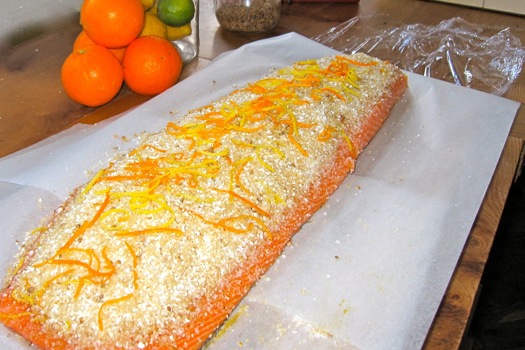
My favorite way to eat salmon is cured or smoked. In the morning, I’ll have smoked salmon with scrambled eggs, or with toasted rye bread and spinach wilted in butter. For lunch, citrus gravad lax with toasted bread and horseradish dressing. The citrus gravad lax has been my signature salmon recipe for many years, and the orange zest complements the salmon beautifully.
Why cure salmon? Because, apart from preservation, curing adds flavor and texture. It is easy, and tastes wonderful. For a piece of salmon of the size described in the recipe below, you can combine all kinds of spices or vegetables, but the amount of sugar and salt should stay the same. For a smaller piece of salmon reduce the sugar and salt.
In lieu of lemon and orange zest, you can use the following combinations for curing:
If you think the salmon filet is too big for your purposes, it can also be used for canapés. After the curing, cut it into small pieces and freeze. The salmon lasts up to two months and still tastes great when defrosted.
Velbekommen!
Citrus Gravad Lax With Horseradish Cream
Serves 20
For the salmon:
For the horseradish cream:
Directions
- If you have a zester, use it to remove the zest from the orange and lemon. Alternatively, finely grate the zest from the fruit. Mix the zests with the sugar and salt.
- Use tweezers to remove any pin-bones from the salmon filet. Spread the zest mixture evenly over the entire surface of the salmon, then wrap it in plastic wrap and refrigerate for 3 days.
- Take the salmon out of the refrigerator, remove the plastic wrap, and wipe off the marinade with a paper towel.
- On the day of serving the salmon, make the horseradish cream. Mix the sour cream, horseradish and sugar together, stirring very gently. Add the lemon juice and season with salt and pepper. Test whether it needs more horseradish; it has to be spicy.
To serve, place the salmon on a board and cut into thin slices with a very sharp knife. The traditional cutting technique starts diagonally at one corner of the salmon and then works back toward the center of the fillet.
Sprinkle the grated zest from the remaining orange and lemon over the salmon.
Serve with horseradish cream, toasted bread and a crunchy green salad.
Trina Hahnemann is a Copenhagen-based chef and caterer and the author of six cookbooks, including “The Scandinavian Kitchen.” She has catered for artists such as the Red Hot Chili Peppers, Soundgarden, Elton John, Pink Floyd, Tina Turner and the Rolling Stones. Her company Hahnemann’s Køkken, which runs in-house canteens, counts the Danish House of Parliament among its clients. Trina writes a monthly column in Denmark’s leading women’s magazine Alt for Damerne.
Photo: Citrus gravad lax. Credit: Trina Hahnemann
Everyone has a food they dislike or a least favorite food. I don’t mean a food allergy, which is something else entirely. Food dislikes come about for many reasons, but the ones that interest me are the ones that I believe come about because of poorly chosen or cooked food.
Of course there are food dislikes related to taste buds and other complex physiological and psychological reasons, and there’s just no explaining them. I don’t like grapefruit. I can eat it if I have to, for instance, when a hostess has put it into their summer fruit salad. But for as long as I can remember I’ve never liked grapefruit. It’s the only food I can think of that I don’t like.
My youngest son doesn’t like cucumber. He can’t explain it and when his sister said “that’s stupid, cucumber is only water,” he just shrugged. I know people who simply cannot tolerate the taste of coriander (cilantro) leaf.
There are two foods people quite often claim they don’t like and I believe their dislike is not based solely on inexplicable taste bud rejection like my grapefruit or my son’s cucumber, but is based on how the food was improperly cooked or served the first time they ate it. Broccoli and beets. Of course broccoli and beets may just be the grapefruit and cucumber of some people. But I don’t think so.
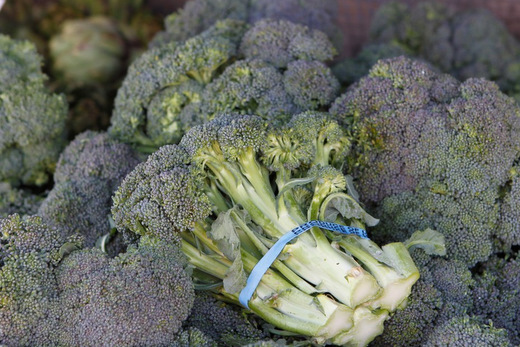
Perfectly cooked broccoli
Let’s take broccoli first. Broccoli, and all cruciferous vegetables, must not be overcooked, otherwise chemicals in the plant break down and release sulfurous compounds, such as ammonia and hydrogen sulfide, and interact with the chlorophyll in the plant, which causes the broccoli to turn an unappetizing brownish-gray color and to have a very unpleasant smell.
This chemical reaction is the reason people who say they don’t like broccoli probably don’t like it. I imagine that at a young age they ate overcooked broccoli. Broccoli should always be cooked in small amounts of water until it is crisp-tender and retains its bright green color; it should never be cooked until limp. 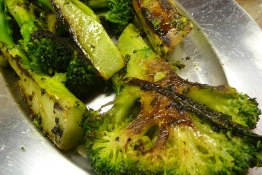
That means broccoli should never be cooked more than seven minutes maximum at a boil and preferably only four to five minutes. It should be drained immediately and never left in hot water and it should be plunged into ice water or put under cold running water to stop its cooking unless you’re serving it immediately. President George H.W. Bush famously said he didn’t like broccoli at all, and I’ll bet as a youth someone cooked him sulfurous broccoli.
A broccoli dish I serve will make a broccoli lover out of anyone. It’s simply Griddled Broccoli.
Fresh beets to please
As for beets, when I hear someone say they don’t like beets I can bet that’s because they’ve only had them out of a can. But fresh farmers market beets cooked properly and served as a colorful salad will change the mind of any naysayer. First, however, they will hardly recognize what they are eating as beets. The perfect dish to convert a beet haters Pancar Salatası, a Turkish dish that simply means beets with yogurt. But, oh my, it’s more than that.
Griddled Broccoli
Serves 4
Ingredients
Directions
- Preheat a cast iron griddle over medium-high heat.
- Bring a saucepan of water to a boil, salt lightly, and cook the broccoli 4 minutes and drain immediately and rinse under cold water or plunge into a bowl of ice water to stop its cooking. Let drain.
- Lightly oil the griddle and cook the broccoli, cut side down, until golden brown, 3 to 4 minutes, turn and cook 1 minute, then remove from the heat, salt lightly, and serve.
Pancar Salatasi
Serves 6
Ingredients
Directions
- Put the beets in boiling water and cook until tender, when a skewer glides easily to their center, 2 hours. Drain and once they are cool enough to handle, peel. Slice the beets in ¼-inch thick slices and arrange on a platter slightly overlapping and let them come to room temperature, if desired (you can serve them now too, still warm). Season with salt and pepper.
- In a mortar, pound and grind the caraway seeds until crushed then add the garlic and salt and pound until mushy. In a bowl, beat the yogurt and garlic mixture until smooth, then spread over the beets. Sprinkle with paprika and serve.
Zester Daily contributor Clifford A. Wright won the James Beard / KitchenAid Cookbook of the Year Award and the James Beard Award for the Best Writing on Food in 2000 for “A Mediterranean Feast.” His latest book is “Hot & Cheesy” (Wiley) about cooking with cheese.
Photos, from top:
When you need an antidote to heavy, gray skies and heavy holiday fare, look no further than the venerable winter radish.
Unlike the fast upstarts of early spring that go from seed to edible in less than a month, winter radishes grow slower, bigger and more beautiful. These are the original radishes — valued for more than a thousand years not only for their taste and nutrition, but because they keep well all winter in a root cellar, cool basement or attic, or in the vegetable drawer of your refrigerator.
In my book, however, their longevity plays second fiddle to their sweet and spicy taste, their satisfying crunch, and their amazing colors that enliven the palette of your plate.
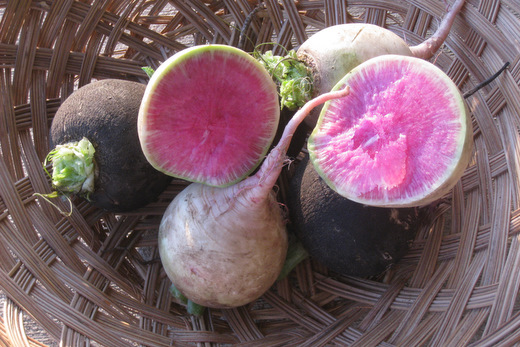
In my many years of farmers market selling, I’ve found that even people who say they do not like radishes cannot resist the roseheart. Also known as beauty heart, misato rose, xin li mei (also transliterated as shin-ri-mei), or watermelon radish, these radishes take a stealth approach. From a distance they look like dumpy, medium-sized turnips. Upon closer inspection, you see that the white exterior has moss-green shoulders. The touch of pink near the root is the only indication of the splendor within.
Slice one open and stand back to admire the deep mauve or fuscia interior with its stunning starburst pattern. After this, let your creativity take you where it will, as the radish is equally good raw or cooked. You can simply peel, slice in wedges and eat. The interior is sweetest, with the spiciness residing closer to the skin. When cooked, winter radishes become even sweeter and meltingly delicious. I like to toss them in the roasting pan with other root vegetables, or chunk them into soups and stews.
Varieties from around the globe
After starting your winter radish habit with the roseheart, move on to the other winter variations — the black radish, German beer radish, daikon and salad rose. All are good raw on their own, or together on a plate of crudités. But they are truly wonderful when roasted, sautéed, or cooked in soups and stir-fries. And if good taste is not enough, winter radishes are good for you too — said to aid digestion, they are low in calories, with a good amount of potassium, vitamin C, folate and fiber.
Black radishes are sooty black on the outside and pure white within. The rock-hard globe grows slowly to the size of a baseball. The crisp white flesh highlights the black skin when sliced, leading to all sorts of fanciful monochromatic creations. Just grab a sharp paring knife or a vegetable peeler and carve or slice strips, stripes and curlicues.
Depending on its growing conditions, the black radish can be as strong as horseradish, and can be used similarly. Use some salt if you want to tame the bite. Or domesticate it completely by turning it into sweet preserves. One of our market customers reports that his Eastern European Jewish family makes delicious radish preserves called Eingemachts with grated black radish cooked in honey or sugar and flavored with ginger.
Next you can move along to the German beer radish. Upon first glance, everyone assumes this large conical root is a turnip. But it is a peppery, turnip-shaped radish that is great salted and eaten as a snack with, yes, beer.
Daikon are a Japanese radish with a crisp, juicy, white flesh. They have a medium bite when raw, but are very mellow when cooked. The name (dai = large or great; kon = root) reveals that this is indeed a large radish — but the more radish, the more you can do with it. My favorite thing is to make daikon oroshi, which is simply Japanese for grated daikon. The grating creates a lot of liquid, but that’s what you want. Just add soy sauce to taste and perhaps a dab of freshly grated ginger if you are feeling extravagant. Daikon oroshi is great with grilled meats or fish, or with grilled, roasted or stir-fried vegetables. Daikon is also wonderful roasted with other roots, or added to soups.
Sweet and Buttery Roseheart Radish
Ingredients
6 medium rose heart radishes, cut into wedges or half moons
2 teaspoons brown sugar
1 teaspoon red wine vinegar
fresh ground black pepper to taste
Directions
- Melt the butter in a skillet over medium heat.
- Add radishes and toss to coat. Cover the pan and cook for 4-6 minutes, shaking occasionally.
- Add the sugar and vinegar and toss over medium heat for 1 minute.
- Season to taste with pepper. Serve immediately.
Winter Radish Salad
Ingredients
Directions
- Place radish slices in a bowl and sprinkle with the salt. Cover with a heavy plate and refrigerate overnight.
- Drain off all the liquid and wash in cold water in a colander. The slices will be transparent and tender.
- Prepare a dressing by combining the oil, wine vinegar, salt and pepper, and pour over the radishes.
- Refrigerate until ready to serve. Add soy sauce and sesame oil if you want to give the salad an Asian twist.
Terra Brockman is an author, a speaker and a fourth-generation farmer from central Illinois. Her latest book, “The Seasons on Henry’s Farm” was a finalist for a James Beard Award.
Photo: Roseheart and black radishes. Credit: Terra Brockman
Everyone is concerned about healthy food but sometimes this can lead to some silly ideas. One summer my friend, cookbook author and fellow Zester Daily contributor Martha Rose Shulman, submitted her piece on beets for her NewYorkTimes.com column called “Recipes for Health.” Her editor titled Martha’s story “Beets: The New Spinach.” We had a big laugh about this. It sounds so ridiculous, because beets aren’t new, don’t need to be compared to anything, don’t taste like spinach, and are botanically related only distantly by both belonging to the family Chenopodiaceae. The meaning, of course, was not about gastronomy. It was a health issue as Martha’s column is in the health section, so it made some sense.
My approach to health is indirect. I believe the question “is this food healthy” is nonsensical. One’s diet or lifestyle can be deemed healthy or unhealthy. Foods themselves are neither healthy nor unhealthy. As a cookbook author, I prefer to get my readers interested in dishes in their own right, through understanding the particular culinary culture or perhaps enjoying the food on its own.
The tasty merits of beets
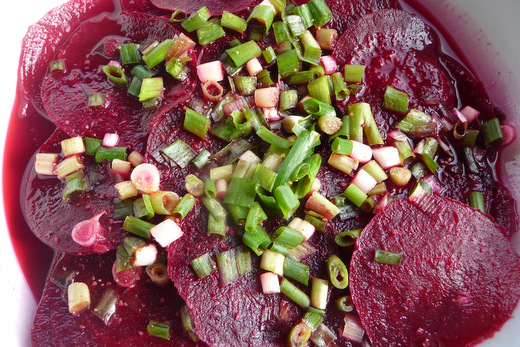
If you have a plate of roasted beets in front of you, and you’re not a microbiologist (or even if you are), as a gastronomer, you’d be interested in the geometric texture of the slice, the essential taste of beetness when the root is roasted, the color so perfectly fitting the description maroon. You’d consider the staining qualities, how to handle beets when cooking them, what other foods might be served with beets, the relative merits of boiling versus roasting beets, and what to do with the beet greens.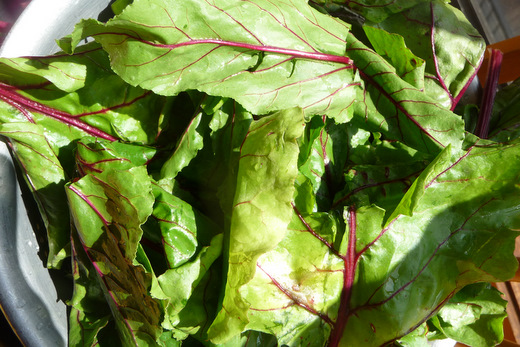
I might also talk about how most everyone hated beets that came out of a can, how in Roman times beets were appreciated for their leaves, not their roots, which probably were not the fleshy bulbous ones of today. What a marvelous vegetable we discovered once we had a real beet. I could talk about my attempts to grow beets or how they are prepared in other cultures.
You may have made the beets with yogurt and swooned about how beautiful a preparation that is. You might mention that beets are nutritious.
However, if you talk about the fact that beets are high in folate, manganese and potassium and that their greens, so often chopped off in supermarkets, contain beta-carotene, vitamin C, iron and calcium, then you are a geek (unless you’re a nutritionist, microbiologist, or other researcher).
While it’s true that beets are very nutritious, if you are buying beets because of folate, you’re a dork. That’s not about joy, that’s about a half-assed understanding about how the body works, a science that changes constantly and which an average well-educated person couldn’t keep up with if they tried. Even nutritionists have a hard time staying current with the recent research.
Don’t be a healthy food geek
None of this is new. Humans have been concerned with health and food since the beginning. But what about joy? What about the joy of eating the beet? What about how beets get integrated with other foods? Of course one should educate themselves about nutritional issues. But there is no need to get geeky about it. And if you always ate “healthy” foods, life would be joyless. And in fact it is, and that’s why people are fat in this country. You’ve seen those skinny, pale, humorless, yoga-twisting girls at Whole Foods? Is that the goal?
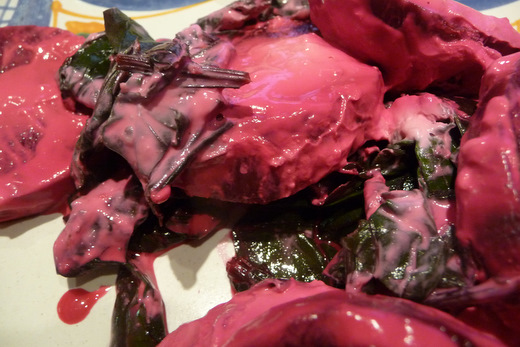 They don’t eat properly because they are overly concerned about issues they don’t understand. They make me want to stuff a cruller down their gullet. What does folate do? Or beta-carotene? Is it possible to have too much? Do you know?
Not even the health writers (most of them) can adequately explain this.
You need to talk to a microbiologist. Try making beets with orange blossom water and Moroccan spices and if folates is the first thing you think of, you need to see a shrink.
Beets With Orange Blossom Water and Moroccan Spices
Serves 6
Morocco is abundant with orange trees and orange juice vendors can be found everywhere. Orange flower water is distilled using an alembic, a device for distillation brought to Morocco by the Arabs. Paula Wolfert tells us that they call this syrup made from orange blossom water knelba in Morocco. One usually finds orange blossom water, along with rose water, sold in Middle Eastern markets, although some supermarkets may have it in their international or baking sections. This refreshing meze also goes great with grilled spiced lamb rib chops. This recipe is adapted from Paola Scaravelli and Jon Cohen’s “A Mediterranean Harvest“ published in 1986, where they call it salata remolacha, which is the Spanish phrase for beet salad.
Ingredients
Directions
- Place the beets and water in a large saucepan, bring to a boil, covered, and continue to boil until tender, about 1 hour. Drain, reserving ½ cup of the cooking water, and peel when they are cool enough to handle. Let the reserved cooking water cool too.
- In a small bowl, combine the reserved cooking liquid, paprika, sugar, orange blossom water, cumin, cinnamon, lemon juice, scallions and salt. Slice the beets thinly and arrange in a serving bowl. Pour the dressing evenly over the beets and refrigerate for 1 hour before serving.
Zester Daily contributor Clifford A. Wright won the James Beard / KitchenAid Cookbook of the Year Award and the James Beard Award for the Best Writing on Food in 2000 for “A Mediterranean Feast.” His latest book is “Hot & Cheesy” (Wiley) about cooking with cheese.
Photos, from top:
Credits: Clifford A. Wright
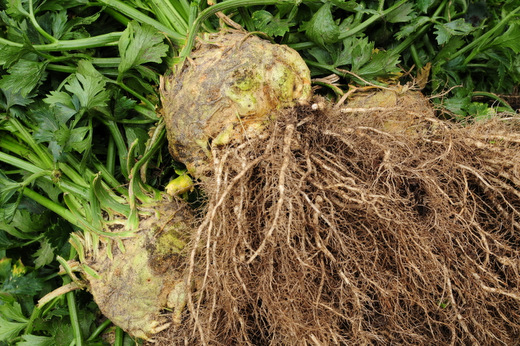
As the winter holidays approach, big vegetables (and big meats) tend to take center stage. While the weighty winter squashes and bright sweet potatoes garner raves, the true culinary star, celery root, waits quietly in the wings for those sensitive to her considerable talents.
Also known as céleri rave and celeriac, this is a root vegetable that won’t win any beauty contests. The beige-colored, lopsided sphere is embossed and channeled, convoluted, creviced, and crowned with disorderly rootlets that tenaciously hold the soil from which they were recently unearthed.
But if you give celery root a chance, you will be won over by the beauty within. Just one sniff of the recently-dug root will fill your head with an intoxicating parsley- and celery-scented aroma. The taste combines that herbaceous pungency with the crisp texture of the root. Together the combination is irresistible.
Despite its gnarled and gnarly appearance, celery root is well-loved by those who know it, and it has an honored place and starring role in the French specialty, céleri rémoulade (celery-root remoulade). If you have ever been to a French bistro, chances are you began with a crunchy salad of julienned or shredded celeriac dressed with a sharp mustard mayonnaise.
A deep and complex flavor
Celery root is a late bloomer. Unlike a radish’s meteoric rise from seed to plate in 30 days, celery root seeds are planted in the hoop house in March, transplanted outdoors in May and then grow slowly but steadily for six whole months before being harvested in late fall or early winter. All that time in the soil gives them a wonderfully deep and complex flavor, equal parts earthy and herbal.
Celery root is not only good, it’s good for you — rich in phosphorous and potassium, and a mere 40 calories per cup. History tells us that Madame du Barry served celery root soup to King Louis XV every night before they went to bed. She considered the soup an aphrodisiac, but most herbalists herald celery root for its anti-inflammatory properties and recommend it for people with arthritis or rheumatism.
But its true value is not in the bedroom, but in the kitchen. There it shines in soups and stews, with other roasted root vegetables, added to mashed potatoes or raw in salads. Raw, it is usually grated, shredded, or julienned and then dressed with mayonnaise, vinaigrette or a cream dressing. For a slightly less raw taste, you can first toss the slivered root with one teaspoon salt and one tablespoon lemon juice and let it marinate an hour. Then rinse, drain, and dry thoroughly before dressing.
Versatile for warm winter dishes
I like to start any winter soup, with sautéed celery root. Finely diced, it makes a perfect substitute for the celery in the traditional mirepoix of carrot, celery, and onion. When you sauté celery root, carrot and onion in butter, it becomes the perfect flavor base for any soup, stew or sauce.
When celery root is braised alongside meat, it creates a tasty two-way street, lending a complex flavor to the meat juices, and a meaty richness to the vegetable. For the same reasons, celery root makes a great poultry stuffing for your Thanksgiving bird.
A few years ago, we had a very wet summer, which led to softball-sized celery root at my brother Henry’s farm. The great quantity of excellent celery root led me to cut it into French-fry sized sticks and make oven fries.
Roasted Celery Root or Celery Root Oven Fries
Ingredients
Directions
- Preheat oven to 425 F. Trim and peel celery root and cut into 1-inch pieces for roasted celery root, or into 2-3 inch sticks for fries.
- In a large roasting pan or heavy cookie sheet, toss celery root with oil and salt and roast in middle of oven 30 minutes.Stir celery root and reduce temperature to 375 F. Continue roasting celery root, checking for doneness after 30 minutes.
Celery Root and Potato Puree
Ingredients
Directions
- Place the potatoes and celery root in a saucepan and cover with cold water. Add the salt. Bring to a boil over medium-high heat. Reduce the heat and cook until the vegetables are soft, about 15 minutes.
- Drain and return to the pot. Add the cream and bring to a low boil over medium heat. Simmer gently 10 minutes, stirring frequently to prevent sticking. Add the butter, stir, and remove from the heat.
- Press the mixture through a potato ricer or pulse in the bowl of a food processor until almost smooth, retaining some bits of celery root and potato.Add the lemon juice, taste and add salt and pepper if needed. Serve hot.
Simple Celery Root in Mustard Sauce
Serves 4 to 6
This is a lighter version of the classic, creamy céleri rémoulade.
Ingredients
Directions
- In a large mixing bowl, combine the lemon juice, mustard, crème fraiche, and salt and pepper to taste. Mix thoroughly. Taste and adjust the seasoning.
- Quarter the celery root and peel it. Grate coarsely. Immediately add the celery root to the mustard sauce and toss to coat. Season to taste.
Terra Brockman is an author, a speaker and a fourth-generation farmer from central Illinois. Her latest book, “The Seasons on Henry’s Farm,” now out in paperback, was a finalist for a 2010 James Beard Award.
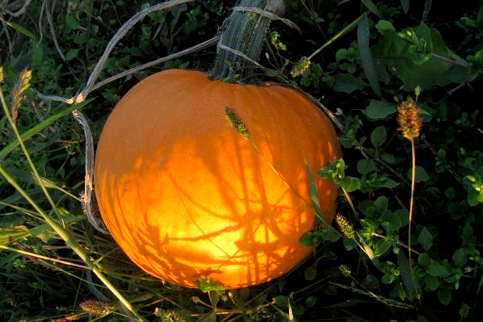
When I see the stacks of orange orbs materializing in front of grocery stores, I can’t help but think that pumpkins have been hijacked by October for that trick without a treat, the Halloween jack-o’-lantern.
The hijackees have been bred not for their texture or flavor, but for their color (DayGlo orange) and substantial stems, with the ability to support their weight when lifted by the buyer, and sturdiness so as not to break with multiple ons and offs of the jack-o’-lantern cap. Only after the imposters have been duly smashed, trashed or (ideally) composted, can we turn to truly great pumpkins.
The rule of thumb for finding a delicious pumpkin is to look for the opposite of the typical jack-o’-lantern pumpkin. The best ones are either the small “sugar” or “pie” pumpkins on the one hand, or the quite large “cheese pumpkins” on the other. Their colors range from light cream to taupe to a dark bronze or a dull orange. Their stems may be thin or even broken off. But remember you’re buying this pumpkin for its luscious flesh, not for its appendage.
Nearly lost varieties
The cheese pumpkins are flattened and squat, just like a big round of cheese. Some have vertical pleats running from the stem end to the blossom end. My brother Henry grows the cheese varieties winter luxury, New England, Long Island cheese and Cinderella. He also grows the elongated long pie pumpkin as well as an heirloom variety given to him by a local resident who got it from descendants of the Kickapoo, which was grown for centuries in great swathes of the Midwest.
The long pie looks something like a long, fat, orange (sometimes streaked with green) zucchini. This cultivar has a peripatetic history. Once known as the “Long Island pie pumpkin,” it was first recorded growing on the Isle of St. George in Portugal’s Azores islands, from seed brought there some time previously from the Americas. From the Azores, it was brought back to the New World in 1832 by whalers traveling to Nantucket from whence it was carried north to Maine.
Burpee offered it in 1888 as St. George, and by the 1930s, it was well established in certain areas of the northeast as the pie pumpkin. It was said that a Mainer never heard of a round pumpkin unless they moved away from home. Little by little, though, the long pie’s fame faded, and by the 1980s it had reached total obscurity (though the Penobscot and Abenaki tribes still regularly grew it).
It was “rescued” by LeRoy Souther, a native of Livermore Falls, Maine, who had been maintaining it for more than 30 years. Sometime in the late 1980s he brought seeds to cucurbit aficionado John Navazio at his Common Ground Country Fair squash booth. Navazio took them with him to Garden City Seeds in Montana where he reintroduced them to commerce.
New England pie is the classic orange pie pumpkin. The flesh is a little drier than some of the others, but stringless, making a nice pie consistency without putting it in a blender or food processor.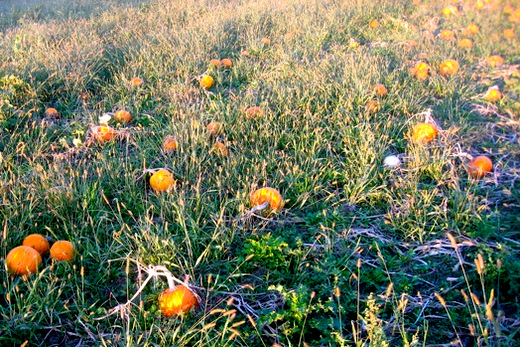
Winter luxury is my favorite culinary pumpkin, and Amy Goldman, author of “The Compleat Squash,” thinks so too. This pumpkin’s beauty comes from the russeted, finely-netted soft orange-gray skin. Goldman advises baking the pumpkin whole, pierced with a few tiny vent holes, until it slumps after about an hour at 350 F. You then scoop out the flesh and put it in a blender to make what Goldman calls “the smoothest and most velvety pumpkin pie I’ve ever had … requiring much less in the way of sugar and eggs than other varieties.” Don’t expect the color of the flesh to be dark orange, though. It is actually quite light but it’s the flavor and texture, not the color, that makes the winter luxury pie pumpkin so exceptional.
A serious heirloom
The Indian or Kickapoo pumpkin is such a serious heirloom that you’ll find it nowhere else than my brother Henry’s farm, unless you are, perhaps, a member of this central Illinois tribe. The seeds of this precious pumpkin were given to Henry by a woman who knows the chief of a local group of Native Americans. His family has grown it as long as anyone can remember. It is a large, flattened, fluted pumpkin that is a delicate beige/orange/tan. It strikes you as almost too beautiful to be real, more of a carved and polished objet d‘art for a large country French oak table, than a thing to carve and eat on a dish upon that table.
But this object is no objet, and eat it you must, for it is a thing of beauty with a practical function, which is to feed us, and feed us well. So find a truly great pumpkin, enjoy its deep beauty for a week or two, then sacrifice it for the enjoyment and nourishment of all.
Start by cutting the pumpkin in half, placing the cut sides down on an oiled baking sheet and baking at 350 degrees F until you can easily pierce it with a fork. From this point you can scoop out the flesh and freeze it for later, or make it into a side dish, soup, stew or dessert. Any way you use it, it will make for a deeply satisfying meal on a chilly autumn evening — another reason to revere the great pumpkin and give thanks.
Grandma Henrietta always had a tray of frozen pumpkin bars ready for quick thawing and icing and serving should a visitor drop by.
Grandma Henrietta’s Pumpkin Raisin Bars
Ingredients
Directions
- Preheat the oven to 350 F.
- Grease a 15½ x 10½ x 1-inch baking sheet.
- Stir the first 8 ingredients in large bowl to blend.
- Add pumpkin, eggs, and oil and beat until blended.
- Mix in raisins.
- Spread batter in prepared pan.
- Bake about 25 minutes.
- Cool in pan on rack.
- Beat cream cheese, powdered sugar and butter in medium bowl to blend into frosting. Spread frosting over cake in thin layer.
- Cut cake into bars. Eat some now and freeze some for later.
Terra Brockman is an author, a speaker and a fourth-generation farmer from central Illinois. Her latest book, “The Seasons on Henry’s Farm,” now out in paperback, was a finalist for a 2010 James Beard Award.
Field of dreamy organic pie pumpkins on Henry’s Farm ready to be harvested in October.
Certain vegetables have a majestic quality to them that requires you to address them with a level of respect. I feel that way about eggplant, and I’m fascinated not only with dishes made with it but with when and how it came to us. Several varieties of eggplant are now available at the market, including the familiar purple oval one and the purple globe eggplant, which is called Tunisian eggplant in Sicily. There are long and thin purple, lavender and white eggplant called Japanese or Chinese eggplant. There are white eggplants that look like large eggs and there is a round, ribbed eggplant called the Italian Rosa Bianco. There are little Thai eggplants the size of marbles. The edible part of the eggplant (Solanum melongena) is the cooked ripe fruit.
Although most botanists believe southeastern India is the place of origin of the eggplant — and some botanists make a case for China, as well as the Malay Peninsula — the place of origin is still unknown. We do know that Arab agriculturists brought eggplant to the Mediterranean from Persia and perhaps from the Arabian Peninsula in the ninth or 10th centuries. The Arabs seem to have discovered the eggplant already growing in Persia shortly after their conquest of that country in 642, although several ancient Arabic names for the eggplant appear to come directly from other Indian names, indicating that the plant may have arrived in the Arabian Peninsula in pre-Islamic times.
A hundred ways to prepare eggplant
The Arabs have long been fond of eggplant, and medieval Arabic cookery manuscripts always have lots of recipes. There is a saying in some parts of the Arab world that a girl should know a hundred ways to prepare eggplant. The eggplant was treated with suspicion at first. The medieval Arab toxicologist Ibn Wahshiya (circa 904) said it was fatal when eaten raw. He was mistaken, but his advice was taken to heart in medieval Europe for centuries.
The earliest reference to eggplant in Europe is from a description in the “Calendar of Cordoba” written in 961 in Islamic Spain where we are told that it is planted in March. There are numerous recipes for eggplant from 13th-century Spain. This is notable because eggplant was a relatively new vegetable to Europe, and this is an early date for its being common. Sicily was one of the first places in Europe where eggplant grew after its introduction by Arab farmers. The first clear reference to the eggplant in Sicily is from 1309, where they are called melingianas and are grown in a garden along with cucumbers and a kind of gourd. Although eggplant was once called “mad apple” (mala insana) because it was thought to produce insanity, this expression is not the etymological root of the Italian and Sicilian words for eggplant, melanzane and mulinciana, respectively. The Italian and Sicilian words derive from the Arabic word for the plant, badhinjan.
Picking the perfect eggplant
When buying eggplant, look for vegetables that are uniformly smooth and colored, without bruises. Squeeze the eggplant gently with a finger and then let go: The eggplant will reform smoothly again if it is fresh. The eggplant should feel heavy. Store eggplant in the refrigerator on a middle shelf, not in the crisper drawer. Many recipes call for salting the slices of eggplant before cooking to leech it of bitter juices. Modern eggplant cultivation has removed its bitterness so it’s not absolutely necessary to do this. On the other hand, I salt eggplant out of habit.
Fittingly, one of the simplest, and intriguing, recipes for eggplant comes from Sicily. It’s called Quaglie di Melanzane, meaning quails made of eggplant. It’s a dish from Palermo where small oval eggplants are sliced while still attached to their stem bases before they are deep-fried. The eggplants are then “fanned” a bit and arranged on a plate to look like quail. In Sicily, they are usually served as a first course or as part of a tavola calda (large tables in Sicilian restaurants filled with various antipasti and other foods) in Sicily
Quaglie di Melanzane
Serves 8
Ingredients
Directions
Zester Daily contributor Clifford A. Wright won the James Beard / KitchenAid Cookbook of the Year Award and the James Beard Award for the Best Writing on Food in 2000 for “A Mediterranean Feast.” His latest book is “Hot & Cheesy” (Wiley) about cooking with cheese.
Photo: Sicilian Quaglia di Melanzane (eggplant quails)
Upcoming Events
-
see all of our
Upcoming Events
-
Nathan’s Famous International Hot Dog-Eating Contest July 4Takes place on July 4, 2013Nathan’s Famous International Hot Dog-Eating Contest The men and women will compete separately for the title of Men’s Hot Dog Eating World Champion and Women’s…
-
The Park City Food & Wine Classic July 10-14Takes place on July 10, 2013The Park City Food & Wine Classic THE PARK CITY FOOD & WINE CLASSIC is a premier destination event where master winemakers, culinary greats, and…
-
Taste of Chicago 2013 July 10-14Takes place on July 10, 2013Taste of Chicago 2013 Taste of Chicago 2013 is Chicago’s biggest event. Getting its start as a modest food festival on the Fourth of July…
SmartBrief