Articles in Politics
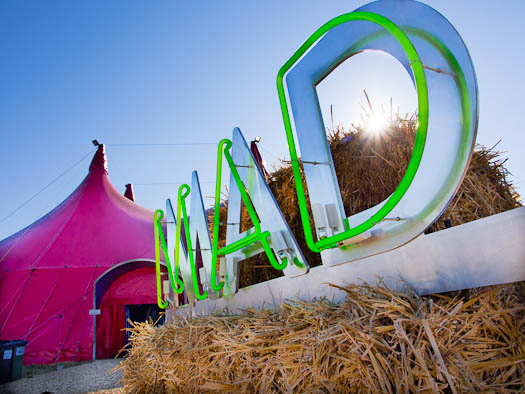
It takes guts to pitch a blood-red circus tent on the fringe of Copenhagen for the MAD Symposium and fill it with 600 food professionals — including cutting-edge chefs, food activists, farmers, foragers and butchers. But then, pioneering chef René Redzepi could never be accused of lacking guts. His radical restaurant, Noma, topped global charts for daring to break with French colonisation, and for establishing in its stead a self-reliance on Nordic ingredients and fresh cooking methods that triggered the so-called Nordic food revolution.
In Danish, “mad” means food. For the third MAD Symposium, Redzepi was host to a colorful cast of culinary characters with guest curators David Chang of Momofuku and Chris Ying — editor of Chang’s Lucky Peach magazine — and with the help of Ali Kurshat Altinsoy and Peter Kreiner. Speakers came from as far away as Australia, Brazil and California to inspire, inform, provoke and entertain the mostly young, international audience.
“We want to create a forum for the kinds of actions and ideas in food that no one else dares to tell or do,” Redzepi says. “The theme of the symposium this year was guts, in all its forms, and our speakers approached the subject from every angle: the natural, the social, the environmental, the emotional, the culinary and the slightly insane.”
“Having guts is a moral currency encompassing courage, ambition, fearlessness and, sometimes, stupidity,” Chang said in his emotional introduction to the event. “In my case, it meant taking a leap of faith to start a restaurant — without leaving anything for the swim back home.” Chang is now one of the most successful chefs in the U.S.
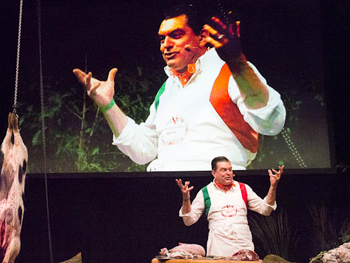
Dario Cecchini onstage. Credit: Carla Capalbo
The tone was set by the first speaker, Tuscan butcher Dario Cecchini, who stepped into the ring beside a just-slaughtered pig that had been strung up at centerstage, its head still dripping ruby blood. With the precision of a surgeon, Cecchini delicately sliced open the animal’s belly and pulled out its still-warm, glistening guts. “I’m proud to be from a family of village butchers,” he said as he worked. “We’re the ones who resolve the terrible dilemma of killing animals to feed our communities. In ancient times, it was priests who practised this art. We must be conscientious, responsible carnivores by giving our animals good, long lives and butchering them with respect. Mine is a hard trade, but it’s necessary.” He finished his presentation by giving a passionate recitation of Paola and Francesco’s song of love from Dante’s “Divine Comedy.” He got a standing ovation.
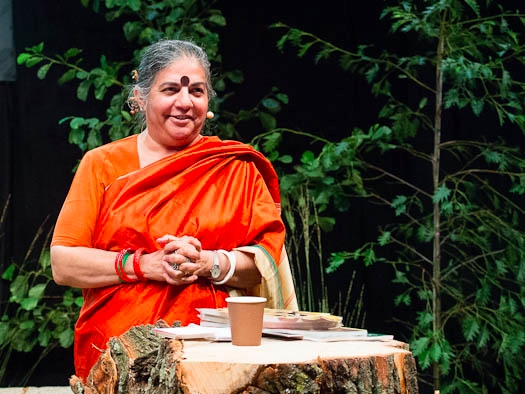
The ever-inspiring Indian food activist Vandana Shiva gave many of the audience’s younger members their first taste of what it means to fight for sustainable agriculture. “In 1987, I had a gut sense I should start saving indigenous seeds in reaction to the spread of sterile, genetically modified seeds produced by the chemical giants who had given us war chemicals,” Dr. Shiva began. “They boasted that by the year 2000 they would control all our seeds and foods. I analyzed that something had to be done.”
Since then her organization, Navdanya, has set up more than 100 community seed banks across India to preserve native varieties and has fought seed patenting and what she calls “the mono-culture of the mind.” “The good, natural bacteria in our guts are being killed off by the saturation of pesticides, weed-killers and antibiotics in our food chain,” she continued. “Only indigenous agriculture can restore the biodiversity and balance we need to survive.”
capalbomad2vandanashiva-8260393
Roy Choi, the Korean-American chef from Los Angeles, touched a raw nerve with his exciting account — part story, part rap — of fighting the city’s “staggering poverty and hunger crisis.” “L.A.’s rich areas have the country’s most diverse farmers markets, but in the poor areas there’s just nowhere to buy fresh produce and most of the food you can find is discarded, expired, inedible or junk,” he began as he showed photos of desolate convenience stores in South Los Angeles. When Choi started sending out his Kogi food trucks to sell fusion cuisine on random corners, he was surprised by the response. “We’d Twitter our location and within minutes, crowds of hungry people would be standing in line for our Korean-Mexican tacos. I really believe some value has to be placed back in the spiritual currency,” he said. “Do we have the guts to break this cycle of food poverty?”
Over two intense days, the MAD crowd heard from other inspirational chefs too. David Kinch, of Manresa in California, and his farmer, Cynthia Sandberg, showed how a creative chef can team up with a single-source vegetable provider to obtain grown-to-order produce. Pascal Barbot, of L’Astrance in Paris, gave a thrillingly high-energy talk about what it means to be a risk-taker in the kitchen by cooking “spontaneously,” adjusting and changing dishes in real time to suit his customers’ moods, needs and desires.
Christian Puglisi, of Relae in Copenhagen, graphically demonstrated how he established a successful all-organic restaurant with almost no funding, by moving into a cheap space in drug dealers’ territory and paring everything back to focus on the food. The street is now crime-free and thriving. Barbara Lynch, of Boston, told the picaresque story of how she became a chef, against all odds, trying to raise $2 million for a restaurant while living in a housing project, and learning to cook by reading cookbooks. “The only way is to be yourself, be honest and be fearless — you’ll need quenelles of steel!” she said, to delighted applause.
With more than 20 distinguished speakers on the rostrum, there isn’t enough space here to describe them all. But there is more information on the MAD site. And remember: To make a difference to your area’s food scene, all you need is guts.
Top photo: Exterior of the MAD Symposium site in Copenhagen. Credit: Carla Capalbo
Why worry about varieties of fruits and nuts decreasing? Multiple tastes, different colors, several growing periods, resistance to pests, drought and environmental disasters — all these factors rest on maintaining, and now reviving, regions and agricultural practices that grow many varieties of fruits, vegetables, nuts, grains and grasses.
These are just some reasons why biological diversity is important, but there are more. First, on an individual level, food tastes better when it is grown locally and transported shorter distances. Second, do you really want just one type of apple that peaks at one time of year? Or do you want different-tasting apples that have many sizes, textures, culinary uses and ripening times so you can enjoy them over a longer season and in an array of dishes? Do you want to enjoy your peaches longer in the season? Then the one-peach-fits-all variety is not going to cut it.
Central Asia, a biodiversity hotspot
Central Asia, which is rich in fruit and nut diversity, includes countries with a multitude of cultures, languages and foodways. The famed silk and spice routes coursed through the mountainous landscapes.
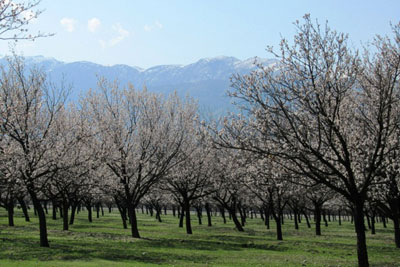
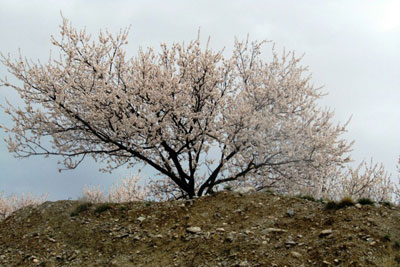
Apricot trees. Credit: Jyldyz Doolbekova
Along the routes arrived a constant exchange of seeds, spices and ecological knowledge, too. In fact, the Central Asian mountains are what Conservation International designates “a biodiversity hotspot” — a region that contains an exceptional number of native plant diversity and serious levels of habitat loss. The hotspot’s more than 330 square miles include two major mountain ranges, the Pamir and the Tian Shan, southern Kazakhstan, most of Kyrgyzstan and Tajikistan, eastern Uzbekistan, western China, northeastern Afghanistan and a small part of Turkmenistan.
Tajikistan and Kyrgyzstan
Focusing on one area — Tajikistan and Kyrgyzstan — gives a few examples of individuals and organizations working toward more fruit and nut diversity in the face of challenging economic times and climate change for all farmers.
Two-part series on biodiversity:
» Part 1: Biodiversity is an issue of survival
» Part 2: Linking to ancient food-preserving techniques with an apricot chutney recipe.
Defining biodiversity
More from Zester Daily:
Mirzoshoh Akobirov, a scientist, is tapping into Tajik local biodiversity and ancient agricultural practices to address climate change and improve the economic welfare of his fellow farmers. Over the years Akobirov noted that only 70% of domesticated fruit and nut trees survived whereas their wild relatives had much higher survival rates. He is actively reviving wild fruit and nut populations on abandoned slopes because of their strong local resiliency to climate change, specifically drought and pests.
Before the fruit, there is the beautiful blossom. So why not celebrate the high diversity of apricots (of which there are about 20 varieties) at the Blossoming Apricot Festival in April each year in the Batken District, Kyrgyzstan? Akylbek Kasymov, founder of the Foundation Bio Muras, is doing just that. With the communities of Samarkandek, Kasymov is reviving the cultural significance and the transfer of agricultural practices to a younger generation of farmers. The festival showcases not only the biological diversity of apricots but also the music, dance and poetry that upholds the local culture.
Muhabbat Mahmaladiyva, a highly respected and beloved biodiversity and women’s rights activist, is founder of Zan va Zamin (Women and Land) in Tajikistan. The Women and Land organization is also the 2012 recipient of the Equator Prize for showing leadership in promoting alternative, innovative ways to build resilient communities and protect both people and the planet. Women and Land created more than 30 seed banks, provided funds so farmers could access seed varieties and offered opportunities for local food entrepreneurs to effectively counter the negative outcomes of Soviet-era mono-cropping and dependence on cotton farming. The group’s 12 field schools produce 1,000 tons of vegetables annually. Community orchards supply saplings and maintain more than 10,000 fruit trees that include local varieties of apples, pears, apricots and peaches. Their work creates more resilient ecosystems, fewer food shortages, more food sovereignty, improved local incomes and active involvement of women at every step of the process.
Collectively, these individuals are positively influencing their fragile environments to rekindle lost agricultural practices and food diversity that are sustainable, one seed and one individual, at a time.
Top photo: An apricot tree. Credit: Jyldyz Doolbekova
This article was partially underwritten by the The Christensen Fund, a nonprofit organization, dedicated to biocultural and agricultural diversity of marginalized people and landscapes globally.
“Just let it melt on your tongue,” Jose Martinez-Valero instructed. “It will dissolve into pure flavor.” I placed the tiniest sliver of jamón Ibérico de bellota in my mouth and waited. The finely marbled fat melted like silk, but the finish was remarkably pure, strangely akin to a classic palate cleanser.
As I positioned myself to snare another sample in the elbow-room frenzy of the Culinary Institute of America’s Worlds of Flavor conference at Napa, California, Martinez-Valero hit me with an even bigger surprise. “This fat is just like the very best olive oil, it’s monounsaturated. It comes from a breed of Spanish pig we call the four-legged olive tree,” he said.
And suddenly I understood why the mouthfeel was so familiar. With years of olive oil tasting under my belt, it was easy to recognize the difference between greasy, mouth-coating fat and this high-quality clean finish.
Jamón Ibérico de bellota is familiar to food cognoscenti as the cured form of this extraordinary animal. At prices north of $1,000 for a single ham, it is not widely available in restaurants or markets. But those who can afford it will go to great lengths to find a reputable source, because it is considered one of the finest foods in the world. At the heart of its difference is that purebred Ibérico pork represents a very old-world approach to one of the tenets of today’s cuisine: a sustainable, simple focus on pure flavor.But like high-quality extra virgin olive oil, purebred Ibérico pork is under siege from unscrupulous distributors who pass off crossbred meats as purebred, elitist pricing and a disappearing ecosystem (needed to support the swine’s unusual eating habits). The species has been on endangered or at-risk lists for years, a dwindling breed supported by a handful of dedicated producers on a lifelong mission to avoid extinction — of the pig, its pastureland and their very livelihoods.
Martinez-Valero represents Ibérico Fresco, one of few Spanish distributors of 100% purebred, acorn-fed fresh Ibérico meat in the United States. Over the din of pork belly- and backfat-crazed chefs at the CIA‘s annual event, he spoke passionately about the plight of this pig and its unique grazing land, the dehesa (forest) of the Iberian peninsula in Spain.
“It is the very definition of sustainable agriculture. The man takes care of the forest, the forest takes care of the pig, and the pig takes care of the man,” explained Martinez-Valero.
Raising Ibérico pigs is an expensive labor of love
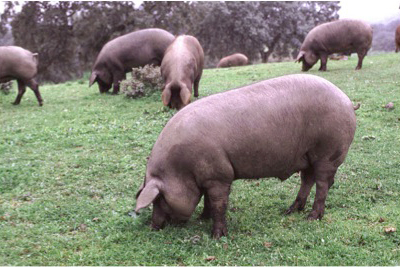
Ibérico pigs are not particularly pretty, galloping along with long legs supporting a chunky body. They are best identified by their distinctive black hooves, hence the Spanish name, pata negra. There are many different breeds of Ibérico pigs, ranging from the productive, big Torbiscal to the delicate Entrepelado, but they all have certain traits in common that strain any producer’s pocketbook. Those include litters half the size of crossbreds, production cycles that are three times as long, and particularly expensive eating habits.
In contrast to the ordeals of pigs jammed into cramped pens and pumped full of antibiotics seen in television news reports on the pork industry, the lives of purebred Ibérico pigs seem like a scene straight out of a fairy tale.
Watch a video about Ibérico pigs and the farmers who raise them, below:
By Spanish law, truly purebred (genetically 100%) Ibérico pigs are required to attain at least 40% of their weight grazing exclusively on holm oak acorns during the montanera, or period of fattening between October and January. Each pig is provided 2 hectares (about 5 acres) of personal space to reach its best weight. The high oleic acid content of the acorns and the genetic makeup of the Ibérico help convert the pig’s fat into its distinctive monounsaturated marbling.
“It’s a marvel, a machine for making healthy meat. It’s perfection,” said Lucia Maesso Corral, president of Aeceriber, the Iberian Pig Breeders Association. She represents purebred producers who are fighting an uphill battle against lesser quality, far less expensive crossbred options that are allowed to take the name “Ibérico.” But their passion for truth-in-labeling and authentic, quality production is palpable.
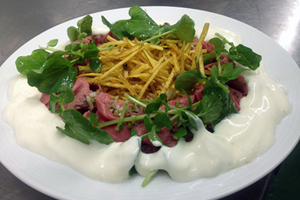
Fresh Ibérico pork with Manchego and saffron. Credit: Courtesy of Monastrell restaurant in Alicante, Spain
Without question, the better-known cured ham version is amazing. But one taste of the fresh meat they now call “the other red meat” and you will understand the depth of these producers’ dedication. For a dinner party of two, I sautéed a secreto of carne de cerdo ibérico de bellota (acorn-fed Iberico pork shoulder skirt) for no more than two minutes per side, classically medium rare with a deep pink in the center, and sliced it like flank steak. Without exaggeration, it may well be the best meat I’ve ever eaten: succulent, sweet, almost nutty. Good enough that we didn’t have the discipline to stop, finishing off the entire cut with no regrets.
Monastrell’s Ibérico Pork with Manchego Cheese and Saffron
I went straight to the best source I know in Spain for a professional’s opinion of the meat. Chef María José San Román of Monastrell in Alicante, Spain, heralds the pig on her Michelin-starred menu with a simple appetizer that showcases the meat by surrounding it with gentle flavors: a foam of Manchego cheese crowned with spring-fresh watercress.
“Many people only know Ibérico ham in its cured form, but fresh cuts of the pig are extraordinary examples of the best pork Spain has to offer,” San Román said. “Like the Manchego cheese it is paired with, Ibérico pork is quintessential Spanish cuisine.”
Serves 6 to 8 as an appetizer
Ingredients
8 teaspoons (40 ml) extra virgin olive oil (preferably Picual variety), plus more for frying
1 pound (500 g) piece acorn-fed purebred Ibérico shoulder loin (presa) (see note below)
1.7 ounces (50 g) salt
100 mg saffron powder (see note below)
1½ ounces (40 g) each of capers, small gherkins, and finely chopped spring onions
2 teaspoons (10 ml) sherry vinegar
¼ pound (100 g) watercress
7 ounces (200 g) Manchego cheese
6 ounces (175 g) fresh cream
5 ounces (150 g) fresh milk
1 pound (500 g) potatoes, cut into matchsticks with a mandoline
Olive oil for frying
Foam maker, such as the iSi Gourmet Whip Plus
Directions
1. Marinate the pork for 3 hours in 2 cups (500 ml) of water with salt and saffron powder. Pork should be room temperature before cooking. Do not trim excess fat. Pat meat dry to remove excess moisture.
2. Place a frying pan with a little extra virgin olive oil over high heat. Place meat fat side down and sear for three minutes. Turn over and sear for two minutes on the other side until meat is just pink. Let rest for 5 minutes, slice angled strips against the grain and set aside.
3. Prepare vinaigrette by mixing capers, gherkins, spring onions, sherry vinegar and 8 teaspoons of extra virgin olive oil. Add to watercress and toss to coat.
4. Heat cheese, cream and milk until the cheese is melted, but do not boil. Put through a sieve and into the siphon and keep hot.
5. Deep fry the matchstick potatoes in olive oil and drain on tissue paper.
6. Put the potatoes in the center of the plate, layer slices of pork around it and place the dressed watercress salad on top.
7. Surround with the hot cheese foam.
Note
Fresh, acorn-fed 100% Ibérico pork and saffron powder can be found at tienda.com.
Top photo: Ibérico pigs. Credit: Courtesy of Aeceriber
As something of a general-assignment reporter on the food beat, I cover everything from elite top chefs in the farm-to-fork realm, to Napa winemakers, to boutique growers, to farmers market advocates and culinary academics.
But I also see food banks — a world of hurt no one in the food industry should ignore.
Tom Colicchio, a New York City chef who’s around the good stuff all the time but who believes that no one in America should be hungry, is co-producer of the documentary “A Place at the Table.”
“That hunger and malnutrition should persist in a land such as ours is embarrassing and intolerable.” — Richard Nixon
More from Zester Daily:
One of the movie’s shattering facts is that in the 1970s, hunger in America was all but eradicated. By the 1980s, hunger returned with a vengeance and now afflicts more people than any other time in the country’s history. A record 47.8 million Americans are on food stamps. Seventeen million are children. More than 33,000 food stamp users hold doctoral degrees. Enrollment in Supplemental Nutrition Assistance Program has increased 70% since the economic collapse of 2008.
It would appear to be a good time to enrich the food stamp system. But that’s not what’s happening in Congress.
Just when people rely on food stamps more than ever, the Senate voted June 10 for a farm bill that cuts SNAP by about $4 billion over the next 10 years.
And that’s the good news.
The Senate cut is peanuts compared to the $20-billion slash the House of Representatives is proposing. To protest, several of members of Congress tried a budget of $4.50 a day for 3 days this week to see what living on food stamps was like — not easy. The House version of the bill will knock nearly 2 million households off the rolls during a weak economy, with unemployment stalled at 7.6% and 15% of Americans living below the poverty line, the highest in poverty in half a century.
Most people on food stamps work. But if those jobs pay only minimum wage, such as Alabama’s $2.13 an hour for tipped employees, all minimum wage workers easily qualify for benefits.
Hard times can happen to anyone
I was on food stamps in California in 2005. My husband and I had lost a business and became instantly unemployed. As staunchly middle class, closer to upper-middle class growing up, I’d never heard of most of the programs that aid distressed Americans. Only one came to mind — food stamps.
Even though I owned a home and car, it looked as if I would be eligible. Only recently had ownership of a car been stricken as a disqualifying asset. I was shocked that people obviously in poverty were once punished if they owned a car to use to get to work or to look for a job. Then I got fingerprinted. (California no longer fingerprints food stamp applicants.)
I was issued a debit-like credit card loaded with funds every month. It’s called Electronic Benefits Transfer, or EBT.
I shopped for what would keep us healthy and un-hungry, such as vegetables, fruits, juice, meat, eggs, and OK, chocolate. I’m a good cook, so my shopping habits didn’t change much. I never got into the living-on-beans thing. I didn’t squander precious food-stamp dollars on soda, chips, frozen TV dinners, disgusting canned peas, lunchmeat or cookies, all of which are permitted. Participants who buy Ding Dongs and Hungry-Mans, and can’t cook, burn through their balance sooner.
Once I got the hang of it, I was going to EBT stores like Whole Foods and buying leg of lamb and brie. The program even allowed me to buy seeds and plants to grow a garden.
I thought that being on food stamps was like manna from heaven. But it’s not perfect. Aside from fraud traced mostly to the grocers’ end, the most imperfect thing about SNAP is its recent message about health.
In 2008, it changed its name to SNAP so it would be thought of as a nutrition program. The only problem here is that SNAP’s N-word, nutrition, doesn’t mean much when enrollees can buy liters of Pepsi and bags of Cheetos, and attract the scorn of politicians and the uninformed. My style of food stamp usage is equally criticized as food stamp elitism. How dare I buy high-quality ingredients while on the government dole?
But food is food, and any change to this definition in the Food and Nutrition Act would require an act of Congress. The people on the Hill gave up when they became tangled in the unruly theories of what makes a food too luxurious or too junky. Why not offer food stamp users nutrition classes? Oh, silly me. SNAP’s education funding had already been cut.
Food stamps benefits multiply
Every time an EBT card is swiped at a store, a nearly instantaneous transfer of funds from Washington starts a cash ripple effect locally. For example, the federal reimbursement of an 89-cent head of broccoli benefits the grower, the distributor, the store and the person who consumes the broccoli’s nutrition — for the full 89 cents.
Slashing billions of dollars from SNAP may starve the government beast, but it’s going to starve actual human beings, too.
If the minimum wage is not a living wage, and until the economy becomes unstuck, expect even more people to need that plastic EBT card like the one I keep in my wallet to this day.
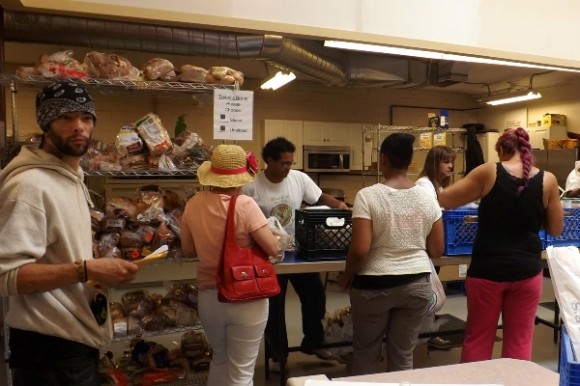
Top photo: Clients collecting food at the River City Food Bank in Sacramento, Calif. Credit: Elaine Corn
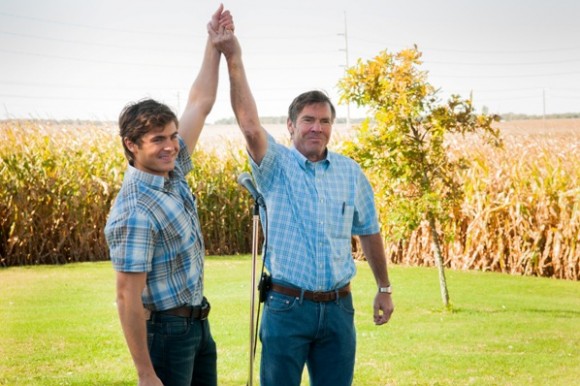
Before his death, Roger Ebert wrote a review of the new Ramin Bahrani film, “At Any Price,” and said, “This is a brave, layered film that challenges the wisdom of victory at any price.”
Among other accomplishments, the film shows us the lives of agrarians who have managed to hold onto their farms into the 21st century who are now being urged to “expand or die.” Apparently, in the beginning days of research, Bahrani spent time with the family of Troy Roush, the corn and soybean farmer who was featured in the documentary, “Food, Inc.”
More from Zester Daily:
» Food movies that drive political debate
» GMO apples coming to a grocery near you?
“At Any Price,” revolves around a not terribly loving father-son relationship and 3,500 acres of farmland planted with seeds from the Liberty Seed Company, which sells genetically modified seeds. It’s kind of interesting how in every film where GMOs have a major role, the seller of those seeds is always painted as a bad guy. In recent memory, films such as Bitter Seeds covered the same territory.
Ebert is right, there are many layers to the film, including the father-son relationship, power, familial individuation and greed. But what struck me was the way many of the film’s characters flagrantly disregarded each other.
This was particularly true of the farmer who is also a salesman for the seed company, played by Dennis Quaid. While at the funeral of a neighboring farmer, he expresses his condolences to the widow and her son right there at the graveside, but just seconds later he tries to buy the rights to the man’s land.
Much like the Indian film “Bitter Seeds,” there is a kind of desperation that is implanted by the seed company in those who are both selling the seeds and planting the seeds. Farmers who use genetically modified seeds must agree to strict rules created by the GMO seed companies. Once a farmer buys the GMO seeds, he is required to pay an annual royalty each time the seeds are replanted. After one season, the GMO seeds need additional fertilizers, and as the seasons move forward more insecticides and pesticides. The soil eventually requires more water than a normal saved seed would require. All of this means more and more money for the farmer to lay out, which means somewhere along the line the farmer is likely to become desperate. This is not a sustainable way to farm or live.
On the Whipple Farm, as featured in “At Any Price,” it’s all about bigger yields, bigger harvests and bigger profits. Where the farmer used to be a person of faith and integrity, he is now all about the bigger attitude, which colors everything and leads the main characters to lie about their illegal use of seeds, and to steal and then to lie some more. One of the characters in the film (a girlfriend of the farmer’s son) compares the use of illegally saved Liberty Seeds to a bootlegger who illegally copies DVDs. Ah, that GMOs were so innocuous.
Henry Whipple has two sons. He would like to leave his farm to both of them. After all, his grandfather left it to his father who in turn has left it to him. Three generations already and Whipple would like to make it four. But Henry Whipple’s sons have other lives in mind for themselves. The elder is climbing mountains in South America and the younger would rather be a NASCAR driver. Neither have any respect for their father or the work that he does or the life that he represents.
In his New York Times review in April, Stephen Holden calls farmer Whipple, “a warped caricature of a reassuring American archetype.”
Film raises specter of nation’s ‘wobbly moral compass’
‘Any Any Price’ He says the film is both “a critical exploration of agribusiness and its cutthroat, hypercompetitive ways,” and “a searching, somewhat ham-handed allegory of American hubris in the 21st century and a bleak assessment of the country’s wobbly moral compass.”
The film pays close attention to the stresses that high-tech farming involves and how it freezes small farmers out of their livelihoods. It also sub-plots the kinds of competition that exist between the larger farms and farmers. This is a rivalry that can, and sometimes does, lead to violence.
The movie raises issues that inspire deep reflection. It’s a complicated film, dealing with complicated issues. And it is certainly worth seeing. This is a film that explores subject matters on a variety of levels, all of which deserve our attention.
Top photo: Zac Efron and Dennis Quaid appear in a scene in “At Any Price.” Credit: Courtesy of Ramin Bahrani
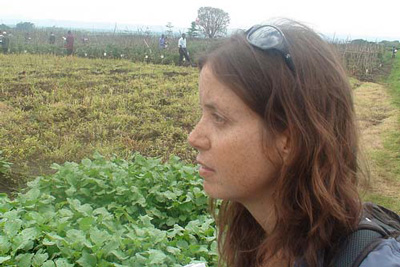
Follow Danielle Nierenberg, and you will end up in interesting places. I learned this reading the missives she e-mailed from developing nations around the world during her tenure with Nourishing the Planet and the Worldwatch Institute. The Tufts-educated Missourian delivered awful truths about the world’s broken food system with an upbeat focus on inspiring individual-sized solutions. I missed her ever-present freckle-face grin when the e-mails stopped.
Now she’s back! With her new venture, Food Tank, Nierenberg and partner Ellen Gustafson remain focused on solutions, but this time they are the sweeping, world-altering kind.
Food Tank will bring together farmers, policymakers, researchers, scientists and journalists with the funding and donor communities to participate in a clearinghouse of information and data. Solid information about what’s working, they believe, will lead to more and better research and development. It’s a step-by-step scientific process toward food justice and a sustainable agricultural system.
I recently asked Nierenberg to share some background on herself and Food Tank.
You have worked to raise awareness about food quality and availability for a long time. What led you to become involved in this cause?
I’ve always been obsessed with food. I’m the person who wants to know what she’s having for dinner at lunchtime. I had the opportunity to work with a lot of farmers right after undergrad as a Peace Corps volunteer and that really helped me understand the connections between how we grow food and the impacts on health and the environment. Since then I’ve really tried to highlight what farmers, business, entrepreneurs, researchers, youth, policymakers and others are doing to make the food system more sustainable.
How did that work lead you to create Food Tank? What do you hope to accomplish?
We want to build a network of eaters, producers and policymakers and highlight the solutions that are already working.
There is so much focus on investment in big, sexy technologies, and we want to highlight how many of the answers to our most pressing social and environmental problems are already out there.
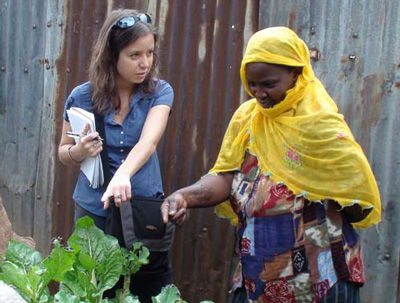
Danielle Nierenberg visits with one of the female farmers growing food in vertical gardens in Nairobi’s Kibera slum. Credit: Bernard Pollack
If we start now, there is an opportunity to develop a better vision for the global food system. Fixing the system requires changing the conversation and finding ways that make food production — and consumption — more economically, environmentally, and socially just and sustainable.
We also want to work with our advisory group to develop a new set of metrics to measure the “success” of a food system. For the last 50 years, the measurements have been based on calories and yield and not on the nutritional quality of food, or whether a food system protects water and soil, or whether it promotes the empowerment of youth or gender equity.
What organizations and individuals are working with you on this project?
Ellen Gustafson is the co-founder of Food Tank. She and I have had a mutual crush and admiration for one another for years. Often she and I are the only young-ish women who end up at both industry conferences and sustainable food conferences. Ellen’s work has been more on the entrepreneurial side. She co-founded FEED Projects with Lauren Bush and started 30 Project.
My work has focused on more on-the-ground research and evaluating environmentally sustainable ways of alleviating hunger and poverty. Over the last few years I’ve traveled to more than 35 countries in Africa, Asia and Latin America talking to farmers and farmers groups, scientists and researchers, policymakers and academics, youth, journalists and others collecting their thoughts about what’s working to increase incomes, raised yields, improve nutrition and protect the environment.
People around the world seem to be far more aware of the issue of food quality and food security. What has caused this awakening?
I think that since the food and economic crisis began in 2007 and 2008 there’s a growing movement around how not just to feed people, but nourish them. Most of the investment in agriculture is on starchy staple crops and less has been invested in leguminous crops, protein-rich grains or indigenous vegetables. These are crops that are not only more nutritious, but tend to be resistant to drought, disease, pests, high temperatures, etc.
And more and more young people are getting involved in the food system — as producers in urban gardens in Asia, as bakers in New York, as seed distributors in Kenya, and as chefs, food manufacturers, etc. The food system and agriculture have often been something young people feel forced to do, rather than something they want to do. We need to find ways to make it more economically and intellectually stimulating so it becomes something that people want to do and know that they can make money from.
If you could snap your fingers and make one change in the food system, what would it be?
There’s no one thing that can happen to change the system, but a big thing I’d like to see is more investment in agro-ecological practices. Again, most of the investment in agriculture is in sexy technologies and commodity crops and starchy staple crops, and not in the things that are already working — everything from agroforestry and solar drip irrigation to combining “high” and “low” technologies through using the Internet and cellphones. The solutions are out there. They’re just not getting the attention, research and investment they need.
Top photo: Danielle Nierenberg at a site visit to the AVRDC-The World Vegetable Center in Arusha, Tanzania. Credit: Bernard Pollack
I was part of a conversation recently with colleagues in the food world who were griping that nothing much had changed in the health food movement since Adelle Davis’ books, “Let’s Get Well” and “Let’s Cook It Right.” Both books had raised a new public awareness in the 1960s to the fact that unprocessed organic food, grown without pesticides and herbicides, can determine our health. What about Michael Pollan, Alice Waters, Frances Moore Lappé, Mark Bittman, Robert Kenner, Paul Newman, A.E. Hotchner and Wendell Berry, to name a few contemporary food activists? Or even more recently, Anna Lappé, Bryant Terry, Jeremiath Gettle, Daniel Salatin, Katrina Blair or Curt Ellis and Ian Cheney.
I’m also frustrated that there is so much work to be done, but everywhere I look I see evidence of how far we’ve come on the issue.
More on Zester Daily:
» Organic food is not just for snobs
» The effects of GMOs on India’s farmers
I argued that things had dramatically changed in simple ways. For instance, yesterday I wanted to make a chicken tagine with plums and olives. The recipe called for chicken thighs, onions, butter, dried plums and lemons. I needed some lamb for another recipe and some hamburger. I also needed milk, half and half, and yogurt. It was midweek, and I didn’t have time to go down to the farmers market so I shopped at my corner market.
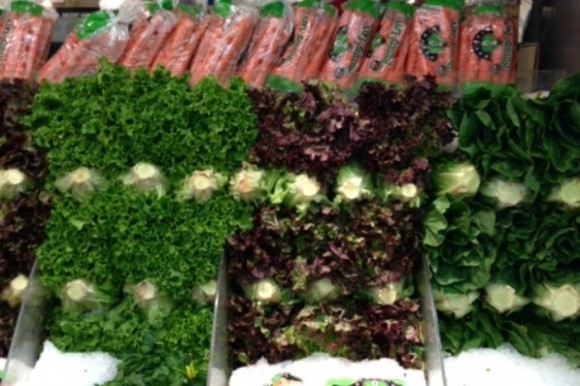
I was able to get full-fat yogurt, a coup these days because in the last 20 years almost everything has become either non-fat or low-fat. This, by the way, does not necessarily mean they are good for you. Fat-free foods may also have added thickeners, flour, sugar or salt. Also you don’t want to avoid all kinds of fat because there’s a decent argument to be made that foods contain both “good” fats and “bad” fats. In the meat department, I was able to get hormone-free, antibiotic-free, organic grass-fed lamb, beef and free-range chicken. I also noticed they had organic, grass-fed bison. In the produce department, I was able to get organic lettuces, organic berries, avocados, apples, pears and bananas. In the dairy case, I had a choice of free-range eggs from three farms, and I also found organic milk, organic half and half, and butter. There are farms all over the United States that sell raw milk. Laws regarding raw milk vary by state, but it is available if you want it. I found dried plums that had not been sprayed with sulphur dioxide, which is great because I definitely didn’t want any of that pesticide on my food because children in my family are allergic to sulphur. I know, of course, our future begins with our children and grandchildren. And I remind my friends that in 1996, Alice Waters created her first edible schoolyard in Berkeley, Calif. Since then the program has expanded to New Orleans and Brooklyn, N.Y.
The health food movement goes mainstream
When President Obama was elected, Michelle Obama told the world she was going to grow a garden. When he ran for reelection in 2012, the First Lady was promoting her new book, “American Grown” about the White House garden.
“The garden is the way to begin the conversation [about healthy food decisions],” she told the National Review. “I learned, in changing my kids’ habits, if they are involved in the growing process of food and they get a sense of where it comes from, they tend to be excited about it. The garden is a really important catalyst for that discussion.”
All over New York City public schools now have roof-top gardens or other areas set aside for gardens. The students at Manhattan School for Children on West 93rd Street give guided tours of their rooftop gardens.
Most colleges and universities offer programs in sustainability and integrated nutrition. We have new words in our vocabulary and dictionary that apply to quality food produced responsibly, such as locavore and sustainability. Most everyone knows about fermentation now because of Sandor Katz’s book, “The Art of Fermentation,” which was on the New York Times bestseller list for several weeks and nominated for a James Beard Award. Although California voters didn’t approve Proposition 37, which would have made the labeling of GMOs mandatory, the big news is that Whole Foods, the grocery chain with 339 stores across the nation became the first retailer in the United States to require GMO labeling on all foods sold in their stores.
Genetically modified ingredients are in much of the food we eat on a daily basis. Food labels give us information about nearly everything else we need to know about the food we’re eating, but there is generally no information about food grown with GMOs. Now, at least at Whole Foods, all foods will be labeled if they contain GMOs.
There are many more ways in which the food movement in the United States has dramatically changed. But in a way, my colleagues are right. Although we’ve done a lot, there is still more to do to protect our good food. And next we need to turn our full attention toward the issue of hunger, and getting that good food to those in need.
Organic produce at Eli’s Market in New York City. Credit: Andrew Lipton
The holidays were nearing when I eagerly skipped down the yellow-brick road into Dr. Mehmet Oz’s world of “What To Eat Now: The Anti-Food-Snob Diet.” His opener — that “some of the tastiest and healthiest food around is also the least expensive and most ordinary” — was indisputably welcoming.
ZESTER DAILY GIVEAWAY
Finally, I sighed with relief, our nation’s favorite star doctor will set the record straight. Eating healthy food doesn’t have to be rocket science. And it doesn’t have to be expensive. OK, yes, all the Google-smart news-speak mavens can choose to buy their fresh foods at the most expensive markets and thereby confirm their conspira-stories that healthy, local food is elitist.
But now, finally, we would get the straight dope on how we can eat well without breaking the bank.
I happily entered Dr. Oz’s world of bright and colorful frozen green peas and carrots. I read that we can enjoy some of our favorite foods — tacos, peanut butter, salsa and guacamole — and we can also “eat frozen and never feel that you are shortchanging yourself.” Hallelujah!
An egg is an egg?
But when Dr. Oz said “organic is great, it’s just not very democratic,” I stopped skipping. What he means by organic is revealed in his next sentence: “truffle oil, European cheeses and heirloom tomatoes.” No mention of everyday organic foods like apples, peas, carrots, beans. A bit later he confesses that he’s doing a “public-health service” to folks who are “alienated and dejected” because “the marketing of healthy foods too often blurs into elitism.” His public health service includes telling us there is no difference between organic and conventional foods. “An egg is an egg,” he says. What’s more, there’s “not much difference between, say, grass-fed beef and the feedlot variety.”
Let me get this straight: Organic is not democratic because … not everyone can afford truffle oil or European cheeses? The only organic food is the kind he shops for? Following that logic, if the only British car I bought was a Rolls-Royce, I could soundly conclude that British cars are not democratic because not everyone can afford a Rolls. That is, of course, ridiculous.
Affordable organic food is available
A real public health service from Oz would be giving devotees the low-down on organic: telling them that eating organic doesn’t mean buying truffle oil. Eating organic can mean consuming affordable, common foods. And eating organic can mean eating more nutritious food. This is where I get to thank Wal-Mart, which, like Dr. Oz, positions itself as serving the common person. Last November, Wal-Mart’s Economic Customer Insights Report announced that its “natural and organic food sales are growing almost twice as much as traditional food products.” This is not truffle oil. This is everyday organic and affordable food.
A real public health service was this recent study, “Is Local Food Affordable to Local Folks?,” which overturned many assumptions about the affordability of local and organic. Comparing prices between supermarkets and 24 farmers markets in 19 communities across six states in Appalachia and the Southeast, the study found that in 74% of the communities, local farmers markets produce was actually less expensive on average by 22%. In 88% of the communities, even organic produce was less expensive, on average by 16%. Overall, although local meats and eggs tended to be more expensive on average, when the costs of similar items were compared, the local food found at farmers markets was either the same or less expensive than in supermarkets in 74% of all cases, with an average of 12% lower cost. What’s more, the great news is that farmers markets are proliferating, meaning more affordable local and organic foods are available to low-income folks. Since 1994, according to a USDA report, farmers markets in the U.S. have more than quadrupled to 7,864 to date, with no end in sight.
Let’s not forget the nutrition argument. An important study showed grass-fed beef is nothing like conventional beef: it’s hugely healthier! Less fat overall, more healthy fats, more minerals, 300% more vitamin E, 400% more vitamin A and 500% more conjugated linoleic acid, which combats cancer, body fat, heart disease and diabetes. Yet another recent study by Penn State revealed striking differences between organic and conventional chicken eggs, with organic boasting twice the healthy fats, 38% more vitamin A and twice the vitamin E.
In my world, a real public health service would spread information not rumors. It would showcase the multiple benefits, including higher nutrition, of organic food. And it would show that, thanks to providers ranging from local farmers markets to Wal-Mart, more and more low-income people now can find — and afford — more healthy, nutritious, organic foods.
I applaud Dr. Oz for addressing the topic of affordable healthy food. Making healthy food more accessible to all is the right goal. But we don’t ridicule those who buy the latest smartphone as snobs and tell the rest to be happy with a rotary dial. Low-income folks don’t want rotary dial phones any more than they want sub-par food. So, Dr. Oz, please come back to the real world where everyone deserves to know the real dope on food: healthier, nutritious food can indeed mean organic foods — and if we look they’re becoming more available and affordable to us all.
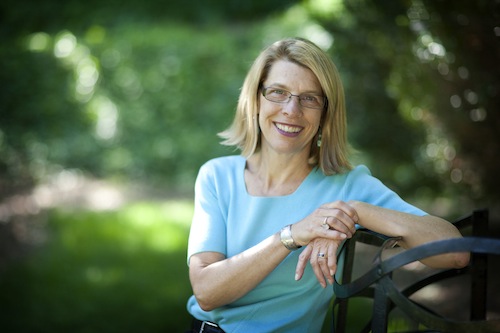
Photo: Tanya Denckla Cobb. Credit: Dan Addison