Articles in Book Reviews
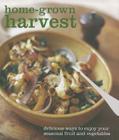
“Home-grown Harvest: Delicious Ways to Enjoy Your Seasonal Fruit and Vegetables” is the kind of cookbook that is as thrilling to browse through as a full-color seed catalog in the dead of winter. I experienced that rush when I opened this handsome book in the doldrums of the squash, potato and beet season. The first chapter of root vegetables spoke directly to me with recipes for potato and parsnip croquettes, Thai red pumpkin curry and spiced carrot dip. Revitalizing a desire to use my storage crops, it propelled me into the kitchen — one of the first tests of a keeper cookbook.
Inspiration for the seasonal cook
Organized by botanical groups (“Bulb & Stem Vegetables,”Greens & Salad Vegetables”), “Home-grown Harvest” is intended as a recipe resource for gardeners. However, lacking any of the horticultural information found in similar books, such as in Alice Waters’ “Chez Panisse Vegetables,” it is approachable for farmers market shoppers and Community Supported Agriculture farm members alike. There is a short supply of text overall (a plus for many; for me, less so), and this book reads like a beautifully designed magazine feature.
The chapter “Fruiting Vegetables” leads you through the warm-season crops of eggplants, peppers, tomatoes, corn and artichokes with alluring photographs. The recipes are a balance of classic and novel, European and Asian, even mixing savories with sweets, and this collection feels modern without seeming scattered. The lengthy tree fruit chapter was far less useful, since I have a garden, not an orchard.
Recipes are short on specifics and salt
“Home-grown Harvest” only revealed its true shortcomings when I brought it into the kitchen. Braised fennel with polenta was the first recipe I made, since I am always looking for more ways to use this beloved bulb. It started off promising with instructions to use the fronds, which I typically compost, and offered directions for trimming and slicing the bulb, a procedure unfamiliar to many home cooks. As soon as I turned on the burner, the situation soured.
I followed the directions to heat the olive oil in a saucepan (no size specified, my first red flag) over high heat to cook chopped onion and garlic. I took a second look in the book, then turned the heat down to medium-high anyway to avoid scorching (red flag number two). The fennel slices barely fit in my largest saucepan (red flag number three). I stuffed them in to braise in lemon juice, wine and stock for 20 minutes, covered, over a low simmer. Thirty-five minutes later, my fennel was crisp enough for a wilted salad but hardly braised (red flag number four), and where in the world was the direction to season with salt (red flag number five)?
Next, I tried the recipe for cauliflower and Swiss chard salad, beckoned by the beautifully caramelized florets in the photo. I found the same pan-size omission, the wanton instructions for high heat, unrealistic cooking times and a serious lack of seasoning in the tahini dressing. I’m sorry to report that the four other recipes I attempted to follow faithfully required some intervention although the recipe ideas throughout continued to allure me.
A cookbook looking for an author
What, precisely, was going on here? I sat down with the book to find out who was guiding my hand at the stove. I flipped the book to the title page and realized that there was no single author. On the copyright page, there was a list of 22 contributors, and I had my answer. As I pored over “Home-grown Harvest” in depth, I noticed how generic, too, were the sparse sidebars and tips, how they lacked the personal attention to detail that makes any cookbook — no matter how lovely — merit a long-term position in our collections.
The mark of an excellent cookbook is the voice, experience, perspective and particularities of its author. Like a kitchen without a chef, this cookbook offered no one to instruct, inform or mentor me. A recipe is not just a recipe. In the end, “Home-grown Harvest” proved to be a quick-reference collection to excite the imagination of the home gardener in the throes of winter, but ultimately could not satisfy this hungry, inquisitive cook.
Zester Daily contributor Lynne Curry is an independent writer based in the mountains of eastern Oregon. The author of “Pure Beef: An Essential Guide to Artisan Beef with Recipes for Every Cut” (Running Press, May, 2012), she also works as a private chef and blogs about rural life at www.ruraleating.com.
Photo: Sesame sweet potato with peanut dipping sauce. Credit: Lynne Curry
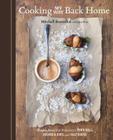
Mitchell Rosenthal has three San Francisco restaurants –Town Hall, Salt House and Anchor and Hope — and another, Irving Street Kitchen, in Portland, Ore. I haven’t been to any of them, but I’m pretty sure I’d like them all. I get this feeling because, as I read through Rosenthal’s new cookbook, “Cooking My Way Back Home,” I found myself really liking him. He has a giving and appreciative spirit, which often makes for a good restaurateur. He’s thankful for the mentors in his life — Tony Plaganis, “a big Greek guy who was passionate about food” and who gave him his first restaurant job; Paul Prudhomme; Seppi Renggli at The Four Seasons in New York; and Wolfgang Puck, for whom he worked at Postrio in San Francisco — and for everything working in restaurants has afforded him: travel, friendships, adventure and good food. This kind of honest and enthusiastic attitude tends to infuse one’s endeavors, and I’m sure his restaurants are full of it. His cookbook, written with Jon Pult, certainly is.
Get out the deep fryer
The book’s recipes, which have a Southern bent to them and are mostly culled from his restaurants, are adapted for home cooks — especially those with deep fryers. You’ll need one to make Angels on Horseback with Rémoulade, a gorgeous appetizer of deep-fried, bacon-wrapped oysters; Crispy Stuffed Zucchini Blossoms with Basil Cream; and an oyster and shrimp po’boy called The Peacemaker. For those of us without deep fryers, though, there are plenty of other finger-licking recipes to make us (fat and) happy. “Cooking My Way Back Home” is no diet book. It’s a collection of manly recipes that will also appeal to women who aren’t afraid to eat.
Rosenthal’s style isn’t subtle. There’s spice and smoke and fire in his food. There’s cream and butter. There’s lots of meat. And it all sounds delicious. Apple-Glazed St. Louis Ribs with Spicy Bourbon Barbecue Sauce, for example, and Peanut and Tasso Crusted Pork Chop with Hot Mustard. Even the fish dishes, like Warm Sea Urchin with Crab and Verjus Butter Sauce and Herb Fired Rainbow Trout With Apple and Horseradish Salsa Verde are daring. I want to eat them all. And I will. The recipes are clear, well-written and don’t require zillions of hard-to-find ingredients. His introductions offer as much insight about the food as about him — he had a recurring nightmare about eating gummy gnocchi, poor guy.
Party food
Thanks to beautiful photography by Paige Green, the food looks tasty and the people — whether it’s a smiling Rosenthal with his goatee and colorful tats or a young girl eating a messy lobster roll — look like they’re having fun. And I get the idea that if I serve this food at a dinner party, all of my guests will have a blast. It has that kind of energy. Indeed, the Haricots Verts with Harissa Vinaigrette, Serrano Ham and Spiced Almonds recently made an interesting and welcome addition to a potluck dinner. (Who knew making harissa was so easy? I’ll be using that vinaigrette on all sorts of salads.)
I’m often dubious about cookbooks written by chefs who spend their lives — including mealtimes — in professional kitchens, surrounded by sous-chefs and specialty equipment. In the introduction to the book, Rosenthal comes clean. “I’ve survived much of the last thirty-five years on staff meals. The last thing I wanted to do after a double shift on the hot line was to go home and cook.” But, he explains, as he became more of a restaurateur and less of a hands-on chef, he started to miss the “simple act of cooking.” That’s when he stepped into his home kitchen, started replicating his restaurant recipes and writing them down for the rest of us.
We’re lucky he did.
Buy Mitchell Rosenthall’s “Cooking My Way Back Home” Now!
Zester Daily contributor Christy Hobart is a food and shelter writer in Los Angeles.
Photo composite:
Mitchell Rosenthal. Credit: Paige Green
Book jacket, courtesy of Ten Speed Press
“I may have spent most of my life working as a professional chef, but in my heart of hearts, I am still a passionate amateur cook, a craftsman in the kitchen.” — Greg Atkinson
It’s easy to discount a book about home-cooking coming from a food professional like Greg Atkinson. After all, he has an unfair advantage. As chef-owner of Restaurant Marché on Bainbridge Island, Wash., and winner of the James Beard Foundation’s M.F.K. Fisher Distinguished Writing Award, Atkinson’s knowledge of cooking should disqualify him for writing a book about his own home-cooking. I suppose I feel that it seems somewhat unfair for a chef to expect average folks to live up to the standards of a professional.
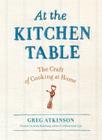
But when Atkinson writes in “At the Kitchen Table: The Craft of Cooking at Home,” about his devotion to home-cooking, I believe him.
Atkinson writes from the point of view of a person who cooks for love: love of family, real food and the places we call home. Each story and recipe strives to connect the dots between these very personal elements. And it is because of the many connections he draws between food, family and the environment that I believe his assertion that he is not only a professional chef, he’s a passionate amateur.
Storytelling and family
Atkinson’s love of craft is clear. When he writes about co-hosting a traditional Pensacola-style fish fry at his home on Bainbridge Island, he explains the logic of the process in a way that makes it seem ridiculous to try it any other way. After reading this chapter, I believed I could host a Pensacola-style fish fry in my own backyard. Atkinson has convinced me that I could succeed at something new, simply by following his instructions. That’s the sign of a true craftsman and a great writer.
The most appealing element of “At The Kitchen Table” is that each chapter begins with a story. The story may be about a particular food. It may be about a specific recipe. Or it may be about Atkinson’s interactions with the rich and famous of the culinary world (like Martha Stewart or M.F. K. Fisher). And while the celebrity tales provided an enjoyable voyeuristic pleasure, it is Atkinson’s stories about his own family that I found most compelling.
Atkinson’s concept of “family” is an embracing one that includes not only blood relatives but staff and colleagues who work beside him. His discussion of the “family meals” — those meals served to restaurant staff before the restaurant opens — made me want to try the recipes in my own kitchen.
He tells of the camaraderie in making Okinawan doughnuts for his staff at Canlis Restaurant in Seattle. The doughnuts were always served at the end of a hard shift, he says, because they “kept everyone in good spirits, even on the toughest nights.” The story made me want to make the delicious treat, not only for the taste, but in hopes of creating the same sense of caring and support he clearly felt for the kitchens he has worked in.
I can now attest that these doughnuts work wonders with unruly toddlers as well. I made them in my grandmother’s deep cast iron skillet, and the simple but satisfying patterns of deep-frying dough not only intrigued my youngest daughter, but the fluffy, crunchy, sugar-covered results satisfied us both. I was cooking for my daughter in the same skillet that my grandmother cooked many a meal, and that knowledge made the doughnuts even better. This is exactly this kind of culinary linkage that Atkinson encourages by telling us about his own family stories.
How food movements become unintentionally elitist
Atkinson also puts his “craft” into historical perspective. He begins the book by comparing today’s organic food movement to the Arts and Craft movement of the 19th century. Arts and Crafts designers produced hand-made goods meant for everyone to use. Sadly, these beautiful artist-crafted objects were so expensive to produce that they ended up primarily in the hands of the wealthy. As Atkinson puts it, “their efforts at egalitarian art became elitist.”
Much like today’s fresh, organic, locavore gourmet foods that, ironically, only the elitist can afford.
Atkins makes the case that the recent farm-to-table movement has indeed produced an alternative to mass-produced agribusiness food, but he questions the viability of the often-high-priced movement for the average consumer.
Atkinson’s solution to this dilemma is simple: To offset the additional expense of buying sustainable food, Atkinson suggests that we all eat at home. Or at least eat there more often. Atkinson’s book makes the case that meals that come from non-professionals, using ingredients and recipes that have personal histories, are far better than any high-end restaurant meal.
The stories made me want to dig up my own family recipes and start cooking them again. By sharing his own stories, Atkinson makes family food seem vital. And perhaps more importantly, he fuels my desire to develop my own repertoire of family recipes and stories.
The gap between restaurants and home-cooking
Ultimately, I think Atkinson’s book — and others like it — point out the growing disparity between the kind of food we want to eat in restaurants and the kind of food we want to eat at home. He also points out that we are increasingly comfortable with this difference. There was a time when many cookbooks were geared to teach people to cook “restaurant food” in their own homes.
If the economic downturn has yielded any positive results, it’s been that people are looking inward and realizing that what they have at home is pretty good after all. Many of us have given up trying to do what restaurant chefs can do better. Restaurants like Atkinson’s have entire staffs to help them produce spectacular food. What do we have at home that no restaurant can provide? Family. And the stories that families share.
Those ingredients of family and stories are the ones that Atkinson clearly values above all.
Zester Daily contributor Susan Lutz is a photographer, artist and television producer. A native of Virginia’s Shenandoah Valley, she currently lives in Los Angeles, where she is writing a book about heirloom foods and the American tradition of Sunday dinner. She also blogs about the subject at Eat Sunday Dinner.
Photos, from top:
Author Greg Atkinson. Credit: Karyn Carpenter
“At the Kitchen Table” jacket cover. Credit: Courtesy of Sasquatch Books
Okinawan doughnuts. Credit: Susan Lutz
* * *
Shop Indie Bookstores
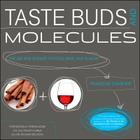
What is food (and drink) but a collection of molecules? And what are taste buds but a cluster of taste receptor cells? And what is this exquisite thing we call taste? It’s the combination of taste buds and molecules, and the subject François Chartier explores in “Taste Buds and Molecules: The Art and Science of Food, Wine, and Flavor.”
With every bite of food or sip of a beverage, dissolved molecules and ions rush into the pours of each taste bud to reach the receptor cells inside. Those receptor cells trap and analyze thousands of molecules and ions, resulting in what we call “taste.” Every animal responds to taste cues (and tons of olfactory cues, which are mentioned only peripherally in this book) to determine what is good or not good to eat. We humans take taste to another level in the culinary arts, which are, as the title says, a combination of art and science.
Culinary science books such as those by Harold McGee and Shirley Corriher are captivating and valuable because they explain chemical processes and demystify what goes on when you brown meat or whip cream.
But Chartier’s book is something else entirely — not so much hard science as a creative swirl of chemical compounds, charts, arrows, sketches, photos and ideas — sometimes frustrating, at times even infuriating — as when he contrasts Angus beef and grain-fed beef, apparently unaware that most Angus cattle are indeed grain-fed. But overall, if you are not blinded by the science, this book is sure to get your creative juices flowing and stimulate new ideas at the table.
Complexity and science
Chartier uses food chemistry research compiled by scientists at Agriculture and Agri-Food Canada, and by Richard Béliveau, author of “Foods That Fight Cancer,” to come up with clusters of foods and drinks that he claims pair well because of their shared chemical compounds.
It’s a simple premise, perhaps too simple. Taste is an extremely complex interaction not only of taste buds and molecules, but of individual differences in biochemistry and perception based on an individual’s genetics and environment. Individual differences in genetics are most obvious in the case of cilantro, which some people perceive as lively and pleasant, and others perceive as soapy and disgusting. And part of the reason I like broccoli and George H.W. Bush doesn’t is most likely that we have different genes coding for different taste receptors. Also, I grew up growing and eating super-fresh broccoli and the former president didn’t.
Nevertheless, the simple premise of pairing foods and drinks that share particular chemical compounds, which Chartier calls “molecular harmony,” got the attention of Catalan superchef Ferran Adrià, giving Chartier and his theory more prominence in the food and drink world than they might otherwise have had.
{sidebar id=149}
Chartier’s ideas play out in chapters devoted to the chemistry and tastes of mint, oak, pineapples and strawberries, cloves, rosemary, saffron, ginger, maple syrup, cinnamon, and chili peppers, with a nod to beef and cheese. Taking the rosemary chapter as an example, we learn that many of rosemary’s volatile compounds are terpenes. So if you are having a classic dish of lamb and rosemary, which wine should you indulge in? Chartier suggests you choose a wine with terpenes, which means ditching the reds in favor of whites. He suggests choosing “in particular those based on Muscat and, to a lesser extent, Gewurztraminer and Riesling” because all of these are “endowed with terpenic fragrant molecules.”
Terpenes are an extremely large and diverse family of organic compounds, found in a wide array of plants. Common terpenes and terpenoids, according to a chart in this book, include bergamot, camphor, cinnamon, citrus, eucalyptus, gasoline, ginger, hibiscus, lavender, lemongrass, lily of the valley, mint, nutmeg, pine, rosewater, rosewood, saffron, sage, spruce, sweet peach, thyme and ylang-ylang. Such a laundry list strikes me as useful only insofar as it shows that terpenes are all around us. (Luckily, Chartier does not suggest pouring gasoline and rosewater over your lamb and rosemary.)
But such lists and many of the blackboard diagrams in the book also have the fortuitous side effect of shocking you out of habit and complacency. Lamb with rosemary and ginger and citrus and a crisp Riesling? Why not?
Real flavors
This book is full of surprising and palate-broadening menu and wine-pairing ideas. In the rosemary chapter, for example, Chartier suggests a dinner of shrimp with rosemary, sautéed with pineapple and red pepper (more terpenes), deglazed with the same terpenic white wine you will be serving for dinner. And when it’s time for the cheese plate, he suggests a terpenic washed-rind cheese such as Munster, in whose center finely chopped rosemary has macerated for several days, accompanied by a late harvest Alsatian Gewurztraminer. And to top it off, rosemary-flavored pineapple and strawberry soup (yep, more terpenes) with fino sherry, rich in terpenic floral notes.
It’s an intriguing menu, a fun piece of performance art, but I’m not sure I want to sit down to variations on a terpene.
And I couldn’t help thinking that centering a meal on aromatic hydrocarbons of the same family is rather arbitrary. Does it really make sense to just call out the terpenes, when each of the ingredients above also has thousands of other molecules, and you could have just as well have thrown darts to come up with a different compound around which to create your charts and diagrams and menu.
Still, this can be a fun way to explore novel food combinations and food and wine combinations, and the book is full of intriguing tidbits. Who knew that Continental rosemary (from Provence, the southern Rhone Valley, and Languedoc-Rousillon) is characterized by verbenone, the fragrance of Spanish verbena, whereas Corsican rosemary is much more complex, and richer in borneol, which lends it a “camphor, woody, tonic, and almost medicinal fragrance.”
This brought to mind the importance of maintaining biodiversity in the field and in the market so that we don’t lose all these unique tastes on the plate and on our taste buds. It also reminds us of the importance of ensuring that tastes come from honest-to-goodness food, not flavors made in laboratories and put into edible food-like substances to fool our taste buds and brains into thinking we are getting something good and nutritious when we aren’t.
“Flavorists” at companies like the Swiss multinational flavor and fragrance company Givaudan (profiled by Raffi Khatchadourian in The New Yorker) are working every day to hijack our taste buds by creating, for example, citrus flavors with none of the nutrition of eating citrus.
At least the molecular gastronomy practiced by Chartier deals with real molecules and real flavors and fragrances from real foods, and may help keep us a step ahead of the flavorists.
Terra Brockman is an author, a speaker and a fourth-generation farmer from central Illinois. Her latest book, “The Seasons on Henry’s Farm,” now out in paperback, was a finalist for a 2010 James Beard Award.
Photo composite:
Author François Chartier.
“Taste Buds and Molecules” book jacket.
Credits: Couresy of John Wiley & Sons Inc. 2012.
* * *
Click on the book below, to purchase it:
Two new books about Spanish food raise more questions than they answer, the principal one being why Spain is such a hard sell in the United States. Spanish cuisine, after all, is not so different from that of Provençe or Italy. Spain, Provençe and Italy all rely on that celebrated triad of olive oil, bread and wine, along with lots of fresh vegetables, lots of seafood and a seasoning palate that includes garlic, basil, bay leaves, parsley, sage, rosemary and thyme. Admittedly there are huge differences, and I’ve spent a lifetime trying to define them. But in the larger perspective, the similarities are compelling.
Why, then, do we rush to buy cookbooks and frequent restaurants touting the food of Provençe, Sicily, Tuscany, Naples and the Riviera, while we ignore the cuisine of Spain? As far as I’m concerned it’s our loss.
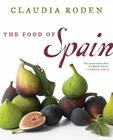
That said, I’m not convinced that the books under review help repair the problem. Roden’s “The Food of Spain” is not, alas, her finest, not compared to her magisterial first effort, “The Book of Middle Eastern Food,” (1974) or the equally great “Book of Jewish Food” (1996). Her latest effort is steeped in the melancholy fragrance of a committee effort, initiated by a publisher who saw a market and filled it with a prestigious author, an enormous number of handsome photographs (not one of which is identified by a caption), a large 609-page format with loads of white space, and precious few recipes (about 180) for the size and price: $45.
More gazpacho, please
Little in this book suggests Roden has a personal passion for the food of Spain. Instead, we are presented with a pristine, well-mannered, bloodless production, like a proper bread-and-butter note written to acknowledge a hostess for each thing that happened on a long and rather boring weekend. In a work that purports to be about all the food of Spain, why is there just one recipe for the iconic and multi-variant gazpacho? (The index of Janet Mendel’s “My Kitchen in Spain” lists seven.)
Roden’s lengthy introduction gives an overview of Spanish food history, with plenty of romance about Jews and Arabs (called by the dated term “Moors”) and their impact. But what happened in Spain in the past century is more compelling and better speaks to the state of food in the country today. The 35 years since Franco’s death have seen a major increase in the production of fine wine and olive oil, whether premium extra virgins or the current ocean of industrial quality — Spain now makes one-third of all the world’s olive oil. Along with a revival of regional breads, cheeses and sausages, much of it for export, there has been a troubling deterioration of regional and local traditions, replaced by what we might call supra-national foodways, MacDonald’s and the like — now that’s a story worth telling. But it’s not told here and, while I may be accused of targeting Roden because she didn’t write the book I would like, I still think she misses the mark.
Well-conceived recipes
That said, I will give credit for good recipes that work well. I tried a hearty and deeply satisfying lentil soup and delicious empañaditas, savory turnovers made of olive oil pastry filled with a mix of tuna, onions and red peppers. Both performed exactly as promised, though I added spicing to the empañaditas — saffron and smoky pimentón de la Vera which online sources included for this treat.
In the end I’m not sure for whom this book is intended. Surely not home cooks: Would you want to dribble olive oil and egg yolk over the pages of such a handsome production? I’m guessing “The Food of Spain” is intended as a gift book, one that makes a statement with its hefty look and price.
Down Under Take on Spain’s Food
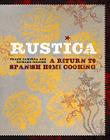
Australian chef Frank Camorra’s “Rustica: A Return to Spanish Home Cooking” was written with Richard Cornish, a television producer. The text is sprinkled with anecdotes of characters encountered during journeys around Camorra’s ancestral Spain and, along with photographs presumably taken by the author, these are the most delightful part of the book.
As a cookbook, “Rustica” suffers from some serious defects, so much so that I hardly know what to make of it. The publisher seems to have bought it, as is, from Australia because recipes require difficult to find and even mysterious ingredients — a fish called trevally, a cockerel (rooster), fresh, young lemon leaves. Chapter subjects are inconsistent — some deal with types of service (tapas), others with regions (the Basque country) and others with ingredients (sherry, salt, fish). Seafood recipes are scattered throughout so it’s hard to know, if you’re thinking of fish for dinner, where to begin.
Again, I tried two recipes, one of which was for that cockerel cooked in red wine, just like a coq au vin but flavored with cinnamon and black peppercorns. It was delicious, even made with an ordinary free-range chicken instead of the rooster. But the second recipe, for Tortas de Aceite, or Crunchy Anise Cookies was, quite simply, a disaster. I had to add about three times the amount of liquid called for, olive oil and anise liqueur, to get a dough that I could form into a log. In the end, after my “improvements,” the cookies were tasty, but the dough certainly didn’t perform the way the recipe predicted.
So what should a person do who wants to learn more about the rich and varied cuisine of this fascinating country? You can’t go wrong with any books from Mendel, who has lived in southern Spain most of her adult life. For a more chef-like perspective, Jose Andrés, the ebullient Washington chef, erstwhile Ferran Adrià acolyte and tireless promoter of Spanish food, writes engagingly about the dishes of his homeland with recipes geared to American cooks. You’ll learn far more from these writers.
Nancy Harmon Jenkins is the author of several books, the latest of which is her newly revised “The New Mediterranean Diet Cookbook.” Her other food books include, “Cucina del Sole: A Celebration of the Cuisines of Southern Italy” and “The Essential Mediterranean,” which looks at a dozen foods key to understanding Mediterranean cuisines. She also wrote “Flavors of Tuscany,” “Flavors of Puglia” and “The Mediterranean Diet Cookbook.” She is working on a book on Atlantic salmon. A former staff writer with The New York Times, Nancy continues to contribute to the Times in addition to writing for The Washington Post, Saveur, Food & Wine and other national publications. She currently divides her time between a Tuscan farmhouse and a home on the coast of Maine where she was born and raised. She has lived and worked throughout the countries of the Mediterranean, at various times making a home in Spain, France, Italy, Lebanon, and Cyprus as well as in Hong Kong and England. You can read more of her food writing on her site, NancyHarmonJenkins.com.
Top photo composite:
Book jacket for “Rustica.” Credit: Courtesy of Chronicle Books
Book jacket for “The Food of Spain.” Credit: Courtesy of Ecco
* * *
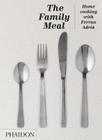
Two recently released cookbooks, each with a cult following, reawaken home cooking. At first glance, they have little in common. “The Family Meal,” by Ferran Adrià, is big, glossy and well-funded, while “Canal House Cooking: La Dolce Vita,” is the seventh volume in a self-published, soft cover series by Christopher Hirsheimer and Melissa Hamilton. But the two meet on delicious middle ground, nudging readers to take the time to make their home-cooked meals better, all the while ushering in the best, new classics.
In Adrià’s kitchen
Before the reader turns to the first page, a note tucked away on the inside cover of “The Family Meal” reads: “What does the world’s best chef eat for dinner?” As it turns out, he’s eating a lot of the same things that you are; his versions are just better.
Shuttered last July, elBulli, Adrià’s iconic Spanish restaurant that defined contemporary eating and reinspired the culinary pilgrimage, put out loads of books, many documenting the whimsical dishes served at the restaurant over its 25-odd years with Adrià at the helm. But in “The Family Meal,” Adrià and his crack team give adoring fans accessible recipes for the home kitchen. They succeed at it, too, albeit via a circuitous route past the foams and syringes, straight into their own bellies. The book is an account of what was served to those who made the restaurant run, during the 30 minutes religiously slotted each night for supper and coffee before service.
A staff that dines together …
The family meal is the universal term for the food that gets dished out to a restaurant’s staff before they start serving guests. Let’s be honest; most family meals are bits of leftovers scraped together, shoveled into the gullets of overworked line cooks while they feverishly continue their prep work. But remember the adage about judging a restaurant by the cleanliness of its bathroom? What about the respect with which its own cooks are fed?
“Ferran says that he learned the importance of the staff meal from his first cooking job, working for a chef named Miquel Moy at the Hotel Playafels, down the coast from the Barcelona airport,” says Colman Andrews, author of “Ferran: The Inside Story of El Bulli and The Man Who Reinvented Food.” “The idea behind feeding staff well is that they learn the importance of food on every level. One of Ferran’s basic tenets is that there is no innate hierarchy of ingredients: beans are worth as much as lobster.”
In photographs that induce palpitations in the hearts of true followers, “The Family Meal” peeks behind the proverbial veil to reveal a staff of 75 that supped together — in unison, of course — with scrumptious three-course meals that any of us would be thrilled to eat: tagliatelle carbonara, cod and green pepper sandwiches, and almond soup with ice cream for dessert, or vichyssoise, lamb with mint and mustard, and chocolate truffles. It comes as no surprise that the recipes were tested, photographed and documented as painstakingly as those on the restaurant’s menu, which ran upward of 30 courses at a sitting.
Get the squid ink ready
Organized as a sort of shell game, recipes are bundled into three-course meals, but can easily be rearranged to fit individual tastes. Forgive Adrià his occasionally faulty assumptions, like the idea that the layman’s pantry includes ras el hanout and achiote paste, and that homemade romesco sauce, squid ink and nougat ice cream are at the ready in freezers everywhere. Use the suggestions as a means to invigorate your daily chow. Sure, you’ve never kept a soda siphon in your kitchen cabinet, but what have you got to lose?
With curious revelations like potato chip omelets and watermelon with crushed menthol candies, the book is a page turner, evenly peppered with Spanish treats such as gazpacho and almond-flavored Santiago cake, and elevated versions of international comfort foods such as guacamole, burgers and caramel pudding. (The staff was culled from around the world, and Adrià gladly allowed their tastes to influence offerings.)
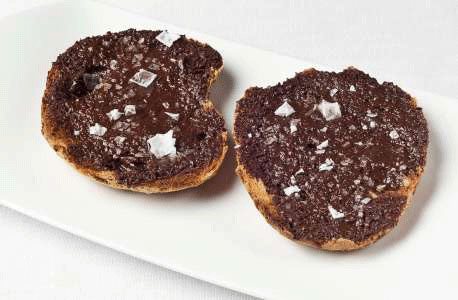
A note in the introduction reads, “If you leave out dessert, preparation times rarely exceed 30 minutes.” Let’s not go that far. Many of these recipes do take some time, but an hour or two set aside to cook on even a Wednesday night is never a bad use of time. Start with the simple, moan-worthy bread with chocolate and olive oil on page 274, because in Adrià’s world there’s always time for dessert.
A trip to Tuscany
The same line, “Welcome to Canal House … ” opens each volume of “Canal House Cooking.” It feels a bit like you’re a very lucky guest in a very special house. Writer and photographer Christopher Hirsheimer and her atelier partner Melissa Hamilton, a food stylist and chef, have worked together in one capacity or another for years. To say that time has been good to these women is an understatement. With each forkful of roasted guinea hen and sip of icy gin with lemon taken under the sunny windows of their New Jersey kitchen and workshop, they find something more to offer loyal readers. This triannual series, which debuted in 2009, continues to blossom with the seasons.
For “Canal House Cooking, Volume No. 7: La Dolce Vita,” the two gals set themselves up for a month in a rented country home in Tuscany. Their aim was simply to cook, embracing all things Italian, with local ingredients leading the way and no TV, phones or Internet to distract from their enviable goal. It sounds like a big-screen romantic comedy for lonely heart Americans. “We looked at each other and laughed, surprised that we could imagine doing such a thing,” they write. “But that’s just what we did.” In their case, the love interest isn’t some charming innamorato. It’s the food.
Photos to dine for
On the handsomely-designed, matte pages of this compact book, friendly faces peek out in Hirsheimer’s photographs: a mushroom vendor at the market, mustachioed butchers, fishermen arranging their nets. Big, warm hands present sheets of pasta, rice with roasted chicken and spinach, and a mountain of shaved chestnuts and bittersweet chocolate. Intimidating recipes like risotto or fresh pasta (and even intimidating ingredients like salt cod and fresh eel) are made simple through chatty, common sense instruction.
Maybe sensing that the previous volume or two in the series had inevitably begun to echo the first, the writers have switched directions, focusing on one cuisine. But smartly, the book’s small but eye-opening lessons translate to all manner of cooking. Grate fresh citrus zest into sandwiches, poach dense fish in olive oil to keep it moist, and let go of tired mealtime hangups, in this case a distaste for the maligned sparkling wines called Lambrusco. (Colman Andrews, quoted above in regard to Adrià, is also a longtime friend of Hirsheimer and Hamilton, and contributed their book’s essay, “Dazzling Italian Sparklers.” Play “Seven Degrees of Colman Andrews” and you can arrive at anyone in the food world.)
Plenty of cookbooks out there preach the simplicity and joyfulness of Italian food, but the handmade feel of this one reads like a private travelogue. Over this and the last six volumes of “Canal House Cooking,” the authors have been forthcoming with personal tales, unapologetic preferences and self-deprecating lessons, meaning that readers now know these formidable women as well as they know their recipes. Like a series of tasty novels, you’ll be drawn to go back to Volume 1 and get caught up.
Buy Ferran Adria’s “The Family Meal” Now!
Buy Christopher Hirsheimer and Melissa Hamilton’s “Canal House Cooking: La Dolce Vita” Now!
Zester Daily contributor Liz Pearson is a writer, consultant, food stylist and contributor to the Los Angeles Times, “Every Day With Rachael Ray” and Saveur. She lives in Texas.
Photos from top:
Photo composite: “Canal House, Volume No. 7″ and “The Family Meal.” Credits: Courtesy of publishers, Canal House and Phaidon Press
Slide show: Photos from the “Family Meal” by Francesc Guillamet; Canal House-related photos by Christopher Hirsheimer
* * *
There was a time when my whole food world revolved around a particular black pepper Asiago sourdough bread. I ate it at every meal, packed it into my purse for snacks, and became a familiar face at the bakery. Then I was diagnosed with Celiac disease, and that world came crashing down.
People with gluten sensitivity go through all the stages of grief following their diagnosis. First there is the denial, “No! I can’t give up my favorite bread forever.” Next, anger, “If you eat that bread in front of me, I’ll punch you in the face.” The depression phase can be pretty long, “I’ll never get to eat anything delicious the rest of my life.” Then the acceptance phase dawns, “Wow, there is still a whole world of tasty food out there to enjoy!”
While thumbing through four new cookbooks, “125 Gluten-Free Vegetarian Recipes,” “Cooking Light Gluten-Free Cookbook,” “Gluten-Free Girl and the Chef” and “Gluten-Free Makeovers,” it occurred to me that the gluten-sensitive also go through an evolution in how they approach cooking post-diagnosis. During the early stages, people desire to retrofit their kitchen standards to be gluten-free, from their favorite bread, to mom’s meatloaf.
Later, they learn to appreciate a whole new world of foods and flavors, with recipes that are built from the ground up with ingredients that are naturally free of gluten-containing ingredients. Once gluten-free eaters have cycled through all the stages of grief, they possess a well-rounded kitchen repertoire, filled both with time-honored standards, and innovative new gluten-free foods.
A couple’s gluten-free journey
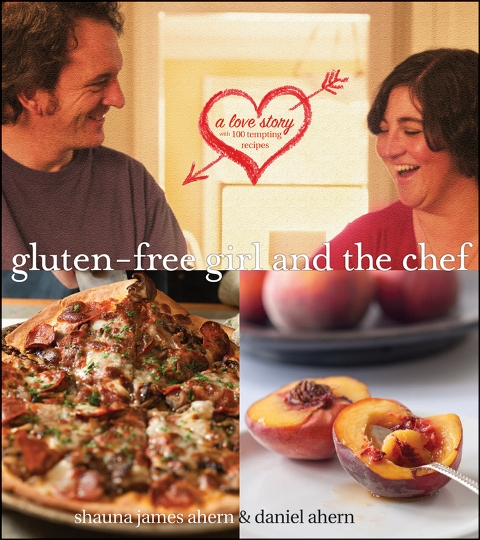
Both as someone who has experienced the stages of gluten grief, and as a food nerd, I found “Gluten-Free Girl and the Chef” to be especially appealing. Written by Shauna Ahern, and her chef husband, Daniel Ahern, this cookbook not only illuminates tantalizing gluten-free dishes, but also chronicles their love story. This isn’t just a collection of recipes, it’s a good read.
Out of love for Shauna, who is a celiac disease sufferer, chef Danny Ahern saw to it that his entire restaurant menu was retooled to be gluten-free. The recipes within the Aherns’ cookbook reflect a chef’s sensibilities, featuring glorious seasonal and fresh foods. Dishes such as black cod in black rice flour, sage polenta fries with parsley pesto, and crisp pork belly with wild rice, cabbage, sour cherries and honey-sage gastrique will certainly appeal to gastronomes, but might be daunting to inexperienced home cooks. That said, the instructions read as if given by a cooking coach, and might persuade the trepidatious to plunge into this book’s gorgeous recipes.
For the baker
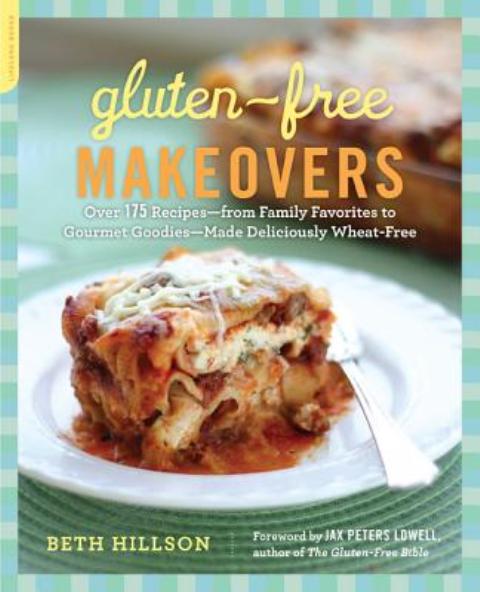
“Gluten-Free Makeovers” by Beth Hillson transforms classic and comfort foods into gluten-free fare, with a strong emphasis on baked goods. However, that could also be the book’s weakness, as its recipes are based upon five different multi-flour blends.
Many gluten-free eaters shy away from these flour blends because of cost and the potential for unused flours. Those undaunted by flour blends will surely be eager to try recipes such as mock matzo, cinnamon plum cake, or bagel sticks.
Gluten-free and vegetarian
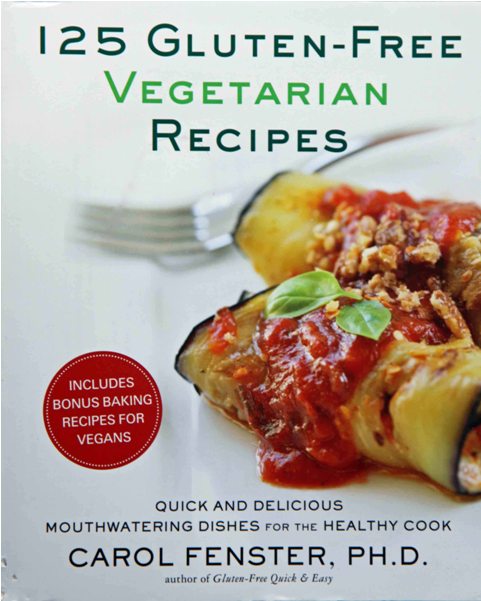

Many gluten-intolerant households also have to deal with dairy and egg allergies. Carol Fenster’s “125 Gluten-Free Vegetarian Recipes” could potentially accommodate a broader audience than gluten-free vegetarians because it contains so many vegan options. Recipes such as peperonata on soft polenta, stuffed bell peppers with picadillo rice, and Thai corn chowder contain neither dairy nor eggs.
It was surprising to see a section at the end of the book with tips for using animal protein in recipes, which included suggestions to use Jimmy Dean sausage, and Thumann’s Cocktail Franks. While these products may be gluten-free, people who are vegetarian for moral reasons might object to using meat originating from factory farms, rather than more sustainable and humane small farms.
Among this set of books, “The Cooking Light Gluten-Free Cookbook” has the broadest appeal. The user-friendly layout and recipes such as Vietnamese beef noodle soup with Asian greens, and tabbouleh-style amaranth salad will have a familiar feeling to readers of the popular magazine.
This cookbook has one particularly nice feature for those who need to navigate the minefield of gluten-free eating. Ingredients that need to be double-checked for gluten, such as canned broth, and Worcestershire sauce, are highlighted in red.
A well-rounded repertoire
Gluten-free eaters, like most, enjoy having a few go-to recipes like basic muffins and bread, as well as an arsenal of easy weeknight meals. They also like to occasionally reach for convenience foods like dry pasta and pre-made pizza crusts. Additionally, gluten-sensitive people are coming to embrace the wide world of naturally gluten-free foods, from fresh vegetables to gluten-free grains.
It’s pleasing to see cookbooks acknowledge these trends, so that the gluten-intolerant don’t have to feel they are settling for inferior meals.
Even within this niche, there is a cookbook to suit every family’s needs, from comfort foods, to vegetarian, to accessible restaurant-worthy cuisine. These four cookbooks illustrate the fact that gluten-free eaters needn’t grieve the loss of gluten. Rather, they can celebrate delicious cuisine.
Zester Daily contributor Wendy Petty lives in the Rocky Mountains, where she is a forager, photographer and wild foods consultant. She writes about her adventures with mountain food on her blog, Hunger and Thirst.
Photos, from top:
“Gluten-Free Girl and the Chef.” Credit: Courtesy of John Wiley & Sons
“Gluten-free makeovers.” Credit: Courtesy of Da Capo Lifelong Books
“125 Gluten-Free Vegetarian Recipes.” Credit: Courtesy of Avery Trade
“The Cooking Light Gluten-Free Cookbook.” Credit: Courtesy of Oxmoor House
I do not much care for celebrity chefs, their cooking shows or their glossy coffee-table books. John Besh, for those who have never watched the Food Network, “Iron Chef America” or “Top Chef Masters,” is a wildly successful chef and entrepreneur who owns a burgeoning restaurant empire and has won just about every food/chef award that exists.
So how did I fall for his glossy, large-format, new cookbook, “My Family Table: A Passionate Plea for Home Cooking?”
In a reversal of the usual “can’t judge a book by its cover” aphorism, this one’s Norman Rockwellian cover photo of a dimpled dad cooking with his two tow-headed son disguises what’s inside: a solid, practical collection of simple recipes, well-larded with personal history and strategy tips. It’s well-written and timely for anyone pressed for time And isn’t that pretty much all of us?
Besh begins by admitting that a passionate plea for home cooking coming from a person who makes his living by serving people who dine out may seem disingenuous. But he quickly settles any doubt about his motives by boldly stating: “Today a terrifying wasteland of food options lurks between our kitchen stoves and our favorite restaurants. The packaged foods we use are loaded with salt and sugar … our meat is shot up with hormones and antibiotics, our produce is sprayed with God-knows-what, and fast food options are the devil’s work.”
His sentiments echo those of the Slow Food movement, emphasizing the importance of cooking with seasonal and local produce, eating with family and friends, and eschewing processed foods, the kind Michael Pollan calls “edible foodlike substances.”
An inspiring conversation at home
But Besh’s reasons for writing this book turn out to be more personal than political. He explains that when he questioned his wife Jenifer (a lawyer and mother of their four boys) about the quality of food she was feeding the kids, she shot back that if he was half as concerned about feeding the family as he was about serving diners at his restaurants, he’d come up with recipes that are quick and easy to prepare, and things kids will actually eat.
Chastened, Besh thought long and hard about the problems busy people face when they want to cook healthy, delicious meals for themselves and their families. The results of his thinking are the recipes and strategies in this book, ranging from the super kid-friendly “Heat & Serve Chili,” “Sloppy Joe Sliders,” “Hearty Baked Pasta” and “Cauliflower Mac & Cheese” to family favorites such as “Perfect Mashed Potatoes,” “Sweet Corn Pudding,” “Braised Beef Short Ribs” and “Hummingbird Cake.”
Get organized
But before launching into the recipes, Besh says that good home cooking, just like good restaurant cooking, needs two things: the best ingredients and planning ahead. By this he means stock your pantry. His own pantry is rather idiosyncratic, combining basics like pasta, Arborio rice, and olive oil, with more unusual items like harissa, pepper jelly, and pimenton (smoked paprika).
Once you stock your pantry and refrigerator with a few basics, you are ready to do reality-based home-cooking without worrying about buying specialty ingredients or mastering complicated techniques. In fact, with good basic ingredients and minimal planning, you can make great meals at a moment’s notice — and here’s where Besh’s book really shines.
Get cooking
I knew I was truly in love with this book when I browsed Besh’s “anything” recipes in the first chapter: “Risotto of Almost Anything,” “Creamy Any Vegetable Soup,” “Curried Anything” and “Warm Any Fruit Crumble.” This is not fetishized-ingredient, spectator-sport cooking, but open-your-fridge-and-make-a-great-meal-with-what’s-there cooking.
And it’s not just the first chapter that’s a winner. Other chapters chock full of great recipes and strategies, include: “Sunday Supper,” “School Nights,” “Breakfast With My Boys,” “Barbeque Wisdom” and “Fried Chicken (& Other Classics).” That fried chicken chapter is particularly good, drawing upon Besh’s Southern heritage and giving us not only his grandma’s recipe for fried chicken, but that of Miss Ruth, the woman who worked for his grandparents, and whom Besh clearly loved and admired. He writes: “She wouldn’t measure much or worry about temperatures, she just knew. She could tell when the oil was ready because she’d float a match in it and wait for the match to ignite before she started cooking. Apparently, those white-tip matches will light up at around 350 F.” He then adds (or perhaps his publisher’s lawyers told him to add): “I don’t recommend this method!”
Home cooking for love and for money
Putting the lie to the recent kerfuffle in the Slow Food movement about whether you can properly pay the farmer who grows good food and have affordable food, Besh shows how with one chicken, one pork shoulder or one pound of black eyed peas, you can feed a family for many days — and you can feed them meals that are less expensive and more nutritious than processed food or fast food.
For example, Besh says if you’re going to roast one chicken, you may as well roast two, and then use every part of the birds in great meals over the coming week. Use the meat for quick and easy Asian chicken salad with cabbage and noodles, or wraps, or pasta, and use the bones for stock for soup and other dishes. Similarly, Besh calls Sunday beef or pork roasts “money in the bank.” The leftovers are perfect for easy meals of pasta, soups, salads and sandwiches the rest of the week.
As if writing cookbooks and running seven restaurants and keeping up with his family is not enough, Besh also oversees the John Besh Foundation, which provides micro-loans to farmers. For minority students wanting to enter the restaurant industry, the foundation provides full scholarships to the French Culinary Institute plus a mentor, and a paid eight-week internship with a Besh Restaurant Group restaurant after school.
After reading “My Family Table,” I returned to the cover and saw it not as Rockwellian nostalgia for a bygone era, but as a picture of the kind of simple, mystique-free cooking that will lure a new generation into the kitchen. And when I returned to the dedication, this time I believed it. This is not just another famous chef’s “Hey look at my cooking-at-home book,” but a book that really is dedicated to his family and your family too.
Buy John Besh’s “My Family Table” Now!
Terra Brockman is an author, a speaker and a fourth-generation farmer from central Illinois. Her latest book, “The Seasons on Henry’s Farm,” now out in paperback, was a finalist for a 2010 James Beard Award.
Top photo composite:
Author John Besh.
Book jacket of “My Family Table: A Passionate Plea for Home Cooking.”
Credits: Courtesy of Andrews McMeel
Shop Indie Bookstores