Articles in Drinking
Christmas in Kerala, that sunny tropical strip of southern India along the Arabian Sea, is a somber festival with more faith and religious fervor than mere celebrations. It is observed as a religious holiday and Kerala Christians all add the flavor of their native culture, be it in the music or food or spirits.
Churches are decorated with candles and flowers, and service is held at midnight on Christmas Eve. Traditionally, Christian families of all denominations, often dressed in formal clothes, go to church for the midnight mass. Christmas Day is celebrated with feasting and socializing with family and friends.
More on Zester Daily:
» Celebrate India’s harvest festival with bean salads
Rituals vary by region so the menu for the Christmas feast differs by village and household. Even though the feast often includes roast duck and mincemeat dishes, palappam, which is made with rice and coconut and served with meat or chicken stew, is also popular. Sweets such as rose cookies and diamond cuts are usually homemade like cookies in Western countries.
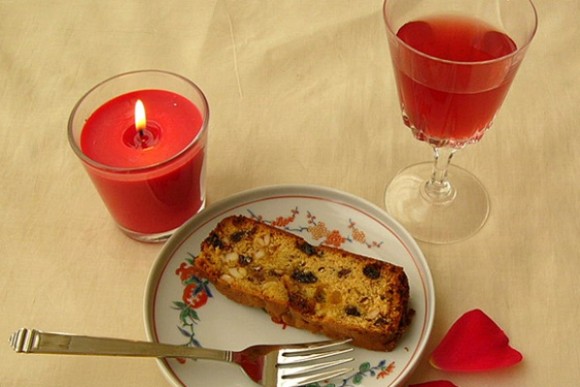
Christmas dinner, especially among Kerala Catholics, is not complete without a glass of homemade sweet grape wine and a piece of plum cake — a moist, brown cake with plenty of nuts, dried fruits and fragrant spices.
In old times the ritual of making wine at home would begin in October. Though tropical Kerala does not have the ideal weather for winemaking, it is a longstanding tradition for Christmas. These days, many depend on store-bought wines and Christmas cakes, but a few still make wine at home.
These wines are very sweet, and most often spiced, and belong to the dessert wine category. Traditionally, wine is made in a pale brown ceramic jar called cheena bharani or simply bharani, which is a remnant of the ancient Indian Ocean trade with China.
The recipe for sweet grape wine is a typical wine recipe, but the fermentation is much briefer. The process is stopped before all the sugar turns into alcohol. The recipe also uses equal amounts of grapes and sugar, resulting is a very sweet wine.
Grapes aren’t grown in Kerala, but winemakers can get Bangalore Blue, Anab-e-Shahi, Gulabi and Bhokri variety grapes from neighboring regions in India. The variety isn’t particularly important, however, as any dark red grape will do.
The red color of this wine is from the red pigment in the grape skin. Grapes give the flavor, sugar adds sweetness, yeast is for fermentation and spices impart aroma. The strength of the wine depends on the amount of wheat or barley used, which also acts as a clarifying agent. Egg white is used to make the wine clear.
It is essential to begin with a sanitary environment and absolutely clean equipment before starting the process of making wine. Used bottles, in particular, should be sterilized before they are used again.
Homemade Kerala Christmas Wine
Makes 16 cups
Ingredients
2¼ pounds sweet dark grapes, washed and stalks removed and wiped dry
1 teaspoon dry yeast
2¼ pounds sugar
18 cups water, boiled and cooled to room temperature
¼ cup wheat kernels
4 cloves
1-inch cinnamon stick, crushed
1 egg white
Directions
1. Clean and dry a glass or ceramic jar.
2. Crush the grapes thoroughly and place them in the jar.
3. Dissolve yeast in 2 tablespoons of lukewarm water and set aside for 10 to15 minutes. Then add the proofed yeast, sugar, water, wheat and spices to the crushed grapes. Stir well, until the sugar is completely dissolved.
4. The contents should fill only ¾ of the jar. During fermentation carbon dioxide is formed and released. It is ideal to cover the jar with a piece of clean cheese cloth and tie with a piece of kitchen twine. Keep it in cool dark place to ferment.
5. For the next two to three weeks open the jar once a day and stir the contents well using a clean dry wooden spoon. Initially the crushed grapes would be floating in the liquid, but after a couple of weeks these will begin to settle at the bottom of the jar.
By the end of the third week, the mixture would stop foaming. Depending on the weather conditions, it may take more or less days for the fermentation process to stop.
6. When the fermentation stops, strain the liquid through a clean cheese cloth into another clean jar and discard sediments. Keep the wine in a glass container for two or three days, closed and undisturbed for the finer sediments to settle down. Drain the clear wine to another bottle and discard the remaining sediments.
7. Mix the egg white into the wine and leave it in the container. Keep the container closed for a few more days. The wine will become clear. Drain the wine once more to remove any remaining sediments.
8. Bottle in dark bottles and store in a cool, dark place.
Top photo: Christmas wine and Christmas cake in Kerala, India. Credit: R.V. Ramachandran
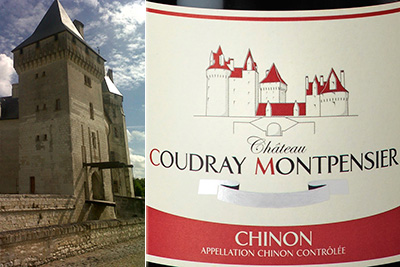
One of my favorite bistro restaurants in New York City is Le Philosophe, which offers a delicious, reasonably-priced blanquette de veau as well as a list of wines that won’t break the bank. This gulpable 2010 Chateau du Coudray Montpensier Chinon, with its fresh ripe spiced-berry flavors and soft tannins, is one of them. Its refreshing fruity style resembles that of Beaujolais-Villages, but this red has more spice and depth. It was perfect with the creamy main course I savored at Le Philosophe.
Elin McCoy’s Wine of the Week
2010 Chateau du Coudray Montpensier Chinon
Price: $14
Region: Loire Valley, France
Grape: 100% Cabernet Franc
Alcohol: 12.5%
Serve with: Blanquette de veau, roast pork
More holiday party selections:
Chinon is a historic town in the Loire Valley and also the name of an appellation where almost all the wine is red, made primarily from Cabernet Franc grapes. The vineyards, which cover 19 communes, span both sides of the pretty, winding Vienne River. My introduction to the area, though, was through history, when I came as a student to tour the town’s famous stone castle, the grand 11th-century Chateau de Chinon, built on a high rocky outcrop above the river. It has a complex early past: English King Henry II rebuilt it and resided there in the 12th century; later it was captured by the French, and it’s where Joan of Arc claimed divine voices told her that Charles VII, the Dauphin of France, would give her an army to fight in Orleans. Writer Francois Rabelais made Chinon’s wines famous in the 16th century.
U.S. catches up with 2010 Chateau du Coudray Montpensier Chinon
I first drank these delicious, fragrant reds in Paris bistros and wine bars 20 years ago, but they’ve become popular in the U.S. only in the past five or so years. That’s partly because wine lovers are now hunting alternatives to big, alcoholic reds. When Cabernet Franc is grown in cooler climates like the Loire Valley it makes wines that are lighter bodied and more aromatic than Cabernet Sauvignon, but have some of the same character. And the newfound popularity of Loire reds has also been helped because they are often stunning bargains.

Chateau de Chinon. Credit: Franck Badaire / Wikimedia Commons
Climate change and improved vineyard practices have helped make Chinon’s wines more appealing. When Cabernet Franc doesn’t ripen fully, the wines taste lean, green and herbaceous. In recent, warmer vintages, the wines have been richer. The 2010 vintage was one of the best of the past few decades.
Chateau du Coudray Montpensier was built in the 15th century, but was only established as a winery 10 years ago. Its 2010 Chinon is well worth seeking out.
Top photo: Chateau du Coudray Montpensier and wine label for Chateau du Coudray Montpensier Chinon. Credit: Courtesy of Chateau du Coudray Montpensier
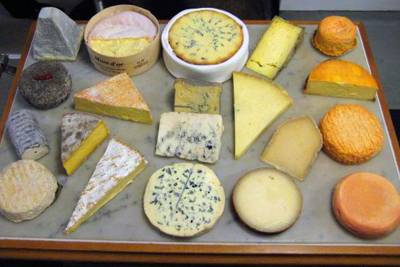
Charles de Gaulle famously asked, “How can you govern a country that has 246 varieties of fromage?” Not only that, one might add, but how on earth can you find the right wine to bring out the best in each of them?
Most people tend to play it safe and reach for the classic reds, but for some cheeses, I’m inclined to go for a white. The richness and fat content of many cheeses is perfectly suited to more acidic, less tannic whites, and my top pick would be a nice crisp Chardonnay, ideally from Burgundy.
More from Zester Daily:
» Year of the goat for cheesemakers
The Chaource made a fine match with a chilled glass of Macon-Villages, a white Burgundy, and I was reminded of my bow-tied and aproned sommelier days. I would try to coax diners who had ordered cheese away from the port, tempting them instead with a little taste of Chablis — one of my favorite combinations.
If this is whetting your appetite, just bear in mind that Chaource can be a bit tricky to track down in stores. Brillat-Savarin would be a delicious alternative, a bit more buttery in flavor; or perhaps a tasty Camembert; or even the failsafe Brie. As a rule of thumb, the softer the cheese, the crisper the wine — to cut through the creaminess.
When you are having a hard cheese, a more full-bodied white wine will be appropriate. Something like extra-sharp Cheddar is a great match for the peachy mango flavors often associated with a Californian Viognier, whereas the creaminess in the semi-hard Gouda goes brilliantly with minerally driven and peachy dry Riesling. However, considering that Gouda is traditionally eaten at breakfast in the Netherlands, it won’t go amiss with an aged vintage Champagne, something with brioche like characteristics.
As for specific wines to try, I’ve suggested a few styles, most of which are on the medium to lighter side. Just remember: Go for crisp wines with minerality but enough weight to handle cheese’s tendency (for instance Sancerre over New Zealand Sauvignon Blanc) to overwhelm the palate. Chardonnay is ideal; however, others like Viognier and even the rare Marsanne have proven worthy.
So next time you’re preparing that cheese board, pour a soupçon of white on the side. It could thoroughly change your perspective.
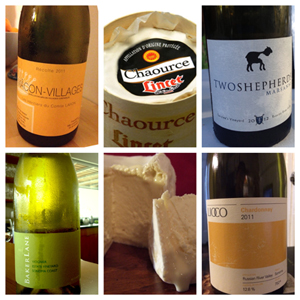
Credit: Louis Villard
Top left: 2011 Les Héritiers du Comte Lafon, Macon-Villages
A classic Chardonnay from the southern Burgundian region, with a slight appley richness in the mid-palate that gives this wine weight and makes it perfect for cheese pairing.
Around $20, widely available
Top right: 2012 Two Shepherds, Marsanne, Saralee’s Vineyard
Usually Marsanne is blended with Viognier and Rousanne; by itself, there is a remarkably rich mouthfeel, like honey, and elegant marzipan flavor.
$30, contact winery for availability: twoshepherdsvineyards.com
Center, top and bottom: Chaource cheese
Bottom left: 2012 Baker Lane, Viognier, Sonoma Coast, Estate Vineyard
Viognier in California tends to be overwhelming and flabby, but this one is as clean as they come, and quite floral as well. The vineyard is perfectly placed in a tiny cool-climate valley deep in Sonoma.
Contact winery for availability: www.bakerlanevineyards.com
Bottom right: 2011 Lioco, Chardonnay, Russian River Valley, Sonoma
A crisp and direct Chardonnay with brilliant stone fruit flavors.
$20, contact winery for availability: www.liocowine.com
Top photo: Cheese trolley. Credit: Louis Villard
Nobody understood the melancholy-tinged beauty of those transitional months between summer and winter quite like the great Romantic poet John Keats, whose “Ode to Autumn” famously celebrates that “season of mists and mellow fruitfulness.” Keats also enjoyed a good drink. So it seems fitting that “the last oozings” of the cider press make an appearance in his love song to the fall.
On a recent evening, I found his lines running through my mind while I tasted a range of utterly distinct apple ciders from Asturias – a remote rural region on Spain’s North Atlantic coast where one can still observe, as in Keats’ more pastoral time, how the season conspires to “bend with apples the moss’d cottage-trees/ And fill all fruit with ripeness to the core.” For in Asturias, the apple is not just an article of produce; it’s a way of life.
There’s something about the traditional style of Asturian cider — or sidra natural, as locals call it — that would have appealed to someone like Keats. Fermented with indigenous yeasts and bottled without any filtration, it’s the sort of frothy, pungent and unapologetically rustic concoction that has remained unchanged for centuries. Sidra natural represents the art of fermentation at its most elemental: The effect is not sparkling so much as gently effervescent, with low alcohol and a slight prick of fizz. Dry and earthy, with a pleasantly tart tang, this stuff is delicious. It also happens to be remarkably versatile at the table: think sheep or goat’s milk cheeses, shellfish or, at this time of year, even the traditional Thanksgiving dinner.
Asturias is home to more than 200 types of apples, which (because of the high moisture in this maritime region) tend to be less tannic than those grown in other cider-producing parts of the world. But in order to bear the proud label of Sidra de Asturias – the area’s officially protected Denomination of Origin (DOP) — the final blend must consist of a combination of as many as 22 preapproved varietals, of which the Regona and Raxao apples are the most common.
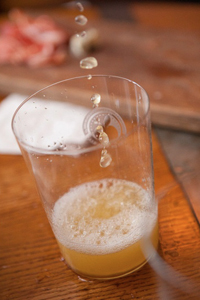
Asturian sidra natural being poured into a glass. Credit: Greg Nesbit / Asturias Cider Commission
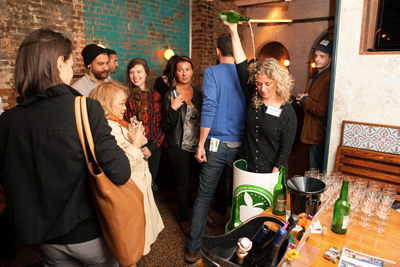
Almost as fun as drinking sidra natural is watching it be poured — in Asturias, this is a crucial part of the experience. The customary method, known as escanciar, involves pouring the cider from high above one’s head and allowing the free-flowing stream to plunge into the glass. According to John Belliveau-Flores, who imports a wide variety of Asturian cider through his company, Rowan Imports, this age-old technique accounts for more than just flashy showmanship.
“Pouring this way physically changes the character of the cider,” he says. “It breaks up the bonds which release the naturally occurring esters and unleash the aromas. Also, when you try to pour the cider normally, it ends up flat, but it effervesces when you pour from a height.” During my own attempt at mastering the art of escanciar, more cider wound up on my shoes than in my glass, but to watch an experienced professional undertake the act is mesmerizing.
‘New Expression’ Asturian cider cuts the funk
Despite the fact that sidra natural has remained a touchstone of Asturian culture over generations, in recent years producers have experimented with a more modern approach. Designed as a cleaner, more commercially viable interpretation for the export market, cider in this “New Expression” category undergoes filtration and stabilization to remove the sediment. Clear, crisp and lemony in both flavor and appearance, it shares more traits with white wine than beer. To be honest, the results often strike me as a bit too sanitized or refined, stripped of Asturias’ signature funky essence. But Belliveau-Flores is quick to point out the virtues of this style.
“In some cases, the New Expression ciders gain something,” he explains. “Although you’re taking away that funk, which removes a powerful layer, you can end up revealing more of the fruit expression, which would otherwise be covered up.”
I suppose it’s a matter of personal taste, but I’d still start by introducing yourself to the classic sidra natural first. One lovely rendition is the Val d’Ornon bottling from the family-run house of Sidra Menéndez. A refreshingly tart and milky blend of apples including Raxao, Regona, Perico and Carrio, it’s the perfect accompaniment to those bittersweet, “soft-dying” autumn evenings that Keats knew all too well. You might even be inspired to write an ode of your own.
Top photo: Escanciar, the art of pouring cider into a glass from above one’s head, releases the aromas. Credit: Greg Nesbit / Asturias Cider Commission
With such a blizzard of flavors on offer at the Thanksgiving table and so many different tastes to cater to among family and friends, a creative approach to wine selection is required. You need wines that are not too fancy price-wise, nor too hulking taste-wise, with enough interest and originality to make them a bit of a talking point.
Here is a totally Eurocentric selection of wines that I’ve found especially convincing on my travels this year. They’re the kind that will not be too bossy or overpowering with a bland meat like turkey, but with enough character to look all those trimmings squarely in the eye. It’s a good idea to provide both white and red wines, to cover all tastes. Or you could be very brave and go for just one delicious sparkling wine that will take you seamlessly through the meal from appetizer to dessert.
Check Wine Searcher for your nearest stockists.
White wines
Riesling Cuvée Frédéric Emile, F. E. Trimbach, Ribeauvillé, Alsace, France
Cuvee Frederic Emile by Trimbach. Credit: Sue Style
Iconic is an overworked word, but Riesling Frédéric Emile for once merits the moniker. A deep golden wine with fugitive elderflower-linden blossom aromas, always a little lean (true to the house style) but with the suggestion of gorgeous curves to come, it’s a perfect match for white meats, rich sauces and sweet-spicy pumpkin flavors.
Crémant d’Alsace Grand Millésime 2009, René Muré, Rouffach, Alsace, France
Alsace is producing some fine Crémants these days, the best of which are a far better bet than regular, non-vintage Champagne and at a fraction of the price. This vintage Crémant, from a blend of Chardonnay and Riesling, is redolent with orangey-peach aromas and would take you gracefully through the meal from start to finish.
Pouilly Fuissé En Buland, Domaine Barraud, Vergisson, France
The Mâconnais region of southern Burgundy offers some fine drinking at distinctly non-Burgundian prices. This one, from 78-year-old Chardonnay vines growing beneath the landmark Rock of Solutré, is crisp and elegant with just a suspicion of oak so as not to be overpowering.
El Quintà Garnatxa Blanca, Barbara Forés, Terra Alta, Catalonia, Spain
Seventy percent of the total world plantation of white Garnatxa is found in the Terra Alta region of Catalonia, where it performs to perfection. This elegant, lightly oaked one from 50- 60-year-old vines has a fresh, expressive minerality that would work wonders with a parade of rich dishes.
Yvorne Grand Cru, Collection Chandra Kurt, Bolle et Cie, Morges, Switzerland
Chasselas Chandra Kurt Selection by Bolle. Credit: Sue Style
In Switzerland’s canton Vaud, on the steep, sun-baked terraces that plunge down to Lake Geneva, they do wonders with Chasselas, scorned by most of the world as a rather uninteresting table grape. Zurich-based wine writer and consultant Chandra Kurt has worked with the Bolle winery to make this prize-winning wine with firm structure and citrusy-honeyed tones, fine with this seasonal menu.
Red wines
Tschuppen Spätburgunder, Hanspeter Ziereisen, Efringen-Kirchen, Baden, Germany
A self-taught winemaker, Hanspeter Ziereisen swept the board at a recent international Pinot Noir taste-off in London, with two of his wines in the top 10. Tschuppen, the lightest of his three Pinots, captures all the magic of the grape and is just the right weight for a Thanksgiving menu.
Gamay de Chamoson, Cave du Vidomne, Saint-Pierre-de-Clages, Valais, Switzerland
More from Zester Daily:
» Raising the pumpkin bar: A pie-free dessert
» Cranberry-orange baklava for Thanksgiving
The Swiss are about the only people to do anything interesting with the Gamay grape outside of Beaujolais. This one, which took away first prize in this year’s Grand Prix du Vin Suisse in the Gamay category, is full of raspberry fruit flavors with nicely balanced acidity to cut the richness of the meal.
Beaujolais Villages, Domaine des Terres Dorées, Charnay, Beaujolais, France
Jean-Paul Brun makes highly prized, exciting, long-lived wines down at the southern end of Beaujolais. His Beaujolais Villages is an especial pleasure, bright, lively and keenly priced — serve it slightly chilled to bring out its zesty best.
Barbera d’Alba, Cascina Fontana, Perno, Piedmont, Italy
Barbera ticks all the right boxes for a turkey feast: bright, fresh, not too alcoholic and loaded with red fruit flavors. If you can track down a bottle of Mario Fontana’s (produced in tiny quantities and dismayingly quick to sell out), it may just make your day.
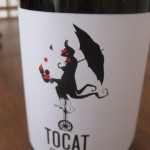
Tocat de l’Ala by Coca i Fito and Roig Parals. Credit: Sue Style
Tocat de l’Ala, Coca i Fitó and Roig Parals, Empordà, Catalonia,Spain
A crunchy, crazy blend (the name means “daft in the head”) of old-vine Garnatxa and Carinyena, made in a joint venture between two Catalan wineries. Big but not over weighty and bursting with cranberry flavors — what could be more appropriate?
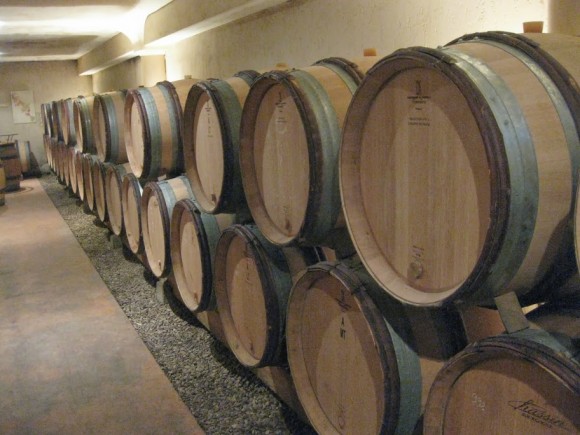
Top photo: Barrels of wine at Domaine Barraud, Maconnais, Burgundy, France. Credit: Sue Style
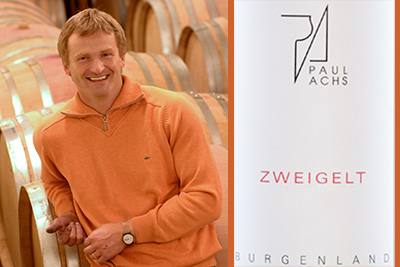
Among the 60 or so Austrian wines I’ve tasted in the past couple of weeks I found my Thanksgiving red for this year. The 2011 Paul Achs Zweigelt from Austria has cherry aromas, soft fruit and spice flavors, and the fresh acidity that will keep palates alive during an hours-long dinner heavy on rich foods.
Elin McCoy’s Wine of the Week
2011 Paul Achs Zweigelt
Price: $20
Region: Burgenland, Austria
Grape: 100% Zweigelt
Alcohol: 12.5%
Serve: With turkey and all the side dishes
More of Elin’s wine picks:
» The right white wine for Thanksgiving 2013
» A perfect white wine for parties
» A perfect red wine for parties
Everyone worries about what wine can possibly go with the many contrasting flavors on a Thanksgiving table, from sweet potatoes to creamy onions to rich sausage stuffing to tart cranberry sauce to turkey roasted with a rosemary rub. I used to be a purist, offering only two American wines, a white and a red, to match the nationality of the holiday. But this year I’m branching out. My white pick last week was from Italy. Selecting a California Pinot Noir for the red seemed like taking the easy route. And this Austrian red is wonderfully versatile with all kinds of foods.
Zweigelt (pronounced Tsvy-gelt) , a cross between two other Austrian red grapes, St. Laurent and Blaufrankisch, the country’s best red, was developed in 1922 by viticulturalist Dr. Friedrich (Fritz) Zweigelt, for whom it is named. The popular varietal isn’t hard to grow, like finicky Pinot Noir, but the wines from both have a lot in common. Zweigelt doesn’t share the complexity and ageability of fine Burgundies or expensive California examples, though some producers make mouth-filling single vineyard versions.
Zweigelt also reminds me of Gamay or even a light-bodied Zinfandel. The most planted red grape in Austria, it’s a fruit-forward, easy-drinking crowd-pleaser. Most, like this one, are medium-bodied, with silky tannins, juicy acidity and no new oak flavors, all reasons why they’re so food-friendly.
2011 Paul Achs Zweigelt aged in older barrels
The winery, named after owner and winemaker Paul Achs, is in Burgenland, south of Vienna, in the village of Gols. He owns 58 acres of vineyards, all cultivated biodynamically since 2007. This Zweigelt comes from vines planted on gravel in an area between the village and Lake Neusiedl known as the Heideboden, the source of all his young, fresh wines. This one is aged in older oak barrels, which allows it to retain its bright fruit.
This 2011 Paul Achs Zweigelt also fulfills another of my Thanksgiving wine criteria: affordability. When different generations of a family, all with very strong opinions, gather at a table for hours, the key to party success is plenty of wine to smooth over heated discussions and keep everyone mellow. Happy Thanksgiving!

Who speaks for the trees? Craft cider producers.
The third annual Cider Week, a beverage-promotional initiative to encourage restaurateurs, shop owners and consumers to try cider, came to New York last month, and it is being celebrated in Virginia this week. I mean hard cider, the fermented juice of apples, which is an alcoholic beverage that has a long history in the United States. I am not referring to sweet cider, the non-alcoholic, cinnamon-laced apple juice often found with a doughnut for a sidekick. Cider Week is about hard cider. For apple growers across the country, that distinction makes all of the difference.
More from Zester Daily:
» The colonial roots of craft apple cider
» Apple cider gets dressed up for the holidays
» Save Sonoma’s Gravenstein apple
Over the last century, this beverage has so thoroughly lost its place at the American table that it’s impossible to write about it without a short history lesson. Before Prohibition, cider was as familiar a beverage as water. Often it was the more palatable and sanitary choice of the two. Thousands of apple varieties thrived across the U.S., and those most highly prized were the kinds that you would not necessarily pick up and eat raw. Bitter and astringent varieties were cherished for the complexity they could add to hard cider, the final destination for most apples grown at the time.
After a near century-long, Prohibition-induced dormancy, the hard cider industry is back with a bullet. Craft producers and sommeliers across the country are rediscovering that cider fermented from heirloom varieties of apple can express complexity and terroir, much as a fine wine. And just as wine presents vintners a more profitable product than selling fresh grapes, cider offers apple growers a much higher price than the highly seasonal sale of fresh apples.
According to Dan Wilson of Slyboro Cider House in Granville, N.Y., his farm’s you-pick operation accounts for about 80% of its yearly income. This business model is risky because his season for you-pick is only six weeks long, meaning a few rainy weekends could seriously damage earnings. For his operation and many like it, the benefits of cider production are manifold. Cider is a shelf-stable product, meaning it can provide income year round. It is an added-value product, selling at a higher price than the fresh ingredients used to create it.
Because apples pressed into cider do not need to be flawless, cider production allows farmers greater flexibility to spray fewer chemicals and to make use of imperfect apples.
Cider Week spotlights craft cider makers
Glynwood, the agricultural nonprofit in the Hudson Valley where I work, started Cider Week three years ago to aid New York craft cider producers in this resurgence. This year’s 10-day celebration of regional, craft cider included more than 200 locations in New York City and Hudson Valley that featured cider on their menus.
While that commitment meant a fun week of great events for consumers, it also meant exposure and new accounts for craft producers. By focusing on artisanal producers, Cider Week is meant to carve out a niche for small growers, help them expand their businesses, and increase viability for Northeast orchards.
The rapid resurgence of this beverage means that the big players — read multinational beer corporations — in the beverage world are out in force. These companies have a part to play by moving cider from niche to mainstream. With a massive clientele and considerable marketing power, they are poised to shake up the traditional beer/wine dichotomy and introduce cider to a huge subset of the American drinking population.
Look for small, local providers
However, for American orchards, for farm viability and rural development, and for increased biodiversity, the resurgence of craft cider is where the true opportunity lies. Small companies pressing whole, regional apples (as opposed to imported apple concentrate) are stewards to the land and keepers of the craft in a way the big boys categorically cannot be.
Craft cider makers are the guides on America’s journey back to a sophisticated, complex beverage, pulled directly from the annals of our own history. As the American palate co-evolves with this new wave of enterprising craftsmen and women, we also hone our tastes for a future that celebrates food and drinks as a passionate expression of place. It is a future that moves me.
And the best way to get there is to find craft cider producers near you. Ask about craft cider on beverage menus and in wine stores. Look at the directories of the many Cider Week events held around the country to discover regional producers (and if you don’t have local cider, many producers can ship). Feature cider at your Thanksgiving dinner this year. In doing so, you will be supporting a beverage, an industry and a tradition as deeply American as the holiday itself.
Top photo: Valerie Burchby. Credit: Caroline Kaye
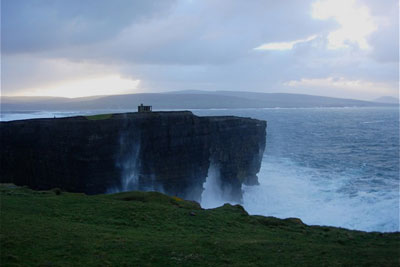
When my husband was invited to practice his art of painting in rural — the word was emphasized many times in the acceptance letter — Ireland, we jumped on it and decided to go right away rather than wait until summer. Our stay was from Halloween to Christmas, covering the major holidays, which were pretty much nonexistent for us that year.
Winter is perhaps not the most perfect time to be on the rough and wild Atlantic coast of the Emerald Island — which, as you quickly come to understand, has to do with the copious amount of rain that falls. It was cold. And damp. Our cottage was stone, and there were gaps in the ceiling that allowed a view of the sky. My husband’s studio was heated, but for me, getting warm and staying that way was the challenge of each day. The recipe called for lots of hot water and alcohol.
Finding warmth in Ireland
Here’s how it worked. First, we were told not to use hot water unless it came from the night storage, a concept we found hard to follow but eventually understood: Electricity is cheaper at night than during the day, so water heated at night is more economical than water heated during the day. So I started the day by submerging myself in water that was as hot as I could stand and staying there until I really couldn’t stand it anymore. Then I dressed in an infinite number of layers that padded me like the Michelin Man, but they kept me warm until noon, when I repeated the process.
More from Zester Daily:
» Good Food Ireland can guide your dining choices
About 3 p.m., when the light caved, I joined Patrick, my husband, in the pub across the street from his studio, where I had a hot whiskey with lemon and clove — divine because it warmed my hands as well as my insides. Then maybe I had a second one just to seal in the hint of warmth that I was sure was coming on. These drinks were pretty mild as alcohol goes. Even two weren’t nearly as strong as the real Irish coffee I had in a pub in a nearby town, where the combination of caffeine, sugar, booze and cream was simultaneously such an upper and downer that your day was done by the last sip. By comparison, the hot whiskey was like tea.
When we returned to our cottage, it was dark outside and cold inside. The first task was to light a peat fire in a fireplace that would never become hot it so dwarfed our expensive bundles of peat logs. There was a heater on one wall, which, if you leaned against it, could make a small portion of your bottom warm, but that was the sum total of its effectiveness.
ireland4
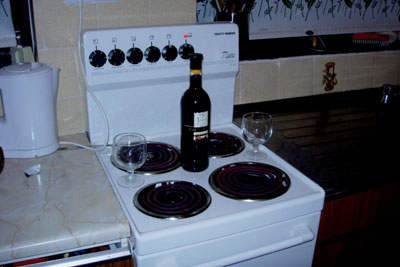
Because cooking dinner helped produce some warmth, we headed to the kitchen. When Patrick would get a bottle out, it wasn’t that nicely chilled red wine temperature we’ve come to appreciate, nor was it frozen. But it was so frigid you might want to wear mittens to handle it. The wine glasses, too, were like bowls of ice. So we lit the burners on the stove, placed the bottle and glasses among them, and waited until the bottle felt right. By then the glasses would be, too, and dinner would be nearly prepared. We ate it huddled against the big metal fireplace that at least suggested coziness.
Finally, I’m ashamed to say, the best part of each day came, and that was getting into bed and lying on the enormous heating pad that worked like a reverse electric blanket: warming the bed rather than lying on top of you. Finally, here was warmth, and it stayed — regardless of the wind and the rain, which sounded like it was shot from nail guns. While in bed I read a lot about the famine years and tried to comprehend how people could be this cold and starving and yet continue on, while I was being such a wimp about it all.
Christmas in Dublin
By Christmas we were in Dublin, which felt very far from County Mayo in every way. The hotel room was warm; people were festive and jolly; the food was varied and good; there were amazing cheeses to be found; and a farmers market was filled with treats. The pubs were bustling, and there were warm cobblers with cream or mushrooms on toast for breakfast. I’ve never loved Christmas that much, but in Dublin it felt like a real celebration, with music on the streets and a big feeling of happiness in those around us. Of course, that’s when the Celtic Tiger was a big glossy cat, but it was last year, too, when we were there and the economics were quite reversed.
By far, the best holiday scene was one I had the good fortune to happen upon, and it had nothing to do with food. I was walking down a street when I noticed at least a 100 Santas standing together in front of a rather grand building. They were talking and smoking in their Santa outfits. That alone was quite something to see, and I would have been utterly content if it went no further. But then all at once the door of the building opened, and the president of Ireland, Mary McAleese, stepped out, and all the Santas burst into boisterous song: “We wish you a merry Christmas, we wish you a merry Christmas, we wish you a merry Christmas and a happy new year!” And they cheered the president in her red dress, and I think they might have tossed hats into the air.
Top photo: County Mayo, Ireland. Credit: Deborah Madison