Articles in Drinking
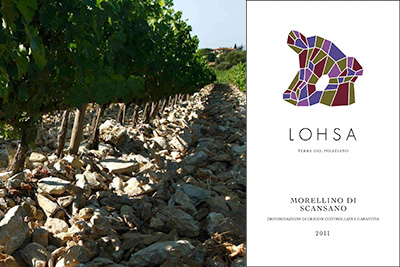
After splurging on plenty of great (and expensive) wines during the holidays, I’m ready to retrench. At $15, this bright, juicy 2011 Lohsa Morellino di Scansano is the right kind of deal, a medium-bodied red packed with generous flavors of cherry, raspberry, earth and spice, and intriguing aromas of dark cherries and violets. It’s yet another example of the fine values to be found in Italy’s less well-known wine regions.
This red comes from the Maremma, a hilly coastal strip in western Tuscany on the Tyrrhenian Sea, where the local name for the Sangiovese grape is Morellino. Wine was produced there back in Etruscan times, but it wasn’t until Bolgheri, the northern part of the Maremma, gained prominence as the home of Super Tuscan wines like Sassicaia that anyone looked farther south and discovered Morellino.
Elin McCoy’s Wine of the Week
2011 Lohsa Morellino di Scansano Terre del Poliziano
Price: $15
Region: Tuscany, Italy
Grape: 85% Sangiovese, 15% Ciliegiolo
Alcohol: 13%
Serve with: Roast pork loin, braised lamb shanks, mushroom ragu with polenta
More of Elin’s wine picks:
» A juicy, organic red from Montepulciano
» A crowd-pleasing party red wine from the Loire Valley
Thirty-five years ago there were only about 10 wineries that grew their own grapes in the district of Scansano, which includes 3,700 acres of vines in most of the towns in the southernmost area of Tuscany. Now there are several hundred wineries, fueled by a mini-land rush of buying and planting.
The reputation of the wines climbed, which is why the Morellino di Scansano appellation finally gained DOCG status starting with the 2007 vintage. Few wine drinkers, I’ve discovered, understand what those letters mean — Denominazione di Origine Controllata e Garantita — and often don’t realize they stand for Italy’s highest quality wine category. Rules govern everything from where the grapes can be grown to which ones must be used. To be labeled Morellino di Scansano, a wine has to contain at least 85% Sangiovese and come from a historic area that surrounds the medieval town of Scansano. Unlike most DOCG wines, Morellino is usually released less than a year after the harvest, which translates into fresh, lively reds. This one is aged for eight months in old oak casks.
Lohsa sets the table
The Lohsa Estate in Magliano belongs to the Carletti family, which established the beautiful Il Poliziano winery in Montepulciano, farther north in Tuscany, in 1961. Federico, son of the founder Dino, like so many restless enologists, wanted to experiment in other regions, and he expanded the family holdings into the Maremma in the 1990s as an independent “Terre del Poliziano” project. He produced his first Morellino in 1998.
The 2011 Lohsa Morellino di Scansano is a simple wine, but it has an enticing, gulpable charm. The appellation’s sunny mild winters, cool winds from the sea in summer, and stony soil all combine to make reds that are softer, rounder and more succulent than other Tuscan wines from the same grape, like Chianti. In other words, they’re delicious, especially for the price, which is why they’re wildly popular in Rome’s wine bars.
Top composite photo: A view of the Lohsa Estate and label for 2011 Lohsa Morellino di Scansano Terre del Poliziano. Credit: Courtesy of the Lohsa Estate
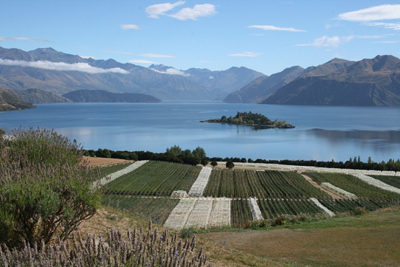
These are notes from a tasting that spanned three decades of Rippon Vineyards Pinot Noir.
1990 — This was the second commercial vintage of Pinot Noir, made from vines planted in 1982. A very warm vintage, with an early harvest. Medium colour, with an evolved rim. Quite a soft vegetal red fruit nose. A silky palate, with ripe red fruit, depth and texture with a good balance. A touch of fruitcake on the finish and a dry finish. Extraordinarily lively for a wine that is 30 years old, proving that New Zealand Pinot Noir can age.
1991 — A slightly cooler vintage. Medium colour. Some velvety vegetal notes on the nose. A very perfumed palate, ripe and rounded; mature and silky. A lovely glass of wine.
Two-part series:
» Part 1: Why New Zealand Pinot Noir Works: A Pioneer’s Story
» Part 2: A Milestone Tasting From Rippon Vineyards
More from Zester Daily:
» The unstoppable Oregon Pinot
1992 — Again, a slightly cooler vintage. Quite a deep young colour. Intense ripe red fruit on both nose and palate. A firm streak of fine tannin to balance the fruit, and still quite youthful.
1993 — Another cooler year. Quite a deep colour, ageing slightly on the rim. Quite a firm dry nose with red fruit, and on the palate some depth, with a vegetal note balancing some red fruit. Quite a dry finish.
1995 — The eruption of Mount Pinatubo in 1994 had a serious impact on subsequent vintages. A very cool year, but the wine does not taste unripe. Quite a light colour. Very vegetal nose, with some silky red fruit. Elegant fruit on the palate, silky and ripe, with a balancing streak of tannin.
1998 — Quite a light colour. A firm dry note on the nose, with a streak of hay. Ripe fruit on the palate, quite rounded and ripe, with more depth and texture that the nose would indicate.
A new decade at Rippon vineyards
2000 — From now on vine age starts to have an impact. Quite a deep colour. A smooth silky nose. A touch raisiny on the palate, but with some soft tannins. A warm finish.
2003 — Nick’s first vintage. He compared it to 2001 in Burgundy, neither a warm nor a cool vintage. Medium colour, beginning to evolve. Quite an elegant dry raspberry nose. And on the palate, some fresh vegetal and raspberry fruit, with some texture. Medium weight, with a fresh finish.
2005 — A small yield thanks to a cool, windy December during flowering. Medium colour, evolving a little. Quite a firm dry nose, and also on the palate. Firm raspberry fruit, with a note of acidity as well as tannin. Quite tight knit, with a fresh finish.
2006 — This was a warm year. Medium colour, with a dry vegetal note on the nose. The palate was quite rounded, with some texture and dry raspberry notes. Quite fleshy, and still very youthful, with good length and depth.
2007 — The smallest yield in the last decade thanks to spring frosts and a windy December, but an excellent ripening season. Quite a deep colour. A firm nose, with fresh dry raspberry fruit. Good acidity. Some elegant texture and a refreshing finish. Very classic. One of my favourite wines in the tasting.
2008 Mature Vines — A hot summer giving a good yield and healthy grapes. The first vintage of this cuvée, from the original vines. Medium colour. Quite a firm dry raspberry fruit on the nose. The palate is still very youthful, with fresh tannins, and dry raspberry fruit. Firm and textured, with ageing potential.
2009 Mature Vine — Medium colour. Quite fresh and ripe, and again on the palate fresh, ripe fruit with some balancing acidity and tannin. A warm note on the finish. Good depth.
2009 Emma’s Block — Medium colour. Elegantly perfumed nose. Medium weight, with rounded ripe fruit. Elegant and fragrant.
2009 Tinker’s Field — Quite fresh intense fruit on the nose and palate. Rounded raspberries; elegant with depth. Lovely texture and concentration, with a long firm finish.
2010 Mature Vine — A warm summer. Good colour. Rounded concentrated nose, and on the palate, lovely texture with concentration, ripe fruit and structure. Smooth tannins and great length. A broader wine than either Emma’s Block or Tinker’s Field.
2010 Emma’s Block — Quite deep colour. Rounded nose, and on the palate great texture with ripe fruit and balancing tannins. Ripe, concentrated and youthful with a tight knit finish.
2010 Tinker’s Field — Deep colour. Ripe perfumed fruit and on the palate, more structured, with firm tight knit red fruit. A youthful concentrated finish. And a great finale to a historic tasting, which amply demonstrates how suitable Central Otago is for the production of that most temperamental of grape varieties, Pinot Noir. Rolfe Mills had the vision to realise the potential of grape growing in countryside that had been dedicated to sheep farming, and his son Nick has the passion to continue to stretch the boundaries of Pinot Noir.
Top photo: Rippon Vineyards. Credit: Briar Hardy-Hesson
It’s time to stock up. Wine shops frequently offer fantastic bargains on Champagnes and other top-notch sparkling wines during the holiday season. Popular brands like Veuve Clicquot Yellow Label, Piper Heidsieck Brut, and Moet et Chandon Imperial often get discounted by 10%, 20% or 30% (sometimes even more). Savvy shoppers know that this is the best time of year to buy bubbly.
Yet this is also the season in which retailers sell the most Champagne. The five weeks or so between Thanksgiving and New Year’s see many shops moving as much of the stuff as they do during the whole rest of the year. As a general rule, sparkling wine does not sell particularly well in the U.S. from January through most of November. Then come the holidays, and bottles fly off store shelves.
More from Zester Daily:
» A push for organic Champagne
» Tasting vins clairs, the predecessors of Champagne
It doesn’t take an advanced degree to see that this pattern flies in the face of conventional economic logic. You may remember the simple supply and demand formula from Econ 101: Assuming a stable supply, when demand curves upward, prices should rise. In this case, though, just the opposite happens.
No one I’ve talked with has a satisfactory explanation. The standard account from both retailers and wholesalers is simply that everyone does it — which is like saying that you drive 80 mph in a 40-mph speed zone because you know that someone else is doing so too.
The very fact that this practice is so widespread suggests, however, that factors which are not primarily economic come into play. The consumer’s state of mind turns out to be just as important.
Why the attractive prices are a must
One of these factors is simply that shoppers like discounts. Cutting prices on this specific type of wine at this particular time of year gets people in the door of the wine shop, where they will find many other products that are not necessarily discounted. And during the holidays, people buy lots of wine as well as all sorts of other beverages. The store manager who strictly follows economic “laws” and keeps Champagne prices high is likely to lose customers.
Another factor involves the nature of the demand for sparkling wine. Many of the people who purchase it do not do so during the rest of the year, and so are not especially brand loyal. They are, however, price-sensitive. Stores that discount the high-end stuff and narrow the differential between it and more modestly priced products implicitly encourage their customers to buy up. After all, no one likes to be thought chintzy at Christmas.
That’s why this is such a good time to stock up, for the holidays and beyond. The attractive prices may well encourage you to think of Champagne and other high-end sparklers as being worth drinking all through the year — and not just when making toasts (or launching ships).
Best pairings for sparkling wine
In addition to being a classic apéritif, dry or “brut” sparkling wine is a wonderful dinner companion. It marries well with a remarkably wide variety of foods. Try it with almost any egg-based dish (a cheese soufflé, if you are sufficiently daring in the kitchen); with soups, especially rich, cream-based ones (think of oyster stew); and with Southeast Asian dishes such as Vietnamese pho or Thai curry. Its bubbles provide textural depth, while its refreshing acidity helps tame peppery heat.
I am talking here about serious sparklers, Champagnes and their imitators, wines made with the classic grapes (notably Chardonnay and Pinot Noir), and by the traditional method of an induced second fermentation in the bottle. This rules out most Italian Proseccos, which are fun and frothy but not true dinner partners; Spanish cavas; German sekts; and French crémants. It includes, though, both non-vintage and vintage Champagnes, their American counterparts, as well as northern Italian delights from both Franciacorta and Trentino.
These are the wines that tend to be discounted the most severely over the holidays. Their price stickers provide an enticing incentive for those of us looking to celebrate not only the season but also the whole upcoming year. Thanks to the paradoxical economics of increased demand and low pricing, this is one time in which we can drink fine bubbly and have it too.
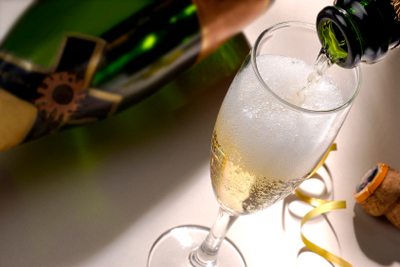
Top photo: Champagne for New Year’s Eve. Credit: iStockphoto
Quick: In three words, what is port wine? Before hosting a port tasting party the other night, I would have said, “sweet, old-fashioned and British” — and I would have been mostly wrong. The most fun way to learn about port is to drink it, so finish reading this article and gather together a few friends and a few bottles. The holidays are the perfect time for a tasting party.
A little background might make your tasting party a bit more interesting. Port is wine fortified with brandy or grape spirit, often resulting in an alcohol level of around 20%. Best known as a deep garnet or brick-red sweet dessert wine, it is also produced in a white or pink off-dry style for cocktails and apéritifs.
Unlike many other wines, it is not produced as a single varietal. Style variations are based on three things: how it is aged — either in bottle or wood vats and casks; how long it is aged; and the winemaker’s skill at blending grape varietals. The result is three basic styles of port: bottle-aged vintage; wood-aged reserve or late-bottled vintage; and wood-aged tawny.
More from Zester Daily:
» Port works its magic on a persimmon tart
» A port-spiked, modernist mac ‘n’ cheese
The World Heritage home of Portugal’s Port
Today, more than 38,000 farmers grow port grape varietals like Touriga Nacional, Touriga Francesco, Tinta Roriz, Tinta Barroca and Tinto Cão on the steep rocky hillsides above the Douro River in Portugal. The fantastically, challenging terrain — in some areas, vine roots have to reach down 40 feet through rock fissures for moisture — has qualified some of the oldest vineyards, or quintas, to be classified as World Heritage sites. And many traditional practices live on: Hand-harvesting and traditional foot-crushing are still widely practiced by the best producers.
Vintage port is considered the rarest and finest of all ports. It is selected from a single exceptional year — only three years on average in a decade are declared “vintage” years by the industry body, Instituto do Vinho do Porto. Vintage port is typically aged 2 years before release, then cellared 15 years or more before it’s ready to drink.
The other classic style is tawny port, aged 10 to 40 years in wooden vats or casks and bottled when ready to drink. The creation of aged tawnies requires incredible blending skills and a great deal of patience on the part of the winemaker. David Guimaraens, head winemaker for Taylor Fladgate, Fonseca and Croft, is a sixth-generation family member of the Fonseca clan who described it best.
“The fact that we lose about 3% a year in ‘the angels’ share’ [what port winemakers call the wine’s natural evaporation] means that having one bottle of 20-year-old to sell in 20 years’ time requires two now. There is simply no shortcut. It takes 20 years to make a 20-year-old tawny,” Guimaraens said.
So port may seem pricey at first, but when you consider the effort that goes into making it, you may think of it as a bargain. The small harvest of 2011 declared vintage port is just hitting shelves now and availability is not expected to last long. So if you want to get your Christmas shopping done really early, pick up a bottle of 2011 vintage today. It will make a killer hostess gift for another port tasting party in 2028.
Tasting party gear
In anticipation of my party, I asked everyone to bring one bottle and I stocked the table with an assortment of aged tawnies and a few newly released 2011 vintage ports from Taylor Fladgate, Fonseca and Croft, all venerable producers of the best classic port. We were lucky that one guest shared a bottle of 2007 Quinta do Vesuvio, the last time a vintage was declared in this decade. We started with interesting vertical tastings of each style and progressed across the horizontal range from aged tawnies to new vintage. No matter what styles you try, have a few things at hand:
- Tasting Notes Form — De Long Wine Company offers a great one free to download
- 3 stemware per person — white wine glasses work perfectly fine
- Wine aroma wheel — might help the tongued-tied with classic flavor descriptions
- Something to munch on — nuts or cheese
- Designated driver
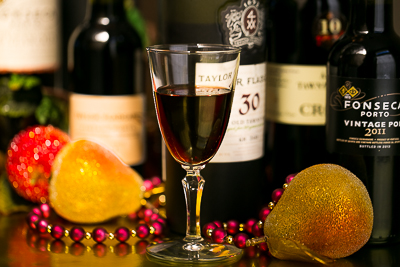
Top photo: An assortment of port wines for a tasting. Credit: Caroline J. Beck
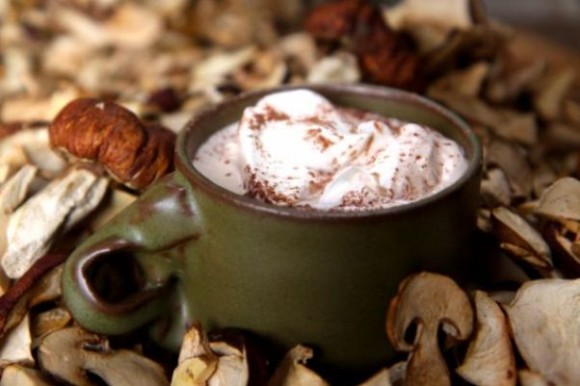
Porcini hot chocolate might be the most unusual holiday drink recipe you try this season. It is polarizing, to be certain. Most people will run in the opposite direction from the very idea of mushroom hot chocolate. But for those who dare to taste it, porcini hot chocolate is a unique and decadent treat.
More from Zester Daily:
» Apple cider gets dressed up for the holidays
» Cinnamon spices up cocktails
I developed this recipe one night when my friend furnished a lovely rich meal of Mangalitsa pork and roasted vegetables, and I was asked to supply dessert. With such a filling meal, I knew that my dessert needed to be light. Immediately, my mind went to sorbets. But it was a cold and snowy night. It finally occurred to me that hot chocolate might be the perfect way to end the meal. The only question was how to make it special.
I’m known for my pantry full of wild Boletus edulis, aka porcini, mushrooms. It seemed that hot chocolate might be rounded out with mushrooms. It was certainly worth the experiment. I ran a quick test batch, knowing it would either be brilliant or horrible.
That first batch was so delicious that, with mug still in hand, I raced to the computer to tell all of my foraging buddies. Most of the foragers were excited. But one friend confessed, “that sounds really gross, but I’ll trust you.”
I served it that evening with the roasted pork to great success, and it has since become the staple item that I bring to all holiday parties. Each time, porcini hot chocolate gets a decidedly mixed reaction. Some politely decline, and others race to fill their cup. The people who try it are unanimously pleased with the way chocolate combines with mushrooms. Both are rich and earthy, and each seems to complement and make the other fuller. The powdered mushrooms also thicken the porcini hot chocolate, as if it were made with cream. When topped with a hit of whipped cream, and some extra cocoa for a bitter contrast, I can hardly think of a dessert I’d rather cozy up to during the holidays.
Porcini Hot Chocolate
Serves 4
Ingredients
2 tablespoons cocoa powder
4 tablespoons porcini powder, from sliced dried porcini
4 teaspoons packed brown sugar
32 ounces whole milk
whipped cream
extra cocoa powder, for dusting
Directions
1. Begin by making the porcini powder. This is best done by placing sliced dried porcini mushrooms in an electric spice grinder. Buzz them until the porcini are as fine as cocoa powder.
2. In a small bowl, combine the cocoa powder, porcini powder and brown sugar. Use a spoon or fork to stir the ingredients together until they are evenly combined.
3. Add the milk to a medium saucepan. Over low heat, whisk in the powdered ingredients until no visible powder remains on the top. Bring the heat up to medium-low, whisking every 30 seconds or so, until the porcini hot chocolate is hot.
4. Ladle the porcini hot chocolate into mugs, and top them with whipped cream and a dusting of cocoa.
Top photo: Porcini hot chocolate. Credit: Wendy Petty
This is the time of year for hot drinks such as buttered rum. Here’s one from the 18th century that fits right in. The drink called bishop is like mulled wine crossed with sangria with a dash of triple sec and a rich and intriguing flavor we rarely use, baked orange peel. It would move pretty fast at a holiday party, and it could even be served cold in summer.
More from Zester Daily:
» Puerto Rican “eggnog” rocks the holidays
» Ring in the New Year with auld lang syne Scotch
» Go old school with classic eggnog
I don’t really know why it’s called bishop, though some people say it was served when a bishop came to visit, and one Maryland recipe collection reportedly says to add brandy “according to the capacity of the bishop.”
The idea of flavoring wine goes back to the Romans, who liked to put spices and fenugreek leaves in it. From the Middle Ages down to the 17th century, monks and doctors made liqueurs with secret herb mixtures while laypeople were whipping up concoctions with names such as ypocras and metheglin. These were all medicinal beverages, or so people told themselves.
In India, the English finally learned to mix drinks for purely recreational purposes. The toddy, from a Hindi word for palm wine, was essentially whiskey, sugar and hot water. The name punch comes from the Hindi word panch, which means “five,” because it originally had five ingredients. Finally, shrub, which comes from the Arabic word sharab, or “beverage,” seems to have been punch with fewer ingredients.
Most of these punches were basically booze mixed with sugar and lemon or lime juice. In the modern world, punch, apart from children’s birthday punches and the wedding champagne punch, has evolved into a cocktail. Most often it is essentially a miniature, single-serve punch mixed to order. And when making cocktails, bartenders still go through a lot of lime juice and Collins mix. Another thing old-time punches and cocktails had in common was that they were often sprinkled with nutmeg, which doesn’t go on anything but eggnog today.
Once they got the idea, the English started running with it. Negus was essentially strong lemonade mixed with wine, perhaps topped off with some brandy. And then there was bishop, which was wine mixed with orange juice. (When bishop was born, it was a showoffy drink because oranges were expensive imported delicacies.)
I’ve followed the recipe in Mrs. Lettice Bryant’s “The Kentucky Housewife” (1839) except for baking the oranges rather than roasting them before the hearth fire. “Serve either warm or cold,” the recipe says, “in glasses, and grate nutmeg thickly over the tops.” Cheers, reverend sir.
Bishop
Serves 6 to 8
Ingredients
6 oranges, preferably Valencias
1½ cups sugar
1 bottle red wine, divided
Freshly ground nutmeg
Directions
1. Bake the oranges at 350 F until the peels soften, about 25 minutes. The peels will look a little puffy and shiny and have a piney aroma. Don’t worry about a few browned spots. Let the oranges cool, slice them into a large mixing bowl and stir with the sugar and half of the wine.
2. Cover overnight.
3. At serving time, squeeze the oranges and stir up the mixture to make sure the sugar is dissolved. In a saucepan, heat the rest of the bottle of wine to just under the boiling point and strain the orange-wine mixture into it. Serve sprinkled with nutmeg.
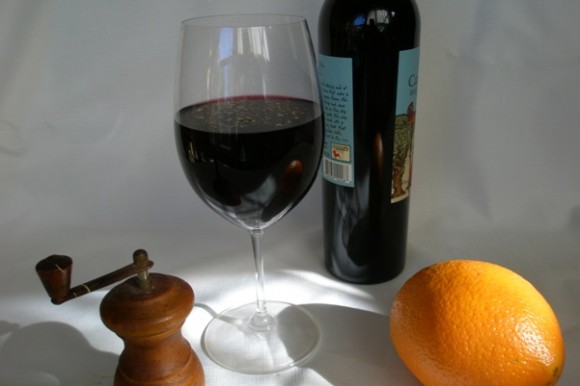
Top photo: Wine, oranges and nutmeg go into the cocktail called bishop. Credit: Charles Perry
Everyone loves reading and drinking, right? Or maybe it’s drinking and reading. So these great books about cocktails would be perfect presents for just about anyone. You might even want to snag a few for yourself, and snuggle up to read them with a drink in hand.
“Cocktails for a Crowd”
This book by Wine Enthusiast Magazine spirits editor Kara Newman is a must-have resource for making punches, pitcher drinks and party-size batches of tiki and tropical beverages. Newman also spells out the way to go on ice, garnishes and other equipment to keep the drinks flowing at your next gathering. Additionally included are classics along the lines of the Bobby Burns (see recipe below), a strong, burly drink invented for Robert Burns Night, celebrating the Scottish poet, on Jan. 25. Newman even explains how to make a bottled version, ideal for serving to a large group. $18.95, Chronicle Books
“Dr. Cocktail: 50 Spirited Infusions to Stimulate the Mind & Body”
Alex Ott, an organic chemist and mixologist, has created cocktail menus for restaurants and bars around the world. Ott was inspired by his own brush with death in an airplane crash to write this book, which centers on the power of spirited concoctions to combat stress, boost energy, stay young, improve memory, cure hangovers, relax one’s nerves and, of course, act as aphrodisiacs and magic tinctures. Many of the drinks call for fresh fruits, vegetables, botanicals and herbs as well as chamomile, garlic, lemongrass and cinnamon to work their power. $17, Running Press
More from Zester Daily:
» Just what Dr. Cocktail ordered
» Taste the seasons in your glass
“The Drunken Botanist”
Written by New York Times best-selling author Amy Stewart, this is the book to get for the gardeners and cocktail historians in your life. A detailed exploration of the garnishes and flavorings that can naturally accent a good drink, from herbs and spices to berries, flowers and other botanicals, Stewart helps guide both how to grow all these accoutrements as well as how to use them in a range of flavorful cocktails, from The Aviation, made with violet liqueur, to a Negroni with fresh orange peel. $19.95, Algonquin Books
“Savory Cocktails”
Written by Greg Henry, author of “Savory Pies,” this is for those who prefer their drinks herbaceous, smoky and strong — his chapters are broken down by Sour, Spicy, Herbal, Umami, Bitter, Smoky, Rich and Strong categories. Within the inspiring recipes are notes on techniques and primers on how to make your own syrups, bitters, shrubs and infusions. $16.95, Ulysses Press
“Shake, Stir, Pour: Fresh Homegrown Cocktails”
Katie Loeb, a Philadelphia-based sommelier, restaurant consultant and bartender, believes that anyone who can shop, boil water, measure ingredients and operate basic kitchen equipment can make homegrown cocktails. But just in case, her book includes step-by-step photos of some of the more complicated procedures for those shaky around a shaker. Expect tips on how to make infusions of base spirits, bitters and your own limoncello. $24.99, Quarry Books
“Twenty Years Behind Bars: The Spirited Adventures of a Real Bartender”
Northern California-based bartender Jeff Burkhart likens bartending to both marathon running and psychology. In this book, he takes a look at life from both sides of the bar, providing anecdotes on encounters with George Lucas, Robert Redford and Andre Agassi, as well as useful tips on drinking and making drinks. $15, CreateSpace Independent Publishing Platform
“Vodka Distilled: The Modern Mixologist on Vodka and Vodka Cocktails”
Renowned mixologist Tony Abou-Ganim’s book is part history, part philosophy, with plenty of recipes for the world’s most widespread — if sometimes maligned — spirit, vodka. Abou-Ganim defends vodka’s complexity and versatility with detailed ideas for cocktails, a primer on pairing with such delicacies as caviar and a list of 58 vodkas with tasting notes and character scores for each. $22.95, Surrey Books
Bobby Burns
Courtesy Kara Newman, “Cocktails for a Crowd”
Serves 8 (about 4 cups)
Ingredients
12 ounces Scotch
12 ounces sweet vermouth, such as Carpano Antica
5 ounces water
2 ounces Benedictine
8 lemon twists, for garnish
Directions
1. In a pitcher that holds at least 5 cups, combine Scotch, vermouth, water and Benedictine and stir well.
2. Using a funnel, decant into a 1-liter liquor bottle or two 750-milliliter bottles. Cap tightly and refrigerate for at least two hours, until chilled.
3. To serve, set out a bowl or wine bucket filled with ice.
4. Shake the bottle to ensure the cocktail is well mixed, then set it in the ice so it stays chilled.
5. Pour into coupe or martini glasses and garnish each drink with a lemon twist.
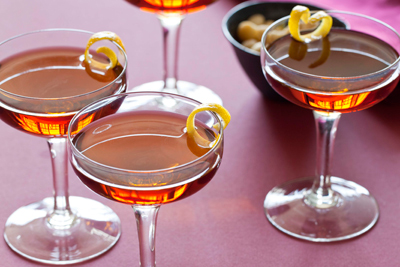
Top photo: Bobby Burns cocktail. Credit: Teri Lyn Fisher
After the death of great South African leader Nelson Mandela, I’ve been thinking about his political and moral legacy and a family wine I encountered in October. This 2012 House of Mandela Thembu Collection Pinotage, with its earth, plum and cherry flavors, is an easy-on-the-palate red produced by his daughter and granddaughter. Think of it as part of Mandela’s wine legacy.
An affordable red from South Africa’s signature grape Pinotage, it’s graced with a colorful label based on Mandela’s traditional dashiki shirts. Part of the profits will go to the family foundation and to the Africa Rising Foundation, which aims to alleviate poverty. It’s certified Fair Trade, which means producers get a set minimum price for their grapes and workers get a living wage.
Elin McCoy’s Wine Of The Week
2012 House of Mandela Thembu Collection Pinotage
Price: $15
Region: Western Cape, South Africa
Grape: 100% Pinotage
Alcohol: 14.3%
Serve with: Spicy pizza, rich beef stew
More from Zester Daily:
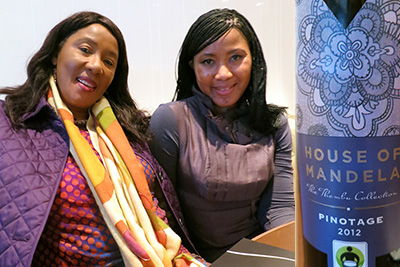
Back in October, I tasted through the House of Mandela lineup with Mandela’s daughter, Makaziwe (Maki) Mandela, 59, and her granddaughter, Tukwini, 38, the team behind the wines. “When we explored the idea,” Makaziwe Mandela told me, “we found out very few black people owned wineries.”‘
The two women asked U.K.-based Master of Wine Lynne Sherriff to help them find winemaking partners to create their wines. (They hope eventually to have their own winery.) Highly conscious of their family heritage, they gave Sherriff a list of requirements: In addition to producing quality wines, the wineries had to be family owned, use good labor practices and respect the country’s biodiversity. They selected several, including Fairview Estate, and use winemaker Erlank Erasmus to oversee the 10 wines, but members of the Mandela family taste and vote on the blends. Of the three whites and three reds in the more affordable Thembu Collection, this Pinotage was the most interesting.
A cross between Pinot Noir and Cinsaut, the Pinotage grape was created by a South African professor in 1925 and is regarded as the country’s own variety. The best wines from it have the bright fruity flavors of Pinot Noir as well as the robust, plummy-earthy ones of Cinsaut. Most of the grapes for this House of Mandela version come from the hot, dry Swartland region north of Cape Town, a hotbed of old bush vines and winemaking experimentation.
Mandela, who loved white wines, gave his blessing to the House of Mandela wine enterprise. Which makes this 2012 Thembu Collection Pinotage a worthy drink to celebrate peace on earth this holiday season.
Top composite photo: