Articles in Holidays
When I first met Johnny Apple I was living in Italy and he was still a crackerjack, award-winning, highly respected foreign correspondent for The New York Times, a man whose charm and raffish air belied an extraordinary focus and discipline. Johnny also had a developing reputation as an irrepressible gourmand, evident from the gleeful manner in which he attacked both plate and glass, as well as his already substantial girth. One of my favorite Apple stories took place in Tehran, in the last days before the Shah flew out and the Ayatollah flew in. Aware that the impressive wine cellars at the InterContinental Hotel would be one of the first casualties of the revolution, Johnny organized a banquet of journalists with the object of making as large a dent as possible in the wine supply. He called it a “Light at the End of the Tunnel” party and only reporters who had also served in Vietnam were invited to attend. In the event, the party was invaded by a large contingent of non-Vietnam veterans who contributed mightily to the effort. A lot of wine went down reporterly gullets and a lot less wine was poured in the gutters of Tehran as a result.
Nancy Harmon Jenkins is the author of several books, the latest of which is her newly revised “The New Mediterranean Diet Cookbook.” Her other food books include, “Cucina del Sole: A Celebration of the Cuisines of Southern Italy” and “The Essential Mediterranean,” which looks at a dozen foods key to understanding Mediterranean cuisines. She also wrote “Flavors of Tuscany,” “Flavors of Puglia” and “The Mediterranean Diet Cookbook.” She is working on a book on Atlantic salmon. A former staff writer with The New York Times, Nancy continues to contribute to the Times in addition to writing for The Washington Post, Saveur, Food & Wine and other national publications. She currently divides her time between a Tuscan farmhouse and a home on the coast of Maine where she was born and raised. She has lived and worked throughout the countries of the Mediterranean, at various times making a home in Spain, France, Italy, Lebanon, and Cyprus as well as in Hong Kong and England. You can read more of her food writing on her site, NancyHarmonJenkins.com.
Decades later, having covered Vietnam, Iran, the higher levels of the British and French foreign offices, and several U.S. political campaigns, Johnny would be reassigned, at his own suggestion, to roam the world for The Times, not investigating foreign matters so much as recording his gastronomic escapades with his wife Betsey. It was an assignment, with an expense account to match, that had almost every other Times reporter positively green with envy. We were all stumped by the question: How on earth did he get away with that?
But Betsey and the global-eating assignment came later. Back in the day — the 1970s — during one Easter week I was planning a Sunday feast at our family farmhouse in the hills of eastern Tuscany. Johnny was staying in Perugia with friends — of course it would be the head of the Perugina chocolate factory, who was also a great patron of music and musicians. Johnny loved music almost as much as he loved food. Not quite, but almost.
I can’t remember now what persuaded him to leave the chocolate factory and the music, but leave it he did to drive up into our hills. We were gathering an assembly from near and far, types that ranged from fellow journalists (the man I was married to at the time was of that tribe) to hippy English back-to-the-landers, a pair of poets. A world-renowned feminist never shy of expressing her opinions brought along an embarrassingly younger lover, then took one look at the more handsome of the hippies and forthwith settled on him.
I think of that meal every year as Easter looms because I outdid myself — not just because of Johnny, although of course I wanted to impress him. But somehow everything fell into place, as it often does — the lamb was tender, the early peas and fava beans had all the immaculate delicacy of new spring vegetables. The wine was a perfect match, even though the husband carefully steered the best bottles toward his and Johnny’s end of the table, leaving the local plonk for the hippies and poets.
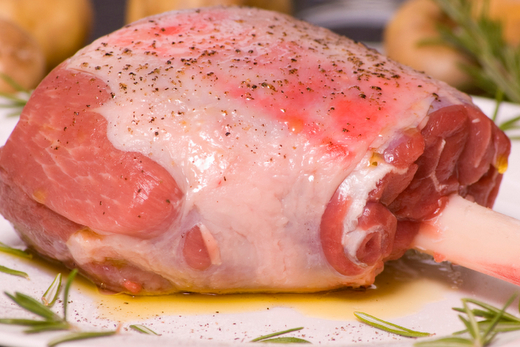
But what was most wonderful was the lamb, a couple of legs of a very young critter that I prepared from a recipe developed by an old friend, Sara Armstrong, once the chef-doyenne of the renowned Copper Kettle restaurant in Aspen, Colo. She too had traveled the world, but as a diplomat rather than a journalist, and had assembled a vast collection of recipes that were the backbone of that amazing establishment. It’s been years since the Copper Kettle closed, and Sara has long since gone to the great kitchen in the sky, but every year at Easter I try to make what she called simply “Roast Lamb With Dill.” I cook it in memory of her, and in memory of Johnny Apple, who ever after expressed amazement at what he called Roast Lamb With Coffee. And what do I call it? Slow Roasted Lamb for Easter.
Slow-Roasted Lamb for Easter
Ingredients
Directions
- Prepare the lamb by inserting garlic slivers all over the fleshiest parts of the leg. Use a small sharp-pointed knife to make incisions and slip the garlic slivers in. Let stand at room temperature for 2 hours before roasting.
- Preheat the oven to 275 F.
- Set the lamb leg on a rack in a roasting pan. Rub the leg all over with the molasses, then (first washing and drying your hands) sprinkle generously with salt, pepper and tarragon, plus half the dill and the coriander.
- Roast the lamb in the preheated oven for about 3½ hours, or until a meat thermometer reads 170 F. Baste the lamb every 30 minutes or so with a mixture of coffee and wine, gradually blending in the accumulated juices on the bottom of the roasting pan.
- When the roast is done, remove but keep it warm while you prepare the sauce to serve with it.
- In a small saucepan, crush the egg yolks with a fork into the vinegar. Blend in the remaining dill and the parsley.
- Strain the juices from the roasting pan, removing as much fat as possible. Add them to the saucepan, set the pan over low heat and blend with the egg mash.
- Add lemon juice and blend, then taste and adjust the salt and pepper.
- Finally stir in the coarsely chopped egg whites. Bring the sauce to a boil just before serving.
- Carve the lamb in thin slices and pass the sauce.
Nancy Harmon Jenkins is the author of several books, including “Cucina del Sole: A Celebration of the Cuisines of Southern Italy” and “The Essential Mediterranean.”
Photo credit: Bocky Tandiono / iStockphoto.com
Mothering Sunday, also known as Mother’s Day, is celebrated this year (in Britain at least) on April 3. It has its origins in a festival of the church which falls on the fourth Sunday in Lent. As such, it’s one of those movable feasts linked to the celebration of Easter, which — as I’m sure you know — follows the old lunar calendar, unlike Christmas and all the other Christian feast days which remain the same from year to year.
A cake to demonstrate material wealth
The festival was marked in medieval times by a pilgrimage to the mother-church of the parish. This habit was replaced in Queen Victoria’s day, when more than half the population was employed in domestic service, by granting young unmarried female servants leave to pay a visit home to mother. If the employer was generous, young women in service were permitted to bake a rich fruitcake to take home to their families, allowing just enough time (since all fruitcakes improve with the keeping) for their handiwork to be stored away for the Easter festival three Sundays later.
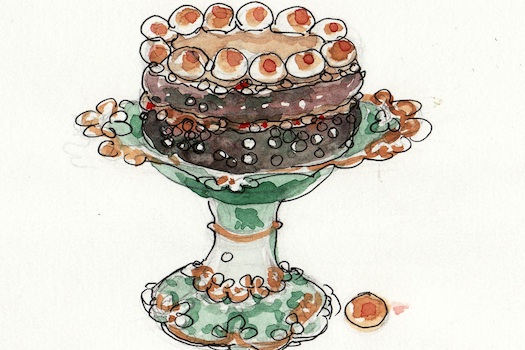
The cake, an edible demonstration that the young woman was well cared-for, was made of the very best ingredients, and Victorian household books stipulate the finest white flour (well-sifted and dried in the oven), raisins-of-the-sun, Jordan almonds, crystallized fruit, dried figs, sweet (rather than salted) butter and fresh eggs, with a liberal addition of expensive spices from the household’s precious supplies. And, if the housekeeper was particularly well disposed, a layer of almond paste baked through the middle. The Christian message was underlined by finishing the cake with another layer of marzipan and a dozen little balls to symbolize the apostles, with another larger ball popped in the middle to represent Christ.
Tracing the cake’s unusual name
None of this explains the cake’s curious name. Victorian storytellers ascribed it to a certain Lambert Simnel, pretender to the English throne some 500 years earlier but granted a royal pardon on account of his youth and set to work as a baker in the palace kitchens. Others ascribed it to a marital quarrel between two confectioners — husband Simon and wife Nell — who couldn’t agree upon who thought of it first.
Nevertheless, the most probable (and prosaic) explanation is that the name derives from the Latin for fine white flour, simila, the ingredient favored by Roman cooks to prepare foodstuffs designed to celebrate the rites of spring which, naturally enough, included those well-known symbols of fertility appropriate to the festival: nuts, eggs and seeds. This might explain the popularity in modern times of the nests of sugar-eggs, fluffy chicks and baby bunnies with which those of a secular turn of mind replace the symbols appropriate to a Christian festival of resurrection. No matter what its origin, the story is renewal, and the cake, a 17th-century improvement on the original boiled dumpling, tastes as good at it should.
Simnel Cake
For dried fruit, choose a pretty mixture of prunes (pitted and diced), sultanas, raisins and crystallised fruit. Ready-made marzipan won‘t do since it lacks the egg-yolk which allows the mix to keep its shape in the oven. This recipe combines boiling with baking, a method which takes account of a lack of domestic ovens. It‘s easy, too, with virtually no beating and absolutely no machinery required.
Ingredients
For the marzipan layer:
For the marzipan topping:
Directions
- Line the base of 9-inch cake tin with a double layer of well-buttered paper. If yours is not one of those tins with a hinged side, line the sides as well with a double thickness — raisins are terrible stickers. For a really nutty flavor, dust a little powdered almond round the tin.
- Put the butter, treacle, all the dried fruit, the whole almonds and orange and lemon rind and juice into a roomy saucepan, and heat until the treacle and butter have liquefied. Simmer gently, stirring, for a few minutes, and then leave aside to cool.
- Prepare the marzipan by working all the ingredients into a stiff paste. If it’s not pliable enough, work in a little lemon juice. Knead it into a ball and roll out into a disk to fit the cake tin, dusting with confectioner’s sugar to stop it sticking to the rolling pin. (Ready-prepared marzipan is no good for the middle layer since it lacks the egg which holds the mixture together in a single luscious layer as it cooks.)
- Preheat the oven to 300F.
- Sieve the flour and the spice mixture into the pan with the syrup-fruit mixture and crack in the eggs. Turn all together thoroughly until you have a soft batter which drops easily from the spoon. Spoon half the batter into the lined cake-tin. Cover it with the marzipan round, and spoon on the rest of the batter. Smooth the top down so that it dips a little in the middle; this encourages the cake to bake with a flat top.
- Bake for 2½ to 3 hours, until the cake has pulled away from the sides and feels firm to your finger. Or you can test it with a skewer poked through the middle — if the batter is uncooked, it’ll stick to the skewer. Or open the door and listen: an excited hissing means the inside is still evaporating moisture and not yet ready.
- Transfer to a rack to cool. Then store in a tin till Easter.
- Before serving: Prepare the marzipan as before, using just the egg yolk to mix (lemon juice might be required to soften) and saving the white for finishing. Save a quarter of the paste and roll out the rest to fit the top of the cake. Spread the cake-top with apricot jam, then cover with the rolled-out marzipan.
- Cut the reserved marzipan into 12 small pieces and form into little balls — one for each of the 12 apostles and one for Jesus. With your finger, make 12 indentations round the edge of the marzipan topping and one in the middle. Paint each dip with a little egg white and drop in the marzipan balls. Brush all with the remaining egg white and sprinkle with a little caster sugar. Pop the cake under the grill or transfer to a hot oven for a few moments to brown the marzipan balls (a lick of spring sunshine, no more).
Zester Daily contributor Elisabeth Luard is a British food writer, journalist and broadcaster specializing in the traditional cooking of Europe and Latin America, and its social, geographical and historical context.
Images: Watercolor of a simnel cake.
Credit: Elisabeth Luard
Valentine’s Day, a day celebrating love and affection between intimate companions is an opportunity for the gastronomically or romantically inclined, or both, to explore the aphrodisiac quality of foods. In the olden days, the idea that certain foods had aphrodisiac qualities was much more popular than today. Today, there’s too much science telling us it’s hogwash. But love is like religion; it requires faith, not reason. And making believe certain foods are aphrodisiacs is plain fun and does no harm to your reputation as a great lover.
The most celebrated of lovers was Giovanni Giacomo Casanova de Seingalt, arguably the most famous of Venetians, along with Marco Polo. Casanova, whose name is now synonymous with sexual exploits, was an adventurer, soldier, prolific author, international gambler, spy and a lover of women. And women loved him. He was a lover, not a skirt-chaser, although the two are sometimes confused. Nevertheless, his sexual escapades read like operatic plots.
Casanova’s belief in the power of food as an aphrodisiac is well known. “I have always liked highly seasoned food. … As for women, I have always found that the one I was in love with smelled good, and the more copious her sweat the sweeter I found it.” He believed Roquefort cheese was an aphrodisiac. “Lithe as a doe she spread the tablecloth, set two places and then served some Roquefort cheese with a wonderful glazed ham. Oh what an excellent pair are Roquefort and Chambertin [a wine] for stimulating romance and bringing a budding love affair to quick fruition.” About oysters, Casanova, who is reputed to have eaten 50 a day to boost his libido, said they are a spur to the spirit and to love. He often assured the ladies, before bedding them, that he had eaten nothing save a cup of chocolate and a salad of eggs dressed with olive oil from Lucca and vinegar from Marseilles. Eggs are a very popular aphrodisiac in many writings.
Antipasto course: Seduction
So for a Valentine’s Day menu, consider a meal that doesn’t have to be about the art of seduction, though that’s a nice way to think. And remember, both men and women seduce and are seduced. Remember to keep portions very small.
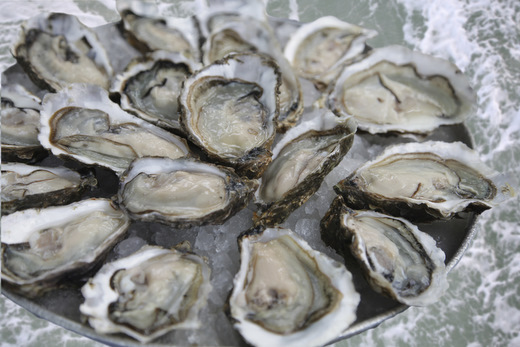
The place to start is an appetizer of raw oysters or a plate of asparagi alla Cupido, asparagus steamed with a sauce of tuna and caper foam. The Greeks, who considered asparagus an aphrodisiac, recommended that it be eaten in moderation. For your romantic evening, it is a light and refined dish best accompanied by a dry white wine and with Debussy’s “Claire de Lune” played in the background. However, raw oysters on the half shell are impossible to resist and their resemblance to the maidenhead is noted by great lovers. To eat it, follow Casanova’s advice: “I placed the shell on the edge of her lips and after a good deal of laughing, she sucked in the oyster, which she held between her lips. I instantly recovered it by placing my lips on hers.”
The oyster or the asparagus should be followed by a small salad, a lovers’ salad, an insalata degli innamorati of avocado stuffed with shrimp, celery and walnuts with pink mayonnaise. This delicious salad is easy and fast, able to be made in anticipation. Your romantic tête à tête can be had over this dish with some sparkling wine or rosé, and of course you will use one spoon and one-half avocado for the both of you.
The next course should be extravagant, but remember we are talking about your lover not your accountant. Foie gras de canard poêlé aux raisins blancs, pan-seared raw fois gras with green grapes is a dish you will both remember. You will not need much.
First course: Macaroni
A romantic dinner without macaroni is unthinkable. What better preparation than a dish we can name after our hero maccheroni alla Casanova. Casanova writes in his autobiography that cultivating and pleasing the senses was for his whole life his main preoccupation. Ho molto amato anche la buona tavola ed insieme tutte le cose che eccitano la curiosità … (I very much loved a good table and everything that excites the curiosity.) Some people have suggested that in Venice, in 1700, macaroni referred to gnocchi, but given that Casanova said Ho amato i piatti dal sapore forte: i maccheroni preparati da un bravo cuoco napoletano, (I love strongly flavored dishes: macaroni prepared by a good Neapolitan cook) it seems that he intended macaroni.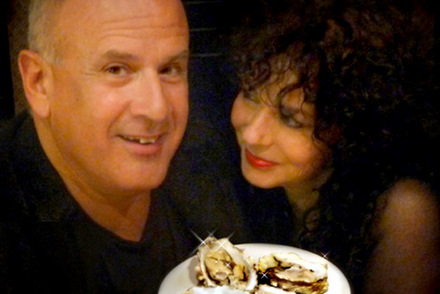
Maccheroni alla Casanova is made with bucatini seasoned with aromatics such as anchovies, tomato, black olives and red chile flakes. Keep in mind Casanova’s preference for spicy foods. A normal primo portion of macaroni would be four ounces. Here you should use less.
Main course: Seared Muscovy duck breast
The main course should not seem main, so again use sensibility in your portions. The seared Muscovy duck breast with Marsala orange sauce with red currants is made by sautéing shallots first in olive oil and butter then searing the duck and finishing it with duck glaze, fresh orange juice, sage, Marsala wine and fresh red currants, garnished with orange zest.
Final thoughts
The smallest portion of Roquefort and apples should be served following the duck and finally, before retiring, a chocolate.
If you take less than three hours to eat or you feel full, you are going too fast and eating too much. Remember, for Valentine’s Day you are inspired by Casanova, not an American teenager.
Zester Daily contributor Clifford A. Wright won the James Beard / KitchenAid Cookbook of the Year Award and the James Beard Award for the Best Writing on Food in 2000 for “A Mediterranean Feast.” His latest book is “Hot & Cheesy” (Wiley) about cooking with cheese.
Photos, from top:
Oysters on the half shell. Credit: Nick Free
Clifford A. Wright’s Valentine’s Day dinner. Credit: Madeline Sitterly
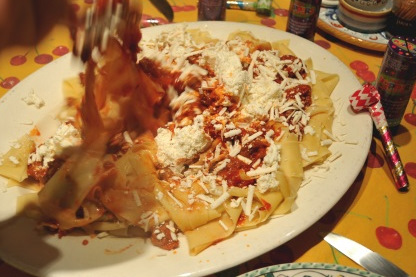
When it comes to food, celebrating New Year’s Eve or New Year’s Day need not be the same old thing if you are willing to adopt a culinary tradition from another culture. For instance, I love to make a Sicilian dish for our New Year’s Eve dinner, especially when the dish has as colorful — so to speak — a name as this one.
Sicilians love vulgar names for their favorite dishes. The name of this rough-and-ready preparation, lasagna cacate di Módica, “shitty” lasagna from Módica, is a dish from the beautiful Baroque town of Módica in Sicily’s province of Ragusa. The name is mild compared to some names I’ve come across, but it is in no way eponymous, as the name may be a reference to its inelegant appearance.
When I make this lusty lasagna guests can’t stop eating it. This recipe is very authentic, too, because I ask you, as they would do in Sicily, especially in the smaller towns and villages of the interior, to make your own pasta casarecchia, homemade pasta.
Traditionally, this lasagna is served as a piatto unico, a single main course dinner plate on New Year’s Eve or New Year’s Day and a little ditty gives you an idea of its purpose for the upcoming year:
“Lasagni cacati e vinu a cannata Bon sangu fannu pri tutta l‘annata.” (“Shitty lasagna and wine by the pitcher, Make good blood for the whole of the year.”)
This pasta is made with fine white flour and not the semolina for which the Sicilians are famous. This is probably a reflection of the specialness of the dish on New Year’s Eve or New Year’s Day because white flour was traditionally considered more expensive and refined. Try sprinkling ricotta salata instead of pecorino cheese onto the pasta.
Lasagna cacate di Módica
Serves 4 to 6
Ingredients
Directions
- Pour the flour onto a work surface. Make a well in the middle and break the eggs into it. Sprinkle in the salt. Begin to incorporate the eggs with the flour, a little at a time, with your fingers, pulling more flour from the inside wall of the well. Once the flour and eggs are combined, knead for about 8 minutes until you can form a smooth ball, using a few tablespoons of water if necessary to form a ball. Wrap the dough in plastic wrap and leave for 30 minutes at room temperature.
- With a rolling pin, roll the pasta out until it can fit into the widest setting of a pasta-rolling machine. Roll out into very thin sheets and with a knife cut them into 1-inch wide strips. Lay on a white sheet draped over a table to dry for several hours. If you don’t have a pasta-rolling machine, you’ll need to use some elbow grease and roll it out very thin with a rolling pin.
- In a large skillet, cook the meat and sausage together over medium-high heat until there is no pink remaining. Optional: Drain the meat with a slotted spoon, discarding the fat. Set the meat aside.
- In the same skillet, add the olive oil and heat over medium heat, then cook, stirring frequently so the garlic doesn’t burn, the onions and garlic until the onions are translucent, about 3 minutes. Add the cooked meat and sausage, reduce the heat to low, and stir. Add the tomato purée, tomato paste, ½ cup hot water, salt and pepper and cook for 30 minutes.
- Bring a large pot of abundantly salted water to a boil and then add the pasta when the water is rolling. Drain while al dente and transfer to a large serving platter. Cover with the meat sauce and sprinkle on the fresh ricotta. Toss well and sprinkle on the pecorino or ricotta salata.
Zester Daily contributor Clifford A. Wright won the James Beard / KitchenAid Cookbook of the Year Award and the James Beard Award for the Best Writing on Food in 2000 for “A Mediterranean Feast.” His latest book is “Hot & Cheesy” (Wiley) about cooking with cheese.
Photo: Lasagna cacate
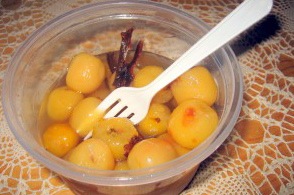
You know Christmas is coming in Mexico not because the days turn chilly but because piles of tejocotes (te-ho-COT-ehs), tiny golden fruits that could easily be mistaken for miniature apples, appear in green grocers and supermarkets. Along with long dried stalks of sugar cane, mountains of fragrant green guavas, and felty brown pods of tamarind, tejocotes are essential for ponche, the steaming, scented, sometimes spiked drink handed out at the parties that keep the streets blocked every night from the Day of Our Lady of Guadalupe (Dec. 12) to Christmas Eve.
Appealing as tejocotes look, the first bite is a disappointment: woolly, not crisp, bland not sweet. Why are they so beloved? In part because until a few decades ago, when trucks began delivering tropical fruits from the hot lowlands to the high dry plateau that is home to Mexico City, fruits were in short supply, particularly in the winter.
One of the exceptions was the tejocote. Come October, just in time to be used in decorations for Día de los Muertos (Day of the Dead), the tejocotes drop from handsome 20-foot trees, covering the ground with gold. Many of these trees, a species of hawthorn (Crataegus mexicana), which are cousins to apples and pears, are semi-wild; others are grown commercially. Although they are not well known in the United States, there are hundreds of other species dotting the northern hemisphere.
In the old days on remote haciendas and in small villages, the fruits were put up in shining syrup flavored with cinnamon or made into a fruit cheese called ate, or candied-like apples, all of which brought out their flavor. Best of all they went into ponche, their abundant pectin adding unctuousness to the drink while they remained whole, and their color added joy.
For years they were unobtainable in the United States and a brisk illegal trade of as many as 9,000 pounds a year crossed the border. Now they are grown in California orchards, so perhaps you can find them in a Mexican or farmers market.
Ponche
Preferences are myriad for ponche, so although this recipe will get you started, don’t worry if you can’t follow it exactly. Ponche smells heavenly. It tastes even better.
Ingredients
3 feet sugar cane stalk, cut into 6-inch pieces, peeled and sliced several times lengthwise
¼ pound guavas washed and cut into ⅓-inch pieces
¼ pound tamarind pods, peeled and strings removed
A stick of cinnamon (preferably Mexican canela) broken into 3-inch pieces
½ pound brown sugar, preferably Mexican piloncillo
Directions
- Add all ingredients to a gallon of water, bring to the boil, and simmer until the fruits are soft.
- A host of different extras may be added: raisins, prunes, oranges, apples, pears, pecans, whatever takes your fancy. Don’t forget that this is a drink, though, not a fruit salad.
- Add a slug of brandy or rum to your mug and you’ll be ready for the Lupe-Reyes marathon, the month of celebrations in Mexico that begin on the Dec. 12, the Day of Our Lady of Guadalupe (Lupe), and continue to Jan. 6, Three Kings’ Day (Reyes).
Rachel Laudan is a historian and freelance writer based in Mexico City. Her book, “The Food of Paradise: Exploring Hawaii’s Culinary History” earned her the Julia Child/Jane Grigson Prize from the International Assn. of Culinary Professionals, and she recently served as keynote speaker at the national meeting of Les Dames d’Escoffier. She is currently completing a book on the history of the world’s cuisines which will be published next year by the University of California Press.
Photo: Tejocotes in syrup. Credit: Rachel Laudan
“In the beginning, there was bagna càuda …”
So began “Piemonte, La Via dei Sapori,” a book about Piedmontese cuisine that I found myself thumbing through near the tiny town of Alfiano Natta. In fact, the gray-brown sauce that is bagna càuda does seem akin to primordial soup.
This classic dipping sauce (literally, “hot bath”) for vegetables is a traditional part of the Christmas Eve buffet in homes throughout Italy, with its origins in the Piedmont region. There, along with winter dishes such as brasato al Barolo, Castelmagno cheese risotto, and fonduta with shaved truffles, the hearty flavors of bagna càuda warm the body and the soul.
I fell in love with this deceptively simple combination of garlic, anchovies and olive oil (butter and/or cream are sometimes added) during a recent trip to Piedmont for Slow Food’s biennial Terra Madre conference of farmers. But the beloved’s origins proved elusive. In the beginning, some say, was the supreme condiment of ancient Rome, garum, a sauce derived from fermented fish. Others say that in the beginning there were simply hard-working Piedmontese farmers with families to feed through the winter when only root crops and hardy stored greens such as cabbage were available. Plus there was garlic, plenty of garlic, which every farmer was obligated to grow according to medieval statutes.
The more I heard Italians talk about the origins, recipes and rituals surrounding bagna càuda, the more unclear things became. For starters, how did sea-dwelling anchovies and the oil of sun-loving olives find their way up into the foothills of the Alps?
‘Salt road’ brought key ingredients to Piedmont
As it turns out, this humble sauce has a complex history of farming culture, regional commerce and tax evasion. While rich in garlic, grains, butter and cheese, Piedmont did not have anchovies or olive oil. These they obtained through barter with their neighbors in Liguria to the southwest, where olive oil and fish were cheap and abundant. As was salt.
Salt was probably the first ingredient to make the mountainous trek from the Ligurian coast to Piedmont. It is essential for human and animal health, not to mention food preservation in pre-refrigeration days, and so the Romans built salt routes throughout their empire. One of these “salt roads” was traveled by the industrious and hardy people of the Val Maira (a valley in the province of Cuneo in southern Piedmont). They made regular trading trips through the Maritime Alps to Liguria, their mules loaded down with wheat, butter and cheese on the way to the sea; and salt and fish on the way back.
The precious salt, however, was tightly controlled and heavily taxed. So the farmers, the story goes, would fill their barrels with contraband salt and then top them off with anchovies. If they were stopped and their cargo inspected, the officials saw only tax-free anchovies. This story has a number of variants, but, smuggled or not, anchovies and salt made their way up to Piedmont, and into bagna càuda, for hundreds of years.
The first versions of bagna càuda were most likely made with the region’s rich walnut oil, from the mature walnut groves that used to be found throughout Piedmont and the Val d’Aosta. After vast areas were largely deforested, olive oil too had to be imported from Liguria. Although olive oil and butter now serve as the base of bagna càuda, some families crush a few roasted walnuts into the sauce to remember the ancient flavor of the dish.
Today, bagna càuda is one of the best examples of “cucina povera,” the humble healthy dishes born of necessity and few ingredients. But bagna cauda is more than a meal; it is a ritual, one that, according to the book on Piedmontese cuisine, “abhors solitude and wants a tavern atmosphere — or better, an ancient cantina lit by fire or candle.” It also requires “a triumph of colors of many vegetables” to eat, and the new season’s wine to drink. Most of all, it requires a convivial atmosphere with friends and family gathered around the pot of simmering sauce as if the setting were a rustic cocktail party.
For all of its ritual, bagna càuda is not strictly codified. Recipes seem infinitely variable — both in the vegetables used and in the proportions of oil, butter, anchovies and garlic. Although cardoons (the thick stem of a plant related to the artichoke but resembling celery) are traditional, bagna càuda is also commonly served over roasted bell peppers (including the sweet peppers of Carmagnola), or with a variety of winter roots and greens such as boiled Jerusalem artichokes, beets, turnips, endive and cabbage.
As far as I’m concerned, any vegetable is enhanced by a dip in bagna càuda. So this season, instead of “chestnuts roasting on an open fire,” try “guests gathering ’round a bowl of garlicky oil.” I can’t think of a better way to welcome the holiday season.
Bagna Càuda (Hot Garlic Anchovy Sauce for Vegetables)
The general procedure for making bagna càuda is to gently warm the olive oil with minced garlic and anchovies until the garlic melts and the anchovies dissolve. Some recipes emphasize the olive oil, while others add butter and even cream. As a guide, you can’t do much better than this recipe from Marcella Hazan’s “Essentials of Classic Italian Cooking.”
Ingredients
Directions
- Choose a pot over which you will subsequently be able to rest, double-boiler fashion, the saucepan in which you are making the bagna càuda. Put water in it and bring it to a lively simmer.
- Put the oil and butter in the pot for bagna càuda, turn on the heat to medium low, and heat the butter until it is thoroughly liquefied and just barely begins to foam. If you let it get past this stage, it will become too hot.
- Add the garlic and sauté very briefly. It must not take on any color.
- Place the bagna càuda pot over the pan with simmering water. Add the chopped anchovies and cook, stirring frequently with a wooden spoon while using the back of it to mash the anchovies, until they dissolve into a paste. Add salt, stir and bring to the table over a warming apparatus. Serve with raw or cooked vegetables.
Terra Brockman is an author, a speaker and a fourth-generation farmer from central Illinois. Her latest book, “The Seasons on Henry’s Farm” was a finalist for a James Beard Award.
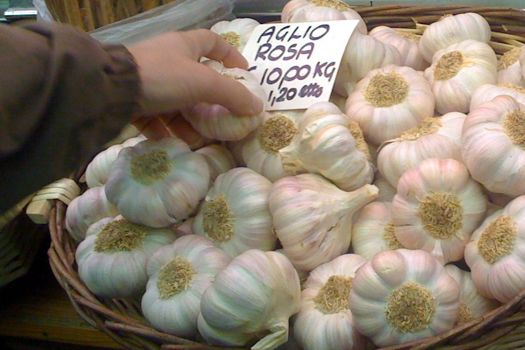
Photo: Garlic, a key ingredient in bagna càuda, at the market. Some old recipes call for an entire head per person.
Credit: Terra Brockman
For years many foodies (even before there were “foodies”) thought of fondue, that classic dish of melted cheese for dipping, as gastronomically corny. This was especially so between 1975 and 1995, when fondue was so dated that the only fondue set most people had was the one in the attic leftover from their parents’ 1950s parties. For Alpine denizens, especially those of us who lived in Switzerland, fondue is simply one of the greatest preparations ever invented.
I literally grew up on fondue, and the recipe below, fondue Neuchâteloise, is based upon the one handed down from the time my mom and dad took us on vacation to Switzerland from our home in France in the 1950s. In 1954, Dad was a staff sergeant in the U.S. Air Force stationed at Toul-Rossières Air Base near Nancy. Dad had a part-time job selling insurance for a Swiss company, which took him to Zurich several times a year on business. He was introduced to fondue, and from then on he became a devotee of this iconic Swiss preparation and the rituals of eating it.
In 1970 I lived in Basel, Switzerland, for a year. My friends and I made frequent trips to the Alpine villages where during the winter we always ate fondue in the chalets. One of the most spectacular fondues I ever had was in the snow abundant village of Sion in February 1971.
Fondue do’s and don’ts
Fondue is a typical meal of the vignerons, the vineyard workers in the Berneralpen, Switzerland. Fondue is always prepared with the help of guests, never beforehand. The guests are assigned various tasks such as cutting the bread, dicing the cheese, rubbing the caquelon (the ceramic fondue pot) with garlic and of course someone has to open and pour the wine, for conversation is helped along with a little wine.
As for the equipment needed, you must have a fondue set which consists of the caquelon, long two-pronged forks, small plates, a burner stand, and Sterno for fuel. The fondue pot is always made of ceramic. The metal fondue pots you may see are actually for beef fondue, the metal being more appropriate than ceramic for heating the frying oil.
Because everyone wants to eat, and it’s hard enough to get people to wait their turn and be able to reach the fondue pot without standing, the number of people at a one-pot fondue party should not be more than eight at a smallish table. The cheese that goes into a fondue Neuchâteloise is pretty much circumscribed, namely the ones called for below, although you will find different cheeses used in other cantons and in the French and Italian Alps.
The first guest, at home the guest of honor, and at a restaurant the eldest, skewers their piece of bread securely and dips it into the fondue, stirring in a figure-eight pattern and not a circle. They remove their fork from the fondue pot, twirl the fork to capture the cheese, and eat, being careful not to burn their lips on any hot metal. The process is repeated around the table, one at a time. Diners should never stick their fork into the fondue while someone else is doing so.
Besides the all-important commodious conversation, there are some rituals that fondue eaters should observe. If a man drops his bread into the fondue, he must fish it out and then lose his turn, or, if in a restaurant, buy the wine. If a woman drops hers she must kiss each man at the table, whether at home or at a restaurant. That was the part my father loved. All eating stops while the man or woman is doing this, but drinking may continue.
The right wine
After each round, namely after each of the six people (sometimes eight) have had a bite, everyone toasts the fondue itself with a shot of kirsch. This shot is about a large thimble full. Everyone toasts together and then continues.
The basic rule of thumb is 5 to 7 ounces of cheese, total, per person and ⅜ cup of white wine per person in the fondue itself.
Swiss Neuchâtel white wine is recommended. Other Swiss white wines that you can use are Fendant from Valais, the lake districts of Biel and Murten, or from the Zurich region, or wines from Lake Geneva (La Côte) such as Aigle, Dêzaley, or St. Saphorin.
A California sauterne could be used, but never a sweet wine. A slightly sour sparking white wine could also be used. Generally the wine should have a high acidity. Because Swiss wines are today very expensive and sometimes hard to find, chablis or riesling make the most sense if you can’t find the Swiss wines called for.
White wine should always be drunk with fondue because it assists in the digestion of all that cheese, which will otherwise congeal again uncomfortably in your stomach, so the saying goes. For people who don’t drink alcohol, a sparking apple cider is also good to drink and acts in the same way as the wine. Generally, the only thing served with a fondue is a simple green salad with vinaigrette.
Fondue Neuchâteloise
Serves 6
Directions
- In a small bowl, mix the kirsch, ¼ cup wine, and corn starch until well blended.
- Rub the inside of the caquelon, the fondue pot, with the cut side of the garlic clove, rubbing all over. Put the cheeses in the pot with the nutmeg and pepper. Pour the white wine over the cheese and turn the heat to medium. Start to stir in a figure-eight motion, stirring constantly. Once the cheese has melted add the flour and kirsch mixture and stir until well blended.
- Light the Sterno in the table heater and transfer the caquelon to the table heater, keeping the cheese hot but under a boil. You may need to adjust the cover of the Sterno burner to control the heat. Start eating immediately being careful you don’t burn your mouth. The guest of honor eats first.
Zester Daily contributor Clifford A. Wright won the James Beard / KitchenAid Cookbook of the Year Award and the James Beard Award for the Best Writing on Food in 2000 for “A Mediterranean Feast.” His latest book is “Hot & Cheesy” (Wiley) about cooking with cheese.
If there’s one thing I enjoy as much as making cookies during the holidays, it’s shopping for high-quality, well-designed, useful baking tools. No gingerbread house kits, chocolate temperers or novelty cake pans for me (although this one my sister just gave me is awesome). I want equipment and ingredients I’m going to use more than once or twice a year. The following list includes many items I already own (some given to me as gifts, some I generously gave to myself) and couldn’t live without. There are also a few that are still on my wish list (Brown Bag shortbread pan, hint, hint). As a bonus, you’ll find a favorite holiday recipe from my new book, “Cookie Swap!,” which can certainly be made without a cookie scoop, high carbon steel biscuit cutter or a Silpat but is a pleasure to make with these relatively inexpensive but highly functional tools.
1. Cookie scoops: Spring-loaded stainless scoops from OXO are a must for anyone who is serious about cookies. Cookie scoops allow you to portion out drop cookie dough (and muffin batter) uniformly, so every one of your cookies bakes at the same rate. And they help keep your hands clean while you’re working. A set of three — large, medium, and small — makes a very nice gift.
2. Handmade copper cookie cutters: Copper Gifts manufactures copper cookie cutters in hundreds of shapes and sizes, and if they don’t have what you want, they’ll fabricate one to your own design specifications. In the past year, I’ve purchased a poodle (to make cookies that look just like my own dog), a whale (our school mascot), and New York State (I decorate those cookies with Yankee stripes). Buy the baker one or several of these handmade cutters and you will be giving an heirloom, for a very reasonable price.
3. Stainless steel offset icing spatulas: Constructed of high-carbon stainless steel, these spatulas are light but strong, with flexible blades that easily help spread the thickest batters and icings. The regular size (13 inches long) is great for smoothing brownie batter into an even layer, for icing bar cookies and for transferring hot, delicate cookies to wire racks. The mini size (7 inches long) is small enough to neatly ice tiny cookies.
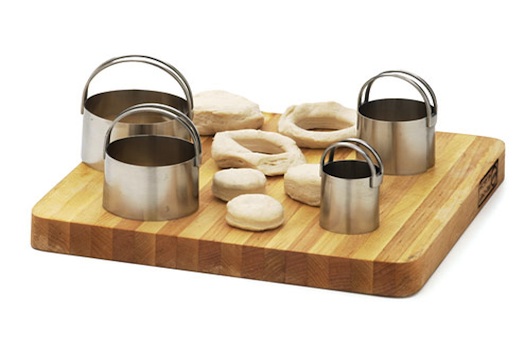
4. Heavy-duty biscuit cutters: These biscuit cutters have razor-sharp edges, and are essential for cutting cookie dough into rounds. (If four cutters isn’t enough, check out Sur la Table’s professional bakeware shop for a set of 12.) If this gift seems too skimpy, throw in a pre-seasoned Lodge cast iron skillet, and your recipient will have just the right equipment to make great pot pies and cobblers.
5. Brown Bag shortbread pans: Every time I see one of these pretty stoneware pans in a catalog or online, I have the urge to begin a massive collection. If the baker you are shopping for is also a collector, start him or her off here.
6. Glass canisters: I store my flour and sugar in airtight plastic containers, but I like these retro canisters (in production since the 1940s) to store pretty homemade cookies on my counter-top.
7. Blanched hazelnuts: This will sound completely crazy, but one of the best gifts I ever received was a five-pound bag of blanched hazelnuts from Nuts Online. I was in heaven. Hazelnuts are my favorites, but the idea of skinning them often sends me straight to the nearest bag of pecans. So to have a large store of ready-to-use nuts was a convenience I fully appreciated. If hazelnuts aren’t quite the thing, this website has bulk quantities of all sorts of luxury ingredients (organic dried fruit, praline and pistachio pastes, organic cacao nibs) that make excellent gifts for the cookie baker.
8. Silpat: A no-brainer if your baker friend does not already own one. Packaged along with a heavy-duty rimmed half sheet pan and wire cooling rack, this gift is a nice upgrade for the novice.
9. Digital scale: I used to use my digital scale primarily to weigh out ingredients for bread dough. But now I find myself using it more and more for cookie- and cake-baking. Newer baking books, acknowledging the importance of accuracy in getting consistent results, often give weight as well as volume measurements. Cookie recipes from Internet-accessible British sources (Dan Lepard’s column in the Guardian is a favorite) are simple to prepare using volume measurements. This OXO scale has all of the features that a baker requires: A large (11-pound) capacity, a pull-out display for easy reading, a tare function, and measurement in 1/8-ounce and 1-gram increments.
12. Pizzelle maker: When I saw this machine in Pittsburgh’s premier kitchen shop during my “Cookie Swap!” book tour, I dreamed of owning it. But it was just too heavy to drag through airport security! When I got home and read about Pittsburgh legend Carmen Palmieri, the founder of Palmer Manufacturing (makers of the only domestic pizzelle irons on the market), I had to have one. Luckily, In the Kitchen has them in stock and ready to ship anywhere in the U.S.
Chocolate-Mint Sandwich Cookies
Makes 32 cookies
When I set out to make these cookies, I started with the idea that I would just sandwich a peppermint patty between two warm chocolate rounds and leave it at that. But my dough spread in the oven, and when I made my sandwiches the candies were lost inside the cookies instead of becoming a filling visible at the edges. What to do? I got out a biscuit cutter and pressed it down on the warm cookie sandwiches, cutting away the excess around the edges and sealing the candy inside. The creamy peppermint was now a hidden surpise. Fabulous!
Ingredients
Directions
- Preheat the oven to 350 degrees. Combine the flour, cocoa powder, baking soda, and salt in a medium mixing bowl.
- Cream the butter and sugar together in a large mixing bowl with an electric mixer on medium speed until fluffy, 2 to 3 minutes. Add the egg and vanilla and beat until smooth. Stir in the flour mixture until just combined.
- Use a cookie scoop to portion out rounded tablespoonfuls of dough on parchment- or silpat-lined baking sheets (alternatively, roll scant tablespoonfuls of dough between the palms of your hand to form small balls), leaving 3 inches between each cookie. Bake the cookies until they are dry on top, 10 to 12 minutes. Let them stand on the baking sheet for 3 or 4 minutes.
- Working quickly, and while the cookies are still warm, sandwich a peppermint patty between two cookies and transfer to a wire rack to cool. After you’ve made the sandwiches and while the cookies are still pretty soft, place each cookie on a cutting board and use a 2-inch biscuit cutter to press down on each sandwich, cutting away the edges and sealing the peppermint patty inside. Chocolate-Mint Sandwich Cookies will keep at room temperature in an airtight container for up to 3 days.
Zester Daily contributor Lauren Chattman is a cookbook author, freelance writer and former professional pastry chef. Her recipes have appeared in Food & Wine, Bon Appetit, Cook’s Illustrated and The New York Times. She is the author of 14 books, most recently “Cake Keeper Cakes” (Taunton, 2009) and “Cookie Swap!” (Workman, 2010).
Photo: Biscuit cutters.