Articles in Thanksgiving
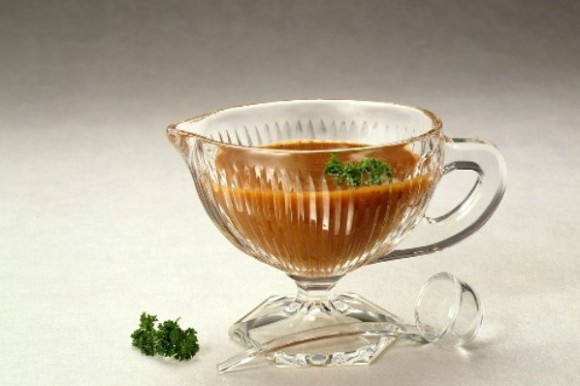
The most overlooked food at Thanksgiving is the gravy. Cooks are working so hard on all the cranberry specialties and other dishes, and wrangling room in the fridge for the turkey, the sweet potatoes, the pies, and everything else that they forget how important the gravy is. In our kitchen, the turkey gravy starts with turkey stock some weeks before Thanksgiving — and we make a lot of it.
The stock for the gravy is very important and should be given as much attention as anything else you make for Thanksgiving. It is the basis to not only the gravy but to the flavoring of the non-stuffed stuffing you might make.
This recipe makes a rich stock that can be turned into excellent gravy. The stock can be refrigerated overnight. Then you skim the surface of the congealed fat and it is ready to use or you can freeze it.
Do not salt the stock or gravy until the last moment. It is best to make the stock for the gravy days before Thanksgiving. I usually make the turkey stock about a week before Thanksgiving by buying some cheap turkey wings or backbones to use for the broth.
Turkey Stock
Makes 8 or 9 cups
Ingredients
4 pounds turkey (preferably), goose, or duck parts (such as carcasses, wings, legs and necks)
3 carrots, sliced
2 celery stalks, chopped
2 medium onions, quartered and separated
2 leeks, split lengthwise, washed very well under running water and chopped (Be sure to separate the leeks under the water to wash thoroughly.)
Bouquet garni consisting of: 6 sprigs fresh parsley, 6 sprigs fresh thyme, 3 sprigs fresh sage, 1 bay leaf
10 peppercorns
6 quarts cold water
Directions
1. Preheat the oven to 425 F.
2. Place all the collected meat parts in a roasting pan, then brown, about 40 minutes. Transfer all the meat and any juices to a large stock pot with all the other ingredients. Deglaze the pan with a little water and turn it into the stock pot too. Add the remaining water.
3. Bring to a boil over high heat, then reduce to low and simmer, partially covered, skimming the surface of foam, for 6 hours.
4. Pour the broth through a chinoise (cone-shaped strainer) or colander and discard all the bones and vegetables. Strain again through a cheesecloth-lined strainer and return to a smaller stock pot.
5. Place the pot over a burner on high heat and boil until a third of the liquid has evaporated.
6. Let cool in the pot and then refrigerate overnight to let the fat congeal. Remove the fat by skimming off with a skimmer or ladle.
7. Place the stock pot with the turkey stock over high heat and bring to a boil. Boil until reduced to about 10 cups. The stock is now ready to use in making gravy. It can be frozen at this point for up to 6 months.
Turkey Gravy
Makes 6 cups
This gravy can be made relatively quickly once the roasting turkey has emitted enough fat. It can be made Thanksgiving morning, before the turkey is put in the oven, by using another fat, such as butter, goose, or duck fat, but it is best with turkey fat. I usually let the gravy sit on a very low burner for hours so that the turkey neck I add becomes very tender and gives the gravy even more flavor.
Ingredients
½ cup melted turkey fat from the roasting turkey (or butter, goose, or duck fat)
Turkey giblets and/or neck (and any other collected duck or goose giblets), chopped
½ cup unbleached all-purpose flour
8 cups Turkey Stock (see above)
¼ cup cognac or brandy
½ cup heavy cream
Salt and freshly ground black pepper
Directions
1. Place the fat in a large saucepan and heat over high heat and add the giblets. Add the flour to the melted fat and cook until sizzling and a very light brown roux has formed, about 3 minutes.
2. Whisk in all of the turkey stock slowly, reduce the heat to medium-low, add the turkey neck, if using, and cook until a consistency of your liking for gravy. Taste the gravy, season with salt and pepper, and continue cooking until blended. Add the cognac and cream and continue cooking until reduce to about 6 cups, then keep warm until needed, not boiling nor bubbling. Season with salt and pepper.
Note: If the gravy is not thick enough, stir in 2 tablespoons corn starch with ¼ cup water into the gravy and cook 15 minutes at a gentle boil and until thickened (you shouldn’t have to do this).
Variation: Remove the turkey neck and pull off any soft pieces and return the pieces to the gravy.
Photo: Gravy in a gravy boat. Credit: StockFood
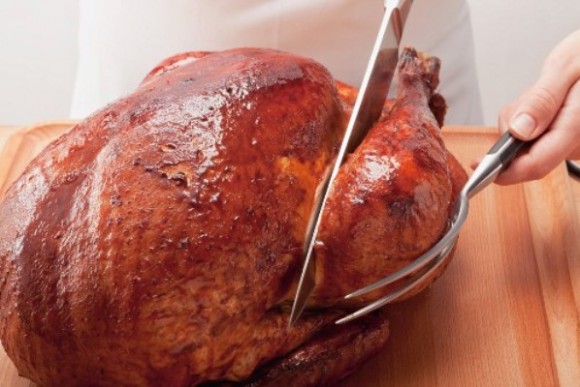
A lot of people say they don’t like turkey because it’s too dry. They are referring to the white meat, by far the most popular part of the turkey for most Americans. The white meat comes from the breast, and modern turkeys are raised to have large breasts (those Americans!). A turkey is a naturally moist and delicious tasting bird, so if you associate breast meat with dry and crumbly meat that’s because of one thing only: The cook overcooked the turkey. Once a turkey is overcooked there’s no going back, it’s ruined. A roasted turkey should never taste dry.
So, when cooking turkey you must pay attention. I recommend using thermometers, in fact, at least two of them in different parts of the turkey. One of the reasons people overcook turkeys is because the U.S. Department of Agriculture, many cookbooks, supermarkets — everybody — instructs you to cook the turkey until it has an internal temperature of 180 F. This is plain crazy and a recipe for disaster. The internal temperature measured in the middle of the breast should be 160 F. To achieve this, you should always use a quick-read thermometer and never rely solely on a pop-up timer in the turkey or any roasting rules-of-thumb. You should also pull the turkey out at 155 F because the turkey doesn’t stop cooking just because you pulled it out of the oven. Let the turkey rest 20 to 30 minutes before carving.
Now you get to the good part. I’m speaking of the dark meat, namely the thigh and legs. I’ve never understood why one would forgo the most delicious and flavorful part of the turkey for the bland white meat. There’s a reason that the expressions describing a person as “oh, so white bread” or “oh, so white meat” exist. It means that person is dull and and common. And that’s white meat. White meat is fine, when properly cooked, moist and flavorful. It certainly makes good sandwiches. However, it doesn’t nearly have the depth, character, and full flavoredness of dark meat, which is, after all, even more moist and rich than properly cooked white meat.
There’s also some secret meat not to be overlooked, and if you’re not the carver you may not know about it. It is important to start carving by separating the leg from the thigh. Some people leave the leg, the drumstick, whole, but you can carve off its meat too. Then you pull off the thigh and slice it. This is the dark meat.
We use the word “carving” but not all this is done with a two-pronged fork and carving knife. A lot of it is done with your hands by pulling. Now, on the underside of the turkey, mostly ignored by everyone because we’re all set on getting to the table, are bits of juice- and fat-soaked dark meat that can’t be carved but must be pulled off in bite-size increments. This is the meat — the best meat as far as I’m concerned — that you’ll see the carvers popping into their mouths as they carve.
This is why I always carve the Thanksgiving turkey.
Thanksgiving celebrates family and traditions. Shaped by a lifetime of expectations, most people think the meal must include turkey, stuffing, gravy, cranberry sauce and sweet potatoes.
Dessert is more variable, although pumpkin pie often seems to be on the menu. In our house apple pie and bread pudding are also constants.
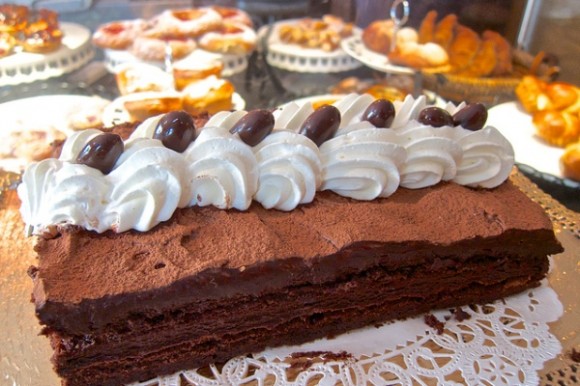
For this Thanksgiving, I’ve decided to bend tradition and bring a flourless chocolate cake to the table.
On a late summer trip to the Berkshires, I was won over by French pastry chef Jean Yves and his deliciously light, flourless chocolate cake.
Knowing I was coming to the area for a visit, he invited me to a hosted tasting at Patisserie Lenox, the cozy shop he and his wife Yulia Bougouin own and operate in Lenox, Mass..
Bringing French pastry to the Berkshires
Chef Yves’ pastries are exactly what one expects to find in a French bakery: light and flaky croissants, richly flavored puff pastries with a light custard filling, airy and buttery brioche, brightly colored macaroons, chocolate glazed éclairs, fresh fruit tarts and elaborately decorated cakes.
What one doesn’t expect in the Berkshires is a French bakery.
The area is renowned for the art and music festivals that dominate the summer season. Performances at Jacobs Pillow Dance and concerts at Tanglewood are the prominent but not the only arts celebrations in the area.
The bakeries and restaurants in Lenox are good but definitely not French. So the natural question to put to Yves is why the Berkshires?
Marriage made in the kitchen
Sitting down for coffee and a slice of his cake, Yves smiled as he talked about how he created one of his signature confections, a two-layer, flourless chocolate cake with a ganache filling.
As a young man, he worked at elegant Le Grenouille on the Upper East Side of New York.
The job demanded he create new desserts to satisfy an always hungry, upscale clientele. He remembered the densely flavored chocolate and thick whipped cream he employed to make rich chocolate cakes when he worked in a German bakery. He applied French patisserie techniques to those ingredients.
The result was a cake that combined the essence of chocolate and cream without being heavy. It’s dense with flavor and light on the palate.

Jean Yves, wife Yulia Bougouin and daughter Sonya at Patisserie Lenox in Lenox, Mass. Credit: David Latt
He looked down at his hands before he explained how he found himself in the Berkshires.
Having worked in New York City, in the kitchens of well-known chefs and on Long Island in his own bakeries, he freed himself from a life that was falling apart when he discovered a soulmate in a young Russian chef who was as proud of her soups as he was of his cakes, tarts and pastries.
This was a marriage made in the kitchen. Yves and Bougouin decided to raise their young daughter in the second home he had built in the woods and recast their lives in the Berkshires.
The flourless chocolate cake — topped with cocoa powder, swirls of freshly made whipped cream and hand-dipped chocolate-covered whole almonds — was one of the ways he celebrated his new life and business in Lenox.
Patisserie Lenox Flourless Chocolate Cake
Use good quality ingredients for better tasting cakes. Avoid butter, cream and chocolates made with artificial ingredients and stabilizers.
Serves 6-8
For the cake
6 eggs
12 ounces of bittersweet chocolate
1 cup of sugar
¾ cup of water
2 cups of whipped cream
¼ cup cocoa powder
10 chocolate-covered almonds or coffee beans or whole berries (optional)
For the ganache
1 cup of heavy cream
1 pound bittersweet chocolate
½ pound of butter
3 cups of whipped cream
1 cup of egg white
2-3 tablespoon granulated sugar
Directions to make the cake
1. Whip 6 eggs and 1 cup of sugar until you reach three times the original volume.
2. Cut chocolate into small pieces, the size of chocolate chips, or use chocolate chips.
3. Pour ¾ cup boiling water over the chocolate, mix to melt the chocolate. Let cool but not harden.
4. Mix the eggs, melted chocolate and whipped cream and gently fold them together.
5. Line two ¼ sheet pans with parchment paper.
5. Divide the mixture and pour into the pans.
6. Cook in a preheated, 350 F oven for 20 minutes.
7. Remove the cake from the oven. It may be a bit jiggly and will look as if it is not done.
8. Refrigerate overnight.
Directions to make the mousse
1. Bring the cream to a gentle boil, pour into the chocolate, mix to melt the chocolate.
2. Mix in the butter to create the ganache.
3. Whip egg whites with 2 tablespoons sugar, until the mixture peaks.
4. Sweeten the whipped cream with one tablespoon sugar.
4. Fold the egg whites into the ganache and mix in 2 cups of whipped cream at the same time.
Directions to complete the cake
1. Place the two refrigerated cakes on a work surface. Pour and smooth out ¾ of the mousse on top of one of the cakes.
2. Flip the second pan so that that cake ends up in the first pan. Remove the parchment from the top of the newly assembled “sandwich” cake.
3. Refrigerate for a couple of hours until the cake is set.
4. Put a large plate, serving platter or cutting board on top of the pan. Flip the pan so the “sandwich” cake slides out of the baking pan.
5. Take off the second parchment paper and smooth out the rest of the mousse on top of the cake.
6. Dust the cake with cocoa powder so the top is completely covered.
7. Decorate with the remaining whipped cream and top with chocolate covered almonds or coffee beans, or berries.
Photo: Jean Yves’ flourless chocolate cake. Credit: David Latt
I’m a fairly tolerant parent when it comes to food. I give in to my daughter Penelope’s chicken finger cravings once in a while, indulge her preference for plain cheese pizza and let her lick the whisk after I’ve whipped heavy cream.
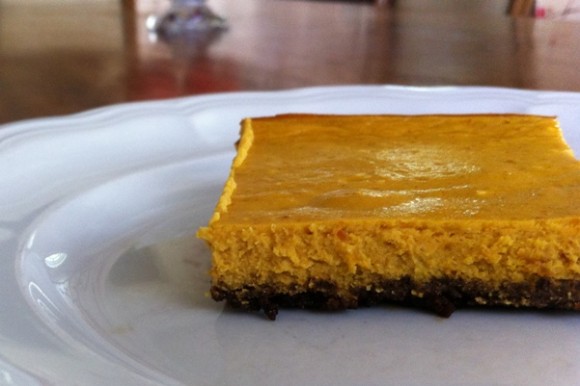
And while you might think kids will eat every sweet placed in front of them, Penelope won’t touch pumpkin pie. Dealing with finicky eaters is not how I want to spend my Thanksgiving holiday, so this year I’m planning ahead and making a separate desert for the kids’ table: pumpkin bars in a gingerbread crust.
These bars are a mom’s dream: a light filling (a fluffy combo of cream cheese and canned pumpkin) is pressed into a gingersnap crust. Make the bars the day before if the oven is occupied with the turkey (and even get the kids to help stir). A dollop of whipped cream on top doesn’t hurt. You might even see some adults ditching the pie and heading for the kids’ table.
Pumpkin Bars
Serves 14-16
For the crust:
8 ounces gingersnap cookies (about 32 cookies), coarsely broken (see note)
¼ cup (½ stick) salted butter, melted
For the filling:
8 ounces cream cheese, softened
½ cup granulated sugar
3 large eggs, at room temperature (see note)
1 (15-ounce) can pumpkin purée
½ teaspoon cinnamon
¼ teaspoon nutmeg
½ teaspoon ginger
¼ teaspoon ground cloves
¼ teaspoon allspice
1 teaspoon pure vanilla extract
Whipped cream, for serving (optional)
Directions
1. Preheat the oven to 350 F. Grease a 9-by-13-inch baking pan.
2. In a food processor, break up the cookies until finely ground and add the butter. Process until moistened. Press the mixture evenly into the baking pan. Bake for 10 minutes.
3. For the filling, combine the cream cheese, sugar, eggs, pumpkin purée, spices and vanilla in a large mixing bowl. Mix on medium speed until combined.
4. Remove the crust from the oven and pour the filling into the pan. Smooth it until fairly level.
5. Bake for 25 minutes. (Check the bars around 22 minutes; they should be set and look firm but not brown). Let the bars cool in the pan on wire rack until sliceable, about 15 minutes.
6. You can store the bars in the refrigerator in a sealed container for up to 3 days. Just bring them to room temperature before serving.
Note 1: The eggs should be at room temp for at least 30 minutes before baking. Cold eggs will make the cream cheese mixture seize up.
Note 2: Most boxes of gingersnaps are 12 ounces, so use three-quarters of the box.
Photo: Pumpkin bar with gingersnap crust. Credit: Laura Holmes Haddad
Here’s a little treat that combines two favorite flavors of this season, cranberries and oranges. I suppose by nature it’s a party snack, but you might serve your Thanksgiving guests a couple of cranberry-orange baklavas to munch on during the dinner proceedings, maybe in place of biscuits or muffins.
By Middle Eastern standards, it’s culinary heresy. Confectioners do sometimes make orange-peel baklava there, (I’ve seen portokalli baklava on a Turkish restaurant menu of the 1930s.) but they certainly don’t use cranberries. Though people relish sweet-and-sour flavors in that part of the world, there seems to be a feeling that sweet-sour is appropriate for meat dishes, not for pastries.
Sweets are supposed to be purely sweet, possibly because they’re traditionally consumed by themselves in the middle of the day, not as part of a meal, where a sour flavor might blend in amongst all the others.
Conversely, the bitter-sweet combination is enjoyed — indeed expected — in pastries; think of all those nut fillings. And it’s largely avoided with meat, so go figure. Anyway, this taste for bittersweet sweets certainly explains how orange-peel baklava arose. I, for one, like sweet-sour sweets. Give me rhubarb pie, give me cheesecake with raspberry sauce, give me lemon drops! And the combination of cranberry and orange summons up warm memories of every Thanksgiving meal I’ve ever enjoyed, though when I was young and foolish, I confess, I didn’t like cranberries, or maybe it was just the cranberry jelly.
This recipe was inspired by the orange baklava in a pastry manual by Necip Ertürk, generally known as Necip Usta (roughly, Master Chef Necip). His name is pronounced ne-JEEP oos-TAH, by the way. He was one of the leading Turkish chefs from the 1950s to the 1970s, serving at a bunch of top Istanbul restaurants and even at a Hilton operation in the United States.
Cranberry-orange baklava. Credit: Charles Perry.
As a sign of his status, he wore a huge toque, which, in photos, looks about 2 feet tall. He’s considered old-fashioned by the Turkish chefs who are currently experimenting with their own style of nouvelle cuisine, but he was a sort of Escoffier figure to an earlier generation.
He never went near a cranberry, at least not when he was making pastries. I’m doing that for him, whether he would have wanted it or not.
Cranberry-Orange Baklava
Yields 24 to 33 pieces
Ingredients
For the syrup:
6 tablespoons sugar
2½ tablespoons water
¼ teaspoon lemon juice
Optional: 1 teaspoon orange blossom water
For the cranberry filling:
3 oranges, or 1 tablespoon candied orange peel
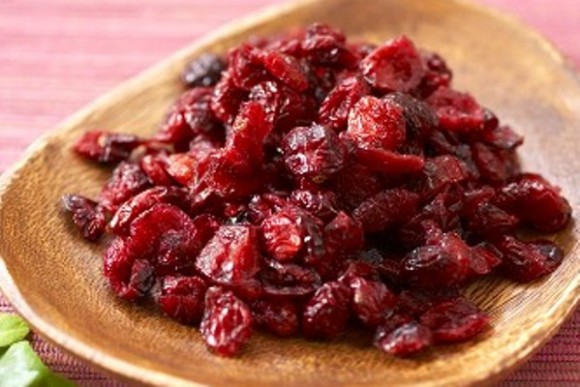
6 ounces dried cranberries, a little over 1½ cups
For the pastry:
About ⅔ pound frozen filo dough
2 sticks unsalted butter, divided
Directions
For the syrup:
1. Put the sugar, water and lemon juice in a small saucepan. Bring to the boil and cook until clear, 2 to 3 minutes. Set aside. When cool, add the optional orange blossom water.
For the cranberry filling:
1. Use a microplane zester to remove only the glossy, colored zest from the peel of the oranges. (If using candied peel, mince finely.)
2. Mix with the cranberries and process in the food processor until the size of large sand, but not until the mixture becomes terribly sticky. Divide into four equal portions and set aside.
For the pastry:
1. Thaw the filo dough in the refrigerator for three hours or more.
2. Meanwhile, use ½ stick softened butter to grease a baking sheet generously. When the filo is thawed, melt the rest of the butter in a small saucepan and keep warm.
3. Heat the oven to 400 F.
4. Open the package and carefully unfold the filo on a large workspace and measure it (the measurements on packages are sometimes only approximate). For this recipe we want to end up with 4 stacks of filo strips about 4 inches wide and 12 to 14 inches long — exact size is not crucial — so figure out how you want to accomplish this, discarding any excess length. Thawed filo cuts easily with scissors.
5. Cover the three stacks of strips you’re not working on with a kitchen towel to keep the dough from drying out. Carefully separate one 4-by-12-inch sheet and lay it down on the buttered baking sheet. Brush it with melted butter, and top with 5 or 6 more sheets, buttering each one. Some filo sheets will tear apart or be wasted in some other way, but don’t worry.
6. Finally arrange one-quarter of the cranberry filling in a long, compact line down the middle of the top sheet. Using a spatula, carefully lift up one side of the stack and fold it over the filling, then roll it up, ending with the seam side down. Use a sharp knife to cut the roll into 6 to 8 lengths.
7. Repeat this process with the remaining 3 stacks of filo, making 24 to 32 short lengths of baklava. Set the baking sheet in the oven and bake until the pieces are puffed and golden brown, 10 to 15 minutes.
8. Remove the baking sheet and transfer the pieces to another baking sheet or a work surface.
9. After a minute, brush the pieces with the syrup.
Will keep about 3 days tightly covered.
Photo: Cranberry-orange baklava. Credit: Charles Perry
The received wisdom about Thanksgiving is that notwithstanding its folklorically-correct gluttony, it’s the least commercial, ergo purest, and for many the favorite and most delicious American holiday.
“Least commercial” means, essentially, not like Christmas, with all those gift boxes stuffed with expensive (and mostly unnecessary) consumer goods. Though the economics are analogous, “stuffed with consumer goods” does have a slightly different connotation at Thanksgiving when America’s foodies shop and eat ’til they drop. By-passing the boxes, the gifting goes directly into our stomachs. We are the boxes.
And it is no coincidence that Santa Claus arrives approximately one month later with a huge belly. He’s still digesting!
But despite the sweet seasonal rituals and non-commercial sentiments of Thanksgiving, it’s not the happiest of holidays for everyone, particularly for those who cannot afford the organic, pasture-raised, “wild-crafted” heritage turkeys. And certainly not for all those birds, however humanely slaughtered. No matter how you cut it, “humanely slaughtered” still means slaughtered by humans.
Nor is Thanksgiving necessarily festive for families who can’t agree on what version of the mandatory turkey dinner to serve. Shall there be a traditionally stuffed and oven-roasted bird? Smoked in a Weber? Spit-grilled over charcoal? Disassembled, brined and baked in the wood-fired pizza oven? Deep-fried? Such seasonal conundrums can wreak havoc in the most loving of families.
Tinkering with tradition
In my own cobbled-together, post-divorce family unit that ritually gathers at this time of year, we are required to materialize a triad of turkeys: a store-bought vegan tofu-crafted and stuffed turkey for my youngest son and his half sister; a merely vegetarian turkey — the same tofu turkey but add egg, butter and perhaps cheese to the stuffing — for my oldest son and his girlfriend; and an actual turkey with a sausage stuffing for the rest of us. Thank god there are no gluten, dairy or other dietary restrictions in our gang — at least not yet. Still, you can cut the gastronomic tension in my dining room with a carving knife!
I know there are good reasons for our seasonal traditions and their specific celebratory modes. These impulses are embedded deep in the human psyche and aligned with planetary truth. Perhaps Thanksgiving’s strict-constructionist formula of culinary glut and material dearth is an appropriate measure of our deepest instincts. We stock up in the fall, and fill up, as a cushion against the coming leanness and meanness of winter. Like chipmunks.
But I wonder, would it be celestially incorrect to express our thankfulness with fewer pies and more things? For me, from my sons, a gift certificate to a local bookstore or a bottle of single malt Scotch would go a long way in allaying the moody season’s built-in affect disorder. For that I’d be truly thankful. And from me to them, perhaps a cellphone upgrade or Netflix subscription. Would this seriously undermine their Occupy Wall Street morality?
I know, I know, I should be a little more patient. Why risk a cosmic meltdown, sending sun, moon and family members into an end-of-days freefall? After all, we are just weeks away from lots of boxes, wrapped in colorful paper and tied with ribbons and bows. Old man winter is on his way with a sack full of things. And, I almost forgot, there’s the 100-percent grass-fed, grass-finished, hormone-free, dry-aged and locally-produced prime rib! Now that’s worth waiting for.
Zester Daily contributor L. John Harris is a food writer, filmmaker, artist and the former owner of Aris Books, publishers of cookbooks in Berkeley, Calif. Harris’ most recent book is “Foodoodles: From the Museum of Culinary History,” a collection of his food cartoons and texts about America’s culinary revolution. (www.foodoodles.com)
Image: Thanksgiving dinner. Credit: L. John Harris
Everybody loves apple pie, and everybody at the very least has warm feelings about pumpkin pie, which is practically a symbol of the holidays.
Apple and pumpkin, two seasonal ingredients. Hmm. Apple and pumpkin, apple and pumpkin.
Hey, why not combine them in one super-seasonal pie?
This edgy, avant-garde idea was already thought of 350 years ago. The leading English chef of the Restoration period, Robert May, gives a recipe for Pumpion Pie in his magnum opus “The Accomplisht Cook, or the Art & Mystery of Cookery.” It’s a wonderful pie, the apples giving perfume and juiciness to the pumpkin, and May’s pumpkin filling is nicely plush.
And it’s also exotic. It contains the usual pumpkin pie spices cinnamon, nutmeg and clove (plus pepper, which has a sweet aroma atop the pepperiness), but it’s also flavored with herbs: thyme, marjoram and rosemary. The herb flavoring works surprisingly well with pumpkin.
Or perhaps this is not so surprising. After all, winter squashes such as pumpkin are usually treated as vegetables, and herbs go well with them in a savory context, so why not in pie? I personally think rosemary is excellent in pumpkin pie, and if you ever have it at my house, there’s probably going to be some rosemary in it from now own.
But I’m also the kind of guy who likes to pump up the clove flavor by grinding cloves fresh. I recognize that a lot of people are reluctant to mess with the basic pumpkin pie recipe, which is practically set in stone because of its association with Thanksgiving.
Master the caudle
And the traditional Thanksgiving pumpkin pie tends to be very simple and straightforward because Thanksgiving spread around the country as a symbol of national unity after the Civil War. Pumpkin pie seemed a natural element in the great American feast because it seemed homespun and unpretentious, a symbol of sturdy Yankee self-reliance with no foreign frippery about it.
May’s recipe does admit the foreign frippery of currants, and it includes a typical 17th-century addition to pie, the caudle. This was a mixture of eggs and wine or other ingredients which was usually added to pie after it was baked, often through a hole poked in the crust. For this pie, you’re supposed to remove the whole top crust before pouring in the caudle.
I’m of two minds about this caudle business. It adds a pleasant bit of richness and a glamorous golden surface. On the other hand, it calls for six egg yolks, and this pie already contains 10 whole eggs. I’m thinking it may belong in the foreign frippery category.
An interesting thing about the filling is that May says to cook it before filling the pie. In fact, he calls on bakers to fry it “like a froise,” which was a sort of thick, eggy pancake, often containing bacon. This particular froise is so thick that it’s never going to turn into anything like a pancake because the bottom will burn before the top is ever done. You have to stir it like scrambled eggs (in effect it’s pumpkin scrambled eggs), which seems to give a pleasant crumbliness to the filling’s texture.
Robert May’s ‘Pumpion’ Pie
Serves 8
Ingredients
Directions
- Heat the oven to 350 degrees F. Line the pie pan with the bottom crust.
- Put the pumpkin in a food processor. Add the thyme, rosemary, marjoram, cinnamon, nutmeg, pepper, cloves, eggs and sugar, and process to a smooth soupy consistency. Transfer this to a buttered medium frying pan and cook over medium heat, stirring often, until thickened.
- Pour the filling into the bottom crust in a pie bpan. Sprinkle the currants over the pie filling. Peel and core the apples, cut in thin slices and arrange on top. Spoon the melted butter over the apples, affix the top crust and bake the pie until the crust is turning tan and you can hear bubbling, 35 or 40 minutes.
- At this point you can let the pie cool for a couple of hours in the usual way, or you can apply the “caudle.” To do so, slice around the top of the pie and lift off the crust. Pour the egg yolks and wine over the apple slices and return the pie to the oven until the caudle sets, about 7 minutes. Return the crust and let cool.
Zester Daily contributor Charles Perry is a former rock ‘n’ roll journalist turned food historian who worked for the Los Angeles Times’ award-winning Food section, where he twice was a finalist for the James Beard award.
Photo: Apple pumpkin pie. Credit: Charles Perry
I know many who say that Thanksgiving is their absolute most favorite holiday ever. I, too, have a special fondness for a celebration that’s based around harvest and gratitude, and I appreciate that there are so many ways to go with this national meal. You can be very traditional, repeating yet again your family’s immutable menu. Some like to follow the recipes and game plan in a food magazine to the letter. Others want to take the traditional flavors of the Thanksgiving menu and bend them in a whole new direction. I always like the challenge of pulling together a meal entirely from my garden or the farmers market for a truly local feast, or limiting my menu to new-world foods. You might decide to give up on the Butterball and feature an heirloom turkey instead.
Regardless of your menu, Thanksgiving is the perfect meal to share with the company (and dishes) of others. It’s also the meal that easily absorbs the visiting friend of a cousin, the new boyfriend of a niece, a neighbor or someone you’ve just met. But sometimes Thanksgiving just doesn’t come to pass as one might hope. Many years ago our family had such a Thanksgiving, and it stays in my mind as one of the best, and most meaningful.
This was true the year I found myself reeling from a divorce. My mother, too, was alone — my father having suddenly left. My sister was expecting her first baby any minute and was in no mood to cook. Dad, of course, was not around for the first time in our lives, but was on the coast with his new lady friend. Collectively we were depressed, a little anxious, angry and confused. Not surprisingly, no one was the least bit interested in roasting a turkey or cooking even one of all those trimmings. Still, we were together — my mom, brothers, sisters and their spouses — so I threw out an idea in an offhand sort of way (not expecting any takers): “Why don’t we just grill some sausages?” There’s something about the sausage, its silly shape and its very informality that seemed about as far from a turkey dinner as one could get. Plus for us, sausage was a novelty.
We were not a sausage-eating family, or even a bacon-eating family. Pork never figured in our family’s menu, and this was long before you could get turkey sausages with spinach and chipotle peppers or whatever passes for sausage today.
So it was nice, plump Italian pork sausages that tumbled out of the butcher’s white paper. We set the table, lit a fire, opened the wine and grilled the sausages along with some onion rings and opened chewy rolls. In short order we sat down to our Thanksgiving supper. Mustard was passed. The sausages were lodged between lengths of rolls with the onions. We had a salad — coleslaw I believe. Dessert must have been something as simple as ice cream. Whatever the menu (and I no longer remember the details, maybe because there weren’t any details worth remembering), it perked everyone up, brought smiles back to faces that hadn’t been so smiley of late, and afforded our recently altered family a time of intimacy and ease, for which we were all truly grateful.
It’s curious how over a lifetime of big, happy Thanksgiving get-togethers with all the trimmings, the heritage turkeys, the good bottles, old friends and new and all of that, what stands out so clearly from the rest is this peculiar little dinner our family shared.
In giving this more thought, I realize that other Thanksgivings stand out, too, for the reasons that something was unexpected, like celebrating the day while backpacking, or a Thanksgiving in Rome when the chef at the American Academy rolled out a huge turkey covered with the flags of the nations, or the time when our family set out for a long hike in the snow but forgot to turn the oven on and had to make-do with sandwiches until the bird was cooked and fragrant — and we were all fully ready to enjoy it together.
Zester Daily contributor Deborah Madison is the author many books on food and cooking, including “The Greens Cookbook” and “Local Flavors: Cooking and Eating From America’s Farmers Markets.” Her latest book is “Seasonal Fruit Desserts from Orchard, Farm and Market.”
Photo: Sausages on the grill. Credit: istockphoto.com / Eric Naud