Articles in Environment
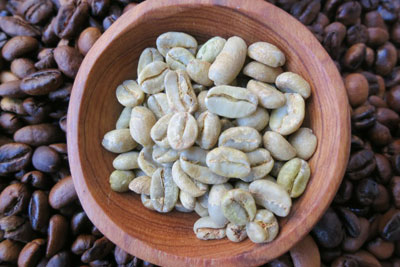
Coffee growers are in crisis. According to Kew Gardens, Arabica coffee falls into the vulnerable extinction risk category, though some suggest a rating of endangered is more apt because of the rapid deforestation in Ethiopia. Further deforestation in other Arabica coffee-growing regions and climate change compound the emergency. In short, once Arabica left its place of origin and source of biological diversity, combined with less-than-favorable cultivation practices, coffee plants’ abilities to remain strong diminished. Most global coffee plantations are increasingly vulnerable to the onslaught of pests, diseases and climate change, just like any other monoculture or commodity crop comparable to corn, wheat and soy.
How to proceed, and how to do some good, so you and future generations can still get your coffee mojo? Two approaches: Buy coffee that is produced sustainably and pays a fair wage and safeguard the place of origin of coffee so its rich biological and cultural diversity thrives to benefit all growers in crisis worldwide.
Top tips on sustainable, fair-trade coffee, it’s best to buy:
- Organic or low-chemical and low-pesticide use beans.
- Shade-grown coffee. (Rustic is best.)
- Products labeled fair trade.
- Rain Forest Alliance-certified coffee.
- “Bird-friendly” Smithsonian Seal of Approval coffee.
Also, ask your local markets to carry those brands. In sum, vote with your dollars, ask questions and support other establishments that advocate the above practices.
Ethiopia deforestation and hopeful solutions
More than four decades ago, 40% of Ethiopian land was covered in forests; now only 3% remains, based on a report from the United Nations Education, Scientific and Cultural Organization.
AFRICAN ORIGINS OF COFFEE
A three-part series:
» Part 1: Coffee’s early roots and routes
» Part 2: Coffee varieties and how to roast green coffee beans
More from Zester Daily:
» Flare up in the fair trade world
Historically, local communities rely on the forest for biological and cultural sustenance. Dependence on subsistence farming, as of late, has changed the delicate balance where deforestation ensues. Partnering with the Ethiopian government, several governmental and non-governmental organizations have designated the Kafa Biosphere Reserve in 2010. The reserve is recognized by UNESCO’s Man and the Biosphere Programme and tasked to promote sustainable development built upon local community participation and sound science.
An indigenous organization, Kafa Limat Forum, is at the forefront of establishing a National Coffee Museum in the Kafa Biosphere Reserve in Bonga. The museum will be a crossroads and gathering point for the many diverse communities to celebrate the rich cultural heritage, including the origins and ceremonies around coffee. The museum will provide a sacred space for locals and visitors to unify in diversity. The museum seeks to reaffirm the communities’ connections to the dwindling sacred forests that represent the centers of biocultural variety.
Maybe it is time to support the economy and people of Ethiopia directly with the purchase of Ethiopian coffee varieties grown on smallholder farms from some of the main coffee-growing areas: Bedele, Ghimbi, Goma Woreda, Harar, Illubador, Lekempti, Limu, Sidamo and Yirga Cheffe. Or, better yet, follow the general coffee-buying guidelines and help all cultivators, growers and laborers revitalize their lives and their environments.
Top photo: Coffee beans. Credit: Sarah Khan
This article was partially underwritten by the The Christensen Fund, a nonprofit organization, dedicated to biocultural and agricultural diversity of marginalized people and landscapes globally.

Simplicity is ubiquitous: if you — like I — get sucked down the gorgeous wormhole that is Pinterest, you know what I mean. Click on the DESIGN tab, and there they are: hundreds of rooms painted a dull monochromatic gray/beige/ecru. A single, long Forsythia branch stands imperfectly perfect in a chipped wabi-sabi bud vase, which is set upon an ancient pine side table chinked with time. Click on the FASHION tab: passels of tranquil, doe-eyed models dressed in dull, monochromatic gray/beige/ecru. They’re wearing loose-fitting overcoats, and modern and expensive versions of their grandfathers’ 1930s cordovan wingtips. Click on the FOOD tab: chipped, matte-finished Heath coffee bowls in gray/beige/ecru hues, filled with variations of the same thing — grains, beans, usually some kale, a drizzle of olive oil, a tangle of lemon zest — and set down on askew cream-and-red dishtowels that have seen endless washings and line-dryings. The image, or any number of versions of it, has been re-pinned a thousand times which, in Pinterest parlance, is a really good thing.
Oh, the simplicity, a work-harried friend wistfully whined to me one morning while we were on the train, commuting two hours to our Manhattan jobs from rural Connecticut. I really want to live and eat like that, she added, looking over my shoulder at my iPad — simply and quietly.
Of course you do, I told her. And so do I.
ZESTER DAILY LINKS

» Click here to buy “Poor Man’s Feast,” by Elissa Altman.
Neo-Nostalgia
And, apparently, so does everyone else these days, so much so that a new crop of magnificently-produced, nearly wordless, expensive magazines — maga-Tumblrs, really — has arrived on the scene, promising vicarious calm, conviviality and aspirational serenity of the sort that Thoreau went to the woods to find 159 years ago. Instagram-softened images of meaningful dinner parties abound; young flannel-shirted men in their 20s — Smith Brothers look-alikes — smoke vintage Meerschaum pipes as they gaze across placid ponds at tire swings swaying in the distance while their ladies thoughtfully pour local herb-infused gimlets into authentic 1930s Ball canning jars. You read the sparse text. You swoon. You study. You wonder if these people have day jobs.
The message is clear: You — yeah you, with the three kids in daycare and the divorce, getting off the IRT and running into Starbucks for your McVenti before hunkering down in your cubicle under those fluorescent lights for eight hours while the jackass next to you yammers on his cell phone about the great sex he had last night — you, too, can live a simple life.
That is, if you work hard enough at it.
If you wear the right authentic clothes and drink the right authentic drinks out of the right authentic vessels. If your food is unfettered and unfussy and thoughtfully produced and served in the right coffee bowls of the right color, and was perhaps procured from the right CSA or the right farmers market.
Overwrought authenticity
For those of us who have suffered through the fashion of anxious, nervous food — inauthentic, tall, overwrought — such simple, gastronomical style is exactly what we’ve been breathlessly waiting for. But has the style of living and eating this way, with its gorgeous prepackaged rusticity and come-hither appeal, just become exigent fetish? Are our attempts to be “simple” so self-conscious and superficial that the benefits of real simplicity, peace, mindfulness, thrift are lost? Will being simple — eating simply, living simply — go the way of the Pet Rock?
Trends are a direct reflection of our ever-changing cultural and socio-emotional needs. In the greed-is-good 1980s, everything was big — shoulder pads, hig hair — and the contrived food of the time, unnatural vertical and architectural, was an extension of that style. In late 1988, I was served an elaborate, human fist-sized chocolate piano at a restaurant in Beverly Hills. A scaled-down replica of a Steinway baby grand, it had eighty-eight black and white chocolate keys, and strings fashioned from spun sugar. After the grim 1970s, life was suddenly all about the frantic quest for the elaborate and ornate, and the food on our plates reflected it. In the 1990s, everyone declared themselves a home-schooled chef — the Food Network went on the air in 1993 — and we all went out to buy kitchen blowtorches and home foamers and timbale molds. After 9/11, we craved peace and conviviality, and the next big thing was comfort food. The sale of crockpots and Creuset casseroles took off like they’d been shot from a cannon.
So what created this fraught mandate for the ancient saucepan — dented to perfection — that we spend hours searching for at Goodwill? Why the farmhouse tables laden with elemental dishes and the longing gazes serene as stone? Desperation for simplicity and authenticity smacks of a sort of psychic exhaustion, and the stark realization that living and eating in a complicated overdone way will take a toll on our souls. It compels us with an almost furious hysteria to return to preconceived notions of what’s real, even if what’s real is nothing more than an often fetishized metaphor for ever-elusive safety, and a commodified yearning to bind our frayed connection to equanimity and control.
In a world of constant digital connectedness, of nebulous relationships and jobs that disappear before our eyes, of an often fraudulent and dangerous food system, where we feed our children pink slime and anyone can slap a green label on their over-processed product and pretend it’s organic, we’ll pay anything we can to get simplicity, or some semblance of it back.
But if simplicity really is just a fetish, what will happen when the fetish fades and the trend is over? What will we eat and how will we live?
Top photo: Elissa Altman. Credit: © Susan Turner

I was taken aback recently to hear the hard statistics: The United States imports more than 50% of the fruits and vegetables we put on our tables.
We regularly see produce from Mexico, Canada, Chile, China, Guatemala, Ecuador, Peru and more — imports that have tripled since the 1990s. The produce is harvested before it is even ripe, so that it can be cheaply and efficiently boxed and shipped to our shores for consumption often weeks later.
And while it is a fact that the local food movement is growing exponentially, the reality is that these small farming efforts are often built on marginal land or urban plots. As for big agriculture, according to the American Farmland Trust we lose more than one acre of farmland to urban development every minute of every day, 24/7.
It all adds up. Stifling competition from often inferior product from abroad. Aggressive developers here at home. Shopping malls. Young farm family members choosing not to follow in their parents’ footsteps.
According to the USDA, the number of farms in the United States fell to a six-year low in 2012.
Shrinking number of farmers
According to the USDA, as of 2007 (the latest date for such statistics) the average age of principal farm operators was 57 years old and there are relatively few prepared with the skills to take their place. How could it be that the Unites States, once the envy of the world in terms of agricultural output, is not even producing enough to feed our own people?
As a nation it’s no secret that we eat too much and too much of the wrong foods, and this has dire consequences on our health. We are currently ranked 33rd on Newsweek / Bloomberg’s 2012 survey of the world’s healthiest countries.
I was reminded of these and other sobering statistics at a screening of “Ground Operations: Battlefields to Farm Fields,” a powerful documentary that addresses the urgent need to retool and reboot U.S. farming practices.
Thanks to the efforts of Dulanie Ellis and Ray Singer, award-winning filmmakers in Ojai, Calif., a social action campaign has been launched nationwide to give combat veterans the opportunity to become a new generation of farmers.
In 2000, Dulanie Ellis launched Walk Your Talk Productions to explore what it would take to protect the world-class farmland in her region of California from development. Thus began her commitment to agricultural activism. Her partner in the documentary, filmmaker Ray Singer, shared her passion and together they embarked on a three-year journey that has profoundly affected each of them. Their goal is to strengthen the growing network of combat veterans who are transitioning into organic agriculture and to build resources for veterans so they can create healthy new lives for themselves and contribute to food security for our nation.
Back from the battlefields
Recently returned from protecting U.S. interests overseas and having traded in their fatigues for overalls, hundreds of veterans returning from Afghanistan and Iraq are now committed to growing organic produce and selling it to local communities from Seattle to Florida.
Colin and Karen Archipley, founders of Archi’s Acres in Valley Center, Calif., have taught more than 100 veterans not only how to grow crops, but how to run a farm as a business through their Veterans Sustainable Agriculture Training (VSAT) program.
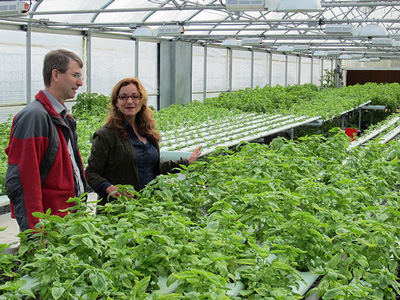
Miles McEvoy, the National Organic Program’s deputy administrator, and Karen Archipley, co-founder of the Veterans Sustainable Agriculture Training program, tour the Archipleys’ organic basil garden in 2012. Credit: Flickr / USDAgov
VSAT is a proprietary hands-on six-week training program “from seed to market” with an emphasis on developing a business plan. Colin and Karen purposefully tap into the skills and military training of the veterans — attention to detail, dedication and thoroughness — and assist with job placement and business creation at the end of the immersive training. Graduates include successful farm owners and workers, soil-testing pioneers, restaurateurs, and owners of food companies.
Michael O’Gorman, a passionate advocate for the cause of teaching veterans to farm, is the founder and director of the Farmer Veteran Coalition (FVC) located in Davis, Calif. This national network of independent veterans-in-agriculture has teamed up with the USDA to offer free educational retreats in sustainable agriculture all around the country, open to veterans and their spouses.
The coalition serves as an important networking agency. Veterans are able to talk with farmers, attend workshops on financing and related business topics. FVC also offers the Fellowship Fund, which makes small but strategic grants to farmer-vets so they can get what they need most to strengthen their operation.
“Our goal is to connect the latest generation of veterans from Iraq and Afghanistan to viable careers in agriculture,” says Michael. “What we see amounts to religious conversions. These young folks have taken on the military and farming — two of the hardest challenges we face — and they’re not even 30 years old.”
American-grown food for all — it’s more than a wish. The United States is projected to add some 18 million people by the year 2020. With nearly 334 million mouths to feed by the end of this decade, food supply is arguably one of the defining issues of our time. Think about it. Homegrown food is healthier for you. Healthier for your children. Healthier for our communities. Healthier for America.
The next time you plan your week’s shopping, check first for a local farmers market. You may just find a veteran farmer continuing to do service for our country.
Top photo: Mark Winkworth. Credit: JJ Britt
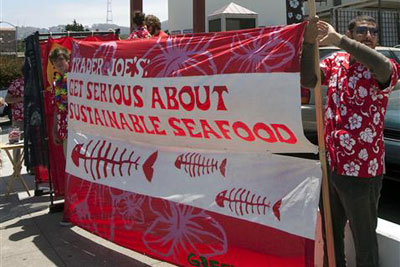
I’m a Trader Joe’s groupie. So I was thrilled when my Hawaiian-shirt-clad friends announced that they would be purchasing all their seafood from sustainable sources by the end of 2012. The Monrovia, Calif.,-based retailer had been a target of a Greenpeace “Traitor Joe’s” campaign for its ocean-unfriendly policies, including the sale of a variety of endangered fish. With that pledge, Trader Joe’s joined the good guys.
But four months past the deadline, my glee has changed to frustration over Trader Joe’s unwillingness to say whether it has indeed gone sustainable. The retailer’s only statement on the subject, a customer update posted on its website March 27, does not address the deadline at all. Instead it lays out a number of steps it has taken in “support of our seafood goal of shifting to sustainable sources.”
Trader Joe’s says it will do the following: Stop selling swordfish caught in Southeast Asia, only sell canned yellowfin and albacore tuna caught using approved sustainable methods, set up new standards for suppliers of farmed shrimp and keep genetically engineered salmon off its shelves. The store has also stopped selling endangered Chilean sea bass, orange roughy and red snapper. Those are all steps in the right direction. (May 30 update: Trader Joe’s, Greenpeace bury hatchet, sort of)
Trader Joe’s mum on meeting deadline
But can I go to Trader Joe’s today and pick up fish fillets for dinner without worrying about whether I am contributing to the degradation of the ocean?
More from Zester Daily:
» Think you’re buying sustainable? Maybe not
Why the mystery? Everyone understands a missed deadline, particularly when it involves something as complex as seafood sustainability, global supply chains and the economics of food. But refusing to discuss the matter makes it look like Trader Joe’s is hiding something.
Casson Trenor, a senior seafood campaigner at Greenpeace, acknowledges Trader Joe’s is making “tremendous progress” toward saving the oceans. But he says the company’s reluctance to provide more information about its seafood sourcing policies has made it nearly impossible to determine whether the retailer is actually living up to its promises.

Casson Trenor. Credit: Greenpeace
For example, he says the store is still selling items such as farmed salmon and dredged scallops that Greenpeace and other groups do not consider sustainable. Are they simply clearing out old inventory? Or are they flouting their own goals and hoping others won’t notice?
There are a lot of things to love about Trader Joe’s if you’re a foodie on a budget, a time-strapped cook (who knew broccoli slaw could taste so good?) or an aficionado of cheap wine. But unfortunately, transparency isn’t one of them. Trenor explains that a key part of Trader Joe’s success is its ability to create tasty, easy-to-use foods — such as spicy fish fillets — that aren’t available anywhere else. To prevent those products from being copied, the retailer has resisted pressure to reveal its sourcing or its suppliers.
“Trader Joe’s is all about magic and illusion,” Trenor says. “It delivers an experience that it doesn’t have to compete for because no one else can produce that product. Why would it give itself away?”
Verifying the sustainability of a seafood product requires two key pieces of information: where it was caught or farmed and how it was caught or farmed, explains Victoria Galitzine of FishWise, a Santa Cruz, Calif., organization working with the seafood industry to develop sustainable business practices. As a first step, she recommends checking out the Monterey Bay Aquarium’s Seafood Watch program, which has an app and pocket-sized cards with lists of ocean-friendly seafood and fish to avoid.
Trader Joe’s says it is in the process of enhancing its package labeling to include information on species’ Latin names; origin; and catch or production method. But until that happens, I will need to ask my friendly sales clerk whether that frozen yellowfin tuna from Fiji was caught using a long-line or purse seine equipped with a “fish aggregating device, or FAD.” If the answer is yes to the FAD, it’s on the red list and off my grill.
“Asking questions demonstrates to the retailers that its customers care about the environmental performance of its seafood and eventually those messages will trickle up the chain of command to the decision-makers who can affect significant change,” Galitzine says.
I can also support retailers who are clearly ocean-friendly. In mid-May, Greenpeace will publish its annual Seafood Sustainability Scorecard ranking grocery stores by their sustainable seafood practices. Last year, the top scores went to Safeway and Whole Foods while Trader Joe’s ranked 15 out of 20.
Trenor wouldn’t say whether Trader Joe’s will be getting a better grade this year. However, if Greenpeace finds a large gap between Trader Joe’s promises and its delivery, he is not ruling out a revival of its “Traitor Joe’s” campaign.
“Trader Joe’s did make a promise to Greenpeace and other groups and that’s why we suspended our campaign,” he says. “The time is up. The question now is did they actually do what they said they were going to do?”
Top photo: A Greenpeace protest at a Trader Joe’s store. Credit: Greenpeace
Anyone who’s ever traveled in the Swiss Alps will know that farming there is nothing new. Wherever you go, you will see doe-eyed, moleskin-brown cows grazing vertiginous, brilliant green, manicured hillsides, their fragrant milk destined for great wheels of hard mountain cheese. But fish farming? It sounds unlikely — a bit like salmon farming in the Yemen — but it’s true.
The story began with the Lötschberg rail tunnel, which enters the Alps at Frutigen in the heart of the Bernese Oberland and emerges the other side at Raron in the Valais.
More from Zester Daily:
The tunnel is the latest example of the Swiss flair for engineering. As often happens when tunneling in the Alps, the project hit a few snags. Chief among these was the water runoff from rain and melting snow, which filters through the limestone layers to the tunnel below. Thanks to the geothermal effect, the water is warmed on its descent through the mountain to a rather comfortable 64 F. To channel it directly into the local river would have played havoc with the wild fish population, accustomed to an icy alpine torrent.
The solution came from engineer Peter Hufschmied, head of site management for the tunnel and a keen angler. Instead of expending energy in cooling down the water before allowing it to run off, why not take advantage of the warmth to raise fish? Simultaneously, they would use any surplus energy to heat greenhouses where tropical plants and fruits would grow. A perfect — and perfectly sustainable — solution.
The Tropenhaus in Frutigen was born, a pilot project was put in place in 2002, and by 2005 the first sturgeon were introduced. The original Swiss caviar, christened Oona (a word with Celtic roots suggesting “unique” or “extraordinary”), was harvested in the winter of 2011-12. Now leading Swiss chefs such as Heiko Nieder at the Dolder Grand in Zürich, Werner Rothen of Restaurant Schöngrün at the Paul Klee Centre in Bern, and Ivo Adam of Restaurant Seven in Ascona on Lake Maggiore can’t get enough of it.
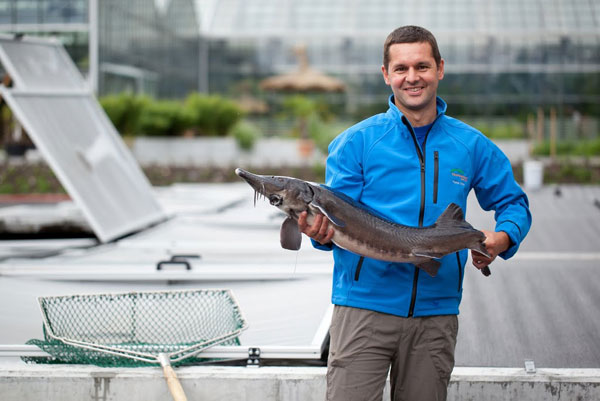
At least 27 different sturgeon species are raised or fished for caviar. From these, the Tropenhaus chose the Siberian sturgeon, Acipenser baerii. It’s a strange and wonderful beast, light gray to brown in color with five rows of bony plates along its back and sides; an elongated, upturned snout; and a kind of four-pronged goatee beard. In captivity, the females of the species will mature at approximately 6 years of age, which makes them an economic proposition for farming. (Wild Siberian sturgeon needs at least 20 years to reach maturity.)
Once mature, the females are stunned and killed, the sac of roe is lifted out and set aside and the fish is deftly filleted. The fillets — firm, dense and devoid of bones — feature on the menus of the two on-site Tropenhaus restaurants and are also sold to restaurants and shops (including select branches of the Swiss retailer Coop, which is also the Tropenhaus’ main shareholder). Some fillets are sold fresh, others are smoked to create a delicacy not unlike smoked eel.
Harvesting roe for caviar a simple process
Considering the mystique surrounding caviar, the process for making it seems simple, at least as demonstrated by caviar-meister Tobias Felix. Clad in a hairnet, overalls, a plastic apron and white boots and equipped with surgical mask and latex gloves, he looks like a cross between an astronaut and a surgeon.
First, taking care not to damage the precious eggs, he gently coaxes and massages them through a wire mesh, leaving behind the membrane that surrounds them. Next, he rinses the eggs in cold water, drains them in a fine-meshed sieve and painstakingly picks out impurities with tweezers. At this stage, the eggs are a dull grayish-black; only when he adds the carefully calculated measure of salt will they take on their characteristic glossy sheen. The newly salted caviar is promptly transferred into custom-made tins, which are sealed hermetically. The entire process takes 15 minutes from start to finish.
caviar3
For the final step, the tin is embedded in a sleek, black sphere, which in turn is enclosed in a solid chunk of glass resembling an ice cube, made at the Hergiswil glass factory on Lace Lucerne, an ultra-chic piece of packaging that won a coveted Red Dot Design award in 2012.
The likelihood of Swiss caviar coming to a table anywhere near you is probably slim. “The quantities are tiny (production in the first year was around 300 kilograms, 700 pounds) and for the moment we are focusing just on Switzerland,” admits marketing manager Andreas Schmid. But there are ambitious plans afoot: Production is set to increase tenfold, and then they will consider the export market.
Even farmed, Swiss caviar will never be cheap; that’s at least part of its mystique. (Thirty grams or 1 ounce of Oona costs 144 Swiss francs, or $155 U.S.) But now that caviar from wild fish is out of bounds due to a disastrous combination of damming, overfishing, pollution and poaching, farmed caviar is increasingly meeting demand for this prized product. Sturgeon is already raised on fish farms all over the world, from France, Spain and Italy to Russia, China, Canada and the United States.
Now Switzerland has joined the ranks.
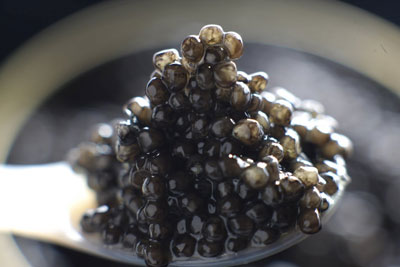
Top photo: A spoonful of Oona caviar. Credit: Tropenhaus Frutigen
A slew of recent news means we can no longer ignore that the planet is groaning under the weight of 7 billion-plus humans. The good news is that one of the most effective ways to minimize our personal negative effect on the environment is with our food choices. Going meatless is helpful anywhere in the world, but eating vegetarian in China can also be surprisingly easy and satisfying.
More on Zester Daily:
The evidence of human impact on the globe is everywhere. Two years of drought in Texas forced legislators to focus their attention on the water supply, and a report released in January by the United Kingdom’s Institution of Mechanical Engineers showed 30% to 50% of all food produced globally gets wasted because of systemic inefficiencies, never making it to people’s plates.
In Beijing, you may have heard that air quality readings from the U.S. embassy broke all past records since figures were first released in 2008, skyrocketing to averages up to 22.7 times the standard the World Health Organization considers healthy. The Beijing city government recently closed more than 100 nearby factories and ordered one-third all government cars off the road.
The change can start with your dinner plate
We all know we should do our part in minimizing environmental impact, but the recommendations are confusing, conflicting, misleading or just plain inconclusive. Except for one very obvious habit that is part of our daily lives and over which we all have control: the way we eat. By reducing the amount of meat each individual consumes, especially beef, we can immediately reduce our impact in terms of water, land, air and energy, to name but a few key issues.
Regarding water, here’s an amazing tidbit: If you gave up showering for one year, you’d still save less water than what’s required to make a single pound of beef. One pound of beef consumes more than three times the water a pound of pork does, and six times more than chicken.
In terms of land use, it takes 16 pounds of grain to make one pound of beef. That’s 94% more land. And 94% more pesticides, which, along with fertilizers, are responsible for using 40% of the energy expended for agriculture purposes. All told, livestock eat 70% of all the grain we produce.
As for greenhouse gas emissions, worldwide agriculture is responsible for 20% of the greenhouse gas emissions, with about 18% attributed to livestock alone, according to the Food and Agriculture Organization. That doesn’t include carbon wastes attendant to meat production, such as cutting down forest to start a farm, fertilizer and diesel fuel to grow the corn, and truck exhaust from shipping cows.
Beyond carbon, livestock produces about 50% and 70%, respectively, of overall anthropogenic CH4 (methane) and N2O (nitrous oxide) emissions. Methane is responsible for nearly as much global warming as all other non-CO2 GHGs put together.
Meat production contributes disproportionately to energy consumption, in part because feeding grain to livestock to produce meat instead of feeding it directly to humans involves a huge energy loss. The John Hopkins Bloomberg School of Public Health estimated our system necessitates 3 calories of energy to create 1 calorie of edible food. Other foods require more, for instance grain-fed beef, requiring 35 calories to produce 1 calorie.
AAs Dr. Rajendra Pachauri, chair of the United Nations Intergovernmental Panel on Climate Change, said of cutting down meat consumption: In terms of “immediacy of action and the feasibility of bringing about reductions in a short period of time, it clearly is the most attractive opportunity.” Every small step is valuable. Simply start with one meat-free day a week. I started with Meat Free Mondays, the movement begun by Paul McCartney.
Where to start eating vegetarian in China
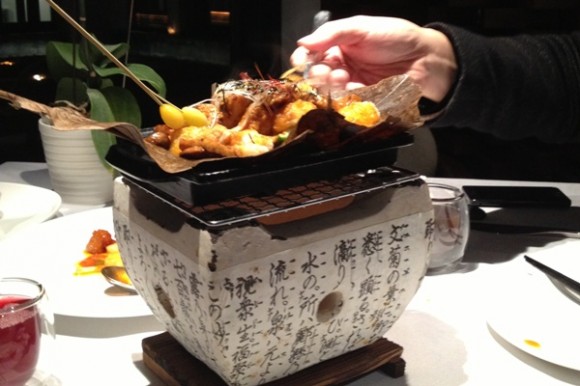
Despite all the dirt on Beijing, there are plenty vegetarian options in the Chinese capital — a whopping 30, according to the list compiled by Tianchu Miaoxiang (click the tab “Beijing Veg Map”). Here’s a quick list of my personal favorites from least to most expensive, so when you visit you too can savor the incredible flavors, creativity and breadth of Chinese vegetarian cuisine.
- Xu Xiang Zhai: This cozy eatery is nestled behind the Confucius Temple on charming Guozijian Road, which is across the street from the must-see Lama Temple. Daily all-you-can eat buffet lunch (68 Chinese Yuan Renminbi or about $11 per person) spans a mind-boggling variety of classic Chinese dishes, including top-notch cold dishes.
- SuHu: Located across from the East Gate of Tsinghua University in the Wudaokou student district, this is popular with students, professors and the tech community who work in Zhongguancun, which is China’s Silicon Valley. Vegetarian lion, as the restaurant’s name means, sells a great selection of vegetarian products to take-away.
- Tianchu Miaoxiang: Like the two aforementioned, its classic home-style Chinese dishes are entirely re-imagined or re-created using meat substitutes. But what makes the two locations of “Heaven’s Chef Fantasy” so special is the restaurants’ focus on seasonality, reflected in rotating specials. Cold dishes, soups and iron skillet eggplant are my regular go-to’s.
- Pure Lotus: This is perhaps the most famous veggie eatery in town, even among carnivores. It is known for its evocative and imperial setting, attentive and knowledge service, and encyclopedic, yet poetic, menu descriptions of delicious dishes that are plated carefully to recall misty mountains and romantic dalliances.
- King’s Joy: The newest addition to Beijing’s non-meat eating scene is also the most upscale, located in a beautifully renovated courtyard setting (ie: traditional Ming Dynasty style aristocratic home) with modern, but minimal, interiors and posh, hushed environs best for impressing guests.
King’s Joy restaurant in Dongcheng District. Credit: Manuela Zoninsein
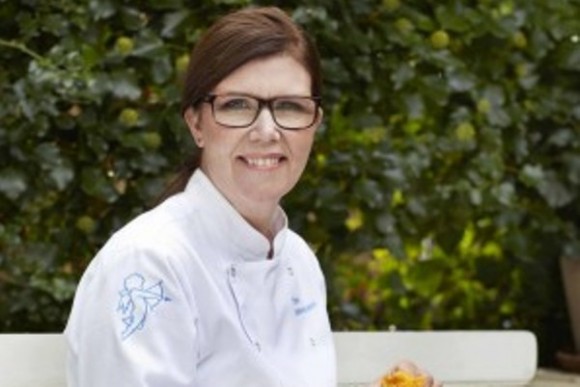
Editor’s note: With the subject “A prosperous future for all: Gender, climate change and biodiversity in a globalized world,” Zester Daily contributor Trine Hahnemann spoke in New York last week at a United Nations event. Hahnemann, a Copenhagen-based chef and caterer and the author of 10 cookbooks, was invited by the Nordic Council of Ministers to participate on the panel.
More from Zester Daily:
» Fair Trade coffee improves Thai village life
» Getting luxurious with sustainable caviar
» Barriers to going organic in Brazil
Organizers explained that people assume that women and men affect the climate in the same way, and that climate change affects both genders identically. But women’s and men’s lifestyles, behaviors and consumption are often different, and they leave a different environmental footprint. Hahnemann capsulizes the issues for Zester readers below.
How does being a chef and a woman affect your perspective on climate change?
I see the world through food; I have cooked hundreds of thousands of meals in my career. My cooking can only be as diverse and tasty as the produce that the farmers grow. I need diverse products to choose from.
My main focus is on vegetables and grains. I like fish and meat, but not necessarily as the centre of thinking and cooking a meal. I believe we need to change our diet so that 80% of our meals come from vegetables and grains and 20% from animals.
That is a radical change of the diet in many parts of the world, though of course not in India or China, and most parts of Africa. I think we in the Nordic countries should be leading this change, but also show flexibility in its implementation.
We have to change into a more climate-friendly diet: a diet of seasonal vegetables and fruit, more grains, less meat and dairy products. The New Nordic food movement includes ideas to change our daily diet. The new Nordic is in my opinion a frame to understand how this could be a worldwide movement about eating local produce but exchange the ideas globally.
How have our changing, globalizing eating habits affected climate change?
In 2012 in Brazil I met a group of female chefs who wanted to draw attention to organic farming and the use of local produce. One of their focuses was manioc, an indigenous root vegetable, which is not as important in Brazilian food culture as it used to be. It has lost popularity in the competition with wheat. Wheat is not grown in big quantities in Brazil; it is imported.
Brazilians also grow soya and maize, which are exported around the planet to feed cows, even though cows can’t really digest corn but should be eating grass, clover and hay. To do this, Brazilian farmers have cut down the rain forest.
Trine Hahnemann speaks at the Nordic Council of Ministers event. Credit: Courtesy of Trine Hahnemann
This is an example of how we have changed our diet over the last 50 years. Instead of a diet that relied relatively little on protein, most developed countries eat a diet where about 50% of our calories come from protein from animals. This has had a huge impact on the climate. We have contributed to climate change just by the way we eat. About 18% of greenhouse emissions come from livestock. How we eat in the future is very important when it comes to climate change.
For their part, the Brazilian female chefs pledged to use of manioc in meals at all levels, from fine dining to street food to school lunches.
It can be used for many things, including baking, being cracked like bulgur, sauces and as crisp topping on food.
How is this a women’s issue?
Men and women work from different perspectives. In many aspects, men are more technical; they invent machines, they look for more technical solutions. They are more competitive and are looking for prestige and position and, therefore, the Michelin star system and acknowledgment like that is often very appealing to men.
Women are the ambassadors for the everyday meal. To change the way we eat we need women to take leadership. They cook public meals, which means they cook in hospitals, kindergartens, schools and elderly homes. Women, for the most part, prepare the daily meals in the households. The famous Michelin male chefs can make the light shine and create focus and attention on important issues, but they cannot make the change; they cook for the rich.
What can communities do to contribute?
One way forward is to create action around the way we eat locally, support organic farming and people who work toward a more holistic solution and look at the land and the people around them.
We need poly-faced farms with sustainable holistic systems where nature, humans and food are at the centre. Biodiversity is life, and maintaining biodiversity is therefore a key to understanding sustainable living on all levels, giving back to nature the same resources we are using, keeping the balance. Women around the world have to be an active part of ensuring that, and it should be a human right, that everybody has a right to decent meal day.
Top photo: Chef and author Trine Hahneman. Credit: Courtesy of the author
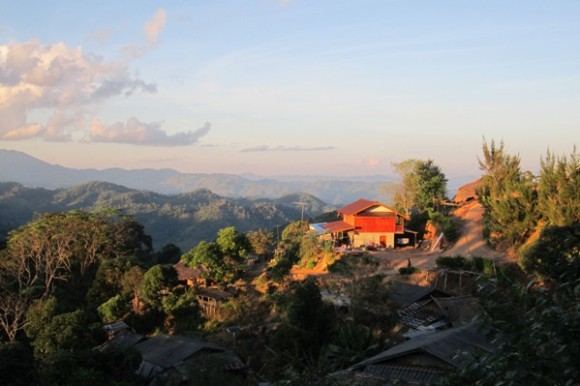
On a perch two hours up a washed-out dirt track from Chiang Rai sits Maejantai, one of the most remote villages in Northern Thailand. This village, set high in the region’s densely forested mountains, also produces some of Thailand’s best fair-trade coffee, which is gaining international attention (most notably by the Specialty Coffee Association of Europe, or SCAE) for its smooth, sweet and sour notes.
Maejantai is home to 32 families of Akha, whose people make up one of just 10 hill tribes officially recognized by the Thai government. Mountain people who are spread across the forested hills of northern Burma, Laos and China’s southern Yunnan province, the Akha speak their own language and are originally from Tibet. Historically, they have been meagerly self-sufficient: They grow or gather almost all of their own food but typically purchase salt and cooking oil. Each home has one solar panel to power a couple of light bulbs. However, as the world around them modernizes, Akha parents want to send their children to school beyond the primary level, and to do so requires economic stability.
Enter coffee. Coffee was first introduced to Maejantai and other hill tribe villages in the 1990s by Thailand’s Royal Agricultural Project as a means to stop opium production. The villagers of Maejantai did grow coffee, but didn’t see their standard of living improve. Though coffee is a cash crop, it is traded as a commodity: middle men buy the coffee at low prices and sell it for a large profit. Because the Akha spoke only limited Thai and had no knowledge of coffee markets, they were often underpaid for their crop. Then the village’s sole college graduate walked back into town.
Creating the Akha Ama brand
Ayu Chuepa, who goes simply by “Lee,” decided in 2007 that he wanted to improve the lives of his hometown’s residents. Coffee was the natural focus. “It keeps well, has a shelf life, is a growing market in Thailand, and is known around the world,” Lee said. Plus, villagers already knew how to cultivate it. In 2010 the Akha Ama brand was born.
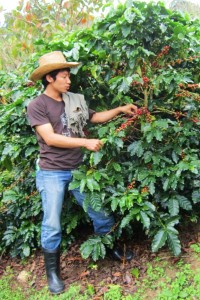
Ayu Chuepa, who goes by “Lee,” in Maejantai, Thailand. Credit: Catherine Bodry
But Lee wanted to remove the middle man, as well as produce high-quality coffee, in a model that was sustainable both environmentally and economically. And that required changes to the way Maejantai did things, changes that were not always welcomed. Lee understood the villagers’ reluctance. “They have always lived their lives with practice, not theory,” he said. “I was gone for 10 years, so why should they believe me?”
Lee, who is 28, speaks Akha, Thai and English and has a fit-but-relaxed build reminiscent of an athlete at rest. His wavy black hair is trimmed in a trendy bowl cut. He was born in Maejantai, but had to walk 4 kilometers to another village to attend primary school. With no secondary school in the area, Lee spent six years in a Buddhist temple until he finished high school. He then attended Chiang Rai Rajabhat University, where he studied English with the help of scholarships and government loans. Today he is in the often awkward and difficult position of ushering change into a community that isn’t yet sure how, or if, to accept it.
Starting Akha Ama was not easy, and not just because he needed to persuade villagers to change the way they grow and sell their beans. Lee, who only drank instant coffee at the time, had to study coffee cultivation from seed to finished product, and learn how to be a barista as well as market a product and manage a business. The year he created Akha Ama, only his immediate family participated, producing 2 tons of beans, half of which Lee distributed as free samples. Three years later, 14 of the 32 families of Maejantai cultivate beans under the Akha Ama brand. In 2010, Lee opened the Akha Ama coffee shop in Chiang Mai, the largest city in Northern Thailand, to sell his village’s coffee directly.
A unique strategy for success
What makes Akha Ama coffee excellent is a combination of prime growing conditions and careful attention to processing. All coffee cherries are handpicked when they are ripe, twisted off of branches and deposited into wicker baskets. The daily harvest is taken by motorbike out of the hills and back into the village, where the cherries are soaked in clean water and separated from the beans. Villagers spread the beans out on wide bamboo platforms, letting them dry overnight in the high mountain air.
Once dried, the beans go through one more separation process, this time to remove a thin skin, or husk. They are then trucked to Chiang Mai, where Lee has carefully selected a small, private roaster.
The beans are 100% Arabica Catuai, grown in soil fertilized with cast-off cherry skins. Farmers do not use chemical fertilizers or herbicides, instead relying on other plants for pest control: sesame and lemongrass have unappealing scents, while cabbage draws insects in (and away from coffee plants). Apricots, peaches and persimmon also reduce risks while adding value as other cash crops. Young avocado trees will soon provide shade. The product is a finely balanced coffee that is both sweet and sour.
Lee refuses a mono-culture model, both because it’s not good for the soil and it’s not good for villagers to rely on a single income source. Standing among the mountains of Maejantai, Lee points to the forest, noting that thousands of species live together, and that this diversity buffers the forest against seasonal ups and downs. He hopes that one day Maejantai’s coffee farms will achieve the same balance, environmentally and economically.
Coffee growing in Maejantai, Thailand. Credit: Catherine Bodry