Articles in World
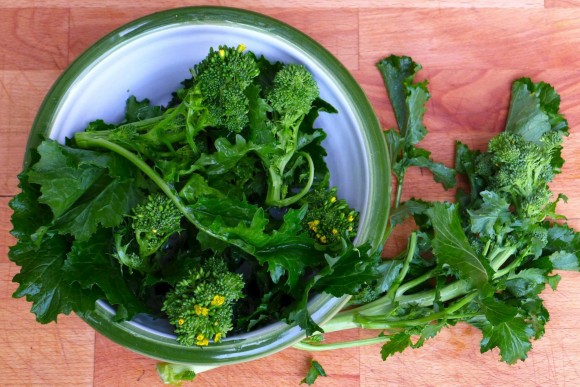
9 Fresh Uses For ‘Broccoli Rabe,’ An Italian Superstar
by: Julia della Croce
in: Vegetables w/recipe
Summer has yet to deliver its full range of vegetables, but one stalwart crop that keeps on giving is Brassica rapa (from rapum, Latin for “turnip”). Brimming with flavor, this vegetable is known variously in its native Italy as cime di rapa (“turnip tops”), broccoletti di rape or just rape (pronounced räp’-eh), rapi, rappini, friarielli, vrucculi and a gaggle of other aliases, depending on local dialects.
And as “if this is not confusing enough,” says Daniel Nagengast — who imports 700 different heritage seeds to the United States for his company Seeds from Italy — “there are perhaps 15 different cime varieties in southern Italy, and I keep on finding more.” Each has its own physical characteristics, growing patterns and flavor nuances. But what they all have in common is a bold, seductive bitterness in their raw state, not to mention a powerful nutritional profile.

Cime di rapa varieties in the greenhouse at Stone Barns Center for Food and Agriculture in Pocantico Hills, New York. Credit: Copyright 2015 Nathan Hoyt/Forktales
Old varieties are new again
More from Zester Daily:
» Don’t be bitter, just cook rapini better
» Give healthy broccoli rabe the tasty Italian treatment
» The perfect cooking style for delicate Brassicas
» 5 wild greens you need to be eating this spring
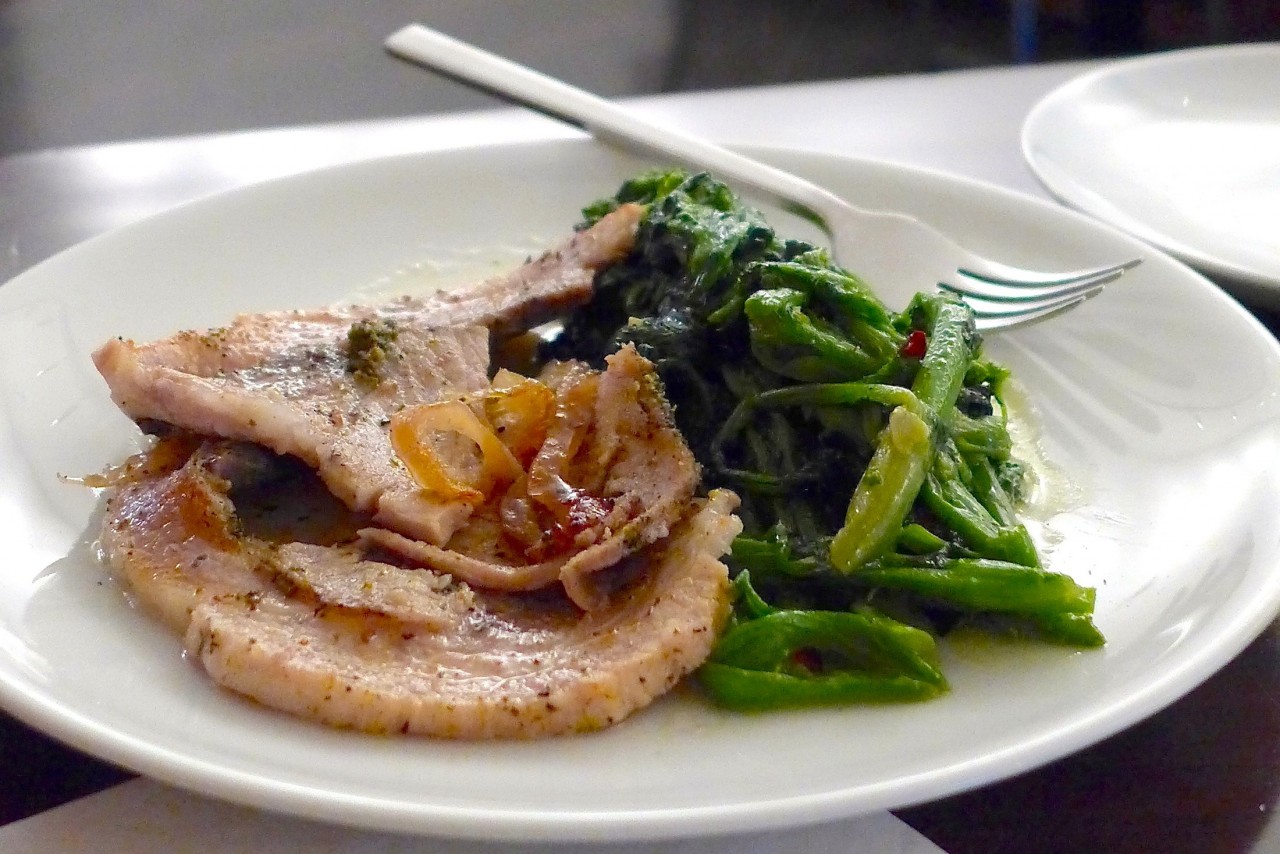
Boiled rapini are flavored with the delicious drippings of porchetta at Mozzarella e Vino in New York City. Credit: Copyright 2014 Nathan Hoyt/Forktales
The old familiar ways with rapini
As much as the vegetable intrigues people, the extent of most Americans’ experience with Brassica rapa is as a side dish cooked with olive oil and garlic. Properly, this basic preparation involves parboiling the greens before sautéing them. First, peel the stems as you would asparagus legs to ensure that they cook at the same rate as the tops. Next, parboil them for two minutes — just long enough to bring out their sweet overtones. Then drain them, saving some of the cooking water. From here, you’ll sauté them with good olive oil, garlic and (optionally) chili flakes, moistening them with a little of the water you have set aside. (You could also change up the recipe by substituting onion and bacon for the garlic and hot pepper, the way Southern cooks make collards, kale and other field greens.) Now you can eat them as is or use them as directed in the recipes that follow.
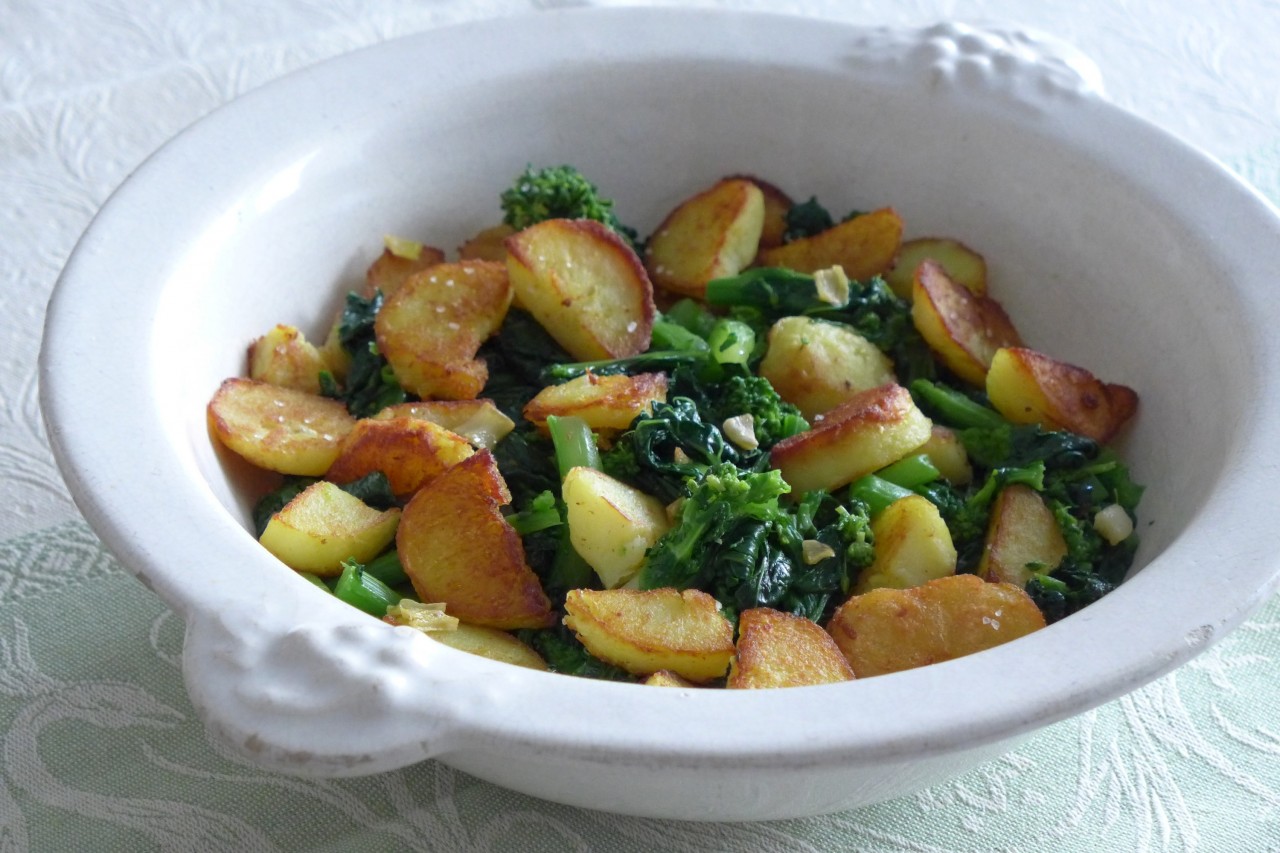
Chef Viola Buitioni’s garlicky Umbrian “rapi e patate.” Credit: Copyright 2014 Nathan Hoyt/Forktales
Rapini and potatoes
For a more complex side dish, combine your garlicky sautéed greens with other vegetables: sautéed cime di rapa alongside a puree of fava beans, or ‘ncapriata, is food of legend in Puglia, brought together with the magic of high-quality olive oil. Chickpeas or white beans also make delicious and nutritious purees for the greens. Probably one of the happiest vegetarian marriages is between rapini and richly flavored potatoes such as Yellow Finns, Yukon Golds or fingerlings. I like chef Viola Buitoni’s way of tossing her sautéed greens with crisply fried tubers, an Umbrian-style dish she calls rapi e patate. If the greens are the feisty part of the couple, the potatoes are the sweet-tempered half.
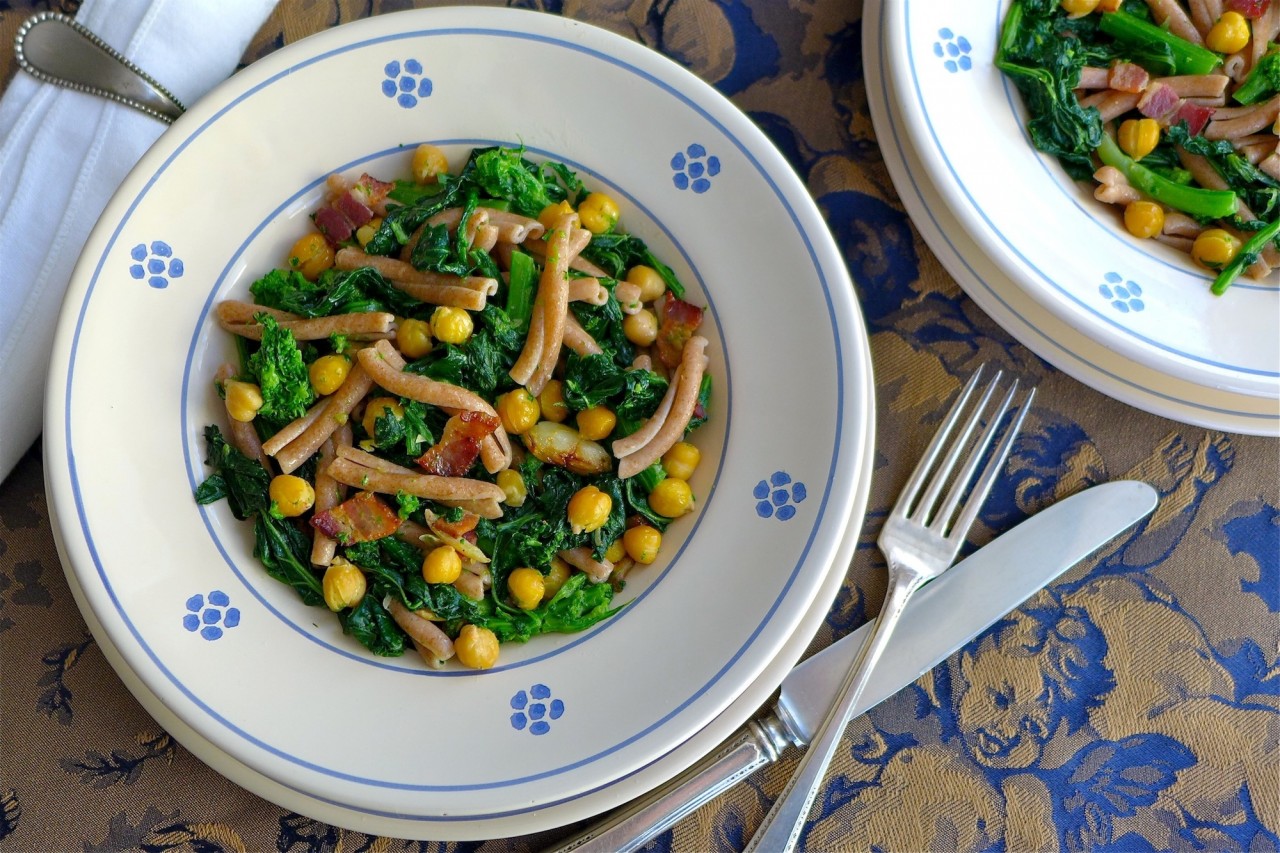
Whole-wheat gemelli with rapini, bacon and chickpeas, which are creamier if you peel the skins off first. Credit: Copyright 2015 Nathan Hoyt/Forktales
Not just a side dish
In Puglia, it is common to cook the greens simultaneously with pasta in the same pot and, after draining, tossing them quickly together in olive oil flavored with garlic. Per the Italian tradition whereby meat is a second course, sausages might follow; but for a one-dish variation, I sometimes add warmed, crushed anise seeds and crumbled sausage to the pasta and greens. And there are so many other ways to dish out rapini and pasta. For instance, you can toss your garlicky sautéed greens together with diced bacon, chickpeas and just-cooked short pasta in a wide skillet; I like to use whole-wheat gemelli (“twins”) or penne imported from Italy. Be sure to save some of the hot pasta cooking water; combined with the olive oil and juices from the prepared rapini, it forms a sauce. Pass a cruet of your best olive oil at the table for finishing.
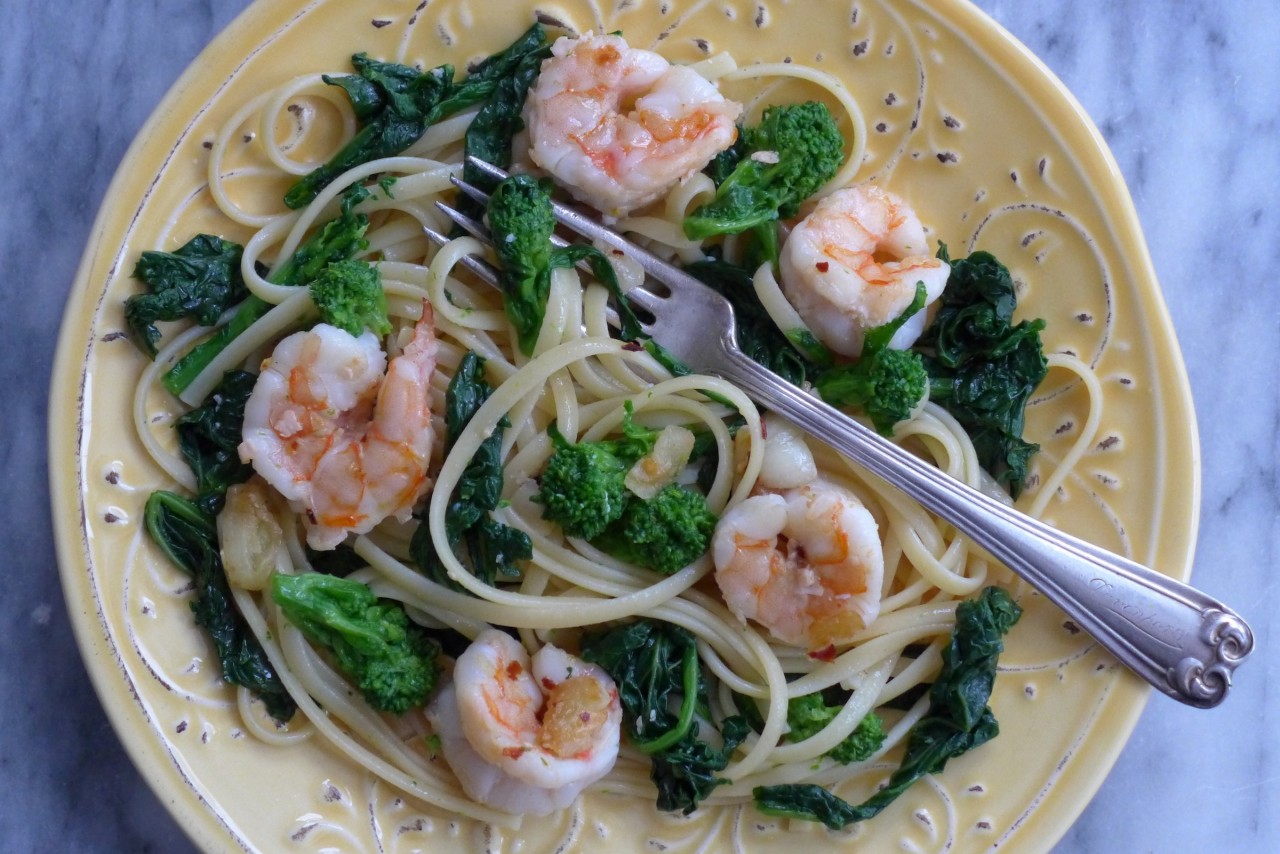
Imported Italian linguine with shrimp, Brassica rapa and hot pepper, inspired by a Venetian dish. Credit: Copyright 2015 Nathan Hoyt/Forktales
Rapini and seafood
Or consider seafood. The Venetians have a particular fondness for the charms of bitter ingredients, including cime di rapa (to use their term); surrounded by water as they are, they often combine the vegetables they cultivate on the lagoon islands with their Adriatic catch. Here is a heavenly dish I ate in a trattoria some years ago on the little island of Burano. It was originally made with fresh tagiolini and a local species of prawn called cannocchie, but it is just as good with linguine and shrimp (or other types of fresh seafood, such as clams or scallops). Start by parboiling your rapini (save the cooking water) and sautéeing the shrimp in fragrant olive oil with garlic and red pepper in a skillet wide enough to accommodate the pasta later. As soon as the shellfish is lightly colored, add dry white wine and let simmer gently for a minute or two, until the alcohol evaporates. Finally, toss in the rapini, cover the pan and turn off the heat. In the meantime, cook the linguine in the reserved cooking water. Drain, again reserving a little of the water, and add the pasta to the skillet. Toss the ingredients together gently, moistening them with a little pasta water if necessary.
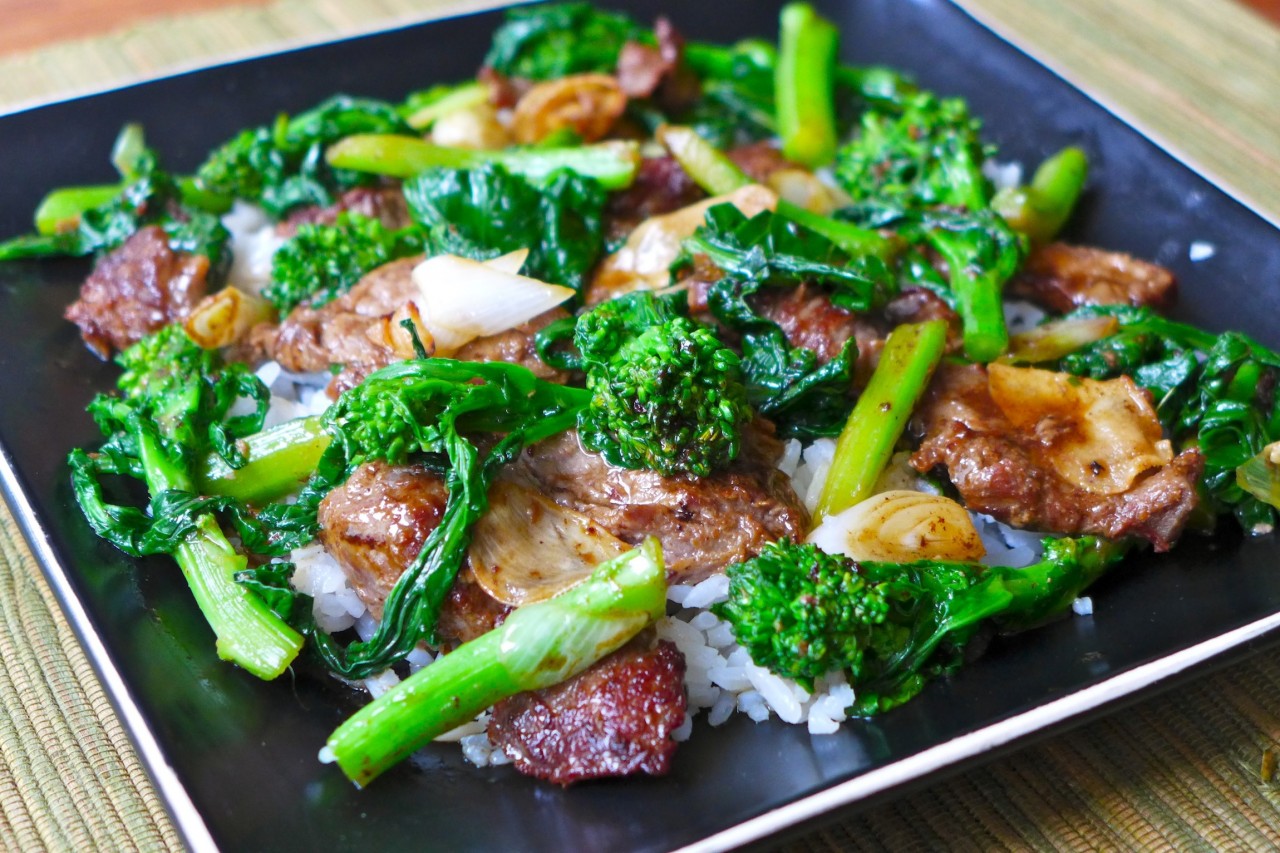
Rosa Ross’s stir-fried beef and rapini in place of the traditional “gai lan,” Chinese flowering broccoli. Credit: Copyright 2014 Nathan Hoyt/Forktales
When bitter is sweet: An Asian spin
Author Jennifer McLagan has devoted an entire book to explaining why a taste for bitterness is the hallmark of discerning cooks and educated eaters. “Food without bitterness lacks depth and complexity,” she writes in “Bitter: A Taste of the World’s Most Dangerous Flavor, with Recipes.” I rather like the gentle Chinese way of describing the yin-yang perfection achieved when balancing bitter, salty or sour flavors (yin) with sweet and spicy ones (yang).
“We love bitter melon and flowering mustard greens and things like that,” says Hong Kong-born American chef Rosa Ross, author of “Beyond Bok Choy: A Cook’s Guide to Asian Vegetables” and other Chinese cookbooks. So, for example, in the original Chinese version of the dish Americans known as beef with broccoli, the bitter green called gai lan must be used — but “when I can’t find it here, I substitute Italian bitter broccoli,” Ross says.

Pizza topped with sweet fennel pork sausage, sautéed rapini, cacio Romano (soft Roman sheep’s cheese) and serrano pepper. Credit: Copyright 2014 Nathan Hoyt/Forktales
Pizzas and pockets
Many pizzerias offer pies spread with vegetables — but they can be more alluring to the eye than they are tasty. A pizza topped with rapini, sausage and tangy cheese is a different, flavor-packed story. To make it, start by preparing your own dough; while it rises, parboil and sauté the greens per our basic recipe and, separately, sauté some crumbled sausage. Spread them both over the dough before baking; scatter cheese on top only in the last few minutes of baking to prevent it from burning. (Mozzarella is too bland in this case, so best to use a young, melting sheep’s cheese or soft Asiago fresco.) You can use the same ingredients as filling for calzones.
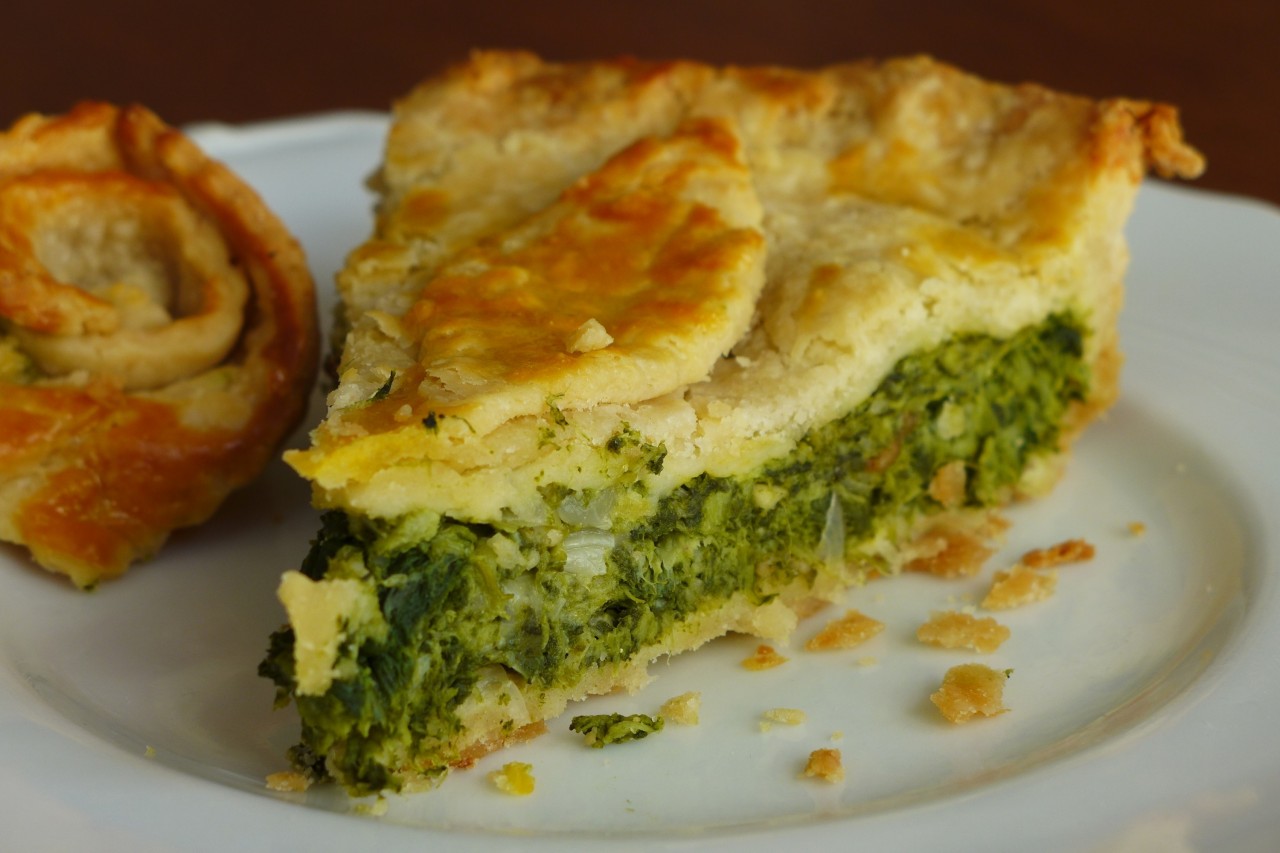
Rapini pie with an American-style crust makes for a twist on Italian tradition. Credit: Copyright 2014 Nathan Hoyt/Forktales
Rapini pie
On a similar theme, last spring I created a new interpretation of the traditional torta pasqualina (“Easter pie”), a savory pastry made of strudel-like dough filled with spring greens such as chard or spinach. Once again, I used an American-style pie crust because I love its structure and crumb — and I also substituted rapini in the filling, mixing them with egg and freshly grated Parmigiano to yield astonishingly good results. They have so much flavor that no additional ingredients are needed, save salt and pepper. Along with a side dish or two, this pie is substantial enough for a dinner; it can also be cut into smaller servings for an appetizer. I’ve been known to improvise with good frozen puff pastry as well, using the same filling to make small hand pies.
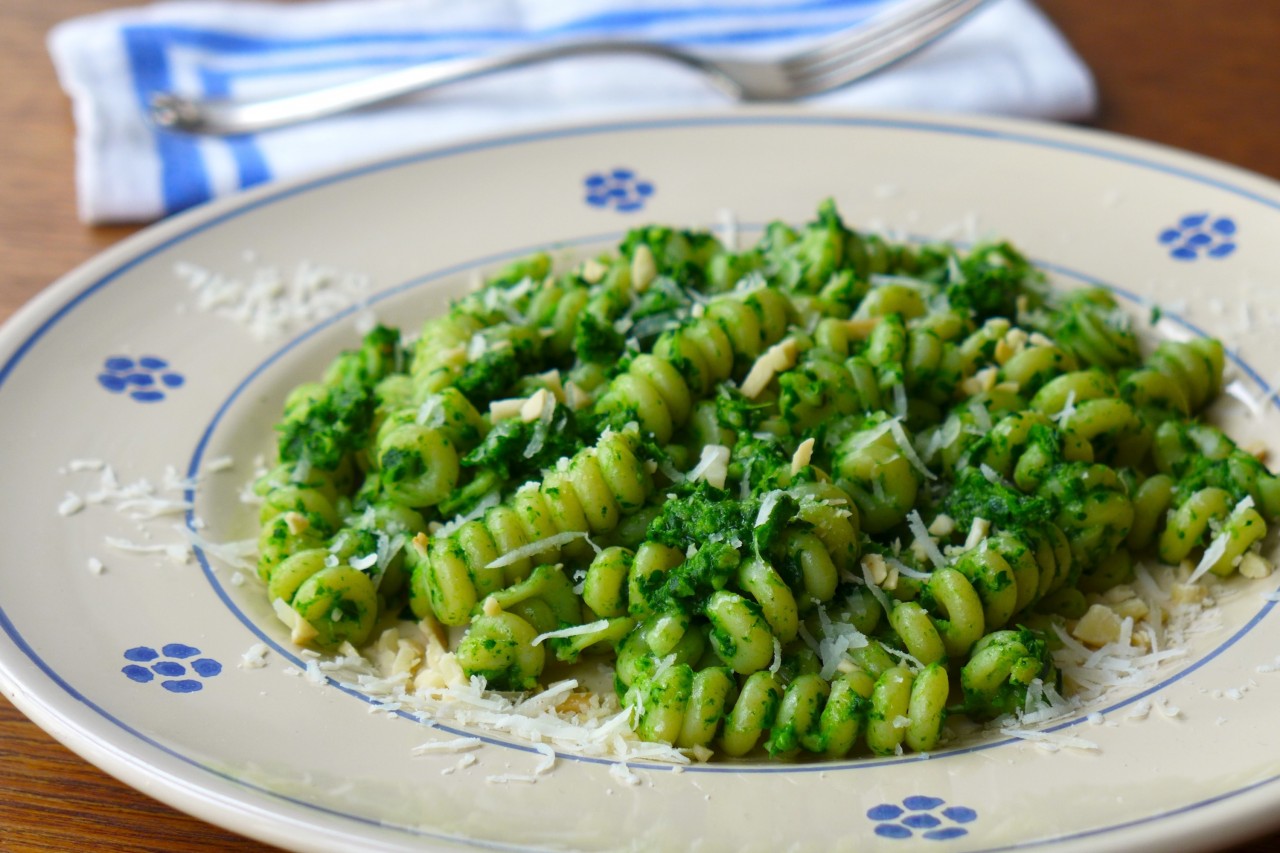
Imported fusilli with rapini pesto, almond shards and pecorino Toscano. Fusilli are exceptionally suitable because the coils trap the pesto. Credit: Copyright 2014 Nathan Hoyt/Forktales
Purees and pesto
We are nearly there, dear reader, but how can we overlook transforming these mighty greens into a purée for eating as is or making into a sauce? If you will first peel the skin from the stalks, you will prevent its fibrous texture from getting in the way of a silky creamed side dish or a velvety pesto. Then cut the stalks into several pieces to make them easier to work with and boil them, along with the leaves and buds, for at least seven minutes. Be sure to drain the greens well before pureeing them in a food processor with a little softened butter or good olive oil. You can eat them just as they are, creamy and hot, seasoned with another dab of butter or dribble of olive oil, plus a touch of coarse sea salt — they’re as good as creamed spinach, even without the roux.
Or, for a gorgeous and delicious alternative to the ubiquitous basil pesto, blend the purée with a touch of garlic; grated, aged sheep’s cheese or Parmigiano; and a little olive oil — because the cooked stems are full-bodied and naturally creamy, you’ll find it unnecessary to use as much oil as many pestos call for. You can also include pine nuts or almonds if you’d like. Like its basil counterpart, rapini pesto should accompany pasta cuts sturdy enough to carry it — linguine, bucatini, medium macaroni, potato gnocchi — or you can stir it into minestrone.
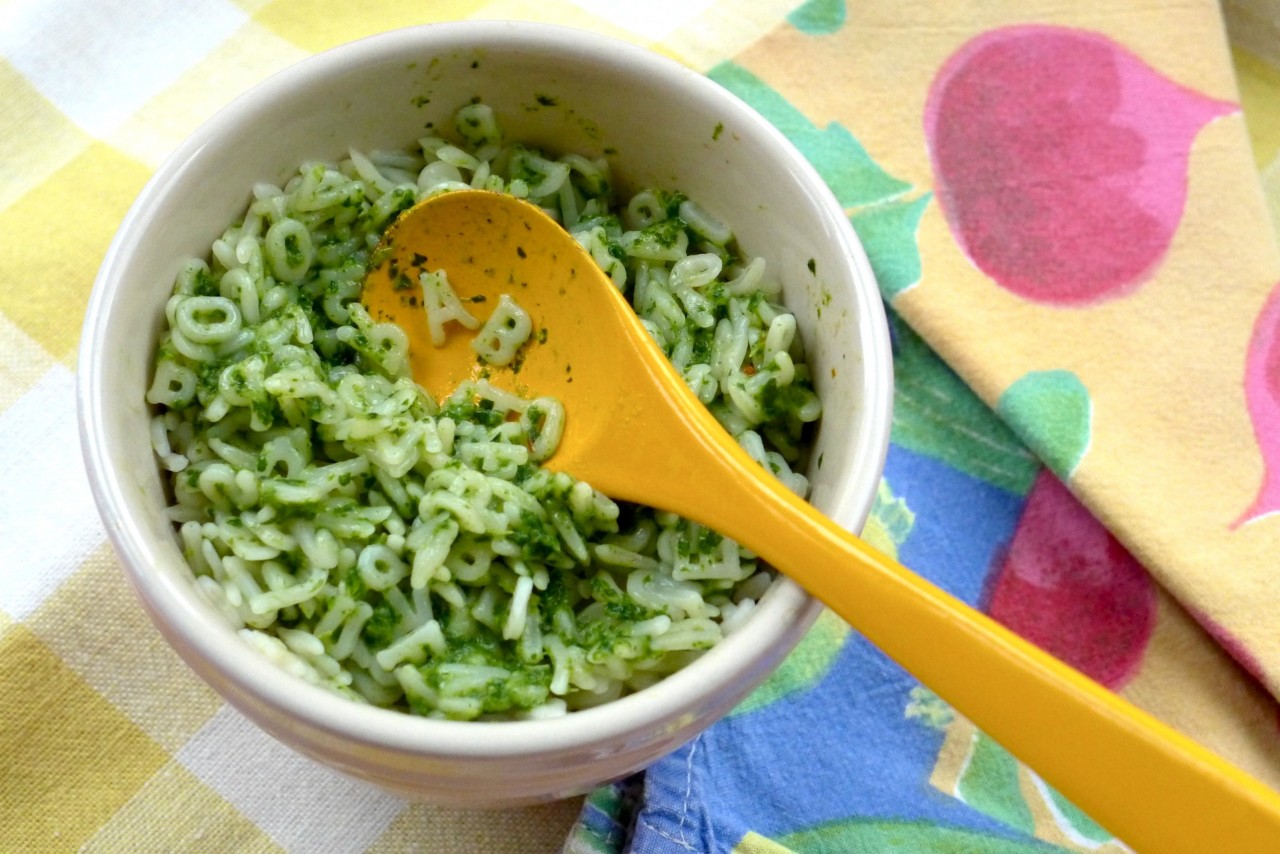
Rapini butter stirred into alphabet pasta makes ideal baby food. Credit: Copyright 2014 Nathan Hoyt/Forktales
Back to the beginning
It’s only too well-known that a preponderance of American children and adults alike hate vegetables — a fact that people in other parts of the temperate world find puzzling, especially as plants are the very stuff that humans most need for proper nourishment. I could write a book exploring the reasons for this, but consider just one for a moment. Although the theory that children need bland foods until they are old enough to handle more intense flavors is bandied about in credulous circles, experts tell us that the taste for particular foods is developed in infancy. The fare we are fed as children — whether it is good or not — is what we crave as adults. Pastina (“miniature pasta”) with butter is an Italian baby’s first solid food, revisited in adulthood whenever comfort food is in order. When my children were babies, I stirred rapini puree and butter into pastina for them, and they loved it. (Like any pasta, pastina tastes best served piping hot immediately after cooking — but naturally, it should be cooled down to warm for babies.) This is an ideal way to develop an infant’s taste for these miraculously healthful greens.
Main photo: Brassica rapa at the Palo del Colle market in Puglia, Italy. Credit: Copyright 2014 Nathan Hoyt/Forktales
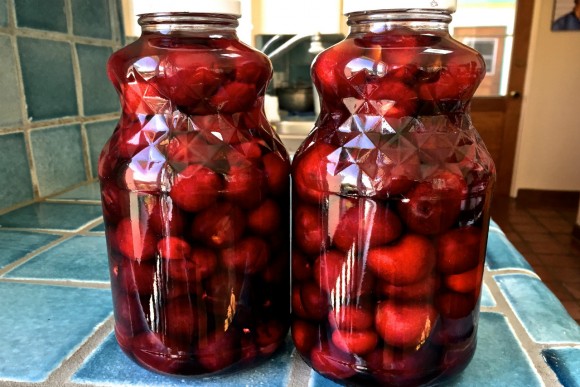
Infusing vodka with fruit is perfect for summer and holiday entertaining. Colorful and easy to make, all you do is place the washed fruit into a clean glass jar, pour in the unflavored vodka, cover and store until the fruit has transferred its flavors to the vodka. The resulting infused spirit can be sipped by itself or used in a deliciously refreshing cocktail. That’s it. Wash, pour, cover, wait and enjoy.
Flavored vs. infused
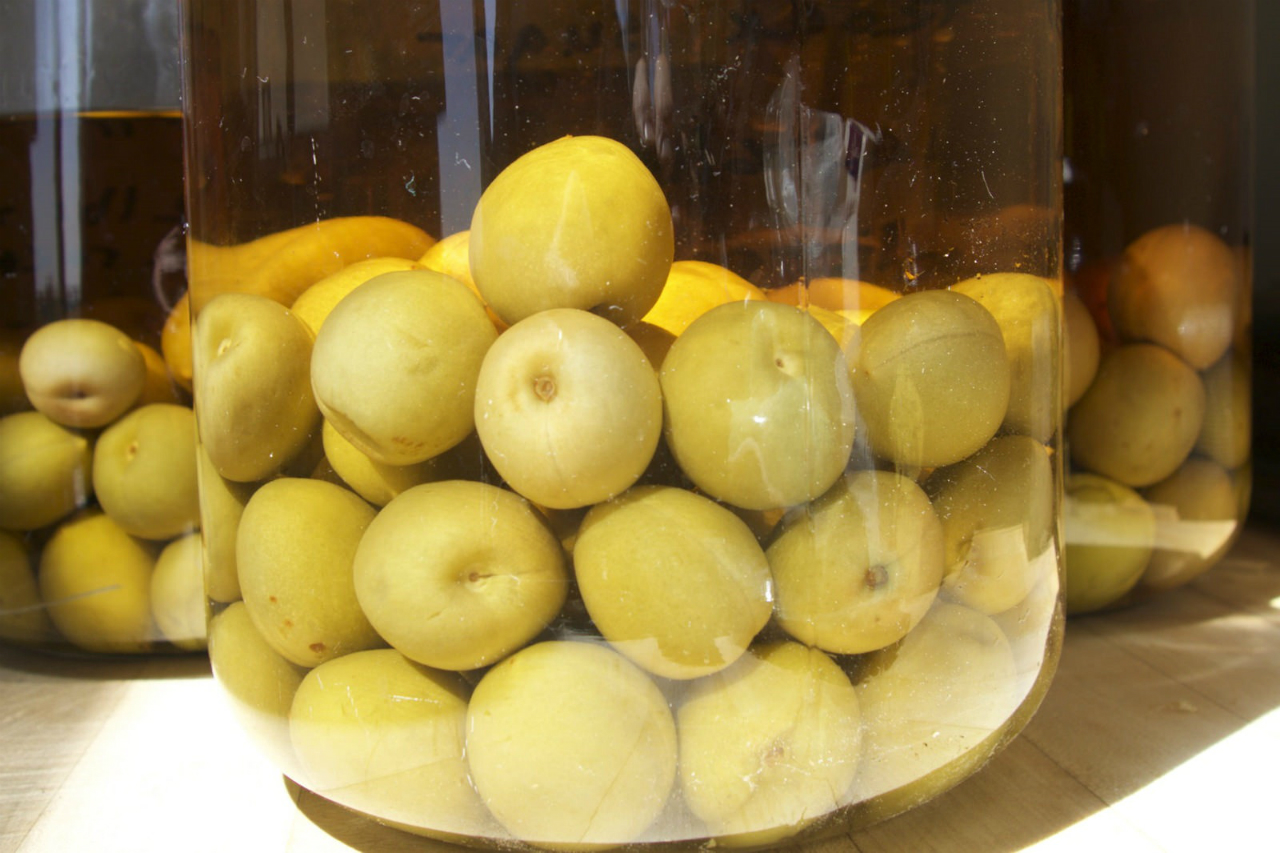
Umeshu, after one year. Credit: Copyright David Latt
All the popular spirits — bourbon, tequila, gin, brandy and rum — can be infused with savory or sweet flavors. Vodka is the easiest because it is more neutral than the others.
You may have seen vodkas labeled as infused with lemons, oranges, cranberries, pomegranates and raspberries. In point of fact, they are actually flavored artificially. The taste of those vodkas ranges from passable to medicinal.
Creating your own flavors allows you to control the quality and the strength of the infusion. Using a farmers-market-fresh approach will bring a farm-to-table excellence to your cocktails.
How long to infuse?
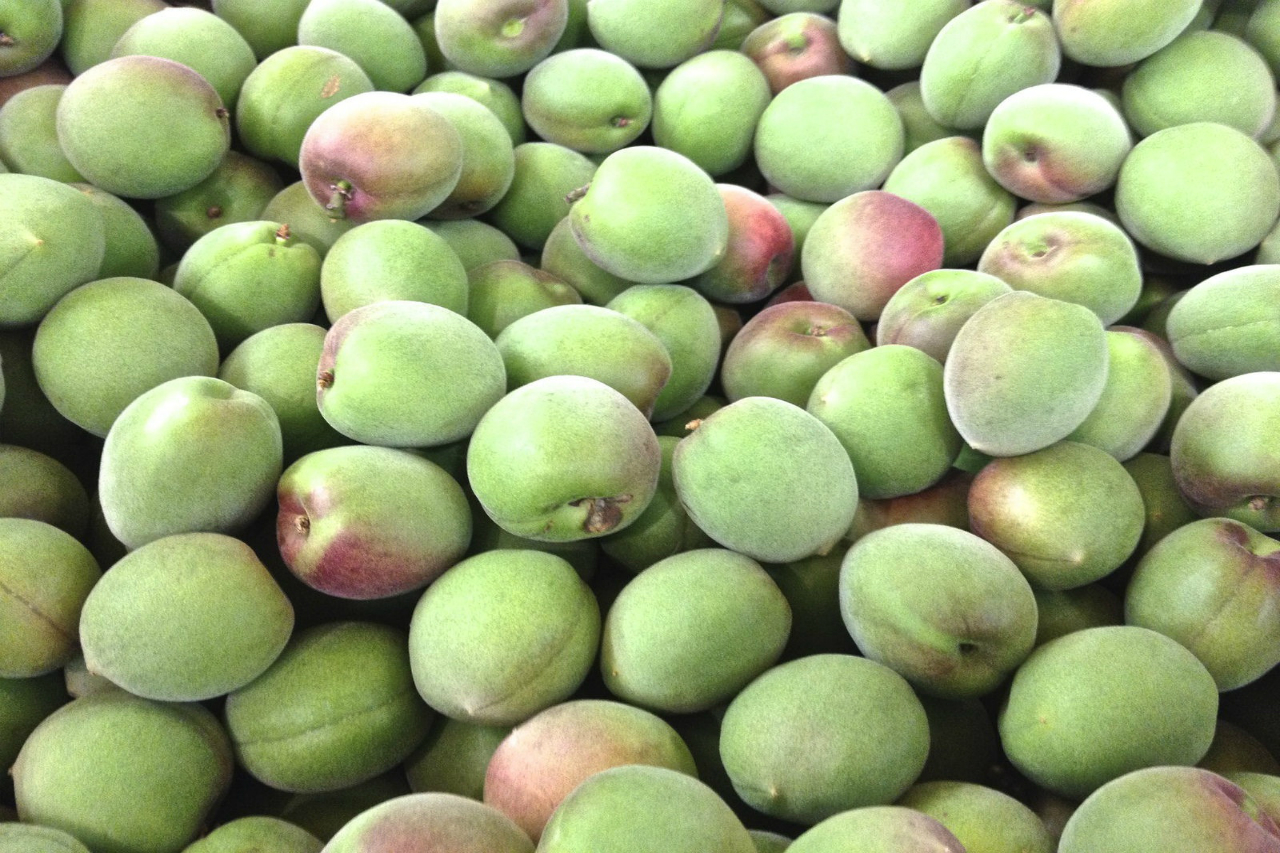
Ume or green plums at Marukai Market in West Los Angeles. They’re used to make umeshu. Credit: Copyright 2015 David Latt
Generally speaking, soft fruit needs less time to transfer its flavors. Strawberries for instance need only a few hours or a day at most. With quick infusions, taste frequently and strain out the fruit when you have the flavor you want. When the fruit is removed, the infusion stops.
With a firmer fruit such as cherries, infusion can take longer. To make the Italian liqueur limoncello, lemon peels remain in the vodka for several months. When making umeshu, Japanese plum wine made with green plums called ume, the plums take a year to complete the infusion process.
When making infusions, no need to use premium vodkas. The fruit so dominates the flavor, buying affordable vodka is definitely the way to go.
Infused vodkas can be used as the basis of any number of cocktails. Personally, I enjoy them over ice, neat or with a mix of soda water. Simpler is better. The result is deliciously refreshing, especially on a warm summer day.
Cherry-Infused Vodka
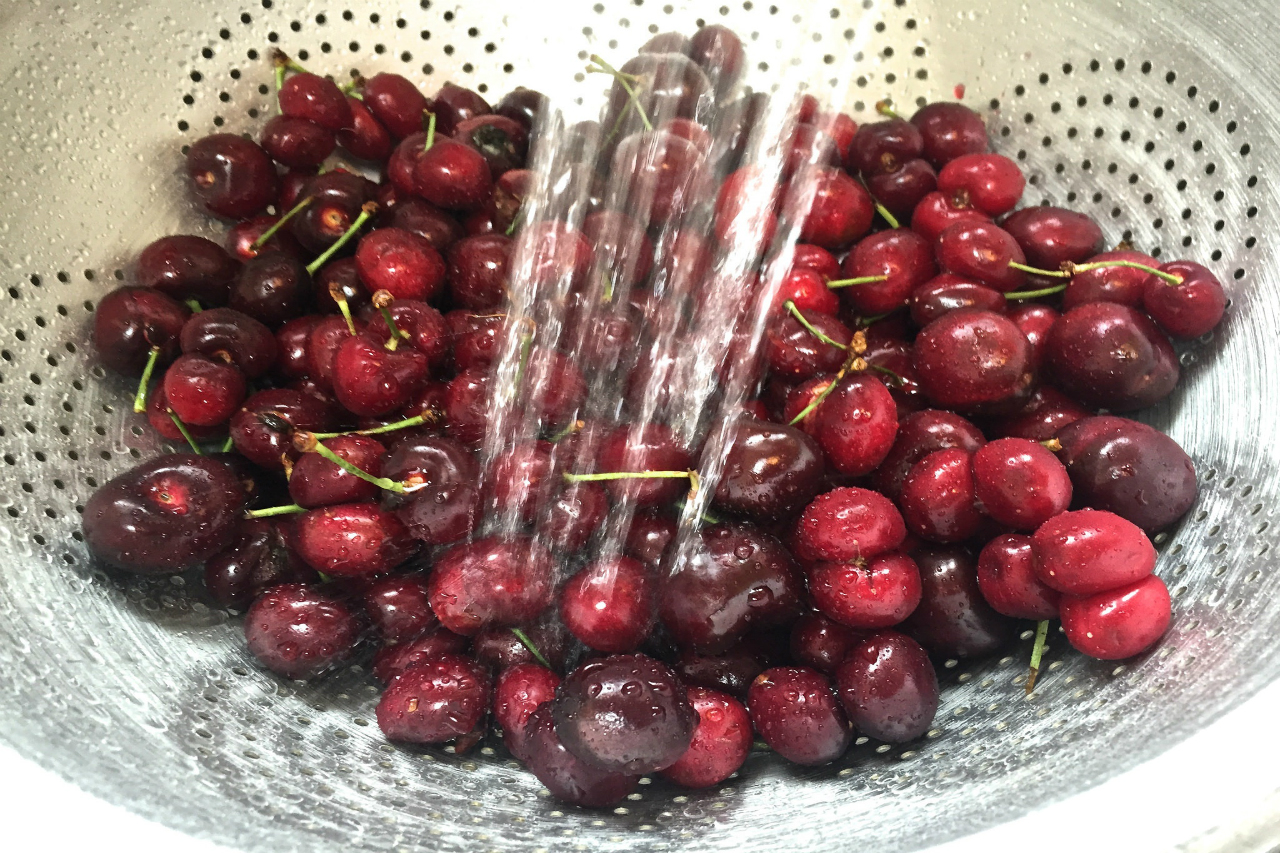
Bing cherries are best for vodka infusions. Credit: Copyright 2015 David Latt
More on Zester Daily:
» Locally sourcing Alaskan vodka
» Discovering the subtle allure of vodka
» Hopheads celebrate hop vodka
Buy good quality, unblemished cherries, preferably Bing cherries because they are fat and sweet. The cherries can be pitted, in which case they will give up their flavor more quickly. But over time the cherries will become less firm. I prefer to keep them whole so they can be served as an adult dessert.
Use glass jars, any size you have on hand. Wash the jars and tops in hot, soapy water and rinse well. Quart juice or canning jars work very well. Use the cherries separately as a dessert by themselves, with plain yogurt or as a topping on ice cream.
The infused vodka can be served cold as a shooter with a cherry as garnish or in a mixed cocktail of your choice. Leave the cherry whole or finely chop when using as a garnish.
Add more vodka when needed to keep the cherries covered. Keep refrigerated.
Prep time: 10 minutes
Infusion time: a week to a month
Yield: two quarts
Ingredients
3 pounds fresh cherries, preferably Bing, washed, pat dried, stems removed
1 quart unflavored vodka
Directions
1. Examine each cherry. Reserve for another use any that are blemished or over ripe.
2. Remove and discard any stems.
3. Place the whole cherries into the jars.
4. Fill with unflavored vodka.
5. Cap and place in the back of the refrigerator.
6. Serve cold. Pour the infused vodka into small glasses garnished with cherries (whole or finely chopped) from the jar.
7. Add vodka to keep the cherries covered. Refrigerate.
Umeshu or Japanese Plum Wine
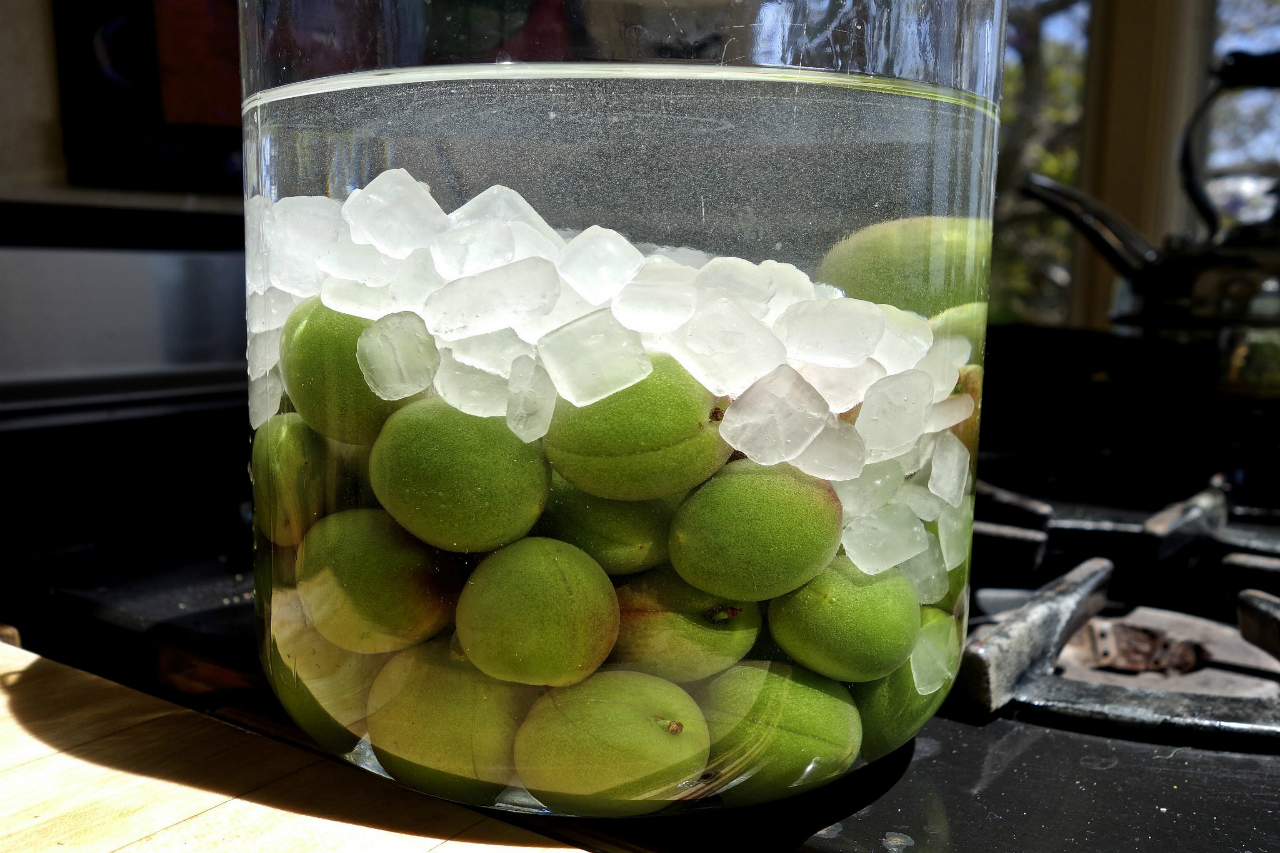
Mix ume or green plums, Japanese rock sugar, unflavored vodka in a glass jar to make umeshu. Credit: Copyright 2015 David Latt
Although frequently called plum wine, ume is actually more of a apricot and umeshu is a liqueur. Available in Japanese and Korean markets, ume are also sold in Middle Eastern grocery stores. Armenians and Iranians eat the unripened plums raw but do not use them to prepare a liquor. In Asia, ume are also eaten preserved in salt and called umebsoshi in Japan.
Sold at a premium price because of the short growing season in the spring, only use green, unripe fruit. Ripe ume should not be used.
Mention umeshu to someone from Japan and invariably they will smile
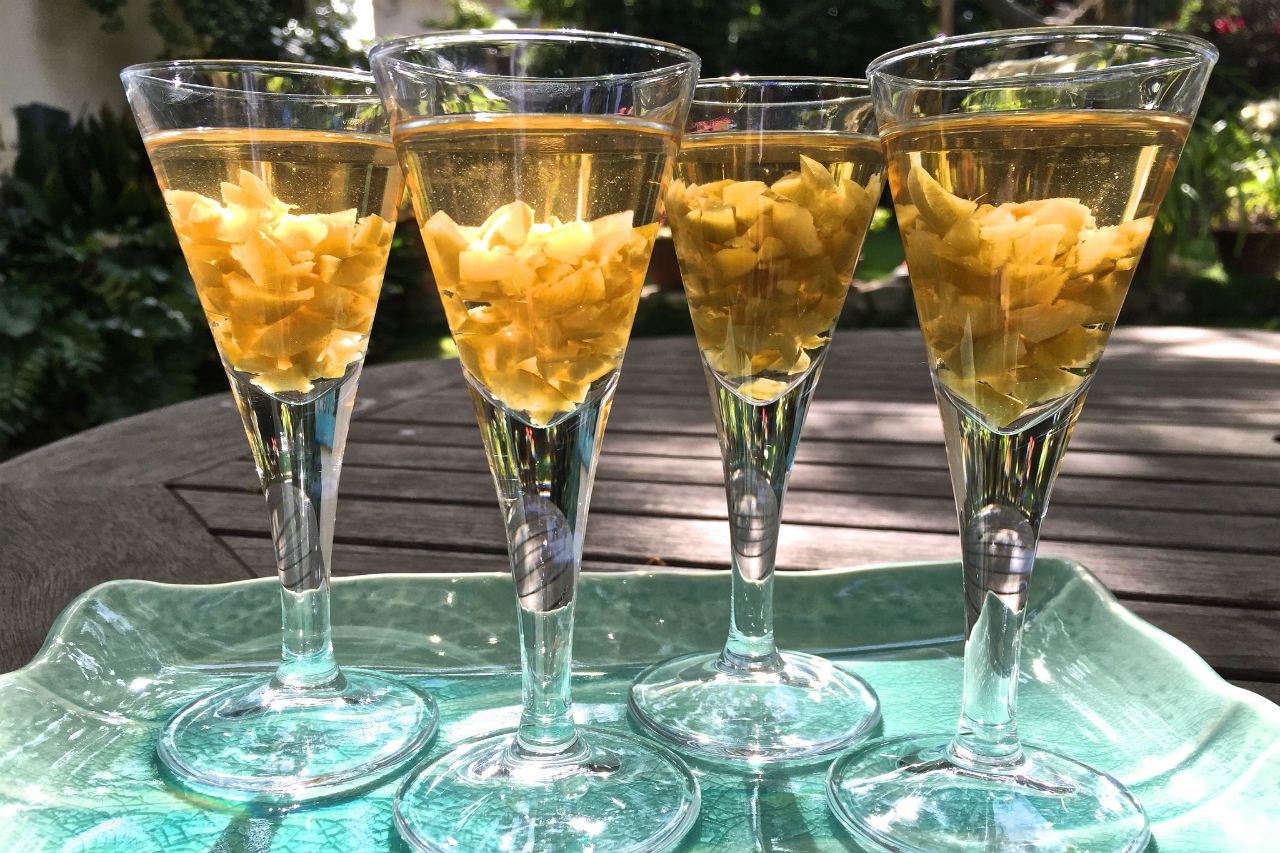
Umeshu shooters with chopped macerated ume (Japanese green plums). Credit: Copyright 2015 David Latt
Traditionally umeshu is made by grandmothers. In the spring when the plums appear in the markets, dull green and hard as rocks, the grandmothers buy up all they can find, place them in a large jar, add rock sugar and shōchū (similar in taste to vodka). The jar is placed under the sink and everyone waits a year until the plums soften and the shōchū has mellowed.
After a year in their sweetened, alcoholic bath, the ume can be eaten. I like to include them in the cocktail, either whole or cut off the pit, chopped up and added as a flavor garnish that can be eaten with a small spoon.
Only use unblemished, unripe fruit.
Prep time: 10 minutes
Infusion time: one year
Yield: 2 quarts umeshu, 2 quarts macerated umeIngredients
2 pounds ume or green plums, washed, stems removed
1 pound Japanese rock sugar
1.75 ml unflavored vodka
Directions
1. Wash well a gallon glass jar.
2. Place the ume into the jar.
3. Add the rock sugar.
4. Pour in the vodka. Stir well.
5. Cover.
6. Place in a dark, cool area where the jar will be undisturbed for a year.
7. Serve ice cold with macerated ume whole or chopped up as garnish.
Top photo: Bing cherry-infused vodka in quart jars. Credit: Copyright 2015 David Latt
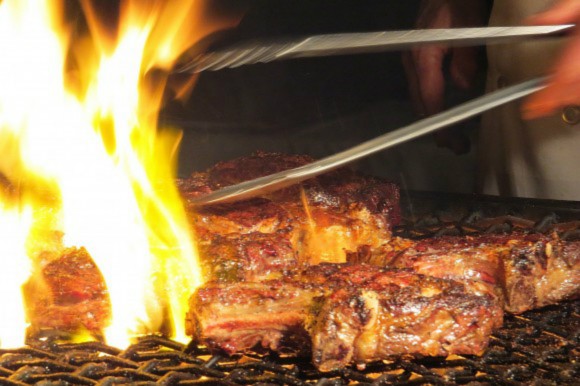
Cooking over an open flame under star-filled skies can evoke romantic thoughts: The life of the cowboy, though dusty and hard by day, becomes almost blissful under the glow of the moon. When you’re surrounded by nature and all the fresh air you can inhale, food just magically tastes better, or so the home-on-the-range story goes. But fast-forward to the modern-day chuck wagon: You, standing at your outdoor grill, staring at a piece of raw meat and a burning fire. Things can quickly go up in flames.
The simple truth is that barbecue — the kind you want to sink your teeth into — takes talent and skill; luck and courage can only get you so far. Like many home cooks, I consider the grill a backyard basic, but my comfort zone is in the kitchen. So when I was invited to attend BBQ Bootcamp at The Alisal Guest Ranch and Resort, I packed my bag and headed south to Solvang, California, with mustang speed.

Home on the range. Credit: Copyright 2015 The Alisal Guest Ranch and Resort
Culinary workout
Forget workouts at a gym: At this boot camp, the heat of multiple grills are what make you sweat, and instead of lifting weights, you’ll be faced with meatier challenges, like squeezing tongs around pieces of meat that could feed small families and mixing custom spice blends. Neither of which, by the way, is easy.
If you’re a nervous Nellie in the kitchen, the drive to The Alisal should help you relax. The route takes you through the windmill haven of Solvang, also known as Little Denmark. Founded in the early 1900s by Danish-Americans, it’s a good place to get a sugar fix. Solvang Restaurant on Copenhagen Drive has a take-out window, making it way too easy to grab an order of aebleskivers and go. Hard to pronounce but fun to eat, these pancake-doughnut hybrids are traditionally served with raspberry jam and powdered sugar; still, the à la mode option is hard to pass up. Wander a while if you want — you’re only a couple minutes away from the ranch. But you don’t want to be late for dinner.

Relaxing at the dude ranch. Credit: Copyright 2015 Dana Rebmann
Vacation on a working ranch
The “I’m on vacation” feeling should sink in when you turn into The Alisal’s long, sycamore-lined driveway. Barnyard animals linger, horses munch happily on what seem to be never-ending stretches of green grass, and the sight of a pay phone outside the lobby makes you laugh — until you check for what is a most likely a nonexistent cell-phone signal. The front desk has change if you need it (along with mugs full of Tootsie Roll Pops).
At 10,000 cattle strong, The Alisal is a working ranch; the 73 cottage-style rooms and suites are just a small portion of this scenic Central Coast property. But it’s one with a dress code. Comfortable play clothes are encouraged by day, but come dinner, bandannas get left in the dust. Men don jackets, while women and children put on party duds.

Guest cottage at The Alisal. Credit: Copyright 2015 The Alisal Guest Ranch and Resort
Old West style
Cowboys might consider their retirement options after spending a night in one of The Alisal’s cottages. Old West linens gussy up beds made of tree branches. Fireplaces burn wood delivered by the morning maid. There’s no need to set out on the range for necessary supplies; all you need is a key to the door (a real metal one, not a plastic card). BBQ Bootcamp students receive a welcome basket loaded with gourmet grilling rubs and libations to help prepare for the meaty workshops ahead.
BBQ Bootcamp is a joint effort between Alisal executive chef Pascal Godé and Frank Ostini, chef-owner of the nearby Hitching Post II, which gained fame after the release of the Academy Award-winning movie “Sideways.” The two chefs focus on the art of Santa Maria-style grilling, a different beast than its well-known Southern cousin.
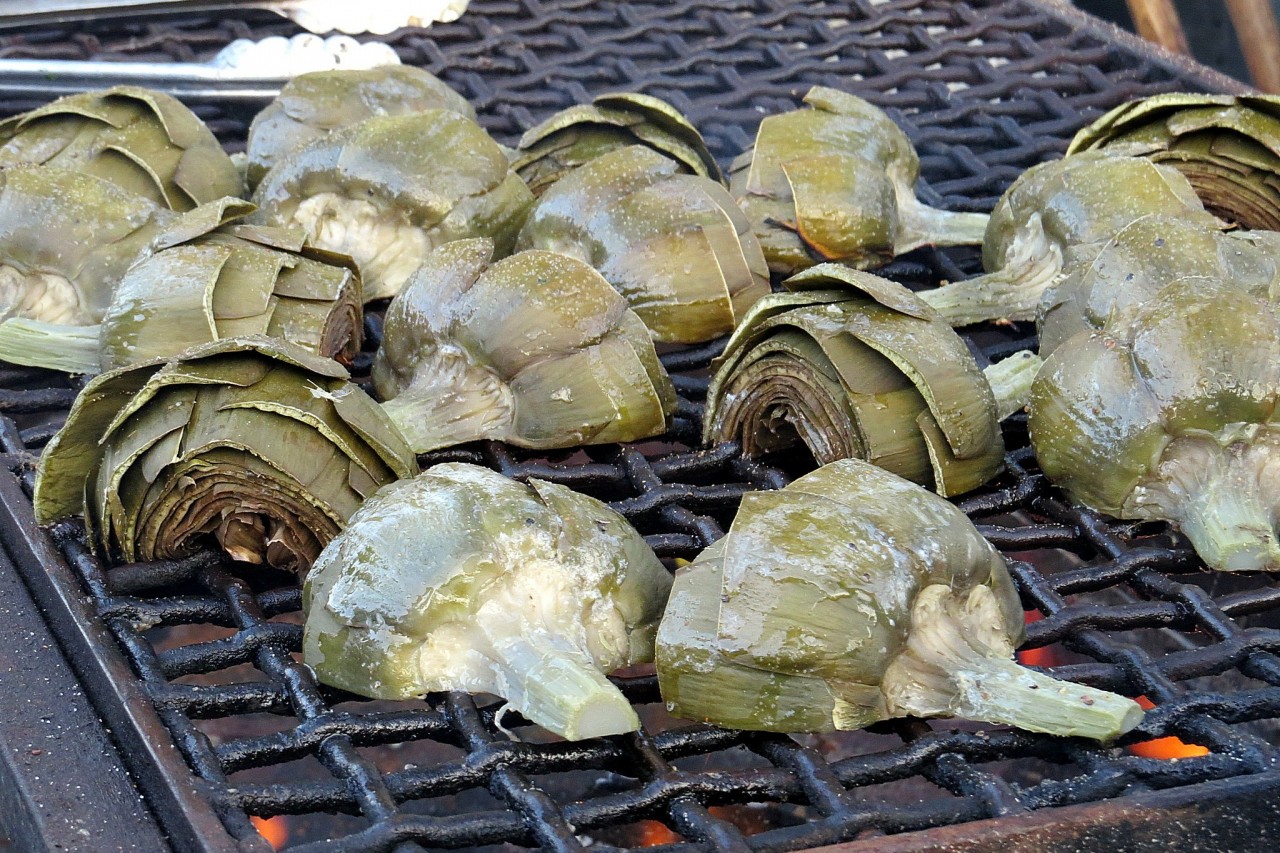
Grilled artichokes boast a meatiness of their own. Credit: Copyright 2015 Dana Rebmann
Mastering open-flame cooking
More from Zester Daily:
» Lure of an open flame: A photo feast of barbecue
» Barbecue boredom? Check inside the shell
» Viva Italia! A fresh start to a hot barbecue season
» Vietnamese street food will be a hit at your next barbecue
Grilling over a hot fire cooks foods more quickly than do the low and slow methods often used in the South — and here’s where much of the trouble begins for novices. Meat that’s burned on the outside yet raw on the inside is too often what sends the uneducated back into the kitchen.
On the first night of BBQ Bootcamp, professionals man numerous, monster-sized, wood-fired grills, offering tips and techniques as they cook everything from beef tri-tip and New York strips to artichokes and bacon-wrapped scallops. Lecturing is limited and notetaking is not a necessity. All students receive a Bootcamp bible of sorts. Along with expected recipes, the spiral-bound book gives a comprehensive yet understandable overview of the differences between wood, gas and charcoal grilling. In this stretch of the world, adjustable, wood-burning iron grills are the apparatus of choice, and red oak is the preferred fuel for the fire.
Relax, eat and drink. Tomorrow, the work begins.

What rush hour looks like on a dude ranch. Credit: Copyright 2015 Dana Rebmann
Rise and shine
When the alarm goes off, bootcampers have to resist the temptation to linger or their ride to breakfast will leave without them. Clothes that can get a little dusty are essential, and you’ll understand why when you arrive at the barn. Once you’re saddled up, the commute to breakfast begins. There are no traffic signals to slow you down, just fast-moving deer and the occasional bovine roadblock to distract you.

A pancake breakfast starts the day. Credit: Copyright 2015 Dana Rebmann
Hearty breakfast
The buffet is loaded with all sorts of good grub, ranging from fruit and pastries to hash browns and biscuits and gravy. The griddle is manned by a resident pancake artist who dishes up flapjacks (sometimes bigger than your plate) that make even mom’s seem suddenly ordinary. But be careful not to overindulge: The ride back to the ranch may shake up your breakfast a bit. “There’s a reason they call it horse riding, not horse sitting,” says Dick, an Alisal wrangler with 35 years of experience under his shiny cowboy belt.
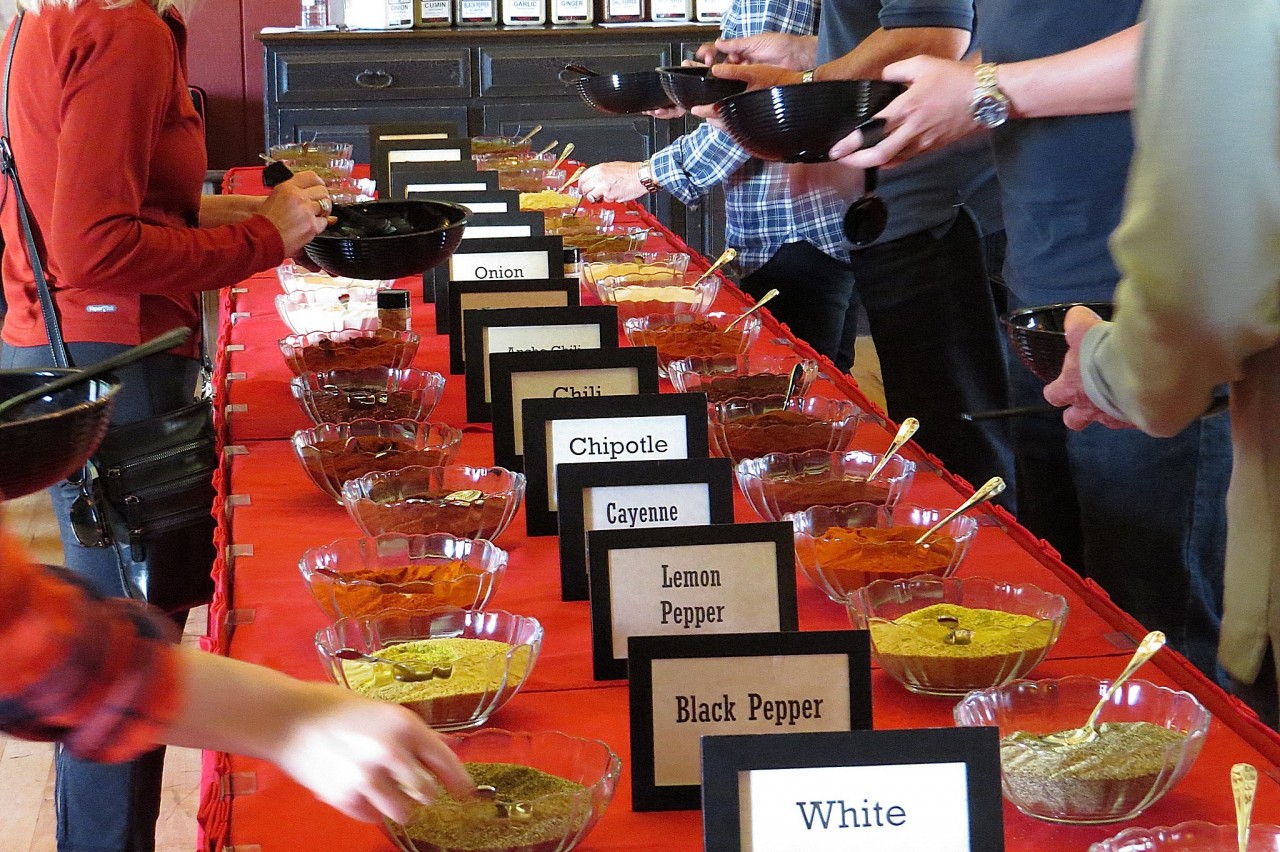
Blending spices for meat rubs. Credit: Copyright 2015 Dana Rebmann
Spice-filled afternoon
You’ll have just enough time after your morning ride to take a power nap or play a game of horseshoes; then the afternoon spice-blending workshop begins. A pinch of this and a pinch of that: The formula doesn’t sound so hard until you’re standing in front of a table with 30-plus seasonings to choose from.
“Steak can take heavy spices,” says Godé, adding, “Go lighter on fish. You want to taste your halibut. You want to taste your salmon.” Purchasing spices from a reliable source to ensure their purity and freshness seems to be the golden rule.
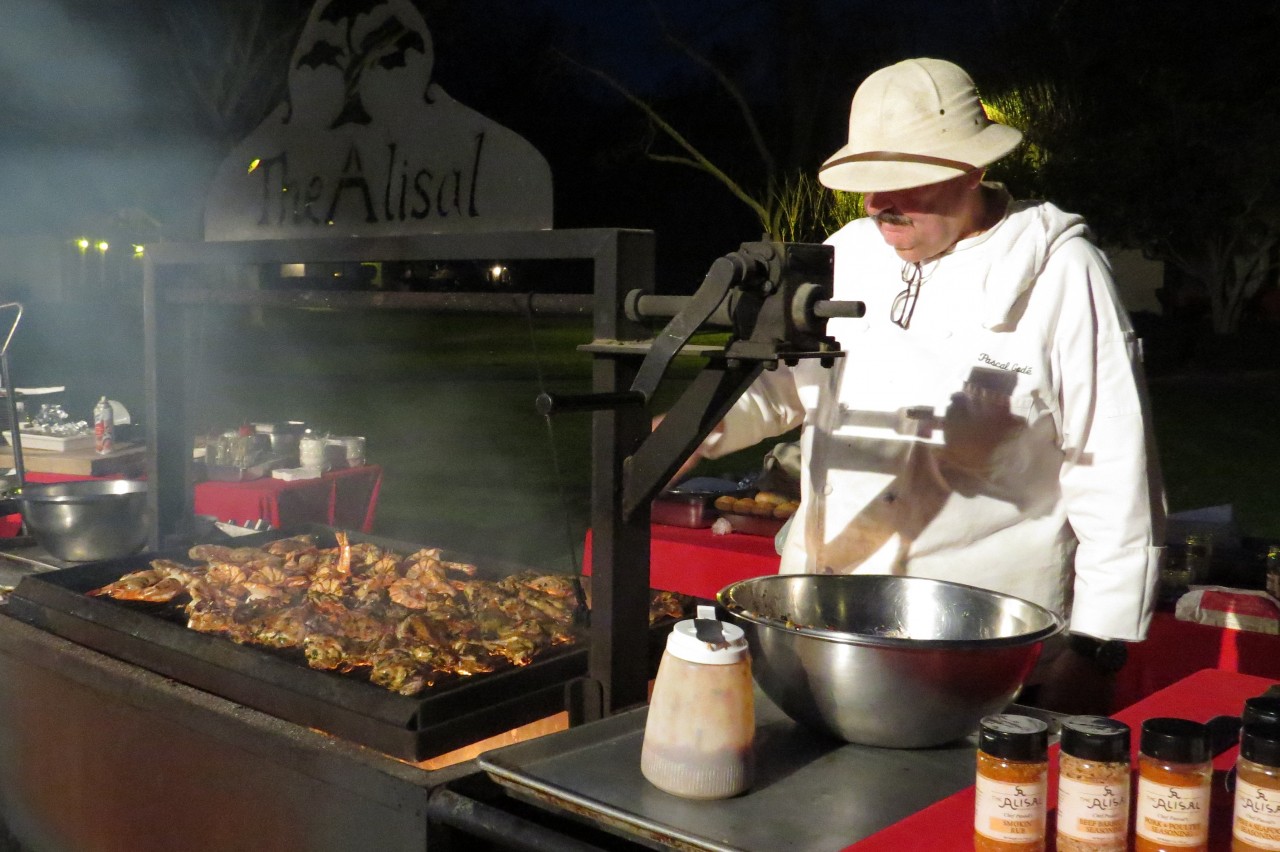
Grill skills are put to the test. Credit: Copyright 2015 Dana Rebmann
Manning the grill
When Alisal’s pleasant-sounding dinner bell rings loud and clear on day two, bootcampers won’t hear it, because they’ll already be grillside, heatedly plotting their first move. Amid the basting and flipping, their nervousness will be eased by grill masters standing by and an endless flow of locally brewed Firestone Walker beer and wine from Ferguson Crest (a Santa Ynez Valley winery founded by Pat Ferguson and his daughter Fergie — yes, that Fergie).
When it’s all said and done, wannabe cowboys and cowgirls might truthfully do more eating than barbecuing, but there will still be plenty of stories to tell when everyone sits down for the night — home on the range not by a campfire, but poolside with heat lamps.
The next BBQ Bootcamp is set for Oct. 28-30, 2015. Giddy up!
Main photo: Steaks on the grill at The Alisal Guest Ranch and Resort. Credit: Copyright 2015 Dana Rebmann
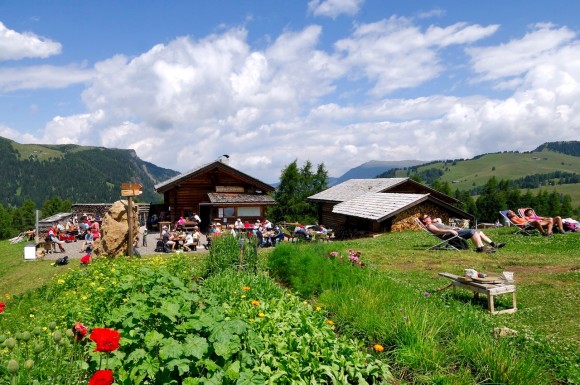
Traveling to Europe this summer? If your plans include Italy, Germany, France, England, Spain, Sweden, Belgium or Denmark, Zester Daily’s community of food writers knows a few restaurants you won’t want to miss. These are our favorite spots — our personal bucket list of dining destinations we share with our closest friends.
The most important thing for us is the food. It has to be exceptional. But we also love beautiful places and nice people, so rest assured that our favorite spots will feed you body and soul. Alfresco dining ranks high on our preferences. And we are equally fond of the culinary extremes of cutting-edge innovation and home-spun comfort. We celebrate cultural traditions wherever they are delivered with care and an emphasis on freshness and flavor.
As you chart your European vacation, allow for side trips to these delightful dining rooms. Some will dazzle you. Others will enfold you. None will disappoint. Happy travels!
More from Zester Daily:
» 12 top U.S. restaurants worth a summer trip
» A farm-to-table road trip
» Celebrity chefs share 9 secrets to perfect summer pasta
» One way to salvage road trip dining in the West
» ‘Perennial Plate’ series a sustainable trip of a lifetime
Main photo: High on a peak in the Dolomites — accessible only by gondola, horse-driven carriage or skis – sits Gostner Schwaige, a rustic cabin where chef Franz Mulser serves exquisite South Tyrolean cuisine. Credit: Copyright 2015 South Tyrol Marketing Corporation
These days, many are choosing a gluten-free lifestyle. But artificially contrived gluten-free products such as pasta, bread and baked goods can be disappointing. With its rich tradition of rice-based dishes, Japanese cuisine beautifully suits a gluten-free diet. Here are six delicious, easy to prepare, gluten-free Japanese rice dishes for spring and summer.
Stir-fried rice with hijiki and Parmesan
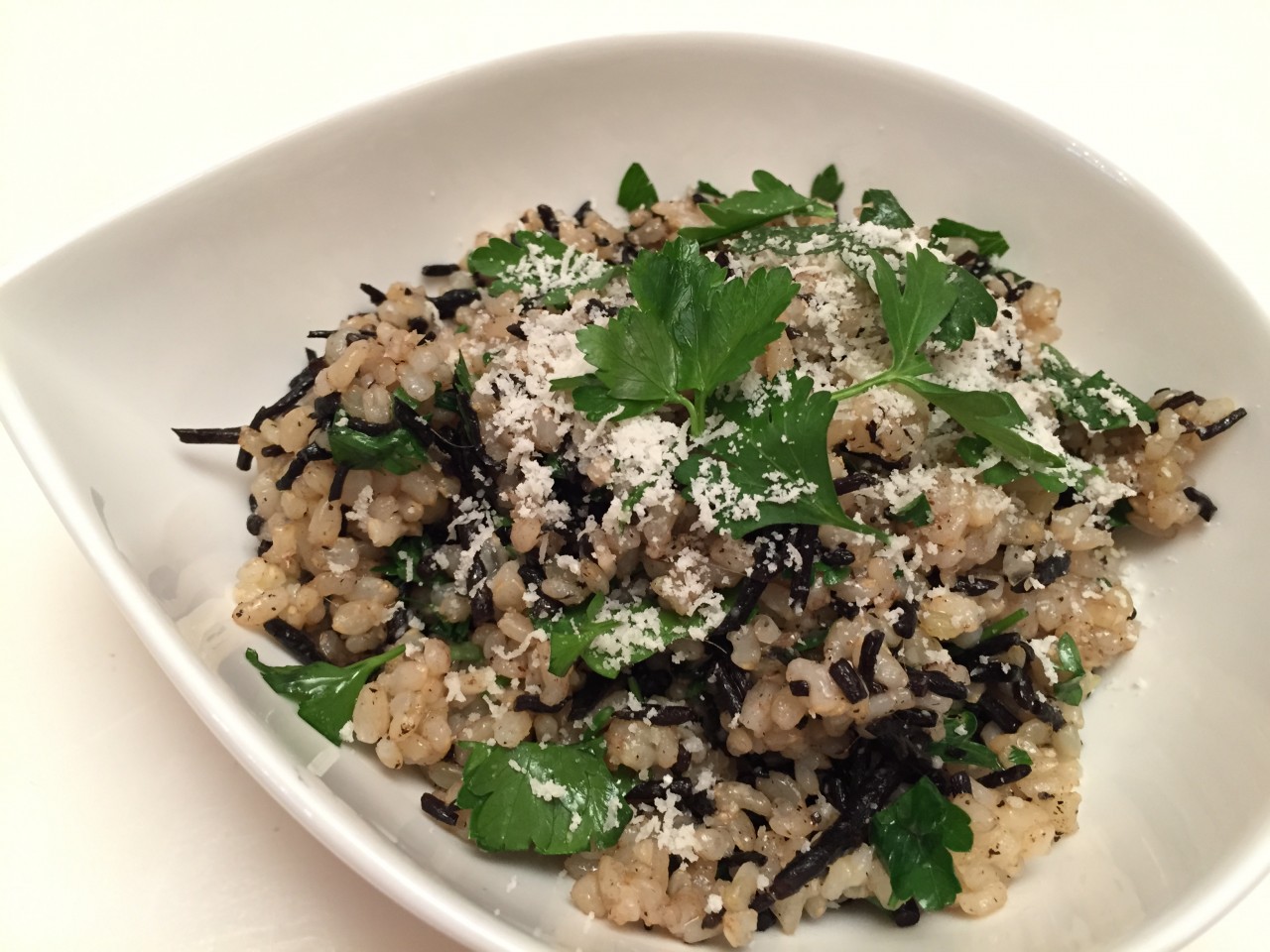
Stir-fried rice with hijiki and Parmesan is an inspired fusion creation. Credit: Copyright 2015 Hiroko Shimbo
Stir-fried rice dishes make use of one- or two-day-old rice and other ingredients that happen to be on hand. This recipe is one I invented for American audiences to showcase hijiki, my favorite Japanese seaweed. Rich in dietary fiber and minerals, it also has a pleasantly crunchy texture and tastes of the sea. It uses the black hijiki along with Parmesan cheese, cilantro and ginger.
The cheese is the secret to the success of this dish, whose recipe was in my first cookbook, “The Japanese Kitchen.” Fifteen years later, hijiki is much more widely available in this country.
Maze-gohan with parsley, shiso and egg
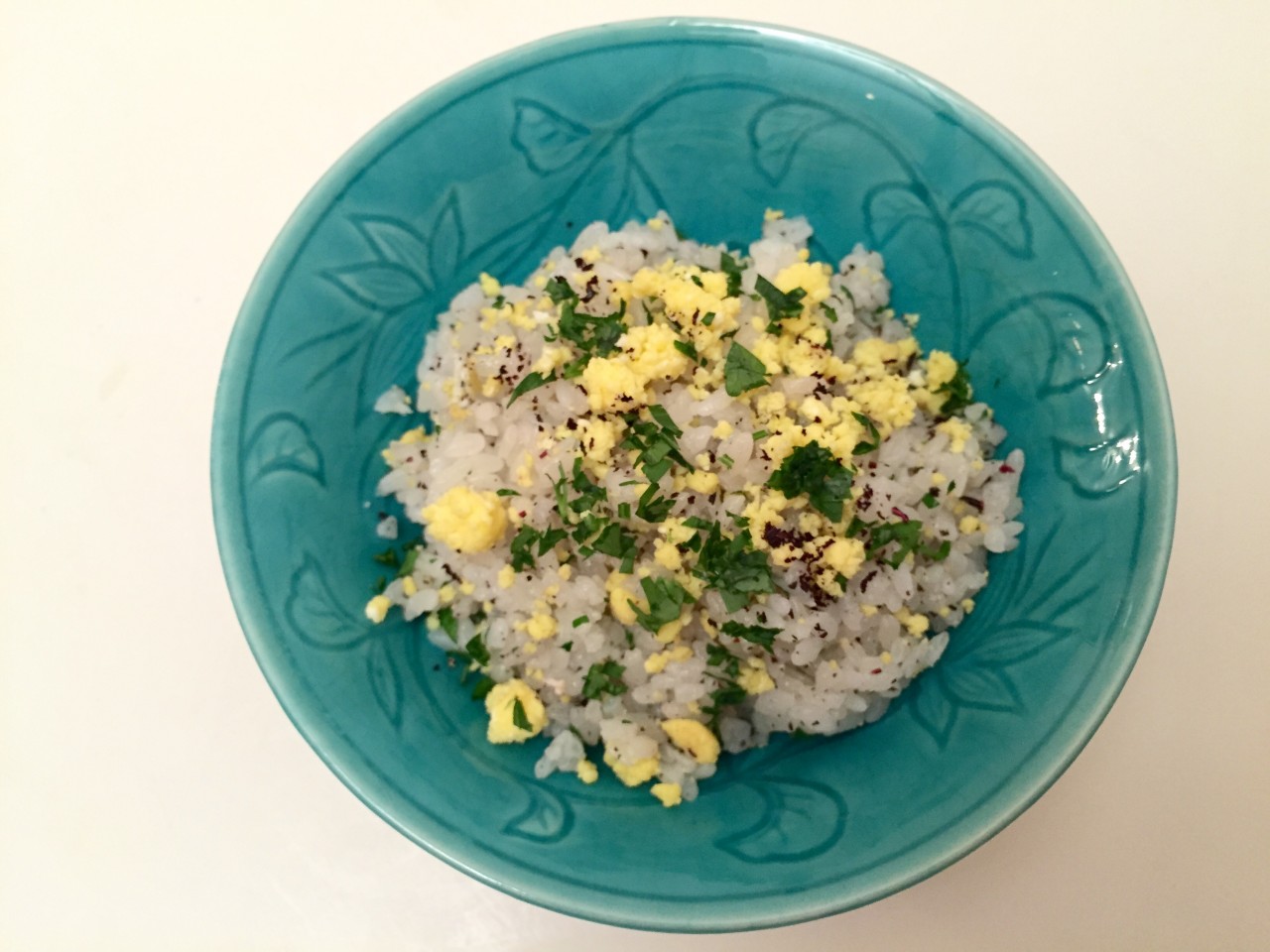
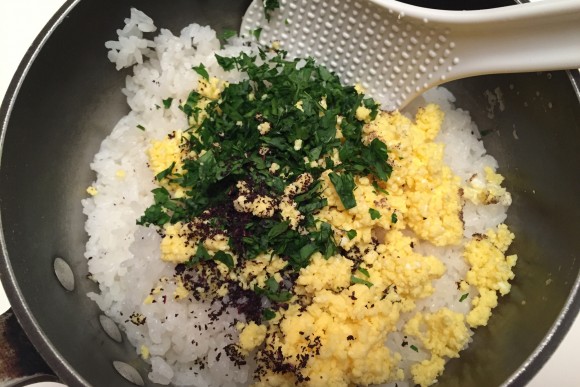
Maze-gohan, or tossed rice, with parsley, dried purple shiso leaf and egg. Credit: Copyright 2015 Hiroko Shimbo
Maze-gohan, translated as “tossed rice,” is a simple dish of cooked rice tossed with flavorings. This version uses chopped parsley, dried purple shiso leaves and scrambled egg — ingredients that elevate the flavor, color and texture of plain cooked rice into a festive dish. Western-style flavorings can be used instead, such as ground black pepper, crisp butter-browned sliced garlic, finely chopped parsley and toasted pine nuts.
Maze-gohan goes well with any protein dish, such as fish, chicken or meat.
Donburi with teriyaki steak
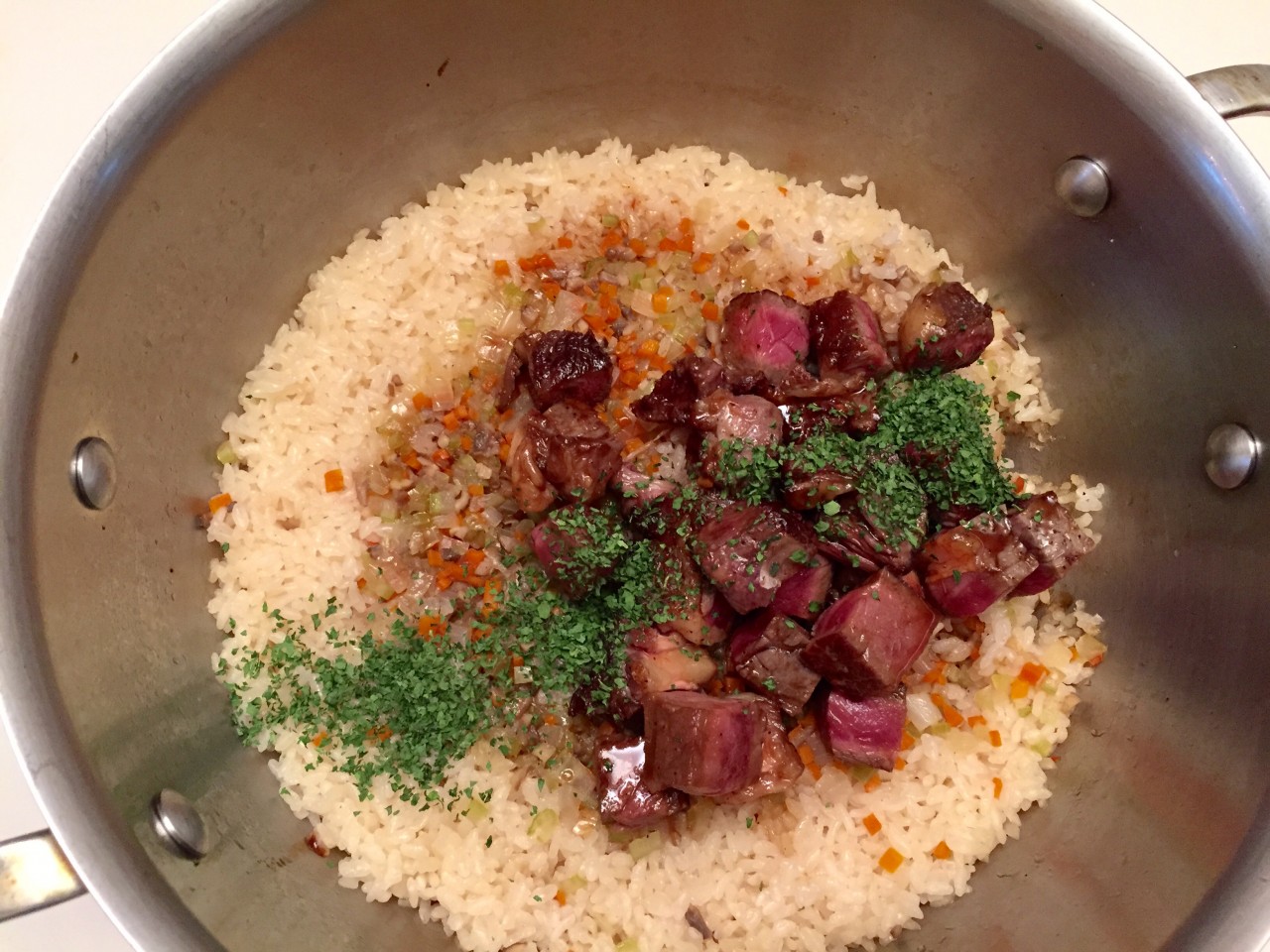
Donburi with teriyaki steak. You can also substitute chicken. Credit: Copyright 2015 Hiroko Shimbo
Donburi dishes combine cooked rice with a topping of separately cooked ingredients and sauce. This one is a beef lover’s favorite: I cook the steak in a skillet, cut it into cubes and flavor them with a sizzling sauce of shoyu (Japanese soy sauce) and mirin (Japanese sweet cooking wine) to create everyone’s favorite teriyaki sauce.
When it’s time to serve the donburi, put the teriyaki beef and sauce over freshly cooked rice for a quick, mouthwatering dish. The sauce trickles down and gives its delicious flavor to the rice. A similar dish can be made with chicken teriyaki.
Takikomi-gohan with chorizo and peas
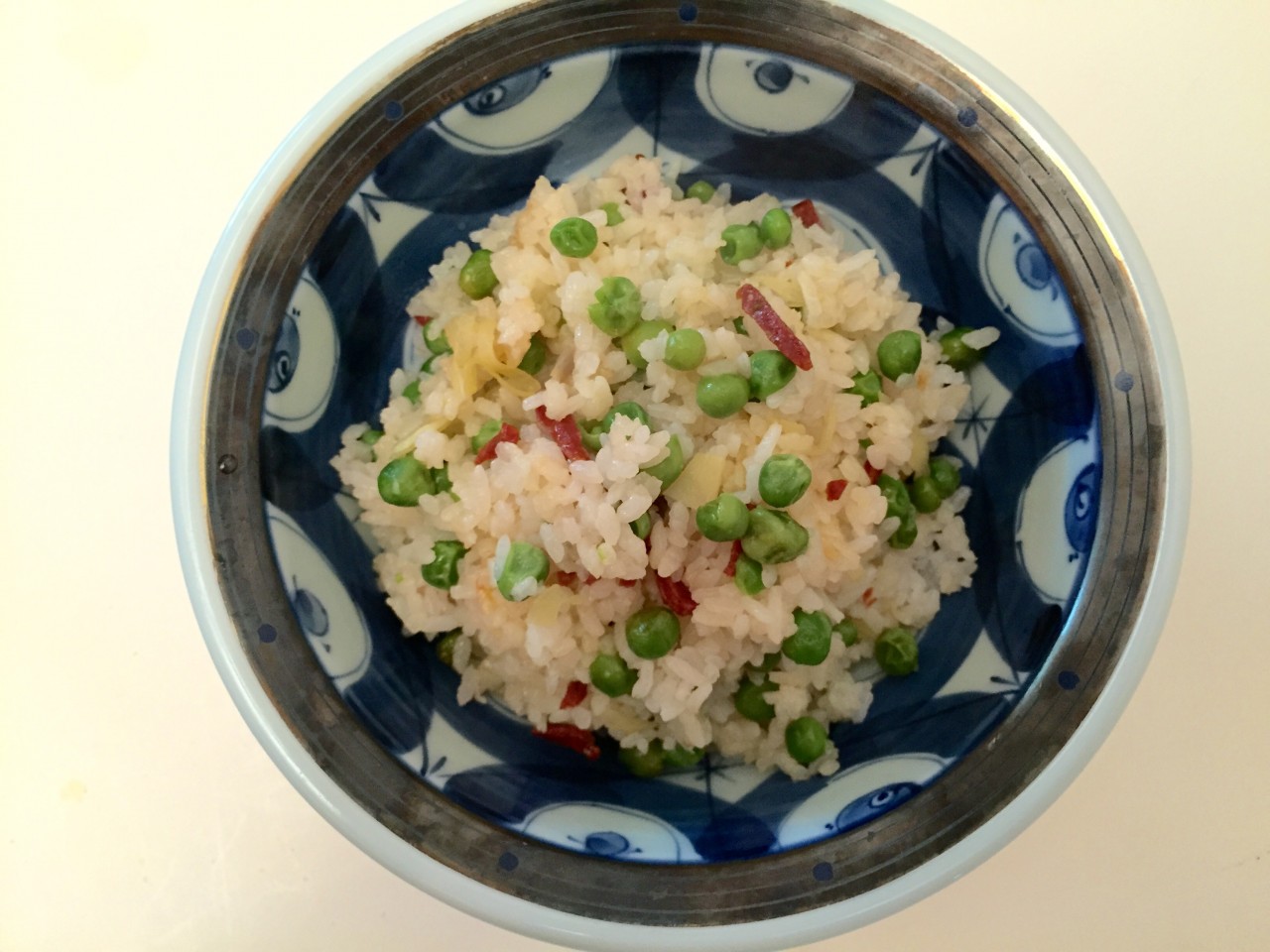
Takikomi-gohan, a sort of Japanese paella, with chorizo and peas. Credit: Copyright 2015 Hiroko Shimbo
Takikomi-gohan is rice that is cooked with seasonal vegetables and/or seafood or poultry in kelp stock or dashi stock. It’s like Japanese paella or risotto.
Spring pea rice is a traditional version of takikomi-gohan for spring or summer. The key to producing the best green pea rice is to blanch the peas in stock, then cook the rice in that stock and add the briefly cooked peas toward the end of rice cooking. This method keeps the peas very green and firm.
I emphasize the paella comparison by adding chorizo as well as ginger. Unlike paella or risotto, though, takikomi-gohan usually has no added butter or oil. This allows all the ingredients to speak for themselves in the dish.
Takikomi-gohan with mushrooms
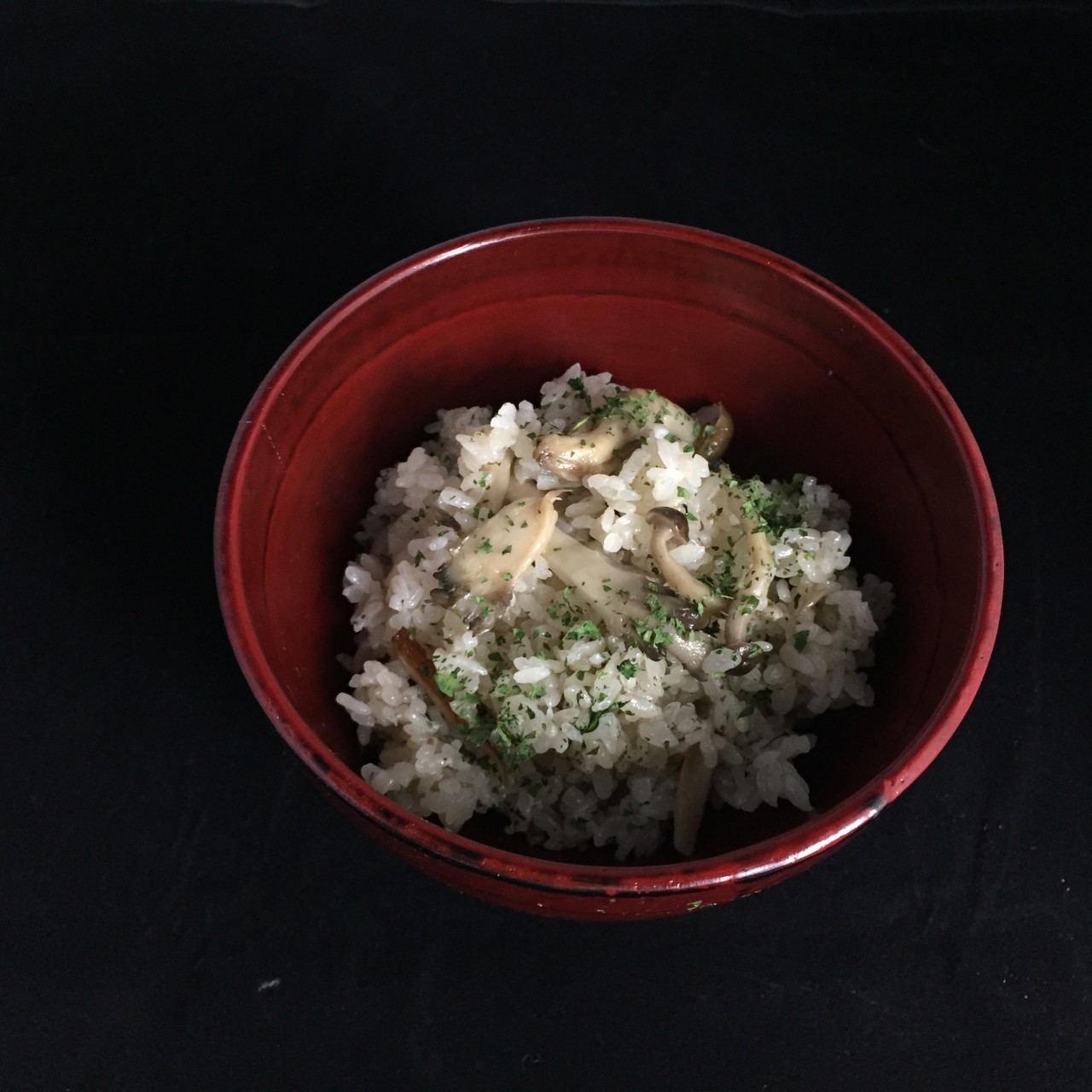
This takikomi-gohan is made with three kinds of mushrooms. Credit: Copyright 2015 Hiroko Shimbo
For a version of takikomi-gohan studded with mushrooms, I use shimeji mushrooms for savory umami flavor, maitake for their fragrance and king mushrooms for their distinctive texture.
For all these rice dishes, I recommend that you use freshly picked vegetables and mushrooms from your local market or store. The natural taste and sweetness will come through.
Corn rice with shoyu and butter
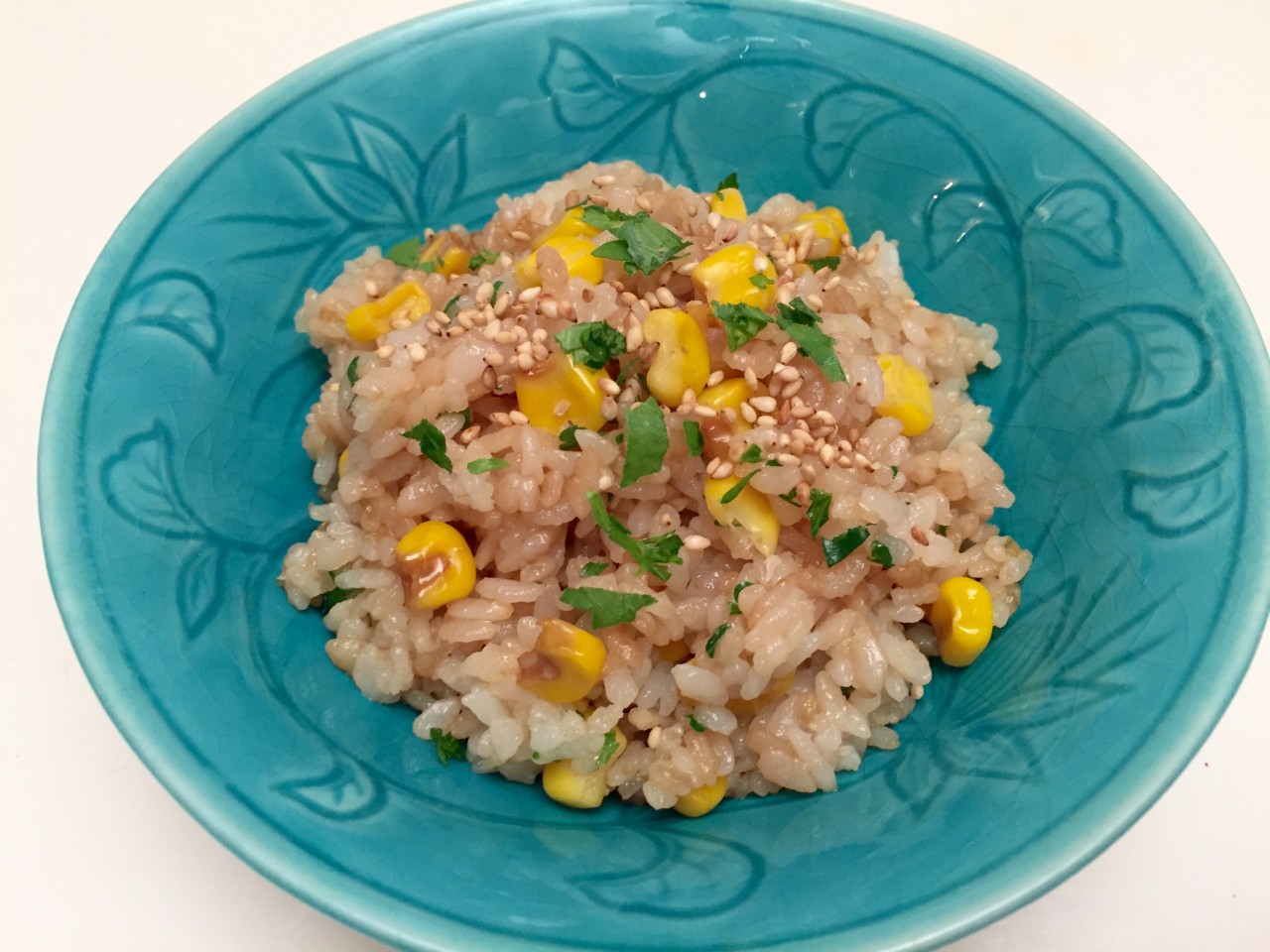
Corn rice with shoyu and butter is an irresistible combination. Credit: Copyright 2015 Hiroko Shimbo
More from Zester Daily:
» How the Japanese made curry rice their own
» Preserve summer with Japanese pickles
The diverse world of Japanese cuisine contains hundreds of such naturally gluten-free dishes. If you are looking for more recipes, consult my two books, “The Japanese Kitchen” and “Hiroko’s American Kitchen.” Both are widely available and contain detailed instructions to make some of the dishes described here.
Corn and Ginger Rice with Shoyu and Butter
Prep time: 15 minutes
Cook time: 20 minutes
Total time: 35 minutes
Yield: 6 servings
Ingredients
2 ears corn
2 1/4 cups short or medium grain polished white rice, rinsed and soaked 10 minutes, then drained
2 1/2 cups kelp stock or low-sodium vegetable stock
1 teaspoon sea salt
1 1/2 ounces peeled ginger, finely julienned (1/2 cup)
1 tablespoon shoyu (Japanese soy sauce)
3 tablespoons unsalted butter
Directions
1. Remove the corn husks and quickly grill the ears over a medium open flame on a gas stove, turning them until the entire surface becomes lightly golden. Or, boil the corn in salted water for 1 minute.
2. Cut each ear of corn in half. Place each half ear on the cut end in a large, shallow bowl and use a knife to separate the individual kernels from the cob. Repeat with all the pieces. You will have about 1 1/2 cups of kernels.
3. Place the drained rice and the stock in a medium heavy pot. Sprinkle the corn, salt and ginger evenly over the rice. Cover the pot with a lid and cook the rice over moderately high heat for 3 to 4 minutes or until the stock comes to a full boil.
4. Turn the heat to medium-low and cook the rice for 6 to 7 minutes, or until all the water is absorbed. Turn the heat to very low and cook for 10 minutes.
5. Remove the lid and add the soy sauce and butter. With a spatula, gently and quickly toss and mix the rice. Divide the rice into small bowls and serve.
Main photo: Tossing the ingredients for maze-gohan. Credit: Copyright 2015 Hiroko Shimbo
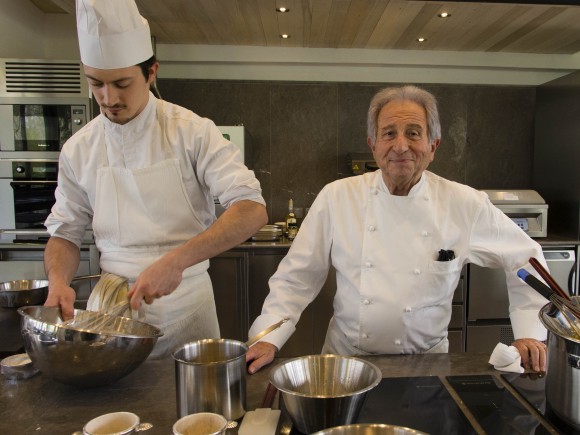
Before the advent of TV’s “MasterChef,” master chef Michel Guérard was already on the gastronomic front lines. He was one of the key activators of the nouvelle cuisine movement in France in the 1970s, which refreshed France’s culture of heavy, rich dishes, and has been pushing for light, healthy, seasonal food ever since.
Today, he continues that commitment in the cooking school he’s recently opened on his estate.
Teaching chefs to cook for health

Les Prés d’Eugénie, the hotel and restaurant. Credit: Copyright 2015 Carla Capalbo
More from Zester Daily:
At Les Prés d’Eugénie, Guérard also runs several hotels, restaurants and a treatment center.
Food as a cure for what ails us

The culinary school from outside. Credit: Copyright 2015 Carla Capalbo
Guérard has always believed that we truly are what we eat, and that food — fresh, light food — can cure us from many of the illnesses that beset the modern world.
The cooking school is aimed at professional chefs and at people preparing food in schools, hospitals, homes for the elderly and for others with special dietary requirements. It brings together current knowledge on key medical problems – such as diabetes, obesity and heart disease — and proposes eating plans for each. The teaching focuses on cuisine that is both healthy — with reduced calories, fats and sugar — and pleasurable, in what Guérard calls cuisine minceur.
“You must never compromise on flavor,” says Guérard. Situated in a luminous, state-of-the-art kitchen overlooking the gardens of Les Prés d’Eugénie, l’Ecole de Cuisine de Santé offers professional courses for groups of up to 10 cooks for one or two weeks.
Beyond a diet of grated carrots
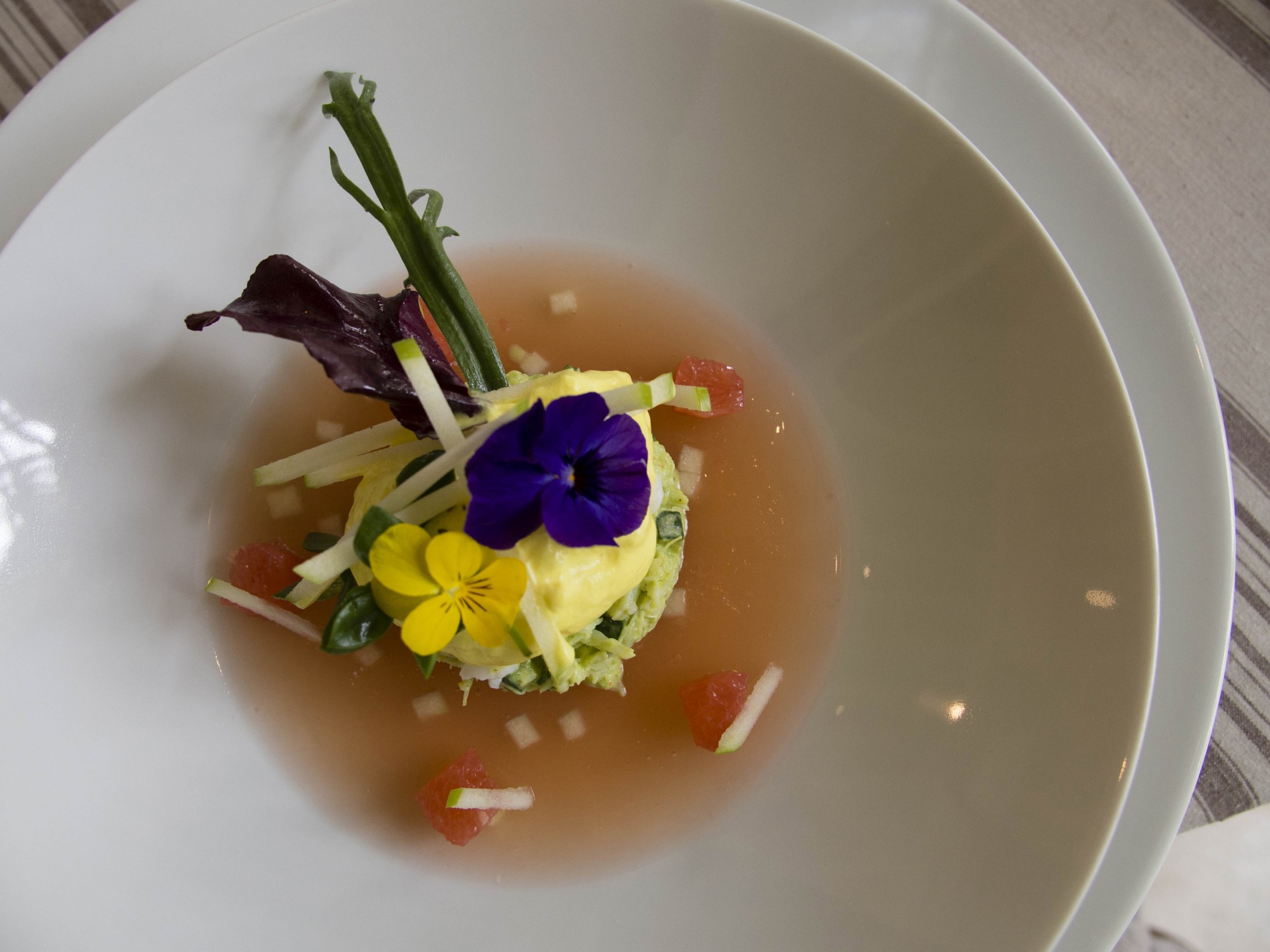
Spiced crab on grapefruit jelly with citrus mousse. Credit: Copyright 2015 Carla Capalbo
“When I started observing what the patients who came for the thermal cures were eating, I too was depressed by the heaps of grated carrots that were placed before them, topped at the last moment with improvised dressings,” Guérard says.
“I saw an opening for a new kind of healthy cuisine that could inspire people with special needs in their diets to look forward to eating, and to make profound changes in their eating habits that would remain with them for life.”
In his spiced crab on grapefruit jelly with citrus mousse, Guérard demonstrates some of his core principles: that seafood and meats can be cooked without fats, butters or creams to produce vibrant dishes. Even dishes on the three-star Michelin Grand Table menu are cooked with natural flair and a light touch. For example, fresh herbs and citrus notes add zest and flavor to shellfish without leaving the diner feeling heavy.
Slimming cuisine based on research
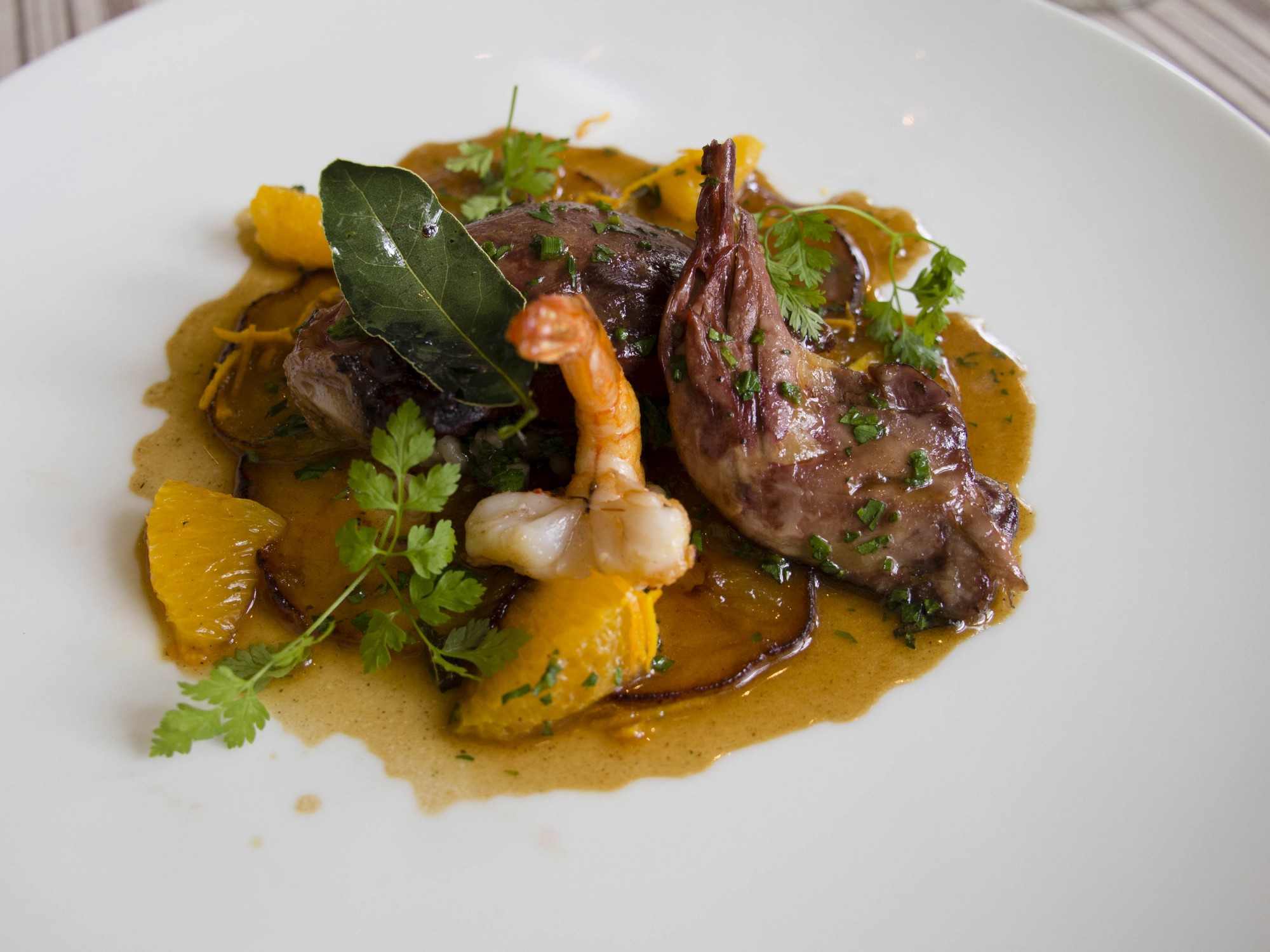
Pigeon is cooked with shrimp, bay leaf and tangerine. Credit: Copyright 2015 Carla Capalbo
Cuisine minceur is not achieved by simply reducing fats, sugars and calories. It is based on experience and nutritional research. After Guérard published his first book on the subject in the mid-1970s, “La Grande Cuisine Minceur,” he was approached by the Nestlé group to help them develop a line of frozen foods that would reflect the healthy approach of his new cuisine.
“I was fortunate to continue this consultancy for 27 years, and thus to have access to the latest scientific research into diet, nutrition, physical exercise, thermal treatments and every aspect of this discipline,” he says. “And throughout, I never lost my conviction that pleasure must always play an important part in eating, no matter what the calorie count!”
You can eat dessert on a diet
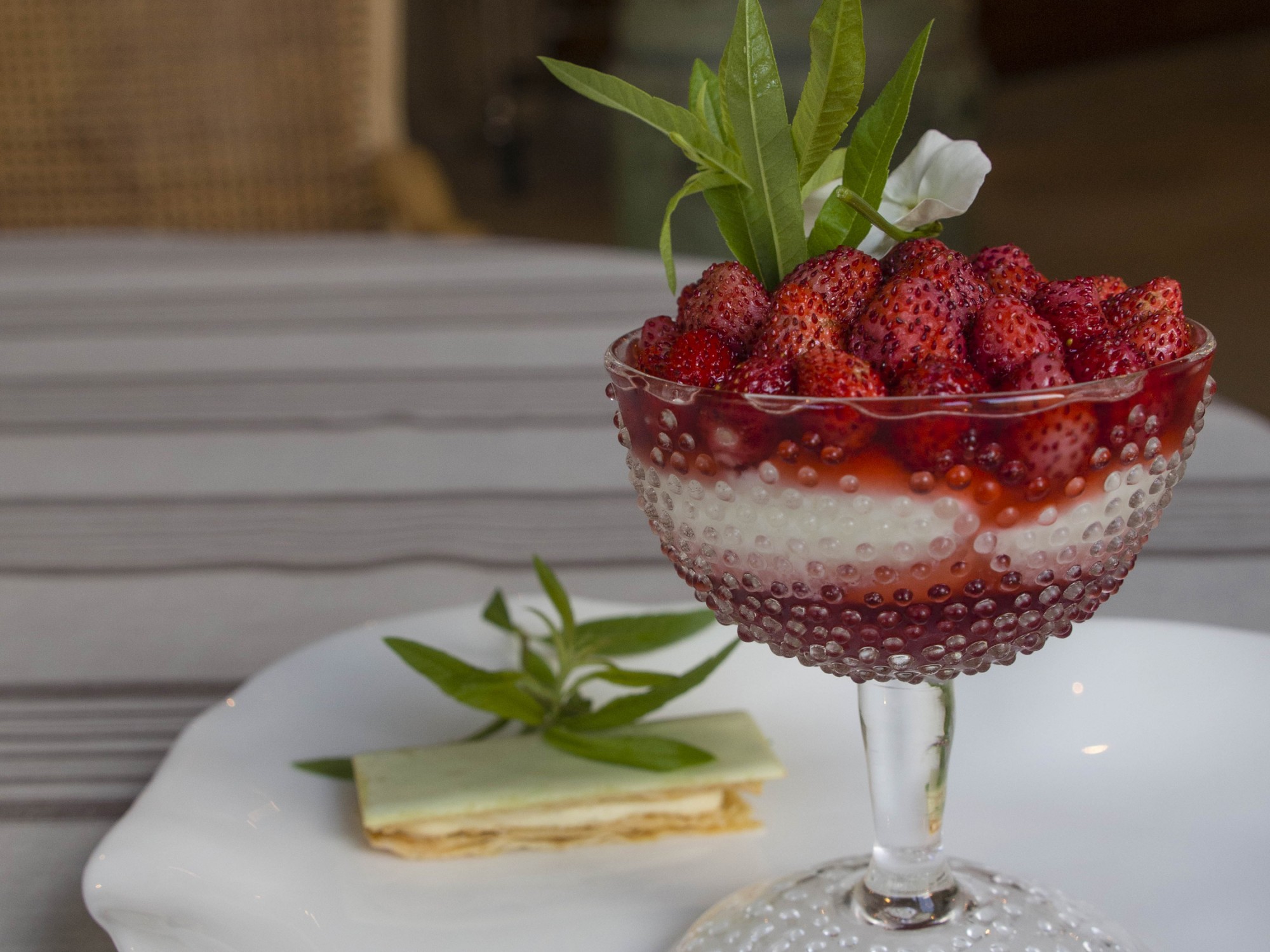
A strawberry dessert. Credit: Copyright 2015 Carla Capalbo
The desserts at the restaurant and in the cuisine minceur cookbooks have also been overhauled. (No surprise there, for Guérard is a master pastry chef who won the Meilleur Ouvrier de France, which honors the creative trade professions, for pâtisserie in 1958). Each dessert recipe comes with a calorie count that varies depending on which sweetener has been used, be it sugar, honey, fructose, xylitol or aspartame. Most three-course meal combinations total less than 600 calories, so they are well suited to those who are cooking for the popular 5:2 diet (in which people are limited to 500-600 calories for two days out of seven). For those who want to learn more about Guérard’s cuisine, his seminal cookbook has recently been translated into English. “Eat Well and Stay Slim: The Essential Cuisine Minceur” offers full instructions for dozens of his delicious dishes.
A dynamic and lasting legacy
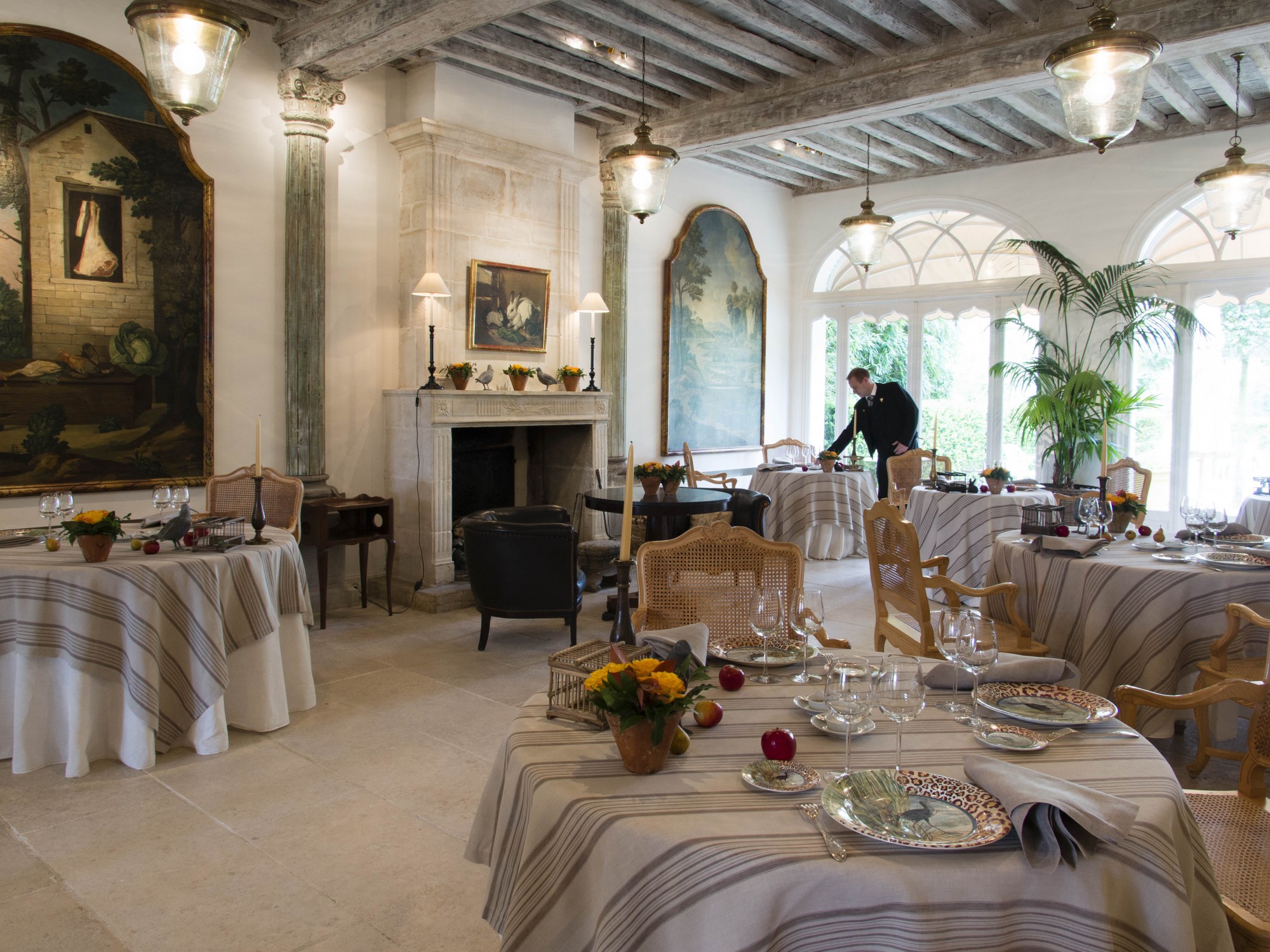
The restaurant dining room. Credit: Copyright 2015 Carla Capalbo
Guérard has never abandoned his commitment to lighter, healthier food, as the new cooking school attests. Today, his philosophy is bearing fruit as the word about cuisine minceur and its methods spreads within the food community in France and beyond. It’s a fitting legacy for such a dynamic grand master, whose revolutions in the kitchen continue to impact on our eating habits, every day.
Main photo: Chef Michel Guérard. Credit: Copyright 2015 Carla Capalbo
Ari Weinzweig got a front-row tasting of Tunisian extra virgin olive oil five years ago, while visiting a sun-drenched Tunisian family farm that’s been making oil since 1891. How did it taste?
“Delicious,” says Weinzweig, co-owner and founding partner of Zingerman’s Delicatessen, now part of the Zingerman’s Community of Businesses in Michigan. “It’s kind of buttery with a little bit of pepper at the end. It doesn’t really overwhelm the food. It adds complexity and flavor.” Weinzweig likens the flavor to southern French oils, “or in a way to the gentle but full flavored oils of eastern Sicily.”
Today, Zingerman’s is among many U.S. retailers selling that oil, from Les Moulins Mahjoub, operator of a 500-acre farm about 25 miles west of Tunis. It’s among a number of quality Tunisian olive oils increasingly landing on global store shelves — this from a country that is the No. 2 olive oil producer, behind Spain.
A break from the past: from barrels to bottles
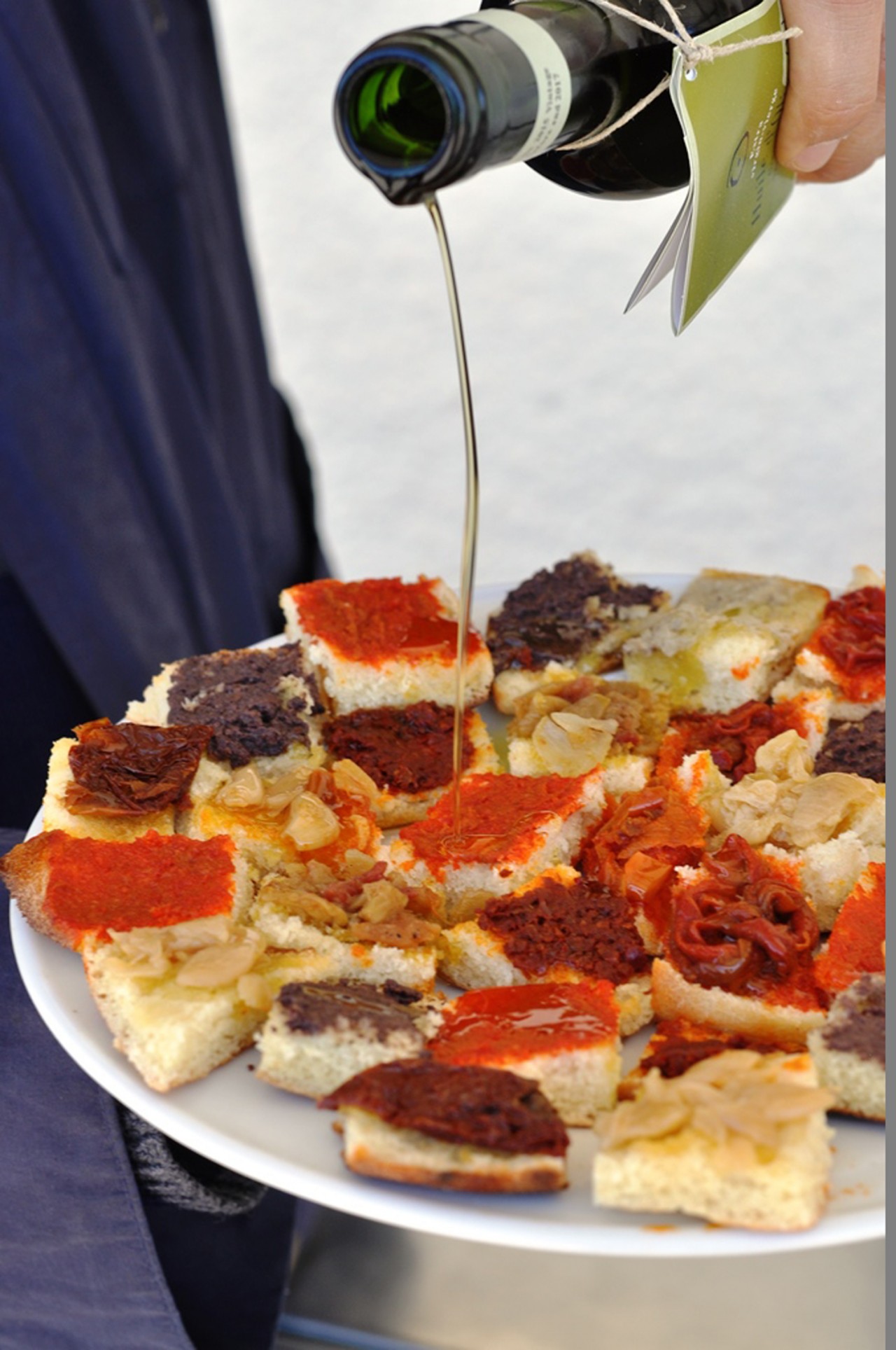
Tunisian olive oil has been described as “kind of buttery with a little bit of pepper at the end.” Credit: Copyright 2015 Roger Fillion
A decade ago, much of Tunisia’s olive oil was sold in bulk — think barrels — to Italy and Spain. There, it was blended with other olive oils, and resold under non-Tunisian labels. That’s changing.
Tunisian olive oil makers, many of them artisanal producers, are bottling and labeling their oils. They’re winning medals at international competitions — and giving Tunisia needed hard currency. “This is the future for Tunisia,” says Malek Labidi Debbabi, brand manager at Safir, a Tunis-based provider of olive oil.
It’s happening in a nation that underwent a revolution in 2011. Protesters ousted an autocrat. He was replaced with an elected government. The uprising inspired Arab protesters elsewhere, and put Tunisia on the map. Now, Tunisian olive oil companies aim to capitalize the nation’ new-found attention. It’s about branding. “This is what we are looking at — a brand that says: ‘Made in Tunisia,’ ” says Ikhlas Haddar, a director at Tunisia’s Ministry of Trade. (Full disclosure: The Tunisian government paid for my trip.)
A global olive oil producer
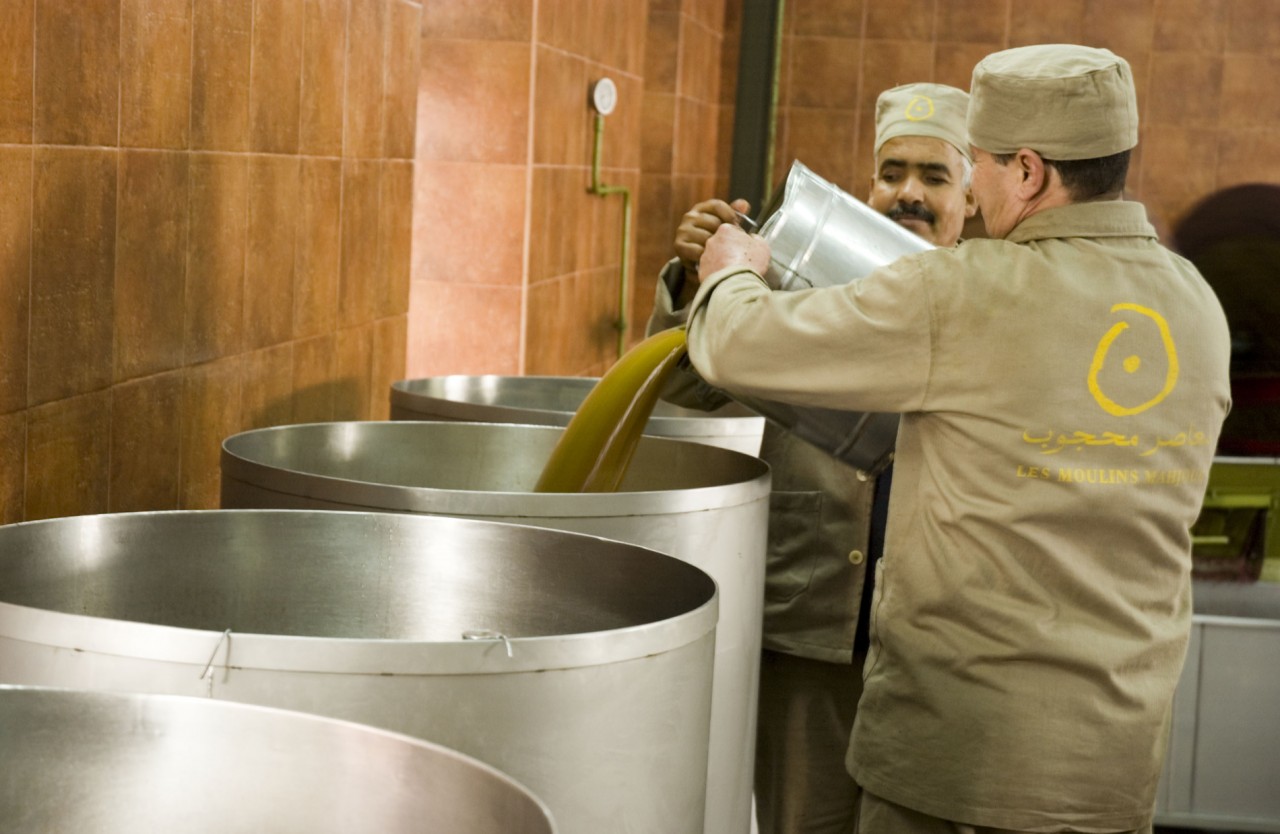
Tunisian olive oil makers, many of them artisanal producers, are bottling and labeling their oils. Credit: Copyright Les Moulins Mahjoub
This year, Tunisia became the world’s No. 2 olive oil producer, displacing Italy. Credit a bumper olive crop — output quadrupled — and a poor crop in Italy. Much of the oil is sent abroad. On average, Tunisia exports 150 thousand tons of olive oil a year, including 16 thousand tons of bottled oil, according to the government. In 2006, exports of bottled olive oil accounted for 1% of exports, according to government officials, who want that percentage to rise to 30% within a couple of years.
More from Zester Daily:
» 6 tips to buying better olive oil
» Deciding which olive oil to buy
The government says 80 Tunisian olive oil brands are exported. They go to the United States, Europe, Japan, Russia, South America and elsewhere. Cecilia Muriel, owner of Medolea, an award-winning producer about 20 miles south of Tunis, says: “I have a label. I have an identity. I have a story. … Things are changing, and we have better and better olive oil.”
In the United States, retailers selling Tunisian olive oil include Dean & Deluca, Trader Joe’s, Cost Plus World Market, Amazon.com, Kalustyan’s and Food Town. Quality brands include Terra Delyssa and Rivière d’Or.
Tunisian olive oil in the kitchen
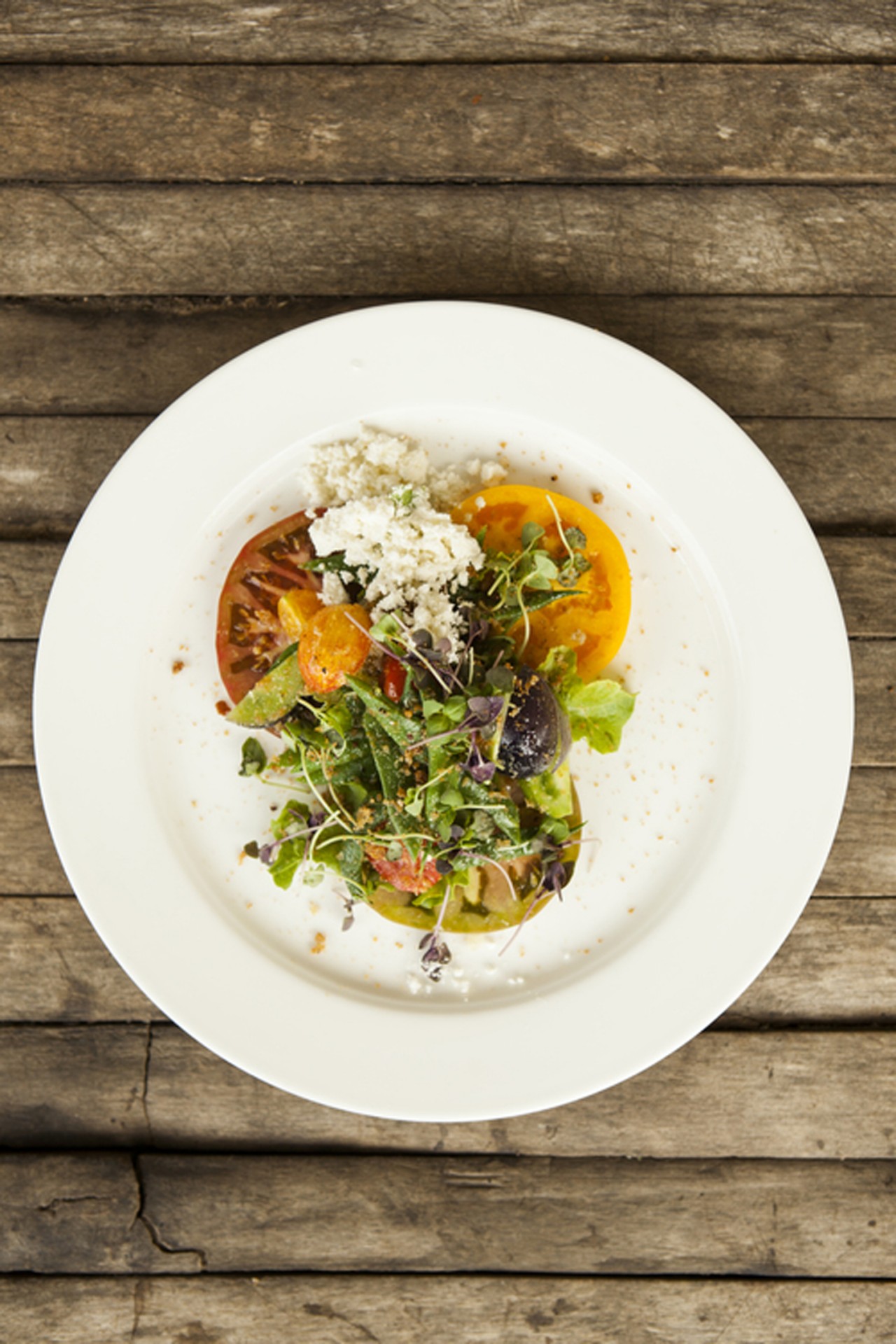
At Primo restaurant in Rockland, Maine, Melissa Kelly drizzles her food with Tunisian olive oil. Credit: Copyright Greta Rybus
Melissa Kelly, a James Beard award-winning chef, is a Tunisian convert, using Les Moulin Mahjoub oil in her Rockland, Maine, restaurant, Primo. “I really love the flavor — the spice to it,” Kelly says.
At Primo, Kelly uses the oil to garnish whipped ricotta served with focaccia and fava beans. “It balances out the sweetness of the ricotta,” she says. Similarly, Kelly drizzles the oil on pasta sauced with a red pepper and pork ragù: “The oil’s peppery note balances out the sweetness of the red pepper.”
An olive oil-centric cuisine
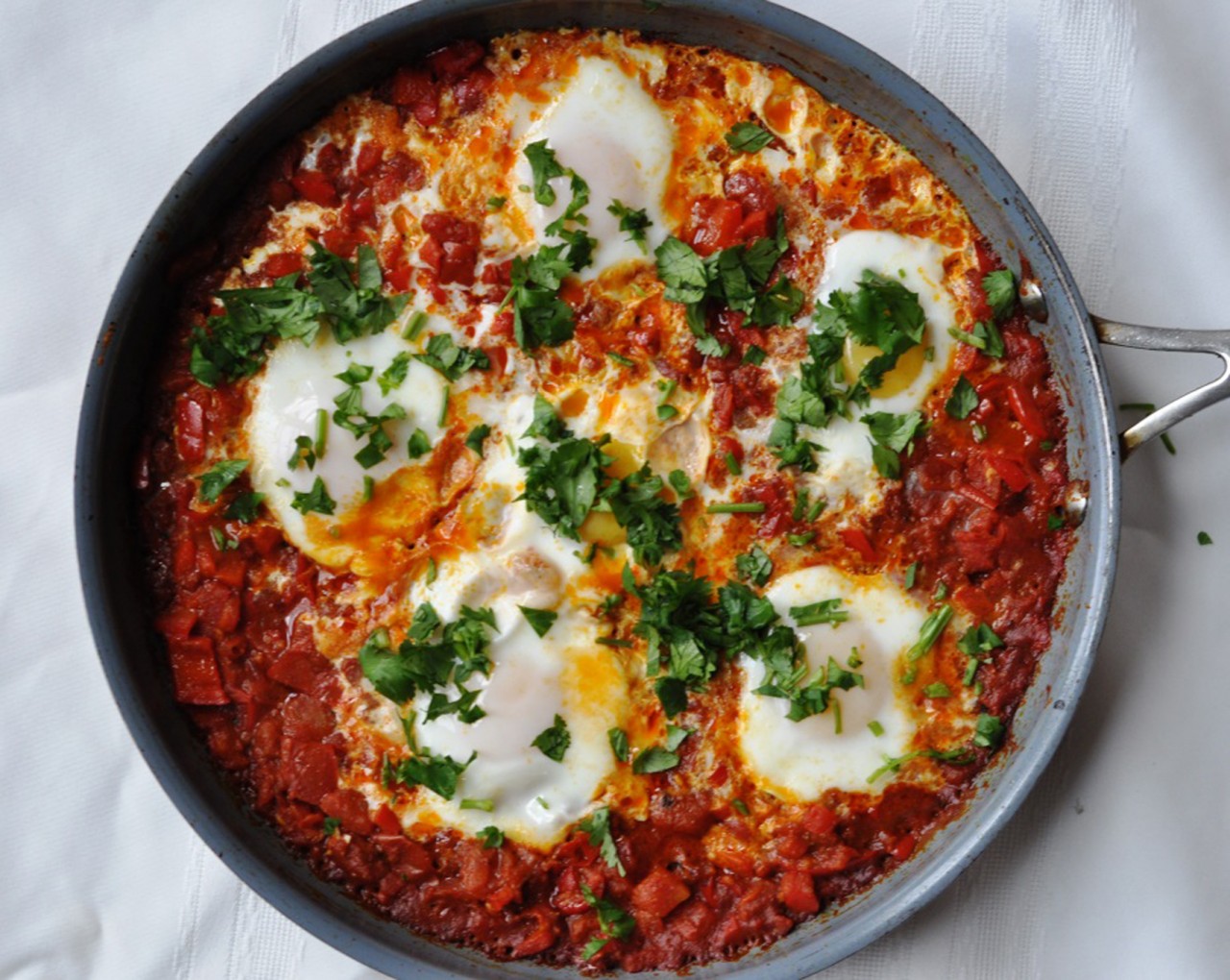
At the heart of shakshouka, a poached egg and spicy tomato dish, is olive oil. Credit: Copyright 2015 Roger Fillion
The ingredients for “Brand Tunisia” include: 80 million olive trees dating back 3,000 years; a climate ripe for olives; and an olive oil-centric cuisine. Think of the spicy chili paste harissa — great on anything, from meat to veggies — and the poached egg and spicy tomato dish shakshouka.
“You can’t imagine that food without olive oil,” says Mediterranean food authority Nancy Harmon Jenkins, author of “Virgin Territory: Exploring the World of Olive Oil.” She notes Tunisians use their oil for frying, baking, garnishing and making many dishes — from couscous to fish soup. “It’s the DNA of the cuisine.”
Majid Mahjoub, Les Moulins Mahjoub general manager, says: “All of our cuisine is built around olive oil. The olive oil reveals all the tastes.”
Olive oil primes the economy
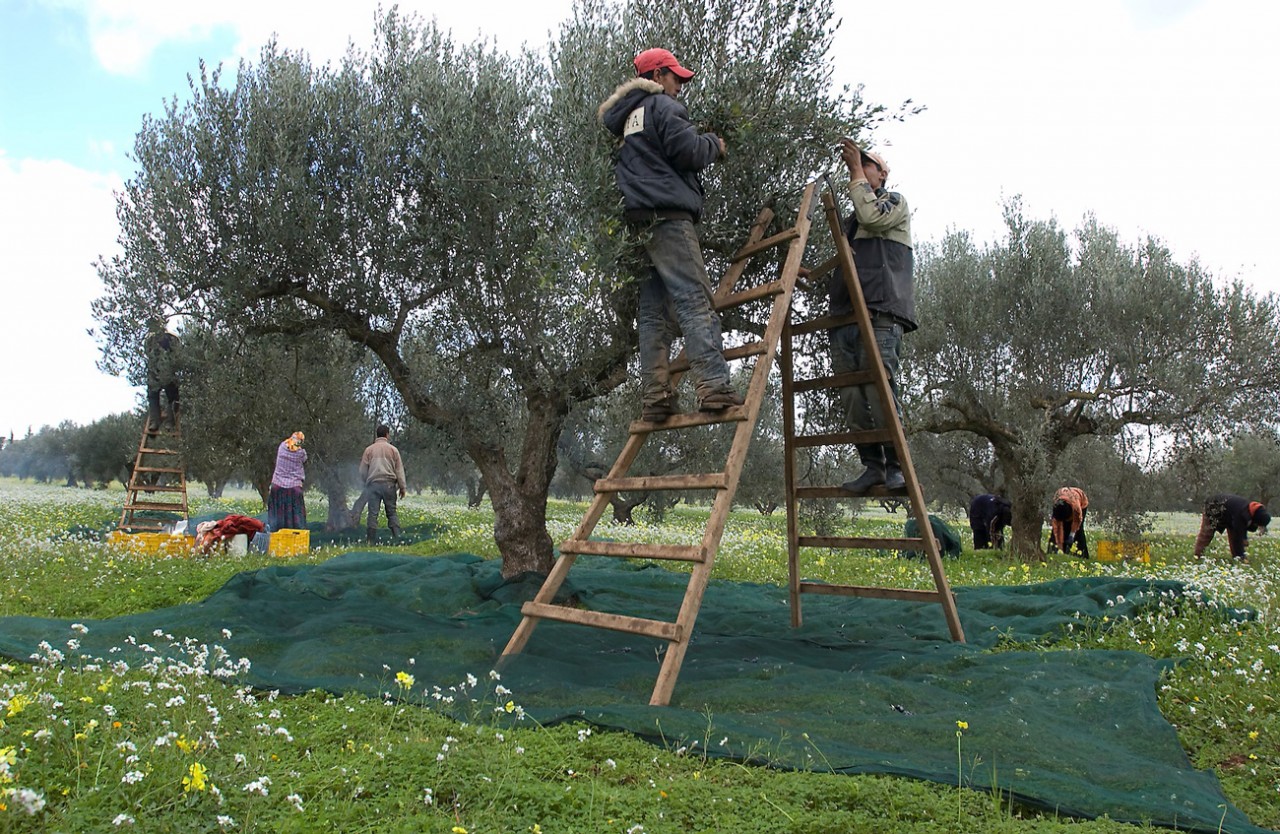
The olive sector accounts for 20% of agricultural jobs in Tunisia. Credit: Copyright Les Moulins Mahjoub
Olive oil exports account for 40% of Tunisia’s agricultural exports, and 10% of total exports, according to government data. The olive sector accounts for 20% of agricultural jobs.
Olive oil employs about 270,000 people, says the U.S. Agency for International Development, which has helped Tunisian olive oil companies switch from bulk to bottles. The agency says olive oil is Tunisia’s No. 5 source of foreign currency earnings.
“It’s a pretty substantial sector for the country’s economy,” says Fariborz Ghadar, professor of global management, policies and planning at Penn State’s Smeal College of Business.
Tunisian Orange-Olive Oil Cake (Gâteau à l’Orange)
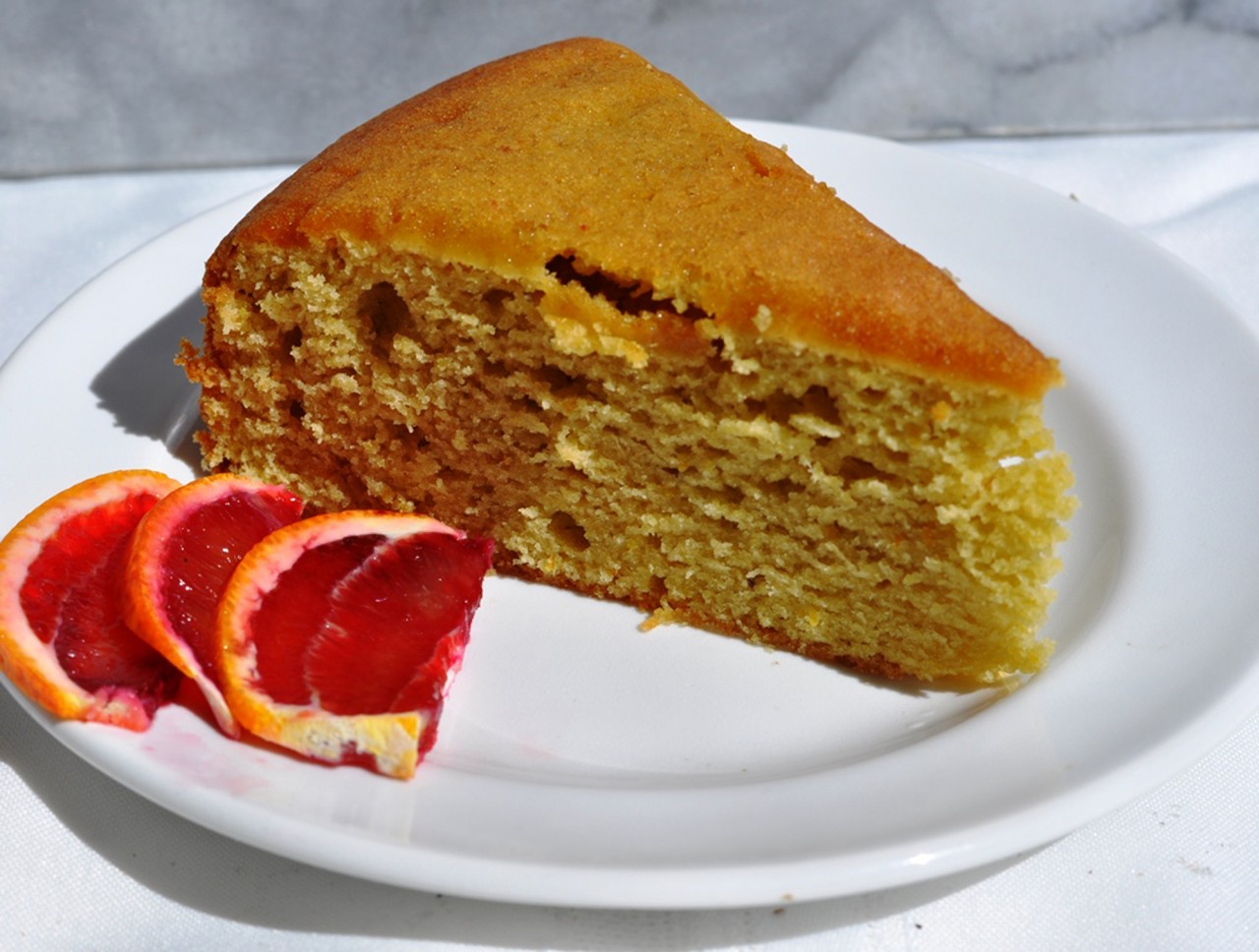
This delicious orange-olive oil cake is a favorite recipe from the Mahjoub family, who make it with a blood orange called maltaise de Tunisie, which gives the cake a beautiful red blush color. Credit: Copyright 2015 Roger Fillion
Prep time: 15 minutes
Cook time: 50 minutes
Total time: 1 hour 5 minutes
Yield: 8 servings (one 9-inch cake)
From “The New Mediterranean Diet Cookbook: A Delicious Alternative for Lifelong Health” (Bantam, 2008), by Nancy Harmon Jenkins. Reprinted with permission from the author.
This delicious orange-olive oil cake is a favorite recipe from the Mahjoub family, makers of very fine extra virgin olive oil and other traditional products in northern Tunisia. The Mahjoubs make it with a blood orange called maltaise de Tunisie, which gives the cake a beautiful red blush color, but when I can’t get blood oranges, I make it with small thin-skinned Florida juice oranges. (Thick-skinned navel oranges won’t work.) It’s important to use organically raised oranges, since the whole fruit, skin and all, is called for; otherwise, scrub the oranges very carefully with warm soapy water.
Ingredients
Butter and flour for the cake pan
2 cups unbleached all-purpose flour
1 teaspoon baking powder
1/2 teaspoon baking soda
2 small organically raised oranges, preferably blood oranges (about ¾ pound)
1/3 cup extra virgin olive oil
4 large eggs
1 ½ cup sugar
1 teaspoon pure vanilla extract
Confectioner’s sugar (optional)
Directions
1. Preheat the oven to 375 F. Butter and flour a 9-inch springform cake pan.
2. Sift together the flour, baking powder and baking soda.
3. Slice off the tops and bottoms of each orange where the skin is thick and discard. Cut the oranges into chunks, skin and all, discarding the seeds, which would make the batter bitter. Transfer the orange chunks to a food processor and pulse to a chunky purée. Add the olive oil, pouring it through the feed tube while the processor is running, and mix to a lovely pink cream.
4. In a separate large bowl, beat the eggs until very thick and lemon colored, gradually beating in the sugar. Beat in the vanilla.
5. Fold about a third of the flour mixture into the eggs, then about a third of the orange mixture, continuing to add and fold in the dry and liquid mixtures until everything is thoroughly combined.
6. Pour the batter into the prepared cake pan and bake for 20 minutes, then lower the temperature to 325 F and bake 30 minutes longer or until the cake is golden on top and a toothpick inserted into the center comes out clean.
7. Remove and let cool. Then invert on a cake rack and dust lightly, if you want, with confectioners’ sugar.
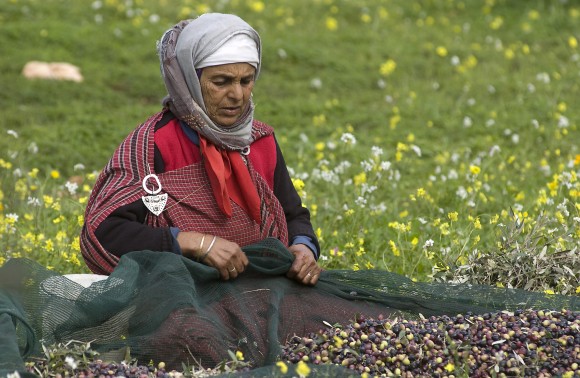
Main photo: A Tunisian woman picks olives in the fields. Credit: Copyright Les Moulins Mahjoub
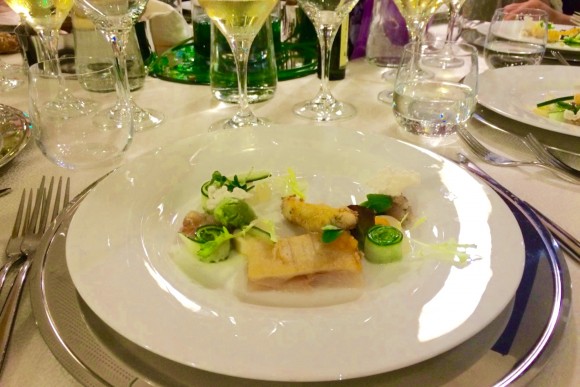
At a time when sea stocks are widely under threat, savvy chefs are turning their attention to the gourmet potential offered by freshwater fish. And when the catch is from Lake Garda in this glorious region in the north of Italy, where the scent of Mediterranean citrus meets sweet Alpine meadows, it gives the food-loving traveler even more reason to visit a place whose classical beauty captivated German novelist Johann Wolfgang von Goethe among many others.
Popular holiday destination

Hotel Lido Palace, Riva del Garda, Italy. Credit: Copyright 2015 Clarissa Hyman
Garda has long been a popular holiday destination for both the families of Verona, many of whom have elegant holiday villas strung out along the shore, and for northern Europeans coming south to seek tranquility in the sun, crystal clear air, and bracing mountain and water pursuits.
It’s a heady, romantic destination with a Grand European Tour history although today’s visitors are less likely to be found sedately sketching castle ruins and more likely to be jogging, playing golf at world-class courses, paragliding, diving, sailing or simply having a zen moment on the shore of Italy’s largest lake.
The food has accents from the three Italian regions that border the lake — the Veneto, Lombardy and Trentino — but the defining ingredients remain lemons, olive oil, wine and fish from the lake.
Fishing on Lake Garda
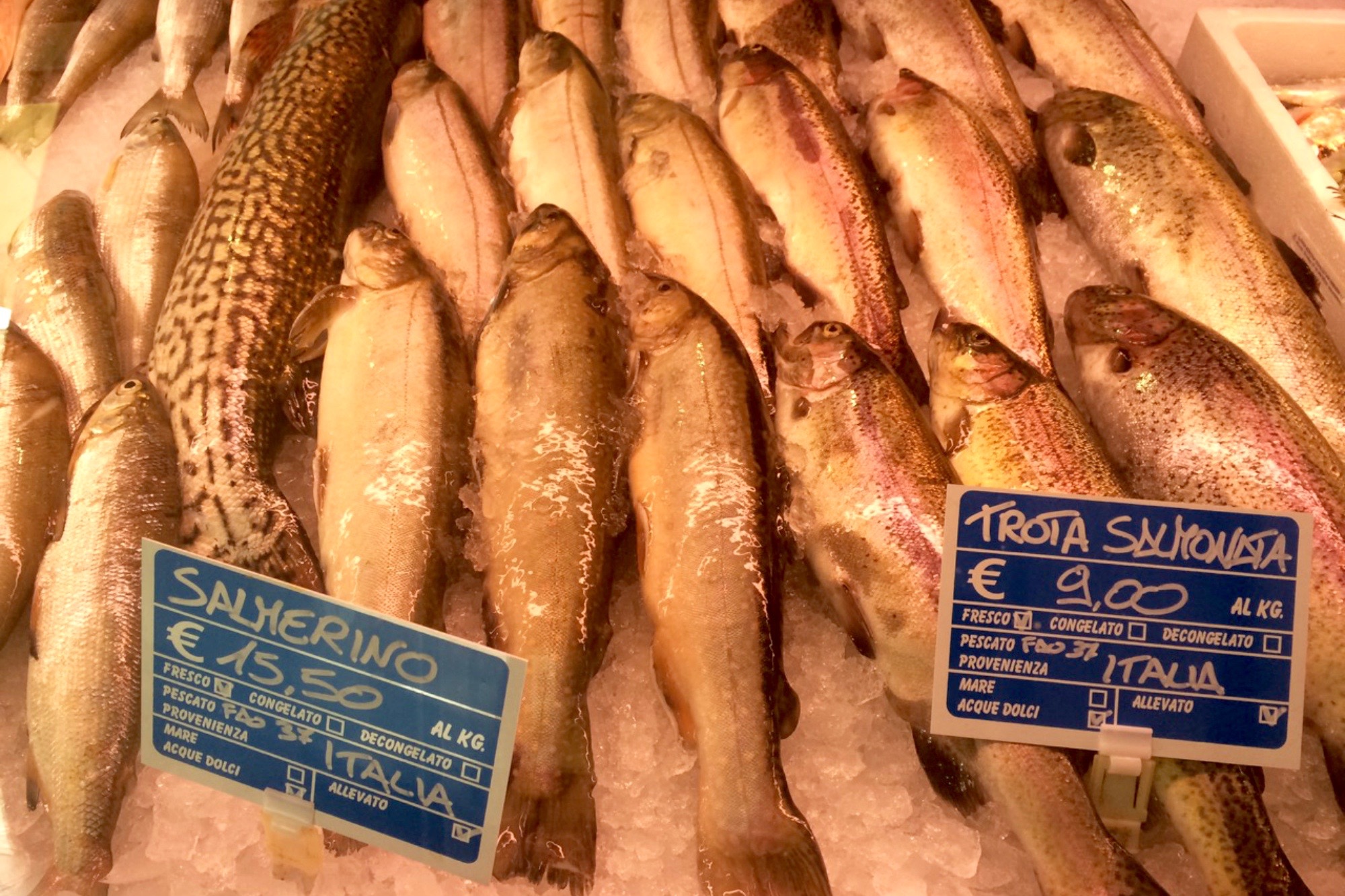
Char, pike and trout on sale in Garda, Italy. Credit: Copyright 2015 Clarissa Hyman
For centuries, fishing was one of the mainstays of Gardenese life. From a peak of 700 fishermen earning their living from the lake in the 19th century, there are now only about 120. Although fish stocks are plentiful, some diners still need to be persuaded to try an alternative to the variety of fish that arrive from the nearby Adriatic and Mediterranean seas. Some small-scale fish farming also occurs: in the Trentino foothills of the Dolomites, the family-run Trota Oro farms trout, char and chub, which they also sell smoked and marinated.
Fish & Chef is an annual gastronomic festival of cookery shows and gourmet meals held in the early summer and designed to highlight the produce of the region. Michelin-starred hotels and restaurants participate in friendly competition and tickets to the gala dinners are quickly snapped up by enthusiastic locals and visitors alike.
It’s a recognition that increasingly, chefs from both Garda and the rest of Italy and Europe are exploring the exciting possibilities of cooking with environmentally friendly freshwater fish such as rainbow trout, pike, carp, perch, bleak, tench, char and freshwater sardines. If lucky, you may find some rare brown trout, although the fishing is subject to tight restrictions.
Fish & Chef competition
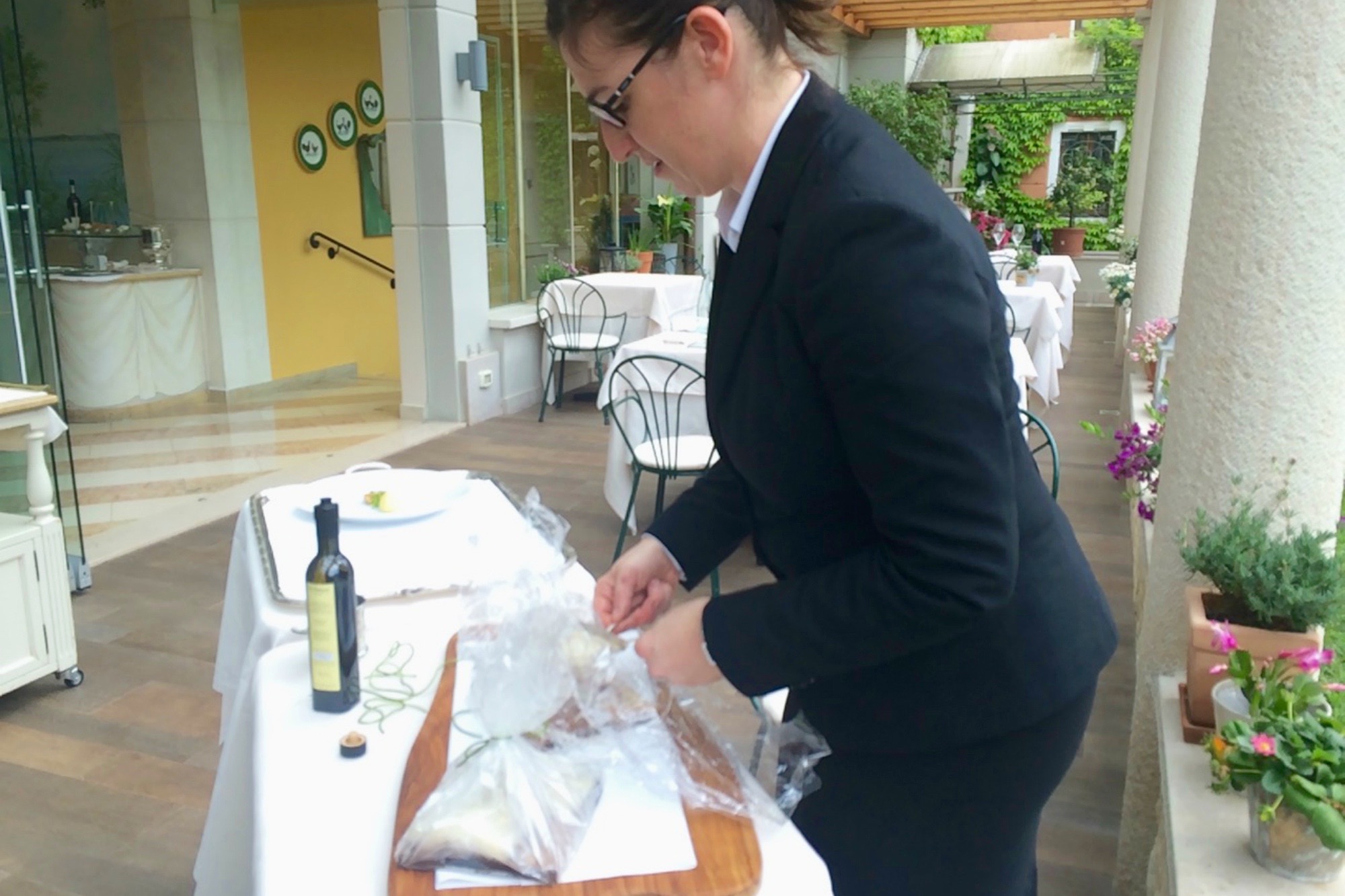
Serving char lightly smoked over cedar wood at the Hotel Regina Adelaide in Garda, Italy. Credit: Copyright 2015 Clarissa Hyman
At this year’s festival, the sixth, Chef Marco Sacco of the two Michelin-star restaurant Piccolo Lago in Verbena created a stunning arrangement of sushi for the Fish & Chef gala dinner held at the lovely Hotel Regina Adelaide hotel in Garda. And at the Aqualux Hotel, Bardolino, pale, lean chub took a star turn served three ways with cucumber, watercress and crème fraiche at a dinner cooked by Dirk Hoberg of the two Michelin-star Restaurant Ophelia on Lake Constance, Germany.
On a more quotidian level, nearly every trattoria and osteria serves a version of bigoli con sarde — rough-edged, soft wheat pasta with a sauce based on freshwater sardines preserved in oil.
Everyman’s version of bigoli con sarde
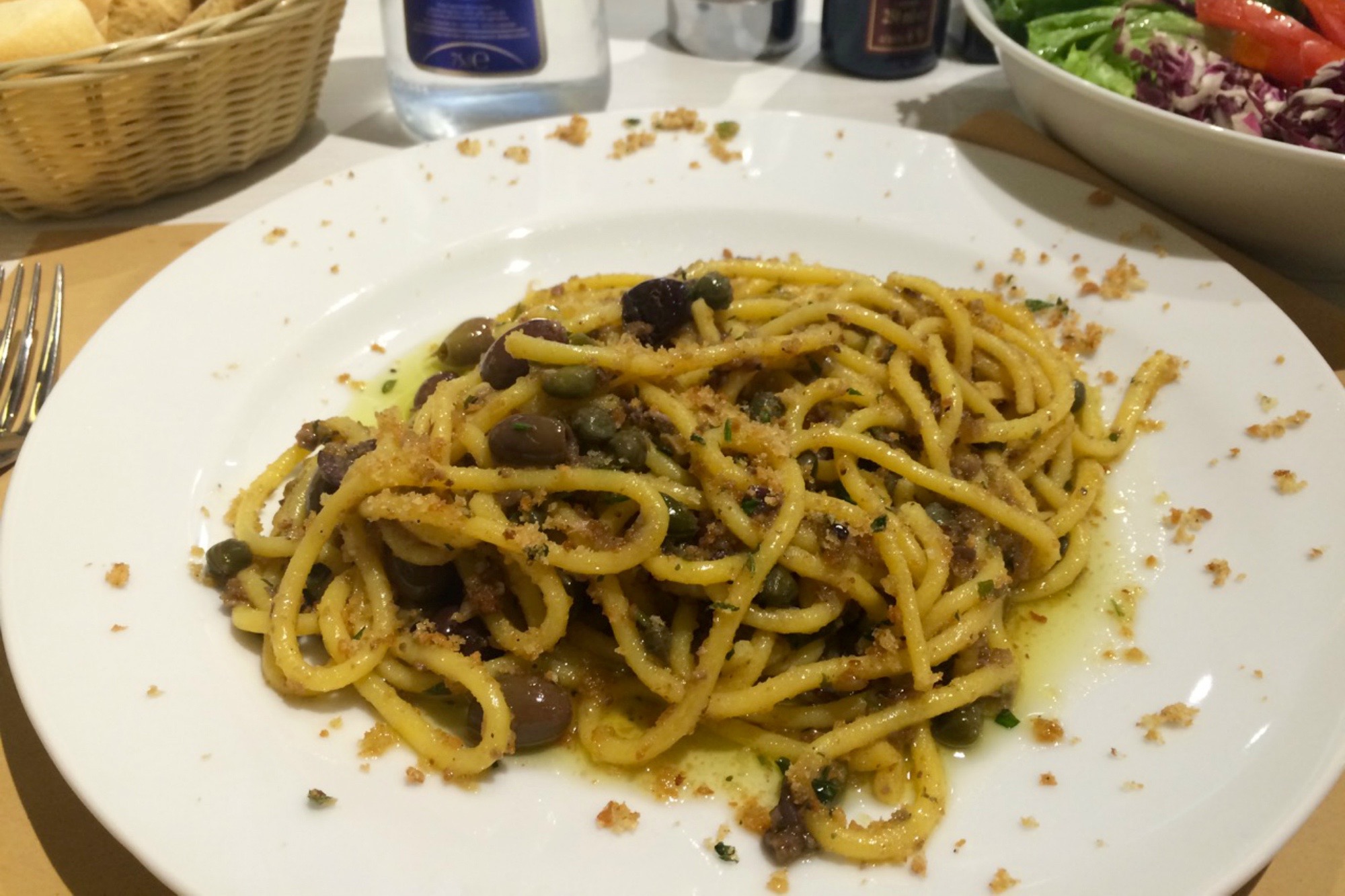
Bigoli con sarde — rough-edged, soft wheat pasta with a sauce based on freshwater sardines preserved in oil. Credit: Copyright 2015 Clarissa Hyman
More from Zester Daily:
» The challenge of finding really fresh fish
» Techniques for fishing don’t have to be intimidating
» Pucker up: Danish lemon mousse gets a kiss from Italy
» Don’t be misled. Quality imported olive oil not a myth
Ironically — and sadly — the most iconic product of Lake Garda no longer exists. Garda lemons were once famous throughout Europe for their alleged medicinal properties, acidity, thin skin, intense perfume and flavor, but the variety was lost when the last trees failed to survive a particularly cold winter in the 1980s. Even before then the writing was on the wall for the most northerly growing citrus region in Europe, an improbable industry created by a determination that has been called “a dogged madness.”
Lemons were brought to Garda by monks in the 13th century. They grew well in the Mediterranean-style microclimate and in the 17th century the construction of vast lemon houses or “limonaia” made this the most northern commercial lemon-growing region in Europe. The towering, terraced structures of wooden beams, stone pillars and glass sheets were designed to protect the fruit from winter frosts. Disease, competition from the south, some exceptionally cold weather and the discovery of synthetic citric acid, however, would later destroy the industry.
Lemons of Garda
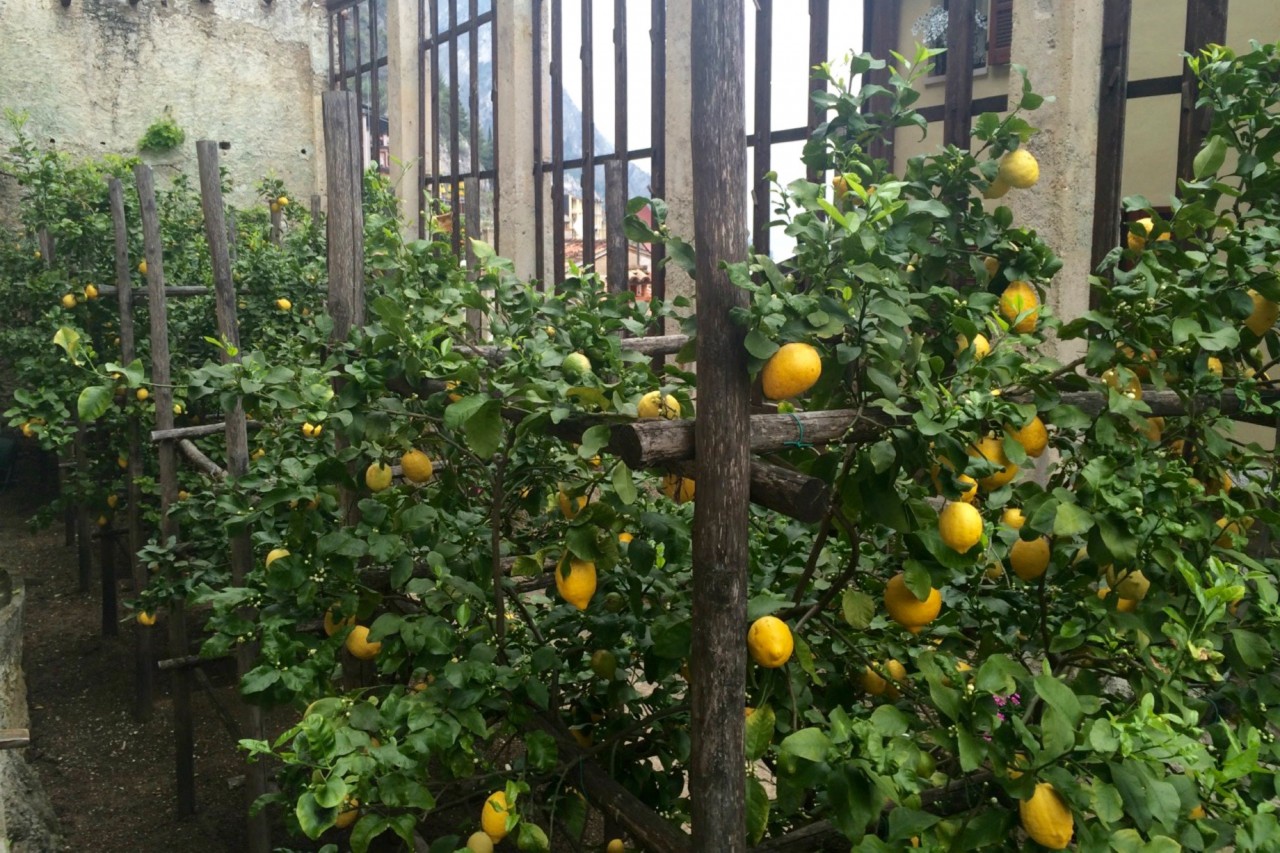
Lemons growing in the renovated Limonaia del Castel, Limone, Lake Garda, Italy. Credit: Copyright 2015 Clarissa Hyman
The original variety of Garda lemon is also virtually extinct, grown only by a few private citrus enthusiasts. Most of the lemons sold in the region come from Sicily and southern Italy or are a modern hybrid, but the tradition of using lemons in conserves and limoncello lives on.
Thanks to the mild microclimate, Lake Garda is also the most northerly region in Europe to produce olive oil. The extra virgin is characteristically delicate and fruity, and is protected by the Garda DOP mark. “Molche,” the residue from olives after they have been pressed, is traditionally used in bread and cakes.
Olive oil cake
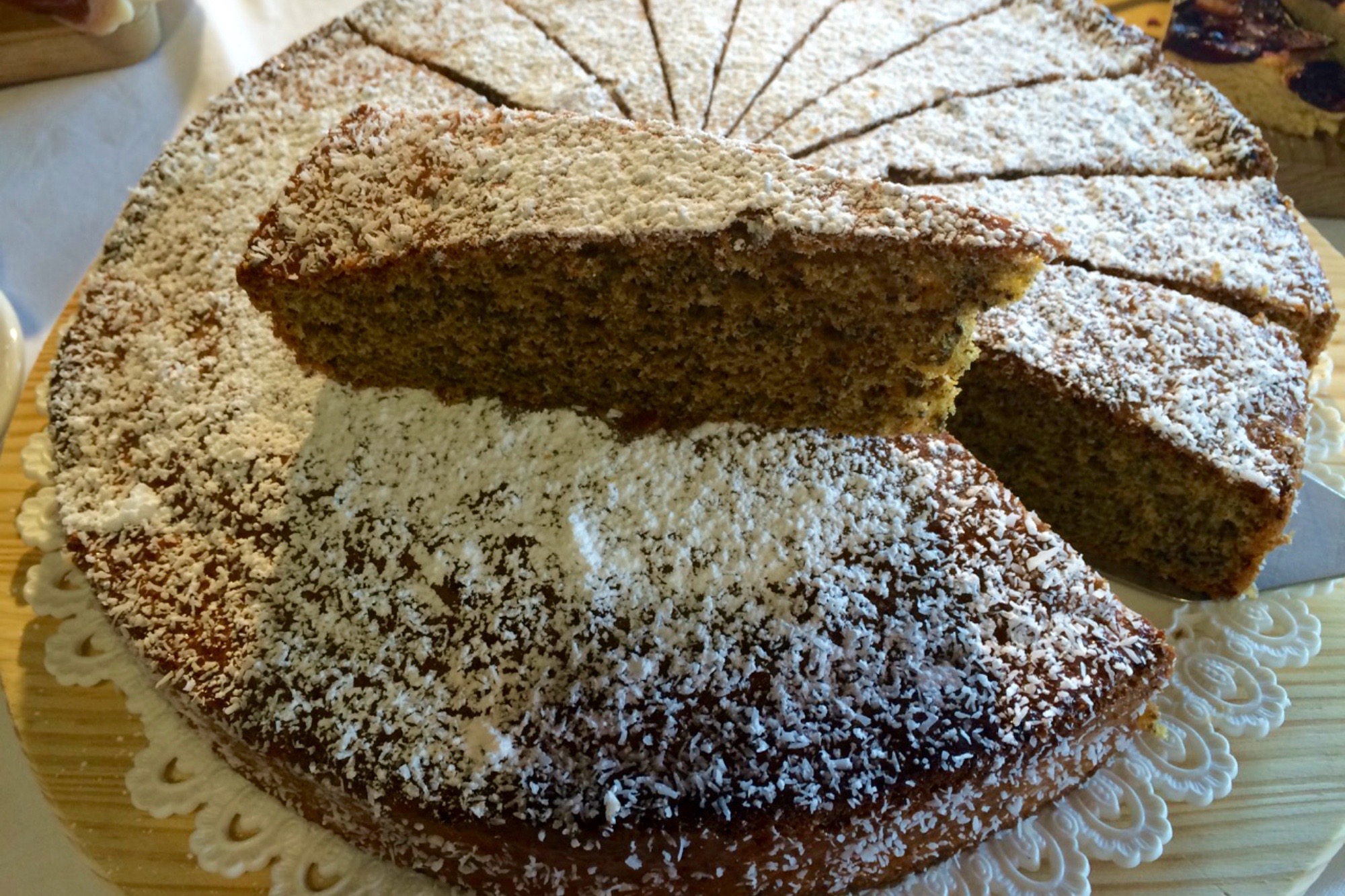
Torta di Molche, or olive oil cake. Credit: Copyright 2015 Clarissa Hyman
One of the stellar olive oil labels in Garda, indeed in Italy, is the boutique olive oil farm of Ca’ Rainene. The award-winning range includes Garda Orientale, extracted from a blend of indigenous olives — Casaliva, Lecino and Pendolino — grown and pressed on their own land. Medium fruity, with perfectly balanced bitter and pungent components, it has a delicate almond note typical of the Garda cultivars. The farm also produces Drizzar, made solely with olives of that name: Fruity and complex, it is superb with fish, game and vegetables.
The hills north of Verona are the land of Valpolicella, but closer to Garda the classic wine to look out for is Custoza, a full-bodied white wine usually drunk young but that is starting to be appreciated when a little older. Bardolino is a light red wine and Chiaretto, the rosé version. There are 80 types of soil in the region that make for extremely “fresh” wines, perfect as an aperitif or to drink with fish.
The last word should go to Goethe: ” … I wish I could get my friends beside me to enjoy together the scenery that appears before me … the beautiful Lake Garda. …”
I’ll raise a glass of Custoza to that while I work out the Italian for “Gone fishing.”
The shores of Lake Garda
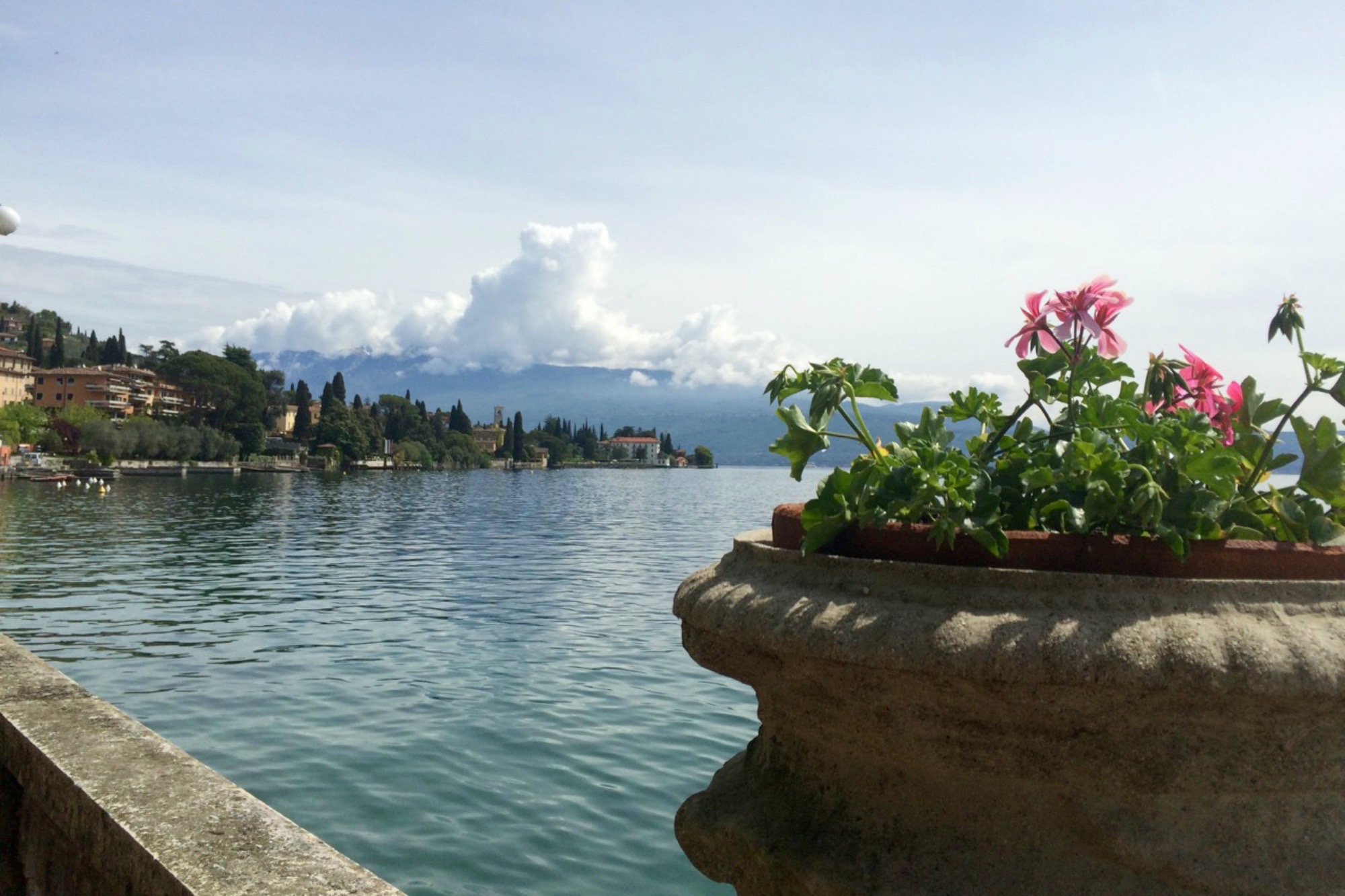
Lake Garda, Italy. Credit: Copyright 2015 Clarissa Hyman
Main photo: For a Fish and Chef gala at the Aqualux Hotel in Bardolino, Italy, Chub cooked three ways, with cucumber, watercress and creme fraiche, as served by Dirk Hoberg of the two Michelin-star restaurant Ophelia on Lake Constance, Germany. Credit: Copyright 2015 Clarissa Hyman