Articles in Agriculture
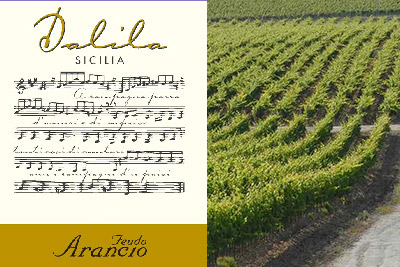
Sunny Sicily is in the throes of a wine revolution. This rich apricot-and-citrus-toned white, 2012 Feudo Arancio Dalila, is an example of just how much has changed since the island turned from producing industrial plonk to quality wine from native grapes. With a 2,000-year wine history, Sicily is now one of Italy’s most exciting, cutting edge regions — and the source of dozens of current bargains. This is one of them.
Dalila is one of the two blends in the Stemmari portfolio, which also includes single varietal reds and whites made from native and international grapes. The Dalila blend is mostly Grillo, a local Sicilian white varietal used traditionally to produce fortified Marsala. Highly fragrant, with exotic notes of mango, Grillo can be exciting on its own, but the addition of some Viognier, a Rhône Valley grape, gives this wine a round, rich texture and contributes aromas of honey and wildflowers. I’m guessing the wine’s name is supposed to evoke the Dalila (of the Bible and the opera), who renders her former lover Samson powerless by cutting off his hair.
Elin McCoy’s Wine of the Week
2012 Feudo Arancio Dalila
Price: $13
Region: Sicily, Italy
Grape: 80% Grillo, 20% Viognier
Alcohol: 13%
Serve with: Seafood risotto, soft cheeses
More from Zester Daily:
» Rare white from Mount Etna in Sicily
» 2010 Vietti Barbera d’Asti Tre Vigne offers charming value
» 2011 Inama Soave Classico climbs the Soave ladder
» 2011 Masseria Li Veli Askos Verdeca is more expressive than the price suggests
Stemmari is the Sicilian project of Mezzacorona, a company originally founded more than a century ago in northern Italy as a winegrowers’ association. In Sicily, the company sources grapes from its 1,700 acres of vineyards at two large estates on the island’s south coast, near Agrigento and Ragusa, where winds sweep in from the Mediterranean. The winery is built in traditional rustic villa style.
Considering this is a fairly big project, Stemmari’s commitment to “green” ideas and sustainable winegrowing is commendable. Though the vineyards are not organically farmed, the company uses “good” insects as an alternative to chemical treatments, as well as “sexual confusion” — a biological system that fights destructive bugs by limiting their reproduction. Thanks to Sicily’s hot, dry, windy climate, it’s also relatively easy to use few chemicals here. Solar panels generate the winery’s electricity, wastewater is recycled, and Feudo Arancio even desalinates seawater to keep its reservoirs full.
Sicily’s long winegrowing history began even before the Greeks arrived to colonize the island in 750 B.C. On a wine tour a few years ago, I wandered the ruins of magnificent ancient temples just outside Agrigento that they left behind. The group of eight buildings, strung out along a road of big stones, is deservedly one of the island’s most famous archeological attractions.
For most of the 20th century, Sicily was known for industrial-quality bulk wine. The wine renaissance started in the 1990s, as forward-thinking producers planted international grapes such as Chardonnay and focused on quality instead of quantity. The 2000s brought the rediscovery of fascinating native grape varieties such as Grillo. The 2012 Feudo Arancio Dalila is a tasty, food-friendly blend of the two revolutions.
Top photo: 2013 Feudo Arancio Dalila. Credit: Courtesy of Feudo Arancio
Blessed with a unique terroir and distinctive indigenous cheese varieties, Northern California’s organic dairy farmers and cheesemakers are aiming to grow the region’s reputation as a hotbed of artisan cheese.
On a recent evening at San Francisco’s Jewish Community Center, Cowgirl Creamery‘s Peggy Smith and Sue Conley, along with Sunset magazine food editor Margo True and Albert Straus of Straus Family Creamery, were celebrating the release of their book “Cowgirl Creamery Cooks.”
Importance of milk
The word “milkshed” appears often in the book, and Conley explained it simply refers to the place where a region gets its milk. The milkshed of West Marin County, just outside San Francisco, for instance, enabled and inspired Cowgirl Creamery’s cheeses. Specifically, it was the milk from the Holsteins and Jerseys on the Straus dairy that gave the Cowgirls their start in cheese making.
In the early 1990s, small family dairies were facing financial challenges that threatened their survival. Second-generation farmer Albert Straus had the idea to transition his lands and herd to a certified organic operation; his neighbors thought he had lost his mind.
At the time industrial agriculture was expanding, causing milk prices to be too low to sustain family farms. Straus thought that going organic would be the key to a viable business model because of the higher profit margin such methods yield. He also believed organic methods would be a more environmentally responsible way to manage the farm.
In 1994, the Straus Family Creamery became the first dairy west of the Mississippi River to go organic. It was Albert Straus’ vision that set the table for the artisan cheese movement in Northern California: to create a product that would save agricultural lands and dairy farming in the area.
The Cheeses
Conley and Smith traveled to England and France and observed regional cheese making. Often an appellation is created that reflects the flora and surroundings of an area, (like Comte cheese from France), and the Cowgirls realized that they had the ingredients to do this at their creamery in bucolic Point Reyes Station, outside San Francisco.
“We had this beautiful milk,” Conley said. “It’s all about the milk, the health of the animals and the beautiful pastures. We realized we had [those elements of an appellation] in our own place.”
jackson-cheese1
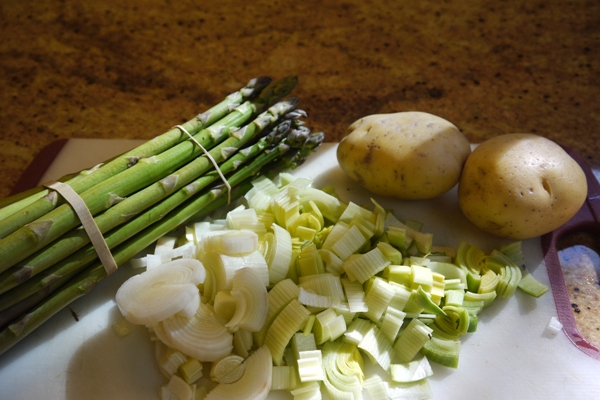
So using Straus milk exclusively, they started out making fresh cheeses like quark, cottage cheese and fromage blanc. Their first effort at an aged cheese was called Mt. Tam, after the landmark mountain in Marin County near the north end of the Golden Gate Bridge.
The cheese is a triple cream and is meant to showcase the spring milk from the herd at the dairy. It is a buttery, mellow, approachable cheese that won second place at the American Cheese Society competition in 2010, and it is considered Cowgirl’s signature cheese. Next was Red Hawk, a rich and savory cheese with a pungent aroma and a red rind, also an award winner at the ACS, the Los Angeles County Fair and other competitions.
Years later, more inspiration came during the recession. They wanted to make a big, utilitarian cheese for daily use, a cooking cheese similar to fresh Asiago, which was requested by their friend Judy Rodgers, from Zuni Café in San Francisco. The initial efforts didn’t work well, so they made successive batches, bringing tastes to the farmers market for customers to give their opinion. The final recipe is a washed rind, semi-hard cheese that is versatile for cooking and eating. It won gold at the California State (2011) and the Los Angeles County Fairs (2010).
The Cowgirls also make four seasonal cheeses using organic milk from Taverna Dairy in the small hamlet of Chileno Valley. The Taverna herd is all Jersey cows; and the cheeses, although made by a recipe similar to Mt. Tam, have a very different taste profile because of the milk and its terroir.
In addition to their own cheeses, Conley and Smith collaborate, support and promote artisan, farmstead cheesemakers throughout the region. Using the model of Neal’s Yard in London, they sell these local products at their cheese counters in San Francisco’s Ferry Building and the Point Reyes Shop, believing that helping the artisan cheese movement grow is crucial to the future of the small family farm and to agriculture in this country in general.
The Future
To that end, Straus told the crowd at the Jewish Community Center that he and the Cowgirls were looking at creating an organic processing hub.
“What we’ve done in Marin and Sonoma counties is created this model of farming that we are trying to work on how can we revitalize the farming community and get the next generation of farmers in succession farming,” he said.
The Straus dairy, Cowgirl Creamery and maybe other organic producers would partner in one facility. A demonstration dairy would allow the public to see everything from the cow to the finished product. There would be an incubator of sorts for up-and-coming farmers, to help them get established in the business and explore ways to save energy and promote land stewardship.
The Book
“Our book teaches how cheese is made, but not how to make cheese,” Conley said. But “Cowgirl Creamery Cooks” is more than just a primer for how cheese is made. There are notes on composing cheese plates, delicious accompaniments to enhance them and myriad recipes that showcase glorious cheese and milk products.
Smith said her favorite recipes are in the chapter called “Ends and Bits,” which was designed to give ideas for what to do with all those pieces that end up in the bottom drawer of the fridge. Her favorite recipe from this section is Parmesan broth, which uses the leftover bits of hard cheese to make a rich, flavorful stock. That stock lends itself to a soup that celebrates spring.
Parmesan Broth
Adapted from “Cowgirl Creamery Cooks,” Chronicle Books 2013
Makes 3 quarts
Ingredients
12 cups cool water
1 tablespoon unsalted butter
2 cups medium-diced onions
1 cup coarsely chopped carrots
1 cup coarsely chopped celery
¼ ounce dried mushroom, such as porcini or shiitake
2 bay leaves
3 sprigs fresh thyme
3 sprigs fresh flat leaf parsley
About 1 cup leftover bits of hard cheese and natural rind
Directions
1. In a large pot, bring the water to a simmer over medium-high heat.
2. While the water heats, use another large pot to melt the butter over medium heat. When it’s melted, add the onions, carrots, celery, mushrooms, bay leaves, thyme and parsley. Cook until the onions are translucent and the carrots, celery and mushrooms are soft, about 8 minutes.
3. With a wooden spoon, stir in the cheese bits. Let the cheese and vegetables sit on the bottom of the pot for short periods of time, no longer than 10 seconds. This will allow the vegetables and the cheese to brown the bottom of the pot a little. (You don’t want all the vegetables browned, but just the bottom surface needs a little color.) Stir often.
4. When the vegetables and cheese at the very bottom of the pot show some brown and the cheese is beginning to melt, slowly introduce the simmering water to the pot, stirring in just 1 cup/240 ml to start. Stirring constantly, deglaze the pan’s bottom with the hot water to loosen any browned bits. When the pot bottom is clean of any brown, pour in the remainder of the water. Decrease the heat to medium-low and monitor the heat, adjusting the flame so the broth stays at a gentle simmer.
5. Simmer for 40 to 50 minutes, stirring every 3 to 5 minutes, so the broth doesn’t pick up a scorched flavor. Strain the broth into a very large container or another clean pot and allow it to cool. Once it’s cool, you can easily skim the top of any fats. Store this in your refrigerator for up to 3 days or in your freezer for up to 3 months.
Spring Soup With Asparagus, Potatoes and Leeks
Makes 1½ quarts
Ingredients
2 tablespoons olive oil
1 large leek, split lengthwise to the root, rinsed well then cut into thin, crosswise slices — about 2 cups
1 cup celery, thinly sliced crosswise
1 bunch asparagus, bottom ¼-inch removed and discarded, tips removed and set aside, remaining stems sliced crosswise into 1-inch pieces, about 1½ cups
Salt and pepper
1 clove garlic minced
1½ cups Yukon Gold potatoes, peeled and diced – about 2 medium
4 cups Parmesan broth
¼ cup crème fraiche
Directions
1. Heat olive oil in a medium saucepan over medium high heat until shimmering. Add leek, celery and asparagus pieces and sauté until coated with oil. Season with a sprinkle of salt and pepper.
2. Turn heat to low, cover the pan and sweat the vegetables until soft but not colored, 7 to 10 minutes. Stir in garlic and potatoes and cook until garlic is fragrant, about 30 seconds.
3. Add broth, ½ teaspoon salt and 3 grindings of pepper from a mill, stir to combine, turn heat to medium and bring to a simmer.
4. Cook until potatoes are tender when pierced with a fork, about 15 minutes.
5. Meanwhile, lightly steam asparagus tips until crisp tender. Set aside.
6. Purée the soup using an immersion blender, food processor or traditional blender until smooth.
7. Serve in bowls with a dollop of crème fraiche and an asparagus tip on top of each serving.
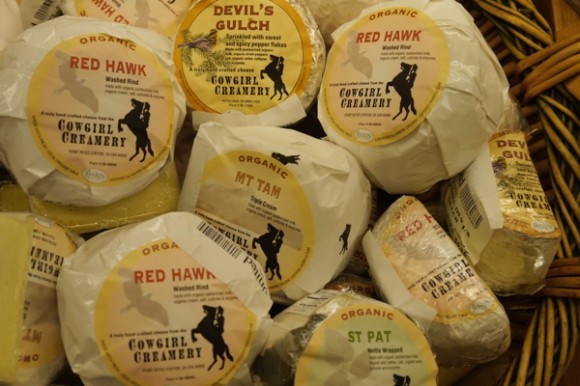
Top photo: Cheese from Cowgirl Creamery. Credit: Brooke Jackson
Birch Syrup: Maple’s Sassier Cousin From New England
by: Christine B. Rudalevige
in: Baking w/recipe
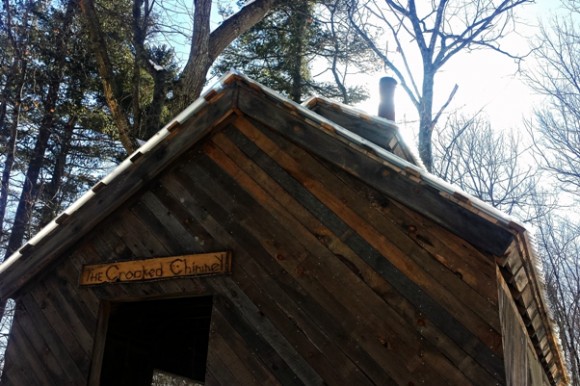
As New England’s maple sap started to drip in March, David Moore of The Crooked Chimney sugarhouse in Lee, N.H., counted the days until it would stop flowing. Right about the time the maples are tapped out, Moore collects a less sugary sap from slender, white paper birch trees.
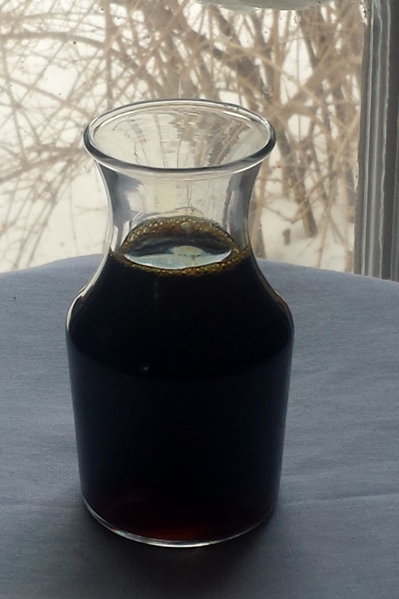
Moore, one of the only known commercial birch syrup producers in New England, says his reddish-brown syrup tastes like a mild, slightly acidic molasses with a hint of raspberry. The viscosity at room temperature is slow, albeit a bit quicker than molasses. Its unique taste makes it well suited as an ice cream topping (Moore’s favorite); a glaze, salad dressing or braising liquid ingredient; and an intriguing baked goods sweetener.
More on Zester Daily:
» For authentic New England chowder, hold the bacon
» Red flannel hash is a New England classic
In addition to its uses in the kitchen, birch syrup has high market values that could help maple syrup producers supplement future revenue streams in a sustainable fashion, according to researchers at Cornell and the University of Vermont. Its production relies on many of the techniques currently employed in making maple syrup, and birch trees are in rather good supply in the Northeast.
Birch syrup is not entirely a novelty in North America. Native Americans for centuries used it as an anti-rheumatic. Twentieth-century Alaskans also tapped it to fill gaps in wartime sugar supplies, and birch syrup production has become a cottage industry there. Still, last year’s 5,000 gallons of domestically produced birch syrup were just a drop in the bucket compared with the 3.25 million gallons of maple syrup produced.
Chef Evan Mallett of Black Trumpet bistro in Portsmouth, N.H., says Moore’s syrup has a rich, deep and slightly resinous quality that makes it suitable as a finishing syrup and a glaze for grilled chicken or pork. Mallett’s seasonal menu features brioche Texas toast, a thick slice of house-made bread stuffed with roasted mushrooms and cheese and served with huitlacoche (fungus that grows on ears of corn) butter, candy cap mushroom oil and a few drops of birch syrup.
“I like it on pancakes too, but it’s pretty expensive to slather on,” Mallett said.
The going rate for a quart of birch syrup is $78, compared with $10 for Grade A maple syrup. The selling price is very attractive, said Moore, who last year charged $25 for 8-ounce jars and sold out by the end of May. Moore sells his product at a half dozen locations in New Hampshire and will be taking some mail orders this year if supplies last.
“Making birch syrup takes more energy than making maple syrup,” explained Moore, who collects 100 to 120 gallons of sap (he typically gets about 5 gallons a day from each of his 170 taps) to make one gallon of birch syrup. Maple syrup requires only 40 gallons of sap per gallon of syrup.
rudalevige-birch2
Abby van den Berg of the University of Vermont’s Proctor Maple Research Center said the profitability of birch syrup production in the Northern Forest — the region that stretches from Maine through northern New Hampshire and Vermont into northern New York — in the past has been limited due to the fact that the low sugar content of birch sap (about 1% compared with 2% in maple) means producers need lots of evaporator fuel to concentrate the sap to syrup density.
But she argues that reverse osmosis, a process used in Alaskan birch syrup production that concentrates sugar densities (to 8% or greater) in the sap before it goes into the evaporator mitigates that hurdle. Modern sap collection techniques such as using a vacuum also help to increase the sap collection during the short three- to four-week birch sap season.
Moore has considered using reverse osmosis, but he currently processes sap in a 3- by 12-foot double-panned evaporator inside the wooden sugar shack he built himself. He uses a team of draft horses to help haul the firewood (ash, hickory, maple and oak) needed to fuel the evaporator. The new reverse osmosis machine would require him to run power to the sugarhouse. He estimates adding reverse osmosis would cost $7,000. “It could be a tough sell for me,” Moore said.
Neither van den Berg nor Michael Farrell, director of Cornell Sugar Maple Research & Extension Program’s Uihlein field station in Lake Placid, N.Y., could provide more than anecdotal evidence that maple syrup producers are clamoring to make birch syrup.
At a maple syrup taste test he conducted for maple syrup producers earlier this year, Farrell threw birch syrup into the mix. When he asked for a show of hands from those who liked the taste of New England birch syrup, not one went up. The producers then were offered a taste of birch syrup made with reverse osmosis. “Nearly everyone changed their mind,” Farrell said.
“This altered process gives birch syrup a wider range of flavor that should appeal to more people. They’ve just got to be willing to taste it,” he said.
Chewy Ginger and Birch Syrup Lumberjack Cookies
Yes, birch syrup is expensive, but it adds an interesting twist to these spicy chewy cookies that people won’t place until you tell them. Think of it as money well spent for tea time conversation.
Makes 24 cookies
Ingredients
2¼ cups all-purpose flour
2 teaspoons baking soda
2 teaspoons ground ginger
1 teaspoon ground cinnamon
½ teaspoon mustard powder
½ teaspoon allspice
½ teaspoon salt
¼ teaspoon black pepper
¾ cup unsalted butter (1½ sticks), room temperature
¾ cup packed light brown sugar
1 large egg
½ cup birch syrup
⅓ cup finely diced candied ginger (optional)
Granulated sugar for rolling
Directions
1. Preheat oven to 375 F. Line two large baking sheets with parchment paper.
2. Whisk together flour, baking soda, ground ginger, cinnamon, mustard powder, allspice, salt and black pepper.
3. Beat butter and sugar together in bowl of electric mixer until light and fluffy, 3 minutes. Add egg and birch syrup. Mix to combine well. Stir in dry ingredients. Stir in candied ginger, if using. Refrigerate the dough for 30 minutes.
4. Roll dough into 1½-inch balls and then roll them in the raw sugar. Arrange on the baking sheets and gently flatten them with the bottom of a flat glass. Bake until set and crinkled on top, about 12 minutes.
Let the cookies sit on the baking sheet for 2 minutes and then remove them to a rack to cool completely.
Top photo: The Crooked Chimney sugarhouse where Lee, N.H., resident David Moore boils down paper birch sap to make birch syrup. Credit: Christine Burns Rudalevige
“So, let me get this straight. You are keeping dandelions as a houseplants? Can’t you see it’s snowing outside?” My buddy aimed her attention toward the straggly weed I’d positioned near the window to catch early morning light, “Why?”
I explained that I had wanted to be like Euell Gibbons and grow my own salad greens in the middle of winter. “Ewe … who? I thought you have a black thumb.”
It’s true. I’ve killed every houseplant I’ve ever touched. One even died of thirst in the cruelest of places, hanging above my shower. Still, as a forager, my desire to enjoy fresh dandelion greens in the snowy months had overcome any fear of dooming another plant to die inside my home.
Gibbons is considered by most to have ushered in the modern era of foraging with his book, “Stalking the Wild Asparagus,” originally printed in 1962. I must have read Gibbons’ book a dozen times before I went to college. Still, when I opened it again last summer, the words sparkled on the page, as if I were reading them for first time.
Having stocked my pantry with wild food for many years, I’d come to take for granted the book written by the man some refer to as the grandfather of foraging. When I reread the chapter titled “A Wild Winter Garden in Your Cellar,” it felt as if I’d been given a gift.
In it, Gibbons chronicled how he grew wild vegetables indoors in winter. He used a method not dissimilar from the one some use to force bulbs such as tulips or hyacinth to grow out of season. In the fall, Gibbons dug up and potted dandelions and left them outside in the cold so they’d go dormant, then brought the pots inside his cellar to reawaken and grow tender new greens to nibble throughout the cold months.
Dandelions wintering in the garage
Facing the looming winter of the Rocky Mountains, I excitedly planned to harvest dandelions and force them to grow throughout the off-season, just as Gibbons had done. Late in October, word came that a winter storm was approaching. I went out into my yard with a bucket, dug up several dandelion plants, and placed them in my cold garage for safe keeping.
Fast forward to the beginning of February when I engaged with another snow-weary forager, bemoaning the lack of fresh greens. I dramatically complained that I’d give my left leg to taste bitter dandelion leaves. Only then, months after I’d dug them up, did I remember my plans to make dandelions dance in winter as Gibbons had done.
I rushed out to the garage, and sure enough, there was my bucket of dandelions, exactly where I’d left it the previous fall, between a stool and some rakes. The poor plants had been freeze-drying all that time, piled in the bucket without any water. I reached in, and fished around the dirt clods for a plant. My heart fell as I pulled out a hard, shriveled root.
Dandelions foraged from outdoors. Credit: Wendy Petty
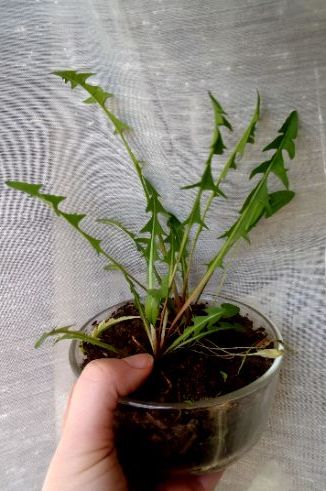
As much as I felt like it might take an act of wizardry to revive the dandelions, I hated the thought of wasting plants more. Without much hope, I planted a few crusty taproots in a bowl, gave them some water, and tucked them into a corner of the kitchen.
I hate to admit that I once again forgot about the dandelions, which is why I nearly spilled my cup of coffee when, one morning the next week, my gaze fell upon that bowl and the tiny jagged leaves it contained. I did my best Dr. Frankenstein impression, “It’s alive!”
Filled with renewed enthusiasm for my project, I smothered my little potted dandelions with TLC. Every day, I moved them from the east window to the west, so they could catch the most sunlight. I sang to them and kissed their leaves goodnight. It was exhausting, all the effort it took to grow weeds.
After a month of babying, my dandelions had only produced a few disappointingly spindly leaves, not nearly enough to make a salad. Worse, I couldn’t bear to eat them because I had grown attached (I wasn’t kidding about the lullabies and kisses). Experiment failed.
Spring brings a new wild crop of dandelions
Let’s face it, I’m no Euell Gibbons. No doubt he was the type of guy who made his bed every day and polished his foraging boots. I, on the other hand, am famous for killing houseplants, and dug up a bucket of dandelions, only to forget them until it was nearly too late. I’ll admit to feeling a little melancholy about my dandelion misadventures.
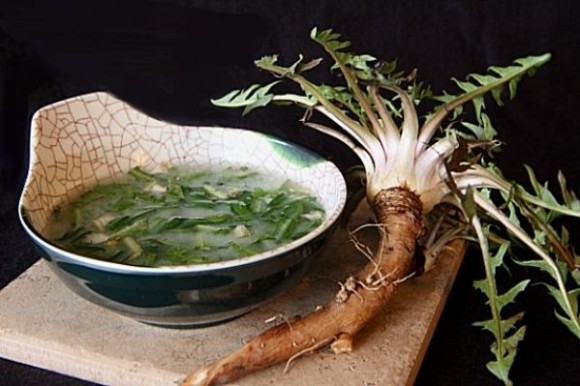
Then one day last week, I noticed the early March sunlight had coaxed the first dandelions out of the ground. After only three days, they were larger than my dandelion houseplants had grown in a month. I happily dug them and enjoyed my first taste of spring in the form of dandelion miso soup. In the future, I think I’ll leave the dandelion gardening in the expert hands of Mother Nature.
Dandelion Miso Soup
Serves 1
Ingredients
2 cups water
2½ tablespoons white or yellow miso
2 newly emerged dandelion plants, washed and chopped
1 tablespoon minced chives or green onion tops
Directions
1. Prepare the dandelion plants by washing them under cool running water. Chop the plants in their entirety. If they are the first of spring, the roots should be tender enough to eat. You will be able to tell because your knife will slice through them as easily as a carrot.
2. Over high heat, bring the water to a boil, add the dandelion roots, and cook for 7 minute.
3. Turn off the heat, and briskly stir in the miso until it dissolves completely into the water.
Gently fold the dandelion greens and chives into the soup, and enjoy it immediately.
Top photo: Dandelion Miso Soup. Credit: Wendy Petty
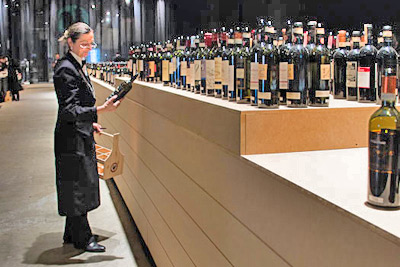
Chianti Classico DOCG is one of Tuscany’s most prestigious wine appellations: Any wine bearing that name must be produced within a specified area and adhere to strict regulations about its making. So when the Consortium of Chianti Classico producers announced a change to its categories, wine critics and appassionati took notice.
Chianti Classico’s consortium recently launched a “Gran Selezione” category: a group of wines touted as the pinnacle of the area’s wine pyramid. The Gran Selezione will account for about 10% of Chianti Classico’s annual production of 35 million bottles, for a value of 70 to 100 million euros.
The launch may have taken place, with much ado, in the spectacular frescoed Renaissance hall of Palazzo Vecchio in Florence, but the reaction — in Tuscany and beyond — has been mixed. Although 35 of the area’s top wineries have so far bottled a wine in the new category, many others are giving the “Selezione” a wide berth — for now, at least. To understand the reasons for this, it’s worth taking an overview of Chianti Classico.
More from Zester Daily:
» For Easter, try a holy wine with royal lineage
The delineated area known as Chianti Classico is located in the Chianti hills between Florence and Siena, and has long been recognized as one of the region’s best for wine production: It was first shaped in 1716 by the Grand Duke of Tuscany. Modern Chianti Classico gained elevated DOCG status (Denominazione di Origine Controllata e Garantita, or Denomination of Controlled and Guaranteed Origin) in 1984 with the “Black Rooster” wines; its consortium now represents more than 600 members.
The overall area for Chianti production is much larger, however. It stretches farther into the provinces of Siena and Firenze, and into those of Pisa, Arezzo and Pistoia. This is confusing for consumers: Although Chianti Classico and appellations such as Chianti Rufina DOCG are recognized for their premium wines, simple, inexpensive — and often not great — “Chianti” wines abound from these other parts of the region.
In Chianti Classico DOCG wines, the primary grape is red Sangiovese. Each wine must contain 80% to 100% Sangiovese, with the remaining percentage made up from other specified red grapes, including “international” varieties, Merlot, Cabernet Sauvignon and Syrah. Until recently, these wines fell into just two groups: Chianti Classico Annata (the “normal” vintage) and Chianti Classico Riserva (aged for at least 24 months), which were considered the appellation’s best wines. (Some producers, however, choose to make their top wines outside of the DOCG rules. These wines are bottled under the IGT appellation, and are the so-called Super Tuscans). Now a third group has been added.
To be admitted into this Gran Selezione, a wine must pass an additional taste test and be aged for a minimum of 30 months, of which three are in the bottle. (Note that “gran” is a shortened version of “grande,” and here means top, not grandmother.) It must also be made from the grapes of a single vineyard or from a selection of an estate’s best grapes. “The idea of this top tier is to help consumers identify an estate’s best wine,” says Sergio Zingarelli, the Chianti Classico Consortium’s president.
There’s the rub. Objectors note that the Riserva system was already in place to do that, and that the new Selezione may increase confusion in the cluttered Tuscan wine map. The Gran Selezione has stimulated a lively debate among the Italian wine world — in Tuscany and beyond — about the pros and cons of the new classification, and about alternative ideas for a change in the appellation’s structure. (Changes must be ratified by law, as the Gran Selezione’s have).

Giovanni Manetti of Fontodi, left, and Filippo Mazzei of Fonterutoli, Chianti producers and joint vice presidents of the Consortium, at the Gran Selezione news conference. Credit: Carla Capalbo
“During the recent economic crisis, the production of Chianti Riserva wines has increased, and they’re competing with Chianti Classico’s higher-level Riservas,” says Leonardo Bellaccini, the winemaker at San Felice, a leading Chianti Classico estate. Its well-known Riserva, Il Grigio, recently passed the tests to become a Gran Selezione. “We hope that once the Gran Selezione branding is recognized, it will stop the confusion between these two types of Riservas.”
Many cutting-edge wines here come from small estates with forward-thinking winemakers at their helm. Paolo De Marchi, of Isole e Olena, is one. His award-winning, pure Sangiovese Super Tuscan, Cepparello, would qualify for the Gran Selezione, but he’s reluctant to change its status.
“I don’t agree with the Consortium’s vision on this,” he says. “For me, great wines are made by their location and vineyards, not by the hands of men. I’d much rather see us differentiate between the sub-zones within Chianti Classico as a way of emphasizing the diversity of our terroirs.”
The concept of “villages” as used in Burgundy — which would allow the wines’ labels to cite the township within which they are made, such as Gaiole, Castellina or Greve in Chianti — is a hot issue among premium estates wanting to differentiate growing areas within Chianti Classico’s 7,000 hectares (about 17,300 acres) of vineyards.
“The Consortium is beginning to take steps in that direction, but it may be several years in the coming,” says Robert Stucchi Prinetti of Badia a Coltibuono. “The diversity of Chianti Classico’s terroirs is one of its strengths.”
Some producers and wine experts believe the Consortium has missed a precious opportunity to requalify Chianti Classico by limiting its grape varieties to Sangiovese and other native Tuscan grapes such as Colorino and Canaiolo.
“A Gran Selezione of just Tuscan grapes would have made sense by emphasizing the link between these varieties and this specific area,” says Bellaccini. That “first tier” would have been clearly understood by everyone.
Will Gran Selezione wines cost more? “That will be up to the individual estates,” says Consortium Vice President Filippo Mazzei. “We have not imposed price hikes for these wines, though they are of course the estates’ top bracket wines.” The Consortium hopes producers of other high-flying Super Tuscans will be encouraged to reclassify them as Gran Selezione wines, and that the word will spread positively about its latest category.
Top photo: Gran Selezione wines sit on a higher podium than the rest of the Chianti Classico wines at the media tasting in Florence. Credit: Carla Capalbo

Local sourcing is an increasingly mainstream priority for restaurants, chefs and almost anyone producing food or beverages. But it’s not such an easy proposition for craft brewing. Unlike butchers who know their pig suppliers or jam makers who know their berry farmers, craft beer makers have a hard time finding local sources of hops and other beer ingredients.
“Everyone talks about local beer, but probably only the water and the brewer are local,” said Robby Crafton, brewer at Big Alice Brewing, during the recent Brewer’s Choice event at New York City’s Beer Week.
Truly local beer is hard to make. This is not the brewers’ fault. Blame it on a regionalized agriculture system that has centralized areas of grain production and processing.
More on Zester Daily:
» Making beer with oysters in the Pacific Northwest
New York state used to be a prime hops producer, but humid summers invite fungal predators, so farmers quit growing hops there. In the United States, hops are now grown mostly in the Pacific Northwest.
Grain production used to be routine in the Northeast too, but climate challenges and westward expansion pushed the crop elsewhere. The last malt in the area was probably made in Buffalo, on the western edge of New York state. Grain processing lingered there because of its great transit location on the Great Lakes. Now, most malt comes from Belgium or the Midwest.
Everyone’s going local
However, a growing preference for local goods is helping change things, and brewers are excited about the flavors they can get from freshly malted and regionally grown grains.
“There’s a beautiful softness and fluffiness from the spelt,” said Joe Grimm, who was pouring Grimm Artisanal Ales’ spelt saison at Brewer’s Choice with his fellow brewer Lauren Carter Grimm.
“Historically, this has been a cool micro-trade show/hangout,” said Kelly Taylor, from KelSo Beer. “It’s awesome that we can take that GrowNYC component and add it to the event.”
Taylor, along with Jimmy Carbone, owner of Jimmy’s No. 43, and Dave Brodrick from Blind Tiger ale house, organized Brewer’s Choice with June Russell, from GrowNYC. GrowNYC is the parent organization of Greenmarket, which operates 55 farmers markets in the city, and Greenmarket’s Regional Grains Project.
The organization promotes regional grain in a number of ways. Greenmarket set a minimum percentage of local flour that farmers market bakers must use. The grains project collaborates with other groups on initiatives, such as New York Farm to Bakery, which paired New York City bakers with millers from New York, Vermont and Pennsylvania.
This recent collaboration with Brewer’s Choice echoes a 2010 bread tasting at the French Culinary Institute in New York City that put local flour on bakers’ radars and in their mixing bowls. Now local malt is in the hands of regional brewers.
Valley Malt, a pioneering malt house in Hadley, Mass., supplied 6,000 pounds of malt to 20 brewers, who had to use at least 30% local grain. Malt from startup Farmhouse Malt also came to Brooklyn. Other beers at the event featured local ingredients such as honey and apples.
In search of local ingredients
In general, brewers are curious about local grain, but limited availability and high cost keep them from using more of it.
“The fact of the matter is that local grain is three or four times the price,” said Taylor, who uses some local grains at KelSo and also at Heartland, where he is the brewmaster. Although the resulting beers have a certain terroir, the extra layer of flavor is very subtle and delicate. The beers, he said, are not two or three times better than others. “But from a social and economic standpoint, it’s 100% better.”
The value, he said, is in trickle-up economics. When local farmers prosper, the economy grows.
“I think in a couple of years this could be 100% local,” Taylor said.
Part of the problem is that small-scale malts, unlike their big-market cousins, don’t have easily understood or well-known performance characteristics. Their qualities vary and working with them can bring uncertainties for brewers. Russell identified another problem on Carbone’s radio show the night before the event: the processing bottleneck. There are not enough small malt houses in the Northeast.
Since New York state’s 2013 Farm Brewery law linked licensing to use of local products, a number of startup malt houses in the state are beginning to address the need. Like the recent Farm Distillery and Farm Cidery Laws, the new law makes it easier for small-scale producers that use local products to get necessary licenses.
If this was local malt’s debutante ball, her many suitors loved the dance. People kept tipping their glasses for pours even after the lights went up and security started guiding the lively crowd out of the hotel.
“It’s over,” Bill Herlicka, of White Birch Brewing in New Hampshire, told one hopeful drinker after he’d unscrewed the taps on his Bill’s Brown Rye and First Sparrow.
The rye was made with Danko, a Polish variety of the grain. Herlicka described the result as sweet and bready, with an interesting coffee quality. Typically rye makes a beer that is dry, sharp and spicy, he said.
Herlicka said brewers would love to use more local ingredients for a number of reasons, including the fact that customers also prefer it. He would be willing to pay more for local ingredients if he could promote that on his beer’s label, he said.
“I would use more local grain,” Herlicka said.
Top photo: Michelle Crafton, Scott Berger, center, and Robby Crafton from Big Alice Brewing at Brewer’s Choice. Credit: Corey Offsey
There are many good reasons to make your own homemade corned beef for St. Patrick’s Day this year. If you’re already a devoted pickle maker, corned beef is just another product of brining. If, like me, you’re conscientious about the source of your food, selecting grass-fed beef is the most healthful and sustainable option available for this March holiday feast.
Let’s start with the simple culinary adventure of “corning” beef. This archaic term just means salting, and it’s one of the most ancient methods for preserving meats. For today’s cooks, the brining process transforms the flavors and textures of the beef by expelling excess moisture and infusing it with salt and seasonings.
More stories from Zester Daily:
» Irish blaas bridge old traditions, new cuisine
» Homegrown Wagyu brings the best Japanese beef to the U.S.
» How about Tuscan-style roast pork loin?
I was intimidated about making my own corned beef until I understood that it was just a matter of soaking meat in salted water and then simmering it until tender.
What could be easier?
Most of the “work” involves waiting four or five days for the beef to cure in the refrigerator, then waiting again while it simmers very slowly. For your patience — with only about 15 minutes of active work time — you get a classic corned beef supper with all the trimmings of cabbage, carrots and potatoes plus leftovers for grilled Reubens, corned beef hash with poached eggs for brunch or sliced cold corned beef on dark rye with mustard.
Any way you use it, corned beef is the best entry into the wide world of cured meats, known officially as charcuterie.
The cut: Beyond brisket
Brisket is the classic corned beef cut, and deservedly so. You can’t go wrong with this tried-and-true favorite. But, in the grass-fed market, brisket is a smaller cut due to the generally smaller frame size of these cattle, and there are only two on every animal.
Given its lack of abundance, brisket can be either hard to find or relatively expensive. So, I’ve learned to use other cuts that are well suited to corned beef. For example, hard-to-use bottom round roast, also known as rump roast, in this recipe below, in particular, is remarkably good and very lean. Other inexpensive cuts, including sirloin tip and chuck roast are easy to find and will save you money. Tongue is another traditional choice with rich meat that brines wonderfully.
Step 1: Brining:
The technique of soaking meats in a salt solution — brining — is a common method to maintain moisture and add flavor to pork and chicken. The science behind this is simple, according to French food scientist Hervé This: when meat is submerged in a salt solution, the water in the cells leaves the muscle until the concentration of salt inside and outside the cells is equal. The result is more tasty protein inside and out.
Salt, sometimes used in combination with curing salt or sodium nitrite (also known as pink salt for the color it is dyed to prevent confusion with table salt), is the main agent used to prevent the growth of bacteria in preserved meats. When the meat is fully cooked as in this corned beef recipe, the curing salt is optional.
Another function of the brine is to convey other seasonings into the cells, including the cloves, allspice and coriander in the classic pickling spice, plus peppercorns and bay leaves. When you start with more flavorful grass-fed beef, then this works all the better.
Step 2: Simmering
After a quick rinse, simply cover the meat in a tight-fitting pot with fresh water. Bring it to a simmer and cook at a low and steady heat for several hours. When you can easily slide a skewer in and out of the meat without any resistance, it’s done. Or, you can slice of a piece to taste and make sure it’s tender to the bite. Cool and store the meat in the cooking liquid to keep it moist and your homemade cured deli meat is ready to eat.
The grass-fed difference
If you’ve heard that grass-fed beef cooks quicker than conventional beef, you will be in for a surprise. Although meat science states that heat penetrates the leaner muscle fibers of grass-fed faster than conventional beef, my experience is that grass-fed corned beef will take longer to cook — up to three and a half hours at a slow simmer. Moreoever, the texture of the meat will be firmer, not the melt-in-your-mouth texture some corned beef lovers expect.
For everyone who finds satisfaction in DIY creations, your own corned beef will be a triumph to share on March 17. I like to invite friends over to indulge in a generous platter of corned beef with a bounteous display of vegetables, including traditional choices of cabbage, carrots, potatoes or unconventional ones like kale and parsnips, garnished with good mustard and a strong craft ale.
Grass-Fed Corned Beef
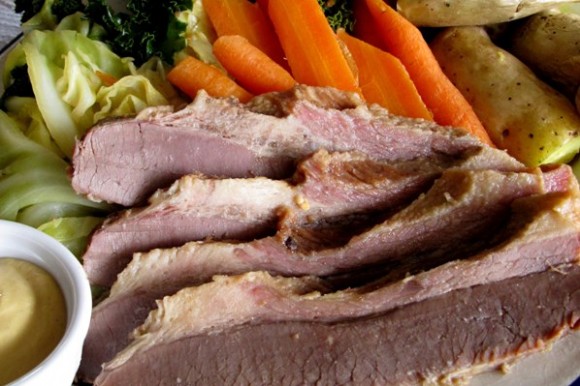
Unlike store-bought corned beef, which is pink from curing salt, this homemade corned beef turns out pale red-brown with all the flavors of traditional corned beef.
Serves 6 with leftovers
Ingredients
½ cup kosher salt
¼ cup sugar
3 garlic cloves, minced
2 tablespoons pickling spices
3 bay leaves, crumbled
1 tablespoon cracked black pepper
1 (3½ to 4 pound) bottom round roast
2 medium onions, peeled and quartered
4 medium carrots, peeled and cut into 2-inch-long rounds
Directions
1. Bring 2 cups of water to a boil over high heat in a small saucepan. Remove it from the heat, add the kosher salt and sugar, and stir until they dissolve. Pour the salt mixture into a 4-quart or larger glass, ceramic, or plastic container. Add 4 cups ice-cold water along with the garlic, pickling spices, bay leaves, and black pepper. Add 1 cup ice cubes and stir to chill the brine rapidly or put it in the refrigerator for 1 hour.
2. Pierce the beef all over with a wooden skewer to help the brine penetrate, submerge the beef into the brine, and refrigerate for 4 to 5 days.
3. Drain the beef along with the garlic and spices in a large strainer and rinse it briefly in cool running water, reserving the garlic and spices. Discard the brine. Put the beef in a pot that fits it snuggly and fill the pot with cool water to cover the beef by 1 inch. Add the reserved garlic and spices.
4. Bring the water to a boil over medium heat then reduce the heat to low, and simmer gently, partially covered. After about 2½ hours, add the onions and carrots, and continue to simmer until a skewer slides in and out of the beef with ease, 3 to 3½ hours total.
5. Serve the corned beef warm in thick slices moistened with some of the cooking liquid and with the vegetables on the side. To store, transfer the corned beef into a container, add enough cooking liquid to cover it, and refrigerate it for up to 4 days.
Recipe reprinted with permission from “Pure Beef: An Essential Guide to Artisan Meat with Recipes for Every Cut” © 2012 by Lynne Curry, Running Press, a member of the Perseus Book Group.
Top photo: Corned beef and vegetables. Credit: Lynne Curry

The snow outside has me longing for the beginning of rosé season. But sampling this bright 2012 Bokisch Vineyards Rosado, with its lively flavors of cassis and pomegranate, at dinner recently reminded me that you don’t have to wait for hot weather to enjoy savory, medium-bodied pink wines. This food-friendly example was perfect with grilled pork chops and sautéed kale and would be delicious with tapas like olives and sharp cheese.
The wine’s origin, Lodi, Calif., surprised me, as did the varietals in the juicy blend. Bokisch Vineyards has made a specialty of growing Spanish varietals and two found their way into this wine. Made mostly from Barbera, it includes percentages of Graciano and white Albariño that add notes of dark cherry, smooth tannin and a nice crispness. Graciano is a very old variety in Spain, supposedly dating back before the Romans arrived. Aging in stainless steel preserves the wine’s acidity and fruit.
Elin McCoy’s Wine of the Week
2012 Bokisch Vineyards Rosado Belle Colline Vineyard
Price: $16
Region: Clements Hills, Lodi, Calif.
Grape: 86% Barbera, 8% Albariño, 6% Graciano
Alcohol: 13%
Serve with: Barbecued chicken or pork chops; tapas; paella
More from Zester Daily:
» Taken with a Spanish red from Cune
» Generous red from France warms up winter
Markus Bokisch, who owns the eponymous winery with his wife Liz, has a deep family connection with Spain, where he spent summers in Catalonia with his mother’s relatives. He started his career at Joseph Phelps in Napa, but spent a few years working in the wine industry in Spain, where he fell in love with Spanish grapes. When the couple returned to the U.S., they bought land in Lodi, planting varietals such as Tempranillo and Garnacha. Now they farm 1,000 acres, selling the grapes to 40 wineries.
I’ve always thought of the Lodi AVA (American Viticultural Area), southeast of Sacramento and west of the Sierra Nevadas, as the place big producers such as Sutter Home and Gallo turn to for grapes for their basic, somewhat boring blends. Few realize it has a 150-year-long vineyard tradition; many families have grown grapes — especially Zinfandel and Tokay, used for brandy — for a century or more.
Although Zinfandel is still the most planted grape, a new generation of adventurous growers is branching out. The Bokisches are at the forefront of the experimentation. Many of their vineyards are organic and others are certified green according to “Lodi Rules.” This complicated system includes using solar and biodiesel energy and monitoring the land ecosystem and water, but also permits some use of synthetic pesticides.
The 2012 Bokisch Vineyards Rosado leans toward the bigger, fruitier Spanish style of rosé, which makes it ideal for drinking at any time of the year. So don’t wait for summer to sample its delights over a long brunch or dinner.
Top photo: 2012 Bokisch Vineyards Rosado Belle Colline Vineyard. Credit: Courtesy of Bokisch Vineyards
 Over 100 flavor-packed Caribbean, African and Southern recipes — all vegan! Enter to win one of five copies.