Articles in Gluten-free
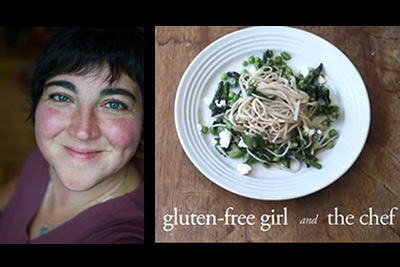
I met Shauna James Ahern last September at one of Molly O’Neill‘s Longhouse Writers Revivals. These one-day, single-subject conversations draw an inspired group of food and drink writers, editors and activists. Shauna was there to talk about “Gluten-Free Girl and the Chef,” her website and books sharing her approach to living with celiac disease.
No surprise, Shauna was funny and charming. She was generous with her writing advice, just as she is with her recipes on her site. But she is a serious woman on a mission. A writer by temperament, training and talent, Shauna launched her blog to help others with celiac disease. Her wit and wisdom have made her an online muse not only for her gluten-free tribe but also for legions of food lovers of all stripes.
Gluten-free insight
Shauna doesn’t suffer celiac disease. Diagnosis was liberation; gluten is a toxin that can be easily banished. Her delicious solutions are welcome at any table.
I asked Shauna to share some tips on how to manage the balancing act of cooking for family gatherings when some folks are following a gluten-free diet. This is a high-stress time of year for people with celiac disease, she said. No one wants to be the “special” person who can’t eat what is being served.
What is the best way to ease the kitchen tension when holidays bring together the gluten-free with the gluten-addicted members of a family?
Well, the first tip is to remember the reason we’re doing all this! It’s about gathering, family, friends and lots of lights. And food. But it doesn’t have to be a specific food, the one cookie your grandmother made and your mother made and you want to make gluten-free now. Make great food. Fill the table with it. And ask everyone to gather around.
The second tip is to ask the gluten eaters how they would feel if their entire holiday was spent in the bathroom. That’s what happens if I get 1/2 a teaspoon of gluten by mistake. Explaining what actually happens if gluten becomes part of the holiday celebrations may help others find a little more compassion.
Also, board games. Lots of really dopey board games help break the tension.
What are the easy substitutes — the gluten-free dishes that no one even notices are gluten-free?
Well, think of most of your favorite foods. Prime rib. Mashed potatoes. Pomegranates. Chocolate pudding. Potato latkes. Roast chicken. Omelets. Kale salad. Peanut butter fudge.
Those are all naturally gluten-free.
Celebrate the foods that are gluten-free without much work. No one will know these are special diet foods. Especially if they involve chocolate.
What is the best reason for someone with an iron gut to lighten their gluten intake?
Oh, I don’t think anyone has to lighten their gluten intake. There’s nothing inherently wrong. It’s just that for millions of us, it’s a toxin.
I will say this. We eat far too much wheat in this culture out of inertia. It’s very, very easy to eat pancakes, toast or muffins for breakfast. Pizza, sandwiches or calzones for lunch. Meatloaf with breadcrumbs or garlic bread with pasta for dinner. Pie for dessert.
Without realizing it, people are eating wheat — and mostly bleached wheat flour, which has no nutritional value — at nearly every meal. Dan Barber, the chef from Blue Hill at Stone Barns, said recently that “We eat more wheat than meat in this culture.” We’re having an important conversation about how much meat we eat in this culture, and where it comes from, and what we could do, but we are not talking about cheap wheat.
So it would be interesting if everyone had to be gluten-free for a week to see how unconsciously they are eating.
When your cousin rolls his eyes about the faddish rush to eat gluten-free, how do you make him smile?
Oh gosh, I probably wouldn’t try to make him laugh. I’d educate him.
Maybe I’m not so much fun at those parties. Then again, most of my cousins have celiac, since it runs in families, so I’ve never actually had to have that conversation.
How do you explain the gluten-free fad?
Well, the first thing to understand is that it isn’t a fad.
So here’s the deal. For decades, wannabe doctors were taught in medical school that celiac disease was really rare, only attacked those who were super-skinny and couldn’t put on weight, and was a childhood disease that people outgrew. They were also taught that 1 in 5,000 people had celiac. Well, it was only about 10 years ago that several doctors in the U.S. petitioned the National Institutes of Health to test the nation’s blood supply. See, those doctors who were celiac experts were all from other countries, where celiac happens anywhere from 1 in 100 to 1 in 500 all over the world, and yet America is 1 in 5,000? So they tested the nation’s blood supply. Guess what? The rate of celiac in the U.S. is actually 1 in 133. (And since those who have anemia cannot give blood, and anemia is one of the most common symptoms of celiac, it’s informally understood that 1 in 100 people have celiac in this culture.)
The University of Chicago Celiac Center tweeted an interesting fact. If you packed Yankee Stadium with everyone in America who has celiac, it would be filled 57 times. But 55 of those times Yankee Stadium would be filled with people who don’t know they have celiac. Still, I think 10 years ago it would have been 56 of those times.
We’re slowly, slowly diagnosing the people who are suffering for no reason.
And then there are folks who have non-celiac gluten-sensitivity, gluten-intolerance, wheat allergies, and people suffering from diseases like rheumatoid arthritis or multiple sclerosis who report they feel much, much better without gluten in their lives. That’s a LOT of Americans.
This isn’t a fad.
What is a favorite gluten-free joke that makes everyone laugh, gluten-free or not?
Well, I like to tell people that nobody expects gluten-free baking to be any good. (Psst. Here’s a secret. It’s often better than baking with gluten.) So I like to tell people in cooking classes: “The expectations are so low that you’re bound to look like a genius when people eat your cookies!”
Top photo composite: Shauna James Ahern and a screen capture of a video on her website of how to cook gluten-free pasta, with Daniel Ahern. Credit: Courtesy of glutenfreegirl.com
Gopala, Shyam, Mohan, Govinda … the charmer with several names, is best known as Krishna, the blue-blooded reincarnation of Vishnu, the Preserver. Krishna was born into royalty; his parents, Devaki and Vasudeva, were imprisoned by the evil Kamsa, a demon who usurped their thrones in Mathura, a town along the banks of India’s river Yamuna.
Kamsa was warned that the eighth son born to Vasudeva would be the cause of his demise. So the first six times Devaki, who was his sister, gave birth to a son, Kamsa made a visit and quickly destroyed the child. The seventh son was transferred magically into the womb of another of Vasudeva’s wives, Rohini.
Escape from death
When Vasudeva’s eighth son was born, it was during the still of midnight as the shimmering light of a full moon filtered through the bars of the humble prison. Vasudeva placed the baby, who was destined to bring order back to Mathura, in a wicker basket and perched it on his head. As he had been promised by Lord Vishnu, who was aware of Kamsa’s vengeful campaign, Vasudeva found the door to his cell miraculously unlocked, the guards drugged. When he and the child reached the banks of the Yamuna, Vasudeva’s qualms about crossing the river dissipated: it magically parted, making his task of delivering the boy to safety an easy one. A cowherd in the town of Gokhul found the beautiful baby and he and his wife, thrilled to have a son, raised him as their own. They named him Krishna.
Word of Krishna’s antics spread quickly through the tightly-knit community. A series of signs and miraculous events foretold of the boy’s pre-destined celestial purpose: to kill Kamsa and bring happiness, beauty and order, which were nonexistent under the demon’s regime, back to the people. Krishna’s handsome good looks, lightheartedness and mischievous demeanor gave every mother in town a joyous heartbreak.
Krishna, Dairy Thief
His penchant for milk, cream and butter became well known. No dairy products could be left within reach for fear of their being devoured within seconds. Whenever cream was collected to make butter, it was amassed in clay pots and strung up high, between the loftiest treetops. Krishna coaxed his fellow cowherds to form a human pyramid and he would soon be found at its apex, gulping his prize with great satisfaction.
It could be said that his love of dairy was instrumental in compelling Krishna to develop the ingenuity and physical strength that eventually led to his defeat of Kamsa in a wrestling match years later. Krishna fulfilled his purpose and restored all that was just and human to Mathura, his native land.
RAGHVAN IYER’S GHEE TIPS
DON’T use margarine or any butter substitutes that want you to think they’re just like the real deal.
DO use a heavy-bottomed pan to prevent the butter from scorching. Cast iron, stainless steel, carbon steel, and ceramic-coated cast iron are all fair game. I use a cast-iron or carbon steel wok if I happen to be making a large batch, as the fat seasons the pan.
DON’T turn up the heat beyond the low setting, as much as you may be tempted to do so; if you do, the milk solids will start to burn.
DO make sure the glass jar is clean and dry before pouring in the ghee. Let the ghee cool completely before screwing on the lid. Moisture will promote the growth of mold.
Cream to butter to ghee
The process of churning fresh cream into butter is still widely practiced in homes all across India. But this is just an intermediary step. Classic Indian cooking always calls for ghee, or clarified butter. Once the milk solids have been removed from butter, its shelf life is extended exponentially and there is no need for refrigeration. Ghee also has a much higher smoke point than non-clarified butter, making it ideal for deep frying.
In my home when I was growing up, each morning Amma skimmed cream from a saucepan filled with hot milk. Once enough was at hand, she squatted on the floor with her deep pot and long-handled wooden beater. Within minutes white, silky-smooth butter separated and floated to the top, weaning itself from the thin whey or buttermilk below. Amma scooped handfuls of the butter and placed it in a heavy-bottomed saucepan. I always happened to be there just in the nick of time to steal a few scoops, Krishna-like, its sweetness coated my tongue, the name maakhan chor (butter thief) rang in my ears.
Stainless steel tumblers collected the buttermilk, to be drunk in thirst-quenching gulps while the freshly churned butter melted on low heat and milk solids were skimmed and discarded. The clear fat, now turned into ghee, rested in a chipped orange porcelain jar, nutty and pure, waiting to bless every dish it would touch with its heavenly aroma and flavor. The taste is truly sublime.
Ghee is widely available in stores. It is not easy on the pocketbook, so be prepared to plunk down your hard-earned money for the convenience, should you not have 15 to 20 minutes of free time to spend in the kitchen. I often splurge and buy ghee imported from India, only because the cows (or water buffaloes, depending on where the milk came from) graze on a different diet and the ghee has a unique flavor not found in America’s dairy land. But making your own is well worth the time and patience.
Ghee
Makes about 12 ounces (1½ cups)Ingredient
1 pound unsalted butter
Directions
1. Line a fine-mesh tea strainer with a piece of cheesecloth, set it over a clean, dry glass measuring cup or pint-size canning jar, and set aside.
2. Melt the butter in a small, heavy-bottomed saucepan over low heat, stirring occasionally to ensure an even melt (otherwise, the bottom of the block melts and starts to bubble while the top half remains firm). Once the butter melts, you will notice that a lot of foam is gathering on the surface. Scoop the foam out with a spoon or just let it be; the melted butter will eventually stop foaming and start to subside. Now you can start to carefully skim off the foam. Some of the milk solids will settle at the bottom and start to brown lightly. This light browning is what gives Indian ghee its characteristic nutty flavor. This process will take 15 to 20 minutes.
3. Once the liquid appears quite clear (like oil) with a light amber hue, pour it through the cheesecloth-lined strainer, leaving the browned milk solids behind, and set it aside to cool.
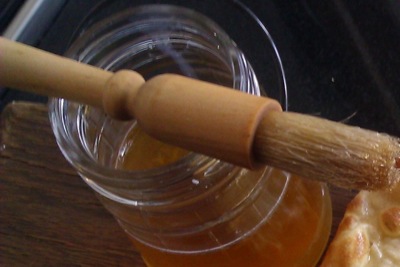
4. When the ghee is cool, pour it into a storage jar and seal it. Keep it at room temperature, right next to your other bottled oils; it will solidify, even at room temperature. (I don’t find it necessary to refrigerate ghee, but if you wish, by all means do so. I have kept mine at room temperature for many months, without any concern for rancidity or spoilage. Because ghee has no milk solids in it, and that’s what can turn butter rancid, I do as millions in India do, and leave it out.
There are not very many new vegetables coming to market, but there are still plenty of new ingredients for the kitchen coming from the Kingdom of Fungi. Chefs and adventurous home cooks are learning to appreciate the whole range of flavors and textures from cultivated specialty mushrooms. Up until recently, mushroom choice was limited to white button mushrooms and seasonably available wild-foraged mushrooms. Even shiitake mushrooms, now becoming ubiquitous, were unknown as a fresh mushroom up until the 1980s. If shiitake now seem ho-hum, then it’s time to expand your specialty mushroom repertoire. Nothing encourages creativity like new ingredients, and mushrooms’ natural flexibility provides plenty of inspiration.
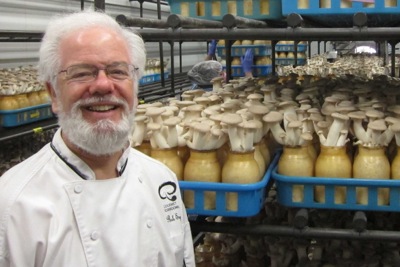
In the past few years, mushroom growers in the U.S. have learned new cultivation techniques from Asia. Shiitake were traditionally grown on logs outdoors, but new methods, relying on sawdust, have made the process more efficient and have opened the potential for growing more varieties. The sawdust substrate provides a medium and food for the mushroom mycelium. Some species, like chanterelles and porcini, are symbiotic with living plants and cannot be farmed. Others, like shiitake, hen-of-the-woods, and nameko are easily adapted to sawdust culture. Wood is the natural food for these varieties. Some species that are now becoming available include enoki, honshimeji (beech or clamshell mushroom), Nebrodini, pioppini (black poplar mushroom) and lion’s mane (pom-pom).
Mushrooms behave like meat
So why do chefs love mushrooms? They are beautiful to the eye, and easily adapt to a wide range of cuisines, but, most important, mushrooms behave in the kitchen much the same way that meats do: They change their character in response to different cooking techniques and they express different qualities depending on the ingredients with which they are paired. There is sound science behind these effects.
Mushrooms are not vegetables. They are fungi and their biochemical structure has more in common with animals in some ways than with vegetables. Mushrooms have a broad range of amino acids, as animal proteins do, and this provides them with savory flavor. They are high in glutamic acid, an amino acid that is naturally occurring in glutamates and acts as a flavor enhancer. (The “unnatural” form is known as MSG, monosodium glutamate.)
Mushrooms are also rich in nucleotides, compounds that are synergistic with glutamates. Together, these characteristics make up umami, the savory flavor component that is now widely accepted as the fifth flavor along with the old standbys of salt, bitter, sweet, and acid. These attributes make mushrooms perfect pairing partners in a wide variety of culinary settings. Savory flavor plus a satisfying “meaty” texture make them excellent in vegetarian meals. Mushrooms give you something to chew on.
Fungi are influenced by their company
As an example of their culinary adaptability, a fairly mild mushroom like the king oyster has a mildly sweet flavor when lightly sautéed in butter with lemon and tarragon, and pairs well with chicken and fish. Prepared this way it is best complemented by white wines. The same mushroom tossed with olive oil, garlic and rosemary, then grilled over hot coals, has a deeply satisfying, hearty character that would stand up to grilled beef and bold red varietals from Cabernet to Zinfandel. One can image a similar contrast with varying preparations of chicken breast. A gently sautéed chicken breast has a different flavor than the same chicken breast grilled, but comparable shifts of flavor do not occur so readily with vegetables. And while some vegetable flavors are hard to pair with wines, mushrooms easily complement them.
With the possible exception of the onion family, mushrooms occur in more recipes around the world than any other single ingredient. Doubtless this is because they grow wild on every continent. In Asia, they are found in soups, noodle dishes and stir-fries. In Northern Europe, they are used in stews and pickled. In Southern Europe, they add depth to ragouts, garnish grilled meats and are tossed in pastas. The culinary names Chasseur, Cacciatore and Jaeger schnitzel all share a common root in the word “hunter” — and all feature mushrooms. When you hunt, you spend a lot of time waiting quietly in the woods, time well spent scanning the ground for mushrooms. The hunter who returned from the forest with game and mushrooms, of course cooked them together.
The cultivation of specialty mushrooms broadens our culinary palette. Take some time to learn about each variety. You’ll find inspiration in their fresh range of colors, flavors and textures. Mushrooms are exciting and elegant enough to stand on their own as center-of-the-plate items, and they will accent, complement and highlight a wide range of pairings. While a brown crimini mushroom is only slightly different from a white button mushroom, a pioppini mushroom is very different from honshimeji, as honshimeji is from maitake. When explorers find a new country they are always ask, “what’s to eat?” Potatoes, corn, cocoa and chilies moved quickly from the Western Hemisphere back to Europe. The Kingdom of Fungi remains in part unexplored territory and chefs can look forward to even more new varieties as expanding acceptance leads to increased demand and farmers investigate new mushrooms and how best to cultivate them.
Photo: Bob Engel. Credit: Gourmet Mushrooms, Inc.
It was that time of the week. The servant had swept and mopped the floors around the house and then headed for the bathroom where she soaked the soiled clothes in a red bucket filled with soapy water. Then she grabbed the baseball bat-like stick and thrashed the fabrics with a rhythmic beat. Soon they made their way into a white plastic bucket filled with clean water for rinsing. Each piece of clothing was twisted dry, except for the cotton saris that lay, beaten clean, in a twisted pile on the bathroom’s white-tiled floor.
Meanwhile my mother, Amma, was in the kitchen heating up a large, stainless steel pot of water on a kerosene-fueled stove. She threw in a bowl of long-grain rice from a newer crop sold by the rice vendor who came to our door once a week with a large gunnysack trailing heavily over her left shoulder. The fresher the crop, the starchier the rice, I later found out, and this was important for my mother’s impending chore.
The water came to a second boil and the rice kernels rose to the top with each rising bubble, puffing up with heated pride. The cooked grains clouded the water sticky-white. With a slotted spoon, Amma scooped out a few grains, squishing one between her thumb and forefinger to test its doneness. Pleased to see it give in with no residual hardness, she placed a tight-fitting lid on the pot, lifted it off the stove and turned it on its side. With the lid slightly held back, she poured the starchy liquid into a large bowl in the sink. She didn’t have a colander.
Rice, starch and saris
My mother grabbed the starch-filled bowl and shuffled to the bathroom. She dunked the saris, one at a time, in the rice water, coating each with the starch and letting it soak through. After 15 minutes, each was lightly rinsed and wrung dry by hand. Akka, my grandmother, awoke from her nap and grabbed the saris that now lay in a bucket, waiting to be dried. She hung them out under the hot sun on a clothesline pulled taut between two hooks nailed on each end of the balcony’s wooden ledge.
Once dry, the saris were picked up by the ironing vendor. They came back into our home the same day, all starched and neatly pressed, smelling like hot, steamed, nutty rice.
There are many ways to cook rice, especially one as refined as basmati. The absorption/steeping method and the open-pot pasta method are ideal. Some people use rice cookers and even pressure cookers to cook this delicate grain, and I find that they generate too intense a heat, resulting in a mushy, overcooked texture.
To salt or not to salt the rice is the Shakespearean query. In my recipes for curries, stir-fries and chutneys, I use just enough salt to bring out the flavors, so I do recommend salting the rice you’ll be serving with them. If you don’t salt the rice, you may want to add a bit more salt to the dish you are serving with the rice.
Cooking Rice With the Absorption/Steeping Method
Makes 3 cups
Ingredients
1 cup Indian or Pakistani white basmati rice
1½ teaspoons coarse kosher or sea salt
Directions
1. Place the rice in a medium-size saucepan. Fill the pan halfway with water, to cover the rice. Gently rub the slender grains through your fingers, without breaking them, to wash off any dust or light foreign objects, like loose husks, which will float to the surface. The water will become cloudy. Drain this water. Repeat three or four times, until the water remains relatively clear; drain. Now add 1½ cups cold water and let it sit at room temperature until the kernels soften, 20 to 30 minutes.
2. Stir in the salt, and bring to a boil over medium-high heat. Cook until the water has evaporated from the surface and craters are starting to appear in the rice, 5 to 8 minutes. Then, and only then, stir once to bring the partially cooked layer from the bottom of the pan to the surface. Cover the pan with a tight-fitting lid, reduce the heat to the lowest possible setting, and cook for 8 to 10 minutes (8 minutes for an electric burner, 10 minutes for a gas burner). Then turn off the heat and let the pan stand on that burner, undisturbed, for 10 minutes.
3. Remove the lid, fluff the rice with a fork, and serve.
Cooking Rice With the Open-Pot Pasta Method
Makes 3 cups
Ingredients
1 cup Indian or Pakistani white basmati rice
1½ teaspoons coarse kosher or sea salt
Directions
1. Fill a large saucepan halfway with water, and bring it to a rolling boil over medium-high heat.
2. While the water is heating, place the rice in a medium-size saucepan. Fill the pan halfway with water, to cover the rice. Gently rub the slender grains through your fingers, without breaking them, to wash off any dust or light foreign objects, like loose husks, which will float to the surface. The water will become cloudy. Drain this water. Repeat three or four times, until the water remains relatively clear; drain.
3. Add the rice to the boiling water, and stir once or twice. Bring the water to a boil again and continue to boil the rice vigorously, uncovered, stirring very rarely and only to test the kernels, until they are tender, 5 to 8 minutes. Immediately drain the rice into a colander and run cold water through it to stop the rice from continuing to cook. (The problem with his method is that the grain will go from just-right to overcooked in mere seconds if you are not attentive.)
4. Transfer the rice to a microwave-safe dish and stir in the salt. Just before you serve it, rewarm it at full power, covered, for 2 to 4 minutes.
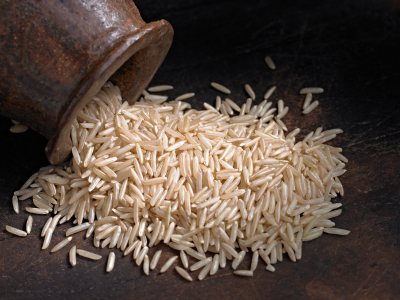
Photo: Closeup of basmati rice. Courtesy of iStockphoto
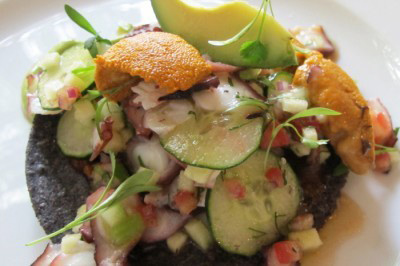
Mexico City is a pescavore’s paradise. This sprawling capital, set atop a central plateau — nowhere near any large body of water — is nonetheless within five or six hours from either coast. The Nuevo Mercado de la Viga, the huge central fish market, provides the populous with a cornucopia of creatures that swim. Mexican cooks work magic with their oceanic bounty in myriad ways: Spanish-style rice dishes, spicy soups and stews, lemony cocteles, and seafood quesadillas.
But it is ceviche, the quintessentially Latin tradition of marinating raw fish in an acidic bath, that is the pride and joy of Mexican chefs. It’s found at marisquerías — seafood restaurants ranging from street stalls to elegant venues, all over the country. Perhaps first imagined in Peru or Ecuador, ceviche usually contains lime juice to macerate the fish, and some combination of tomato, onion, chili, cilantro, and, in the “Acapulco” variety, even ketchup. Marinating time, which can vary from 15 minutes to overnight, is the most disputed element in its preparation.
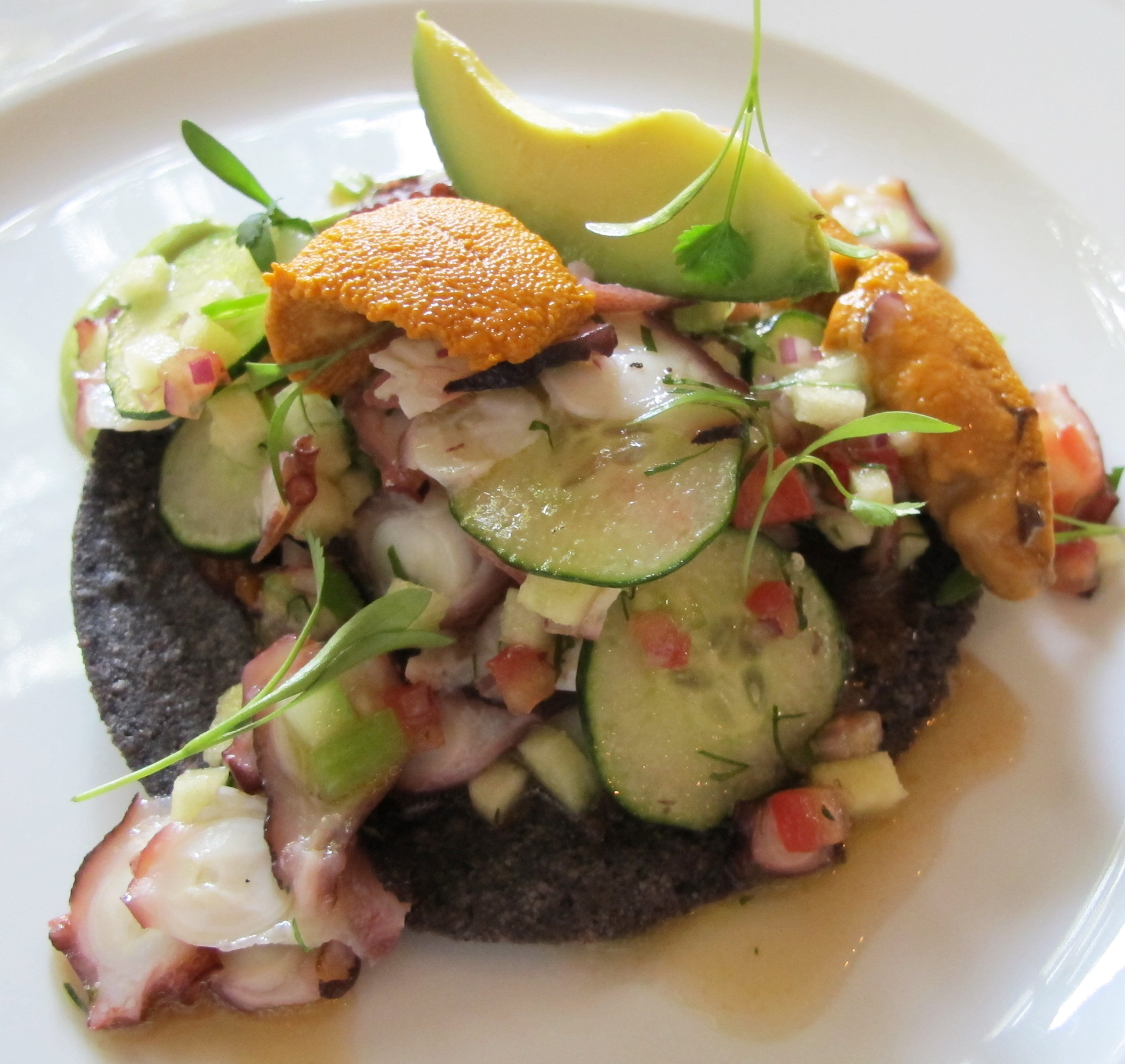
a-creative-ceviche-of-octopus-and-sea-urchin-from-maximo-bistro_photo_nicholas-gilman
The search for ceviche
So this landlocked food writer set out to find the best ceviche Mexico City has to offer, a daunting task in a metropolis of over 40,000 eating establishments. Here are the highlights:
— El Caguamo (slang for a liter-size beer bottle) is a humble street stall always packed with hipsters and old-timers chowing down on fried fillets, shrimp cocktails, tostadas and, of course, ceviches, which are served in a parfait glass or on a tostada. They can be made of pescado, jaiba, calamar or pulpo, (fish, crab, squid or octopus), with the addition of chopped tomato, chili, onion and cilantro. Ceviche here is marinated in lime juice and white herbal vinegar, then finished off with a little olive oil and a few slices of avocado — a perfect balance of salty, sour and fishy umami.
— Colonia Escandón is a solid middle-class neighborhood of single-family homes and small apartment buildings, built in the ’40s and ’50s. Its market has one big attraction, Marisquería Playa Escondida, where foodies make the pilgrimage for a sophisticated array of classic seafood. The young chef concocts a simple ceviche de pescado with strips of fresh snapper artfully seasoned in a strong, lemony vinaigrette. Its closer to the way they do it in Lima, more Peruvian than Mexican. Acerbic and briny, biting and vibrant, it was made muy Mexicanoby the lashings of green chilies that gave it heat.
— Tucked into a corner of an old house in trendy Colonia Roma, La Veracruzana, Fonda de Mariscos has a charming retro décor and sunny patio. It offers a bit of Veracruz, the city on the Caribbean Gulf Coast known for seafood influenced by the Spanish settlers and the African slaves they brought with them. (Huachinango a la Veracruzana, red snapper in tomato/caper sauce, is well known all over Mexico.) This pleasant lunch spot frequented by local artists serves an exemplary, if generic, ceviche de pescado. Sergio, the chef, explains that sea bass is marinated overnight in a light solution of white vinegar, onions and herbs such as oregano and bay leaf. Chopped tomato and chili are added later. Despite the long maceration, the fish tastes fresh and the texture holds its own. The dressing is light and zesty — a winner.
— In the fashionable art deco neighborhood, La Condesa, Mero Toro’s kitchen is in the capable hands of master chef Jair Téllez, formerly of Ensenada on the Pacific Coast. The California-influenced menu is small, unpretentious and creative. Ingredients are chosen strategically, with an eye to freshness, smart combinations and the occasional salute to cultural tradition. Chef Téllez offers a ceviche de jurel con pepino, limón y salicornia: Chunks of rosy yellowtail repose on a pool of tart aromatic dressing. The salicornia, a salt-water loving plant, is strewn about, imparting its briny bite. But the fish is barely macerated, if at all, and the result is more like a sauced sashimi. This preparation strayed far from the ceviche tradition — interesting, but in my mind a bit off the mark.
— Not far away, in the even trendier Colonia Roma, is Máximo Bistrot Local, a newcomer on everyone’s list. Chef Eduardo García worked at Le Bernardin in New York, and at Mexico City’s chichi food temple, Pujol, so he knows something about fish. A Mexican, he loves a traditional ceviche. His version, made with octopus and sea urchin, hits all the marks. The understated salsa tatemada, made with charred chilies, sets off the two distinctive ocean creatures in a thought-provoking whirl of heady aromas, like a Bach fugue. This is a ceviche for the 21st century — thumbs up.
— All of these ceviches, which range from the humbly noble to the gloriously creative, satisfied different parts of the gastronomic brain. There was no best. So I offer my own version, a compromise between the beach and Le Cordon Bleu. Perhaps, as Dorothy of “The Wizard of Oz” discovered, the answer was at home all along.
Ceviche de Pescado, Pacific Style
Ingredients
½ cup fresh orange juice
½ cup lime juice
½ cup tomato, seeds and pulp removed, in a ¼-inch dicer
¼ cup finely chopped sweet onion (such as Vidalia), or shallot
2 tablespoons good olive oil
2 tablespoons chopped cilantro
1 jalapeño (or to taste) finely chopped
1 teaspoon grated orange rind
a pinch each of sea salt, pepper and oregano
½ to ¾ pound fish (sea bass, snapper, or another firm white fish), cut in ½-inch cubes
1 avocado
Directions
1. Combine all ingredients except fish, in a glass or ceramic bowl; leave for at least 15 minutes for flavors to blend.
2. Add fish and let macerate for one hour. Serve in small bowls or on tostadas, preferably freshly fried (from yesterday’s tortillas). Top with thin slices of avocado.
Top photo: Octopus and sea urchin ceviche at Máximo Bistro. Credit: Nicholas Gilman
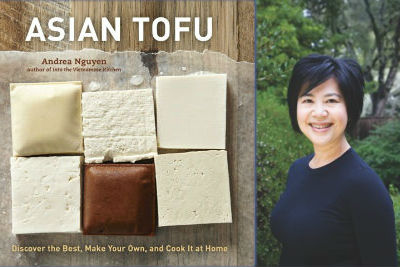
Tofu has to be one of the most misunderstood ingredients around. But with Andrea Nguyen’s masterwork, Asian Tofu, humble bean curd finally gets its moment in the sun.
This is a book that takes tofu seriously. Readers will find impeccably detailed and illustrated guides to making just about every kind of beany incarnation, from basic soy milk all the way through block and pressed tofu. Superb photography by Maria Caruso and others makes this beautiful enough to be a coffee table book for those strong enough to resist the wonderful recipes contained between its covers.
I was not so strong. My downfall started with an inspired recipe for White Fermented Tofu that allowed me to make the closest equivalent to cheese in the Chinese canon. Cubes of extra firm tofu are allowed to mold over a few days until they glisten with golden dots and, in the author’s words, “achieve the ‘3S’ criteria — slime, splotches, and stink.” I had attempted this recipe following the guidelines in a 1976 classic, “Florence Lin’s Chinese Vegetarian Cookbook,” but the results never quite measured up. With Nguyen’s help, though, I am now one happy person with jars of funky perfection filling up my fridge. This stuff rocks – as does Nguyen’s book.
Pan Asian tradition
In addition to brilliant recipes for basic tofu, Nguyen offers a broad section on how to put her homemade creations to work using traditional recipes from the Far East, Southeast Asia and India. Spicy Korean dishes dot the book along with gentle Japanese offerings, savory Malaysian skewers, Vietnamese street food and time-honored Chinese classics.
Contemporary takes on the humble curd include Tofu French Fries, crunchy and chewy, with delightful dipping sauces. For those who long to satisfy a sweet tooth with a semblance of reason, Nguyen provides a recipe for doughnuts made with soy milk lees (the ground-up bean leftovers from making soy milk).
Interspersed among all of these vegetarian delights are some recipes for carnivores. Crisp Roasted Pork Belly is one, its tangential relationship to bean curd being some red fermented tofu in the marinade. Not that I’m complaining; this is seriously good stuff.
Personal stories give recipes depth
In addition to the recipes, the main chapters include illustrated travelogues describing Nguyen’s hunt for traditional dishes and concepts, with the minute attention to detail that brings the people in each of these stories alive. Tales from Tokyo, Taipei and Sichuan give cultural depth to featured recipes, while local purveyors in California’s Bay Area show how these culinary traditions have taken root in new soil.
Tofu is presented quite seriously at the beginning, but by book’s end Nguyen shows a playful side in her dessert section. Recipes that look ever-so-slightly insane on the surface turn out to be insanely delectable. Nguyen suggests that her Essence of Tofu Ice Cream be topped with savory bits and pieces, like salt, sesame seeds, Indonesian sweet soy sauce and Savory Kelp Relish. I first thought, “Ew,” but now I’m a convert.
Cashew and Cardamom Fudge is a gorgeous reinterpretation of a South Asian treat, with traditional milk and sugar edged aside by a clever use of tofu and sweetened condensed milk, the final sprinkle of crushed pistachios turning this into a gorgeous finale for the finest Indian banquet.
Tofu Tiramisu is a welcome twist on a culinary cliché; firm tofu mingles with cream cheese and ladyfingers, taking on the 21st century with an Asian sensibility.
Beautiful, knowledgeable and thorough, this is the best book on tofu ever to make its way to my bookshelves. Highly recommended.
Buy Andrea Nguyen’s Asian Tofu Now!
Zester Daily contributor Carolyn J. Phillips is a Chinese food wonk and illustrator who has a cookbook to be published by McSweeney’s in 2014. In addition to Zester Daily, you can find her on her blog and as @MadameHuang on Twitter; her food writing can be found in places as disparate as Lucky Peach and Pork Memoirs.
Top photo composite:
Book jacket courtesy of Ten Speed Press
Andrea Nguyen. Credit: Penny de los Santos
There was a time when my whole food world revolved around a particular black pepper Asiago sourdough bread. I ate it at every meal, packed it into my purse for snacks, and became a familiar face at the bakery. Then I was diagnosed with Celiac disease, and that world came crashing down.
People with gluten sensitivity go through all the stages of grief following their diagnosis. First there is the denial, “No! I can’t give up my favorite bread forever.” Next, anger, “If you eat that bread in front of me, I’ll punch you in the face.” The depression phase can be pretty long, “I’ll never get to eat anything delicious the rest of my life.” Then the acceptance phase dawns, “Wow, there is still a whole world of tasty food out there to enjoy!”
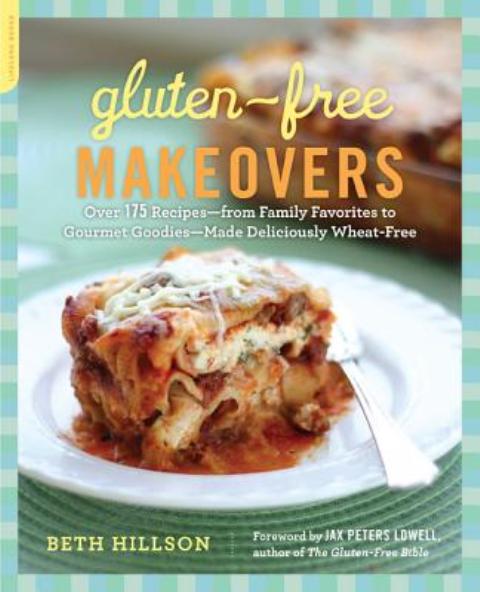
While thumbing through four new cookbooks, “125 Gluten-Free Vegetarian Recipes,” “Cooking Light Gluten-Free Cookbook,” “Gluten-Free Girl and the Chef” and “Gluten-Free Makeovers,” it occurred to me that the gluten-sensitive also go through an evolution in how they approach cooking post-diagnosis. During the early stages, people desire to retrofit their kitchen standards to be gluten-free, from their favorite bread, to mom’s meatloaf.
Later, they learn to appreciate a whole new world of foods and flavors, with recipes that are built from the ground up with ingredients that are naturally free of gluten-containing ingredients. Once gluten-free eaters have cycled through all the stages of grief, they possess a well-rounded kitchen repertoire, filled both with time-honored standards, and innovative new gluten-free foods.
A couple’s gluten-free journey

Both as someone who has experienced the stages of gluten grief, and as a food nerd, I found “Gluten-Free Girl and the Chef” to be especially appealing. Written by Shauna Ahern, and her chef husband, Daniel Ahern, this cookbook not only illuminates tantalizing gluten-free dishes, but also chronicles their love story. This isn’t just a collection of recipes, it’s a good read.
Out of love for Shauna, who is a celiac disease sufferer, chef Danny Ahern saw to it that his entire restaurant menu was retooled to be gluten-free. The recipes within the Aherns’ cookbook reflect a chef’s sensibilities, featuring glorious seasonal and fresh foods. Dishes such as black cod in black rice flour, sage polenta fries with parsley pesto, and crisp pork belly with wild rice, cabbage, sour cherries and honey-sage gastrique will certainly appeal to gastronomes, but might be daunting to inexperienced home cooks. That said, the instructions read as if given by a cooking coach, and might persuade the trepidatious to plunge into this book’s gorgeous recipes.
For the baker
“Gluten-Free Makeovers” by Beth Hillson transforms classic and comfort foods into gluten-free fare, with a strong emphasis on baked goods. However, that could also be the book’s weakness, as its recipes are based upon five different multi-flour blends.
Many gluten-free eaters shy away from these flour blends because of cost and the potential for unused flours. Those undaunted by flour blends will surely be eager to try recipes such as mock matzo, cinnamon plum cake, or bagel sticks.
Gluten-free and vegetarian
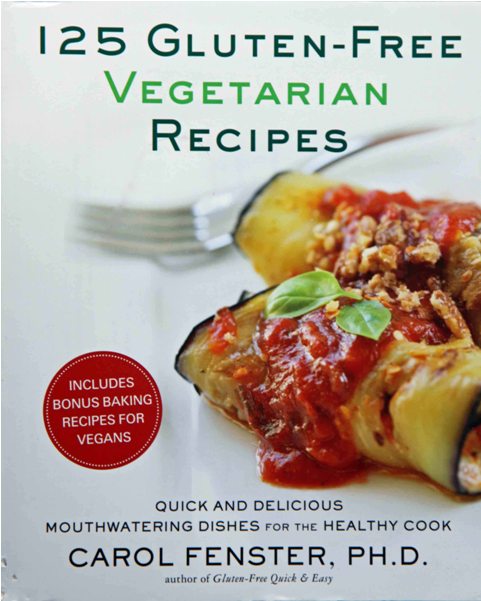

Many gluten-intolerant households also have to deal with dairy and egg allergies. Carol Fenster’s “125 Gluten-Free Vegetarian Recipes” could potentially accommodate a broader audience than gluten-free vegetarians because it contains so many vegan options. Recipes such as peperonata on soft polenta, stuffed bell peppers with picadillo rice, and Thai corn chowder contain neither dairy nor eggs.
It was surprising to see a section at the end of the book with tips for using animal protein in recipes, which included suggestions to use Jimmy Dean sausage, and Thumann’s Cocktail Franks. While these products may be gluten-free, people who are vegetarian for moral reasons might object to using meat originating from factory farms, rather than more sustainable and humane small farms.
Among this set of books, “The Cooking Light Gluten-Free Cookbook” has the broadest appeal. The user-friendly layout and recipes such as Vietnamese beef noodle soup with Asian greens, and tabbouleh-style amaranth salad will have a familiar feeling to readers of the popular magazine.
This cookbook has one particularly nice feature for those who need to navigate the minefield of gluten-free eating. Ingredients that need to be double-checked for gluten, such as canned broth, and Worcestershire sauce, are highlighted in red.
A well-rounded repertoire
Gluten-free eaters, like most, enjoy having a few go-to recipes like basic muffins and bread, as well as an arsenal of easy weeknight meals. They also like to occasionally reach for convenience foods like dry pasta and pre-made pizza crusts. Additionally, gluten-sensitive people are coming to embrace the wide world of naturally gluten-free foods, from fresh vegetables to gluten-free grains.
It’s pleasing to see cookbooks acknowledge these trends, so that the gluten-intolerant don’t have to feel they are settling for inferior meals.
Even within this niche, there is a cookbook to suit every family’s needs, from comfort foods, to vegetarian, to accessible restaurant-worthy cuisine. These four cookbooks illustrate the fact that gluten-free eaters needn’t grieve the loss of gluten. Rather, they can celebrate delicious cuisine.
Zester Daily contributor Wendy Petty lives in the Rocky Mountains, where she is a forager, photographer and wild foods consultant. She writes about her adventures with mountain food on her blog, Hunger and Thirst.
Photos, from top:
“Gluten-Free Girl and the Chef.” Credit: Courtesy of John Wiley & Sons
“Gluten-free makeovers.” Credit: Courtesy of Da Capo Lifelong Books
“125 Gluten-Free Vegetarian Recipes.” Credit: Courtesy of Avery Trade
“The Cooking Light Gluten-Free Cookbook.” Credit: Courtesy of Oxmoor House
The holidays just aren’t the same without pie, right? Apple pie, pecan pie, Grandma’s chiffon pie all sing special songs of the season. Unless you are gluten-sensitive, in which case, the holidays are a minefield of tempting, but often inedible treats. Perhaps even more so for the bewildered families and friends who have to host gluten-sensitive guests during holiday parties.
I’m all too familiar with this tricky territory, because I have celiac disease. My friends tease me, they are also quite caring and sensitive about my condition. They keep rice crackers on hand, serve polenta instead of bread and even convert favorite recipes when I join them for dinner. Some have even gone so far as to construct completely gluten-free meals, just so that my sensitivity can be accommodated, and I can enjoy a normal meal with everyone else.
I am a forager by trade and hobby. Most of my meals are built around wild vegetables, fruits and game meats. This means that on a day-to-day basis, being gluten-sensitive isn’t a problem. In fact, it’s something I rarely think about.
Doing without, and packing nuts
This hasn’t always been the case. When I was first diagnosed, I went through a mourning period. I missed my black pepper asiago sourdough loaf. I yearned for normal things like dinner rolls and breakfast cereal. I sulked when my friends visited an Asian buffet and I couldn’t come along (soy sauce contains gluten-containing wheat). I learned to travel with a bag of nuts in my purse to keep from going hungry at meal times.
There were several occasions when I had to reach for that bag of nuts. I attended more than one dinner where a dry salad mix was the only thing safe to eat. One time, a family member ended up in the hospital for an emergency and I was stuck there with nothing at the hospital safe for me to eat. I cried that night when my aunt ate doughnuts in front of me.
As the years went on, I missed these foods less. I learned to happily take my meals with a side of potatoes or other starchy vegetables. I know that every celiac is different, but I came to a point of peace. And when I reached that point, I decided that gluten-free replacement foods, such as gluten-free breads, pastas and cakes, were no longer important to me. In my mind, I had tasted breads and pastries at their finest, and those memories held a special place in my heart. Also, gluten-free replacement foods either didn’t measure up, or were too much trouble to make, often requiring blends of four or more unusual flours, and other strange ingredients.
Holidays are different
For the most part, I can do without breads and muffins and desserts entirely. But the holidays are different. Eating at the holidays is about so much more than just nutrition. During the holiday season, meals and feasts center on family and communion and nostalgia. I want to share in the tastes that have made each reunion special throughout the years.
I know others feel the same, both those with celiac disease and the people who cook for them. But gluten-free recipes and their complicated lists of ingredients can be daunting and may prevent people from diving in and creating treats every guest can enjoy.
I tried very hard to develop a recipe that used only ingredients that could be found in a major grocery store. Unfortunately, I failed. In fact, those attempts nearly had me in tears, and I’m usually a fairly calm and confident cook.
Instead, I’ve come up with this recipe, which contains only two specialty gluten-free ingredients: millet flour and xanthan gum. Millet flour is ground from millet seed and adds a delicate texture, flavor and color to the crust. If you can’t find millet flour, rice flour can be substituted. Xanthan gum is used to replace the elastic quality of gluten in regular wheat flour. If you are new to gluten-free baking, try to find the millet flour and xanthan gum in a health food store or co-op. The prices in those types of shops tend to be good, and you may even be able to purchase the items in bulk.
Because gluten-sensitive families are now so common, another good idea would be to find a friend or family member who already have millet flour and xanthan gum and purchase the necessary amounts from them.
One last important tip is to make certain the cornstarch and baking powder you use for the recipe are marked gluten-free on their label. Several major labels carried in grocery stores fit the bill.
This gluten-free pie crust comes out perfectly, time and again. I’ve used it as a crust for sweet pies, as tart shells, for turnovers, and for pot pie (omitting the sugar). It is my attempt to simplify gluten-free holiday baking for everyone. This recipe makes enough dough for either an 8- or 9-inch single crust pie.
Gluten-free pie crust
Ingredients
Directions
- Stir together dry ingredients.
- Using a pastry cutter or fork, cut in the cold butter. Stop short of creating a uniform sandy texture. Instead, aim to have some butter pieces the size of small peas, because these are what create a flaky crust.
- In a cup, whisk together the egg, vinegar, and water. Add these wet ingredients to the flour and butter mixture, and gently stir to combine. If the mixture appears to be too dry, keep adding cold water by the teaspoonful until the mixture starts to come together and form a ball of dough.
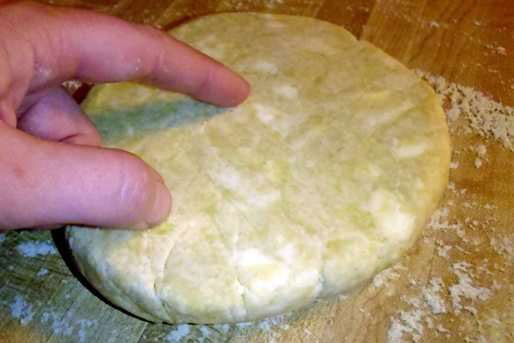
- Place the ball of dough in plastic wrap, and flatten it into a circle approximately 1-inch thick. Refrigerate for 15 minutes.
- Dust your counter and the pie dough with millet flour. Roll the dough to ⅛-inch thick, which is an approximately 12-inch circle.
- Transfer to pie plate, crimp edges, and prick the bottom with a fork. Bake in a 425 F oven for 10-12 minutes, or until the crust is slightly puffed and very slightly golden along the edges.
piecrust1
Zester Daily contributor Wendy Petty lives in the Rocky Mountains, where she is a forager, photographer and wild foods consultant. She writes about her adventures with mountain food on her blog, Hunger and Thirst.
Photo: Gluten-free pie crust treat for the holidays. Photo and slideshow credit: Wendy Petty