Articles in Cocktails
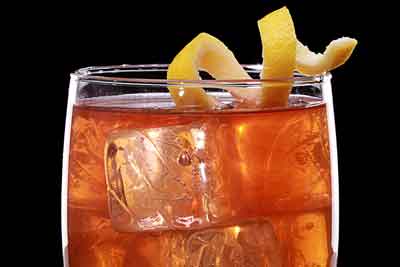
If you adore the fragrantly spicy foods of Southeast Asia, you might want to inject a sweet-and-spicy ginger liqueur into your next dish or drink. An integral part of Asian cuisines, ginger has become a popular flavor in cultures around the world.
Only able to grow in tropical and subtropical climes, the gnarled ginger root is peppery and mildly sweet. The French discovered it during their colonization of Vietnam, Cambodia and Laos, and much like the British in India with their Pimm’s No. 1 Cup (traditionally a blend of gin and ginger ale or lemonade), concocted a refreshing combination of ginger and brandy to get through the unfamiliar heat.
That makes a ginger-infused drink perfect for high summer, and there are several brands of ginger liqueur available. One of the most popular is Domaine de Canton, which re-creates the French colonial combination of ginger and brandy. It is produced with fresh baby ginger sourced from small farms throughout Vietnam, which is peeled and cut by hand, and then blended with VSOP and XO Grande Champagne Cognacs, Provencal honey, Tunisian ginseng and fresh vanilla bean.
The result is a smooth drink with the zest of ginger but not the bite, balanced by the sweetness of vanilla and honey and the full-bodied mouthfeel of cognac.
The King’s Ginger Liqueur is an option with a pedigree — it’s made from a recipe dating to 1903 by Berry Bros. and Rudd in London for King Edward VII to “stimulate and revivify” himself. Instead of Cognac, it has Glenrothes Single Malt Scotch as its base, plus ground ginger and lemon peel.
The excitement around ginger-based drinks has even inspired such large spirits makers as DeKuyper — the Dutch brand famous for Schnapps — to add a ginger liqueur to its Mixologist Collection line, blending honey and ginger into a slightly sweeter mixer for Ginger Martinis or the company’s Gingersnap Cocktail.
Smaller distillers such as New Deal Distillery in Portland, Ore., have also been playing around with ginger, infusing fresh, chopped organic ginger root into an unspecified spirit then adding a touch of organic cane sugar and agave nectar. Their recommendation: Mix it with bourbon, or just serve it on the rocks. And Stirrings, which makes all-natural cocktail mixers, has just released a ginger liqueur itself, all the better to mix with its Apple Martini mixer.
Canton Classic
Serves 1
Ingredients
2½ parts Domaine de Canton or other ginger liqueur
½ part fresh lemon juice
2 dashes Angostura bitters
Slice of lemon peel, for a twist
Directions
1. Combine liqueur, lemon juice and bitters in a cocktail shaker.
2. Shake vigorously and strain over ice in a rocks glass.
3. Garnish with a lemon twist.
Photo: The Canton Classic cocktail. Credit: Domaine de Canton
The quintessential American summer drink, iced tea was invented in 1904 at the St. Louis World’s Fair. Since then, it has easily overtaken hot tea in popularity; Americans drink 85% more of iced tea than hot each year — about 2.5 billion gallons in all.
Iced tea is typically brewed hot and served cold; the flavor and body vary depending on the type of tea that’s used, with black tea being the traditional choice.
It goes down easy with barbecue and plenty of other classic Southern dishes and is so common south of the Mason-Dixon line that it’s sometimes called the house wine of the South.
We like it plain, we like it with sugar, with lemon, with mint and mixed with lemonade, so why not with vodka, tequila or rum?
An appealingly exotic option for making cocktails is Pu-erh, an ancient type of healing tea picked from old-growth, wild tea trees in the mountains of China. It is the oldest tea to have traveled the ancient tea route, from the village of Pu-erh through Yunnan Province and onto the southern Silk Road.
After picking, the tea’s leaves are put in a pile, dampened and left to ferment for 60 days, giving Pu-erh a distinctly earthy flavor. Like a great wine, this fermented tea is thought to get better with age.
Artisan tea makers have begun to offer Pu-erh in the U.S., including Mighty Tea and Oakland-based Numi Organic Tea, which makes Pu-erh in four flavors: Chocolate, Moroccan Mint, floral Magnolia and Emperor’s, a rich, earthy, malt-tinged tea that is a good alternative to coffee.
Numi now bottles its iced Pu-erh teas, but for this recipe it recommends that you steep a traditional tea bag in hot water to best pull out its rich flavor, letting it cool before mixing. The strongly steeped tea will also help boost the drink’s structure.
Pu-erh’s earthy backbone offers enough weight to balance the other range of flavors going on in this summery cocktail recipe, which includes plenty of refreshing fruitiness from the frozen cantaloupe, complemented on the finish by the crispness of the lemon juice and vodka.
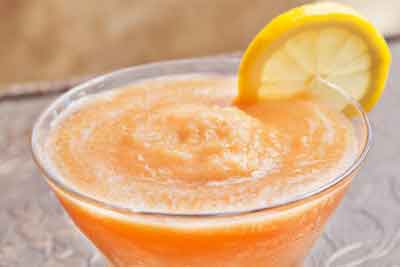
Numi Cantaloupe Tea Daiquiri
Serves 1
Ingredients
1½ ounces Numi Emperor’s Pu-erh Tea
1½ ounces vodka
3 ounces frozen cubed cantaloupe
1 ounce coconut milk
Splash of lemon juice
Directions
1. Steep tea in boiling hot water at four times the normal strength for 2 minutes, then remove tea bag and chill liquid for later use.
2. Combine and blend ingredients in a blender, adding a splash of lemon for each serving.
3. Serve on the rocks, garnished with a lemon wedge.
Photo: Cantaloupe Tea Daiquiri. Credit: Courtesy of Numi Organic Tea

I used to tell people that I got interested in cocktails because my parents were into wine and it was my way of being a rebel. In comparison with cork-sniffing and vintage-cataloguing, quaffing cocktails seemed a lot more fun — and a whole lot less like work.
That was 10 years ago, an era when cranberry juice reigned behind the bar, insisting on fresh citrus was considered crazy and the shaken martini was still de rigeur. Almost nobody considered the importance of ice, how different sized and shaped cubes affected a cocktail.
Flash forward to the present when managers and bartenders at even indifferent chains stock 31 different flavors of bitters (two of them mole-based!). Now cocktail enthusiasts write dissertation-level explanations on the evolution of old recipes, and even mid-sized cities report a surfeit of faux-speakeasy bars (aka speak-cheesy). A night out can dock a couple $72 (before the tip) for two drinks each, and thanks to the bartender’s showmanship, a single libation can take 20 minutes to make.
The rise of the craft cocktail
Just how did we get to this era of refined drinking? New York was a pioneer of the craft cocktail — drinks carefully conjured from pre-Prohibition recipes and house-made ingredients. Bars like Milk and Honey, Please Don’t Tell and Flatiron Lounge promised better drinks and a less boisterous atmosphere. Dedicated craftsmen, like bartenders Katie Stipe and Jim Meehan weren’t actors waiting to be discovered (and feeling secretly better than those they served). They were — and are — passionate bartenders sharing their enthusiasm with customers.
Stipe and Meehan are among the pioneers who helped establish an interesting subculture. Marked by sideburns, mustaches, fedoras and tattoos, today’s professional craft cocktail makers create syrups from scratch and hand-carve ice to achieve specific levels of coldness suited to the level of dilution required. In the late 19th century, the American cocktail was a culinary innovation and cultural export — one of our great contributions to world epicurean excellence.
Prohibition and the collapse of the ‘drinkway’
The corpse reviver family of cocktails (traditionally morning drinks intended to revive the hungover corpse) was widely celebrated at the Paris Exposition in 1889. But Prohibition, that noble experiment, lasted for a long, thirsty stretch and resulted in what is called a lost “foodway,” or, in this case, “drinkway.” Recipes and methods stopped being passed down from one bartender to the next through hands-on training and apprenticeship. By the time bars reopened in the 1930s, the ranks of professional barmen had long moved on to other careers or retired.
Prohibition-era drinks were often overly sweet and creamy to mask the substandard booze. Post-Prohibition drinks grew out of that tradition, but became bigger, as the game became “How much liquor can you get into a glass?” Nobody would deny the virtues of midcentury American classics like daiquiris and gimlets, but over the next few decades artificial-tasting and looking bar mixes replaced fresh lime. In the 1980s, candy-flavored drinks brightly colored with grenadine, like the Tequila Sunrise, “fruit” daiquiris and margaritas, and bright red Royal Rickeys emerged.
Beyond cran-and-vodkas
The end of the 20th century and early millennial years are often viewed as the nadir of the cocktail timeline, until Sasha Petraske of Milk and Honey, rightly viewed as America’s first “craft cocktail” bar, took the reins and taught people to just say no to cranberry and vodka. He didn’t stock either ingredient. Instead, he proffered gin- and brown liquor-based classics made with fresh-squeezed juices and house-made syrups. “bartender’s choice” drinks, reflecting the omakase trend in sushi restaurants, took hold.
That said, the relationship between drinker and pourer is not always amiable. The last time I went to a bar, one I won’t name (but let’s just say it was a New York speakeasy-style spot known for some of the best drinks in the country on East 6th Street somewhere between 1st and A avenues), I received a 30-minute penalty before being served because I failed to give enough direction on my bartender’s choice. The conversation went roughly like this:
ME: “I’d like a Bartender’s Choice — anything with rum.”
BARTENDER: “That doesn’t help me at all, since I don’t know what kind of drink you like.”
The bartender proceeded to serve every person at the bar before coming back with a Swizzle, a tall rum, fruit juice, falernum and bitters drink served over finely crushed ice. Admittedly, it was a very good Swizzle, but at that point a Bud Light Lime would have tasted pretty good, too.
At that moment, I felt like we’d lost the plot. My first book was about cocktails, but I am far more interested in bar culture than in specific ingredients. As bartenders are downright fetishized for their ability to combine specific spirits, I feel we’re losing some of the spirit of the bar. People are there to have a good time and meet people, not to pray at the altar of the cocktail.
There are other aspects of fine drinking (as opposed to fine dining) that are less than democratic. Craft cocktail bars aren’t your drop-by-after-work-and-chat-with-Norm kind of places. More often than not, they take reservations and enforce rules about speaking to people (especially women) you don’t know. Initially, that was such a welcome rule – and there’s still a place for it – but it begs the question: Why are we trying to de-socialize the emblem of sociability? And then there’s the price. It’s not unusual for a cocktail to run between $12 and $16 these days.
Is cocktail snobbery the problem? Probably not the biggest one, since gentrification, healthism and car culture are all probably bigger threats to traditional bar culture. But just in case elitism is even a small component, I’m doing my part to fight it — I’m switching back to wine.
And the occasional vodka.
This week’s Zester Soapbox contributor Christine Sismondo is a Toronto-based author and barfly. She wrote “Mondo Cocktail: A Shaken and Stirred History” in 2005 and, more recently, “America Walks into a Bar: A Spirited History of Taverns and Saloons, Grog Shops and Speakeasies.“
Photo: Christine Sismondo.
Credit: Steve Edgar
* * *
ENTER NOW to win a contest for Christine Sismondo’s “America Walks Into a Bar” and William Yeoward’s “American Bar.” Ten entries will be selected to receive both books!
* * *
Shop Indie Bookstores

Shop Indie Bookstores
This is eggnog season, and we all know eggnog is flavored with rum, or maybe whiskey.
But not necessarily. Mediterranean sweet wines work beautifully, and they’re even more traditional.
The word “eggnog” doesn’t show up until the early 19th century. It’s a bit obscure — the Oxford English Dictionary connects it with “nog,” which was a sort of strong ale made in East Anglia, but it might more logically be connected with “noggin,” which meant a small quantity of liquor or a mug (before it became a quaint old-fashioned slang word for the head). Or who knows, all these words might be connected.
At any rate, eggnog is just one member of an English family of hot sweet drinks of milk or cream mixed with some kind of liquor. There had been drinks called caudles and possets at least since the 17th century. Originally, possets were enriched with nuts and were partly drunk, partly eaten, from special posset cups. All these drinks were considered soothing and digestible and a proper treatment for the common cold. In the original 1896 edition of “The Boston Cooking-School Cookbook,” Fannie Farmer still placed her eggnog recipes in the sick-room food chapter.
No kidding, it’s rich
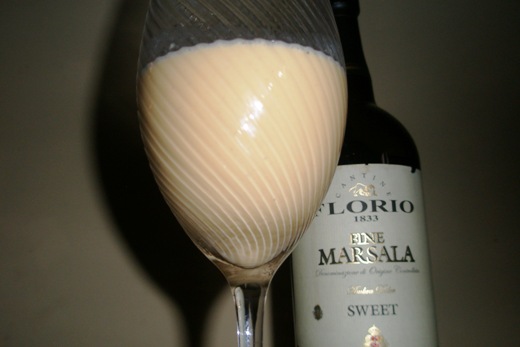
The direct ancestor of eggnog might be the sack posset, which was made with sack instead of rum or whiskey. “Sack” was the general name for raisiny Mediterranean sweet wines such as sherry, Marsala, Malaga and others we’ve forgotten, such as Canary and Mountain. Personally, I prefer Marsala for this recipe, which comes from “Kidder’s Receipts,” a 1740 manual of dishes taught at Edward Kidder’s cooking school for those who might be required to prepare “cuisine suitable for the corporate dinners of aldermen and lawyers.”
Kidder’s original recipe calls for eryngo, an ingredient you just don’t see any more. In its day, though, eryngo was hot stuff, literally. It was considered an aphrodisiac, which is why Falstaff calls for the skies to “hail kissing-comfits and snow eryngoes” in “The Merry Wives of Windsor.” Eryngoes were the candied stems of a thistle-like member of the carrot family. (Kidder refers to eryngo roots; he might have been confused, or he might have been leaning a little too heavily into his own sack posset.)
Anyway, by all means add eryngoes if you have them. Maybe they turn this drink into the culinary equivalent of mistletoe. And by the way, other old sack posset recipes used milk instead of cream and cinnamon in place of nutmeg, so there are some other possibilities in old school nog.
Sack Posset
Makes 5 or 6 servings
Ingredients
Directions
- Separate 7 of the eggs and discard the whites. In a mixing bowl, beat the 7 yolks and 7 whole eggs with the sugar and sherry. Beat on high speed 30 seconds.
- Put the cream in a saucepan with the nutmeg or cinnamon and bring it to a full boil, 7 or 8 minutes.
- Slowly pour the boiling cream into the eggs, whisking constantly until thoroughly blended.
- Cook over medium heat, stirring constantly until the texture is distinctly thickened, the eggs no longer smell raw and if you stir in one direction and remove the spoon, the liquid quickly stops moving, 6 or 7 minutes. The temperature will be 159 or 160 degrees F.
- Immediately transfer the posset back to the mixing bowl to stop cooking and serve.
Zester Daily contributor Charles Perry is a former rock ‘n’ roll journalist turned food historian who worked for the Los Angeles Times’ award-winning Food section, where he twice was a finalist for the James Beard award.Photo: Sack posset. Credit: Charles Perry
Most American families who take food seriously during the holidays are now beginning to think about all they need to do for its preparation. In our family, it’s quite a production, beginning at least two weeks in advance and sometimes more.
But there’s one thing families often overlook, and that’s the holiday toast. Many people are perfectly happy toasting thanks for their bounty with a fine wine, a bourbon and water, or a beer, but our family cannot not have our homemade holiday eggnog. We have it at Christmas, and it’s really a joy at Thanksgiving.
Our eggnog is ridiculously rich, a bit involved to make, and we really only drink it for toasts, as to drink it continuously has alcoholic and caloric consequences. Nevertheless, it’s just too delicious to have only one glass, so we each have at least two, and some of us — usually my adult children — have even more.
Wright Family Eggnog
Serves 10
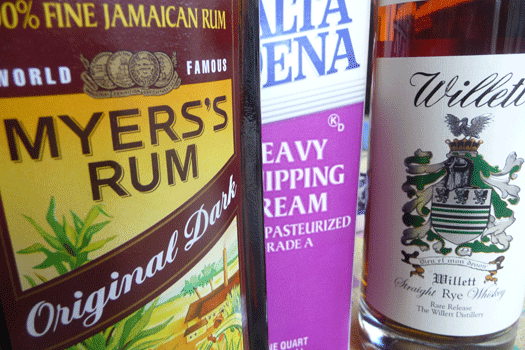
Make sure you have the finest ingredients: good bourbon, such as Woodford Reserve; a good dark rum, such as Myers’s; and the freshest eggs, whole milk and heavy cream — preferably not ultra-pasteurized, although that is fine to use.
Ingredients
Directions
- Set out three bowls, one larger than the other two. Separate 3 large eggs and put the yolks into the largest bowl and the whites into another bowl.
- Whisk the yolks until they are thick and lemon-colored. Add ½ cup sugar to the yolks and stir until the sugar is dissolved.
- In the second bowl, beat the egg whites and ½ cup sugar until the whites are very stiff but not dry.
- In the third bowl, whip the cream until it forms peaks and you have 1 cup of whipped cream.
- Begin combining the contents of the bowls by pouring about ¼ cup of bourbon over the yolks, stirring constantly.
- Then add the whites, a small quantity at a time, to the bowl with the rest of the bourbon, stirring and folding.
- Next, stir and fold in the whipped cream, the rest of the bourbon and the rum.
- Pour in the milk, stir gently, sprinkle with a little freshly ground nutmeg, stir and transfer to a punch bowl or a pitcher and chill for at least 2 hours.
This amount is good for 10 small one-drink toasts. Triple the recipe if you want to get blotto.
Zester Daily contributor Clifford A. Wright won the James Beard / KitchenAid Cookbook of the Year Award and the James Beard Award for the Best Writing on Food in 2000 for “A Mediterranean Feast.” His latest book is “Hot & Cheesy” (Wiley) about cooking with cheese.
Photo: Some of the ingredients for eggnog. Credit: Clifford A. Wright
Maybe I had scurvy or malaria, as this year I’d already been managing a near constant craving for the gin and tonic, which combats both maladies, before I even went to Spain. For me, the G&T is another man’s meatloaf: comfort food. The mere smell of the drink, floated on the effervescent spray of a recently poured bottle of tonic, carries me right back to my youth when on summer evenings my parents would relax in the backyard with a couple of icy gin and tonics and I would sit by with my virgin version — tonic and lime — trying to seem mature.
But even my very real love and respect for the drink falls flat given the reverence for it in Spain. On a recent visit through Basque lands to the north, I was shocked by the dedication of seemingly every bar and restaurant to offering a totalizing, almost overwhelming experience of the gin and tonic. They’re mad for it.
To start, most bars carry gin menus as long as some wine lists I’ve seen. Even in small towns, gin selections are stunningly complete. Beyond the gold standards like Tanqueray, Hendrick’s, Plymouth and Beefeater, one could easily find much more niche bottles such as 209 and Junipero, both from San Francisco, Blue gin from Austria, G’Vine from France, as well as brand new products such as Nolet’s from the Ketel One folks of Holland and No. 3 from London merchants Berry Bros & Rudd.
Tonic is given its proper due — anyone who values the gin and tonic knows that the latter, non-alcoholic ingredient is just as important to the drink’s ultimate success as the starring spirit — by being likewise offered in a selection of small, individually-sized bottles. (The small bottle of tonic, 200 ml, is essential to the individual G&T. Nothing is worse than flat tonic, which is what tends to come out of larger bottles and “the gun” so commonly found in American bars). Beyond the expected Schweppes, many bars offered the relatively recent arrivals of Fever Tree and Q tonics, and some even had Fentimans, a newcomer among newcomers. I thrill to the fact that we finally have a choice among tonics and that many of them are quite good. I’m a Fever Tree man, myself, not just because they were the first “artisan” tonic to arrive, but because in test after test, my palate prefers its brightness and complexity. But I know people who prefer the slightly less florid, more austere Q tonic for precisely those traits.k
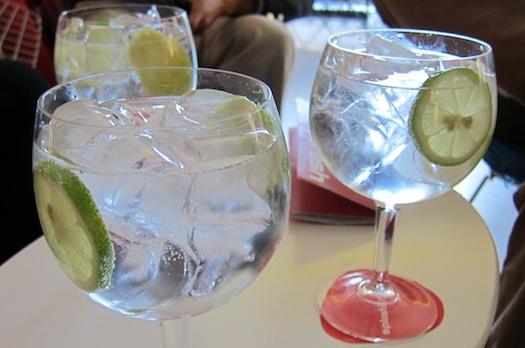
Typically, in Spain, I found the cocktail built in a large glass wine goblet. Often the bartender (or bartendress, as there were many females), would begin by gently muddling a long, flat strip of lemon or lime zest in the bottom of the glass to release its oils. Then large ice cubes would be taken from a bucket with tongs and casually dropped in the glass. The gin would come next, measured with a jigger to the tune of two to three ounces and the tonic would come last, filling the glass. Perhaps a squeeze of lemon or lime would top off the beautiful, clear globe of refreshing deliciousness.
I’m not the first to become enamored of Spain’s gin and tonic obsession. My colleague and friend Jason Wilson chronicled the phenomenon in the Washington Post last spring, as did Kara Newman in Food Republic. They uncovered even more floral and elaborate preparations that included various fruits, vegetables and spices in the mix, all of which sound delightful.
But I politely dispute a couple of declarations offered in Wilson’s article. First, his statement that “There is no perfect G&T”; and, second, the opinion of a bartender he cites in the piece, who says, “There’s really no reason to stick to lime.”
The perfect G&T is one that can be made in under a minute — 30 seconds, if you’re quick. I’m also a stout believer that the perfect G&T includes a generous dousing with lime, squeezed fresh from the husk of the fruit. Indeed, to me, the lime is essential. It’s the spark that powers the drink: A Christmas tree only becomes dazzling if one plugs in its lights. And, after having done many trials, it’s the London Dry style of gin that goes best with most tonics (Plymouth, I love you, but I’m saving you for my martinis). In fact, these days nothing is a better match with the citrus and spice high notes of Fever Tree tonic than the insistent pepperiness of classic Tanqueray. Take them in a measure of 2-1, tonic to gin, in a glass filled with large ice cubes. Drizzle a half a lime, about an ounce, over the top and gently stir in. Finally, drop another wedge of lime on top for looks and aromatics. Now go and enjoy your summer.
Jordan Mackay is the wine and spirits editor for San Francisco’s metropolitan magazine 7×7 and writes The Juice column for Chow. In addition, he’s a contributing writer for Wine and Spirits magazine and a regular contributor to Decanter and the San Francisco Chronicle.
Photo: Gin and tonic at Hotel Domine Bilbao in Bilbao, Spain. Credit: Jordan Mackay
Lime-laced daiquiris, creamy piña coladas, ginger-tinged dark ‘n’ stormies: When we think of rum, we naturally imagine tropical cocktails against a dreamy backdrop of sun, sand and surf. But there’s another side to this popular spirit. While the colorful history of its production throughout the Caribbean is darkened by colonialism and slavery, rum itself is a far more complex character than its starring role in umbrella drinks suggests. Not to knock such stuff completely — there’s good reason for the current revival of vintage punches and classic tiki concoctions: Namely, their combination of technical complexity and fruity froth appeals to serious-minded mixologists and party-minded revelers alike.
Colorado Rums
• Infused with cinnamon sticks, vanilla beans and whole nutmeg, Dancing Pines Distillery’s spiced rum (it also makes white and cask-aged rum) is lightly, not cloyingly, sweet, providing a swell base for toddies.
• In addition to white, gold, spiced and vanilla rums, Downslope Distilling produces a numbered bottle series, variously aged in Hungarian Tokaji, Sonoma Cabernet and Napa Merlot casks. While they’re all super-smooth, the Tokaji barrel-aged rum (batch numbers 001 and 002) is particularly heady, boasting aromas of vanilla and spiced caramel as well as a distinctive butteriness. Its Cabernet-influenced counterpart, batch number 003, is slightly lighter and, of course, fruitier.
• Montanya Distillers plans to add an organic rum and an ultra-aged rum to its current lineup of platino and oro rums. The latter, Hoskin notes, yields especially “unusual flavors on the backpalate, like pear, butterscotch, red chile, and black pepper.”
Distilled most commonly from molasses, rum can also be made from cane syrup or even fresh cane juice (as is the famed rhum agricole of Martinique). Varieties are myriad; depending on the aging process, they can be white, gold, dark and black as well as spiced. Generally speaking, the longer they’ve aged, the better they serve as sipping rather than mixing rums. But quality is primarily determined by the careful efforts of the distiller — which helps explain why, high in the Rocky Mountains, of all places, a number of enterprising Coloradans are beginning to produce some real gems.
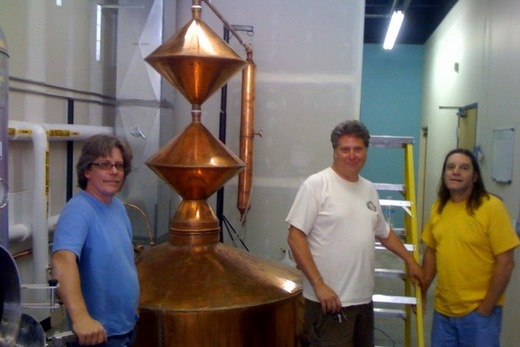
Granted, they’re at one major disadvantage. As Andy Causey — who, with his brother Matt and their partner Mitch Abate, runs Downslope Distilling in the Denver suburb of Centennial — puts it, “Obviously, we can’t grow sugar cane on the banks of the mighty Cherry Creek. We’re also landlocked, so the historical commercial aspects [of the industry] are absent as well.”
Why assume such a expensive risk, then, in sourcing dried, pressed cane juice from Maui, especially when grain-based products — Downslope also makes vodka and whiskey — have a far clearer track record here? He shrugs wryly. “The answer is, Why not? The market is mostly populated with insipid product, and it just doesn’t have to be that way. And there’s a lot of room for us to distinguish ourselves because we’re out of the typical production zone.”
His sibling Matt agrees. “My experiences with white rum were limited to Bacardi — looks like nothing’s there, tastes like lighter fluid. But no one was really making it around here, and while at first we were apprehensive, once we tried some, we were like, ‘Wow, this is what rum should taste like.”
High altitude spirits
Meanwhile, as Montanya Distillers’ Karen Hoskin, sees it, the mountainous Colorado landscape actually presents a level, rather than uneven, playing field. On the one hand, she says, “One of the bigger misconceptions out there is that these Caribbean distilleries are getting cane from their own islands, and that’s actually gone by the wayside pretty significantly. They have tremendous pressure from the tourism industry [in terms of land use], so most Caribbean distillers are pulling their cane from Paraguay, Uruguay, Brazil.” Montanya gets its cane from Maui, so “it’s not even like they have a benefit over us.”
On the other hand, it was after an eye-opening visit to the acclaimed Ron Zacapa distillery, high in the Sierra Madres of Guatemala, that Hoskin and her husband-partner Brice Hoskin “determined that what was more important than immediate access to sugar cane was access to really high quality mountain water and altitude-aging potential.”
“We think Rocky Mountain water is the best in the world; ours comes from snowmelt and it’s exceptionally flavorful.”
The second point is a bit more complicated, Hoskins explains: “We did a lot of research to see what effect altitude has on aging. What it comes down to is that the diurnal temperature fluctuations that happen in the barrels [at high elevations] are a catalyst to aging. It’s a very kinetic process; the rum is forced in and out of the pores of the barrels, getting exposed to the oak and the charcoal in a way that doesn’t happen in a humid sea-level climate, where they use pressurizing techniques to try to create the natural environment that we have here in Colorado.”
Thus satisfied that they could indeed make great rum at 9,300 feet, the Hoskins opened Montanya in Silverton in 2008. Convincing the public they could do it turned out, much to their surprise, to be even easier. Now the fastest-growing rum distillery in the United States (which recently moved to a larger base of operations in Crested Butte), Montanya “kinda got it right from the start,” marvels Hoskin. Both the light (platino) and dark (oro) rums took medals at prestigious international competitions the year they were released, and their acclaim has only spread.
Colorado: ‘built by the tipplers for the tipplers’
But credit for Colorado’s microdistillery boom doesn’t, Hoskin points out, go solely to the producers themselves. Legislation friendly to permit-seeking entrepreneurs was “an essential piece” of their success, she says, just as it has been for the long-established local beer industry. “I do think that Colorado offers a higher level of support for the industry, and it has such a strong history of microbrewing. There’s a synergy of people who’ve been in the beer world and are moving into the spirits world. So [Coloradans have] been trained by companies like New Belgium and Ska and Stranahan’s, which was on the early end of the distilling trend, to have a mentality of appreciating drinks that come from close to home.”
New Belgium and Ska are famed brewing companies in Fort Collins and Durango, respectively. Denver-based sensation Stranahan’s Colorado Whiskey was bought by Promixo Spirits to the tune of $3 million in 2010.
Even anecdotal history goes to show that Colorado, like few other states, was built by the tipplers, for the tipplers. Thanks to the hard-knock yahoos who came to stake their claim in gold in the 19th century, taverns sprouted here before schools and hospitals. It was in a saloon that the seat of local government was founded in 1859. And once an influx of enterprising German immigrants (among them one Adolph Kuhrs) caught wind of its wealth of natural resources — above all those aforementioned mountain springs — the state was bound to gain renown as a brewhub.
Rum trade: ‘Whatever it takes’
That rugged DIY attitude has now spread from brewers to distillers, embodied in characters like Kristian Naslund of Loveland, who only recently left his job as a paramedic firefighter to concentrate full time on his startup with wife Kimberly, Dancing Pines Distillery — which produces not only three different rums from blackstrap molasses but also a number of cordials, including a superb espresso liqueur infused with locally roasted beans.
And Ian James, founder of Mancos Valley Distillery, a former brewer who single-handedly produces Ian’s Alley Rum out of, yes, an alley off Main Street in a sleepy town near the Four Corners. And Mitch Abate, the Causey brothers’ partner at Downslope — who once posed as a journalist to land one-on-one research interviews with a number of Kentucky’s master bourbon distillers. “They treated me like royalty, wining and dining me,” he recalls with amusement.
Hey, whatever it takes. That could well be the motto of Colorado’s emerging rum trade.
Co Co Rumchata
Horchata, a spiced rice-and-almond cooler popular across Latin America, serves as the inspiration for this cocktail from bartender Tyler French of Denver’s Row 14 Bistro & Wine Bar.
Serves one
Directions
- Shake all ingredients in a tin vigorously.
- Add ice and shake again.
- Strain into a small wine glass rimmed with cocoa powder rim.
- Sprinkle chocolate shavings over the foam.
- Serve with a small straw.
* Simple syrup is a mixture of equal parts sugar and water brought to a boil, then reduced to a simmer until the sugar is dissolved.
Zester Daily contributor Ruth Tobias is assistant editor at Sommelier Journal as well as a seasoned food-and-beverage writer for numerous city and national publications; she is also the author of the upcoming “Food Lover’s Guide to Denver & Boulder” from Globe Pequot. Her website is www.ruthtobias.com or follow her @Denveater.
Photos, from top:
Matt Causey, Andy Causey and Mitch Abate of Downslope Distilling. Credit: Downslope Distilling.
Co Co Rumchata. Credit: Tyler French.
Tales of the Cocktail, the international cocktail conference/festival, took itself on the road last week, traveling from its steamy New Orleans-in-July locale to the drizzly downtown of Vancouver for a one-day event (with parties on both the preceding and following days). That one day, however, was a microcosm of the Cajun Tales, replete with seminars — from cocktail luminaries like Allen Katz, the host of the cocktail hour on Martha Stewart’s Sirius station; Dave Arnold, head of culinary technology at New York’s French Culinary Institute; and Jeff “Beachbum” Berry, author of five books on Tiki drinks — demonstrations, tastings and, yes, lots of schmoozing and drinking.
The cocktail movement is spreading horizontally
The real star of the show, to my mind, was Vancouver itself (and its legion of young, smart and highly professional barkeeps). I have said for over a year now that the cocktail movement hit a ceiling in terms of the wild inventiveness and creativity that fueled its rise and that the only direction for it to go was horizontal — to spread from epicenters like New York; San Francisco; Portland, Ore.; and Chicago to places where telling the bartender you want the Last Word will get you a greenish beverage, not an ejection. Despite its cold, damp surface, Vancouver has a drinking scene that doesn’t lack for heat (lots to talk about beer- and wine-wise there too) these days. And for me, who had spent only one long night in British Columbia’s largest city 10 years ago, there’s no place more exciting a place than a city whose cocktail/bar scene is taking off.
One thing driving Vancouver’s transformation is an influx of bartenders from around the world, particularly around the Commonwealth. Two of the great early epicenters of the modern cocktail culture were London and Australia, whose nationals can happily gain easy work visas into Canada. As Jacob Sweetapple, bar manager for the excellent (and exceedingly popular) bar at the shiny new Farimont Pacific Rim hotel says, “A lot of the top bartenders in town have worked all over the world and have just ended up here at the same time. In fact, we were drawn here by the energy that we could see concentrating.”
Sweetapple, an Australian, has worked in London and Sydney and brings a worldly flair to his menu at the Fairmont Pac Rim’s elegant lobby bar. He says that Vancouver has blossomed right before his very eyes. “A year ago in a place like this I probably couldn’t have gotten away with even putting a classic like a Sazerac on the menu,” he says, gesturing to the vast, light-filled, airy hotel lobby, “but somewhere around three months ago, people started clamoring for things like that.” I was charmed by his negroni made with house barrel-aged vermouth, but his stately Valid Victorian cocktail was the one that won me over. Its pale pink hue makes it look like a ladies’ drink, but it doesn’t pull any punches. The cocktail — a combination of gin, ginger liqueur and peychaud bitters — has a dry sophistication and seriousness (recalling, say, an English grand dame like Helen Mirren) that belies its color, and its femininity is strong and invokes Vancouver itself (a feminine city, in a way, as it’s surrounded by and transected by water in the form of bays, canals, rivers and creeks).
Appropriately, Vancouver has a strong contingent of female bartenders led by Danielle Tatarin, the reigning president of the Canadian Professional Bartenders Association and the charismatic presence behind the excellent bar at The Keefer. A hotel and bar, The Keefer resides in rapidly gentrifying Chinatown, which asserts its presence not only outside the bar but in the cocktails themselves, displayed in The Dragon Fly — a creative combination of gin, dragonfruit, pearl sake, lemon, ginger syrup and homemade magnolia bark tincture — and the Opium Sour, which seasons a mixture of grapefruit, Makers Mark and tamarind with poppyseed tincture.
Chinese cuisine and culture is the direct source for the Keefer’s almost-neighbor, Bao Bei, which was perhaps my favorite stop in Vancouver. Owned and run by another young woman, the charming Tannis Ling, formerly a bartender at Chambar, Bao Bei (a Chinese term of endearment like “precious” or “darling” to which Ling was evidently referred when she was young) is a quirky, idiosyncratic establishment that seems to radiate a personality (likely Ling’s), and serves excellent Chinese bistro fare that makes great salty, savory accompaniment to a phenomenal cocktail list that likewise delves into Ling’s native cuisine. The Handsome Benny involves bourbon, maraschino, Punt e Mes and “smoky plum,” a soothing elixir in Chinese culture. The Kai Yuen Sour applied Chinese plum syrup to rye, lemon, bitters and egg whites; and the Scarlet Clue cocktail was a marvel of balance despite blending sizable amounts of Angostura bitters and Cynar.
Food and drinks go hand in hand
Food is a common theme in the Vancouver bar scene. I can’t remember a single establishment I visited for cocktails that didn’t also serve food. L’Abattoir, in Vancouver’s nighttime playground of Gastown, is one of the most acclaimed restaurants in town, but also has a gorgeous, cozy bar run by Shaun Layton. (I loved the Meat Hook: bourbon, maraschino, Punt e Mes, and smoky Ardebg 10.) Across the street, the Diamond throbs with energy and seems to serve as the city’s cocktail hub. Operated by two of the top bartenders in town, Mark Brand (formerly of Boneta) and Josh Pape (Chambar), the Diamond has an extensive menu and pulls in the crowds on weekend nights. Though it serves food, I must say that I didn’t see a plate either of the times I was in there.
And these are but a few of Vancouver’s cocktail beacons. There is amazing stuff to be had at the Refinery, West, Pourhouse, Chambar, Uva and many others. Furthermore, the service I experienced in Vancouver was quite good. I was impressed that the citywide uniform for male bartenders was business casual — shirtsleeves usually accompanied by a swank necktie (no retro curly mustaches and vests), giving an air of capability and professionalism, while inspiring confidence in customers that they’re being well taken care of. If there’s one thing that bartenders suffer from here, it’s the availability of the wide variety of spirits we see in most U.S. states, as the flow of liquor into B.C. is regulated by the government. And, often, what bartenders can get their hands on is extremely expensive relative to its price across the border. “It makes life difficult, for sure,” said L’Abattoir’s Layton, “but I think it’s also inspired us to be more creative, to do more with less.”
Indeed, you wouldn’t know they had less — the overarching mood at the city’s bars is one of joyful plenitude.
Valid Victorian From the Fairmont Pacific Rim
Ingredients
Directions
- Shake all ingredients with ice and strain into a chilled martini glass.
The Scarlet Clue From Bao Bei
Ingredients
Directions
- Shake all ingredients with ice and strain into a chilled martini glass.
Jordan Mackay is the wine and spirits editor for San Francisco’s metropolitan magazine 7×7 and writes The Juice column for Chow. In addition, he’s a contributing writer for Wine and Spirits magazine and a regular contributor to Decanter and the San Francisco Chronicle.
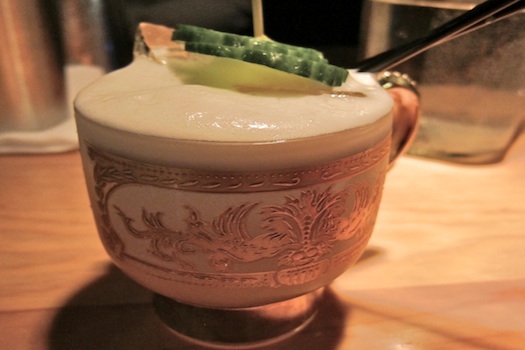
Photo: The “A Spot of Tea” cocktail from Vancouver’s L’Abattoir. Credit: Jordan Mackay
Upcoming Events
-
see all of our
Upcoming Events
-
Nathan’s Famous International Hot Dog-Eating Contest July 4Takes place on July 4, 2013Nathan’s Famous International Hot Dog-Eating Contest The men and women will compete separately for the title of Men’s Hot Dog Eating World Champion and Women’s…
-
The Park City Food & Wine Classic July 10-14Takes place on July 10, 2013The Park City Food & Wine Classic THE PARK CITY FOOD & WINE CLASSIC is a premier destination event where master winemakers, culinary greats, and…
-
Taste of Chicago 2013 July 10-14Takes place on July 10, 2013Taste of Chicago 2013 Taste of Chicago 2013 is Chicago’s biggest event. Getting its start as a modest food festival on the Fourth of July…
SmartBrief