Articles in Chefs
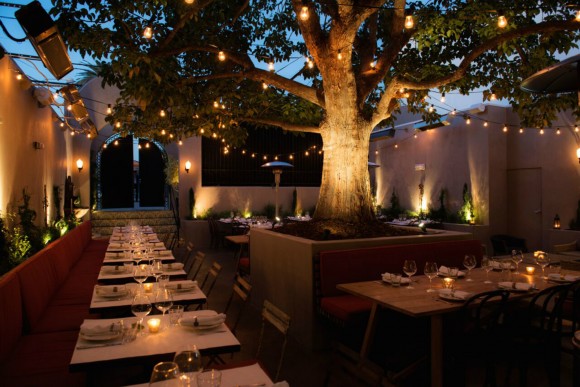
Los Angeles’ restaurant scene is on fire with exciting new spots scattered across the basin. In this chef-driven movement, folks such as Nancy Silverton, Neal Fraser, Michael Cimarusti, David Lentz and Josef Centeno are cementing their status as LA’s culinary trendsetters. You can’t go wrong at any of their restaurants.
True to the city’s Hollywood-centric culture, dining rooms here are graceful, relaxed and torn-jean-friendly environments. The city’s food covers the culinary map, embracing Latin, Asian, European and American traditions. LA is a city that refuses to be pigeonholed.
You will come to the city for the endless sunny days, beautiful beaches and spectacular shopping. You’ll stay for the food. Be one of the smart folks who appreciates that the future of American food is being served now in Los Angeles. Below is a slideshow of some of the restaurants you must try on your next trip to the Southland.
More from Zester Daily:
» The 5 best restaurants in Mexico City
» Venice and Northeast Italy: 14 must-see restaurants
» 19 top European restaurants worth a trip
» 12 top U.S. restaurants worth a summer trip
Main photo: Terrine’s romantic back patio takes advantage of the Southern California weather. Credit: Copyright 2015 Jesus Banuelos
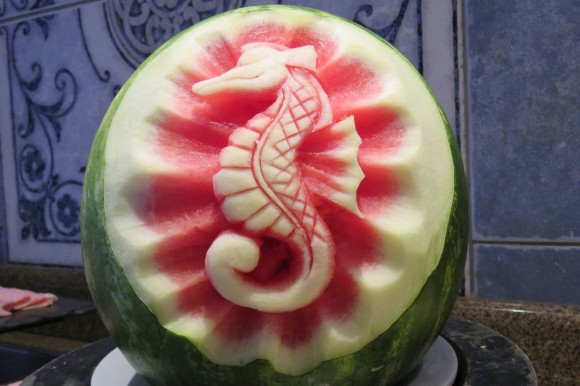
Just as artists work with paints and canvas or clay, chefs create masterpieces with everything from carrots to crayfish. But whereas painters and sculptors have museums to display their creations, most chefs only have plates; their “displays” are limited to the short stretch during which a diner admires their meal before digging in. Endang Supriatna may have found the perfect solution, however. He’s taken his art to sea.
The hallmark of garde-manger
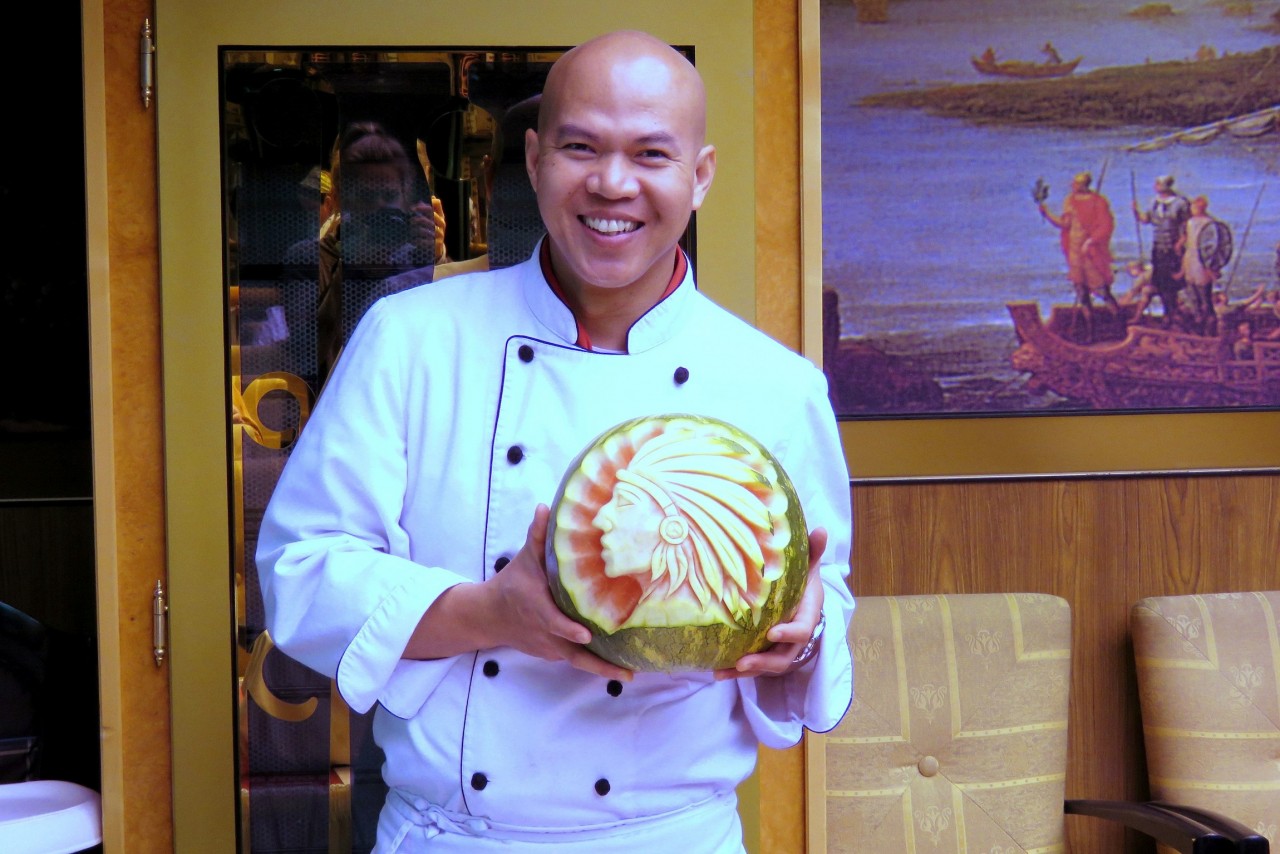
Endang Supriatna. Credit: Copyright 2015 Dana Rebmann
I met Supriatna as an invited guest on a week-long cruise to Alaska aboard the Carnival Legend. Working with some of the same items that are probably sitting in your kitchen, he turns ordinary edibles into eye-catchers; you could say he has all the ingredients for a dream job. “I am the only culinary artist on board, and I carve vegetables and fruits and create ice carvings from huge blocks of ice. Sometimes I create paintings for special occasions,” Supriatna said in an e-mail interview.
Working magic on melons
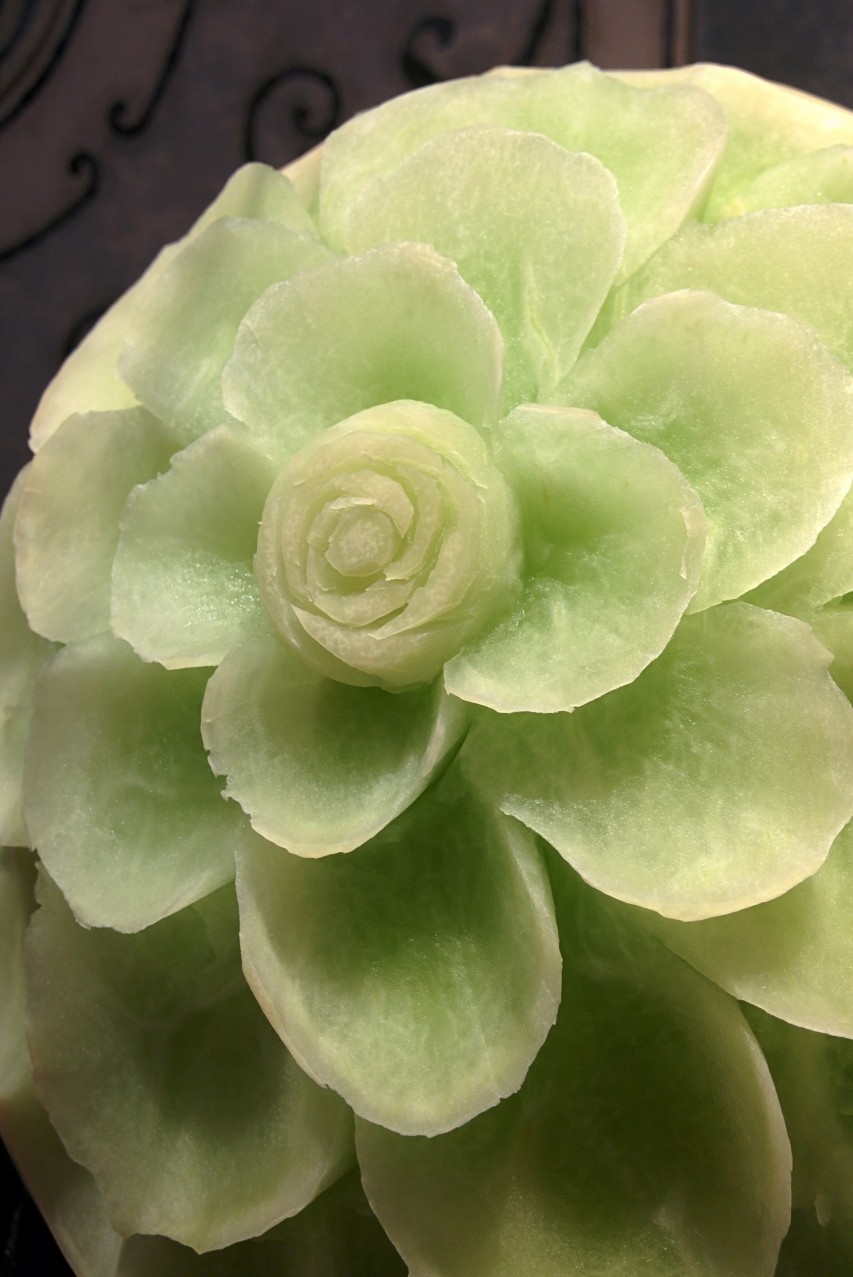
Honeydew details. Credit: Copyright 2015 Dana Rebmann
For the average home cook, cutting watermelon can be a messy chore. But Supriatna does not see the awkward fruit you and I see. He sees potential.
Supriatna carves two dozen or so watermelons on every week-long cruise. His carvings vary in shape and size, just like his juicy, circular canvases. From salty sea creatures to detailed portraits, the results often decorate the ship’s Lido Restaurant. It’s common to see cruisers struggling to balance a loaded plate in one hand and a camera in another as they attempt to snap photos of the sculpted spheres.
Carving demonstration
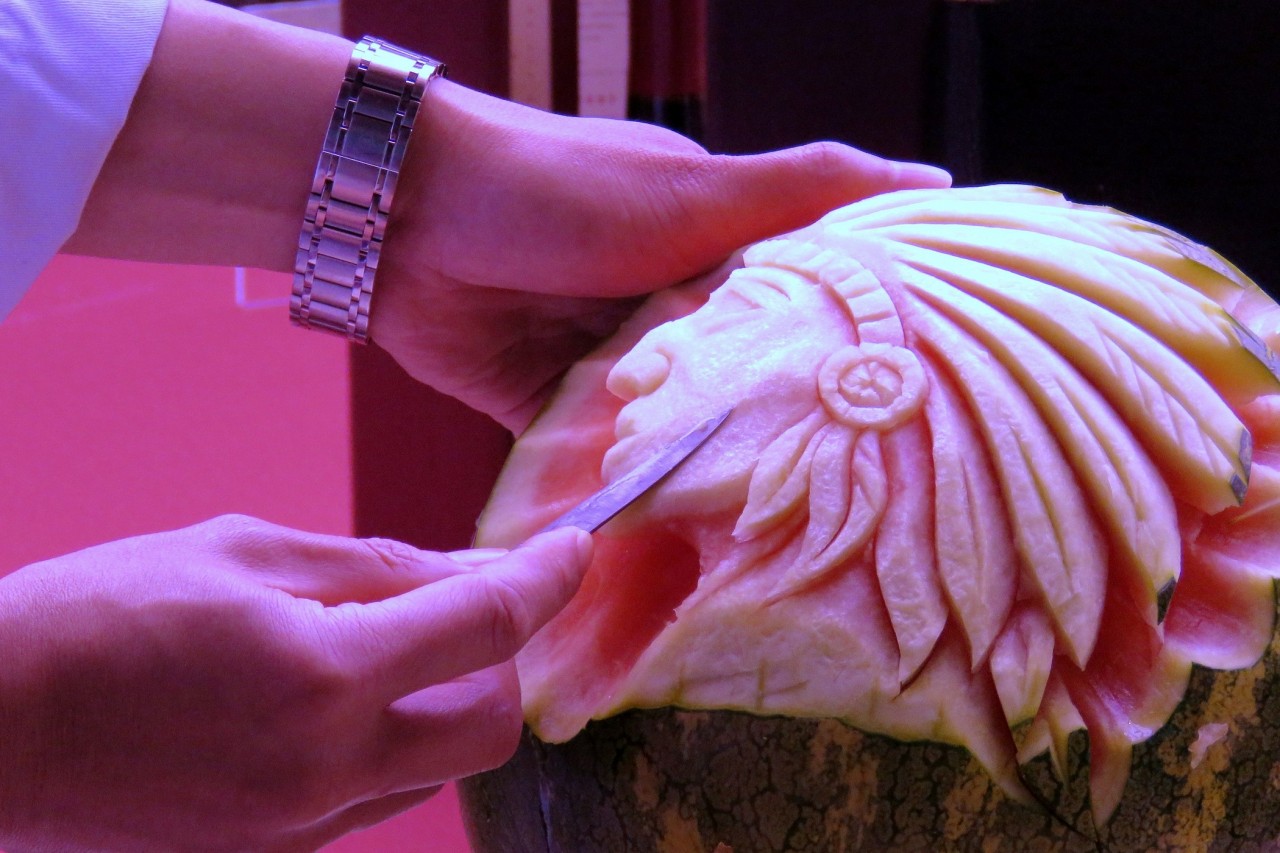
Supriatna demonstrates his craft. Credit: Copyright 2015 Dana Rebmann
You can see Supriatna at work firsthand during a weekly demonstration at The Golden Fleece Steakhouse. Silently and swiftly, he creates melon magic in less than an hour. There is thought and precision with each graceful cut, but Supriatna has a knack for making his skill look effortless. What might be even more impressive, however, is his ability to create in a wide variety of mediums. Though I saw more watermelons than anything else, every now and then a new showpiece would pop up.
Early inspiration
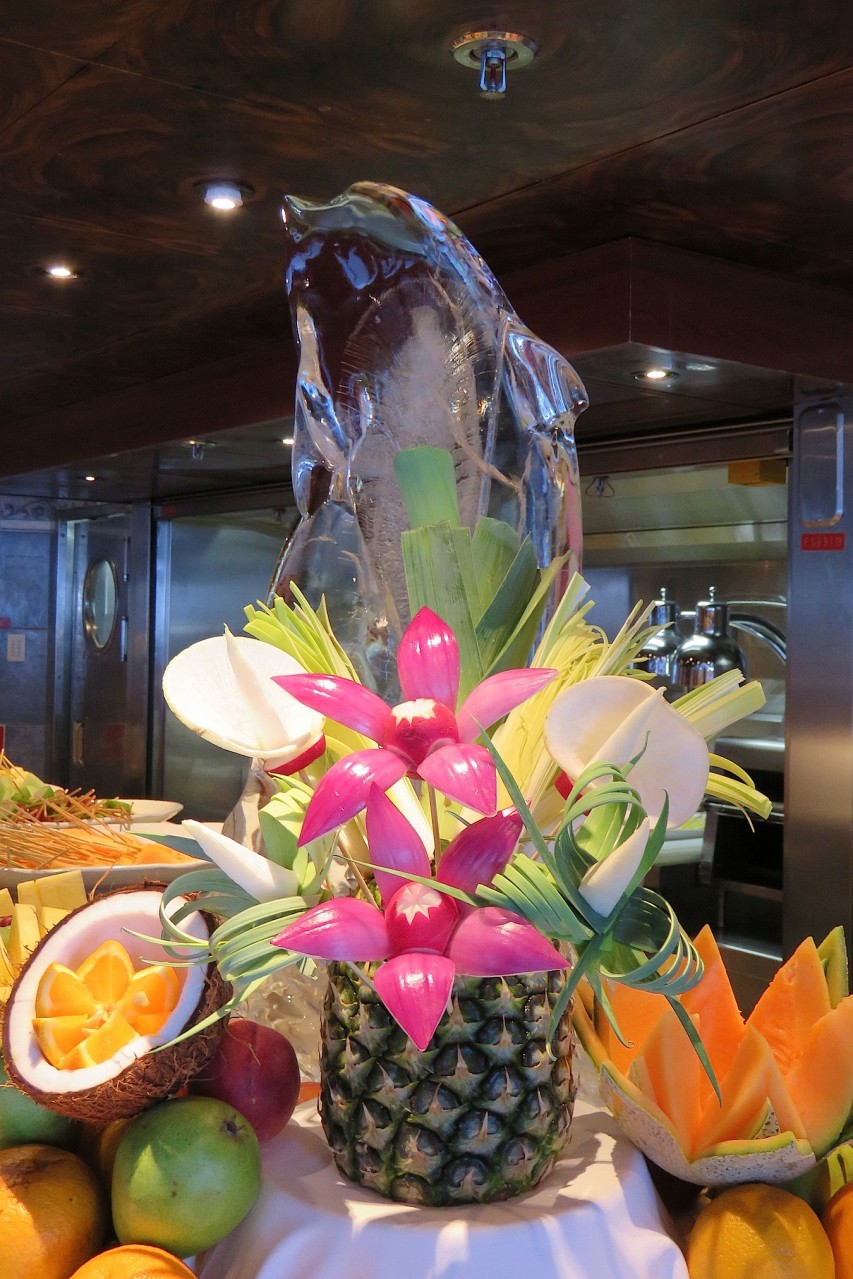
Produce in bloom. Credit: Copyright 2015 Dana Rebmann
Red onions and radishes cut to create colorful blooms, then perfectly arranged in a prickly pineapple vase: Supriatna’s edible bouquet decorated the buffet area surrounding the chocolate fountain on our last day at sea. You might have mistaken the arrangement for real flowers, especially since it sat somewhat in the shadow of a glistening ice sculpture, which also happened to be Supriatna’s handiwork.
More from Zester Daily:
» Farm-to-table centerpieces for eco-chic entertaining
» The other sugar bowl
» ‘Prune’: A glimpse into a chef’s untamed cooking mind
» 10 watermelon recipes that scream summer
As an adult, Supriatna has worked hard to develop his craft, but he says he had inspiration to create from an early age.
“My father is an architect, and (he) influenced and motivated me when it comes to carving and art,” Supriatna said. “Besides creating/designing houses, he often does artwork, such as sketches, paintings, drawings and wood carvings. … I’d always watch and try to learn from him.”
From the visual to the culinary arts
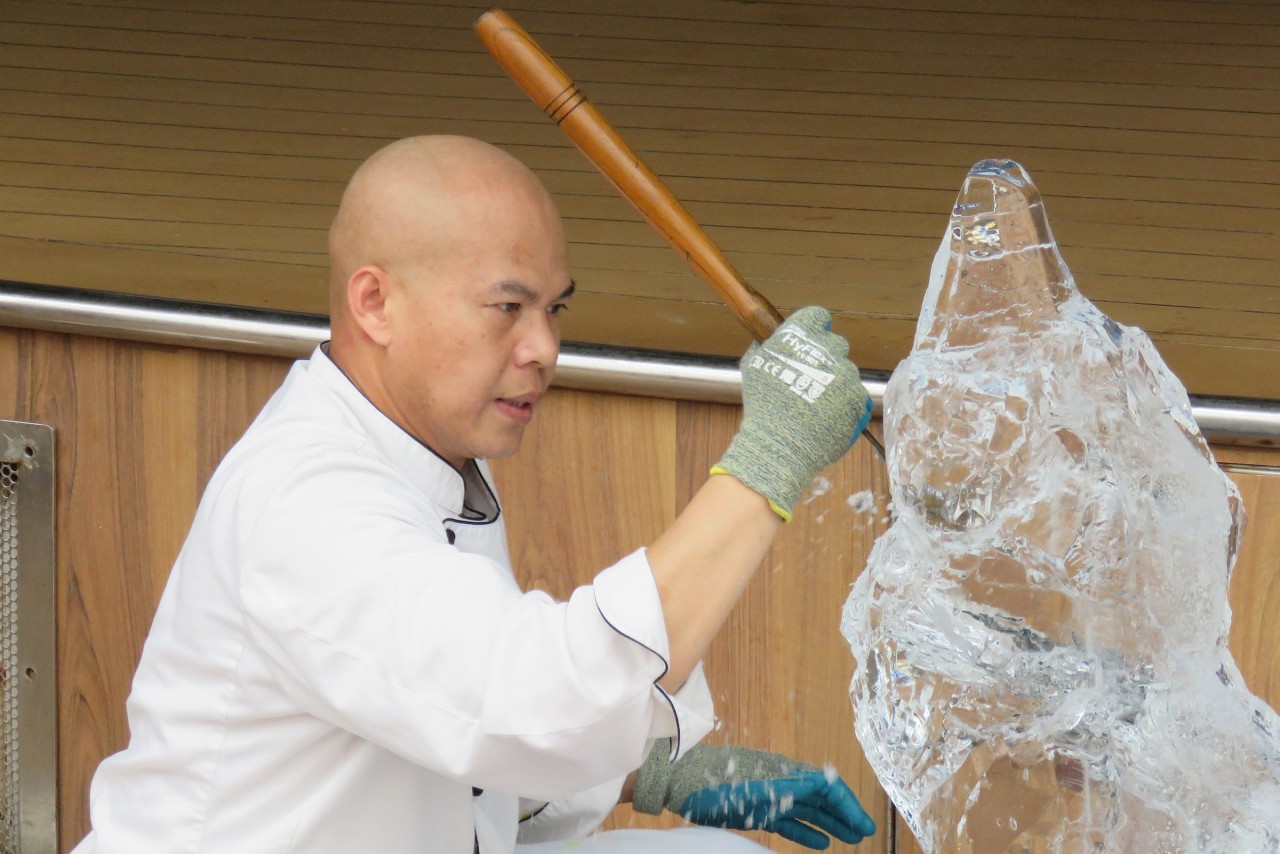
Ice carving on deck. Credit: Copyright 2015 Dana Rebmann
In fact, Supriatna pursued an art degree in college. After graduation, he worked in several hotels as an artist. It was there that food became part of the plan. “I became more interested in seeing how the chefs worked to create beautiful and delicious dishes. To me, that’s a form of art,” he said.
So off to culinary school he went. He graduated one of the top three in his class, and in 2000 he set sail with Carnival Cruise Lines as an ice carver, fulfilling his dream of seeing other parts of the world in the process.
“I’ve also gotten the opportunity to see real works of art from some of my favorite maestros, like Rembrandt, Van Gogh, Picasso and Dali,” Supriatna said.
Cooking at sea and at home
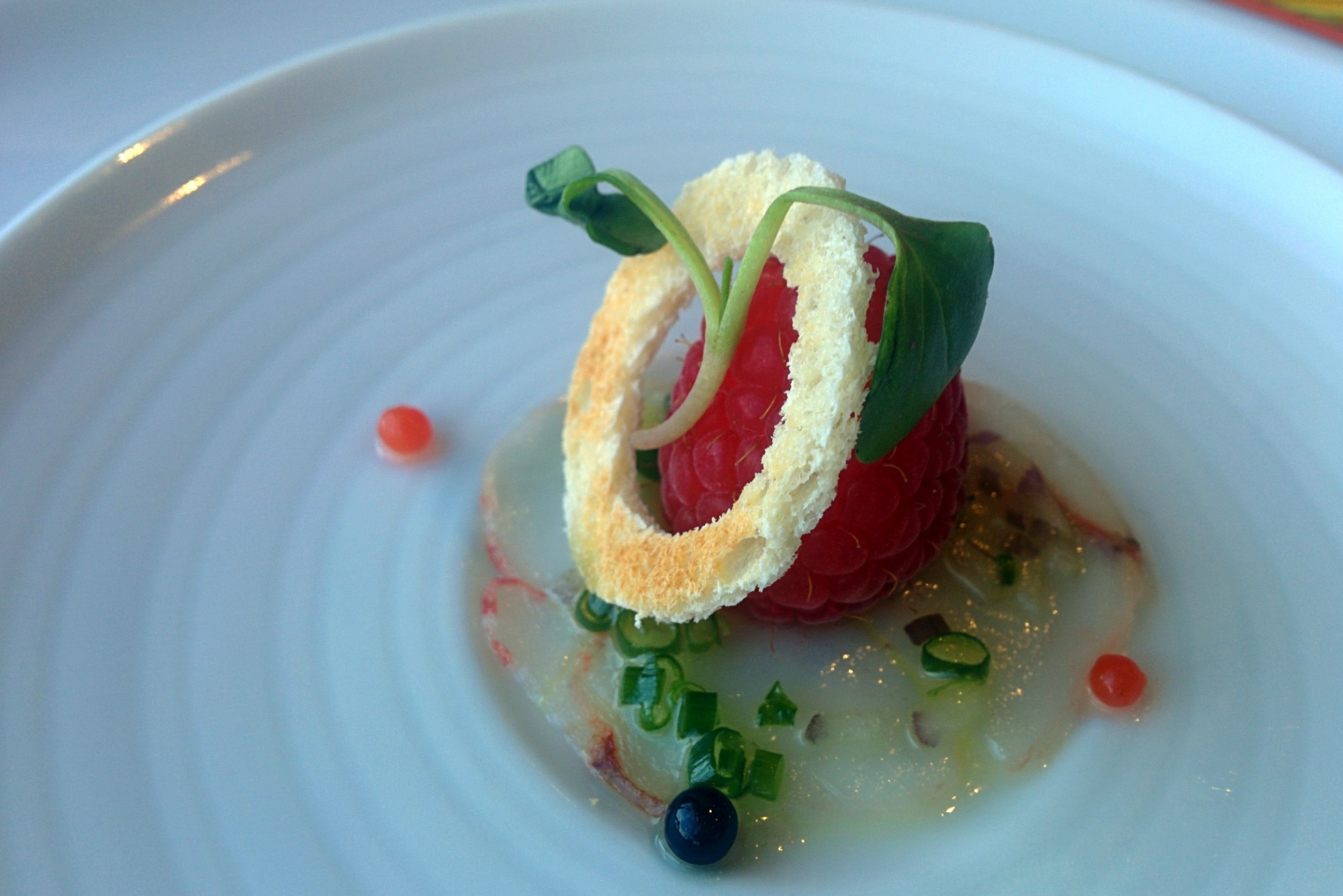
Art on a plate aboard the Carnival Legend. Credit: Copyright 2015 Dana Rebmann
When he’s not wowing cruisers with his carvings, Supriatna also cooks. Responsible for cold-food production and presentation on board the ship, he has nearly a dozen chefs working under his supervision.
His work schedule is demanding. Supriatna typically spends six months at sea before getting two months at home in Bandung, West Java, Indonesia, with his wife and two sons.
“At home I give command of the kitchen to my wife, but once a week I’ll cook for them. I usually make my special mushroom and shrimp risotto, which they love,” Supriatna said. “And yes, sometimes I’ll still do carvings, but I try to limit it to special events only.”
Main photo: A sample of Supriatna’s work. Credit: Copyright 2015 Dana Rebmann
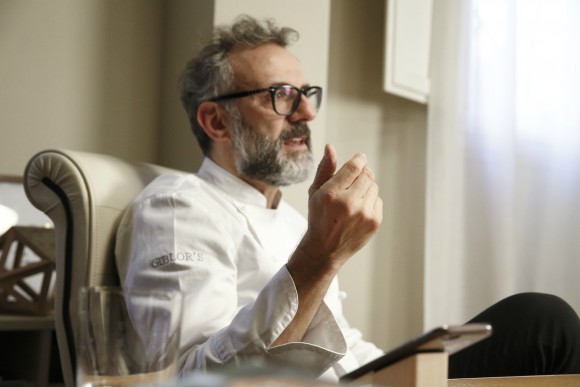
Massimo Bottura, considered by many to be Italy’s greatest chef, earned three Michelin stars and his restaurant Osteria Francescana in Modena is ranked second in San Pellegrino’s ” World’s 50 Best Restaurants” list in 2015, the highest ranking ever received for an Italian chef. Bottura’s jewel of a restaurant that seats 28 requires a kitchen staff of 28 to achieve nightly avant-garde culinary magic. Mario Batali dubbed him, “the Jimi Hendrix of Italian chefs” and says his food is “innovative, boundary-breaking and entirely whimsical.”
Below is an excerpt of a conversation with him at his office in Emilia-Romagna on why he loves American cuisine, tips for home cooks and favorite must-try Italian ingredients.
Tradition, with a twist
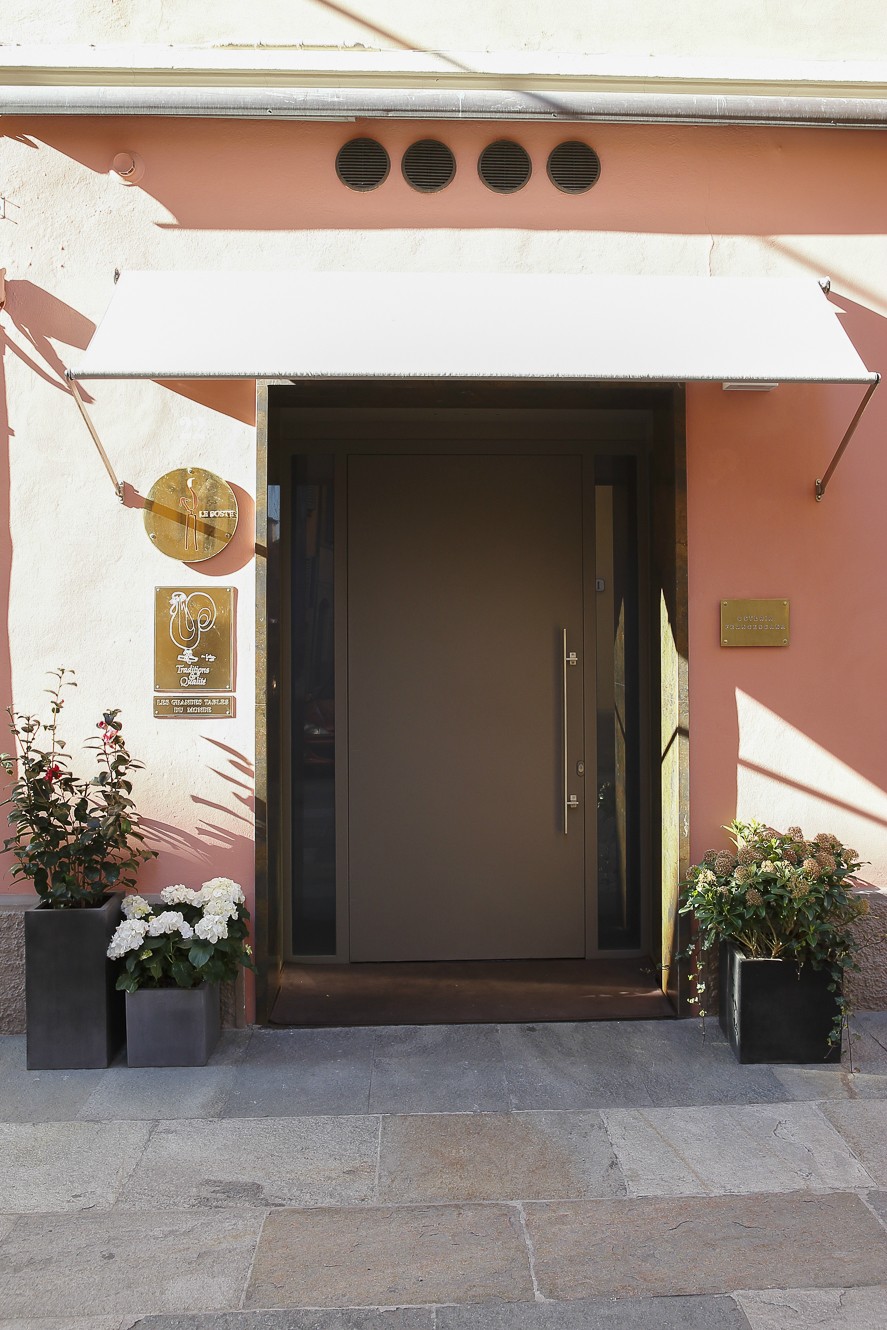
Osteria Francescana in Modena is ranked second in San Pellegrino’s ” World’s 50 Best Restaurants” list in 2015. Credit: 2015 Copyright Max Bennici
The Wall Street Journal says, “Bottura possesses both a deep respect for local traditions and a drive to keep blowing them up.” How would you describe your approach?
In the entrance way to Osteria Francescana, there’s a 2,000-year-old jug. It’s broken. I break with the past; I don’t want to get lost in nostalgia. I’m always in search of the future. That’s how I respect our traditions. If you just dust traditions, you’ll lose them. Put them in a museum, and they’ll stagnate, they will die.
‘Never Trust a Skinny Italian Chef’
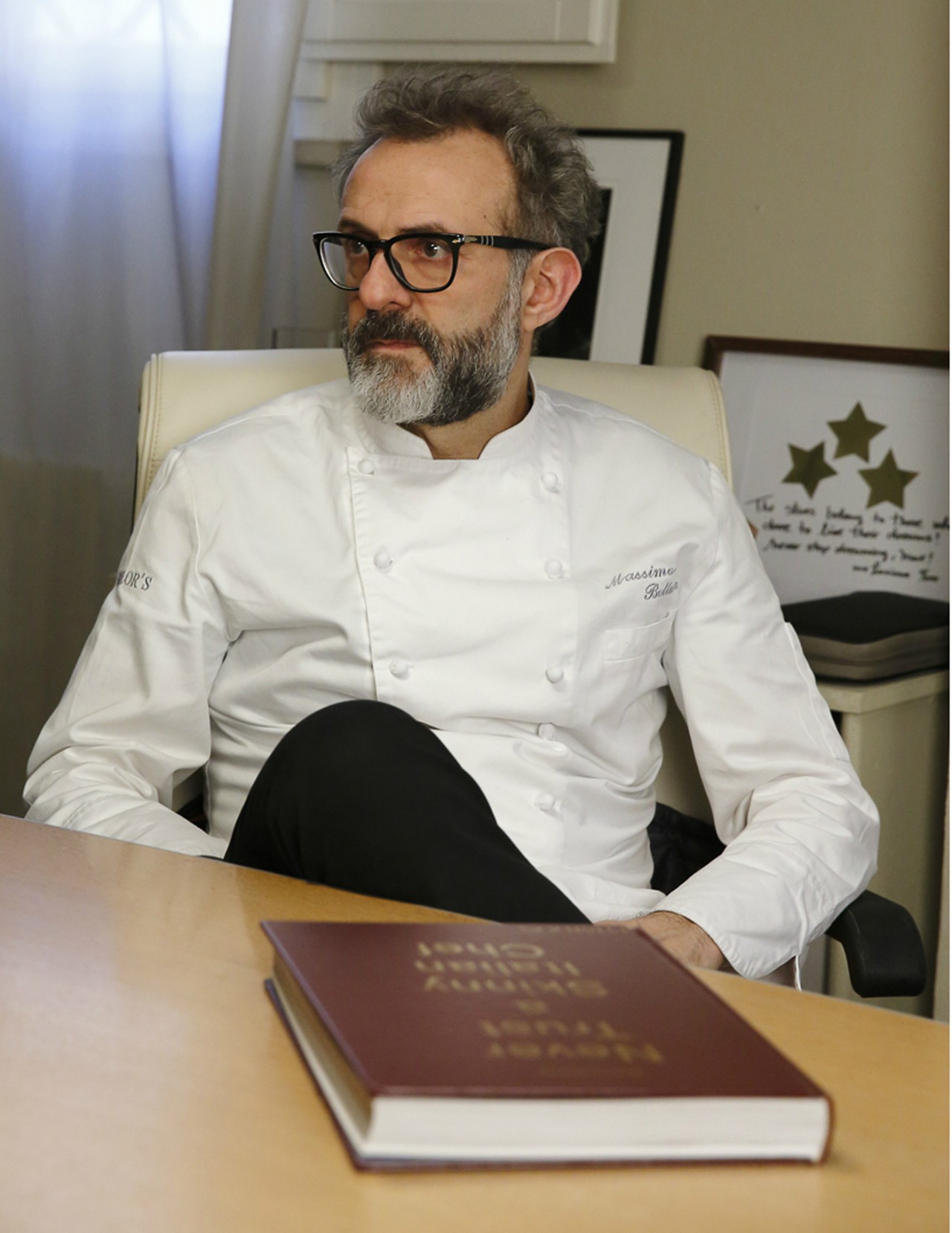
“Never Trust a Skinny Italian Chef” by Massimo Bottura has “everything I wanted to say.” Credit: Copyright 2015 Max Bennici
Your latest book, “Never Trust a Skinny Italian Chef,” has received international acclaim. The New York Times Book Review wrote that it “demonstrates that food has indeed morphed into an element of high culture.” Now that it’s been published, is there anything you wish you had included? Anything you wish you’d added?
I wrote the book like I cook. I wrote a million things, and then cut them to their essence. It says everything I wanted to say.
Cooking Italian in the United States
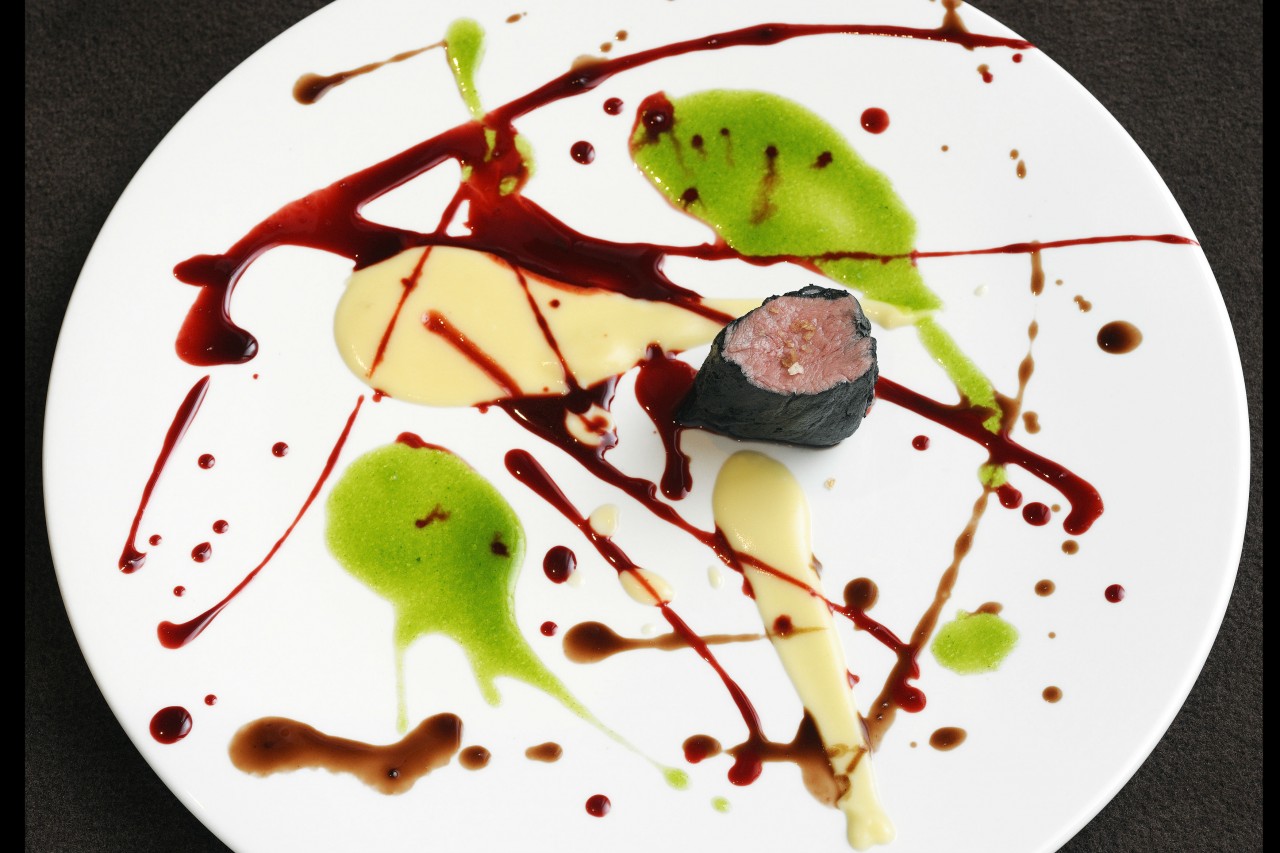
The Beautiful Psychedelic, Spin-Painted Veal, Not Flame-Grilled is a work of art as well. Credit: Copyright 2014 “Never Trust a Skinny Italian Chef,” by Massimo Bottura
The Italian government invited you to represent its cuisine in the USA last year as part of their “Year of Italian Culture” initiative. Tell us about the trip.
Hillary Clinton said one of the things Americans like best is Italian cuisine, so I was honored that Italy asked me to come to the States representing Italian food. It was an incredible trip. I prepared meals around the USA. In NYC for over 60 journalists, in D.C. for the embassy with the ambassador attending, and in Los Angeles, in Bel Air, Sylvester Stallone even helped us in the kitchen!
Sylvester Stallone can cook?!
Yes, absolutely. He didn’t sit with the guests in the dining room, but stayed in the kitchen with us all for the entire meal. He was amazingly helpful, very modest. A real delight.
What did you serve?
We created a menu entitled “Come to Italy With Me,” a sort of trip through Italy by way of our flavors. We started in southern Italy with the island of Pantelleria, then went across Sicily traveling into the Gulf of Naples, crisscrossing Italy and up into the Po Valley and northern Italy.
Advice for home cooks
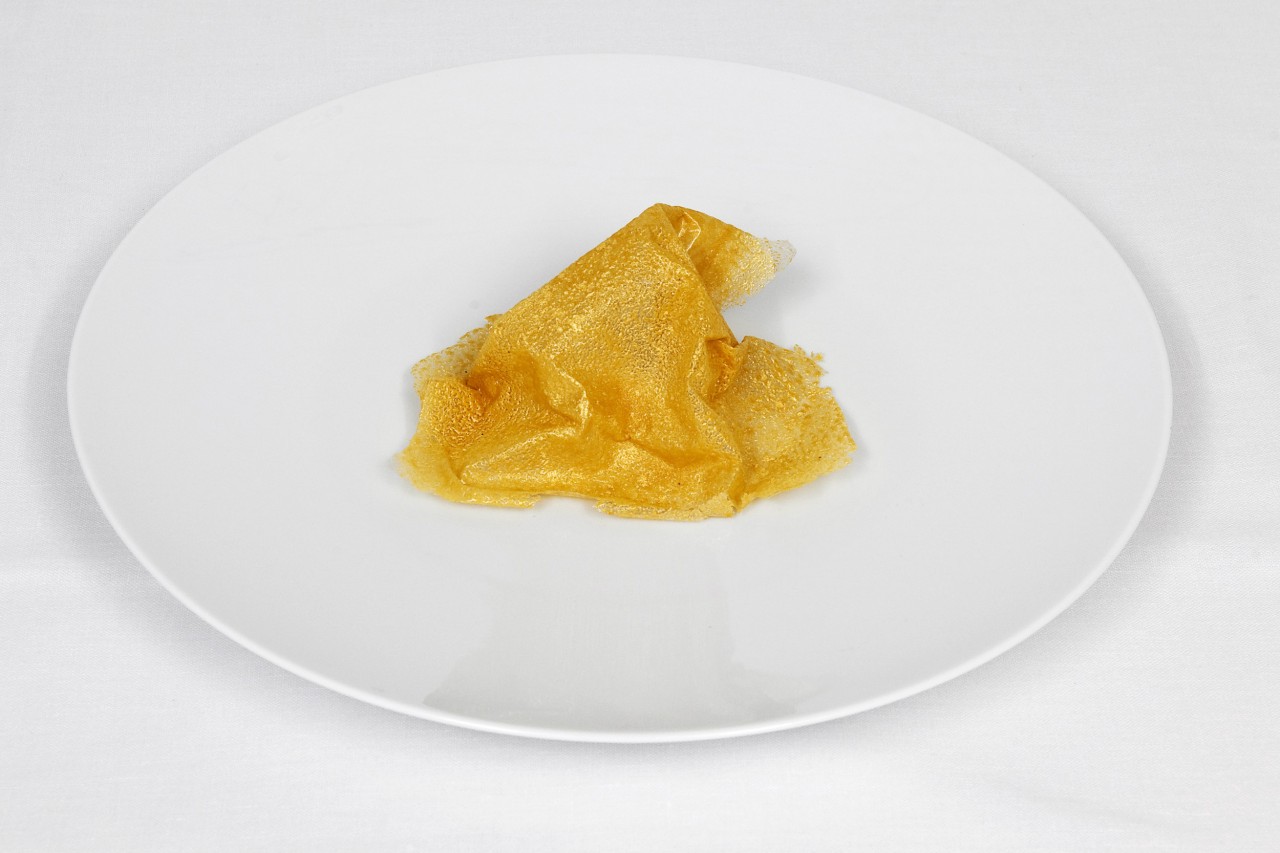
Bread is Gold, the chef says, is a dessert that’s an ode to a dish of stale bread dipped in warm, sweetened milk. It is also a nod to the artist Sylvie Fleury’s gold-plated trash cans. Credit: Copyright 2014 “Never Trust a Skinny Italian Chef,” by Massimo Bottura
What was the best American ingredient you discovered while traveling through the States?
Liberty! The liberty of expression. It’s the key ingredient to why American cuisine is so wonderful. In fact, a journalist recently asked me what would be the cuisine of the future and I told him that it would come from America. Americans have an open mind and the resources to push the boundaries of the culinary arts. I’m struck by the great chefs America has inspired, chefs like Grant Achatz and Wylie Dufresne, who leave me speechless.
What do you think is America’s secret to this culinary success?
Pride. America takes pride in its creativity and freedom to push boundaries.
You’ve created several savory dishes with unusual ingredients, like coffee.
I like the touch of earthiness that coffee adds. I added a hint of espresso foam to Snails in the Vineyard, a dish I created that celebrates the snail’s daily meal, with the texture of the soil created with coffee, beets and black truffles sitting atop aromatic greens. Again, with snails in my dish Snow Under the Sun, there’s coffee powder to complement with the earthy raw potatoes and porcini gelatin. I even added a drizzle of sweet cappuccino to a risotto dish I made for the young daughter of NY Times food writer Melissa Clark.
Is there an ingredient you’re experimenting with right now?
Not an ingredient but a tool. I’m amusing myself tremendously with the Big Green Egg. It smokes, roasts, bakes and even grills at very high heat. I’m exploring the limits of what I can create with it.
What advice do you have for home cooks?
Go grocery shopping! Buy what’s in season, purchase just what you need for two days. You’ll use it all and waste less. Treat yourself to 30 minutes every two days to get to know your grocer, to establish a relationship with small stores, the fishmonger. If you can, go to farmers markets and meet small artisan makers. After a week or two, these folks will give you the best.
Favorite ingredients
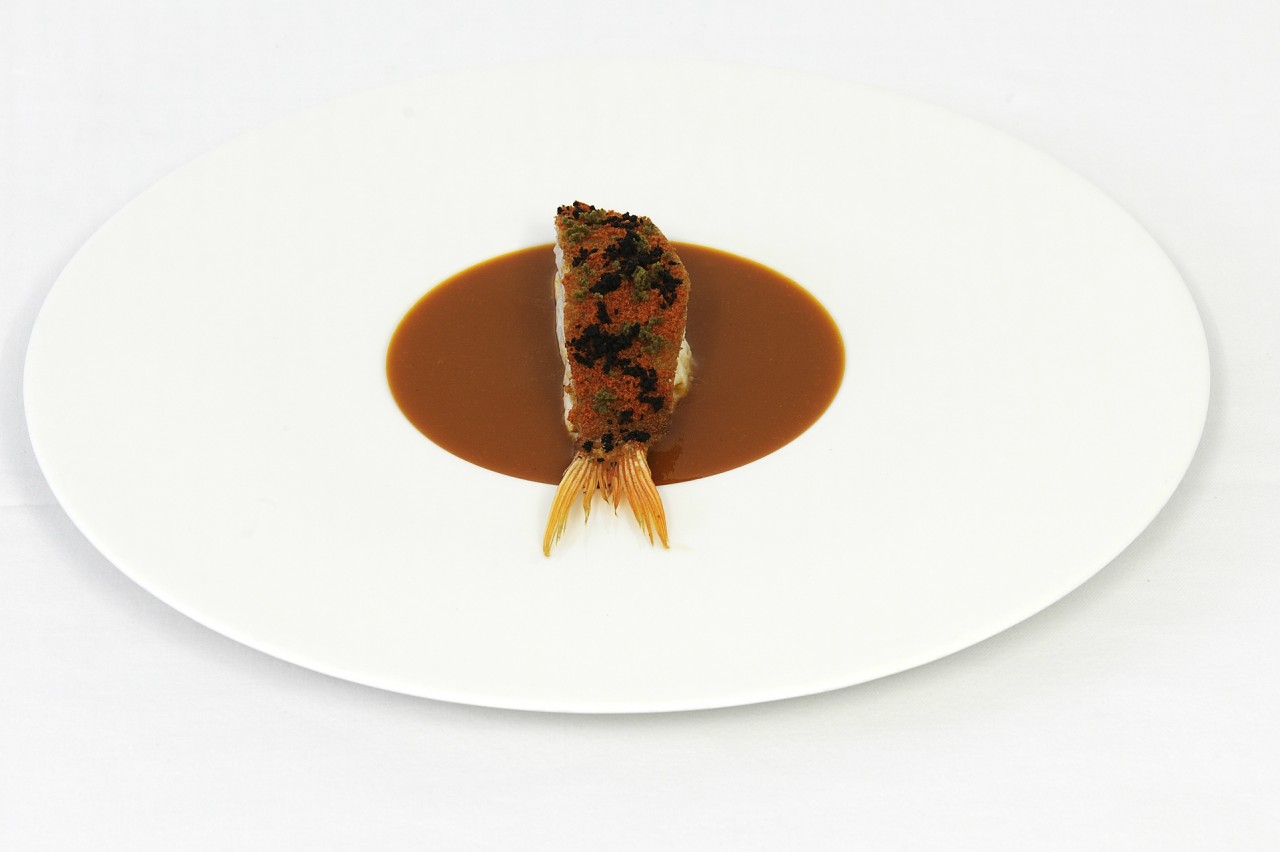
Bottura’s red mullet livornese Credit: Copyright 2014 “Never Trust a Skinny Italian Chef,” by Massimo Bottura
What are your favorite Italian ingredients?
I’m partial to the foods of my own region, to the gourmet foods of Emilia-Romagna.
- Parmigiano-Reggiano, preferably aged 24 months
- Aceto Balsamico from Modena. Never cook with it, though. It’s best enjoyed poured onto a small ceramic spoon and sipped at the end of a fine meal.
- Culatello of Zibello, the boneless center of prosciutto. It tastes to me like the Po Valley, the fog, the mushrooms that grow there. Culatello encompasses the entirety of the flavors of Emilia-Romagna, the taste of our land.
- Great dried pasta, like the fine pasta from the Gragnano area of Italy, like Giovanni Assante’s Gerardo Di Nola pasta or Monograno Felicetti, of the Trentino region. Buy great pasta and dress it simply, with just quality olive oil, and you have a gourmet meal. What’s important is to start with the best ingredient.
- For the fifth, I suggest a series of flavors of that represent the Mediterranean: Lemon from Sorrento, anchovies from Certara, capers from the Sicilian island of Pantelleria, wild oregano from Puglia and Mozzarella di Buffalo from Campana.
What’s your personal favorite food?
Coffee is my big vice. I don’t like just a shot, but prefer it strong, sweetened with milk foam.
Main photo: Massimo Bottura is considered by many to be Italy’s greatest chef. Credit: Copyright 2015 Max Bennici
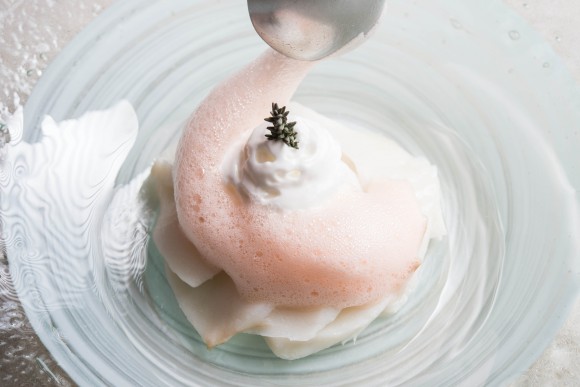
Classic meets contemporary at the 56th Biennale di Venezia. This year’s theme is “All the World’s Futures,” and one chef in Venice has taken that inspiration to create a spectacular menu.
The international art exhibition, which runs until Nov. 22, takes place in the Giardini and Arsenale venues and other locations throughout the historic city, making a marvelous encounter between history and avant-garde, where classic meets contemporary art.
In the spirit of this convergence, Chef Luca Veritti created an original menu for the magnificent Met Restaurant at the Metropole Hotel in Venice.
The spectacular menu, called “Tra’Contemporary Cuisine,” combines two philosophies — the traditional Italian and Veneto recipes and a futuristic style through which the same recipes are elaborated and proposed in a creative way.
While different from the current gastronomic trends, the reason for such an original choice lies in the intention of giving value to the regional products — often neglected on behalf of food from faraway countries — elaborated with exotic styles and cuisines.
Hors d’oeuvres the traditional way
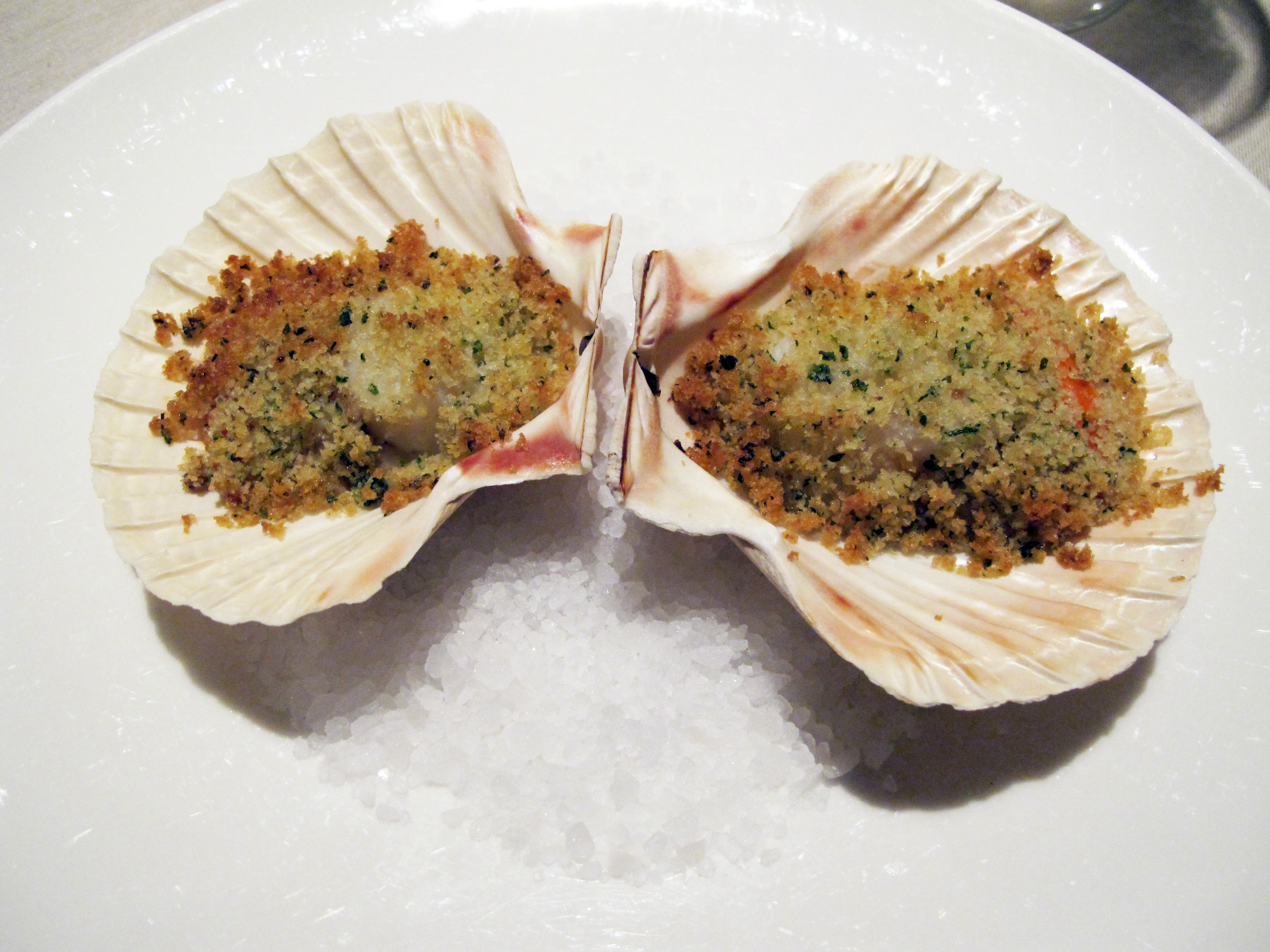
Traditional capesante gratinate, baked scallops with bread crumbs and aromatics. Credit: Copyright 2014 Cesare Zucca
A perfect example are the capesante gratinate, a typical hors d’oeuvres in the Veneto tradition, consisting of baked scallops covered with bread crumbs, aromatized with garlic, parsley, salt and pepper.
A delicate update
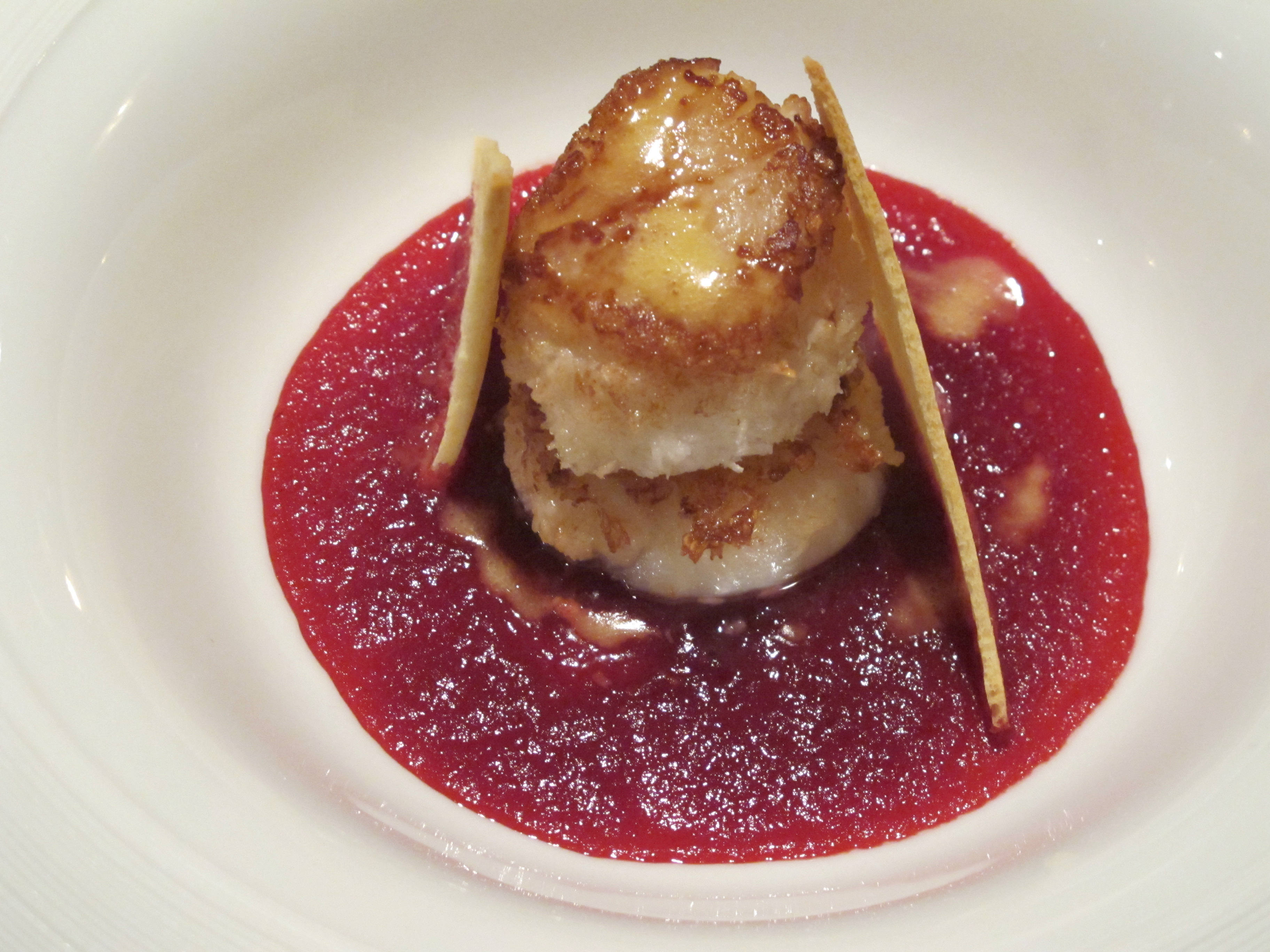
A contemporary capesante adds passion fruit and a delicate beetroot cream. Credit: Copyright 2014 Cesare Zucca
In the contemporary version “à la Oriente,” the capesante are breaded and cooked with coconut rapé and served with a delicate beetroot cream, hints of passion fruit and a wafer of bread flavored with parsley and garlic.
Home cooking from Carnia
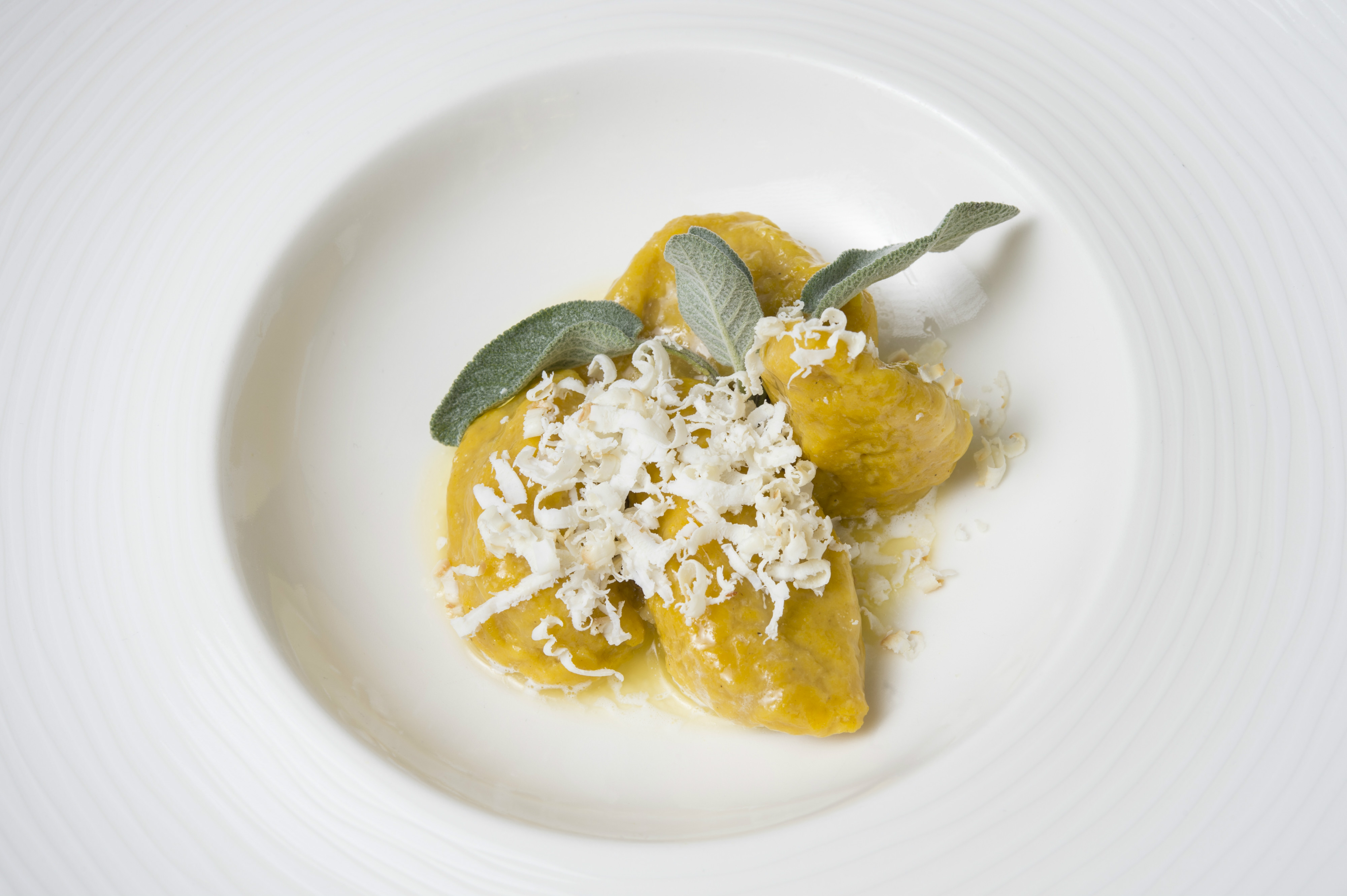
Macaròns di còce is made with pumpkin gnocchi prepared by hand, using a spoon, which gives them their shape and weight, then served with melted butter, sage leaves and some grated smoked ricotta cheese. Credit: Copyright 2014 Daniele Nalesso
Another traditional home-cooking dish from Carnia: Macaròns di còce is made with pumpkin gnocchi prepared by hand, using a spoon, which gives them their shape and weight, then served with melted butter, sage leaves and some grated smoked ricotta cheese from Friuli.
An innovative update
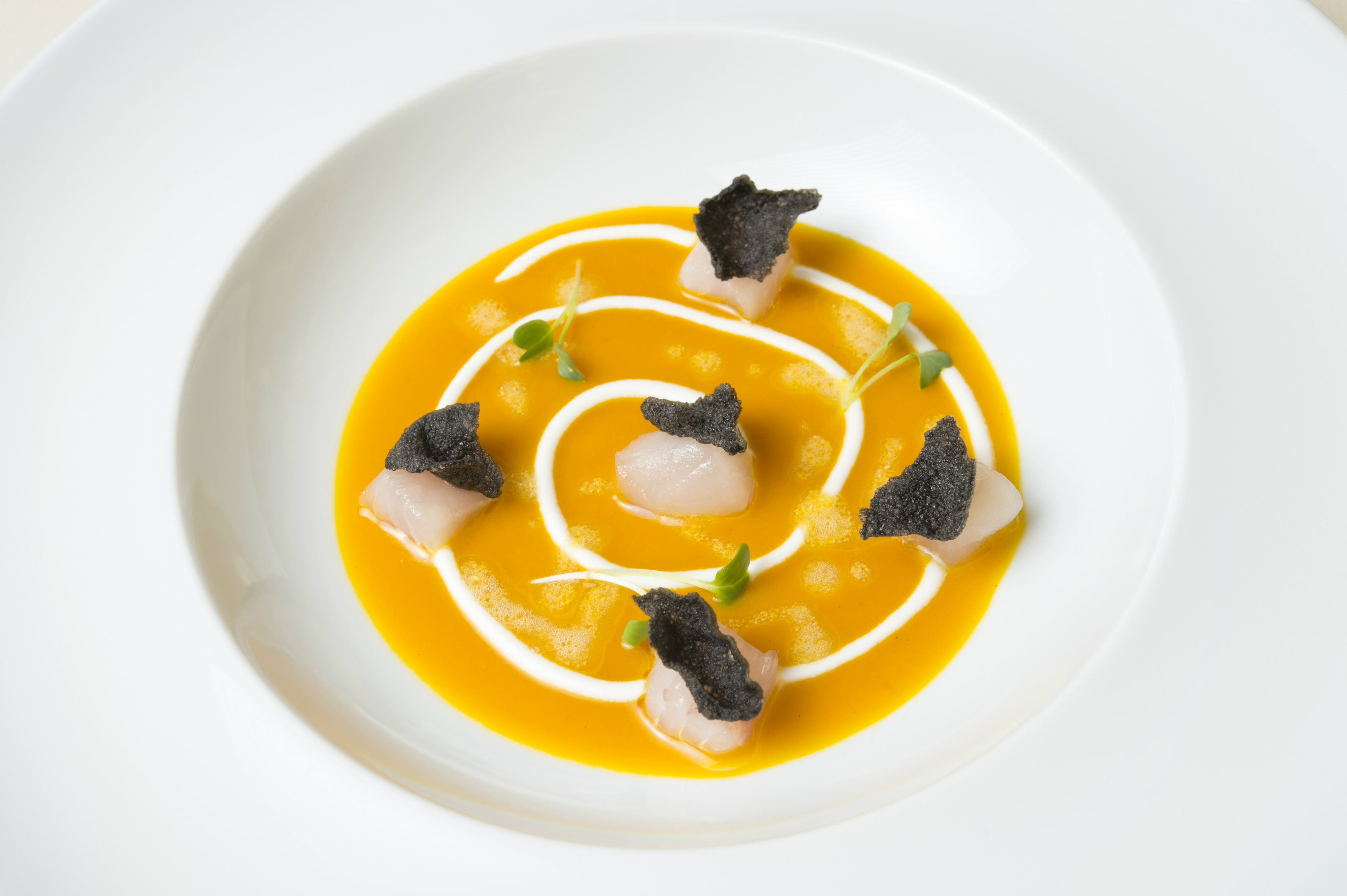
The innovative cream of pumpkin and ricotta cheese. Credit: Copyright 2014 Daniele Nalesso
This traditional recipe is transformed into a cream of pumpkin and ricotta cheese with a hint of sage. The smoked trout with mountain herbs enriches the dish, which is finished with a morchia sauce — a typical sauce of Friuli prepared with melted butter and cornmeal.
Trendy and traditional
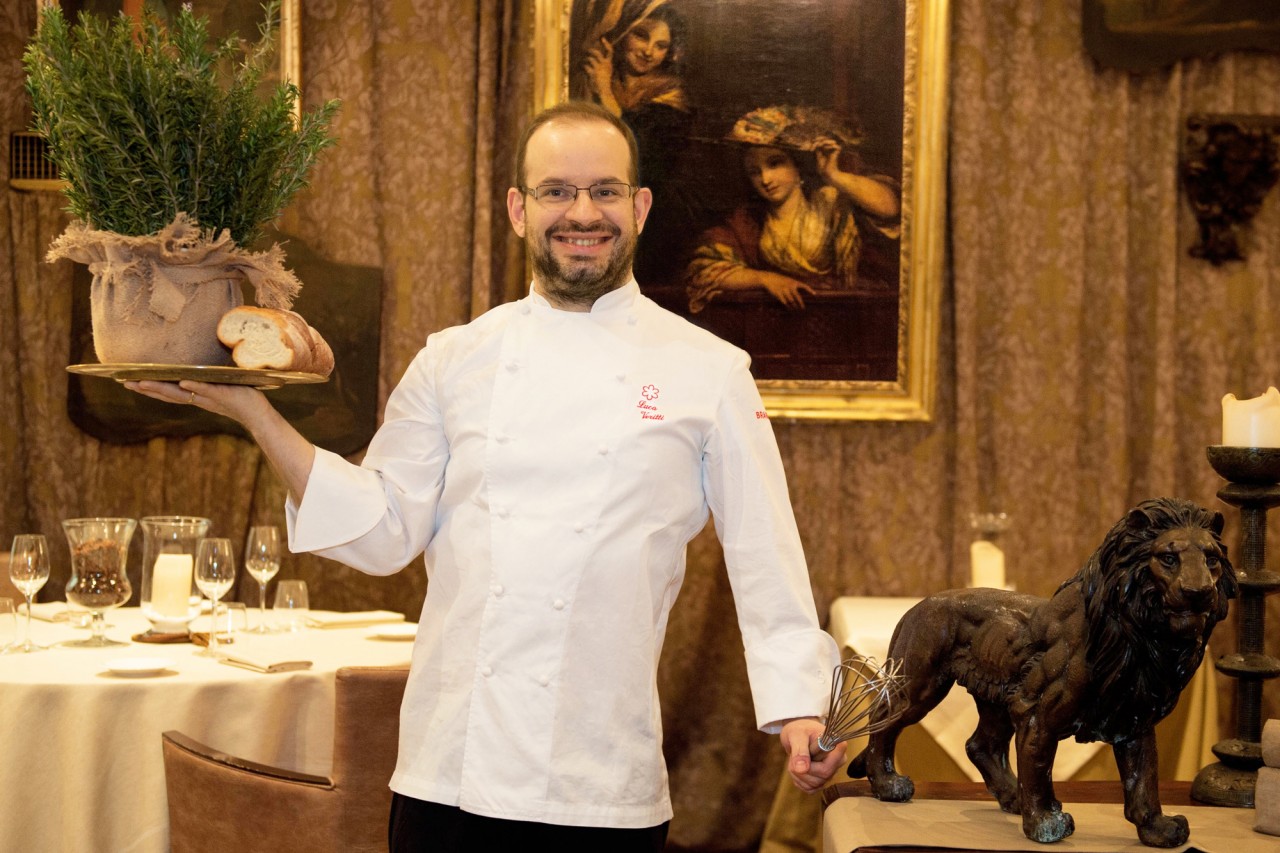
Inspired by the Venice Biennale, Chef Luca Veritti created his Tra’Contemporary Cuisine menu for the Met Restaurant in Venice. Credit: Copyright 2014 Daniele Nalesso
The high quality of the raw materials will be the centerpiece of the Tra’Contemporary Cuisine: The lamb comes from the Alpago; the vegetables from the Venetian island of Sant’Erasmo; and the fish from Rialto market in Venice. Speaking of fish, in Luca’s menu the classic Venetian baccalà gets a trendy look. The stockfish cooked at a low temperature is accompanied by a rosemary-flavored olive oil foam. A delicate Bronte pistachio sauce and air of Aperol Spritz add a further touch of refinement.
Chocolate gets an update
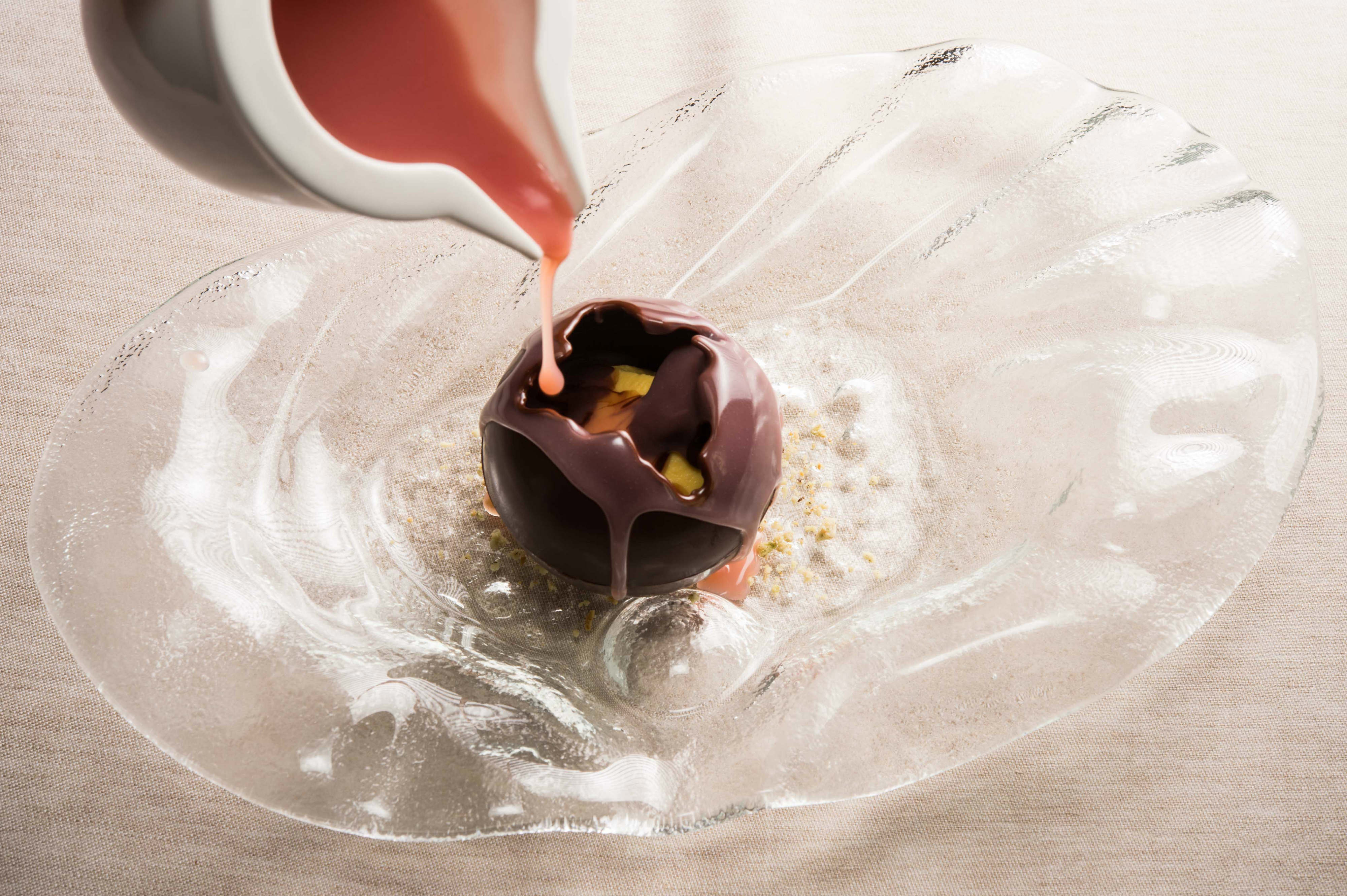
Chocolate revisited, with passion fruit, caramel and bourbon vanilla. Credit: Copyright 2014 Daniele Nalesso
Couldn’t chocolate get a “futuristic” treatment? Veritti designed a “chocolate revisited,” in which a heart of passion fruit mousse enriches a sphere of plain chocolate sprinkled with white chocolate cream flavored with alchermes. Chocolate with savory caramel and Madagascar bourbon vanilla crumble complete the dish.
Veritti’s experiment could be a great culinary experience for a couple who can share dishes, while indulging in the past and adventuring into the future.
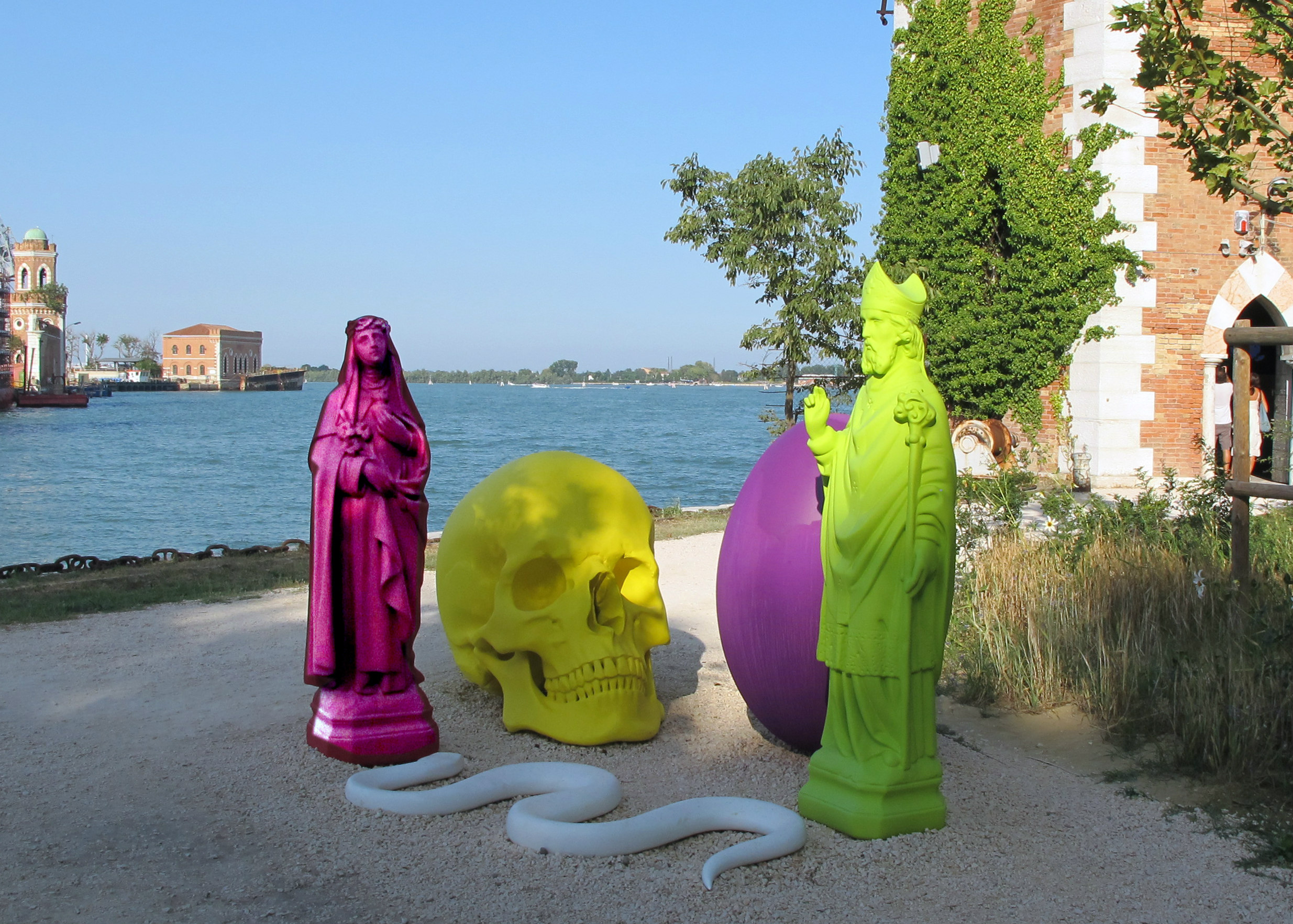
The Venice Biennale art exhibition will run until Nov. 22. Credit: Copyright 2014 Cesare Zucca
Main photo: Classic Venetian baccalà gets a trendy look from Chef Luca Verriti. Credit: Copyright 2014 Daniele Nalesso
More from Zester Daily:
» These creative chefs are too busy to battle
» Venice adores pumpkins in Italian squash stew
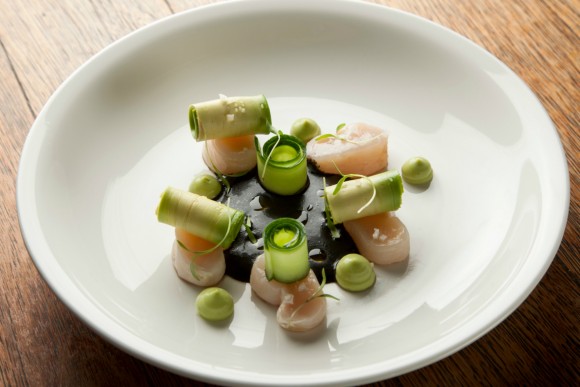
Mexican cuisine has no high or low. Unlike in French, Chinese or Japanese cooking, it is from the humble tradition of everyday kitchens that most Mexican recipes are culled. The difference is more a matter of degree of luxury in presentation than of basic cooking concepts.
More from Zester Daily:
» 7.5 reasons I love living in Mexico City
» 10 questions for Mexico City chef Josefina Santacruz
» Why old-school Asian fusion still matters in Mexico City
» Surf and turf heaven as found only in Sonora, Mexico
In recent years, a culinary trend has emerged from the kitchens of a new generation of chefs called Nueva Cocina Mexicana or Modern Mexican. Utilizing international culinary techniques, but working with traditional Mexican recipes and ingredients, these cooks have created a body of dishes as well as a contemporary context for serving and eating them.
Sometimes it’s simply a matter of presentation: Martha Ortiz’s duck in black mole varies little from that eaten in an old Oaxacan home. But it is elegantly served on contemporary designer china in a streamlined, posh venue in Mexico City’s Polanco area, surrounded by less standard accompaniments, and chased with a nice Baja Chardonnay. Or take Patricia Quintana’s salmon appetizer with its vanilla-infused dressing: nothing time-honored here but for the separate ingredients. And Mónica Patiño’s chicken soup perfumed with té de limón — that’s Thai lemongrass sold in every market across the country, but never before served at a Mexican dinner table.
An earlier generation of chefs have paved the way for an extraordinary renaissance of fresh, creative cooking, led by star chef Enrique Olvera of Pujol, now head chef at New York’s Cosme. Young culinary-institute-trained chefs are returning to their roots while exploring contemporary concepts developed in Europe. Mexico City has become an amazing place to discover not only the wide range of classic and regional cooking but also new traditions being forged every day.
Main photo: An appetizer of marinated raw scallops in “ash vinegar” with cucumber and cilantro. Credit: Copyright 2015 Sud 777
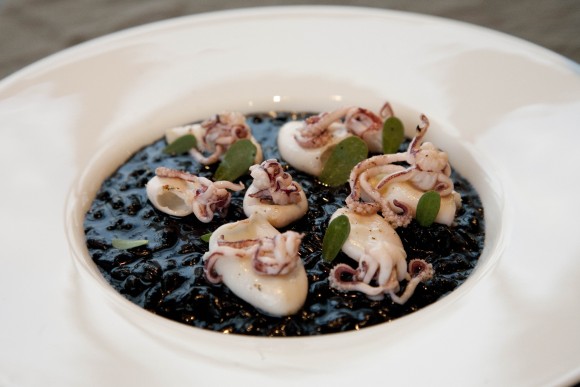
From dining on a romantic island in the Venetian lagoon to feasting on handmade pasta in Bologna, northern Italy’s gastronomic capital, this list guides you to the best places to eat in Italy’s northeast. Award-winning food writer Carla Capalbo has spent more than 20 years eating her way around Italy and has uncovered its best-kept secrets, from new-wave pizza to the elegant restaurant of one of the world’s top female chefs. She’s brought together great food for every budget, from take-away noodles to three-Michelin-star refinement.
With this list as your guide — the first of a series — you’ll have a fabulous eating holiday in Italy — whether you go in person or just dream from your armchair.
More from Zester Daily:
» 6 tips to finding fabulous authentic food in Italy
» Tuscan cuisine remains a family affair
» 5-minute pasta sauce made with fresh tomatoes
Main photo: At Venissa restaurant in Venice, fresh squid is served on a bed of black risotto. Credit: Copyright 2013 Carla Capalbo
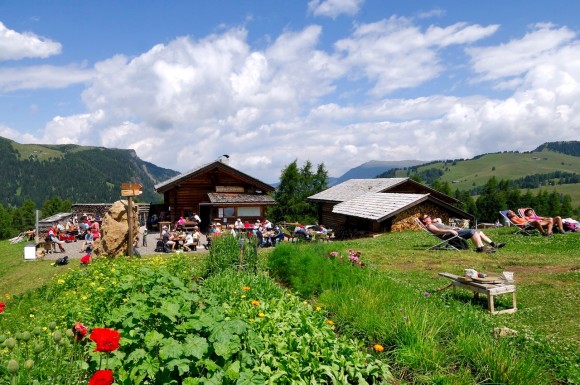
Traveling to Europe this summer? If your plans include Italy, Germany, France, England, Spain, Sweden, Belgium or Denmark, Zester Daily’s community of food writers knows a few restaurants you won’t want to miss. These are our favorite spots — our personal bucket list of dining destinations we share with our closest friends.
The most important thing for us is the food. It has to be exceptional. But we also love beautiful places and nice people, so rest assured that our favorite spots will feed you body and soul. Alfresco dining ranks high on our preferences. And we are equally fond of the culinary extremes of cutting-edge innovation and home-spun comfort. We celebrate cultural traditions wherever they are delivered with care and an emphasis on freshness and flavor.
As you chart your European vacation, allow for side trips to these delightful dining rooms. Some will dazzle you. Others will enfold you. None will disappoint. Happy travels!
More from Zester Daily:
» 12 top U.S. restaurants worth a summer trip
» A farm-to-table road trip
» Celebrity chefs share 9 secrets to perfect summer pasta
» One way to salvage road trip dining in the West
» ‘Perennial Plate’ series a sustainable trip of a lifetime
Main photo: High on a peak in the Dolomites — accessible only by gondola, horse-driven carriage or skis – sits Gostner Schwaige, a rustic cabin where chef Franz Mulser serves exquisite South Tyrolean cuisine. Credit: Copyright 2015 South Tyrol Marketing Corporation
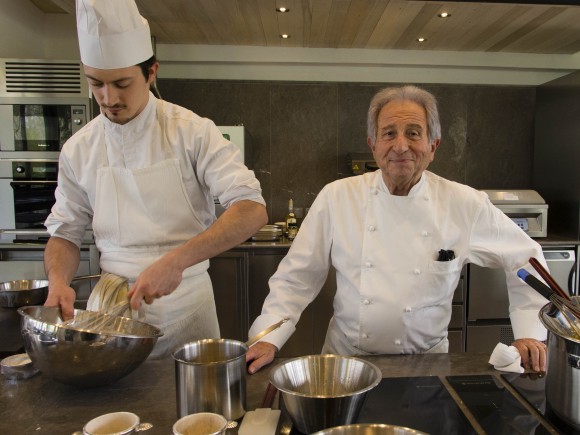
Before the advent of TV’s “MasterChef,” master chef Michel Guérard was already on the gastronomic front lines. He was one of the key activators of the nouvelle cuisine movement in France in the 1970s, which refreshed France’s culture of heavy, rich dishes, and has been pushing for light, healthy, seasonal food ever since.
Today, he continues that commitment in the cooking school he’s recently opened on his estate.
Teaching chefs to cook for health
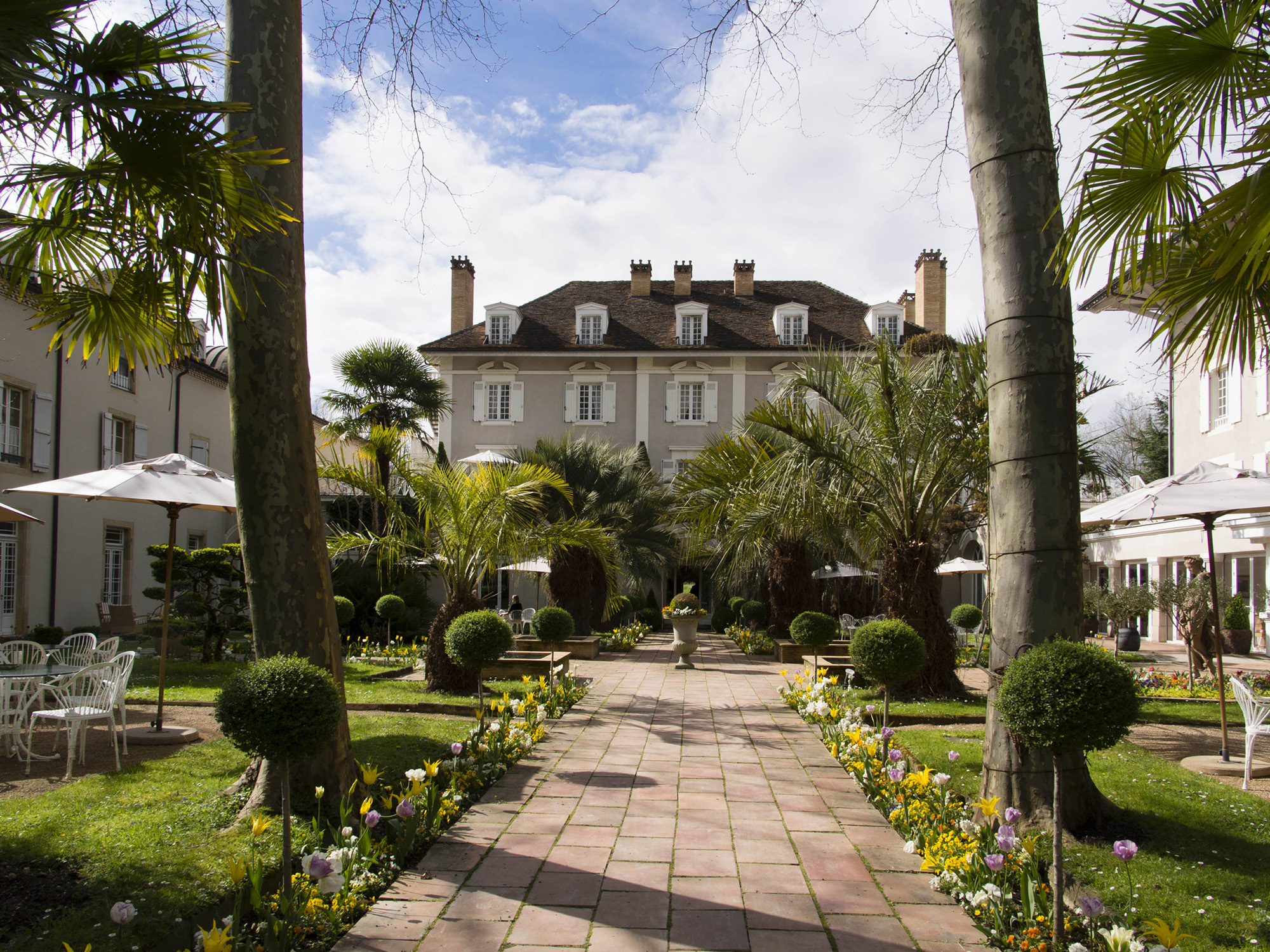
Les Prés d’Eugénie, the hotel and restaurant. Credit: Copyright 2015 Carla Capalbo
More from Zester Daily:
At Les Prés d’Eugénie, Guérard also runs several hotels, restaurants and a treatment center.
Food as a cure for what ails us
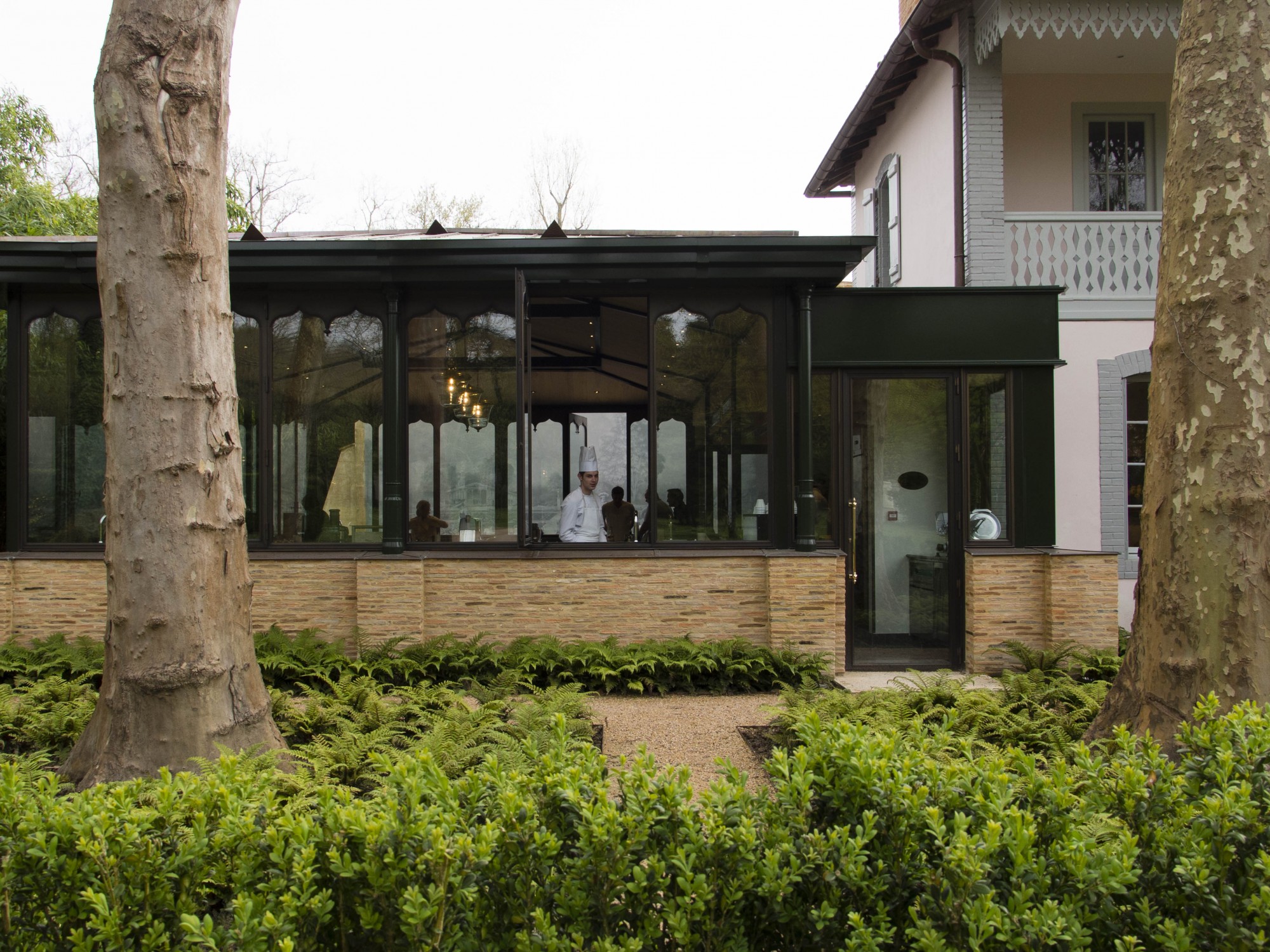
The culinary school from outside. Credit: Copyright 2015 Carla Capalbo
Guérard has always believed that we truly are what we eat, and that food — fresh, light food — can cure us from many of the illnesses that beset the modern world.
The cooking school is aimed at professional chefs and at people preparing food in schools, hospitals, homes for the elderly and for others with special dietary requirements. It brings together current knowledge on key medical problems – such as diabetes, obesity and heart disease — and proposes eating plans for each. The teaching focuses on cuisine that is both healthy — with reduced calories, fats and sugar — and pleasurable, in what Guérard calls cuisine minceur.
“You must never compromise on flavor,” says Guérard. Situated in a luminous, state-of-the-art kitchen overlooking the gardens of Les Prés d’Eugénie, l’Ecole de Cuisine de Santé offers professional courses for groups of up to 10 cooks for one or two weeks.
Beyond a diet of grated carrots
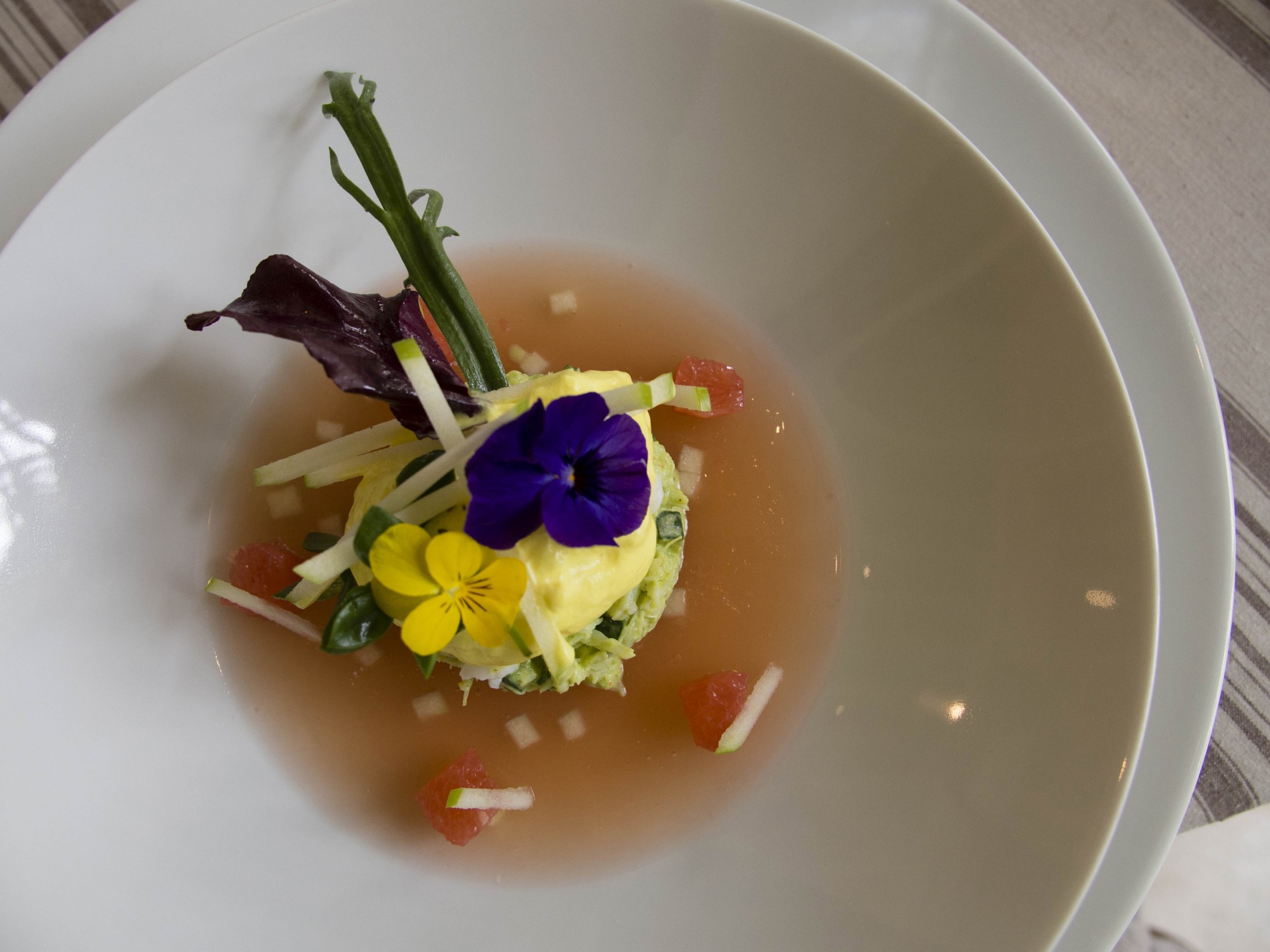
Spiced crab on grapefruit jelly with citrus mousse. Credit: Copyright 2015 Carla Capalbo
“When I started observing what the patients who came for the thermal cures were eating, I too was depressed by the heaps of grated carrots that were placed before them, topped at the last moment with improvised dressings,” Guérard says.
“I saw an opening for a new kind of healthy cuisine that could inspire people with special needs in their diets to look forward to eating, and to make profound changes in their eating habits that would remain with them for life.”
In his spiced crab on grapefruit jelly with citrus mousse, Guérard demonstrates some of his core principles: that seafood and meats can be cooked without fats, butters or creams to produce vibrant dishes. Even dishes on the three-star Michelin Grand Table menu are cooked with natural flair and a light touch. For example, fresh herbs and citrus notes add zest and flavor to shellfish without leaving the diner feeling heavy.
Slimming cuisine based on research
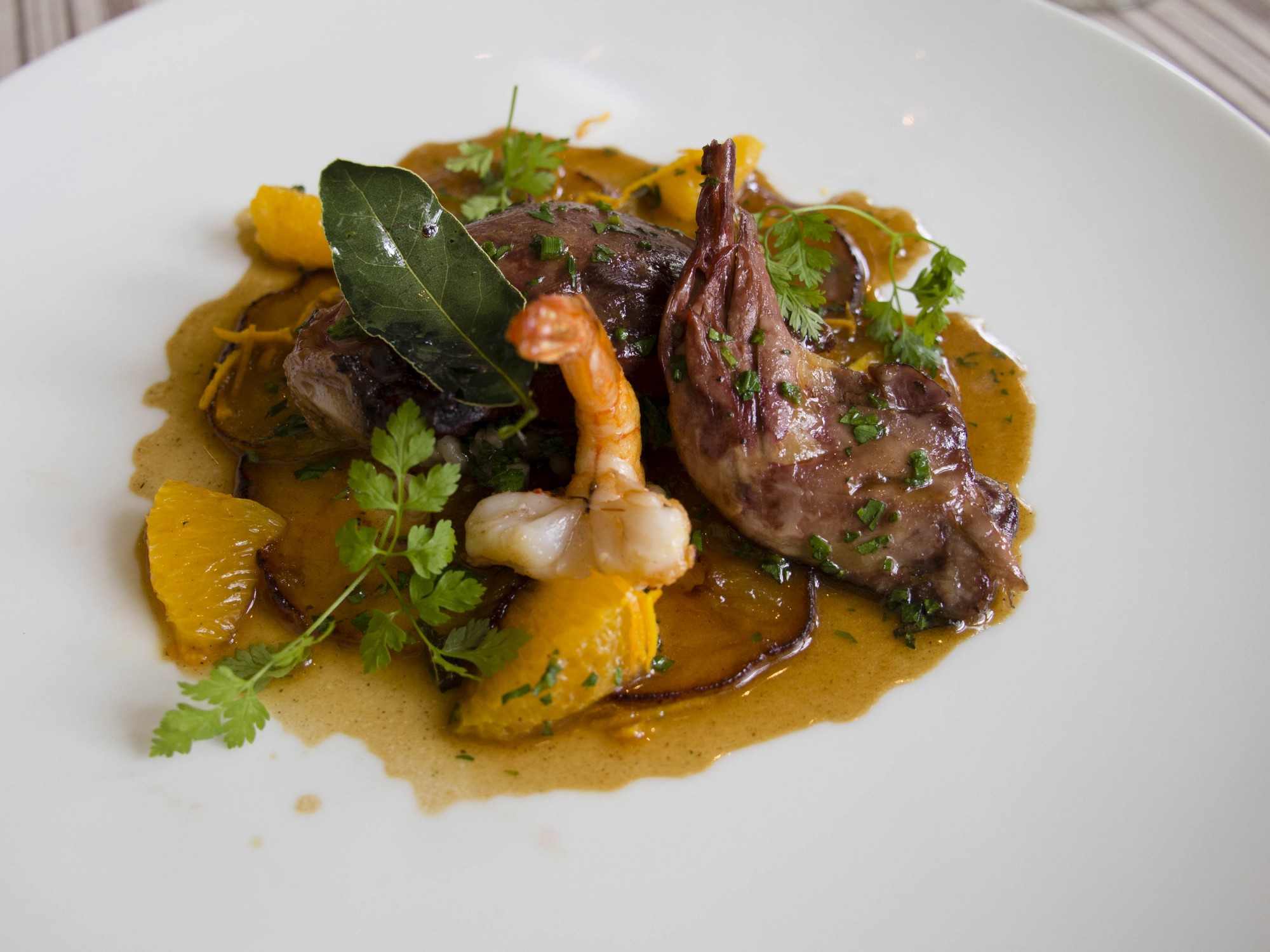
Pigeon is cooked with shrimp, bay leaf and tangerine. Credit: Copyright 2015 Carla Capalbo
Cuisine minceur is not achieved by simply reducing fats, sugars and calories. It is based on experience and nutritional research. After Guérard published his first book on the subject in the mid-1970s, “La Grande Cuisine Minceur,” he was approached by the Nestlé group to help them develop a line of frozen foods that would reflect the healthy approach of his new cuisine.
“I was fortunate to continue this consultancy for 27 years, and thus to have access to the latest scientific research into diet, nutrition, physical exercise, thermal treatments and every aspect of this discipline,” he says. “And throughout, I never lost my conviction that pleasure must always play an important part in eating, no matter what the calorie count!”
You can eat dessert on a diet
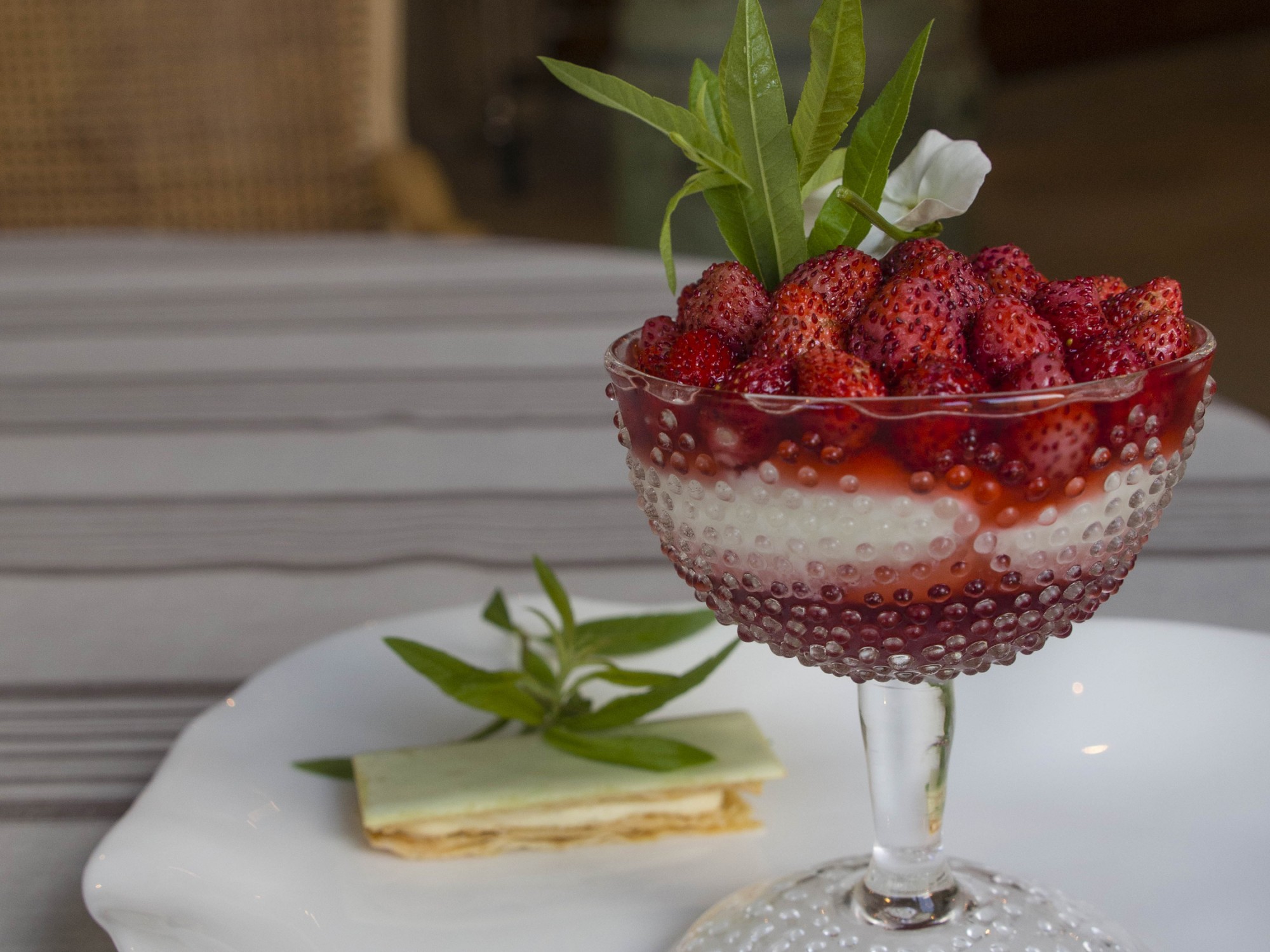
A strawberry dessert. Credit: Copyright 2015 Carla Capalbo
The desserts at the restaurant and in the cuisine minceur cookbooks have also been overhauled. (No surprise there, for Guérard is a master pastry chef who won the Meilleur Ouvrier de France, which honors the creative trade professions, for pâtisserie in 1958). Each dessert recipe comes with a calorie count that varies depending on which sweetener has been used, be it sugar, honey, fructose, xylitol or aspartame. Most three-course meal combinations total less than 600 calories, so they are well suited to those who are cooking for the popular 5:2 diet (in which people are limited to 500-600 calories for two days out of seven). For those who want to learn more about Guérard’s cuisine, his seminal cookbook has recently been translated into English. “Eat Well and Stay Slim: The Essential Cuisine Minceur” offers full instructions for dozens of his delicious dishes.
A dynamic and lasting legacy
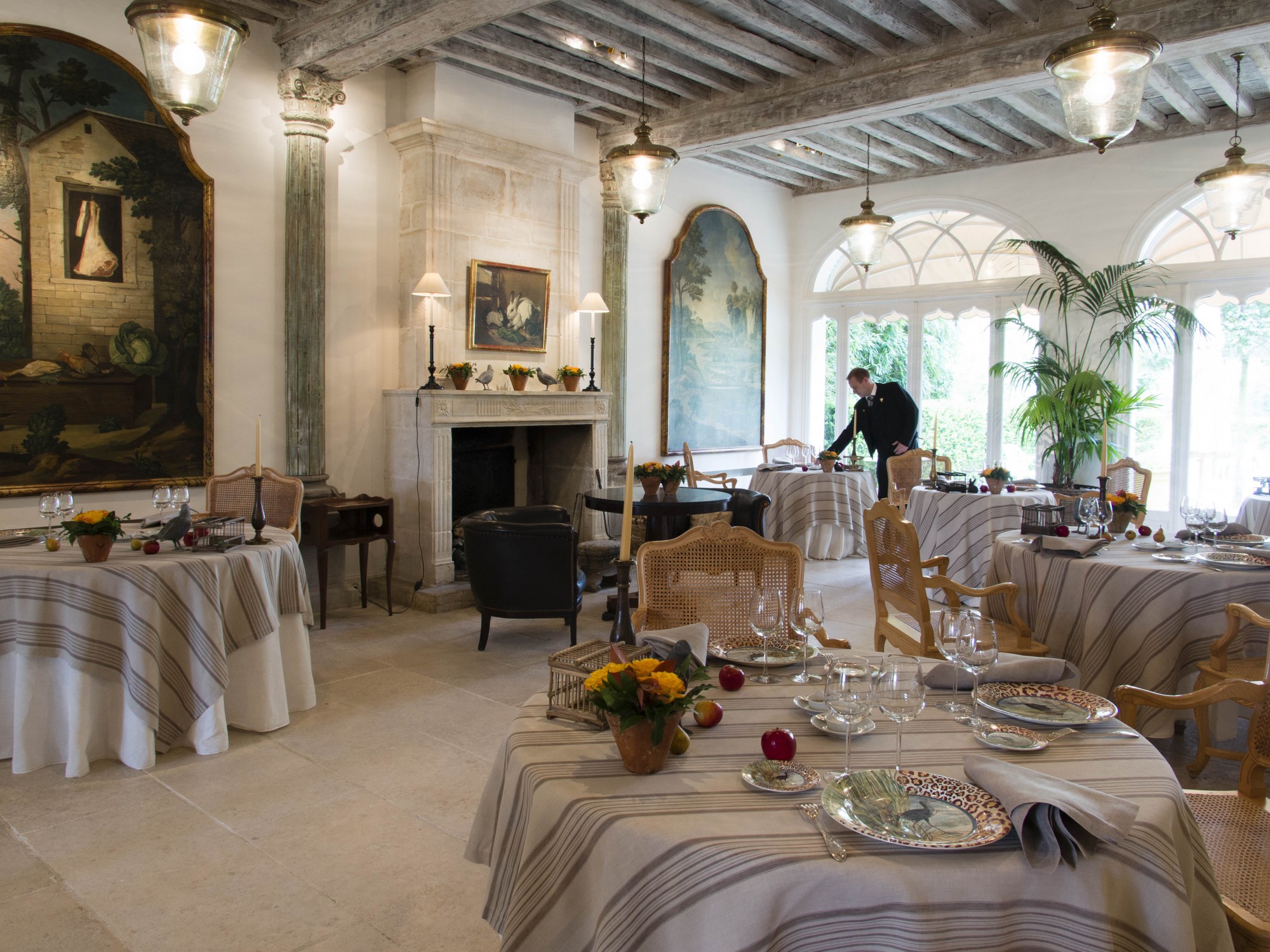
The restaurant dining room. Credit: Copyright 2015 Carla Capalbo
Guérard has never abandoned his commitment to lighter, healthier food, as the new cooking school attests. Today, his philosophy is bearing fruit as the word about cuisine minceur and its methods spreads within the food community in France and beyond. It’s a fitting legacy for such a dynamic grand master, whose revolutions in the kitchen continue to impact on our eating habits, every day.
Main photo: Chef Michel Guérard. Credit: Copyright 2015 Carla Capalbo