Articles in Book Reviews
In a twist on turning lemons into lemonade, Mark Diacono comes close to saying that when the world hands us climate change, we should make Chilean guava gin.
In the introduction to his lushly photographed new book, “The Food Lover’s Garden: Amazing Edibles You Will Love to Grow and Eat,” Diacono writes: “What a sweetly virtuous circle that climate change should allow us the possibility of growing many of the foods we currently import, and that we can take advantage of that shift to help arrest its progress.”
Yes, Diacono is telling us to stop worrying and learn to love climate change. And there is a certain Strangelovian logic to it, because if we grow formerly exotic foods such as Carolina allspice, Sichuan pepper and Chilean guava in our own backyards, we will reduce our food carbon footprint by cutting back or eliminating packaging and overseas transportation.
Grow your own global produce
Diacono not only talks the talk, he walks the walk. As head gardener at Hugh Fearnley-Whittingstall’s River Cottage enterprises for many years, he grew edible plants of all sorts and taught others how to take them “from plot to plate” — or as we would say on this side of the pond, from farm to table. Diacono now devotes himself full time to his own Otter Farm in Devon, in southwest England.
Although Diacono’s introduction to “The Food Lover’s Garden” places gardening in the larger context of climate change, peak oil, peak phosphate and other global concerns, the book itself is not a treatise on food politics or the environment. Rather it is part gardening handbook and part cookbook — a chatty, often cheeky, user-friendly guide to choosing, growing and then cooking your own favorite foods.
Diacono believes that life is too short (and often gardens too small) to plant anything but what you are truly passionate about eating. At the outset, Diacono dismisses the “boring” vegetables that you can get easily and cheaply at any grocery store, such as potatoes and cabbage, and advises us to instead plant the exotic fruits, vegetables, nuts and spices he loves.
While I respectfully disagree with Diacono about potatoes and cabbage being boring, that is actually the point of this book: You read about what excites Diacono, then you decide what turns you on — in the garden and in the kitchen — and plant accordingly.
Let flavor be your guide
“The Food Lover’s Garden” starts at the endpoint, with whatever tastes you love, then takes you back to the beginning, to choosing and planting those foods in your garden. Diacono first recommends making a wish list, letting flavor alone be your guide. Then he suggests growing things you can’t find in the store, and choosing plants that will provide you with food in every season. Finally, he suggests balancing “certainties” (easy to grow even if you don’t have a green thumb or great soil) with “gambles.”
Scanning “The Food Lover’s Garden” table of contents, I saw that about half of the plants would be bad gambles in the Midwest where I live, and throughout most of the United States. Neither Diacono nor his publisher make mention of U.S. Department of Agriculture plant hardiness zones, but I did a little research and found what I suspected, that many of the plants Diacono raves about will survive only in Zone 8 and higher — the far southern states, and areas moderated by the Pacific in the western states.
Devon, where Diacono lives and farms, has always been known for its mild climate, even in pre-climate change centuries. That’s great for him, but his book is a bit of a cruel tease for the rest of us — unless, of course, climate change goes into very high gear in the very near future. But there are still a dozen or more hardy and delicious plants that Diacono recommends, such as sorrel, rhubarb, lovage, nasturtiums, mizuna and asparagus.
And no matter where you live and garden, even if you are only an armchair gardener, this book is a wonderful invitation to live adventurously and expand your gardening, cooking, and eating horizons. At the same time, by growing and eating more local foods, Diacono writes, “you’ll be casting your vote for a new way of feeding ourselves and for the future.”
Buy Mark Diacono’s “The Food Lover’s Garden” Now!
Terra Brockman is an author, a speaker and a fourth-generation farmer from central Illinois. Her latest book, “The Seasons on Henry’s Farm,” now out in paperback, was a finalist for a 2010 James Beard Award.
Top photo composite:
Mark Diacono. Credit: Jason Ingram
Book jacket for “The Food Lover’s Garden.” Credit: Courtesy of Timber Press
* * *
The first thing to say about Anne Willan’s “The Cookbook Library” is that for years or decades to come, this beautiful volume is going to be an indispensable resource for readers and researchers in love with the history of cookbooks. Certainly it will become one of my own hunting grounds for the answers to many mysteries.
The next thing to say is that it must have been an unimaginably difficult work to compile and publish, one of those productions marked with awkward traces of their own birth pangs. Something like three or four different books seem to be going on here at the same time — all worthy, all fascinating, but not all harmoniously meshed or equally well-realized.
The overall framework is a kind of gallery tour through the huge and important private library amassed by Willan and her husband, Mark Cherniavsky, over a period of many decades. The book is studded with many dozens of title pages, frontispieces, engravings, etchings and other images from the Willan-Cherniavsky collection. (All illustrations are black and white, a drawback only with reproductions of medieval illuminations and later paintings.)
The couple’s “cookbook library” is also the springboard for a historical survey of cooking, cookbooks, cookbook writers and recipes from the late Middle Ages to about 1830. The material is organized into four substantial chapters covering developments throughout the four centuries from 1400 to 1800, two shorter chapters addressing the late 14th and early 19th centuries and a few dozen boxed essays on special topics such as the medicinal angle of early cookbooks and the evolution of table furnishings. As if this complex design weren’t enough, each chapter also concludes with a handful of recipes (38 in all) taken from books in the collection, with the original text followed by Willan’s lengthy adaptations for modern home kitchens.
A spirited historical overview
The best-realized part of all this, aside from sheer visual plenty, is the general historical overview. Willan manages to place dozens of obscure (to most lay readers, anyhow) figures in lucid, lively context while sketching trajectories of influences from one seminal work to its progeny. Her spirited sketches of people like Taillevent, Platina, Elizabeth Raffald, Sir Kenelm Digby and Marie-Antoine Carême will make “The Cookbook Library” an invaluable adjunct to food history courses everywhere, not to mention a nifty tool for self-taught dippers and browsers.
The subsidiary boxes do a fine job of bringing crucial but often unsung issues — for instance, the literacy or illiteracy of cooks through the ages — to attention. And Willan can trenchantly remind us that “historical” cooking techniques aren’t terribly distant from living memory; one of the best things in the book is her childhood recollection of being taught by an old family cook to beat the batter for Christmas cakes with her bare hand in a rural Yorkshire kitchen. (“First the butter: I would squish with my fingers, then curving my hand like a spoon would beat it to a cream, the warmth of my little, eager hand helping the mix.”)
All the more pity that as a historian, culinary historian or elucidator of texts, the author is frequently out of her depth. Owning a notable library of historic cookbooks unfortunately has nothing to do with scholarly chops. Willan seems to believe that Piers Plowman (not William Langland) wrote the Middle English poem “Piers Plowman.” Her unfamiliarity with the conventions of scribal abbreviations produces garblings like “Pep” for “Peper” (pepper) in a transcribed 14th-century recipe for “cormarye” (roast pork in a spiced wine sauce). Elsewhere, she marvels over the “spartan” character of a 1791 dinner at the court of George III without noticing that it’s for “Their Majesties Pages,” not “Their Majesties” and mangles the title of the oldest book in the Willan-Cherniavsky collection, a 1491 edition of St. John Cassian’s “On the Establishment of Monastic Communities and the Remedies of the Eight Principal Vices,” by thrice writing “viliorum” for “vitiorum” (vices).
The left hand sometimes doesn’t appear to know what the right hand is doing. Having pointed out that Lucy Emerson’s “New-England Cookery” (1808) was almost wholly plagiarized from Amelia Simmons’ “American Cookery” (1796), Willan then manages on the same page to draw inferences about Emerson from her book’s title page without observing that it’s repeated almost verbatim from Simmons. About 40 pages later, she reproduces one of the cribbed Emerson recipes (a squash pudding) without mentioning its provenance.
The difficulties of old recipes
The reconstructed recipes, which occupy acres of page space and obviously have had much work bestowed on them, are the weakest part of the effort. You never know whether you’re going to find penetrating insights into the nuts and bolts of old recipes or stumble on maddening failures to think through the meaning of some original word or direction.
A very few examples: Modern commercial brown sugar is no proper equivalent of the “Madeira sugar” in a 16th-century quince jelly. (Madeira sugar was white enough to have been dubbed the island’s “white gold.”) Gallina morisca in a 17th-century Spanish recipe almost certainly refers not to a Moorish style of cooking chickens but to a particular variety of poultry — in fact, today it sometimes means “guinea hen.” The chocolate in Vincent La Chapelle’s “Chocolate Cream” (1733) would have been a coarse-ground, grainy substance more akin to today’s Mexican chocolate than the smoothly conched modern dark chocolate in Willan’s reconstruction. The “rape-vinegar” in Maria Eliza Rundell’s pickled lemon recipe (1811) would have been made not from “wild turnips” but from wine-press leavings.
It has to be said that reconstructing historical recipes is difficult stuff even for skilled culinary historians; probably Willan would have been prudent to make these a less prominent part of the general plan. “The Cookbook Library” is still a triumphant contribution to both the study of culinary history and the ranks of treasurable books on cooking. Would that the execution of its grand design were less erratic, but it belongs in any real cookbook lover’s library.
Buy Mark Cherniavsky and Anne Willan’s “The Cookbook Library” Now!
Anne Mendelson is a freelance writer, editor, and reviewer specializing in food-related subjects. She has worked as consultant on several cookbooks, was a contributing editor to the late lamented Gourmet, and has been an occasional contributor to the New York Times Dining Section and the Los Angeles Times Food Section. Her biography of Irma Rombauer and Marion Rombauer Becker, Stand Facing the Stove (Henry Holt 1996), won widespread critical praise for its insights into the history of modern American cooking. In 2000 – 2001 she held a fellowship at the Dorothy and Lewis Cullman Center for Scholars and Writers at the New York Public Library, working on a study of food history in New York City. (Part of this research, a survey of pre-European foodways among the Lenape Indians, won the 2007 Sophie Coe Prize in Food History at the Oxford Symposium on Food and Cookery.) Her most recent book is Milk, a cultural-historical survey of milk and fresh dairy products (Knopf 2008).She is now working, with a grant from the Guggenheim Foundation, on a study of how the global Chinese diaspora is influencing Chinese food in America.Top photo composite:
Book jacket courtesy of University of California Press
Mark Cherniavsky and Anne Willan. Credit: Patty Williams
As an avid seafood eater and occasional fisherman, I have amassed a boatload of fish cookbooks. Among my favorites is “The River Cottage Fish Book” (Ten Speed Press, 2012). Written by Hugh Fearnley-Whittingstall and Nick Fisher, British broadcasters, cooks and lifelong fishermen, this weighty tome explores the complicated issues of catching, selecting and preparing seafood both safely and sustainably. Part reference book and part recipe collection, it has become my go-to source whenever I have a question or concern about fish.
“The River Cottage Fish Book” starts off with engaging anecdotes about the authors’ first childhood fishing experiences. It then eases into three comprehensive but approachable chapters on sourcing, cleaning, storing and preparing fish and shellfish. Any quandaries readers may have about choosing ecologically sound seafood, killing a crustacean, filleting a flatfish or freezing and subsequently defrosting a whole fish are resolved here.
With facts and fundamentals established, the authors move on to the heart of any cookbook, the recipes. In “The River Cottage Fish Book,” Fearnley-Whittingstall and Fisher serve up 135 creative yet remarkably easy dishes, all of which focus on sustainable seafood. Mackerel stuffed with salsa verde, pike fishcakes with caper sauce and squid and tomato risotto dazzled but did not tax me or the sea ecology. Simple, British-inspired repasts such as smoked haddock-studded kedgeree, fish bubble and squeak, and the rich, oniony fish soup known as Cullen skink were equally sound and scrumptious.
Fearnley-Whittingstall and Fisher conveniently group their recipes according to technique. Yearning for beer-battered fish? Flip to the chapter on shallow and deep frying and you’ll find a tasty recipe for this very dish. In the mood for a savory seafood pie or gratin? You’ll come across several delightful concoctions in the chapter on baked and grilled fish.
In most instances, the recipes can be used interchangeably with other fish. Helpful sidebars point out specific substitutions. The head notes and ingredient lists often cite this information too.
Along with providing reliable and delectable recipes, the authors also delve into the art of preserving seafood. By the end of “The River Cottage Fish Book” readers know how to build their own hot- and cold-smokers and whip together pickling marinades and salt fish. They can create such renowned dishes as ceviches, escabeches, taramosalata and gravad lax or, in this case, the eco-friendly, salt- and sugar-cured mackerel.
The two likewise look at seafood affinities, discussing the foods and flavors that partner well with fish and shellfish. They explore the merits of raw seafood and consider which condiments, such as pickled ginger and shallot vinegar, enhance it. Additionally, they take readers step by step through creating such uncooked classics as sashimi, sushi, carpaccio and tartare.
First published in the United Kingdom in 2007, “The River Cottage Fish Book” features quite a bit of British seafood. A section titled “British Fish” showcases just that — the species caught and consumed in the U.K. The presence of European catches such as John Dory, wrasse and winkles doesn’t detract from my enjoyment of the book. I found it fascinating to learn what our neighbors to the east catch, cook and eat. Plus, should my fishmonger get in a rare shipment of cockles or sprat, I now know what to do with each. Anyone care for creamy cockles with tagliatelle or smoked sprat?
If the wealth of fascinating information and recipes hadn’t already sold me on “The River Cottage Fish Book,” then the powerful color photographs surely did. Both illustrative and captivating, the photos are a sumptuous visual feast. I could almost skip cooking and display this as a coffee-table book. However, with such quality recipes, insightful essays and useful tips, I’ll keep “The River Cottage Fish Book” close at hand in my kitchen.
Buy Hugh Fearnley-Whittingstall and Nick Fischer’s “River Cottage Fish Book” Now!
Kathy Hunt is a syndicated food writer whose work has appeared in the Chicago Tribune, Los Angeles Times, Baltimore Sun and VegNews, among other publications. She currently is working on her first cookbook.
Photo: British broadcasters and cookbook authors Nick Fisher and Hugh Fearnley-Whittingstall. Credit: Simon Wheeler
Shaun Rein, managing director of the China Market Research Group, is the author of the new release “The End of Cheap China,” which addresses, among other things, food safety and food supply issues in China.
Rein’s research shows that China is having an increasing impact on global food supply and that the Chinese taste for imported Western food is growing as is demand for a reliable and safe food system in that country.
Based in Shanghai, he writes for Forbes and Bloomberg Businessweek. I spoke recently to Rein about his book chapter dedicated to food safety issues in China.
How is the consumer power of the average Chinese changing?
The book is meant to dispel a lot of myths about China’s economy. The first is that Chinese consumers are price-sensitive and cheap. I have a chapter on food safety, where I explain that they’re willing to spend money on healthy and safe food, so if you’re a producer, it’s worth selling into China. For example, Yum! Brands makes over 40 percent of its global revenue in China. So the Chinese consumer is a great consumer for Yum!, McDonald’s, Kraft and any company trying to sell finished products into the country.
It’s also a great country for the agricultural sector: sales of pork and soy are going up 300 to 400 percent a year.
How is this affecting the way the Chinese eat? How has that changed in recent years?
Meat consumption was very low. Meat consumption in China is only about 35 percent that of the United States, So, Americans eat a lot more meat, but that is changing. Chinese doubled (their average per person) meat consumption in the last 30 years. As Chinese consumers are getting wealthier, they’re eating more meats, and (the country’s wealthiest consumers) are actually willing to spend more per capita on meat than (their counterparts do) in the United States.
Are they domestically producing different kinds of foods to meet those demands?
Yeah, what you’re seeing now is massive investment on the domestic side when it comes to beef, when it comes to wine … all kinds of things. But the reality is that China’s food system has a problem: There’s not enough arable land, and the water is heavily polluted. So China is actually going to have to rely on food imports, from the United States especially, and they’re becoming a massive importer of pork, chicken feet, soybeans, pistachios, all kinds of products. These consumers trust American-produced food products more than they do stuff from China. So it’s really a boom for all different industries involved in the food sector. On the lower end and higher end.
Arable land is only 7 percent (of that available around the world), so it’s a serious problem, and it’s only going to get worse going forward.
What are you noticing in terms of the impact on health in the way Chinese are changing their food consumption behaviors?
Right now, consumers are not worried that much about food when it comes to “is it healthy?” towards their overall diet. They’re eating meat, they’re eating fatty food, and they’re not overly concerned about long-term illnesses, which is why you’re seeing rates of heart disease and diabetes skyrocketing.
But people are worried about being healthy from a toxicity standpoint. We interviewed 2,000 consumers in eight cities last year, and the majority said they feel that KFC, for instance, is healthy. They know it’s not healthy in the traditional sense, but people are worried about eating cooking swill oil [that is old, used oil which is filtered of solids and then re-used for cooking] on the streets, and dying right away.
What are the food safety concerns Chinese have, beyond swill oil?
We interviewed 5,000 consumers in 15 cities last year, and their biggest concern in life, ahead of being able to pay for their kid’s education or for medical costs for the family, is actually food and product safety. People are really worried. That’s why brands like Mengniu Dairy are winning, because they’re positioned as higher priced over Nestlé, they’re about 20-30 percent more (expensive), and consumers are willing to fork out the money because they think it’s going to be safe. So Dannon and Nestlé had to shut their factories in Shanghai this year, because they were competing on price and consumers didn’t want their cheap stuff anymore. Consumers find a correlation between safety and price, and feel higher price will be safe. Now I’m not sure that’s necessarily true in reality, but that’s how they equate it.
In your opinion, how are China’s consumption trends affecting the world beyond?
[They are affecting the world] in a few areas. First, China’s become the market to sell into, so a lot of brands need to think about how they’re going to sell to Chinese consumers, especially women, because women are the decision-makers when it comes to food purchases, predominantly, in families.
It’s also going to mean that there’s going to be inflation. In the last three decades, China has really been a deflationary force on the global economy. But because everyone’s getting fat, and wanting to eat more, better quality foods, you’re going to see a pricing strain on global commodity markets. So the world needs to be prepared for global inflation. American consumers better get used to higher prices at Shaw’s, or Tesco or Carrefour or Walmart, around the world.
Will the Chinese agricultural and food production systems have to change?
They absolutely will have to change. It’s an absolute mess, it’s a disaster, and an embarrassment for China to have such a poor food supply system. Though it’s being changed by two things.
The first is, the government understands it needs to do a better job of oversight. So what they’ve done is shut 50 percent of the nation’s dairies last year, for example.
The real change is going to take place by people willing to spend money when they feel that they’re safe. So brands are going to fix their supply chain and cater to these consumers and make money. The scope of the problem is enormous.
Buy Shaun Rein’s “The End of Cheap China” Now!
Zester Daily contributor Manuela Zoninsein is a Brazilian-American reporting on sustainable food, travel and business from Shanghai. A former dining editor for Time Out Beijing, her work has appeared in Condé Nast Traveler, ClimateWire and Newsweek. She writes about her passion for healthy, interesting and sustainable food at manuelasweb.com.
Photo: Author Shaun Rein. Credit: Courtesy of Shaun Rein

I bring two pre-qualifiers to bear upon my consideration of Clifford A. Wright’s latest book, “Hot and Cheesy” (Wiley, 2012), a tome* of 250 recipes making use of the seminal dairy ingredient. One is that I’m married to a Frenchman. It is a little-known fact** that in order to apply for a French marriage certificate one must be able to list more than 100 of the more than 300 known French cheeses. My other qualification is that I am the mother of two small children. Unless you have the rare pleasure of raising a fledgling vegan, melted cheese is a protein mainstay of the child diet and the fix-all to many a vexing vegetable dilemma.
I consider myself pretty well-versed on the subject of cheese.
Which leads straight to the gooey impetus for Wright’s delightful and surprising book. How well, really … really … do any of us actually know cheese, even given the proliferation of artisanal cheeses produced and available today in the United States? Beyond, as Wright notes in his introduction, “putting cheese on a board and serving it with red wine and crackers,” how well do we know cheese not as the star of its own show, but as a supporting cast member? As an ingredient?
An appreciation for cheese history
In the Alps region of France, cheese is produced not in a fromagerie, as one might suspect, but in a fruitière, a term that comes from fruit — pronounced “fwee,” meaning fruit, exactly as in English. The term survives from medieval times, when cheese was considered the “fruit” of the milk and was a life-sustaining protein staple — hardy, transportable and capable of long storage.
In “Hot and Cheesy,” to move beyond mac and cheese (though a superlative recipe is included) and the cheese board, Wright plumbs these historical depths. The Zester Daily contributor makes an argument for cheese in its versatile international guises, as a global culinary chameleon, appreciated in nearly every culture where there’s ever been a suitable mammal to milk. Thus we get recipes as unlikely as a Tibetan blue cheese and beef soup, which I found myself needing to make immediately, applauding Wright for unearthing a long-buried memory of drinking butter tea at a Tibetan restaurant in Paris. The soup was a sensational mix of spicy, numbing (from Sichuan peppercorns), savory and sour, the blue cheese adding the pleasing pungent note. It’s a great conversation-starting dish for a dinner party.
Elsewhere in the book, a recipe for saag paneer was equally appreciated, in part for the revelation that this dish, usually associated with spinach greens — and, frankly, often on the rich yet bland side, like an Indian version of creamed spinach — is traditionally made with enlivening mustard greens. So, so much the better.
If the bulk of the book mines recipes from Mediterranean regions rather than these exotic, farther-flung gems, Wright is to be forgiven. He has, after all, crafted an accessible book filled with the types of things one actually wants to cook and eat nightly, and that is an admirable thing in a cookbook. “Hot and Cheesy” is not of the genre intended for shelf display, but rather for daily inspiration.
Accessible but sophisticated
The mother in me — in particular the French-by-marriage mère in me — did a little dance to find a find recipe for pizza flamiche, a northern French leek tart, here laid out flat and topped with caramelized onions, smoky bacon, semisoft Spanish Tronchón and silky goat’s milk cheese. This is pizza I want my children to eat.
I jigged similarly over the francesinha sandwich (though I still can’t pronounce it), a Portuguese adaptation of the French croque-monsieur in which ham, chorizo, linguiça and thin-pounded beef steaks are layered on grilled country bread with melted Edam and served with a piquant tomato and beer sauce. Surprisingly child-taste-bud-friendly, and rather like a more-sophisticated meatloaf sandwich. These are the kinds of dishes on which to raise adventurous eaters — challenging (and fun for the cook), but not, in kid parlance, flat-out weird.
I could have done with slightly fewer variations on the theme of pasta with cheese, these being the most run-of-the-mill of the dishes on offer, but on the whole, “Hot and Cheesy,” though admittedly not for the lactose intolerant, nonetheless provides ample reasons for the rest of us lucky lot to embrace our inner cheesemeister.
* Pun intended. “Tomme: a generic name given to a class of cheese produced mainly in the French Alps and in Switzerland.”
** Not really. But the ability to pun about French cheese (see tomme, above) will qualify you to receive a French passport***.
*** No. Not really.
Buy Clifford A. Wright’s Hot and Cheesy Now!
Zester Daily contributor Amy Finley is the author of the memoir “How to Eat a Small Country,” and winner of Season 3 of “Food Network Star” on The Food Network. She lives on an orchard in San Diego, where she grows avocados and citrus for local restaurants and teaches at the Olivewood Garden and Learning Center, an urban farm in National City, Calif.
Top photo composite:
Author Clifford A. Wright and his book “Hot and Cheesy.” Credits: Courtesy of Clifford A. Wright
Vegan cookbooks aren’t just for people who follow the meat and dairy-free lifestyle. You are unlikely to find a person who enjoys meat and dairy as much as I do. Yet, I still see a lot of room for vegan recipes in my kitchen library, for several reasons. First, I’m a forager by trade, and have a deep love of wild vegetables. Over the years, I’ve often found the best way to showcase wild foods is to find how a similar commercial vegetable is used in a vegan recipe.
Also, vegan cookery is handy when entertaining. It is rare to throw a party these days without at least one vegetarian, or person with food-sensitivities in attendance. Dishes that are free of meat and dairy are the lowest common denominator for dinner parties. A host who offers a scrumptious vegan dish has covered many of those bases by cooking a dish most guests can enjoy.
If you are a card-carrying carnivore like me, perhaps you are under the impression that vegan fare is dull. Three new cookbooks from the Vegan Heritage Press offer up a wide array of vegan dishes that are anything but boring salads, sad crudite platters, and frighteningly wobbly eggless egg salads of eras past.
Seasonal and accessible “The Blooming Platter Cookbook” by Betsy DiJulio artfully takes advantage of the seasonal cuisine trend. Each chapter, from starters to soups to brunches, is arranged by season, with a visual icon (flower, sun, leaf, or snowflake) clearly marking each. Cooking this way just makes sense because you are using the tastiest fresh produce. With DiJulio’s versatile recipes, you could refresh in the springtime with a menu of fresh pea and tarragon hummus, caramelized onion and spinach quesadillas, and a slice of chocolate carrot cake. In the fall, you could cozy up with beet muhummara, white bean sausages and red apple sauerkraut, and pumpkin apple-butter cheesecake pie.
As someone who just loves good food, when I look through a cookbook in any genre, I expect to find appealing recipes. Even though I’m not a non-vegan, several recipes in “The Blooming Platter” had my mouth watering, particularly in the appetizer and salad chapters. Seasonal fruit and red wine onion jam? Yes please. Beet salad with horseradish-walnut vinaigrette? Don’t mind if I do. Thai rice noodle and plum salad? Yes, you could put some right here on my plate. Tunisian couscous salad with cumin-pomegranate vinaigrette? Make extra for me.
One aspect of DiJulio’s cookbook that I found particularly intriguing was the appearance of several meat and cheese-replacement recipes, which were make from white beans. Previously, I had thought that it was fairly standard to make this sort of thing with soy products. After having had some unpleasant tofu experiences, I think that white bean sausages sound like an appealing alternative.
Flavors from around the globe
“World Vegan Feast” by Bryanna Clark Grogan contains recipes that originate in more than 50 countries. Here Grogan offers a crafty answer to the question: “How do you make flavorful food if you can’t eat meat or dairy?” The answer, as it turns out, is to make use of the spices and seasonings of world cuisine. This book offers up such globe-trotting dishes as masa crepes with greens and black bean and corn salsa, Vietnamese-style mango salad rolls with smoked tofu, Greek nugget potato and kalamata olive stew, Egyptian-style beans, and Peruvian carmel-filled pastries.
Diner food without the meat
“American Vegan Kitchen” by Tamasin Noyes promises “delicious comfort food from blue-plate specials to home-style favorites.” At first glance, it would seem this book’s target audience is a younger crowd, possibly those who are vegan for political, rather than health reasons. I envision the college kid who just wants to eat the same foods her buddies are enjoying.
But let’s face it, everyone enjoys fun food every now and again, and this book delivers by retooling classic American fare. You could satisfy your cravings for diner food by saddling up to fried pickles, a mushroom burger, fries and coleslaw. Put a cap on a night out with stick-to-your-ribs pot stickers. Enjoy the big game with a room full of friends and spicy balsamic maple wings. Or kick back after a hard day at work with loaded baked potato soup and seitan on a shingle.
I’m guessing that even picky eaters could be won over by some of the popular dishes Noyes cooks up.
If you think that vegan food means endless meals of brown rice and kale, it is time to reconsider. Even while avoiding meat and dairy products, the modern vegan can take advantage of a colorful and flavorful assortment of foods, and even satisfy all of their cravings.
Vegans, non-vegans, and people who just love plant-based dishes will enjoy these books.
Buy Betsey Di Julio’s “Blooming Platter Cookbook” Now!
Zester Daily contributor Wendy Petty lives in the Rocky Mountains, where she is a forager, photographer and wild foods consultant. She writes about her adventures with mountain food on her blog, Hunger and Thirst.
Photo: Vegan cookbooks. Credit: Wendy Petty
* * *
On my first trip through Morocco, I packed not only a guidebook but also a cookbook: Paula Wolfert’s 1973 classic, “Couscous and Other Good Food from Morocco.” Filled with rich culinary and cultural anecdotes, her book helped me navigate the country’s markets, medinas and menus in ways that no traditional travel guide could. Back at home it enabled me to recreate countless aromatic, North African specialties. When I learned of Wolfert’s colorful follow-up, “The Food of Morocco” (Harper Collins, 2011), I doubted that I could cherish this cookbook as much as I had her first. And yet I do.
In “The Food of Morocco,” the James Beard award-winning author expands upon the delights that she had covered decades ago. She updates many classics and introduces new favorites including date, almond and apple truffles and cheese- or meat-stuffed flatbreads. Throughout the book, she shares invaluable insights, techniques and recipes garnered from 50 years of traveling and cooking in Morocco.
Wolfert begins her latest book by looking at the basic ingredients and tools of Moroccan cuisine. She explains how to make such pantry staples as preserved lemons, meat confit and the spice blend ras el hanout. She also discusses how best to use these items in everyday dishes. These early chapters provide a solid foundation for newcomers and a nice refresher for old hands at Moroccan cooking.
Fundamentals established, Wolfert moves on to salads, breads, soups, dairy-based foods and those tiny grains of semolina that we know as couscous. The chapter on couscous is particularly beneficial to anyone who, like me, purchased, dragged across North Africa and then lugged back home a couscousiere — the two-tiered pot traditionally used in Morocco to steam couscous. Wolfert takes readers step-by-step through the process of hand-rolling thousands of semolina grains, steaming them in a couscousiere or colander and then raking them through your fingers until they become light, airy couscous. Lush color photographs and detailed illustrations further assist with this and other kitchen tasks.
No cookbook devoted to Morocco can be without a tagine recipe or two. Prepared in the eponymous conical, earthenware pot, these rich, succulent stews are found throughout the country as well as “The Food of Morocco.” Fans of Wolfert’s first book will recognize her chicken with preserved lemon and olives, meat with carrots and celery and meatballs or kefta with herbs, spices and lemons. These timeless dishes appear alongside such original, delightful offerings as baby calamari with red pepper and tomato and lamb with prunes and almonds. Wolfert gives readers a mix of the old and new, delivering a wealth of sumptuous meat- , poultry- , fish- and vegetable-based tagines to tantalize the taste buds.
Along with the quintessential North African foods, there are some dazzling modern creations here, especially in the realm of desserts I particularly appreciate the aromatic, orange flower water-laced tarte tatin, crumbly semolina almond cookies and creamy avocado and date milkshake.
In addition to presenting her unsurpassed knowledge of Moroccan cuisine, Wolfert brings her skills as a storyteller to “The Food of Morocco.” Whether in a head note, sidebar or essay, each of her recipes tells a tale of Moroccan life. By the end of the book I felt as though I, too, had spent decades journeying through and cooking in this sensuous land. Who knows? Maybe a few readers will be inspired to tuck this tome into a backpack and set out to make their own memories of Morocco.
Whether you’re a longtime fan of or latecomer to Moroccan cooking, you’ll find “The Food of Morocco” inspiring and delightful. Creative, engaging and informative, it’s a welcome addition to any kitchen.
Buy Paula Wolfert’s “The Food of Morocco” Now!
Kathy Hunt is a syndicated food writer whose work has appeared in the Chicago Tribune, Los Angeles Times, Baltimore Sun and VegNews, among other publications. She currently is working on her first cookbook.
Top photo composite:
Author Paula Wolfert and “The Food of Morocco” book jacket. Courtesy of www.paula-wolfert.com
* * *
Shop Indie Bookstores
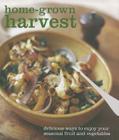
“Home-grown Harvest: Delicious Ways to Enjoy Your Seasonal Fruit and Vegetables” is the kind of cookbook that is as thrilling to browse through as a full-color seed catalog in the dead of winter. I experienced that rush when I opened this handsome book in the doldrums of the squash, potato and beet season. The first chapter of root vegetables spoke directly to me with recipes for potato and parsnip croquettes, Thai red pumpkin curry and spiced carrot dip. Revitalizing a desire to use my storage crops, it propelled me into the kitchen — one of the first tests of a keeper cookbook.
Inspiration for the seasonal cook
Organized by botanical groups (“Bulb & Stem Vegetables,”Greens & Salad Vegetables”), “Home-grown Harvest” is intended as a recipe resource for gardeners. However, lacking any of the horticultural information found in similar books, such as in Alice Waters’ “Chez Panisse Vegetables,” it is approachable for farmers market shoppers and Community Supported Agriculture farm members alike. There is a short supply of text overall (a plus for many; for me, less so), and this book reads like a beautifully designed magazine feature.
The chapter “Fruiting Vegetables” leads you through the warm-season crops of eggplants, peppers, tomatoes, corn and artichokes with alluring photographs. The recipes are a balance of classic and novel, European and Asian, even mixing savories with sweets, and this collection feels modern without seeming scattered. The lengthy tree fruit chapter was far less useful, since I have a garden, not an orchard.
Recipes are short on specifics and salt
“Home-grown Harvest” only revealed its true shortcomings when I brought it into the kitchen. Braised fennel with polenta was the first recipe I made, since I am always looking for more ways to use this beloved bulb. It started off promising with instructions to use the fronds, which I typically compost, and offered directions for trimming and slicing the bulb, a procedure unfamiliar to many home cooks. As soon as I turned on the burner, the situation soured.
I followed the directions to heat the olive oil in a saucepan (no size specified, my first red flag) over high heat to cook chopped onion and garlic. I took a second look in the book, then turned the heat down to medium-high anyway to avoid scorching (red flag number two). The fennel slices barely fit in my largest saucepan (red flag number three). I stuffed them in to braise in lemon juice, wine and stock for 20 minutes, covered, over a low simmer. Thirty-five minutes later, my fennel was crisp enough for a wilted salad but hardly braised (red flag number four), and where in the world was the direction to season with salt (red flag number five)?
Next, I tried the recipe for cauliflower and Swiss chard salad, beckoned by the beautifully caramelized florets in the photo. I found the same pan-size omission, the wanton instructions for high heat, unrealistic cooking times and a serious lack of seasoning in the tahini dressing. I’m sorry to report that the four other recipes I attempted to follow faithfully required some intervention although the recipe ideas throughout continued to allure me.
A cookbook looking for an author
What, precisely, was going on here? I sat down with the book to find out who was guiding my hand at the stove. I flipped the book to the title page and realized that there was no single author. On the copyright page, there was a list of 22 contributors, and I had my answer. As I pored over “Home-grown Harvest” in depth, I noticed how generic, too, were the sparse sidebars and tips, how they lacked the personal attention to detail that makes any cookbook — no matter how lovely — merit a long-term position in our collections.
The mark of an excellent cookbook is the voice, experience, perspective and particularities of its author. Like a kitchen without a chef, this cookbook offered no one to instruct, inform or mentor me. A recipe is not just a recipe. In the end, “Home-grown Harvest” proved to be a quick-reference collection to excite the imagination of the home gardener in the throes of winter, but ultimately could not satisfy this hungry, inquisitive cook.
Zester Daily contributor Lynne Curry is an independent writer based in the mountains of eastern Oregon. The author of “Pure Beef: An Essential Guide to Artisan Beef with Recipes for Every Cut” (Running Press, May, 2012), she also works as a private chef and blogs about rural life at www.ruraleating.com.
Photo: Sesame sweet potato with peanut dipping sauce. Credit: Lynne Curry