Articles in Book Reviews
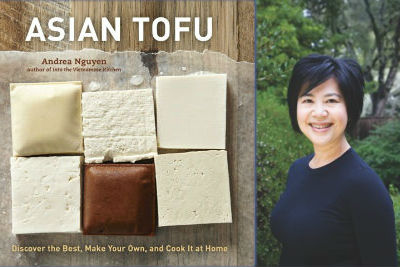
Tofu has to be one of the most misunderstood ingredients around. But with Andrea Nguyen’s masterwork, Asian Tofu, humble bean curd finally gets its moment in the sun.
This is a book that takes tofu seriously. Readers will find impeccably detailed and illustrated guides to making just about every kind of beany incarnation, from basic soy milk all the way through block and pressed tofu. Superb photography by Maria Caruso and others makes this beautiful enough to be a coffee table book for those strong enough to resist the wonderful recipes contained between its covers.
I was not so strong. My downfall started with an inspired recipe for White Fermented Tofu that allowed me to make the closest equivalent to cheese in the Chinese canon. Cubes of extra firm tofu are allowed to mold over a few days until they glisten with golden dots and, in the author’s words, “achieve the ’3S’ criteria — slime, splotches, and stink.” I had attempted this recipe following the guidelines in a 1976 classic, “Florence Lin’s Chinese Vegetarian Cookbook,” but the results never quite measured up. With Nguyen’s help, though, I am now one happy person with jars of funky perfection filling up my fridge. This stuff rocks – as does Nguyen’s book.
Pan Asian tradition
In addition to brilliant recipes for basic tofu, Nguyen offers a broad section on how to put her homemade creations to work using traditional recipes from the Far East, Southeast Asia and India. Spicy Korean dishes dot the book along with gentle Japanese offerings, savory Malaysian skewers, Vietnamese street food and time-honored Chinese classics.
Contemporary takes on the humble curd include Tofu French Fries, crunchy and chewy, with delightful dipping sauces. For those who long to satisfy a sweet tooth with a semblance of reason, Nguyen provides a recipe for doughnuts made with soy milk lees (the ground-up bean leftovers from making soy milk).
Interspersed among all of these vegetarian delights are some recipes for carnivores. Crisp Roasted Pork Belly is one, its tangential relationship to bean curd being some red fermented tofu in the marinade. Not that I’m complaining; this is seriously good stuff.
Personal stories give recipes depth
In addition to the recipes, the main chapters include illustrated travelogues describing Nguyen’s hunt for traditional dishes and concepts, with the minute attention to detail that brings the people in each of these stories alive. Tales from Tokyo, Taipei and Sichuan give cultural depth to featured recipes, while local purveyors in California’s Bay Area show how these culinary traditions have taken root in new soil.
Tofu is presented quite seriously at the beginning, but by book’s end Nguyen shows a playful side in her dessert section. Recipes that look ever-so-slightly insane on the surface turn out to be insanely delectable. Nguyen suggests that her Essence of Tofu Ice Cream be topped with savory bits and pieces, like salt, sesame seeds, Indonesian sweet soy sauce and Savory Kelp Relish. I first thought, “Ew,” but now I’m a convert.
Cashew and Cardamom Fudge is a gorgeous reinterpretation of a South Asian treat, with traditional milk and sugar edged aside by a clever use of tofu and sweetened condensed milk, the final sprinkle of crushed pistachios turning this into a gorgeous finale for the finest Indian banquet.
Tofu Tiramisu is a welcome twist on a culinary cliché; firm tofu mingles with cream cheese and ladyfingers, taking on the 21st century with an Asian sensibility.
Beautiful, knowledgeable and thorough, this is the best book on tofu ever to make its way to my bookshelves. Highly recommended.
Buy Andrea Nguyen’s Asian Tofu Now!
Zester Daily contributor Carolyn J. Phillips is a Chinese food wonk and illustrator who has a cookbook to be published by McSweeney’s in 2014. In addition to Zester Daily, you can find her on her blog and as @MadameHuang on Twitter; her food writing can be found in places as disparate as Lucky Peach and Pork Memoirs.
Top photo composite:
Book jacket courtesy of Ten Speed Press
Andrea Nguyen. Credit: Penny de los Santos
“An Everlasting Meal: Cooking With Economy and Grace,” by Tamar Adler, doesn’t contain a single glossy page or picture, but it will fill your head with hundreds of colorful recipes. Adler’s book contains recipes that call for dried-out meat, burnt vegetables and overcooked rice; and I promise you that it will make you want to rush to the kitchen and cook all night. Patterned after M.F.K. Fisher’s classic, “How to Cook a Wolf,” “An Everlasting Meal” makes such an eloquent appeal for how to eat well while still being a responsible consumer, that you will want to read it four times over just to hear the beauty of Adler’s words.
At its heart, “An Everlasting Meal” is a practical manual, devoid of chef-y pretenses and attempts at glamour. Within its pages, Adler deftly debunks myths and hands out utilitarian, no-nonsense advice about how to prepare and eat food with ease and economy. Informed by her years cooking in famed restaurants such as Prune and Chez Panisse, she has laid out a handbook for having an honest relationship with food, a book that is equally useful to people possessing all levels of kitchen skills.
Perhaps its most quintessential chapter is entitled “How to Catch Your Tail.” This chapter sets out a plan to use all of the “tail ends” of cooking, from parsley stems to onion skins to bones to scraps of bread. For example, mint stems can be soaked in vinegar, which can then be used to make a seasoned vinaigrette. The olive oil used to pack anchovies can be utilized to cook vegetables. Droopy wilted vegetables can be boiled and transformed into puréed soup. Most leftovers meals and sides work well in the next day’s frittata.
Adler calls to mind the vision of Plato’s snake, eating its own tail as a means to eternity and implores, “When we leave our tails trailing behind us we lose what is left of the thought we put into eating well today. Then we slither along, straight, linear things that we can be, wondering what we will make for dinner tomorrow. So we must spot our tails when we can, and gather them up, so that when we get hungry next, and our minds turn to the question of what to eat, the answer will be there waiting.”
Methods over measurements
Don’t count on seeing a lot of traditional recipes in this book, although there are enough to satisfy those who desire exact instructions. Adler has decided to focus less on measurements and ingredient lists, and more upon ideas in cooking. This means that there are hundreds of recipe ideas contained within “An Everlasting Meal.” She spins up eight ways to serve simply cooked beans in just a few paragraphs — including beans and rice, beans on toast, beans with an egg, cassoulet, sausage and bean soup, and herbed bean gratin. She adroitly shows how to transform an entire week’s purchase of vegetables in one hour, so that they will be ready to use for quick-cook meals throughout the week.
You might be shocked to see so many ideas for correcting mistakes in the kitchen, and how to use food that might otherwise be considered ruined. But this plays perfectly well with Adler’s call for resourcefulness and achieving a comfortable relationship with food in the kitchen. After all, if you know how to correct a dish that is too salty, or repurpose an overcooked grain, you are much more likely to return to the kitchen to cook again, rather than feel defeated and order out.
An intimate conversation
This probably isn’t the right book for someone who needs a full-color picture to accompany each recipe. However, this book will be a delight for those who adore well-turned phrases in food writing. For the most part, “An Everlasting Meal” reads like an intimate conversation with a treasured food buddy.
The most poignant parts of this book come when Adler speaks about one’s relationship to food. When describing what to do if one should fall out of love with cooking, she advises, “My answer is to anchor food to somewhere deep inside you, or deep in your past, or deep in the wonders of what you love … Let yourself love what you love, and see if it doesn’t lead you back to what you ate when you loved it … Tug your memories back into the kitchen with you and you’ll find yourself less separate from the idea of making food.”
This is just part of the passionate call of “An Everlasting Meal” to return to a deep-seated relationship to cooking, which in turn, will help return us all to better eating.
Whether you are looking for stellar food writing, pragmatic recipes for eating well, or tidbits of wisdom on how to eat with grace, “An Everlasting Meal” will deliver.
Buy Tamara Adler’s “An Everlasting Meal” Now!
Zester Daily contributor Wendy Petty lives in the Rocky Mountains, where she is a forager, photographer and wild foods consultant. She writes about her adventures with mountain food on her blog, Hunger and Thirst.
Photo: “An Everlasting Meal” by Tamar Adler. Credit: Wendy Petty
As a busy cookbook consumer, I have many demands. I expect a cookbook to bring new tastes into my life, expand my understanding of cooking and excite my palate — without fussy steps and excessive dishware.
“Plenty: Vibrant Vegetable Recipes from London’s Ottolenghi“ satisfies all of these desires — and more. This is all the more surprising because author Yotam Ottolenghi is chef of four London restaurants and this book (his second) has earned four-star praise from the James Beard Foundation to Food52.
While chef cookbooks have come a long way from coffee-table tomes with out-sized recipes, they still tend to presume a higher investment of time, attention and money than fits well into my daily life. I turn to my shelf of restaurant-based books when I want to rock my world. What’s so priceless about “Plenty” is how this striking volume opened up my every day.
“Plenty” stems from Ottolenghi’s tenure as the new vegetarian columnist in The Guardian newspaper, though he makes it clear in his introduction that he is not a vegetarian. With that statement, the author allies himself with most cooks who do eat meat, but are looking to put more vegetables — in different varieties and compositions — into their diets and onto their plates.
The press release for the book (originally published in the United Kingdom in 2010, it debuted in the United States in April 2011) declared: “Plenty’s fresh take on ingredients and flavors will change the way you think about and cook vegetables.” Indeed, as I browsed through this pictorial-rich book, the flavor combinations were so novel, I felt a disorientation that comes from encountering a new conceptualization of the familiar.
For example: Eggs with yogurt. Eggplant and mango. Barley and pomegranate. Quinoa with grilled sourdough. Zucchini with hazelnuts. Maple syrup and soy sauce. Lentils with asparagus.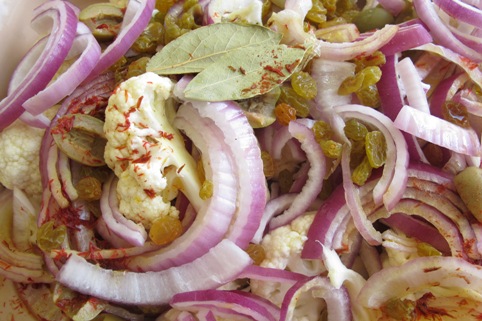
My brain recalibrated to absorb these pairings into my taste matrix. At the same time, I noticed a particular attention to some of my own pet ingredients: chickpeas, chard and eggplant along with a favorite spice, sumac, and the celery-like herb, lovage, that rarely make appearances in cookbooks. What I discovered through repeated use was that these multicultural details create an aesthetic for the book as a whole.
Accessible and well organized
The entry point into “Plenty” is the fact you can start with whatever vegetable you may have on hand. The 15 recipes chapters logically cluster like with like, so it’s easy to find main ingredient recipes in one place, such as “Leaves, Cooked and Raw,” “Zucchini and Other Squashes,” “Grains” and “Green Things” (though green beans merit their own chapter) and “Fruits with Cheese.”
Roasted parsnips and sweet potatoes with caper vinaigrette was one of the first recipes I tried. Despite feeling uncertain about the generous use of capers with sesame seeds, I remained loyal to the recipe, which was confidently written without being wordy. (Likewise, the head notes throughout are brief but informative. I especially love comments urging readers to use all of the parts of the vegetable in question, from beet leaves to the stock from simmered onions, a sign of the most attentive kind of cook.)
Granted it’s hard to go wrong with root vegetables roasted to a crisped edge with ample olive oil, onion and a whole head of garlic, but it was that bracing vinaigrette (maple syrup, Dijon and lemon juice along with the capers) that produced its riveting result. And, it gave me a lifelong lesson: Never again will I serve roasted vegetables without a final splash of something vinegary.
Saffron cauliflower was another easy assembly of red onion, green olives, golden raisins and cauliflower florets steeped in saffron water. I ate it over bulgur, but yearned to serve it with a chunk of olive-oil poached halibut or bring it on a picnic to eat at room temperature.
New food resolutions
After cooking only a few recipes (including chard cakes with sorrel sauce and Brussels sprouts and tofu), I’d gained the freedom to:
- Experiment more fearlessly with unconventional food combinations.
- Make a habit of playing sour off sweet and sweet off sour.
- Embellish willy-nilly with sesame seeds.
- Steep more saffron.
- Cook with yogurt.
The only hitch with trying all of the recipes I craved was the availability of certain ingredients, especially pomegranate for the barley salad and burnt eggplant with tahini. But I’m willing to wait because this book’s not leaving my countertop to be shelved.
Striking in its simplicity, “Plenty” is the kind of cookbook that remains accessible while stretching our culinary selves. It enjoins us to create the meals we busy and demanding home cooks want to — and can — eat every single day.
Buy Yotam Ottolenghi’s “Plenty” Now!
Zester Daily contributor Lynne Curry is an independent writer based in the mountains of eastern Oregon. The author of “Pure Beef: An Essential Guide to Artisan Beef with Recipes for Every Cut” (Running Press, May, 2012), she also works as a private chef and blogs about rural life at www.ruraleating.com.
Images, from top:
“Plenty: Vibrant Vegetable Recipes from London’s Ottolenghi.” Credit: Chronicle Books.
Yotam Ottolenghi. Credit: Richard Learoyd
Curried cauliflower. Credit: Lynne Curry
Whether Michael Krondl’s latest — “Sweet Invention: A History of Dessert” — is a must-read depends not on the size of your sweet tooth but on the extent to which you’re a history buff. The latter may well devour his painstakingly researched exploration of the evolution of dessert in a few key places around the world, places chosen “because I think they have wielded the greatest influence on other societies’ sweet-eating customs.” But given the extraordinary attention to detail he pays to the content and context of, say, baklava, biscotti and Sachertorte — from the economics of ingredient production to nomenclature and etymology — less avid historians may find it hard to see the forest for the trees (or the pastry through all its layers, as the case may be).
This is, in short, a serious read. Though the prose is lively enough, it isn’t sugarcoated by the accompaniment of sumptuous photographs (or illustrations of any kind), and recipes are few and far between. Fair or not, I found myself growing impatient at several junctures with Krondl’s decision to privilege historical depth over geographical breadth: after a bewildering catalog of India’s milk-based sweets or a lengthy tangent about syrup in the age of “A Thousand and One Nights,” for instance, I craved a bite of mochi; a word on the Mexican wedding cookie and its counterpart, the Russian tea cake; or a spoonful of Polish fruit soup.
Which isn’t to say the book isn’t chock full of passages that reflect in fascinating ways on the nature of culinary creativity then and now. Did you know that an early version of baklava was made with lentils? That medieval Italian banquets might start with eels in marzipan and culminate in the presentation of a pie filled not with fruit or custard but precious jewelry? That the trend in contemporary American restaurants toward spiking desserts with savory ingredients was well known to 18th-century European craftsmen, who offered the likes of artichoke ice cream and parsley or celery-flavored crèmes? That the wine cocktails of today were also a thing of the past? Me neither; Krondl does a fine job of exposing the myth that is linear progress. (Speaking of myths, let it be known that Marie Antoinette never said “Let them eat cake.”)
A certain amount of coherence derives from the final chapter, as Krondl lays the differences between the culture of sweets in America and that of much of the rest of the world at the feet of professional artisans and trade guilds; lacking those, he points out, “in the United States, the story of dessert is very much about mothers and factories.” Here we can discern well the distinction between a macaron and an Oreo, say, or tiramisù and s’mores. Ultimately, though, an overarching narrative about the global development of dessert per se doesn’t clearly emerge. Under those circumstances, I’d just as soon be treated to an array of delectable tidbits from the world round as grow satiated on a handful. Still, Krondl’s complete mastery of the material at hand is undeniable; those with a greater taste for the discrete yet thorough than I apparently possess should by all means indulge.
Buy Michael Krondl’s “Sweet Invention” Now!
Zester Daily contributor Ruth Tobias is assistant editor at Sommelier Journal as well as a seasoned food-and-beverage writer for numerous city and national publications; she is also the author of the upcoming “Food Lover’s Guide to Denver & Boulder” from Globe Pequot. Her website is www.ruthtobias.com or follow her @Denveater.
Top photo composite:
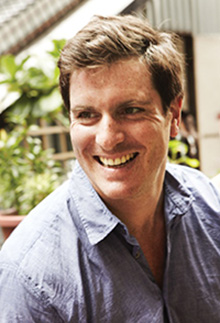
Michael Krondl. Credit: Joanne Dugan
“Sweet Invention: A History of Dessert” book jacket courtesy of Chicago Review Press
So much has been written about the wildly creative Spanish chef Ferran Adrià, who brought molecular gastronomy into the spotlight, that a fresh perspective seems impossible. But when journalists take trips that are more about the journey than the destination, they often discover something new. Such was the case for author Lisa Abend and filmmaker Gereon Wetzel in their separate explorations of the world created by Adrià at his now-shuttered restaurant, elBulli.
Neither one relates a single recipe or showcases the few fortunate patrons lucky enough to score a wundermeal at elBulli, which opened for a limited season each year. Instead, Abend, author of “The Sorcerer’s Apprentices: A Season in the Kitchen at Ferran Adrià’s elBulli” (Free Press, 2012 paperback) and Wetzel, director of the documentary “elBulli: Cooking in Progress,” (Kino Lorber, 2012 DVD) both focus on the creative process that was at the heart of Adrià’s success. In doing so, they capture Adrià’s true legacy to future chefs: license to break the rules and play with their food. They also offer a glimpse of Adrià’s next venture, a culinary research foundation that is to open in 2014.
Getting to know elBulli through its minor players
Before elBulli closed for good in July 2011, the only spot more coveted by foodies than at its tables would have been behind the scenes, watching the preparations for one of Adrià’s performance art-like exhibits. Abend got a backstage pass for the 2009 season, and “The Sorcerer’s Apprentices” became the theatre critic’s notes.
But Abend did not focus on the show’s director. Instead, she studied the 32 apprentices who toiled to serve Adrià’s imagination. Readers are introduced to the entire repertory cast, from Katie Button, the American biomedical engineer motivated by the disciplined process, to Gael Vuilloud, the stubborn Frenchman with a penchant for pushing his own creativity, and Myungsan “Luke” Jang, the meticulous Korean who sought a culinary education by immersion. Viewing day-to-day operations through the eyes of elBulli’s kitchen brigade, Abend uncovers the themes that drive Adrià’s work and the reason that some of the best chefs in training from around the world chose to work gratis for six months in hope that they would absorb some of his genius.
It might be counterintuitive to suggest beginning a book at the end — in the section that readers often gloss over — but Abend’s acknowledgments succinctly capture her education in the kitchen at elBulli and the essence of her book. Then, go back to the beginning, where Abend invites the reader to stay the course as she recounts, month by month, the interplay between the apprentices and their chefs. Her ability to find the spirit of elBulli in the elusive details of tension and triumph are what makes this book such an interesting and intimate read.
“The portrait of him that emerges is based in part on the perspective of those who work for him, and is therefore necessarily more complicated than often seen,” Abend writes. “But I hope it is no less admiring; in addition to convincing me of his genius, the times I spent at elBulli revealed to me the great depth of Ferran’s intelligence and courage.”
The visual art of Ferran Adrià
Director Gereon Wetzel ripped a page from Adrià’s textbook when he opened his documentary with a darkly lit single shot. Barely discernible, Adrià licks a sucker-like fluorescent fish on a stick that leaves an eerie residue of blue light on his lips and his tongue. It’s theatrical, unexpected and definitely not for the squeamish, but this first scene gets to the heart of Wetzel’s film, also made during the 2009 season at elBulli: Its head chef’s insatiable curiosity for exploring the edges of imagination to create culinary art.
The film is neatly broken into two halves: six months of research in anticipation of six months of operation. Like other documentaries about artistic genius, the film starts in the artist’s studio — or rather, the elBulli workshop in Barcelona where Adrià and his top chefs meticulously explore the possibilities of ingredients for the upcoming season’s menu.
“At the moment, taste doesn’t matter to us — that comes later,” Adrià explains to a visiting sommelier advising the team on flavor issues at the workshop. “At the moment, what matters is whether something is magical, and whether it opens a new path.”
Unfortunately, the lengthy observation of these lab experiments in culinary science could lull a viewer to sleep. Wetzel’s cinéma vérité style of an unobtrusive lens with no supporting commentary works better in the second half, when the camera follows Adrià and his team back to the restaurant, where the tension and energy of the real performance begins.
The strength of the story is its singularly focused view of chef as artist. Adrià’s canvas of choice is dinner-table linen; and the chef’s body of work is every experimental oddity that graces the table. As the film unfolds, it’s hard not to imagine that the director was exploring the chef’s cultural DNA. Was Adrià simply following in the footsteps of fellow avant-garde Spanish deconstructionists like Pablo Picasso and Salvador Dalí? Perhaps. In style and in execution, Adrià’s penchant for looking at dinner from a different perspective suggests he is just as much a master of his medium as his forebears.
In a final nod to the real talent of the film, the credit roll is given over to a photographic montage of the dishes created during the 2008-2009 season at elBulli, with the chefs following in supporting roles. By the film’s conclusion, it is clear that Adrià would agree with the billing.
* * *
“elBulli: cooking in progress” (2010, Germany): Directed by Gereon Wetzel, based on a concept by Anna Ginestí Rosell and Gereon Wetzel; director of photography, Josef Mayerhofer; edited by Anja Pohl; music by Stephan Diethelm; produced by Ingo Fliess; released by Alive Mind Cinema. In Catalan, with English subtitles. Running time: 108 minutes.
Caroline J. Beck is a freelance food and wine writer and a strategic advisor to specialty food start-ups. Her articles and columns have appeared in such publications as the Santa Ynez Valley Journal, Michigan BLUE — Michigan’s Lakestyle Magazine, and The Olive Oil Source, the world’s top-ranked olive oil-related website, where she has served as editor since 2007. Caroline’s website, www.carolinejbeck.com, provides common sense advice for enthusiastic entrepreneurs looking to succeed in the specialty foods business.
Top photo: From left, Eduard Xatruch, Oriol Castro and Ferran Adria. Credit: Alive Mind Cinema
* * *
Grilled Asparagus and Leeks with Romesco Sauce. Salted and Pickled Anchovies on Grilled Flatbread. Trout a la Navarra prepared with kale and Serrano ham. Confit of Duck Legs with Plums. I want to cook and eat all the dishes from Seamus Mullen’s first cookbook, “Hero Food: How Cooking With Delicious Things Can Make Us Feel Better” (Andrews McMeel Publishing, 2012). That he tells us these recipes are healthy is almost beside the point. They all sound — and look — delicious.
Mullen, chef-owner of New York’s acclaimed Spanish restaurant, Tertulia, (and also a bit of a star thanks to his performance on the Food Network’s “The Next Iron Chef”) was diagnosed with rheumatoid arthritis after excruciating pain in his hip made it hard for him to move. The flare-up may have been brought on by the harried schedule and intense stress of running a restaurant (it occurred a few years ago while he was executive chef at Boqueria), but Mullen was determined not to let RA keep him away from the work he loves.
“I know there’s no silver bullet, but I have discovered that some foods can make dramatic differences,” he writes. “And here’s the good news: In that great fatalistic way of Mother Nature, what I like turns out to be good for me!” That’s good news for us, too. Zeroing in on 18 “heroes,” as he calls these foods that make him feel better — parsley, olive oil and almonds among them, and treating them in the Spanish style, Mullen offers recipes we’ll make because they’re delicious. Their benefits, which I suspect apply to all of us, with or without RA, are secondary.
The moderate omnivore
This isn’t a book that banishes certain foods. There are lots of vegetables in it but there’s also some beef, a little butter, some gluten and eggs included in the recipes. Mullen, it seems, falls into the Michael Pollan omnivore camp and quotes nutrition expert Marion Nestle: “You are better off paying attention to your overall dietary pattern than worrying about whether any one single food is better for you than another.” He’s never militant, but recommends avoiding refined industrial foods, eating everything in moderation, listening to your body and enjoying yourself. Good common sense.
Mullen’s food is straight forward. He’s offers a lot of good research on nutrition, and he shares a lot of information about technique and his ingredients, too. He tells us what makes Bomba rice so special and why it’s the best for paella. We get lessons on cleaning squid and extricating a quail egg from its shell. (Cracking it on the counter doesn’t work.) After reading about anchovies, you’ll want to give them a second chance. And he makes a case for buying local lamb.
“Hero Food” is proof that Mullen isn’t letting his diagnosis get in the way of eating well and enjoying life. Photos, taken by Colin Clark, show him in his beloved Spain, making chicken and seafood paella with friends on his city roof, digging in the garden with a child, sharing a toast surrounded by family. “Even if that fresh ear of sweet corn were to cause me a bit of discomfort,” he writes, “for me it’s a good trade-off … After all, just how unhealthy could an occasional ear of sweet corn eaten only in season really be, compared to the life-pleasure it delivers?”
Buy Seamus Mullen’s “Hero Food” Now!
Zester Daily contributor Christy Hobart is a food and shelter writer in Los Angeles.
Photo: Pickled carrots from Seamus Mullen’s recip. Credit: Colin Clark
Food memoirs can be hit or miss. No matter how many times a writer spins a tale of eating in a foreign land or following a grandmother around the kitchen, it’s often an awkward dance between good writing and good food. But Annia Ciezadlo’s “Day of Honey: A Memoir of Food, Love, and War” is astonishing in what it achieves.
As a journalist and foodie, Ciezadlo accomplishes the impossible. Not only does it illuminate the wondrous flavors of Middle Eastern home cooking, but also details the conflicts in Beirut and Baghdad from 2003 through 2010. She explains the regional conflicts with detailed historical references (she spent three years researching food and Middle Eastern history) while leaving the reader with the urge to leap in the kitchen and prepare kafta, kibbeh, and fattoush and stock the pantry with pomegranate molasses. While at times the history can be a bit dry, it’s critical to understanding the region’s modern-day politics and current state of affairs.
In addition to posting as a foreign correspondent, Ciezadlo marries Mohamad Bazzi, a Lebanese journalist who works as the Middle East bureau chief for Newsday. This leaves her navigating her way through a new marriage, a new language and two foreign cities (she honeymoons in Baghdad; enough said).
“Day of Honey” is an extremely thoughtful, personal look at the wars and how food is part of the strife. You practically smell the sizzling kebabs on the grill and taste the hot, strong tea while turning the pages, immediately understanding how food fits in to the lives of people constantly in crisis. As Ciezadlo puts it, “People find ways to reconstruct their daily lives from the shambles of war; like my friend Leena, who once held a dinner party in her Beirut bomb shelter, they work with what they have.” Ciezadlo describes the food she eats but also what she cooks. She turns to cooking for comfort, and her tales of cooking in a tiny hotel kitchen and of rescuing spaghetti during sniper fire are astounding.
Lost in translation
Ciezadlo writes with such detail and accuracy that it feels less like personal narrative than a collective history of Beirut and Baghdad and their people who must carry on with their everyday lives despite these bloody, destructive conflicts. She avoids overt judgment about American foreign policy but discusses the results of some of those policies. And while it’s a serious look at the Middle East, many pages are laugh-out-loud funny. As someone married to a Lebanese man, it gave me true insight into my in-laws — their social norms, customs and habits. Even my husband howled with laughter at how accurate the descriptions were of Ciezadlo’s aging, opinionated Lebanese mother-in-law, who cannot understand why Ciezadlo wants to measure the ingredients for each dish. This is not a quick read; rather, the details require focus and a kitchen nearby should you work up an appetite from reading about the ingredients, methods and dishes of Iraq and Lebanon.
What I appreciated almost as much as the poignant writing were the authentic recipes Ciezadlo included. They are far from an afterthought. These are Lebanese recipes from Ciezadlo’s relatives found in homes throughout the country (and they were given a stamp of approval from my husband, raised in a household of cooks). Most of the dishes are those my husband learned from his father — and delicacies my father-in-law still cooks when he visits. These are not quick, go-to recipes; they are weekend recipes that take time and patience.
Home cooking
For most Americans, the politics, history and conflicts in the Middle East are confusing and often forgotten. But this should be mandatory reading; not only does it break down the complicated web of politics of the regions, it brings the everyday people to life while showing that the cuisine is so much more than pita bread and hummus.
This recipe is what Ciezadlo calls “classic home cooking, the quintessential comfort food — Lebanon’s moral equivalent of macaroni and cheese.”
Batata wa Bayd Mfarakeh (Crumbled Potatoes and Eggs)
Ingredients
2 tablespoons canola or olive oil
3 pounds russet or Idaho potatoes (about 4 medium-large), peeled and cut into ½-inch cubes (about 4 cups)
1-2 teaspoons sea salt, plus more for salting potatoes and to taste
Optional: 2 tablespoons chopped fresh herbs such as oregano, rosemary and/or thyme
Equipment
Directions
- Saute the onions in the oil in a heavy or nonstick pot over medium heat. Stir frequently and do not let them burn. Once the onions begin to soften, after 2 to 3 minutes, cover the pot and turn the heat down to medium-low. Check the onions and stir every 10 minutes or so to keep them from sticking and burning. Do not let them brown at this point; you want them to caramelize very slowly. When they start expelling a lot of liquid and are turning translucent, turn the heat down as low as possible.
- While the onions are cooking, sprinkle the potato cubes generously with salt, toss, and let them sit for about 5 minutes. Rinse very well under cold water.
- After about 30 minutes, the onions should be starting to turn dark gold. Increase the heat to medium and remove the lid to evaporate as much of the liquid as possible. Add the tablespoon of salt and the potatoes and mix. If you’re using fresh herbs, add them now.
- Turn the heat to very low and cover. Sweat the potatoes until they are soft — usually 10 to 15 minutes — stirring gently and tasting every so often. If you like the potatoes crispy, turn the heat up, add a bit more oil, and let them crisp for a few minutes between stirs. The potatoes are done when they just begin to disintegrate around the edges and you can pierce them easily with a fork. Taste and adjust the seasoning.
- Crack the eggs directly into the pot. Stir until they just begin separating into creamy curds. Take the pot off the heat and keep stirring until the eggs are done (they will continue to cook for a minute or two in the pot). Taste and adjust the seasoning with salt, pepper, or whatever else you like.
Umm Hassane strongly recommends that you serve batata wa bayd with salad. It also goes remarkably well with salted tomatoes drizzled with olive oil.
Variation
Recipe courtesy Annia Ciezadlo/Free Press, a division of Simon & Schuster
Buy Annia Ciezaldo’s “Day of Honey” Now!
Zester Daily contributor Laura Holmes Haddad lives with her husband, daughter and son in Northern California, where she writes about wine and food and runs her website, gourmetgrrl.com. Her latest collaboration is “Plats du Jour: A Journey Through the Seasons in Wine Country” with the girl & the fig restaurant in Sonoma, Calif., released in November 2011.
Top photo composite:
Book jacket of “Day of Honey: A Memoir of Food, Love, and War” and author Annia Ciezadlo. Credit: Mohamad Bazzi
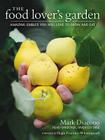
In a twist on turning lemons into lemonade, Mark Diacono comes close to saying that when the world hands us climate change, we should make Chilean guava gin.
In the introduction to his lushly photographed new book, “The Food Lover’s Garden: Amazing Edibles You Will Love to Grow and Eat,” Diacono writes: “What a sweetly virtuous circle that climate change should allow us the possibility of growing many of the foods we currently import, and that we can take advantage of that shift to help arrest its progress.”
Yes, Diacono is telling us to stop worrying and learn to love climate change. And there is a certain Strangelovian logic to it, because if we grow formerly exotic foods such as Carolina allspice, Sichuan pepper and Chilean guava in our own backyards, we will reduce our food carbon footprint by cutting back or eliminating packaging and overseas transportation.
Grow your own global produce
Diacono not only talks the talk, he walks the walk. As head gardener at Hugh Fearnley-Whittingstall’s River Cottage enterprises for many years, he grew edible plants of all sorts and taught others how to take them “from plot to plate” — or as we would say on this side of the pond, from farm to table. Diacono now devotes himself full time to his own Otter Farm in Devon, in southwest England.
Although Diacono’s introduction to “The Food Lover’s Garden” places gardening in the larger context of climate change, peak oil, peak phosphate and other global concerns, the book itself is not a treatise on food politics or the environment. Rather it is part gardening handbook and part cookbook — a chatty, often cheeky, user-friendly guide to choosing, growing and then cooking your own favorite foods.
Diacono believes that life is too short (and often gardens too small) to plant anything but what you are truly passionate about eating. At the outset, Diacono dismisses the “boring” vegetables that you can get easily and cheaply at any grocery store, such as potatoes and cabbage, and advises us to instead plant the exotic fruits, vegetables, nuts and spices he loves.
While I respectfully disagree with Diacono about potatoes and cabbage being boring, that is actually the point of this book: You read about what excites Diacono, then you decide what turns you on — in the garden and in the kitchen — and plant accordingly.
Let flavor be your guide
“The Food Lover’s Garden” starts at the endpoint, with whatever tastes you love, then takes you back to the beginning, to choosing and planting those foods in your garden. Diacono first recommends making a wish list, letting flavor alone be your guide. Then he suggests growing things you can’t find in the store, and choosing plants that will provide you with food in every season. Finally, he suggests balancing “certainties” (easy to grow even if you don’t have a green thumb or great soil) with “gambles.”
Scanning “The Food Lover’s Garden” table of contents, I saw that about half of the plants would be bad gambles in the Midwest where I live, and throughout most of the United States. Neither Diacono nor his publisher make mention of U.S. Department of Agriculture plant hardiness zones, but I did a little research and found what I suspected, that many of the plants Diacono raves about will survive only in Zone 8 and higher — the far southern states, and areas moderated by the Pacific in the western states.
Devon, where Diacono lives and farms, has always been known for its mild climate, even in pre-climate change centuries. That’s great for him, but his book is a bit of a cruel tease for the rest of us — unless, of course, climate change goes into very high gear in the very near future. But there are still a dozen or more hardy and delicious plants that Diacono recommends, such as sorrel, rhubarb, lovage, nasturtiums, mizuna and asparagus.
And no matter where you live and garden, even if you are only an armchair gardener, this book is a wonderful invitation to live adventurously and expand your gardening, cooking, and eating horizons. At the same time, by growing and eating more local foods, Diacono writes, “you’ll be casting your vote for a new way of feeding ourselves and for the future.”
Buy Mark Diacono’s “The Food Lover’s Garden” Now!
Terra Brockman is an author, a speaker and a fourth-generation farmer from central Illinois. Her latest book, “The Seasons on Henry’s Farm,” now out in paperback, was a finalist for a 2010 James Beard Award.
Top photo composite:
Mark Diacono. Credit: Jason Ingram
Book jacket for “The Food Lover’s Garden.” Credit: Courtesy of Timber Press
* * *