Articles in Desserts
Sixteen years ago, I left a job in academia to go to cooking school. The course itself was a joy. But completing the required six-week apprenticeship at a four-star Manhattan restaurant was the scariest thing I’ve done in my life. Every day I’d come home from work and tell my husband that I was going to be fired — for making the tuiles too thick or for wasting too much phyllo dough when making tart shells. He would protest that I couldn’t be fired, since I wasn’t being paid. But I knew another intern who had been dismissed for choosing too-large mint leaves to garnish plated desserts (“This is not a diner!” the chef shouted at her as he gestured toward the door). I was sure I would be next.
It was with immense relief and hard-earned self-knowledge (I now knew I was not cut out for restaurant work) that I made it through and collected my certificate. I also walked away from that four-star kitchen with the most useful piece of baking advice ever. In an unusually friendly and expansive mood one day, the chef told me he considered the freezer as important as the oven in helping him do his job. From that day on, I looked at my freezer in a new light and tried to use it to produce my own humble home desserts with seeming effortlessness.
Many components of fancy restaurant desserts are made days or weeks in advance of service and frozen. At the restaurant where I worked, the pastry chef was rightly famous for a chocolate soufflé that diners could order at the end of a meal, rather than ordering at the beginning as is traditional. The secret to his kitchen magic: The batter was frozen in little aluminum cups and baked straight from the freezer in less than 10 minutes.
But the restaurant’s freezer held much more than novelty desserts like this one. There were unbaked puff pastry shells, mousses, buttercream fillings and frostings, ice creams, sorbets, and cookies. With these pre-made elements at the ready, it was easy for the pastry cooks on duty during dinner service to gather and assemble them into spectacular showpieces in minutes.
It’s been 15 years since that terrifying, enlightening internship. And yet, I find myself thinking of the famous pastry chef’s frozen Bavarian creams, sliced brioches and streusel toppings every time I open my freezer door to retrieve a disc of pie dough or to stow individually wrapped leftover brownies. My freezer holds a variety items so that I am always prepared to bake. It helps me shave hours off of preparation time and eliminate last-minute work when I entertain.
My freezer is my pantry
Is there anything worse than realizing that you can’t make blondies during a snowstorm because you are out of butter? My freezer functions as an extension of my pantry, storing pounds of butter, lard (we make a lot of pie dough around here), nuts, extra flour and other grains in case of emergency.
Frozen dough changed my life
My baking life changed when I realized that I could freeze unbaked cookie dough. Gone are the days when I baked four dozen cookies and ate all of them in 24 hours. Now, I drop balls of dough onto a parchment-lined baking sheet, freeze the sheet until the dough is hard (about 15 minutes) and throw them into a zipper-lock freezer bag. This bag sits on a shelf in my freezer, and when I want a cookie or two, I preheat the oven, take a couple of balls of cookie dough from the bag and bake them. I also feel secure in the knowledge that I have several pounds of pie dough in the freezer, so I’m always a few hours closer to homemade pie than I would be if I had to start from scratch.
Ice cream is essential
I usually have several pints of ice cream and sorbet in the freezer. I use it to accompany pies, tarts and cakes and to make simple ice cream treats like sandwiches (see recipe below) or chocolate-dipped ice cream cones. If I have a package of graham crackers and some time on my hands, I will make an ice cream cake in a spring-form pan, layering two flavors of ice cream and some fudge sauce, chopped nuts and/or caramel sauce on top of a quick crumb crust. A layer of sweetened whipped cream spread over the top of the cake is a pretty finish. Wrapped well in plastic, this cake can sit in my freezer for weeks until there’s an occasion for it.
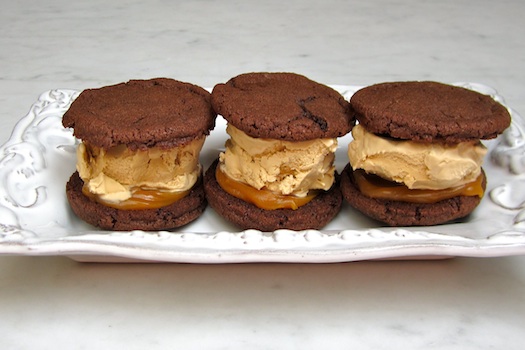
Mocha Caramel Ice Cream Sandwiches
Makes 12 ice cream sandwiches
Every Memorial Day, I delight my friends with homemade ice cream sandwiches that I fetch from the freezer after our meal of barbecued brisket, ribs and baked beans. I put together these treats at my leisure. My stockpile of ice cream guarantees that I won’t have to settle for what’s left in my supermarket’s frozen food aisle after the frenzy of shopping that takes place here in the Hamptons in anticipation of the holiday. I make the cookie dough, shape it into balls, freeze the unfrozen balls well in advance of my party and bake the cookies when I’m ready to put together the sandwiches, a day or two before I’ll be serving them. Once I put together the sandwiches, I wrap each one individually in plastic wrap and then freeze them all in an airtight container or zipper-lock bag for freshness.
Ingredients
Directions
- Preheat the oven to 350 degrees. Line two baking sheets with parchment paper. Combine the flour, cocoa powder, baking soda and salt in a medium mixing bowl.
- Cream the butter and sugar together in a large mixing bowl with an electric mixer on medium-high speed until fluffy, 2 to 3 minutes. Add the egg and vanilla and beat until smooth. Stir in the flour mixture until just combined.
- Scoop up tablespoons of dough and roll them between your palms to form a ball. Place dough balls on baking sheets, leaving about 3 inches between each cookie. You should wind up with 24 cookies, two baking sheets’ worth. (Cookies may be placed next to each other on parchment-lined baking sheets, frozen, transferred to zipper-lock plastic freezer bags and stored in the freezer for up to 1 month. Frozen cookies may be placed in the oven directly from the freezer and baked as directed.)
- Bake the cookies until they are dry on top, 8 to 10 minutes (a minute or two longer for frozen dough). Let them stand on the baking sheet for 5 minutes and then carefully slide the entire parchment sheet with the cookies from the pan to a wire rack and let the cookies cool completely.
- Line a baking sheet with a clean piece of parchment paper. Use a ¼-cup dry measure to scoop out 12 disks of ice cream (if the ice cream begins to melt on the baking sheet, place it in the freezer, along with the unmolded ice cream, to firm up before proceeding). Lightly cover with plastic and use the flat bottom of the measuring cup to slightly flatten each ice cream disk. Freeze until very firm, at least 1 hour and up to 1 day.
- Spread 1½ teaspoons of caramel sauce over the flat side of half of the cookies. Sandwich the flattened balls of ice cream between two cookies. Wrap each ice cream sandwich tightly in plastic wrap and place in a zipper-lock freezer bag. Freeze for at least 1 hour and up to 3 days before serving.
Lauren Chattman is a cookbook author, freelance writer and former professional pastry chef. Her recipes have appeared in Food & Wine, Bon Appetit, Cook’s Illustrated, and The New York Times. She is the author of 14 books, most recently “Cake Keeper Cakes” (Taunton 2009) and “Cookie Swap!” (Workman, 2010).
Photo: Mocha caramel ice cream sandwiches. Credit: Lauren Chattman
We can get oranges all year around, but if you’re one of the lucky few who own an orange tree, you may be wondering about now what you’re going to do with all the fruit weighing its boughs.
This points up the thing about oranges. They have wonderful juice — none better — but what do we ever make with them? Mostly fruit salad. The juice loses its fresh flavor in cooking, and you can’t pickle oranges like lemons, Moroccan style, because they develop a loathsome spoiled-pumpkin aroma.
Astonish the guests
In 17th century England, the thing about oranges was that they were rare and expensive. Unless you owned a special greenhouse called an orangery, you had to buy them imported from Spain or Portugal. With their fragrant peel and optimistic color, they were a show-off fruit, and people came up with show-offy treatments like oranges preserved “after the Portugall fashion.”
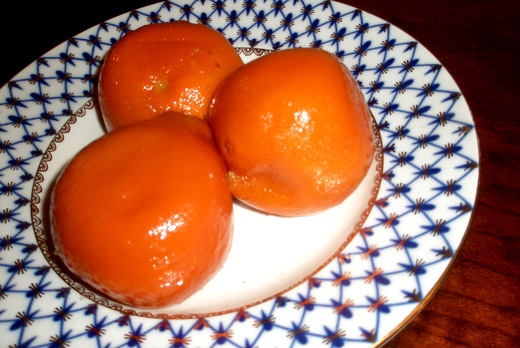
The recipe in Sir Hugh Plat’s 1609 “Delights for Ladies” points out that you can cut right through one “as you would a hardboiled egg,” astonishing your guests by revealing a translucent globe of aromatic peel inside. They’re basically whole candied oranges, languid and plush, dark orange-amber in color with an unnatural luster. They have a strange, overdone appeal, kind of like Snooki Polizzi on “Jersey Shore,” even down to the skin tone.
The filling is something like marmalade, but proper marmalade requires an exact balance between fruit pectin and sugar to jell, while the filling of Portugall-fashion oranges isn’t expected to jell. So they’re easier to make than marmalade, though they still involve a little more trouble than we’re used to taking with oranges. I, for one, am willing to go to a little trouble when it comes to astonishing the old guests from time to time.
Perfect for dessert
In the 17th century, this was a way of preserving oranges, and they will keep in the refrigerator for several weeks. I think of them basically as an accompaniment for vanilla ice cream. One orange would be overwhelming for a single diner, so serve them by halves or even quarters.
This dish was created for Valencia oranges. Navel oranges will do just fine, although their peels are thicker and you might want to scrape off a little of the bitter white part. Tangelos work too, but tangerines are too small to be practical.
Oranges ‘After the Portugall Fashion’
Makes 4 stuffed oranges, 8-16 servings as a condiment
Ingredients
Directions
- Choose the 4 best-looking oranges. Take one and make a hole in the side (not on one of the ends) with an apple corer. Remove a plug of peel and hollow out the orange, scraping and sawing with the apple corer to remove as much of the pulp and seeds as you can without puncturing the peel — a melon baller is the best tool for this job. Repeat with the remaining 3 chosen oranges.
- Quarter the 2 remaining oranges and remove the flesh and seeds, exposing as much of the white peel as possible. Boil all 6 oranges in 4 or 5 quarts of water for 2 to 2½ hours to soften and reduce bitterness.
- Boil 6 cups sugar with 3 cups water until clear. Add the oranges and cook on a low boil for ½ hour. They will turn a richer orange color. Remove and drain.
- Puree the 2 quartered oranges with ½ cup sugar and stuff the 4 hollowed oranges with this puree (you may have some left over).
- Return the oranges to the syrup and poach (the syrup should not quite to cover them) for 15-20 minutes.
- Remove, drain and refrigerate.
- To serve, present with the hole side down and slice through for maximum effect.
Zester Daily contributor Charles Perry is a former rock ‘n’ roll journalist turned food historian who worked for the Los Angeles Times’ award-winning Food section, where he twice was a finalist for the James Beard award.
Photo: Oranges “after the Portugall fashion.’”Credit: Charles Perry.
A recent trip to my home state of Wisconsin held a touch of sadness as well as the usual pleasure I feel when seeing old friends and family. In the past, these visits would always end with a trip to a candy store — in the old days, it was one called Buddy Squirrel, I suppose because fragrantly roasting nuts were the main draw. But, more recently, I was able to stop at a candy store right at the Milwaukee airport where I would always find what I was looking for: Wisconsin Candy Raisins, for me, the Holy Grail of confections. But, alas, I will never have them again, for the local factory that made them has been shut down, and the parent company has moved production to Massachusetts and discontinued that particular treat. While Steve Almond talks about this kind of pain in “Candyfreak,” until now such heartache had never hit home.
To call Wisconsin Candy Raisins “raisins” is a misnomer, for these candies did not contain real raisins nor were they enrobed in chocolate. In fact, they weren’t much to look at — yellowy-tan, maybe a half-inch in size with a wrinkled top (the reason why they were called raisins). They were a kind of stiff gum drop that when bitten into released a flavor some describe as perfumy, others say gingered honey, and I say pure heaven. I have never come across a taste that is anything like it (and I never miss an opportunity to bite into a new candy) so comparisons are impossible. I only know that something I dearly loved is gone, and that I now bear a new grudge against corporate America.
Candy grief
And, I am not alone. As soon as I recovered from the shock that my favorite candy had disappeared, I checked online to see if I could locate a supply, for I harbored a fantasy that I would be able to eat them one last time. No luck. Instead I found a website established by another Wisconsinite who had organized a petition to be sent to the New England Confectionery Company (NECCO) for the purpose of persuading them to bring back our beloved candy. I signed, and so did more than 7,000 others, all of us fighting on the side of innocent pleasure. We also were asked to comment, and the testimonials produced are enough to break your heart: “NO!! Tell me it isn’t so!!!” said one anguished writer. Another echoed, “Say it isn’t so!” and went on to complain, “First I have to move to Boise, Idaho, and now this!” I was reminded of the first of Elisabeth Kubler-Ross’ seven stages of grief: shock and denial.
One mourner appealed to our sense of history, stating that “taking away the candy raisin is like tearing up the Declaration of Independence,” while another suggested that the product be protected by putting it on the historic register. One man declared them vital to education, saying, “I learned math skills at the corner store figuring how many Candy Raisins I could buy with 25 cents.” But most of the statements evoked nostalgia and loss, one person informing us that the candy was served at grandpa’s funeral because they were his favorite, while another confessed, “These candies have helped me get through some rough times and boring meetings. Don’t take away my sanity during these trying times.”
What really caught my attention, however, was the writer who said, “If we lose Candy Raisins, the terrorists have won,” making me realize that the trauma of this loss reflects the current zeitgeist.
Kindred spirits
Like so many others, I contacted customer service at NECCO hoping to hear that production of our beloved candy was being considered, but soon learned that the company had no plans to bring back the product, which led me to ask for the recipe. The customer-service lady immediately took on an “are you out of your mind?” tone with me, and I have to admit, our conversation got a little heated after that since I recall muttering something negative about their dusty wafers. Because the NECCO factory is not far from where I now live, I thought about mobilizing an angry protest, but soon realized that kindred spirits were many miles away and sympathetic local friends who might have joined me had never known a Wisconsin Candy Raisin and therefore lacked appropriate passion. Instead of picketing with a sign, I fell into a reverie about the sad disappearance of many favorite candies, including such brands as the Powerhouse, Chicken Dinner and Caravelle bars, and local favorites which, like my candy raisins, most of us have never heard of: Cherry Humps; Pecan Petes; Whiz Bars, and Snirkles. Most likely these brands were purchased by corporations, then snuffed out as unnecessary competing products, showing no consideration for the bereaved.
This sad state of affairs is in sharp contrast to the origins of many candies that were created by optimistic immigrants who, with a copper pot, wooden spoon and some imagination, were able to invent treats and then establish candy shops that attracted a local following. Some that began in this way — Tootsie Rolls and Almond Joys, for examples — are now part of big candy conglomerates, but at least they still exist. However, the fate of small, family-owned candy companies has been bleak. Not able to get their products into large supermarkets because of exorbitant fees charged for shelf space, and with small local groceries just about gone, these businesses cannot compete and have either sold out or shut down. See for yourself. The candy aisles of most supermarkets and drugstores display piles of the same old stuff produced by just a handful of huge companies — Hershey’s, Mars, Nestle and Brach’s. The goal of these corporations is to get bigger and bigger and compete for the largest share of the market. But from the standpoint of the consumer who feels the loss of old-time favorites, this corporate reach for more and more has led to less and less.
Barbara Haber is a food historian and the former curator of books at Radcliffe’s Schlesinger Library at Harvard University where she built a major collection of cookbooks and other books related to food, and influenced the recognition of food history as a viable field of academic and professional study. She founded the Radcliffe Culinary Friends, which supported the library’s culinary collection and provided a forum for food writers from across the country to present their work to an appreciative audience. She also held monthly gatherings, called “First Monday,” where local chefs and writers came together to hear talks on timely food-related topics.
Barbara’s books include “From Hardtack to Home Fries: An Uncommon History of American Cooks and Meals” and “From Betty Crocker to Feminist Food Studies: Critical Perspectives on Women and Food,” which she co-edited. She has written numerous articles and reviews including “Home Cooking in the White House” published in “White House History.” She is currently working on a book about food and World War II in the Pacific tentatively called “Cooking in Captivity.”
She is a former director of the International Association of Culinary Professionals and currently serves on the awards committee and chairs the Who’s Who Committee of the James Beard Foundation. She is a frequent speaker on topics related to the history of food as well as popular food topics, and has appeared on television’s “The Today Show,” “Martha Stewart Living” and The Cooking Channel. Barbara was elected to the James Beard Foundation’s “Who’s Who’s in Food and Beverages” and received the M.F.K. Fisher Award from Les Dames d’Escofier.
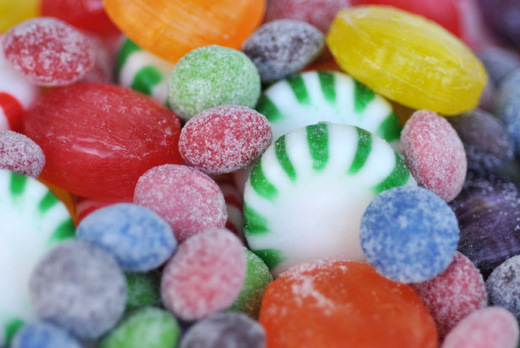
Photo: Candy. Credit: Sondra P.
During this long, cold winter, I’ve turned to root vegetables often, roasting beets for hearty salads, mashing turnips and celery root to serve with short ribs, pureeing carrots for spicy soups and oven-frying sweet potatoes. After I made a focaccia dough a week ago, incorporating a mashed russet potato to give the bread a fluffy texture and moist crumb, I got to thinking about other ways to use root vegetables in baked goods. It was time to make a root vegetable cake.
The idea wasn’t to sneak something healthy into an ostensible treat, à la Jessica Seinfeld (although I can’t deny that in a sadistic way I did look forward to revealing to my vegetable-hating children that they had just consumed a whole lot of shredded beets along with their chocolate). But neither did I want to bake something that was instantly recognizable as rutabaga-based. It would be nice, I thought nostalgically, to use some of the vegetables from my Amagansett CSA’s root cellar to bake a moist, wholesome cake that an eastern Long Island farm wife might have made in February, in the days when the Hamptons had more farms and fewer shingled mansions with four-car garages.
It makes sense that resourceful bakers of yore used root vegetables for cold weather cakes. Many root vegetables aren’t even harvested here until October or November, since they get sweeter as the weather gets colder, their starches converting to sugars after a frost or two. Once they are pulled from the ground, they can stay fresh in a cool (35 to 45 degrees) root cellar for two months or more. Instead of dipping into the sugar bowl, why not use the vegetables’ natural sugars to sweeten cakes?
British food historian Alan Davidson says that carrot cake and pudding recipes appear in many 18th and 19th century British cookbooks, but traces today’s root vegetable cakes to World War II-era Ministry of Food recipes, disseminated to help citizens deal with sugar rationing by baking with the sugar-rich produce, including carrots, sweet potatoes and parsnips, from their victory gardens. Carrot cake made with vegetable oil and whole wheat flour gained popularity in the U.S. during the “health food” craze of the seventies. But instead of going the way of the lentil loaf and macrobiotic sprout salads, it stuck around, solidifying its standing in the American baking canon. There is evidence that root vegetable desserts are today’s fine dining trend. A recent story in the Chicago Sun Times surveyed local chefs at top restaurants and discovered they were featuring apple-rutabaga pie, parsnip custard and sweet potato spice cake on their menus. Baking with root vegetables brings together several current chef obsessions: Using seasonal and local ingredients, referencing old-fashioned comfort recipes, and displaying one’s kitchen economy as a sign of virtue and good taste.
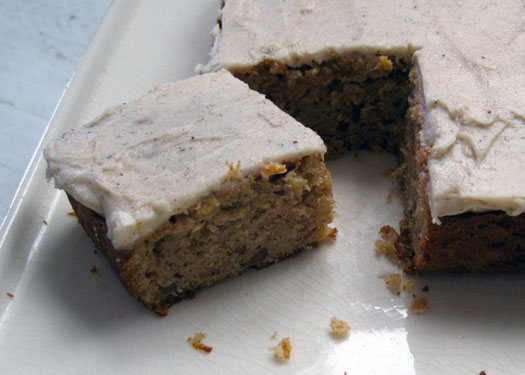
After considering beets, carrots and sweet potatoes, I settled on parsnips for my cake because of their sweetness and bright flavor, which is a little nutty with hints of celery and parsley (parsnips are related to both). I used melted butter in my one-bowl recipe, not only for farm-fresh taste but because I don’t love the spongy texture of cakes made with oil. And I spiced up the batter with a combination of cinnamon, black pepper, cardamom and cloves. For snacking or brunch, the cake doesn’t need any frosting. But a simple combination of browned butter, confectioners’ sugar, heavy cream and spices makes a rich and deeply flavored finish.
If you were one of those Chicago chefs, you’d wait until March and then pull up early harvest parsnips (some gardeners believe the sweetest vegetables are allowed to sit underground for the entire winter) from your own garden. But you can still make a creditable parsnip cake with vegetables purchased in February. Shop for them at a reliable natural foods market with a reasonable turnover (supermarket parsnips can be very old). Although parsnips will keep in a root cellar for months, they will become limp and lifeless after a few weeks in the refrigerator. Avoid gigantic specimens, which may have woody cores.
Parsnip Spice Cake with Brown Butter Icing
Serves 9
Ingredients
For the cake:
For the icing:
Directions
- Make the cake: Preheat the oven to 350 degrees. Coat the inside of an 8-inch square baking pan with cooking spray and dust with flour, knocking out any extra.
- Combine the cinnamon, pepper, cardamom and cloves in a small bowl. Transfer ½ teaspoon of the spice mixture to another small bowl and reserve for icing.
- Whisk together the butter and brown sugar in a large mixing bowl. Whisk in the eggs and then the milk and vanilla.
- Stir in the flour, baking powder, salt and remaining spice mixture until combined. Stir in the walnuts and parsnips.
- Scrape the batter into the prepared pan and smooth the top with a rubber spatula. Bake the cake until it is golden and a toothpick inserted in the center comes out clean, 35 to 40 minutes. Let the cake cool in the pan for about 15 minutes, invert it onto a wire rack and then turn it right side up on a rack to cool completely.
- Make the icing: Heat the butter over medium heat in a small skillet until the milk solids on the bottom are a dark chocolate brown, 3 to 5 minutes. Remove from the heat and let cool slightly. Whisk together the confectioners’ sugar, salt, cream, and reserved ½ teaspoon spices. Whisk in the brown butter and whisk until smooth. Spread frosting over the top of the cake and let stand until set, about 30 minutes, before slicing into 9 squares and serving.
Zester Daily contributor Lauren Chattman is a cookbook author, freelance writer and former professional pastry chef. Her recipes have appeared in Food & Wine, Bon Appetit, Cook’s Illustrated and The New York Times. She is the author of 14 books, most recently “Cake Keeper Cakes” (Taunton, 2009) and “Cookie Swap!” (Workman, 2010).
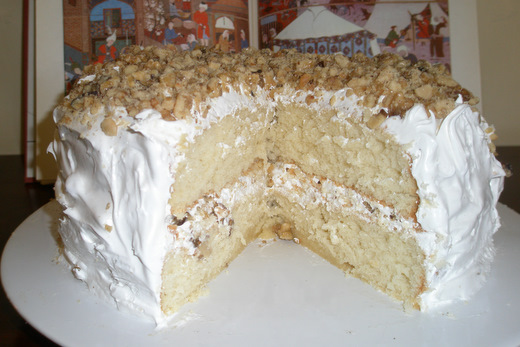
OK, there’s no such thing as a frosted layer cake in traditional Persian cuisine. That may be the part of the world where cooks first explored the higher densities of sugar syrup, and there are medieval recipes for sweets that are candied by dipping them in thick syrup, but candying is not quite the same thing as frosting.
Nevertheless, there are some flavor combinations from that region that make perfectly spectacular frostings. Exotic ones, too, of course. And I say it’s high time to get more spectacular and exotic in the frosting department.
As it happens, I took these medieval ideas not from sweets but from savory dishes like stews. No fear; people were into perfumed flavorings for stew 800 years ago or so, and these combinations work brilliantly in desserts.
One is a sweet-sour frosting, with the tiniest conceivable amount of antioxidant value, that is a show-stopping effect in itself. The world needs more sweet-sour frostings. The other is flavored with spices. You just don’t see spice frostings these days, apart from vanilla, but this one happens to use the two most expensive spices in the world, and you know that has to be cool.
The first one I’m proposing is flavored with pomegranate and walnut. They happened upon this happy combination of sweet, sour, rich and aromatic at least 1,000 years ago in Persia, to judge from all the medieval recipes that call for it. One of the most popular dishes in present-day Iranian restaurants, fesenjan, is chicken stewed with walnuts and pomegranate juice.
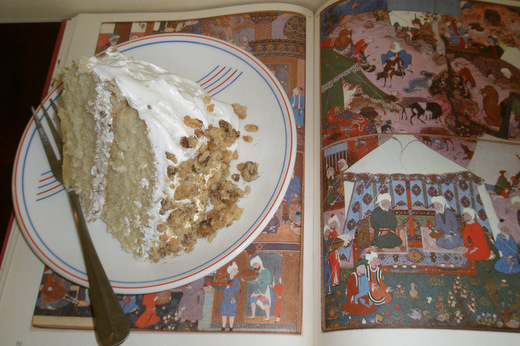
The other combination is simpler but equally aromatic: saffron and cardamom. It also frequently appears in medieval recipes, and it’s still a common flavoring for Iranian ice cream (bastani). It goes well with walnuts too. Maybe this would be the dessert to serve after a curry.
So while the weather’s still cool enough that you look forward to turning on your oven, try these on your regular cake layers. There’s more to the world than chocolate, vanilla and coconut.
Fesenjan Cake
Ingredients
Directions
- Grind the candied walnuts in a food processor to pieces a little smaller than peas.
- Frost the top of one cake layer with pomegranate frosting. Sprinkle ½ the candied walnuts on top.
- Put the second layer on this and frost the cake with the remaining frosting. Sprinkle the top with the rest of the walnuts and the optional pomegranate seeds.
Note: To obtain seeds from a pomegranate, slice it in half with a serrated knife and transfer the halves to a bowl of water. Break up the peel and the seeds will come out and sink; the peel will float.
Candied Walnuts
You can use commercially available candied walnuts, but they tend to be stale, and it‘s absurdly simple to candy walnuts yourself. Here‘s the technique. (Be very careful when handling hot sugar syrup — it can give you a nasty burn.)
Ingredients
Directions
- Spread the walnuts on a baking sheet and bake at 350 degrees until a piece can be pierced easily by a pin, 5 to 7 minutes. Transfer to a mixing bowl.
- Put the sugar in a 1½- or 2-quart saucepan, preferably nonstick, and stir with a wooden or heat-resistant plastic spoon over high heat without adding any water. After 2 minutes the crystals will start to melt and gradually darken. Stir vigorously until the syrup is brownish amber and smooth, with no remaining lumps.
- Add all the walnuts, remove the saucepan from the heat and stir hard to coat all the pieces with the caramel.Immediately pour the nuts onto a greased or nonstick baking sheet and break up big clumps with the spoon. When it cools, the candied walnuts will be brittle and relatively easy to break up by hand.
Pomegranate Frosting
For this you need Middle Eastern pomegranate molasses, called dibs rumman in Arabic and rob-e anar in Farsi, available in Middle Eastern markets and even a few supermarkets. It has a far more concentrated flavor than the grenadine syrup used in cocktails.
Ingredients
Directions
- Beat the egg yolks until lemon yellow. Raise the mixer blades out of the mixture.
- In a 1½ to 2-quart saucepan, preferably nonstick, mix the sugar and corn syrup. Cook over high heat, stirring occasionally with a wooden spoon in the beginning, until a thermometer reads 238 F.
- Quickly pour ⅓ of the syrup into the eggs, lower the blades and beat until mixed, about 10 seconds, then raise the blades and repeat twice more, the last time scraping out every last bit of syrup. Always be careful not to pour hot syrup on the blades or it will be wasted. To make cleanup easier, when the saucepan is empty, fill it with water and put the spoon in it.
- Beat the mixture until it falls to room temperature. Then add the butter to the mixture, 1 stick at a time, and beat until incorporated.
- Beat in the pomegranate molasses.
Bastani Cake
Ingredients
Directions
- Grind the walnuts in a food processor to pieces a little smaller than peas.
- Frost the top of one cake layer with saffron-cardamom Frosting.
- Sprinkle ½ the walnuts on it, set the second layer on top and frost with the remaining frosting.
- Sprinkle the top with the rest of the walnuts.
Saffron-Cardamom Frosting
Ingredients
Directions
- Grind the saffron and cardamom to powder in a mortar. Add the water and grind until all the saffron is dissolved.
- Mix the sugar, corn syrup, water, egg whites, salt and cream of tartar in the upper part of a double boiler. With a hand mixer, beat the mixture for 30 seconds.
- Put about 1½ to 2 inches of water in the bottom of the double boiler and bring to a full boil.
- Put the top of the double boiler over it and beat until the mixture loses some of its shine and forms firm peaks when the blades are lifted out. This will take about 7 to 10 minutes.
- Remove from heat, add the saffron-cardamom liquid and beat 2 minutes more.
Note: It’s best to buy saffron in the form of threads (stamens) rather than powder, which loses is flavor rapidly, and the best form of cardamom is green cardamom pods.
Zester Daily contributor Charles Perry is a former rock ‘n’ roll journalist turned food historian who worked for the Los Angeles Times’ award-winning Food section, where he twice was a finalist for the James Beard award.
When plunging temperatures herald winter’s icy grip, our food cravings turn to hot, comfort food.
When we’re cold, we hunger for stews filled with tender vegetables and succulent meats, savory braises and thick soups are perfect to raise one’s internal temperature and satisfy a deeply felt hunger.
Chef Mark Shoup knows about such things. The executive chef at Robert Redford’s Sundance Resort in Utah serves up a lot of hot comfort food when hungry skiers sit down in the main dining room, the Foundry Grill.
His winter menu features savory dishes, with an emphasis on familiar comfort foods. In addition to soups, stews and braises, Chef Shoup helps beat back cold with desserts.
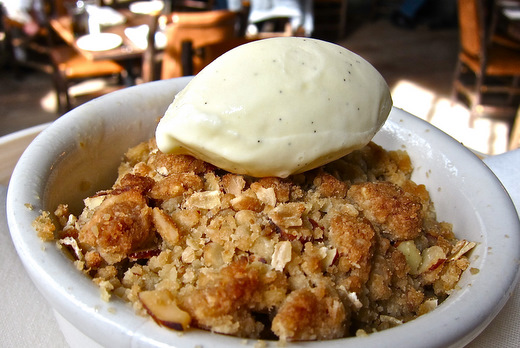
High on his list of favorites is hot pear crisp topped with ice cream. If you’re counting calories, use whipped cream or yogurt instead.
Perfect by itself for a cold-weather afternoon snack or to end a meal, the crisp can be prepared a day ahead, kept in the refrigerator, and popped in the oven just 30 minutes before serving.
Pear Crisp Topped With Almond Crumble
Serves 4
Ingredients
Directions
- Use a mixer to beat the almond paste until smooth.
- To the mixer, add the butter and brown sugar and cream until well blended.
- Stir in by hand the lemon zest, salt, oats and almonds. When mixed well, add in the flour. Avoid over-working the flour. You want crumble not dough.
- Heat oven to 375 F.
- Toss the cut-up pears with the white sugar and cornstarch.
- Portion the pears into 4 ovenproof bowls.
- Top with the crumble and seal with aluminum foil.
- Bake, covered with foil, 12 to 14 minutes.
- Remove foil and bake an additional 12 to 14 minutes until the crumble is lightly browned.
- Serve warm with toppings of your choice.
Zester Daily contributor David Latt is a television writer/producer with a passion for food. His new book, “10 Delicious Holiday Recipes” is available from Amazon. In addition to writing about food for his own site, Men Who Like to Cook, he has contributed to Mark Bittman’s New York Times food blog, Bitten, One for the Table and Traveling Mom. He continues to develop for television but recently has taken his passion for food on the road and is now a contributor to Peter Greenberg’s travel site and the New York Daily News online.
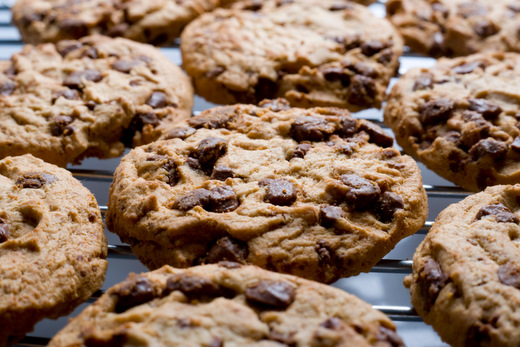
A recent daylong blizzard hit parts of Massachusetts with 2 feet of snow, leaving me with a couple of choices: bundle up and shovel at frequent intervals or stay in the kitchen and bake cookies. For me, the choice was a no-brainer. I baked. And eventually, neighbors with a snow blower took pity on me and cleared off my walkways. In response to their good deed, I turned up at their back door with a heaping plateful of assorted cookies, fragrant with chocolate and still slightly warm, and was left with the feeling that each of us thought we got the better of the deal. I don’t think I have to explain why I was happy not to shovel heavy wet snow, and my neighbors’ expressions of sheer rapture when I handed over the cookies made their contentment clear. But this encounter set me to wonder why cookies –- especially home-baked ones — get people so excited.
For instance, I recently brought a gift of cookies to a friend who was giving a small dinner party and the sight of them made her express the usual exaltation I have come to think of as “cookie joy.” She may be the most sophisticated and intellectually gifted person I know, but not above loving cookies. What was unusual about her response, however, was that the day after the party I received an e-mail message from her that contained an analysis of each of the cookies and why she thought one was better than another. In other words, she had deconstructed the plate. Her favorite was a recipe I had never made before, double chocolate cookies that contain nuggets of walnuts and chocolate chips, a big hit with everyone this year.
The spreading of cookie joy motivates a man I know who, every morning, bakes mandel bread, a close relative of biscotti, and then packages and freezes them so as to have on hand a ready supply to meet any occasion. He brings them along to such important life events as weddings, bar mitzvahs and funerals, but also to casual card parties or gatherings around the pool of his retirement community. Handing out his cookies has become part of his identity, a thoughtful way of saying “hello, I like you,” a message that sits well with everyone he encounters. People brighten up when they see him coming, for he is never empty-handed.
Cookies with an all-American history
Our love of cookies helps to explain why everyone seems to know the story of Ruth Wakefield and her accidental discovery of chocolate chip cookies. Throwing some cut up semi-sweet chocolate into a batch of drop butter cookies and expecting the chocolate to melt and disappear, she was surprised to see that the chocolate bits kept their shape and stayed put. And thus America’s favorite home-baked cookie was born. Our devotion to this particular cookie has been augmented by the urban legend usually associated with Neiman-Marcus that had some believing that a customer’s request for a chocolate chip cookie recipe they were told would cost $2.50 wound up on her bill as $250. In the old days, this story, full of indignation, showed up in chain-letters along with a recipe, and then reappeared in the early days of e-mailing.
Our love of cookies has benefited the Girl Scouts who, since 1917, have sold cookies to raise millions and millions of dollars to fund their various programs. In the earliest years of the program, girls would bake cookies with their mothers, package them in wax paper bags sealed with a sticker and then go door to door selling them for 25 or 30 cents per dozen. Later, the task of baking was taken over by commercial bakers who now produce the much-loved Thin Mints, Samoas (vanilla cookies coated in caramel, sprinkled with toasted coconut and decorated with chocolate stripes) and Tagalongs (vanilla cookies, layered with peanut butter and coated with chocolate) — the three most popular Girl Scout cookies. Americans look forward to the annual cookie drive and often bring boxes of them to offices around the country where they join together to eat cookies for a good cause.
Another American custom is the fortune cookie that tops off meals in Chinese restaurants around the country. Not at all Chinese in its origins, the cookie probably got started in San Francisco and spread throughout the country, with diners vying for who gets the best fortune, hoping not to be told, “you are a very nice person,” but preferring to read “you will meet the love of your life” or “you are going to be rich and famous.”
While fortune cookies are not enjoyed for their flavor but for their messages, we eat other cookies because we love the way they look and taste, perhaps identifying with the “Sesame Street” Cookie Monster who chants, “Me want cookie. Me eat cookie.” But why do we like cookies so much?
Proust’s transporting petite Madeleine
Perhaps we like the fact that if we eat just a couple, we are spared from the huge intake of calories we would absorb if we ate, let’s say, a couple of jelly doughnuts. The other reason we may find joy in cookies is that they can evoke positive memories. A whiff of spice may evoke memories of Grandma’s hermits, while even the sight of a bag of chocolate chips can recall pleasant days of after-school baking with Mom when we were kids. This connection between cookies and memory was most famously described by the writer Marcel Proust whose taste of a petite Madeleine dipped in tea led to the following phenomenon: “No sooner had the warm liquid, and the crumbs with it, touched my palate than a shudder ran through my whole body…,” and he suddenly and vividly recalls nearly forgotten memories of his childhood when he frequently ate those cookies. Modern scientists refer to this phenomenon as “involuntary memory,” in which cues from everyday life bring up long-forgotten recollections from the past. Cookies will do that, and therefore should never be put down as being trivial or unimportant.
Double Chocolate Cookies
Adapted from “What Cooks in Suburbia” (1961) by Lila Perl
Ingredients
Directions
- Cream butter and sugar.
- Add egg and beat well.
- Stir in the melted chocolate which has cooled.
- Combine the flour, baking powder, and salt, and sift into the chocolate mixture.
- Blend well and add the coffee mixture, the vanilla extract, nuts, and chocolate chips.
- Drop batter by rounded teaspoonfuls about 1½ inches apart on cookie sheet lined with parchment paper and bake on shelf in upper third of the oven at 375 F for 12 minutes or until cookies are firm in the center.
- NOTE: I use a small ice cream scoop to form cookies which then bake into an attractive round mound.
Barbara Haber is a food historian and the former curator of books at Radcliffe’s Schlesinger Library at Harvard University where she built a major collection of cookbooks and other books related to food, and influenced the recognition of food history as a viable field of academic and professional study. She founded the Radcliffe Culinary Friends, which supported the library’s culinary collection and provided a forum for food writers from across the country to present their work to an appreciative audience. She also held monthly gatherings, called “First Monday,” where local chefs and writers came together to hear talks on timely food-related topics.
Barbara’s books include “From Hardtack to Home Fries: An Uncommon History of American Cooks and Meals” and “From Betty Crocker to Feminist Food Studies: Critical Perspectives on Women and Food,” which she co-edited. She has written numerous articles and reviews including “Home Cooking in the White House” published in “White House History.” She is currently working on a book about food and World War II in the Pacific tentatively called “Cooking in Captivity.”
She is a former director of the International Association of Culinary Professionals and currently serves on the awards committee and chairs the Who’s Who Committee of the James Beard Foundation. She is a frequent speaker on topics related to the history of food as well as popular food topics, and has appeared on television’s “The Today Show,” “Martha Stewart Living” and The Cooking Channel. Barbara was elected to the James Beard Foundation’s “Who’s Who’s in Food and Beverages” and received the M.F.K. Fisher Award from Les Dames d’Escofier.
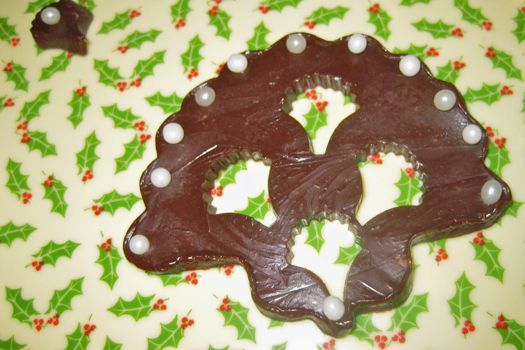
Fudge is a tawdry confection of cooked sugar, butter and cream. She makes no apologies for her excesses. She is shamelessly sweet, shockingly fattening and decadently laden with chocolate. She has long been quietly adored — lasciviously eyed at ports of call like boardwalks, amusement parks and shopping malls — she has never learned quite how to dress. She comes to us in chunky blocks which we stuff in paper bags as if this indulgence were something illicit to hide. But we fudge lovers have never required the object of our affections to look fetching. We never require her to be dressed up with doilies, decorated with powdered sugar or stacked on pedestals like her trendy cousins, the artisan cupcakes.
It is time for fudge to go glam! She needs a muse and a catalyst and that, oh great fudge-lover and home confectioner, is you. Dress this lady up in fine clothing and give her some jewels. This holiday season, when you make your favorite fudge, don’t stuff her into that horrible corset of a small square pan as most recipes will instruct you to do. Instead, pour the still-warm fudge on a buttered swath of tin foil that has been laid into a sheet pan. Smooth her over the foil to a slender ½ inch thick – just a fraction of the usual clumsy height. Then, once the fudge has set, trim her with cookie cutters, dust her with exotic sugars, dip her in the finest chocolate or sprinkle her with carefully roasted nutmeats. Fudge, with her regaldelivery of flavor, decadance and satisfaction deserves the trappings of the richest confections.
Chocolate Courtesan Fudge
Ingredients
Directions
- Grease a half sheet pan or 9 x 12 inch pan.
- Combine sugar, and butter in a heavy saucepan over medium heat. Bring to a boil and continue cooking for about 5 minutes, or until you hit 235°F on a digital or candy thermometer.
- Take the pan off the heat and fold in the chocolate, vanilla, salt, and walnuts. Stir vigorously for several minutes, until the mixture is very smooth, then pour into the prepared pan.
- Allow the mixture to set, about 30 minutes. Slice with a small fan-shaped or heart-shaped cookie cutter.
Note: This fudge is very rich, so if you can’t find a small heart-shaped cookie cutter, use a paring knife to make small uniform shapes. Keep a bowl of hot water and a damp cloth nearby to clean the cutter or knife after each use. If the fudge is too soft to cut easily, chill for another 30 minutes in the refrigerator.
Susie Norris is a chocolatier, TV producer and author of the book “Chocolate Bliss.“
 Learn how to brew coffee like the pros. Enter here to win one of 10 copies!

Upcoming Events
-
see all of our
Upcoming Events
-

Los Angeles Times “Jonathan Gold’s 101 Best Restaurants” May 21stTakes place on May 21, 2013Los Angeles Times Presents “Jonathan Gold’s 101 Best Restaurants” Celebratory Members-Only Bite Nite On May 21st, The Times will celebrate the ultimate local dining…
-

The New Orleans Wine & Food Experience May 22nd-25thTakes place on May 22, 2013The New Orleans Wine & Food Experience Over the past 20 years the New Orleans Wine & Food Experience has raised…
-

Atlanta Food & Wine Festival May 30th-June 2ndTakes place on May 30, 2013Atlanta Food & Wine Festival Presented by FOOD & WINE The Atlanta Food & Wine Festival is the first culinary weekend in the nation dedicated…
SmartBrief