Articles in Travel
An expression my mother used to denote a faraway place was “Timbuktu.” It’s strange to think of Timbuktu, on the southern edge of the Sahara in West Africa, as cosmopolitan but in a curious way it is because the potpourri of people there mirrors the rest of Mali, a country with more than 30 ethnic groups and languages. The recent takeover of Timbuktu by Islamic extremists accompanied with the coup d’état against Mali’s fragile democracy has been disheartening. It brought back wonderful memories of my visit in 2005.

Mosque in Timbuktu, Mali. Credit: iStockphoto.com
The population of Timbuktu is predominantly Songhay and Touareg and the town itself was not only a geographic oasis but an oasis of calm and friendly people. When I was researching my book “Some Like It Hot,” I had come across a famous Songhay dish called tuvasu (or tukasu). I did not know much about the Songhay, who live mostly in neighboring Niger, and all I knew about this dish was that it was a recette difficile mais succulente! (“a difficult recipe, but succulent!”).
Breaking the tourist pattern in Mali
During one of our little pow-wows to plot our daily affairs with Youssouf, our Bambara guide who accompanied my companions David and Steven and me throughout Mali, and Haliss, our Touareg guide in Timbuktu, I inquired about tuvasu. Youssouf had been pleased that I ate local food, as he called it, without ever a cringe of the nose, as opposed to expecting tourist food as is most common among Western travelers. Haliss said he would have to arrange it, since no local restaurant served it, and restaurants are entirely for tourists in Mali as people are too poor to be eating out. In any case, it’s a dish prepared for special occasions and wouldn’t have appeared on a menu anyway.
Haliss arranged for a local restaurant, the Poulet d’Or, to make it for us. The tuvasu had to be preordered because it takes several hours to prepare. Restaurant was a very fancy name for a hole in the wall that had all the ambiance of an auto body shop. This is where we would have our tuvasu. Poulet d’Or had a dirt floor and consisted of two large rooms with one table in each. The white paint on the walls was chipped. There was one picture on the wall, and the room was lit by one fluorescent bulb and was dusty and dingy. The table was set with glass salad plates and a multicolored tablecloth of red, green, white, and blue strips with little red and yellow squares and dots in the center. We ordered apple soda, a locally produced bottled drink of which we had grown quite fond. We ordered water too, which one always does in the desert. Youssouf and our Dogon driver Siddiqi joined us, though Siddiqi only spoke Dogon and Bambara.
Our hosts first brought out a salad of tomatoes, boiled potatoes, onion slices, fresh chile slices, green bell peppers, and parsley on lettuce, with a creamy vinaigrette dressing. I had no idea if this salad was Songhay, but I suspected not; it seemed French to me, but I didn’t care because I was famished and this was an incredibly good salad and we ate it with Touareg bread.
Finally, a mystery solved
Then came the famously unknown Songhay tuvasu. I had spent the day talking my companions into eating this stuff, convincing them that it was an extraordinary dish and unique and you couldn’t leave Mali without having tried it. I made that all up. Even though I had asked for it with some authority, I actually didn’t have a clue what it was until it arrived at the table. Even then I wasn’t sure what we were about to eat.
Two large platters arrived. In one a mound of very red sauce covered pieces of mutton that had been stewed for many hours in peanut oil, water, tomatoes, onion, and “12 spices” our cook told us. The cook was Songhay and spoke broken Bambara with Youssouf who translated. But the cook didn’t know the names of the spices in Bambara. I never did get exactly what the 12 were, but we did figure out that salt, black pepper, chile powder, aniseed, cinnamon, garlic, cloves, coriander seed, bay leaf, and ground baobab were 10 of them. The mutton ragoût is braised until the liquid is much reduced and saucy and unctuous and glistening a brilliant fire-engine red. I knew from experience that that meant they must have used a lot of tomato paste, maybe up to a half pound. There were also chopped dates and fresh tomatoes and fresh chiles in the ragoût as well.
The other platter contained grapefruit-size spongy bread dumplings with the consistency and texture of angel food cake covered with a little of the sauce. These dumplings were steamed as they sat on top of the mutton in an hermetically sealed cauldron. These huge dumplings were taken out as the mutton continued to cook. We spooned the spicy mutton sauce over the dumplings and ate. There were six of these Pantagruelian dumplings and all five of us very hungry guys could only eat three of them.
The mutton fell off the bone and the sauce and dumplings were very heavy and rib-sticking, but very satisfying. In fact, it was the type of delicious food that you keep shoveling into your mouth long after you’re full. We left more than sated with the fondest memories and hope that Timbuktu returns to its admittedly wacky normalcy.
Photo: Mutton like the meat used for tuvasu in Mali. Credit: StockFood
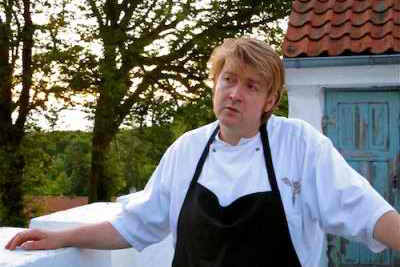
An hour west of the thriving culinary mecca of Copenhagen is an 800-year-old castle clinging to the shore of the frigid North Sea. Unlike so many of the country’s castles that have been transformed into museum pieces, the fortified white walls of Dragsholm Slot envelope a thriving industry that includes a hotel and two restaurants.
One restaurant is a casual bistro called The Eatery that serves traditional Danish fare, the other is a fine dining establishment overlooking acres of land from which nearly all of the tasting menu’s ingredients are sourced. It’s an idyllic place for chef Claus Henriksen, 31 and the former sous chef of Noma. There he oversees both restaurants and the castle’s robust catering and events division.
Henriksen eschews meat-heavy dishes in order to showcase the intensely flavored vegetables he harvests from his garden each day: Grilled asparagus and garden sorrel with crispy rye bread croutons and garden herbs; glazed lamb brains and new potatoes with onions, pickled tapioca and lovage; and thyme and mint granita with fresh goat cheese meringue strike a perfect balance between protein and produce.

The extraordinary surroundings of electric green hills spilling into rich fields, ancient orchards and hedgerows populated with beehives sustain his frenetic seven-day work week and remind him to slow down and absorb the sublime energy reverberating around him. In this interview with Henriksen, we discover why visitors to Copenhagen who invest the time to journey to Dragsholm are justly rewarded by an experience that not only stimulates their palettes, but ignites their spirits.
What do you like most about working at Dragsholm Slot?
It’s the quietness. If you have free time here you can walk outside and enjoy everything that’s around you. The only thing you can do in the middle of a city is step out your door and drink. If you need ten carrots here, you can go and get ten carrots instead of calling a producer and telling them you need ten carrots.
Where do you think this New Nordic obsession came from?
Until around twelve years ago the only thing Danish chefs desired was to purchase everything from France. It’s the way the chef was brought up. We didn’t understand the meaning and significance of our own surroundings. And then we started to look more internally. When you’re growing, there comes a point when you want to do something different than what you’re parents are doing. That’s what happened to Danish chefs. We wanted to rebel against the status-quo and use Danish products instead of imports. A lot of our chefs went out in the 90s and the beginning of the 2000’s to work abroad. They started to see that in other areas of the world, chefs only used local products and we started to think that we could do the same thing. [Chefs cooking] New Nordic cuisine focus on the ingredients and listen to the environment in order to truly understand it. These principles can be applied anywhere in the world.
I asked a chef many years ago why we were using asparagus and cherries all year long. He said, “I don’t care. It’s in season somewhere in the world.” Twenty years ago that was the philosophy. I think this is what inspired Danish chefs to cook differently. The way we cook now in Scandinavia is fresher and more thoughtful. Twenty years ago everything revolved around a prime piece of meat such as tenderloin, and supporting it were truffles, foie gras, lobster, langoustines. Now we are more focused on flavors. If you spend more time coaxing out the flavor of something simple, you will be rewarded. It’s more challenging to do this, but it’s more fulfilling too.
Is it an exciting time to be a chef in Denmark at the moment?
If you don’t look at it as an exciting time, you might as well quit. You have to appreciate the challenges and the virtues in every season and find virtue in your work each and every day. If your interest wanes, stop and reassess. If you’re happy, then your guest will be happy, because your happiness comes through in your cuisine.
What are the fundamental principles that guide you when cooking?
For me the most important thing is to have a contented guest who understands what I’m doing. If my cuisine sometimes get a little too crazy, I will dial-it back and begin all over again. You have to be willing to do this. I think that one problem in kitchens all over the world is that people are afraid to start over.
The cooking here is very personal. It’s about integrity. It’s about using, producing, showing the produce in its best light ,and then you can always add something for a final flourish. I want it to be balanced. Sometimes people say it’s a little too powerful and that’s true, because it’s filled with flavor. This doesn’t mean that we’re adding a lot of elements, it tastes so intense because the natural flavors are so fresh. We are showing here the best of what the farmers and fishermen are doing. You can do fancy things but if you don’t have the best ingredients, it won’t work. And vice versa. There has to be a balance and this balance must include the best of everything.
Top photo: Claus Henriksen of Dragsholm Slot. Credit: Sandeep Patwal
Slide show credit: Sandeep Patwal
London is buzzing with Olympic excitement. The city’s program of special celebrations goes far beyond the starting lines of sporting events to a marathon of cultural activities.
For foodies, one of the summer’s most exciting and exclusive dining venues is on the roof of the Royal Festival Hall in the Southbank Centre arts complex on the River Thames. Built for the 1951 Festival of Britain, the prestigious concert hall has been adorned for the Olympic with a drop-down, pop-up restaurant that sits like a white cubist feather in the building’s cap.
The sky-high mobile restaurant, the Electrolux Cube, is a sleek metal and glass structure that’s more rhomboid than square with a penchant for perching on landmarks. It houses a single table for 18 diners and an open-plan, state-of-the-art kitchen. The Cube restaurant was inaugurated in 2011 atop Brussels’ triumphal arch and has since appeared on a Milan rooftop overlooking the Duomo. Its twin is now summering in Stockholm, on top of the Royal Opera House.
Mobile restaurant, rotating chefs
The draw for Olympics guests goes beyond these iconic locations. The Cube’s kitchen is staffed by star chefs from the country’s top restaurants. In the United Kingdom, the four-month season kicked off with Sat Bains, whose eponymous two-star Michelin restaurant is in Nottingham, about two hours north of London. He’s being followed by two-star chefs Claude Bosi, of the cutting-edge Hibiscus restaurant in London, and Daniel Clifford of Midsummer House in Cambridge. They’ll alternate with young chefs Jonray and Peter Sanchez-Iglesias, of Casamia in Bristol, and Tom Kitchin, from the Kitchin in Edinburgh, Scotland. The Cube is in London through September.
The format comprises a set, seven-course meal cooked personally by the chef at lunch or dinner with handpicked wines accompanying each course. Diners can watch the chef cook, ask questions, and be part of a truly exclusive eating experience. The cost? £175 ($275) all-included per person for lunch, £215 ($340) for dinner.
“It’s a unique opportunity for both chefs and diners,” says the jovial Bains as he plates his amuse-bouches before lunch: small cubes of wild horseradish ice cream made from plants growing along a river near Nottingham. “We see firsthand how our customers respond to our food, and they talk to us as we’re preparing the meals.” Despite the formal service, the mood at the communal table is relaxed and friendly, like a private lunch party where guests compare notes about their favorite dishes and restaurants. Bains is an expansive host, and the atmosphere is convivial as diners move around the Cube, taking pictures and admiring the high-tech Electrolux kitchen and breathtaking views of London beyond.
Brit-Asian and local
Bains, who comes from a Punjab family, grew up in Derby in the industrial Midlands, and likes to maintain contact with his Asian roots. He works with the finest British produce without losing sight of the multiculturalism that defines modern Britain. “To me, British food always has been a magpie food,” he says. The chef is known for his creativity with local ingredients. For his stint at the Cube, he’s featuring a handful of artisanal products, including Lincolnshire Poacher butter, Jersey Royal potatoes, Banbury cake and a newly created soft blue cheese called Beauvale from Nottingham Stilton producers, Cropwell Bishop.
Bains has a fine sense of humor. His opening dish is named for his postcode: NG7 2SA. “People are big on foraging now,” he says, “so this is a nod to them — a wild horseradish panna cotta with wild garlic sauce that we source right around the restaurant.” The dish manages to be modern and English: delicate and summery, yet with a hint of fire and bitterness.
The panna cotta is followed by an exceptional plate of scallops seared on one side only and served with elderflower mayonnaise and a fresh strawberry compote that’s given added acidity by sun-dried tomatoes. It’s an instant hit with the guests who burst into applause after eating it. The floral notes of elderflower and strawberries remind me of a wine’s bouquet. “I’m definitely more into flavor than substance,” says Bains as we crowd around him in the kitchen. A lively raconteur, he charms the group by describing how he used Twitter to find extra elderberry flowers when he ran out in his first week at the Cube. “A kind lady in south London obliged by bringing us the fragile blooms from her own garden,” he laughs.
Two more savory dishes come next, poached new potatoes with ham and dashi, and braised lamb shoulder with seaweed, smoked leeks and caper sauce, each a microcosm of balance and interest. The new Beauvale cheese is paired with a fruity Banbury cake lifted by citrus and served with a Port sauce. What could be more British? Imaginative desserts follow: chocolate spiced with cumin and lime and, finally, a treacle sponge baked for just seconds in the microwave in homage to that technique’s creator, Spanish pastry chef Albert Adrià of elBulli, which closed last year. The afternoon ends with Chef Bains signing autographs on the menus. Even after the Olympics, summer in London promises to be deliciously stimulating.
Top photo: Chef Sat Bains’ dish, NG7 2SA, horseradish panna cotta with wild garlic sauce. Credit: Carla Capalbo
Slideshow credit: Carla Capalbo
The Olympics are in full swing, and London restaurants are serving visitors from all over the globe, but the host city is encouraging even more tourists to take in the moment. The lure, beyond the Summer Games, is the English capital looking as you have never seen it, without the anticipated traffic woes. For an added flavor, here’s a tip sheet to city’s restaurants that ignite tradition with daring and innovative style.
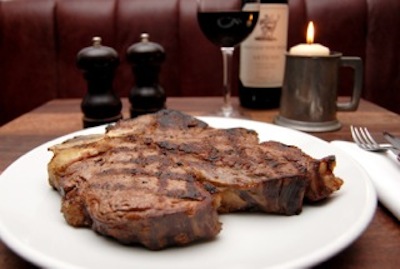
Noma, the world’s best restaurant for the third year in a row, will be represented as a pop-up at Claridges. For steaks and drinks, The Hawksmoor is the place. Its many cuts of beef are sourced from sustainable British farmers. The wine list includes a good selection of dessert wines. Hawksmoor also serves a hearty breakfast. Another breakfast spot high on my list is Kopapa near Covent Garden, where Turkish eggs in yogurt are served with hot chili butter and toast. For anyone in need of a hangover remedy or an energy boost, this is the way to start the day.
Coffee and cheeses
The coffee at Monmouth Coffee on Monmouth or Stoney streets may be the best in London. If you go to the one on Stoney Street, you can hang out in the open café, sit at the communal table and pay a few pounds to share the bread, jam and butter. For lunch, or if you have a hankering for breakfast teas and cakes, or just want to do some serious food shopping, La Fromagerie in Marylebone is the place. The homey spot offers a wide cheese selection and tasty Mediterranean salads made of great quality ingredients from France, Italy and Britain. Budget meals can be found at Koya, which has a great selection of noodles and side salads, as well as Japanese-style marinated vegetables and fish specials.
Sushi lovers can head to Feng sushi (which delivers) for outstanding salmon from Loch Duart, a sustainable farm in Scotland. Order a picnic from the Chalk Farm branch and take it to Regents Park.
The Ottolenghi restaurants are also worth a try, offering some of the best salads in London. At their newest, Nopi, small delicate plates bursting with flavor are meant to be shared. Chef-owner Yotam Ottolenghi challenges the palate with meticulously sourced food.
London has excellent Italian restaurants, including the all-time classic River Cafe with its patio, and Boca di Lupo, which serves modern dishes — don’t miss the puddings!
Sardines to rabbit
For a less expensive, louder and more lively experience, try Polpo, a small spot in Soho. They don’t take reservations at night, so you may have to stand in line for the no-nonsense food. Not far away is the Soho outpost of Duck Soup, where the menu changes daily and is written on pieces of paper. I had great sardines, mackerel, quail and blood oranges. Sit in the window or in the bar and enjoy fairly-priced food made from the heart. For a classic French meal go to Racine, where the Knightsbridge vibe is uplifted a bit with proper table cloths. Try chef-owner Henry Harries’ rabbit in mustard sauce and enjoy a classic French dessert.
St. John restaurant is a must for real British food: pork cheeks, sweet bread, raw vegetables, langoustine, pigeon. All are cooked to perfection and served in surroundings reminiscent of a pre-World War canteen. At Dock Kitchen, which chef-owner Stevie Parle started as a pop-up, the home-cooking menu is inspiring and the atmosphere relaxed. In July, I was on their guest chef roster, cooking a Danish supper. Last but not least, if you fancy dim sum during the week, Royal Garden has branches throughout London, ideal for a quick bite.
Photo: A porterhouse steak at Hawksmoor in London. Credit: Courtesy of the Hawksmoor
I hadn’t flown to London last month just to eat at the hot new Tramshed, an homage to my two favorite animal protein sources — chicken and beef — and, it appears, to the fine art of moneymaking in the restaurant trade during a bad economy.
No, I was en route to my summer eating sabbatical in Paris. Back home in California, I had read the extensive media coverage of Tramshed’s exalted opening in May, the latest recession-defying venture from chef/restaurateur Mark Hix. Much has been made of the connection between Hix and his artist buddy Damien Hirst, who installed in Tramshed’s dining room one of his notorious formaldehyde-preserved whole animal vitrines, this one called “Cock and Bull.”
So I was happy to delay my Chunnel connection to Paris long enough to experience both — the dual fuel dishes at Tramshed (chicken and steak are the only main courses on the menu) and Hirst’s post-minimalist oeuvre on view both at Tramshed and at the Tate Modern’s current Hirst retrospective.
On both fronts, food and art, it’s a popular, if often silly, debate in the media these days whether Paris or London takes the respective cake. London, for my tastes, has clearly pulled ahead of Paris on one of these fronts — art. I can’t think of a French artist today that interests me as much as the abstract master Howard Hodgkin, or the late, great figurative painter Lucian Freud, or Damien Hirst himself, the most talked about and richest artist of our time.
As for London’s food, it’s still, at least for me, an open question. In a recent article in the Financial Times, the art and food writer Peter Aspden quotes France’s master chef Joël Robuchon’s claim that London is the gastronomic capital of the world “ … because it’s only in London that you find every conceivable style of cooking.” But does London truly excel at all of them? After a somewhat perplexing meal last summer at Fergus Henderson’s highly regarded nose-to-tail restaurant, St. John, including a main course slab of pork served next to a plain boiled carrot and a mound of garlicky aioli (British cuisine epiphany or Provençal nightmare?), I had to wonder what all the fuss was about.
Tramshed or Tramsham?
So I approached Tramshed with modest expectations. On arrival I was indeed bowled over by Hirst’s “Cock and Bull” towering over the dining area in the dramatically cavernous former electricity-producing facility for London trams. My guest, a food writer who had already eaten at Tramshed, suggested that she order the “Mighty-marbled Glenarm sirloin steak,” that I order the “Roast Woolley Park Farm free-range chicken,” and that we share. What she didn’t share until after the meal was her lukewarm opinion from her first visit.
The only steak on Tramshed’s menu is the sirloin, which my dining companion ordered rare. The menu states that the beef is dry-aged “… in a Himalayan salt chamber on Peter Hannan’s farm on the Glenarm Estate in Northern Ireland.” What? I attempted to get details on Himalayan salt chambers back in my hotel room after the meal, but I mainly found references on the web to the healing properties of Himalayan salt when people are exposed to it at special salt spas. Puts a new spin on the age-old technique of salt-curing meat.
Our steak arrived on its wooden carving board overcooked the first time and almost raw the second. Actually, the first round was, for me, perfectly cooked, an American (circa 1950s) medium rare — pink, not red, in the center. Unacceptable, however, to my guest. As our server apologetically picked up the overdone sirloin, which he had started to carve, I was able to skewer a slice as he raced the board back to the kitchen. I was hungry. It was good.
When the second round arrived, I could see we were in even bigger trouble — the steak was gray, with scarcely a grill mark. As the server began carving the almost raw piece of meat, he asked whether it was done properly, to which my stoic companion replied, “Yes.”
As for my shriveled “spring chicken for one” served upside-down, as if diving into its little pool of jus, it too was sadly wanting. If not officially overcooked, it had been surely sitting around awhile. An inserted mini wad of stuffing was tasty but the chicken’s skin was deflated and the meat dry. If you can kill a chicken twice, here was proof.
Build it up expensive and they will come
It’s never easy for an ambitiously conceived restaurant to deliver on the ecstatic hype that builds around its opening. But in London, where media-identified darlings become sacred (and, in this case, preserved) cows, it seems rather easy. The template is, of course, the British monarchy, which, over the centuries, has survived a multitude of indiscretions. The British can be, I’m reminded, a fiercely loyal and forgiving lot, and Hix and Hirst apparently can do no wrong.
So it doesn’t really matter in London’s blooming art and food culture whether Hirst’s “Cock and Bull” installation is brilliant art or just over-the-top restaurant décor spun off from his 1980s natural history series on display at the Tate. Either way, and I’m not entirely sure which, it attracts herds of artsy eaters to Tramshed’s gentrified Shoreditch neighborhood.
But it apparently does matter to me that three out of two of Hix’s dishes (yes, chicken once, steak twice) were painfully short on precision, if not well-sourced ingredients. Of course there are terrific-sounding fine dining options in London I will visit next year, like Heston Blumenthal’s Dinner, offering modern takes on historical British food, and Mikael Jonsson’s Hedone, which channels new Nordic ingrediocentricity. But after my meal at Tramshed, I was hungry for Paris, the world’s most underrated over-the-hill eating mecca.
For all of culinary London’s exciting diversity, it’s still my Paris amuse-bouche, a very entertaining warm-up act.
Illustration: Two-and-a-half cock-and-bulls down for Tramshed. Credit L. John Harris
London is limbering up for the Summer Olympics, which take place in the capital from July 27 to Aug. 12. It’s estimated that some 14 million meals and snacks will be served in Olympic Park throughout the Games. Jan Matthews, head of catering at the London Organising Committee of the Olympic and Paralympic Games, or LOCOG, describes it as “the biggest peacetime catering operation in the world.”
What kind of expectations can athletes and visitors have where food is concerned? Sheila Dillon, BBC Radio 4′s Food Programme presenter, describes London 2012 as “the first Olympic Games — ever — with a food policy.” Eyebrows were therefore raised when it was announced that the chief sponsors to the Games included McDonald’s, Coca-Cola, Procter & Gamble and Cadbury. Initial skepticism about such enterprises providing healthy, nourishing food and snacks has been muted to some extent. At the very least, all have signed up to the explicit aims of the food policy: to serve decent, tasty, sustainable fare, and to source it from every corner of the United Kingdom.
Such is the food picture in Olympic Park. But the catering operation doesn’t stop there. All over London, top chefs from around the world will be providing sustenance for VIPs in a host of different venues. London catering company Mosimann’s landed the contract to cook at four distinct venues around the city, including the House of Switzerland and the House of the United States of America.
Feeding royals and Olympians
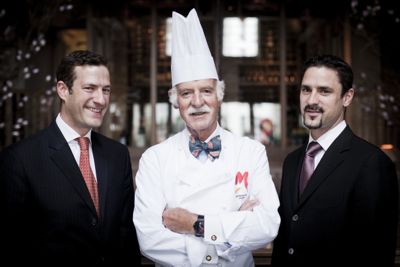
The company, started by a Swiss family, also runs a private dining club of the same name in London’s Belgravia neighborhood and is no stranger to high-end, large-scale food provision. Caterers by appointment to Prince Charles, it handled the Royal Wedding dinner at Buckingham Palace last April and provided a sit-down lunch for some 700 for the Queen’s Diamond Jubilee celebrations in June. As far as the company’s Olympic credentials are concerned, “It definitely helped that we’d done a lot of the VIP food at both Beijing [site of the 2008 Summer Olympics] and Vancouver [2010 Winter Olympics]“, says Philipp Mosimann, who is responsible for the catering side of the business. (He is the elder son of the company’s celebrated founder, bow-tied chef Anton Mosimann).
The House of Switzerland will be based at Glaziers Hall on the south bank of the Thames River. Three public restaurants will be set up within the 2,500 square meter riverside space: a Victorian-style wine bar reborn as a cozy Bernese chalet serving typical Bernese comfort food; a brasserie featuring Swiss specialties such as Zürcher Geschnetzeltes (diced veal and mushrooms in cream sauce), and a rösticceria, named for and serving one of Switzerland’s much loved national dishes, Rösti (hash browns) as well as raclette and bratwurst.
The wine list
For the VIPs — guests of the sponsors, Swiss government representatives and winning athletes — five different menus will be available along with a selection of such Swiss wines as a Sauvignon Blanc and Pinot Noir from Twann, on Lake Biel; a Chardonnay and Merlot from the Italian part of Switzerland, and a Fendant (Chasselas) and Cornalin from the Valais region above Martigny.
At the House of the United States of America, in the Royal College of Art overlooking Albert Hall and Kensington Palace Gardens, Mosimann’s will take care of the high-end dining for an estimated 1,200 people each day. The American-style menu will feature famous dishes from all over the States: Southern fried chicken, barbecued spare ribs, New York-style cheesecake and key lime pie. True to the London 2012 food policy, all ingredients will be locally sourced from the British Isles.
Planning for this mammoth catering operation began in April 2010 and has occupied most of Philipp Mosimann’s waking hours since. The logistical challenges are mind-boggling, from hiring the right staff (each one interviewed individually) to finding off-site prep and storage space to getting the kitchens in the different venues up to speed. To minimize waste, he says, “All the vegetables, meat and fish will be pre-trimmed.”
Delivery of ingredients and equipment is proving especially challenging. “The team will only have a day and a half to set up,” Mosimann notes, “and the authorities have insisted that all deliveries be undertaken during the night to keep the streets free of the vans while the Games are actually happening.” His worst-case scenario? The electricity supply isn’t up to the task. He’s planning a test run of all the ovens, which will be left blazing for three full days before the final kickoff. “We have to be ready for anything — flexibility will be the name of the game!”
Photo: Chef Anton Mosimann, flanked by his sons Philipp (left) and Mark. Credit: Steve Bliss
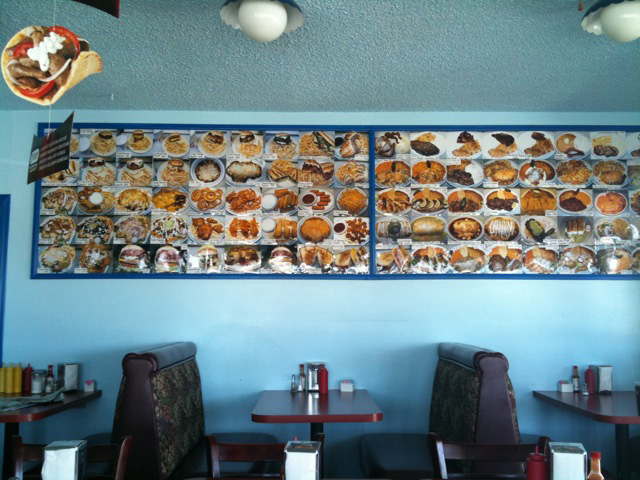
Summer is the season when people get in their cars for vacation and when articles appear about what to eat while on the road. Some magazines detail routes to coincide with great eating experiences. Others are more about self-defense. There are individuals like Elissa Altman, who, encountering the ghastly offerings on a trip to Maine, wrote on her blog, “Poor Man’s Feast,” about how truly dismal it all was and how it really was time to change the entire food system. (And she knew that already.) I’ve had more than a few requests to write about how to eat well when traveling; how to find food that won’t make you sick or put on pounds. I have road experiences of my own to draw on: For more than 20 years, I’ve been making at least one drive a year from Santa Fe, N.M., to Davis, Calif., plus I love more local road trips, too. I should have figured things out by now, but mostly I’ve come to conclusion that it’s really, really hard to eat well on the road.
When you’re traveling on highways through the empty West, those magazine articles pointing you to culinary treasures won’t help much. The good family-owned cafes are largely gone. Espresso (and/or good coffee) is rare. Farmers markets are dicey to connect with. Because there’s not much chance for real food anywhere, the obvious solution, it would seem, is to bring your own.
Drink up and DIY on your road trip
I suggest starting with beverages. Pack a small espresso pot and a small camping burner and you can at least stave off the misery of bad coffee. (If you’re a tea drinker, do the same for tea.) You can make good, strong coffee at rest stops or in your motel room. Or you can exit the freeway, and find a boulder to lean against and a cool spot to set up your machine. Having a satisfying hot beverage in a beautiful spot can be magical. You sip, gratefully, listen to birds you don’t normally hear, breathe in the creosote smells of the Mojave Desert or the big sage on the “Loneliest Highway in Basin and Range Country,” maybe watch the sun rise or a hawk circle. Your only obstacle to this sublime pause, aside from running out of matches, water or coffee, is wind. I’ve been forced to give up the coffee experience because of wind more than once.
Other beverages are easy to bring and refreshing. A bottle of kombucha or decent iced tea has saved me from a spate of brain fatigue more than once when the temperature is hovering around 100 degrees. Makings for a gin and tonic or a bottle of wine will vastly improve the ambience of your cheap hotel room. Add some good crackers and cheese, a cucumber, some fruit and you don’t even have to look for place to eat in Barstow.
The hope for breakfast
Finding food is the harder part for road trip dining in the West. Yes, you can pack your own, but the problem is that after hours in the car I want to get out and stretch and sit and eat somewhere else, preferably in an air-conditioned restaurant with soft banquettes. More than once I’ve had food with me and still chosen to breakfast in a restaurant, just for the change. Breakfast is often the better meal to have on the road. If you don’t eat it normally, it’s kind of fun to have fried eggs and hash browns or eggs scrambled with chorizo. The eggs won’t be organic and nothing will be local or homemade, but you won’t perish and you will get fed.
Lunch and dinner are more difficult. That’s when the food you’ve brought comes in handy. I have absolutely relished my Motel 6 room in Needles, Calif., (105 F outdoors) because it had a little table and chair, and I had a delicious menu to assemble from my cooler, plus a bottle of chilled wine. I even had a little tablecloth to spread over the plastic table — a great help for atmosphere — and was happy as can be.
The local eatery challenge
Because there aren’t great choices for routes between New Mexico and California, I have gotten to know towns, cities and crossroads over the years. I’ve learned that Flagstaff has some good places to eat and a really good coffeehouse (Macy’s); that you can get a good cappuccino at a little café in Williams; that Kingman, my least favorite place next to Barstow, has a Mexican restaurant (Oyster’s Mexican and Seafood) with creaky fans that aren’t too effective but very cold beer that is and the chance for an OK, albeit fairly predictable, meal. There’s a café in Ludlow that will do in a pinch, too.
If I have the time to take Highway 395 up the east side of the Sierra, there are all kinds of OK restaurants in Bishop, Bridgeport and in between. But that does require extra time. Route 99 North is fast, intense and daunting. It doesn’t take much longer to cross over the valley to the more relaxed pace of Interstate 5. And that’s where I found Baja Fresh, a relatively large restaurant chain but a welcome find in a gas station near Coalinga. I’ve had fish tacos there (grilled to order) more than a few times and found them, with their rice, beans and salsas, a fine meal. When I was there last, in June, I noticed the following words scrawled over the wall in big, friendly cursive: No Microwave. No Can Opener. No MSG. No Freezer. No Lard.
No wonder the tacos were so good.
Normally, a travel center would not be my culinary destination, but if you don’t want a steak at the Harris Ranch, a bowl of Andersen’s pea soup or a boiled egg wrapped in plastic, it might be that a travel center harbors a treasure. I have it bookmarked in my brain along with all the other little places that offer something out of the ordinary. I still do rely on my cooler, though, even if its contents more often than not aren’t eaten until my destination is reached, or until I’ve returned home.
Top photo: A taco café at Kramer Junction, the intersection of California Highways 395 and 58. Credit: Deborah Madison
For years I had dismissed coconut as merely the main ingredient in macaroons, cream pies and piña coladas, and what I added to curries to reduce their heat. That it held more cultural importance and culinary pizazz didn’t dawn on me until I traveled through Southeast Asia. There I witnessed how essential and versatile this fruit is.
Native to Malaysia, the towering cocos nucifera, or coconut palm tree, grows in tropical and subtropical climates. Thanks to medieval Spanish and Portuguese explorers who transported it across the ocean, the tree thrives in South America, the Pacific Islands, Puerto Rico, Hawaii and other steamy, coastal locations.
Although each prolific tree bears thousands of coconuts during its seven-decade lifetime, the plant does provide more than just fruit. In fact, it performs so many roles in Southeast Asia that people there refer to it as “the tree of life.”
In Vietnam, folks use the hollowed-out shells for bowls, husks for fuel, leaves for thatching and wood for timber. To this day, my stepfather-in-law’s sister, who lives in rural South Vietnam, cooks her meals on a stove fired by coconut husks. She cools off on hot days with water tapped from young, green coconuts.
From one coconut tree comes a variety of liquids. There is the aforementioned sweet, opaque juice from immature fruit. I’ve drunk this directly from the shell in Vietnam as well as in Cambodia, Singapore and Malaysia. A common thirst quencher, coconut water is sold on the streets throughout Southeast Asia. Vendors simply hack off the top of the shell, insert a straw and serve.
Cooks also use coconut water to tenderize and braise meats. It’s especially important in the Indonesian fried chicken specialty Ayam Mbok Berek. Here hunks of chicken marinate and then boil in a mixture of coconut water, shallots and spices before being deep-fried. Soft, succulent and flavorful, this dish puts my usual fried chicken to shame.
A staple of Southern Indian and Southeast Asian cooking, coconut milk is the result of adding boiling water to grated coconut; pour in half the amount of water and you’ll end up with coconut cream. After cooling to room temperature, the whitish liquid is squeezed and strained from the fruit. Both coconut milk and cream feature in curries, soups, sauces, preserves, cakes, puddings, rice dishes and drinks.
When tapped for its fast fermenting sap, a coconut palm tree generates the alcohol known as toddy. If you distill this sap, you’ll create the potent spirit arrack. Reminiscent of rum and whisky, it’s widely produced in Sri Lanka.
A coconut doesn’t just yield liquids. Its white meat serves a variety of culinary roles. When unripe, the jelly-like flesh can be consumed like pudding, straight from the shell with a spoon.
Coconut meat used in both sweet and savory treats
Ripe, firm coconut meat can be shredded and made into candies, desserts, stir-fries, curries and condiments. In Vietnam, coconut is grated together with tapioca for an unusual take on rice paper. Shaped into thin rounds and then steamed, coconut-tapioca paper is then either dried and used for spring rolls or toasted and topped with vegetables or meats.
As a result of a recent trip to Singapore, my current favorite way to consume coconut is as jam. Coconut jam, or kaya, plays a prominent role in this city-state’s cuisine. Drop by any Singapore coffeehouse at breakfast time and you’ll encounter plates of toast slathered in the sweet, amber-hued kaya.
Along with acting as a toast topping, kaya serves as an ambrosial filling for steamed Singapore buns. While I do put homemade coconut jam on toast and in buns, I also place it in crêpes, on ice cream and over Greek yogurt.
Unfortunately, although high in protein, coconut is likewise high in saturated fat. Enjoy it in moderation and in countless ways.
Coconut Jam
A variation on the traditional Singapore preserves known as kaya, this jam will keep for up to one week in the refrigerator. For the best results, use fresh eggs and fresh, not canned, coconut milk.
Makes 2 cups
Ingredients
¾ cup plus 3 tablespoons granulated sugar
1 tablespoon water
5 large eggs
1 cup coconut milk
3 tablespoons unsweetened coconut, minced
Directions
1. Place 3 tablespoons sugar and 1 tablespoon water in a small saucepan, stir to combine and bring a boil over medium high heat. Stirring frequently, cook until the ingredients thicken and turn caramel in color, about 7 to 10 minutes. Remove from heat and set aside.
2. In a medium bowl whisk together the remaining sugar and eggs. Add the coconut milk and whisk until well combined.
3. Using a mesh strainer, strain the liquid into a double boiler. Stirring constantly, cook the mixture over medium heat until it becomes custard-like in consistency and golden in color, about 40 to 45 minutes. Add the caramelized sugar and minced coconut and, still stirring, cook for 10 to 15 minutes. When done, the jam will be thick, chunky and caramel colored.
4. Spoon the jam into a bowl and cool completely.
5. Serve chilled or at room temperature.
Top photo: Workers at a Mekong Delta coconut-processing plant. Woman in the foreground shells the fruit, which will be sent to markets down river in Vietnam. Credit: Kathy Hunt
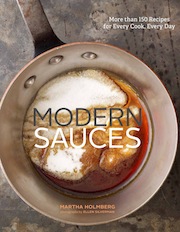 Proof that a well-made sauce can change the dish. Enter here to win one of 10 copies!

Upcoming Events
-
see all of our
Upcoming Events
-

Massachusetts Aquaculture 101, June 19Takes place on June 19, 2013Massachusetts Aquaculture 101: A Teach-In On Our Seafood Farms Did you know that oysters, scallops, fin fish, clams, and shrimp—all delicious and sustainable sources of…
-

Memphis Plant-Based Food Festival June 21-23Takes place on June 21, 2013Memphis Plant-Based Food Festival The Plant-Based Food Festival is a family event where you can explore a multitude of healthy eating options, all created without…
-
National Festival of Breads June 22ndTakes place on June 22, 2013National Festival of Breads After weeks of analyzing recipes, kneading, mixing, baking and testing, a panel of judges has selected the recipes that will be…
SmartBrief