Articles in People
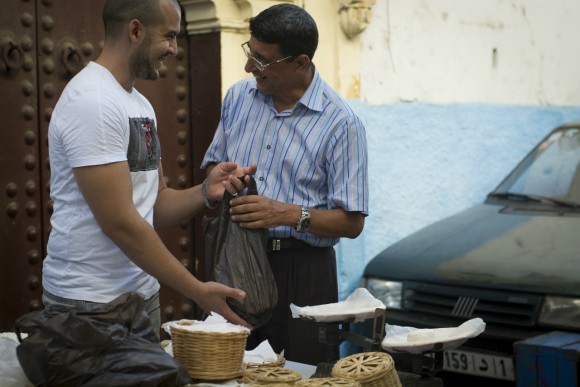
RABAT, Morocco — Like fans lining up for concert tickets, Abdelatif Reda’s customers patiently wait. If his small cart in Rabat’s old medina is unmanned, its young owner, they speculate, must be out for his afternoon prayer. But he will return, as he does every day after 5 p.m., to sell his homemade cheese.
Age-old market
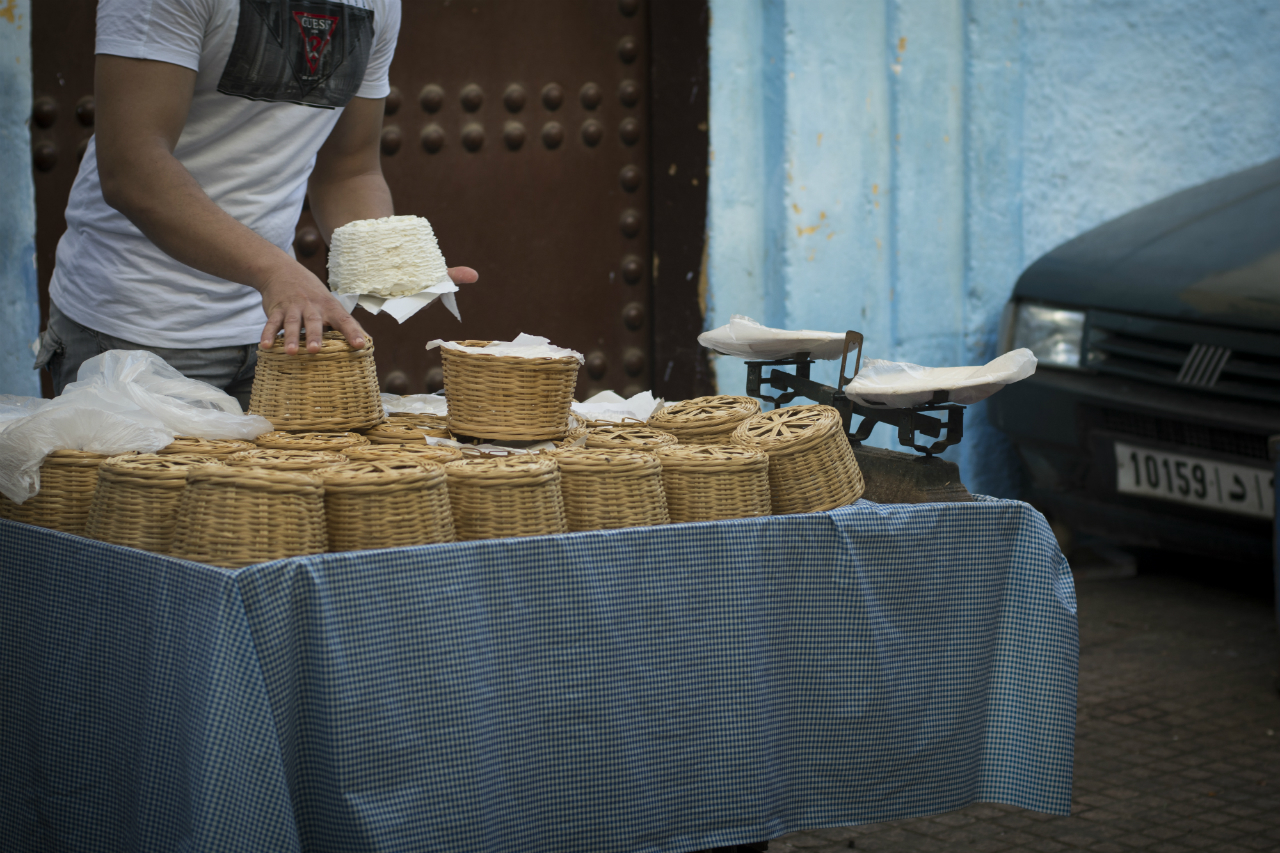
Abdelatif Reda removes his cheese, which resembles an iced cake, from a basket. Credit: Copyright 2014 Eloise Schieferdecker
Rabat’s medina is a pastel-washed huddle of squat shops and walls running across lines drawn in the 17th century. Here, soap is sold in reused water bottles. Vendors’ blankets display rusty sprawls of lamps, utensils and pots. Residents function on an intimate system of commerce, rotating among their favorite shop owners amid the stutter of moped engines and roil of street life in the medina. And although nearby chains such as Carrefour offer chilled dairy selections, Reda’s cart is, for many, their first choice for cheese.
“Competition is a fact,” said Reda, 30, whose daily inventory fits onto a single rolling cart. “But quality is a question.”
Reda began making cheese when he was 13, learning from his father and older brothers before him. Upholding the family legacy left little time for formal education, so Reda dropped out of school to make cheese full time.
Over the years, his cart has attracted medina regulars and converted supermarket-goers. Some customers travel from as far as away as Casablanca or Meknes, more than an hour away, to try the freshly made cheese, which tastes like a lucky meeting between mozzarella and Greek yogurt.
Cheese is breakfast, teatime treat
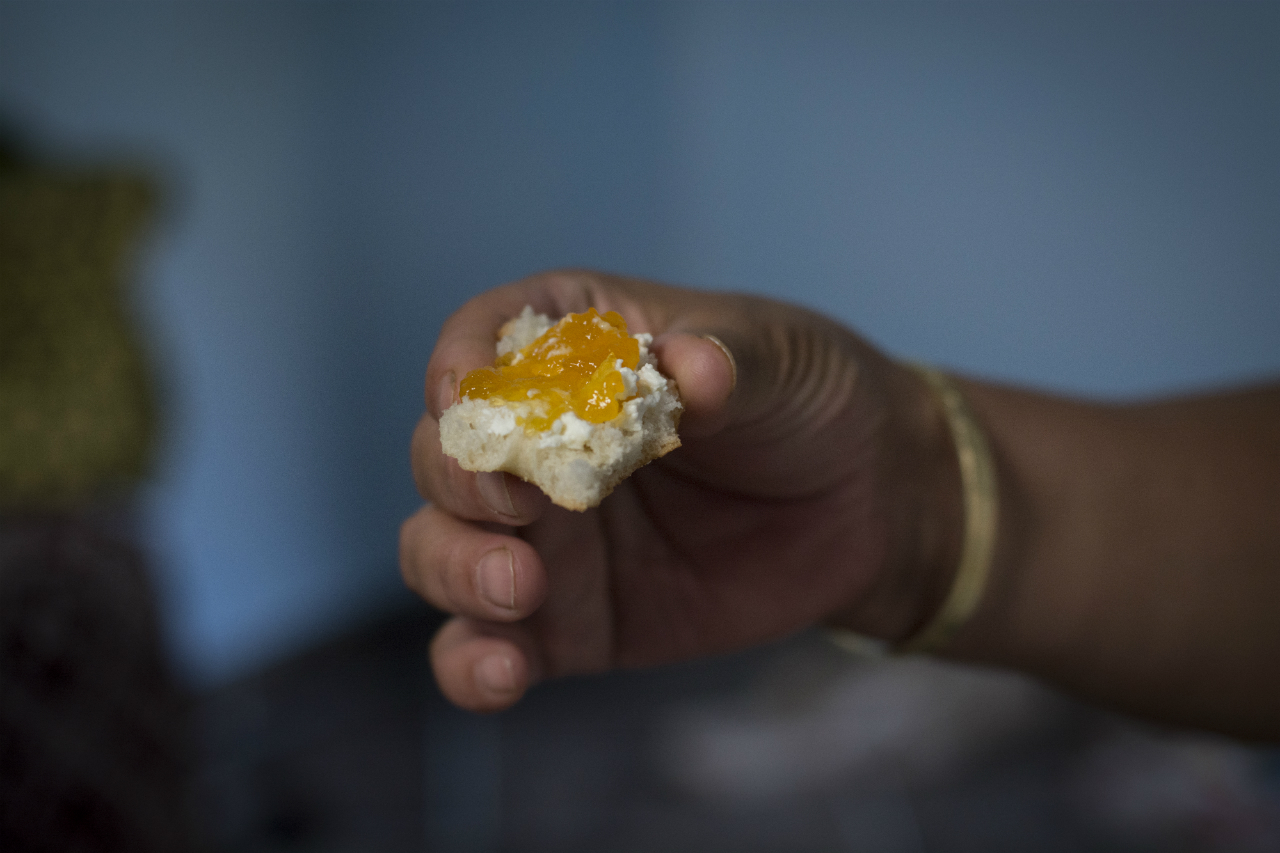
Bread, topped with cheese, butter, honey or jam, is a common breakfast and snack option in Morocco. Credit: Copyright 2014 Eloise Schieferdecker
The Author

The Photographer

Eloise Schieferdecker is an undergraduate at Bennington College in Vermont where she studies documentary photography and video. Eloise grew up in Westchester, New York.
“[Reda’s cheese] is the first thing that I opt for with ghraif [a traditional Moroccan pancake],” said Badrdine Boulaid, 35, who lives in Meknes. “It’s becoming the most important thing served at breakfast and teatime.” The cheese is often paired with toast, olive oil and smears of jam.
Reda refuses to disclose his recipe, though many have asked him to share. He will say only that his process is a complex one, requiring fine manipulation of many different factors such as water temperature, milk quality and even weather.
The cheese comes in quivering white domes, which Reda separates into thick, buttery chunks with quick flicks of his knife. Prices are determined by the final say of Reda’s old metal scale, and customers accept their bags without argument or haggling.
“We prefer certain vendors because we know the source of [their] product,” said Yahya Boutaleb, 24, on his familiarity with the medina’s markets. “We know the produce comes from good farms.”
This familiarity is key to commerce in the medina. Boutaleb’s father, for example, receives a text from his fish vendor whenever a particularly good catch comes in.
It’s all in the name of freshness, which Moroccan chef Alia Al Kasimi describes as a non-negotiable aspect of Moroccan cooking.
A veritable culinary ambassador for her home country, Al Kasimi got her start making cooking videos with her grandmother and posting them on YouTube. Her quick, chirpy how-tos explaining traditional cuisine had an instant fan base with American-Moroccan families.
“If you notice, in Moroccan cuisine, there are not really many spices or ingredients that mask the flavor,” says Kasimi, who has hosted episodes of TV’s “MasterChef” in Morocco. “So the freshness of the ingredients is extremely important.”
Buy fresh, buy local
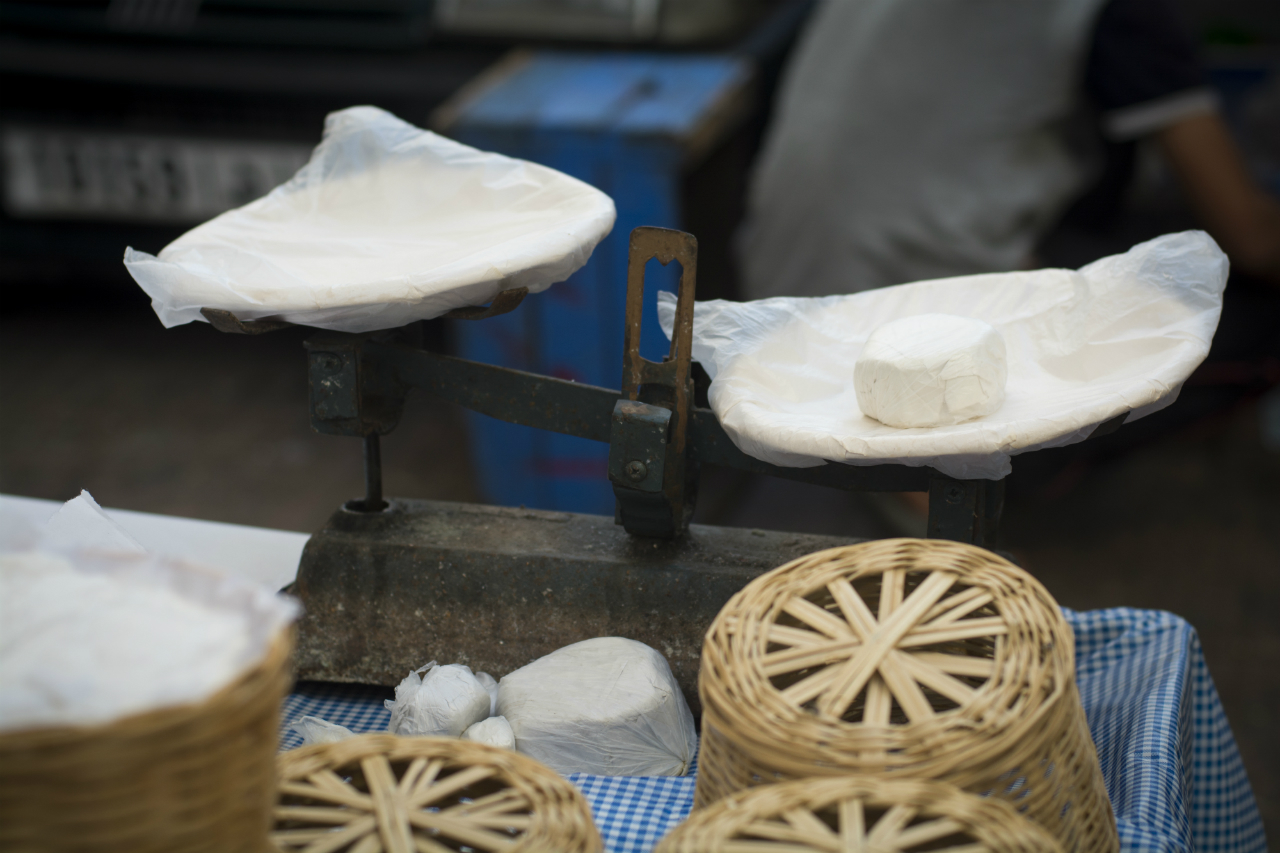
Using an old-fashioned scale and weights wrapped in paper, Abdelatif Reda makes sure his customers get the right amount of cheese. Credit: Copyright 2014 Eloise Schieferdecker
Because of this emphasis on ingredient quality, trust is an important factor in food commerce. “My grandma would go to the market every other day, or every day if she needs to, as if she’s trying to buy what just came out of the earth,” Al Kasimi says. “There’s this pride of how fresh it is.”
Increasingly, this traditional relationship between sellers and buyers has had to compete with well-lit — and air-conditioned — supermarkets within Wal-Mart-style megastores. Unlike the medina’s clumped knot of alleyways and twisty roads, these stores are spacious and organized. The Marjane retail empire is particularly formidable, with 32 branches and 600,394 square feet of space in Morocco.
Al Kasimi says this may be changing the importance that Moroccans place on freshness, adding that while her grandmother feels compelled to stop by the market several times a week, her mother goes just once a week. Al Kasimi admits that her friends in Morocco often prefer the frozen-food aisle at the local grocery store to places like the medina.
Ready to eat
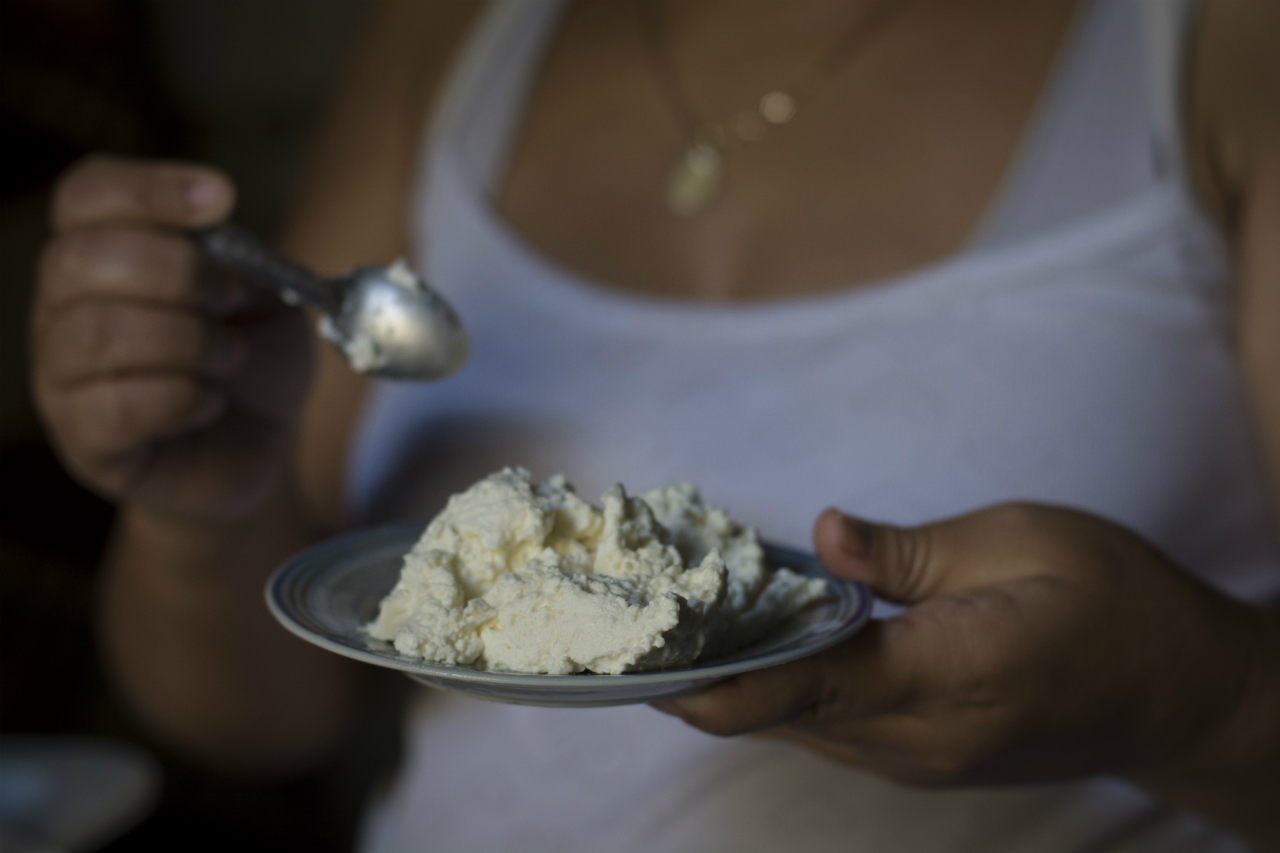
Abdelatif Reda’s cheese is regularly enjoyed by many Moroccans from inside and outside of the medina. Credit: Copyright 2014 Eloise Schieferdecker
Reda is fortunate that he doesn’t need to worry about defection. Moroccan cheese like his must be made fresh. And unlike traditional French cheeses, it doesn’t age. It has a tangy quality of newness that goes bad if not gobbled up quickly.
More from Zester Daily:
» Cheese to intrigue and entice holiday guests
» How artisan cheese steps up in Northern California
» The London shop that inspires U.S. artisan cheese
» Swiss cheese Oscars for makers of artisan cheese
Besides, he says, there is no time to check out the competition when he must spend the first part of his day making his product and the rest of the day selling it. He also insists he will not eat any cheese he has not made himself.
To learn how to make your own fresh Moroccan cheese, watch Al Kasimi’s video and check out her recipe for Moroccan cheese spring rolls.
Zoë Hu and Eloise Schieferdecker spent several months in Morocco on an SIT Study Abroad program. They produced this story in association with Round Earth Media, which is mentoring the next generation of global correspondents while producing under-reported stories for top-tier media around the world.
Main photo: Abdelatif Reda engages with one of his regular customers. He has been selling his product since he was 13. Credit: Copyright 2014 Eloise Schieferdecker
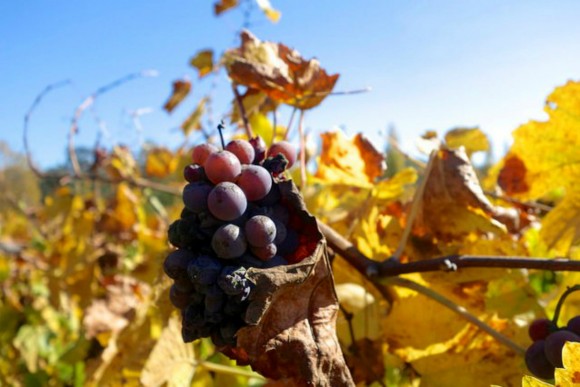
California’s Napa Valley is home to some of America’s best wineries. The valley is also well-known as an incubator of female winemakers. Shawna Miller is one of a group of talented women who have pursued a wine-making career in the valley.
More from Zester Daily:
» Winemaker Michel Laroche embraces the roots of Chablis
» Early signs of a California wine revolution
» The terroir in Sonoma goes to extremes
Growing up in a small Virginia town along the Appalachian Trail, Miller spent a lot of time outdoors, hiking and helping her grandmother tend the large garden that fed the family. In the summer they ate what they grew and canned the rest. During the wet, cold winters they happily supplemented their meals with the food they put up in the pantry, including jars of huckleberry and blackberry jam, tomatoes and green beans.
She never thought about grapes or wine.
Studying forestry at Virginia Polytechnic Institute and State University in Blacksburg, she graduated with a degree in forestry, which was a natural fit for a woman who had grown up trekking the Appalachian Trail. That’s also where she met and married Zak, who shared her love of biology. To see the world and build their resumes, they picked up jobs wherever they could. After a stint with the U.S. Geological Survey in Florida, a friend invited them to work a harvest in New Zealand. That work-vacation changed their lives.
Learning wine making around the world
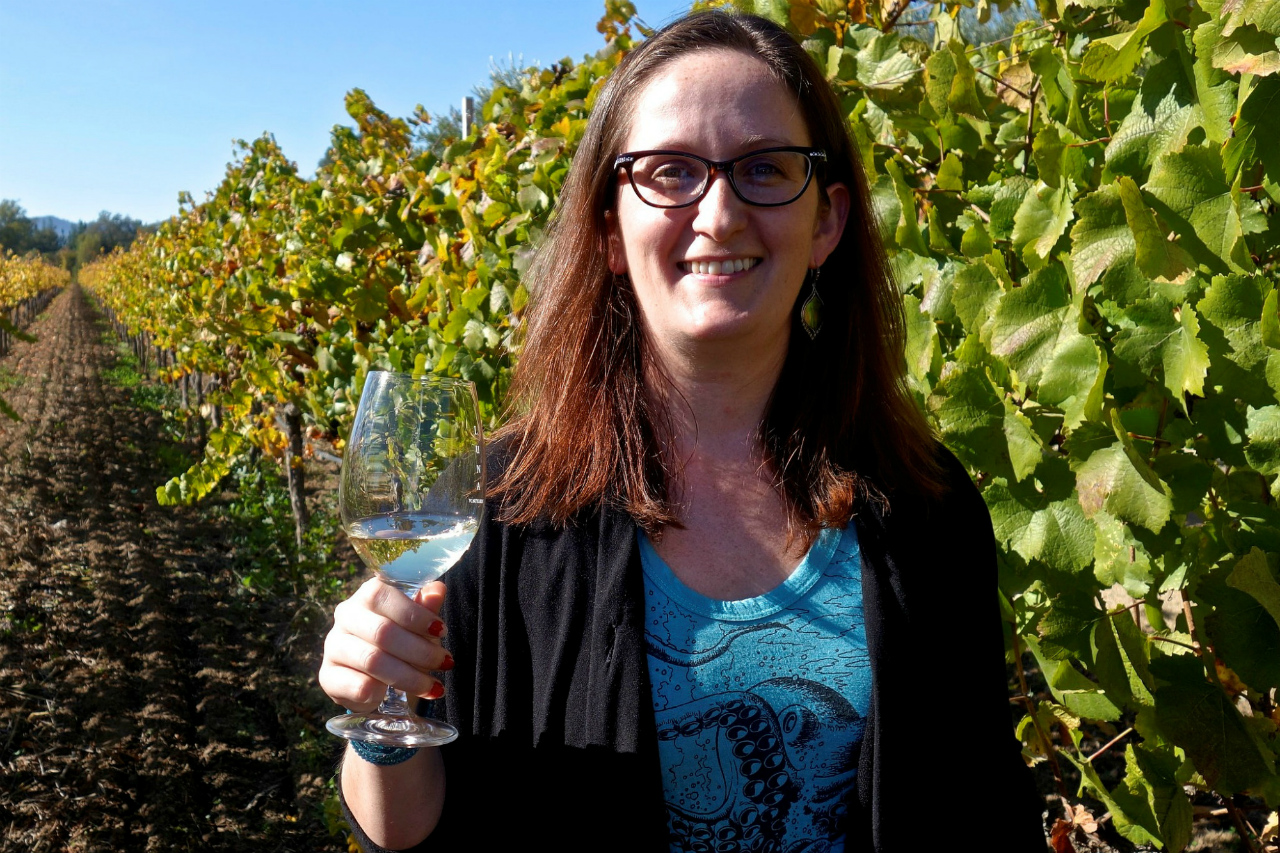
Winemaker Shawna Miller in the Luna Vineyards with late-harvest vines. Credit: Copyright David Latt
Near Margaret River in Western Australia, they worked at the Cape Mentelle Winery where she learned that each grape had a different temperament. Each had to be picked at exactly the right moment. Pick too soon or wait too long and the grapes would yield inferior wine.
She and Zak were hooked. They pursued harvests in California, New Zealand, Australia and Chile. They experienced firsthand how soil and climate — terroir — created different wines. The Indian Ocean breezes that swept across the grapes at the Cape Mentelle Winery yielded wines very different from the ones she came to love in hot, dry Napa.
Taking classes at the University of California, Davis Extension, Miller wanted to learn the science behind raising grapes and making wine. But there wasn’t time to get a degree in enology.
Her graduate work would be done in the fields and in the labs where her background in science got her jobs measuring fermentation levels.
Mastering the art and science of wine
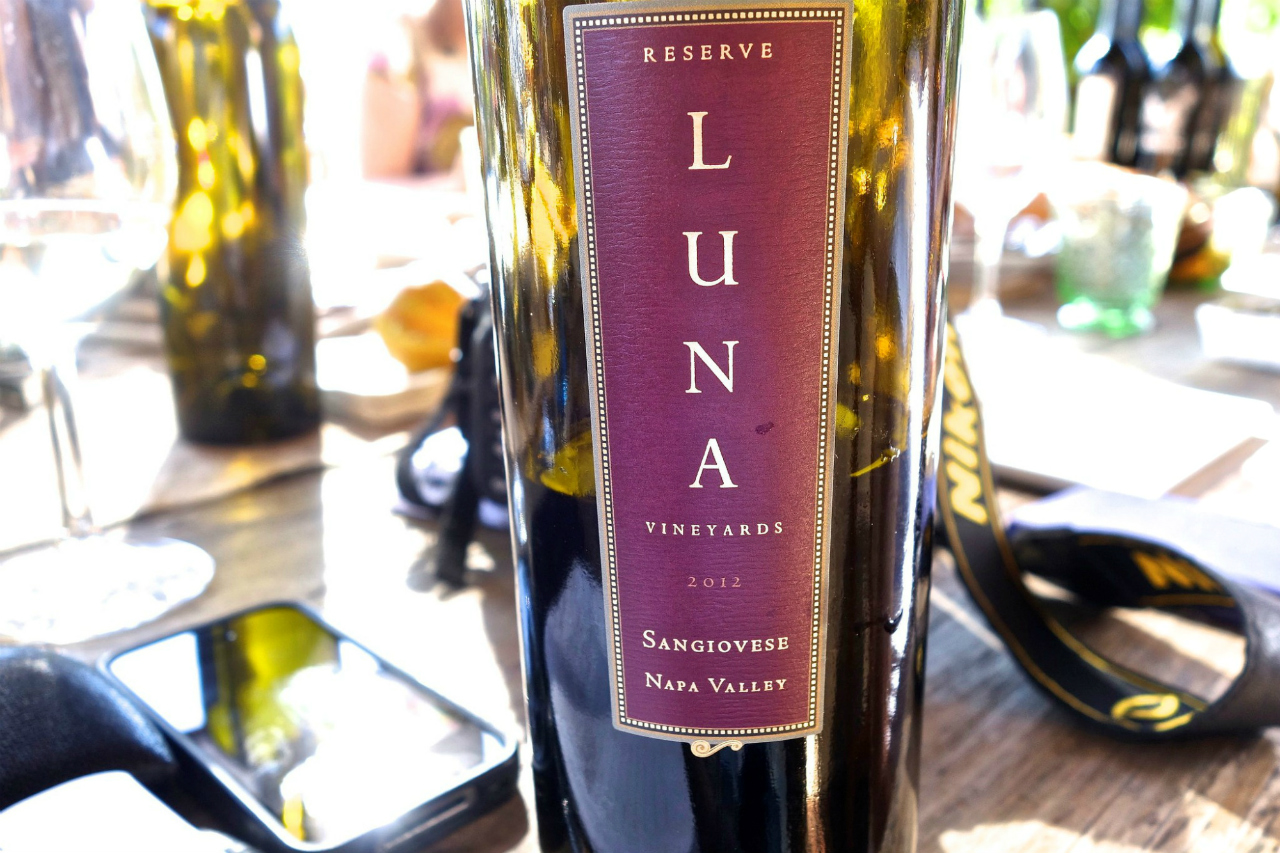
A bottle of Luna Vineyards Reserve 2012 Sangiovese, Napa Valley. Credit: Copyright 2014 David Latt
To become a winemaker, she had to master more than chemistry. Wine making is part science, part art.
Even if a wine is made entirely from one varietal, the grapes grown in one part of a vineyard can be markedly different from those harvested from another area. Blending those different flavors is an art that must be developed by a winemaker.
Today as the winemaker at Luna Vineyards, she oversees the production of a collection of well-regarded, affordable wines.
Luna Vineyards
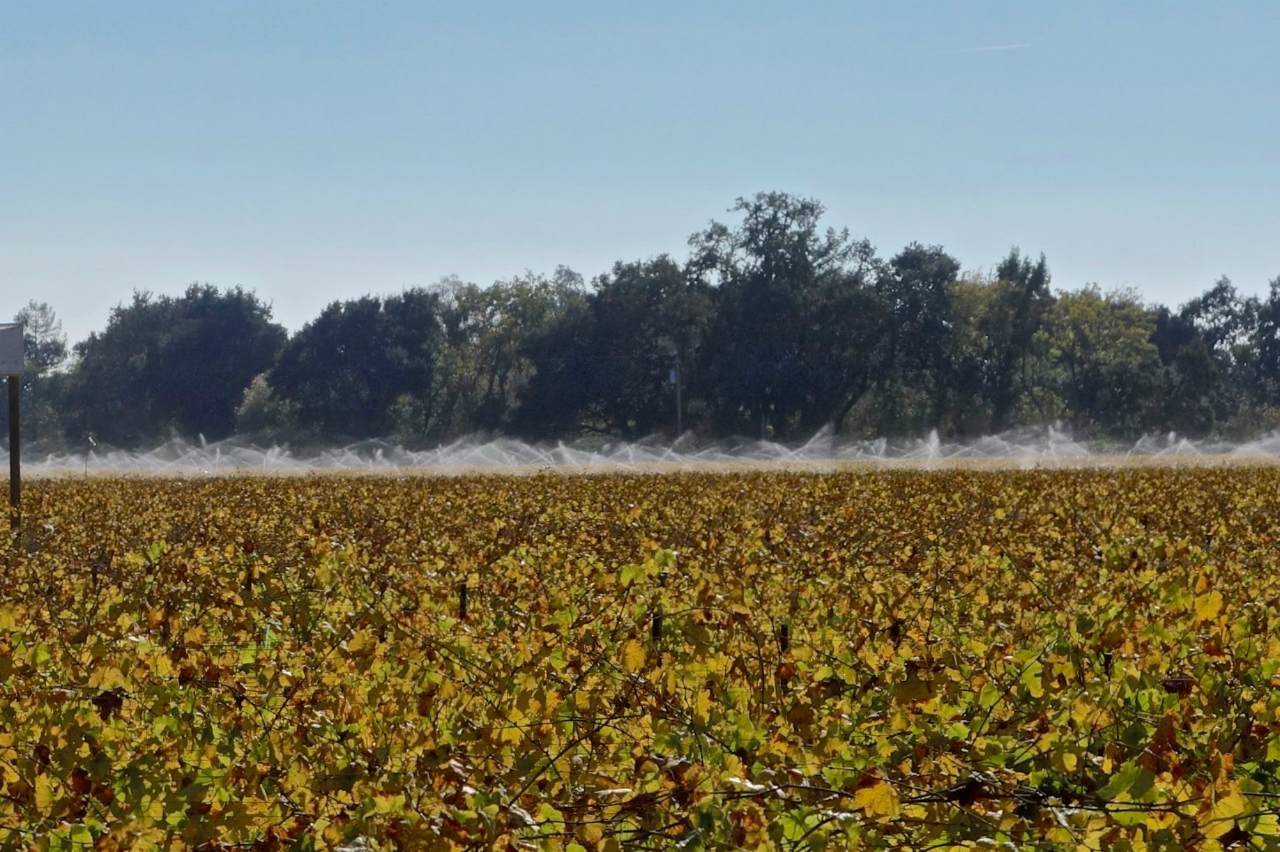
Vineyard irrigation at Luna Vineyards, Napa Valley, California. Credit: Copyright 2014 David Latt
What distinguished Luna Vineyards in its early days was the choice to produce Italian-style wines. When Michael Moone founded the vineyard in the mid-1990s, he wanted to make wine modeled on the Italian wines he loved. He planted Pinot Grigio (white) and Sangiovese (red) grapes and blended the wines in a way that set them apart from the largely French style wines produced in the valley’s other vineyards.
At times in their marriage, Miller’s husband Zak has worked half a world away at a winery in Chile. But now with Zaira, their little girl, to raise, Zak stays closer to home as an assistant winemaker at Domaine Carneros.
As harvest time approaches, they put the call out to their parents. When the grapes are ready to be picked, Shawna and Zak will be in the fields from before dawn until well into the night. Someone needs to be home with Zaira.
In the days before the harvest begins, Miller walks through the vineyard. The fat clusters of grapes hang heavily on the row upon row of well-tended vines. If the weather cooperates and no pests damage the grapes, she could have a very good year. She is always hoping that with luck and hard work, this year’s vintage could be one of the winery’s best.
Harvest — exciting and nerve-racking
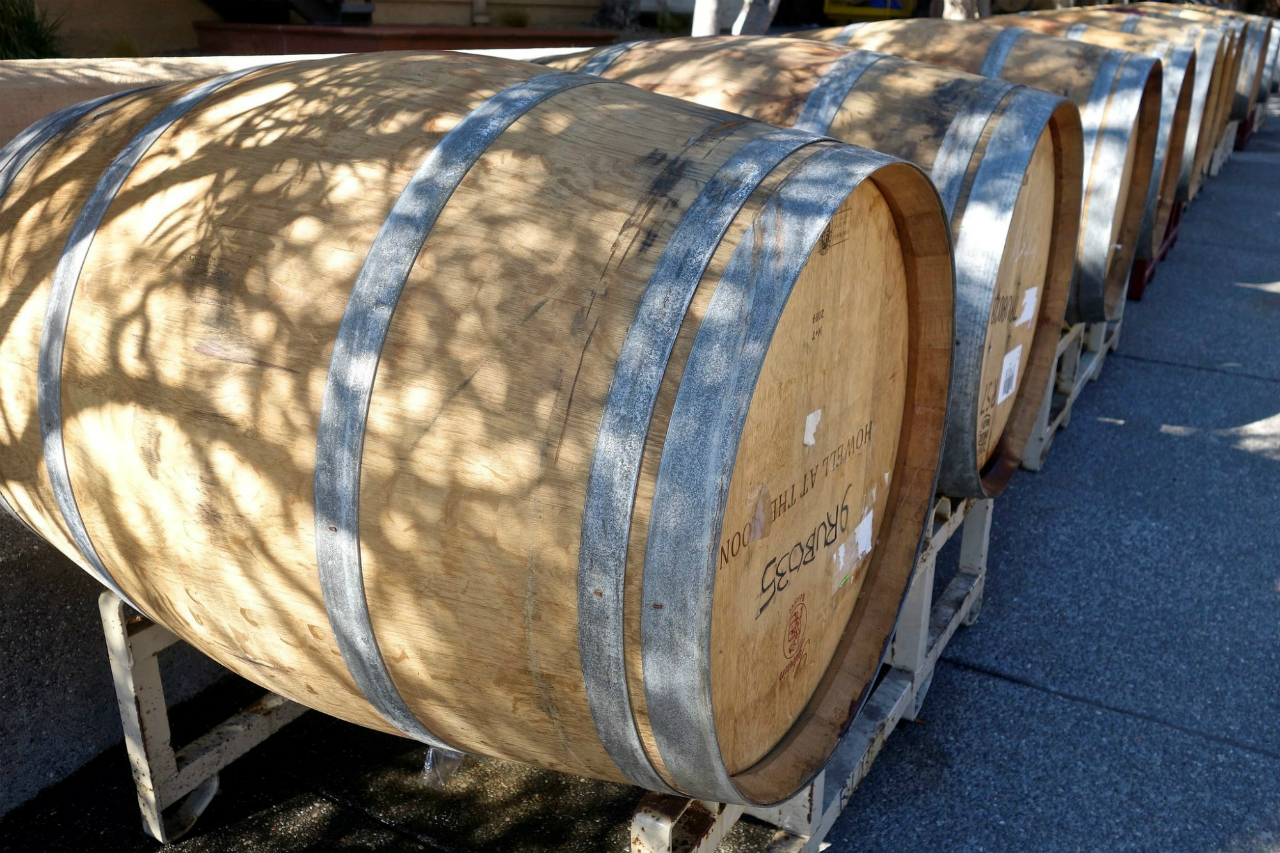
Oak barrels ready to be cleaned at Luna Vineyards. Credit: Copyright 2014 David Latt
With a last look at the refractometer that measures the sugar level of the grapes, Miller makes the call to the vineyard manager, “OK, let’s take it.” And that’s when the real drama begins.
The grapes are ready. Miller is ready. But during harvest time there is more work than workers available. Sometimes when she calls she is told there isn’t a crew available. The grapes won’t be picked for days.
During that waiting time she is at the mercy of the weather. If it gets too hot or if it rains, the grapes will be pushed past their prime and a vintage that could have been great will be less so.
At moments like this, all Miller can do is watch and wait. She busies herself, making sure the lab is ready and the fermentation tanks are clean. Finally, when the crew is available, then it’s all hands on deck. Time for their parents to babysit Zaira.
Fermenting and then blending
What makes one wine different from another? Of course the quality of the grapes matters, but so too does the palate and skill of the winemaker.
Depending on the style, the maturing wine spends time in stainless steel vats or in oak barrels. When Miller believes the wine is ready, she begins a series of trial blends that are like rough drafts. Making several blends, she and her team will sample and rate each, comparing that year’s wine with ones they liked from years before. Like the best chef, she will mix and combine until she has the flavor she loves. At that moment, she will call in the bottling crew.
During the year there are moments when Miller can take a break to spend time with her family. As all-consuming and as hard as the work can be, having time with Zak and Zaira is absolutely essential.
And then it’s time to start the process all over again. In spring the leaf buds poke through the dark wood. In the heat of the summer, the vines need to be tended, the grape clusters are thinned and the plants monitored for pests. And in the fall there is the harvest when so many moving parts have to work together to give Miller what she needs to make great wine.
At the end of the day, even with all those stresses, Miller counts herself lucky to have found a career she loves, in a valley that produces beautiful wines.
Main photo: Late-harvest grapes at Luna Vineyards in Napa Valley, California. Credit: Copyright 2014 David Latt
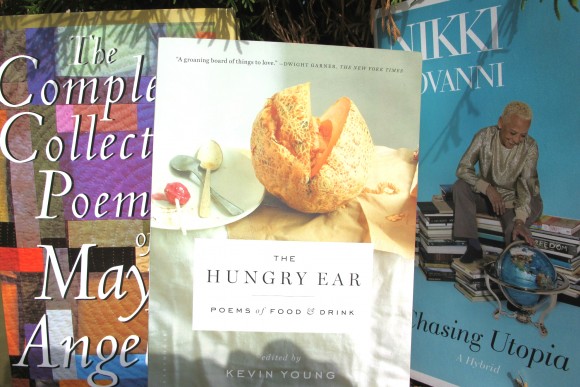
April is National Poetry Month. For Zester foodies I bring — not a recipe — but a taste of the work of my favorite African-American poets who chose food as metaphor and main ingredient.
“I think poems return us to that place of mud and dirt and earth, sun and rain,” African-American poet Kevin Young said in an interview on National Public Radio’s “The Salt” program. “And that’s where food comes from, and so there’s this common link.”
More from Zester Daily:
I agree.
Each of these poems is as unique as the poet who cooked them up. One poet seduced you with chocolate. Another wondered why you eat health food. All of them reflect culture with nuanced politics, humor and love.
Rita Dove
The 1987 Pulitzer Prize winner for poetry for her work “Thomas and Beulah,” U.S. Poet Laureate (1993 to 1995), National Medal of Arts honoree (2012) and English professor at the University of Virginia, Dove is known for her lyrical style and historical edge.

Rita Dove won the 1987 Pulitzer Prize for poetry for her work “Thomas and Beulah.” Credit: Copyright Dan Addison, University of Virginia Communications
She also writes about music in “Sonata Mulattica” and dance in “American Smooth.” As I moved into midlife, I acquired an addiction to chocolate. So naturally, I was drawn to Dove’s ode to the confection entitled “Chocolate.” Here’s an excerpt of it, taken from the “American Smooth” collection:
“Velvet fruit, exquisite square
I hold up to sniff
between finger and thumb —
how you numb me
with your rich attentions!”
Maya Angelou
I had the honor of meeting and dining with Angelou several times while living in Oakland, Calif. The nation is still grieving the 2014 loss of our beloved storyteller, writer, activist and author of the 1969 autobiography, “I Know Why the Caged Bird Sings.”

Maya Angelou died in 2014 at age 86. Credit: Copyright Dwight Carter
Angelou delivered the poem for the 1993 inauguration of President Bill Clinton. She was also an extraordinary chef and humorist. Her poem “The Health-Food Diner” — published in “The Complete Collected Poems of Maya Angelou” — is a hilarious poke at vegetarians. If you read the whole thing, you will see the humor, too. She begins with raw veggies while ending the first few stanzas fantasizing about meat. But she builds a crescendo to a frenzy of pork loins, chicken thighs and Irish stew. Here’s how this poem opens:
“No sprouted wheat and soya shoots
And Brussels in a cake,
Carrot straw and spinach raw,
(Today, I need a steak).”
Elizabeth Alexander

Elizabeth Alexander delivered President Barack Obama’s inauguration poem in 2009. Credit: Copyright Michael Marsland, Yale University
I met the distinguished Yale professor during the launch of her poetry in the New York City subway at the Metropolitan Transportation Authority’s Poetry in Motion event.
Recently named to the board of chancellors of the Academy of American Poets, Alexander delivered President Barack Obama’s inauguration poem in 2009.
Her “Butter,” included in “The Hungry Ear: Poems of Food & Drink,” edited by Young , is a vivid tribute to her mother and the many delectable ways one can cook with butter. Her British West Indian menu includes Yorkshire puddings in the first half of the poem. Here are some opening lines:
“My mother loves butter more than I do,
more than anyone. She pulls chunks off
the stick and eats it plain, explaining
cream spun around into butter!”
Nikki Giovanni
Giovanni is best known as a civil rights poet activist from the Black Arts Movement.

Nikki Giovanni is best known as a civil rights poet activist from the Black Arts Movement. Credit: Copyright Jan Cohn
She writes about food as memory, sustenance and aphrodisiac. A humorous and serious poet-foodie, Giovanni is known for sharing stories about her grandmother, aunts and mother’s cooking at poetry readings. Her book, “Chasing Utopia: A Hybrid,” describes how she went from being the “baby in the family to becoming an elder.” So, while this book is mostly about mourning her loved ones, she spins lovely stories about them through food. This is a must-read for food poetry fans. As she searches for “Utopia” beer to toast her mother’s memory, she explained the correct way to cook grits in “The Right Way”:
“My Grandmother’s grits
Are so much better than mine
Mine tend to be lumpy
And a bit disoriented”
Langston Hughes
Hughes is one of the most celebrated literary figures from the Harlem Renaissance.
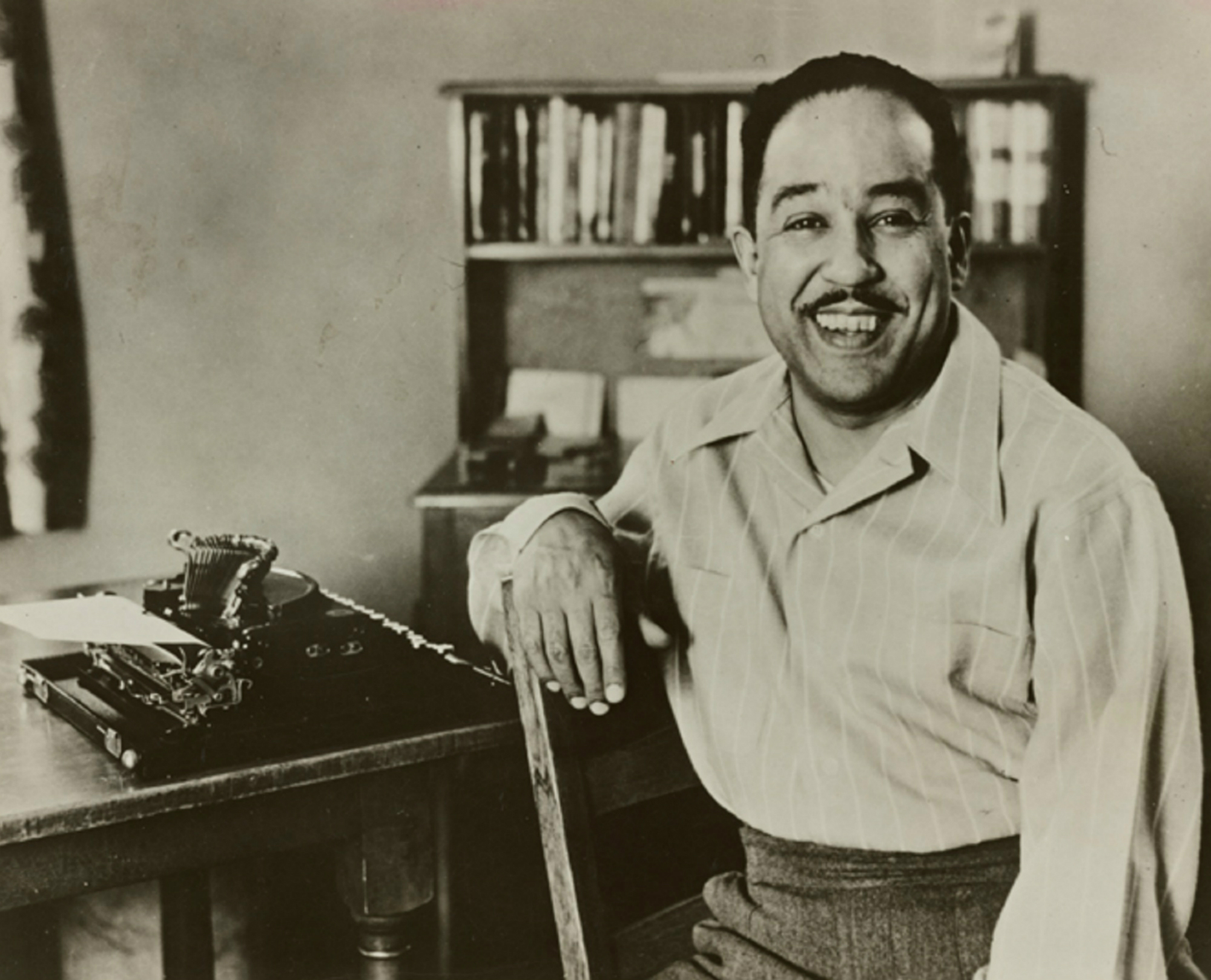
Langston Hughes’ poem “Harlem” is best known as “A Raisin in the Sun” — the title of Lorraine Hansberry’s acclaimed Broadway play. Credit: Copyright 1952 The New York Public Library, Schomburg Center for Research in Black Culture
His poem “Harlem” is best known as “A Raisin in the Sun” — the title of Lorraine Hansberry’s acclaimed Broadway play. This was the top poem mentioned when I asked colleagues to name their top five black poets who told stories through the lens of food. Most everyone in my circle can recite this powerful poem by heart. Here are a few lines:
“What happens to a dream deferred?
Does it dry up
like a raisin in the sun?
Or fester like a sore —
And then run?”
If these excerpts have left you hungry for more, check the aforementioned “The Hungry Ear,” which features a multicultural blend of poets, including Gwendolyn Brooks’ “The Bean Eaters,” Pablo Neruda’s “Ode to Salt” and Sylvia Plath’s “Mushrooms,” among dozens of others.
Main photo: For National Poetry Month, I honor my favorite African-American poets who chose to write about food. Credit: Copyright Sylvia Wong Lewis
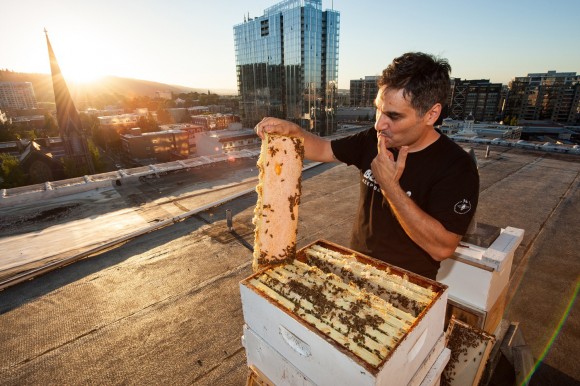
There’s this moment that occurs when you’ve been working with bees for a while. Standing there, on top of a hotel in Portland, Oregon, preparing to approach a hive he had established to house more than 30,000 bees, Damian Magista realized he had no need to wear his bee suit.
He had made a lot of mistakes with them in his half decade of hobby beekeeping, like opening the hive too often or accidentally squashing the queen.
“Less is more in beekeeping,” Magista said. “You have to resist the temptation to over-manage your hives.”
Listening to the hive
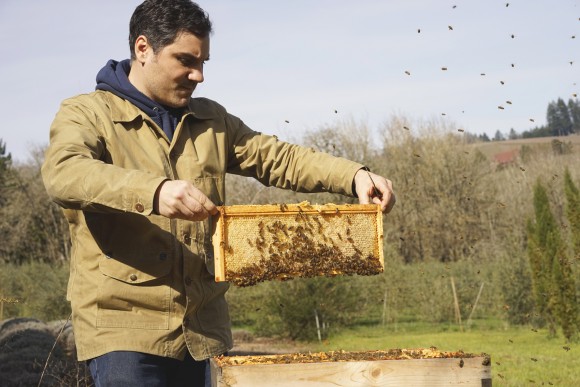
After several years working with his hives and learning how to read the bees based on their behaviors
and buzzing, Magista got to the point where he no longer felt like he had to wear the bee suit every time. Credit: Copyright Bee Local
Magista had learned to really slow down, and listen to them, to decipher their buzzing, to hear changes in their music. He knew that if the scouts they sent out of the hive to greet him started ramming his body, he should back off. He knew when he was welcome.
“I can’t see myself ever knowing everything about them,” he said. “But I’ve gotten to the point where I can relax into it.”
More from Zester Daily:
» Seattle chef tends to bees, too
These days Magista barely dons his bee suit, but he is doing the opposite of relaxing. As the founder of the innovative neighborhood-to-jar company Bee Local, he has taken his message that all truly exceptional honeys are local to the national stage by introducing the United States to the culinary ambrosia of locally sourced honey. In doing so, he is creating a network of hive systems that support hobby beekeepers and help protect against the colony collapse disorder that has been ravaging the species.
Bee Local began as a hobby, until Magista had one of those pivotal entrepreneurial moments that turn hobbyists into entrepreneurs with a mission. Tasting honey sourced from neighborhoods throughout Portland, he noticed that bees that visited buckwheat produced a honey with dark, smoky, deep molasses overtones. Those that had traveled across Portland’s farm regions made one containing deep blue and blackberry notes with a floral finish. Bees lucky enough to live in the Willamette Valley’s vineyards, hops fields and berry farms made one robust and complex.
“The whole premise of Bee Local was discovering that hives in different locations produce different colors and taste profiles,” Magista said. “Honey is a snapshot of time and place.”
Making artisanal honey
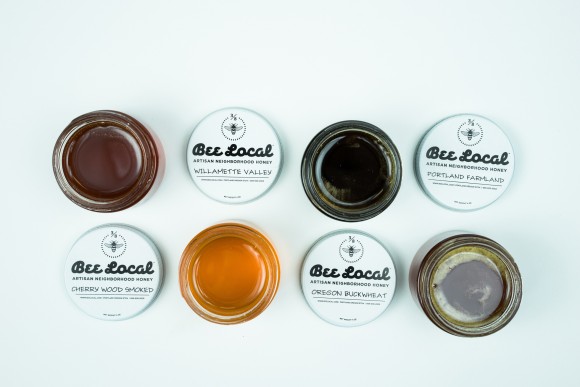
The company’s place-based honeys, from light amber to rich, dark caramel, harness the setting where they are created, places such as the Willamette Valley, the city of Portland, hops farms and vineyards. Credit: Copyright Ryan LeBrun
Magista’s goal was to introduce the world to the beauty of the small artisanal honeys from the neighborhoods around Portland, harnessing what was unique about those geographies and allowing bees to express it in honey like wine captures terroir.
But making these small-scale honeys was not going to help Bee Local change the world, nor could it survive as a business, so in August of 2014 Bee Local joined Jacobsen Salt Co., a producer of artisan salts sourced from the waters of the Pacific Northwest, which had already established a national retail operation through partnerships with companies such as Williams-Sonoma.
“What we were doing was not scalable,” Magista said. “To take our business to the next level and truly make a wider impact we needed to merge.”
Tackling colony collapse disorder
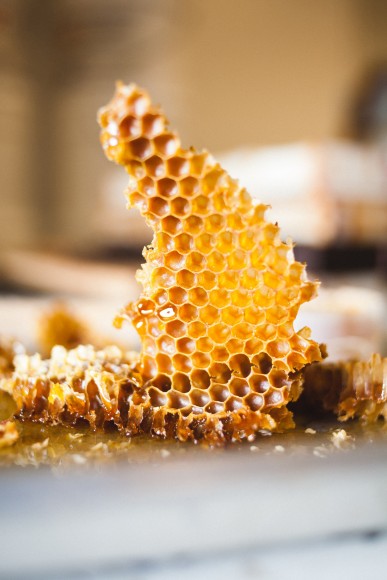
Most commercial honeys are not pure — they contain corn syrup and other additives and are created with uniformity in mind. Bee Local is more like wine — each hive is a world unto itself, as is each honey created there. Credit: Copyright Nolan Calish
Now, from a space he shares with Jacobsen’s in Portland’s Eastside Industrial District, a growing home base for artisan makers of all stripe in the city’s nascent food industry, Bee Local is launching an expansion that ties its business prospects on taking on one of the most pressing environmental crises of our time: colony collapse disorder.
First documented in 1869 and named in 2006, the disorder describes the situation in which entire colonies of commercial bees disappear abruptly due to factors such as adverse weather, too many bees in one area, infection, virus, overuse of pesticides or mite infestation. Although most who study it believe it has always existed in bee populations at some degree, CCD has been happening in dramatically higher wavers, sending out ripples for commercial agriculture and affecting food systems around the world. In some cases, beekeepers have lost up to 90 percent of their colonies.
Placing hives throughout Oregon
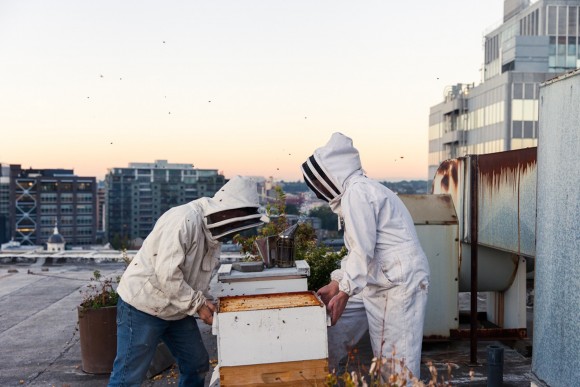
The settings where hives can thrive are diverse. In Portland alone, Bee Local has 15 locations, including
partnerships with roof-top restaurants and hotels. All of them are secret, to preserve the bees’ privacy. Credit: Copyright Kyle Johnson
But tackling colony collapse disorder is a bigger-picture project. In the meantime, Bee Local is developing relationships with business owners throughout the Willamette Valley and finding distinct places to place its hives. Over the next year, it will add 150 more hives in places such as Amity Vineyards and the top of the new Renata restaurant, although most of them are located in places inaccessible to the public.
Even as it makes its foothold in Oregon stronger, Bee Local is reaching out to hobby beekeeps in Austin, Texas, and Brooklyn, N.Y. — markets that embrace unconventional products and where many of its partner chefs reside — to launch its national expansion. What’s good for business, it turns out, will be good for the bees.
“Beekeeping as an art is dying out,” Magista said. “Not enough young beekeepers are coming up to take the place of older generations.”
Culture of beekeeping
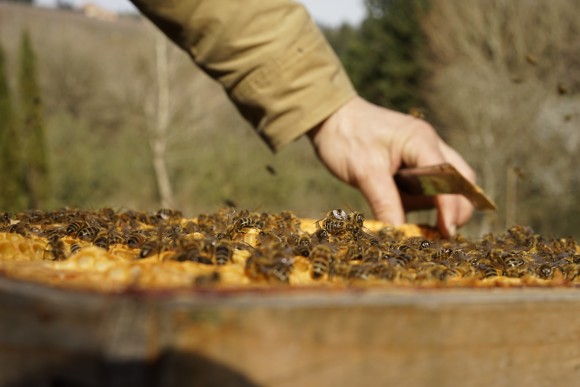
In a world where colony collapse disorder is threatening bee populations, Bee Local’s methods invest in traditional ways to ensure bee colonies thrive. The company avails itself of old-school approaches to beekeeping, using no pesticides and keeping hives placed in one location. Credit: Copyright Ryan LeBrun
The loss of the art of beekeeping comes at great cost to both the culture of beekeeping and the global environment, which has wrestled in the past decade with colony collapse disorder, which happens in commercial beekeeping and big agriculture. When hives die because of environmental factors — for example if they are placed in monocrops, they are moved around too much, or they encounter pesticides — entire hive populations can be wiped out.
“When you remove bees from this environment, they remain healthy,” Magista said. “It’s so simple — treat an organism with respect and it thrives, abuse it and it dies.”
Bee Local works exclusively with hobby beekeepers and places its hives in diverse environments where no pesticides are being sprayed.
We don’t engage in commercial beekeeping,” Magista said. “We don’t use chemicals in our hives, we generally don’t move them around.”
The result are honeys that restaurants and food purveyors and ordering by the gallon and artisanal food lovers recognize as very different from your garden-variety honey in a honey bear bottle.
“What the bees come up with themselves is what’s really exciting,” Magista said. “I can control some variables, but the result is up to nature.”
Main photo: Damian Magista tends to a rooftop hive in Portland, Oregon. Credit: Copyright Bee Local
It’s not easy to capture an entire country’s cuisine in one cookbook — especially when the author lives 3,000 miles away. So when Amalia Moreno-Damgaard began writing her cookbook about Guatemalan cuisine, she knew she would have to make compromises. The challenge was finding substitutes that wouldn’t compromise the integrity of the cuisine.
Peppers can be used instead of chilies. It’s fine to use store-bought chicken broth instead of making your own with chicken bones. To make a meal healthier, oils can be substituted for lard — a trick Moreno-Damgaard learned from her grandmother many years ago in Guatemala City.
The Author

But don’t even think of using anything other than a corn tortilla. “The tortilla is king,” Moreno-Damgaard declares.
It’s that kind of homegrown knowledge that fills Moreno-Damgaard’s cookbook, “Amalia’s Guatemalan Kitchen — Gourmet Cuisine with a Cultural Flair,” which was published in 2012. The 420-page cookbook not only provides readers with an array of Guatemalan recipes, it also introduces them to the culture of the country, exploring street foods, breakfast dishes and holiday specialties.
The cuisine highlights Latin American culture, Moreno-Damgaard says, a culture she wants to celebrate. Too often, she says, it’s the stories of violence and corruption that make the headlines.
“Someone needed to go out there and say wonderful things about Guatemala,” Moreno-Damgaard says. She believes she can convey the many positive attributes of her home country by exposing Americans to authentic Guatemalan cuisine beyond the typical rice-and-bean dish.
To gather material for the book, Moreno-Damgaard traveled back and forth from her home in Minneapolis to Guatemala City, where she was born and raised.
“Guatemalan food is a combination of native cuisine and Spanish cuisine, which is the story of Latin America,” she says. And that mixture is a result of four distinctly different regions of Guatemala, each with its own distinct food.
The southern shores offer the freshest seafood; the east produces unique fruits and vegetables; the northern mountains still celebrate Mayan cooking and traditions, and the west coast is home to the Garifuna people — descendants of Africans and indigenous Arawak people from the Caribbean — who bring their own cooking style to the region, including lots of chowders and rice dishes with coconut and plantain flavors.
The woman behind the book
In 1981, Moreno-Damgaard, then just 19, left her home to visit her brother in the United States. She ended up staying, getting her bachelor’s degree in business administration from Fontbonne University in St. Louis, and her master’s degree in international business and culture from Saint Louis University. After college, she built a successful career in international banking, holding a variety of senior-level positions.
Since 2001, she has lived with her husband, Kenn Damgaard, in the Minneapolis area.
Sixteen years ago, when their son, Jens, was born, she decided to give up her banking career to spend more time at home. Moreno-Damgaard says she couldn’t imagine missing her son’s first steps or first words. But with quite a bit of free time on her hands, she concentrated on cooking, making it more than a hobby.
Moreno-Damgaard enrolled in Le Cordon Bleu College of Culinary Arts Minneapolis/St. Paul in Mendota, Minn., for her professional culinary arts degree in classic French cuisine.
Then she plunged into a professional career, starting out as a cooking teacher — something she continues to do today. She gives cooking demonstrations at culinary events and benefits, as well as private lessons.
“Teaching keeps me on my toes, because I continue to learn,” Moreno-Damgaard says. “You never stop learning, even about an area you specialize in.”
Nora Tycast recently attended one of Moreno-Damgaard’s cooking classes in Minneapolis. Tycast’s three daughters — all adopted from Guatemala — joined her.
The family has attended many of Moreno-Damgaard’s events, Tycast says, because it gives her daughters a chance to learn and identify with their native culture.
“It’s nice for the girls to see a professional chef, and it’s nice (for them) to see someone who looks like them,” Tycast says. “It’s good to have someone (from Guatemala) up in front of them and being an example.”
In additional to teaching classes, Moreno-Damgaard runs her own business and serves on the board of directors for Common Hope, the Latino Economic Development Center, Women Entrepreneurs of Minnesota and Le Cordon Bleu Alumni Association.
Latin American cuisine
When Moreno-Damgaard moved to the Twin Cities, she says it was hard to find Latin American cuisine or interest in diverse foods. She says she missed the tastes and textures she had grown up with.
“When … we first came to Minnesota, we really struggled to find a Latin American restaurant,” she says. “Even a good Mexican restaurant was hard to find.”
Today, Moreno-Damgaard sees more of an appreciation of international cuisine because the Internet has opened up access to different parts of the world, including Guatemala. She said the wealth of information on the Web about different cultures has sparked an interest in foreign countries and cuisines, and the influx of immigrants to the Twin Cities has exposed the local population to Latin American food.
She says she has more to tell people about Latin America, so she’s writing a second cookbook about Guatemala. She plans to detail more specific aspects of the cuisine as well as provide a more in-depth look at the culture. In recent trips to Guatemala, Moreno-Damgaard spent time with chefs — both professional and hobbyists — to gather local knowledge. She also spent time exploring rural Guatemala to more clearly define its regions.
Because of the influences from Spain, the Caribbean and the Mayans, Guatemalan food is “the deepest, the most diverse, and the most delicious” in Latin America, Moreno-Damgaard says. She says the flavors, ingredients and history are the most varied in the region. She is excited to be sharing the cuisine with those who relate to her passion for healthy and flavorful food.
More from Zester Daily:
» Chef school’s Latin reach
» Latin-Asian Inspiration
» A light on the new Peruvian cuisine of chef Emilio Macias
» How to drink in the benefits of Mayan chaya leaves
Pepián Negro (Spicy Chicken and Pork Vegetable Stew)
Pepián negro (black pepián) is from Guatemala department, which includes Guatemala City, in the south-central part of the country. It takes its name from the blackened tortillas used in the sauce. There are also red and yellow pepián with varying ingredients, made with turkey, chicken, beef or pork, in Quetzaltenango, Suchitepequez and other regions. All varieties have some ingredients in common, such as pan-roasted seeds, peppers, cinnamon and tomatoes, but they may have different finishing touches. Pepián can be made with any kind of protein. Serve it with Arroz Guatemalteco (Guatemalan vegetable rice) and Tamalitos de Queso (fresh cheese mini tamales in banana leaves), which provide a nice break between spicy bites.
Prep time: 20 minutes
Cook time: 25 minutes
Total time: 45 minutes
Yield: 4 servings
Ingredients
3 skinless, boneless chicken thighs, cut into 2-inch pieces
1/2 pound pork butt or shoulder, cut into 2-inch pieces
2 cups fat-free, low-sodium chicken stock
1 small, whole yellow onion, peeled and t-scored*
1/2 cup unchopped cilantro, include stems and leaves
1 cup quartered Roma tomatoes (about 2 large tomatoes)
1/2 cup husked, quartered tomatillos (3 to 4 large tomatillos)
1 small yellow onion, cut into thick slices
2 large garlic cloves, peeled
1 guaque (guajillo) chile, seeded
1 zambo (mulato) chile, seeded
Para Espesar (Thickeners)
Choose one of the following:
2 corn tortillas blackened in toaster oven to medium brown, soaked in hot stock for 10 minutes;
or 2 tablespoons instant corn masa flour, browned in a dry pan over medium-low heat until medium brown;
or 2 tablespoons white rice, browned in a dry pan over medium-low heat until medium brown, then soaked in cold water 10 minutes
1 tablespoon canola oil
Sazón (Seasonings)
1 tablespoon ground pan-roasted pumpkin seeds
1 tablespoon ground pan-roasted sesame seeds
1/8 teaspoon ground cinnamon
1/8 teaspoon ground cloves
1 teaspoon kosher salt
Freshly ground black pepper
1/2 cup small cubes of potatoes, cooked al dente
1/2 cup fresh green beans cut into 1-inch pieces, cooked al dente
1/2 cup carrots sliced on the diagonal, cooked al dente
1/2 cup güisquil (chayote squash) cut into 1-inch cubes, cooked al dente
1 cup loosely packed, finely chopped fresh cilantro leaves
Cilantro leaves, finely chopped, as garnish
Directions
1. In a medium pot, cook the chicken and pork in the stock with the yellow onion and cilantro over low heat until the chicken and pork are done, about 30 to 45 minutes. Remove and reserve the onion and the cilantro. Set aside the pot of chicken, pork and stock.
2. Heat a skillet for 2 minutes over medium heat and add the tomatoes, tomatillos, onion and garlic. Adjust the heat to medium-low and pan roast the vegetables until they are charred all over and mushy, about 8 minutes.
3. Separately, pan roast the chilies over medium-low heat for about 3 minutes. Keep a close eye on the chilies, as they burn easily. Then soak the roasted chilies in 1 cup of very hot water for 10 minutes.
4. Combine the roasted vegetables, the reserved onion and cilantro, the soaked chilies, half the soaking water, and 3/4 cup of the hot stock in a blender. Add the thickener of your choice and purée to a fine consistency. The purée should look smooth and velvety.
5. Heat the oil in a medium skillet. Add the purée and seasonings. Add the cup of finely chopped cilantro. Cook for about 3 minutes. Add the sauce to the pot of chicken, pork and stock. Add the al dente vegetables and stir. Simmer covered to blend the flavors, about 10 minutes. The sauce should be medium thin — about the consistency of steak sauce. If the sauce is too thin, cook the stew a bit longer to thicken it. If the sauce is too thick, add more stock or water. Taste and adjust seasonings, if needed.
6. Serve the stew garnished with chopped cilantro leaves.
* Note: To t-score an onion, make a 1/2-inch-deep, cross-shaped cut at the narrowest end of the onion. The onion remains whole.
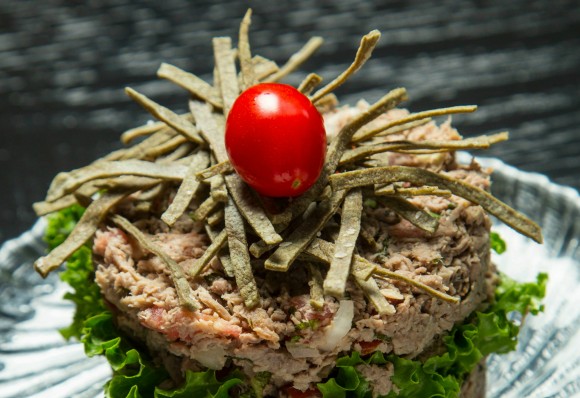
Main photo: Amalia Moreno-Damgaard’s salpícon. Credit: Copyright 2015 Martha Landry.
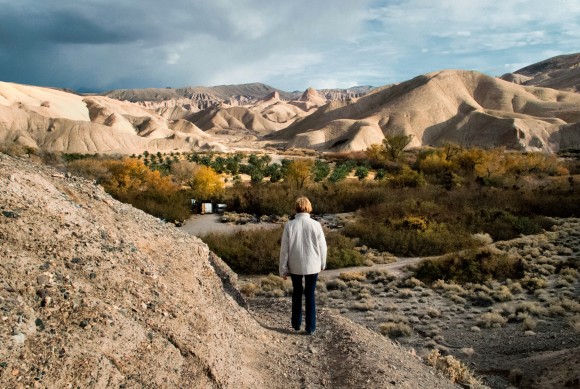
China Ranch is a thriving oasis of boutique date palms that began with the whimsical planting of an ornamental garden nearly a century ago. To the casual traveler driving north from Baker to Furnace Creek in Death Valley National Park in California, it is nearly invisible; you must look out for the signs for the Old Spanish Trail and follow it into a steep canyon, through bare, rough hills and exhausted talc and gypsum mines. There, watered by a creek running south to the Amargosa River, is the improbable sight of 1,500 fruit-bearing trees.
China Ranch 100 years ago
In 1920, Vonola Modine moved with her husband from nearby Shoshone to the property then also known as The Chinaman’s Ranch after an industrious, possibly mythical Chinese rancher called Ah Foo. She wanted some trees to line their new roadway and ordered seeds from the date industry burgeoning near Mecca in the Coachella Valley. They arrived in a wooden box by rail. She had never seen a date palm nor tasted a date nor heard the old adage that the fruits “like their feet in water and their heads in fire.”
The Modines wound up selling China Ranch shortly after the palms were planted. For the next 50 years, successive owners’ attempts to establish hog, sheep and alfalfa farms all failed — even as the original date palms flourished into magnificent trees. In the 1970s, Vonola’s relatives by marriage, the Brown family, repurchased the land — and in 1989, Brian Brown, her grandnephew, realized he had the “water and fire” to create the perfect conditions for a viable date farm. He and his wife, Bonnie, began focusing all their efforts on developing and expanding the garden.
More from Zester Daily:
» Remember baking date and nut breads in tin cans?
» Why make dates super-sweet? Really, it makes scents
» Sugar rush: Dates a sweet pick to break Ramadan fast
» Going locavore in the high desert at Coppa Cafe
China Ranch today
The original seeds sent to China Ranch were brought to California by agricultural pioneers bearing offshoots from Algeria, Iraq, Tunisia, Baluchistan, Morocco and Egypt. But date palms grown from seeds never replicate the parent plant, so the trees in the original grove yield hybrid dates that are unique in the market. Brown has continued to reproduce these happy accidents, including the dark, moist Black Beauty; the sweet Gourmet; and the soft, caramel-colored China Ranch Hybrid. The Browns also introduced new date palms and now have 15 varieties such as Dayri, Halawy, Bahri, Hayany and Khadrawy growing on 25 acres. Their crop is in sharp contrast to that of the huge commercial enterprises, which tend only to produce the Medjools and Deglet Noors that your grandmother served at Christmas.
Brown works eight days a week: It is hard physical labor, from trimming the crowns, and battling 4-inch thorns to clearing the offshoots and pollinating the female trees by hand. And help is scarce in the harsh Death Valley environment. There are no palmeros, as the skilled workers who have enabled date production in the Coachella Valley for nearly a century are called, here. Some dates are harvested in the khalal stage, just before they ripen, and others at ripeness; the entire harvest period extends from August to February. The work during these six months can be punishing; in late summer, the temperature can soar to 120 F and the black flies bite through your clothing.
The fruit of family labor
Then the picked fruit must be sorted. Perfect specimens are for eating, while the funky-looking ones are for cooking, eventually macerated to produce a date paste used by bakers, raw-food chefs and upscale Las Vegas restaurants that value local sourcing. And thanks to the wild success of the cookbook “Jerusalem” by Yotam Ottolenghi and Sami Tamimi, home cooks are in hot pursuit of ingredients such as date molasses too. Specialty-food agents come to China Ranch in search of unusual dates to supply stores all over California, while employees at the ranch store make converts of casual visitors with cool, thick date shakes and date-nut bread baked daily from Bonnie Brown’s secret recipe. Bonnie also runs an eclectic retail shop and an online mail-order operation that ships gift boxes of fresh dates all over the country.
The farm has an unexpected sideline as well. The Dayri palm, originally from Egypt, puts out long, straight, symmetrical fronds that make perfect lulavs, which are used in the Jewish celebration of Sukkot. For the past seven years, rabbis have come from as far as New York to select and cut some 300 of these fronds. Despite their inconsistent harvest and light yield, Dayris will always be grown here.
Little did Vonola Modine know that her ornamental trees would be an inspiration to Brian Brown nearly 70 years after she planted them. She returned to China Ranch in 1991 to see the glorious mature palms that now line the path leading to the Browns’ great adobe home — and you should see them, too. The setting is bizarre, but the dates are sublime.
Main photo: The accidental oasis that is China Ranch date farm. Credit: Copyright 2015 Seth Joel
Fine dining in Cuba might sound like an oxymoron. For decades, wisdom has been that restaurants on the impoverished island were mediocre at best, and that a good meal was hard to find. This was true as recently as a couple of years ago. But, even before the island nation’s relations with the United States thawed, the gastronomic scene had been changing, and chefs have made huge strides in offering a wider range of quality restaurant options.
The Cuban government, in the desperate years after the Soviet Union pulled its support from the island, sanctioned the private ownership of small restaurants called paladares, which means “palate.” Situated in homes, these humble kitchens, limited to a few tables, provided simple criollo — traditional Cuban — food. The scarcity of all but the most simple meats, rice and beans, and a strict policy that forbade the offering of seafood kept them from competing with government-owned establishments.
More from Zester Daily:
» Havana dining: Culinary tradition to the rescue
In 2012, however, the state relaxed the rules and paladares have moved up to the next level. While simple mom-and-pop places abound, a new crop of elegant venues for creative chef cooking have begun to challenge the island’s reputation for culinary blandness.
One of the first in this vein was La Guarida, located in the apartment in which the renowned film “Fresa y Chocolate” was filmed. Several dining rooms, filled with kitchy knickknacks and movie memorabilia bustle with locals and foreigners. The menu, which includes a small wine list, strives for international creativity but doesn’t always hit all the marks. Still, La Guarida opened to doors to wider possibilities.
Then Le Chansonnier arrived. Set in a late 19th-century mansion in Vedado, it was restored by chef and owner Héctor Higuera Martínez (who has since moved on to Atalier). The dazzling décor was decidedly postmodern. The small, astutely chosen menu featured duck, lamb and fish, all of whose sources were nearby and local by necessity. Patrons included government bigwigs, foreign visitors, journalists and a handful of locals with enough disposable income to afford the relatively steep prices.
Others followed in rapid succession. The ultra cool El Cocinero is perched on the roof of an extinct factory that houses a complex of galleries and boutiques. Casa Pilar oozes sophistication.
Doña Eutimia specializes in artfully prepared traditional dishes, as does Mamá Inés and Nao. O’Reilly 304 does home-style cooking in a laid-back boho setting, ’60s rock creating a funky and fun ambience.
Otramanera steps up dining in Havana
Most recently, in August of 2014, Otramanera, perhaps presenting the best cooking to date, was inaugurated. It’s set in a sleek ’50s ranch-style house, its chef trained in Catalonia.
But all of the chefs interviewed pointed out the daily uphill battle they face trying to keep stock of the most basic ingredients, as well as deal with less than expertly trained staff.
While perhaps it’s early to proclaim the birth of the “Nueva Cocina Cubana,” it seems clear that the dining scene in Cuba is in the midst of a revolution of its own.
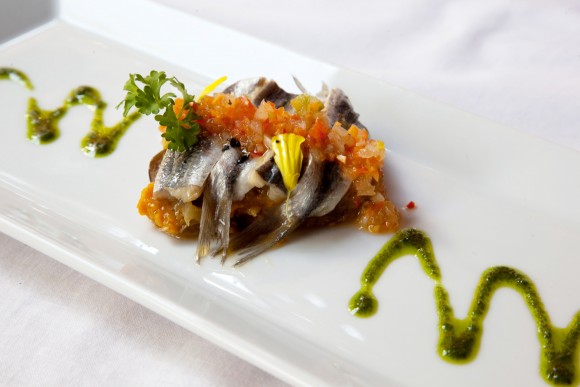
Main photo: Otramanera’s dishes, prepared by chef Dayron Ávila, include fresh sardine fillets dressed in a fruity papaya salsa augmented with a cilantro purée and crowned with edible flowers. Credit: Copyright Nicolas Gilman
Craft beer now outsells Budweiser in the U.S. With two to three craft breweries opening every day across America, every region of the country now has craft bragging rights. The top-selling new craft beers come from breweries located in some unexpected small towns and cities. Find the one closest to you. Source: IRI-tracked supermarket sales.
More from Zester Daily:
» American brewing steams along with crafts
» 12 beers that make you want to pack your bags
» The local malt issue that can change craft brewing
» Great American Festival finds: 9 craft beers you shouldn’t miss
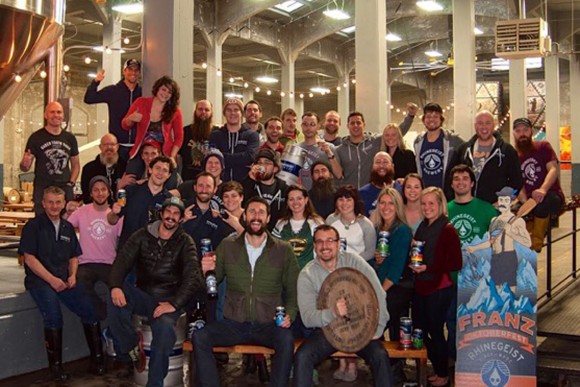
Main photo: The staff at Rhinegeist Brewery in Cincinnati. Credit: Copyright 2015 Rhinegeist Brewery