Articles in Holidays

Hogmanay, as the last day of the old year is known in Scotland, is celebrated with an enthusiasm unmatched south of the Border in England, where Christmas is the main event of the holiday season.
The midwinter rituals of the cold lands of the north, where the growing season is short and winter lasts about half the year, have to do with lighting fires to encourage the return of the sun so it can warm the earth and refill the cupboard. In Scotland, however, there was also a real need to defend the household against uninvited guests, particularly those wearing cow’s horns on their helmets, which explains the Scottish custom of First-Footing.
More from Zester Daily on New Year’s Eve traditions:
Fear of marauding Norsemen lies behind the gathering together of rowdy groups of merrymakers to knock on doors demanding reward in much the same way as trick-or-treaters at Halloween. Never mind that this now takes place in towns and cities rather than isolated rural households who needed safety in numbers at a time of year when families were at their most vulnerable.
Hogmanay a time to give token gifts as a gesture of friendship
As a token of friendship, First-Footers are expected to arrive at the door with a log of wood or a piece of coal in return for a slice of cake and a dram of whisky. Furthermore, because it’s advisable that the first person to step over the threshold be a dark-haired Celt rather than a blond-maned Viking, any First-Footer with appropriate coloring will find himself bundled out of the door and refused readmission till the year has turned, thereby guaranteeing the household good luck (and absence of Vikings) for the next twelvemonth.
The first Christmas of which I have any memory was spent with my Scottish grandmother. Though she had married and settled south of the Border, she kept Christmas as a strictly religious festival and reserved the fun and games for Hogmanay, when she wore a sash in her own soft green tartan over a long dress as blue as her eyes. And there was music and dancing and special things to eat and drink, most important of which was fruitcake and whisky toddy for the grownups and baked apples and hot lemon barley water for the children. And instead of salt with the breakfast porridge — my grandmother didn’t permit sugar — there was treacle and cream. And on the back of the stove was a simmering pot of cockaleekie, a thick leek-and-chicken soup made with an old boiling fowl culled from her flock of Rhode Island Reds.

A Scottish Hogmanay celebration. Credit: Elisabeth Luard
But for us children, the fun really started at dusk, when we were allowed to go First-Footing with a lantern around the neighborhood, ringing on doorbells and bothering people we didn’t know for sweets and coins, though we usually had to explain ourselves, this being England. On our return home, the house had already filled up with ex-patriot Scots and there was pipe music on the gramophone, a wind-up affair, and lines of grownups dancing the Gay Gordons and Strip the Willow.
The next day, the first of the New Year, we — children and grandmother (no one ever made our grandfather do anything he didn’t want) — gathered up the debris and built a huge bonfire in the garden, warming our hands against the flames while our grandmother told us stories of Hogmanay when she was a girl and lived in a draughty castle in the Highlands at the time when Queen Victoria was on the throne. This wasn’t as romantic as it sounds, she said, because all the wood for cooking had to be fetched from the log pile in the yard and you had to have a bath in front of the kitchen fire and the bedclothes were always wringing wet. In those days, she added, First-Footers had to walk for miles to visit their neighbours, though some of them were very handsome and came because they were courting. We asked whether our grandfather was one of these handsome young visitors.
“Mind your own business,” said granny.
Athol Brose
Fortify your First-Footers against marauding longshipmen with this oatmeal caudle, as the preparation is known south of the Border.
Serves 6-8
Ingredients
1 bottle Scotch whisky
12 ounces runny honey
12 ounces thick cream
1 heaped tablespoon fine oatmeal or porridge oats
2 cups water
Pinch of nutmeg (optional)
Directions
1. Mix the whisky with the honey and cream and whisk until smooth.
2. Stir the oats into the water in a pan, bring to a boil and simmer for a few minutes.
3. Whisk in the whisky mixture and serve hot. A scraping of nutmeg can be sprinkled on top, and you might care to add a little more cream.
Black Bun
Black Bun, fruitcake batter enclosed in a pastry cake, is traditional at Hogmanay on the East Coast and in the Lowlands, where coal-fired ovens came into general use in the 1900s. On the West Coast, the Highlands and islands where my grandmother lived as a girl, cakes were mostly boiled and came in the form of a clootie dumpling. (Find a clootie dumpling recipe here.) The pastry covering serves much the same purpose as the huff-crust used to protect delicate meats from the heat of the fire when turning on the spit. Old habits die hard.
Serves at least a dozen
Ingredients
For the pastry:
8 ounces plain flour
½ teaspoon salt
4 ounces cold butter, diced
3 to 4 tablespoons iced water
For the batter:
8 ounces self-rising flour
Pinch of salt
12 ounces raisins
12 ounces sultanas
4 ounces prunes, stoned and chopped
4 ounces crystallized peel
4 ounces blanched almonds, roughly chopped
4 ounces soft brown sugar
1 egg, forked to blend
1 teaspoon powdered cinnamon
1 teaspoon powdered ginger
½ teaspoon grated nutmeg
1 small glass brandy or milk
To finish:
Beaten egg
Directions
1. Make the pastry by tossing the flour with the salt and rubbing in the butter with your fingertips.
2. Mix in enough water to make softish dough and work it lightly into a ball — don’t overwork. Cover in cling film and leave to rest in a cool place for half an hour or so.
3. Roll out two-thirds and use to line a cake tin 8 inches in diameter and roll out the other third to make a lid.
4. Preheat the oven to 350 F (180 C/Gas 4).
5. Meanwhile, make the cake batter by picking over the fruit and nuts and tossing them in a little flour. (This helps prevent the solids sinking to the bottom of the cake.)
6. Beat the sugar and butter together until light and fluffy — the more you beat, the easier the adding of the eggs.
7. Beat in the egg, stirring in a spoonful of flour if it looks like curdling.
8. Sieve in the flour with the salt, add the powdered almonds and fold gently.
9. Fold in the fruit, nuts and spices and enough liquor or milk to make a softish dough.
10. Spoon the mixture into the pastry case, top with the lid and pinch the edges together with a wet finger to make a wavy edge.
11. Brush the top with a beaten egg and prick the surface with a fork in 2 or 3 places.
12. Bake for 2½ to 3 hours, until the top is well-browned and firm to the touch. If it looks as if it is browning too early, cover with grease-proof paper.
Top illustration: A Scottish Hogmanay celebration. Credit: Elisabeth Luard
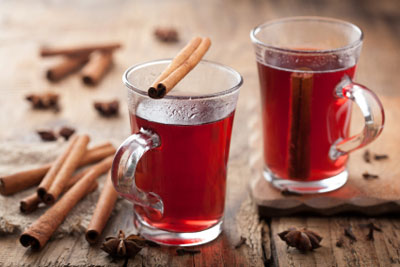
The Danish Christmas is a whole month of celebrations, not only on Christmas Eve and the days after. We really mean business when it comes to Christmas, so we celebrate all four Advent Sundays before Christmas also.
Every year, I have a Sunday afternoon party on one of these Sundays, where I serve homemade Christmas doughnuts that we call æbleskiver and a hot drink called gløgg, a kind of mulled wine.
Both æbleskiver and gløgg part of Danish food history
The æbleskiver has a long history as part of our food culture. As the name suggests, they are slices of apples in a kind of pancake batter fried on both sides in a pan.
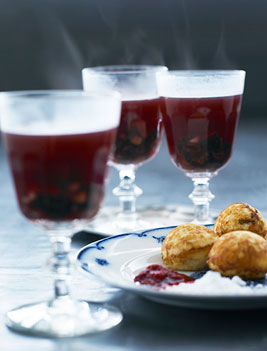
Traditional dish æbleskiver and gløgg. Credit: Lars Ranek
Nowadays, most æbleskiver are bought frozen and heated up in the oven, and because of that they all have the same taste of artificial cardamom and vanilla.
I must admit that for years I bought these frozen ones until I realized I actually never ate them myself. I did not like them. So I found our old family recipe and started making them, and that has become part of my Christmas repertoire. It’s important to continue with tradition so the original and regional ways of baking and cooking do not disappear. When we end up with too many premade industrial products, we start forgetting what things originally tasted like, and unfortunately people start only to like the bland, premade products.
The recipe for æbleskiver varies from region to region in Denmark. In some areas you still bake them with slices of apples inside. My Auntie Sarah, who now is in her 90s and lives on the Island Ærø in the southern part of Denmark, made them with prunes when she was still cooking. The baking of æbleskiver is in general a famous Christmas tradition. Hans Christian Andersen wrote about them in one of his fairytales describing Christmas, “At Manor House.” (You can find the story here.)
Hot alcohol drinks accent Danish dishes
The gløgg is of course part of an old European tradition to drink hot alcohol drinks in the winter. The French drank cognac with sugar, and the Greeks in ancient times drank hot red wine with spices — a bit similar to the Scandinavian drink.
More from Zester Daily:
Swedish alcohol factories pushed gløgg heavily around 1900, when they started making it into a product marketed at Christmas with particular Christmas themes and colors. That worked. It helped gløgg to become widespread and very popular.
The butter-fried æbleskiver doughnuts are cooked in a special pan that has 7 to 9 ball-like indentations; the pan is sold on the Internet and in shops around the U.S. Noma serves the æbleskiver as a savory with a whole anchovy inside. There are many cookbooks about æbleskiver and how to make them in many different ways. Here is my family’s recipe:
Æbleskiver
Ingredients
For the æbleskiver:
2 teaspoons dry yeast
3½ cups lukewarm milk
3 cups plain wheat flour
2 teaspoons salt
1½ teaspoons ground cardamom
2 whole vanilla pods
2 tablespoons caster sugar
4 eggs, separated
1 stick of butter for frying
For serving:
Icing sugar
Raspberry jam
Directions:
1. In a bowl, dissolve the yeast in the milk. In another mixing bowl, sift together the flour, salt and cardamom.
2. Slit the vanilla pods lengthways, scrape out the seeds with the tip of a knife and add them to the dry ingredients along with the sugar.
3. Whisk the egg yolks into the milk mixture, using an electric mixer if possible. Add the dry ingredients and beat to make a dough.
4. In a separate bowl, whisk the egg whites until stiff, then fold them into the dough.
5. Leave the batter to stand for 40 minutes.
6. Heat the æbleskiver pan over medium heat. Put a little butter in each indentation, and when it has melted pour in some of the batter. Cook for 3 to 5 minutes or until golden underneath, then turn the doughnuts over so they form a ball.
7. Continue frying for about 5 minutes, then remove from the pan and repeat with the remaining batter.
8. Dust with a little icing sugar and serve the æbleskiver in a serving dish. Serve icing sugar and raspberry jam on the side.
Hot mulled wine
Ingredients
For the extract:
2 cups water
1 cinnamon stick, smashed
1 tablespoon whole cloves
1 lemon in slices
1 orange in slices
1 tablespoon coarsely chopped cardamom pods
1 cup sugar
For the gløgg:
Extract
2 bottles red wine
2 to 4 tablespoons caster sugar
1 cup aquavit or vodka (optional)
2 cups raisins
1 cup blanched almonds, chopped
Directions
1. Make the extract by combining the water, cinnamon stick, cloves, lemon, orange and cardamom pods in a saucepan and bringing it slowly to a boil.
2. Reduce the heat and simmer for 15 minutes, then turn the heat off and leave to stand for another 15 minutes before draining the mixture through a sieve.
3. Discard the spices and save the liquid.
4. In a saucepan, combine the spiced liquid extract, red wine and sugar and bring slowly to the boil, then reduce the heat and simmer for 10 minutes.
5. Add the aquavit or vodka, if using, the raisins and almonds and simmer gently for 5 minutes, but do not let it boil. If you prefer a sweeter drink, add more sugar.
6. Serve in tall glasses with spoons so you can catch the raisins and almonds.
Top photo: Gløgg, a mulled wine. Credit: iStockPhoto
Although everyone in my family loves crown roast of pork, and baked ham, and everything else one is suppose to eat at Christmas, we do have a go-to menu every year simply because after many discussions we can never decide and we’re all too exhausted from Thanksgiving anyway. And this is no time to experiment. So we opt for a delicious but simple classic prime rib for Christmas dinner with Yorkshire pudding and creamed spinach. Appetizers, punches, desserts and guests may change every year, but these three dishes get made over and over again and we never regret it.
A prime standing rib roast is a given. It’s very expensive, but well worth the splurge, and you don’t have to do a thing to it. If prime rib is prohibitively expensive, you can always use USDA choice rib, which is what you’re likely to be offered in the supermarket anyway.
Also from our contributors:
Traditional Christmas in Provence
Remember that one rib feeds two people, so a three-rib standing rib roast will feed six or seven people generously. Ask the butcher for a standing rib roast cut from the loin end and not the fattier shoulder end. Ask them to “French” the roast, which means to cut the fat away from one end of the rib bone to expose it.
Prime rib should always be cooked rare to medium rare. If you cook it beyond this point you are destroying the reason you bought such a tender — and expensive — piece of meat in the first place. If you like beef cooked medium to well then buy the appropriate kind of cut, which will benefit from longer cooking, such as round or chuck steak.
Prime Rib Roast With Horseradish Sauce
Serves 6-8
For the roast:
One 3-rib (7- to 8-pound) prime or choice standing rib roast
Directions
1. Preheat the oven to 325 F.
2. Place the roast, fat side up, in a roasting pan in the middle of the oven. Check the roast after 30 minutes to make sure things look OK. Baste the ends with the accumulated juices. Once the internal temperature reaches 110 F, after about an hour, you need to be very attentive as the cooking can quickly finish. At some point remove ½ cup pan drippings for the Yorkshire pudding. Test the rib’s doneness by putting an instant-read thermometer into the meat (not touching a bone) in two places, leaving it there for 15 seconds. It should be 120 F. Immediately remove the roast from the oven.
3. Remove the roast to a carving platter and let rest 20 minutes. Serve with horseradish sauce.
For the horseradish sauce:
This is the simplest way to do it, the traditional accompaniment to prime rib.
5 tablespoons bottled horseradish
2 tablespoons Dijon mustard
1½ cups whipped cream
½ teaspoon white wine vinegar
Salt and freshly ground white pepper to taste
In a bowl, vigorously stir together all the ingredients.
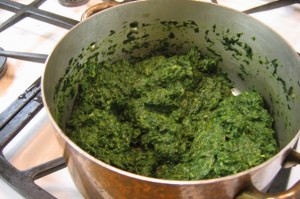
Creamed spinach. Credit: Clifford A. Wright
Creamed Spinach
Serves 6
4 pounds fresh spinach, heaviest stems removed, washed well
3 tablespoons unsalted butter
3 tablespoons all-purpose flour
¾ cup heavy cream
¾ cup milk
1 large garlic clove, very finely chopped
Salt and freshly ground white pepper to taste
Pinch of nutmeg
Directions
1. Put the spinach leaves in a large pot with only the water adhering to them from their last rinsing, then cook, covered, over high heat until the leaves begin to wilt, about 4 minutes, stirring occasionally. Drain very well in a colander, pressing out the liquid with the back of a wooden spoon, saving 1 cup of the spinach water you press out. Finely chop the spinach using a mezzaluna or a chef’s knife.
2. In a saucepan, melt the butter over medium heat, then stir in the flour to form a roux, cooking for 2 minutes while stirring constantly. Reduce the heat to low and slowly add the cream and milk. Whisk until smooth, then add the garlic, salt, and pepper and cook for 5 minutes. As it thickens add some of the reserved spinach water and stir and continue cooking until it is like a very thick pancake batter.
3. Add the spinach, stir, and cook until it is heated through, about 2 minutes. Add the nutmeg, stir, correct the seasoning and serve.
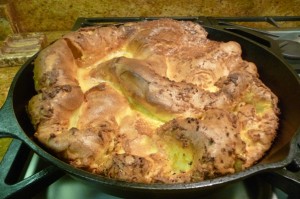
Yorkshire pudding. Credit: Clifford A. Wright
Yorkshire Pudding
Serves 6
Ingredients
1½ cups whole milk, at room temperature
3 large eggs, at room temperature
1 teaspoon salt
½ cups all-purpose flour
½ cup reserved prime rib roast pan-drippings
Directions
1. In a blender, blend the milk, eggs and salt for 15 seconds. With the blender running add the flour, a little at a time and blend the mixture at high speed for 2 minutes. Let the batter stand at room temperature, in the blender, covered, for 3 hours.
2. Preheat the oven to 450 F.
3. In a 12-inch cast iron skillet, heat the reserved pan drippings in the oven for 8 to 10 minutes, or until it is just smoking. Blend the batter at high speed for 10 seconds and pour it into the skillet.
4. Bake the pudding in the middle of the oven for 20 minutes, reduce the heat to 350 F and bake the pudding 10 minutes more or until the top is all puffed up and a deep golden brown. Transfer the pudding to a platter and serve immediately.
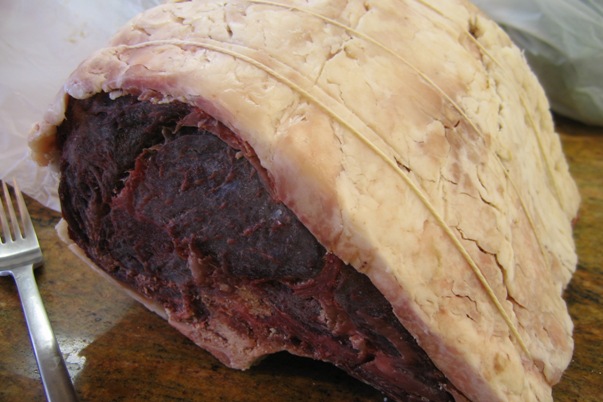
Photo: Prime rib. Credit: Clifford A. Wright
We tend to overindulge during the holidays. “The more the merrier” is the prevailing theme, after all. So wouldn’t it be great if a cocktail could cure what ails the holiday partygoer?
More about cocktails from Zester Daily:
» How to throw a fabulous cocktail party
» In Napa, bartenders skip the wine and mix it up
» Are elitist cocktails wrecking our bars?
» Tequila goes from poolside to fireside
» Garden-fresh flavors inspire these drinks
» Organic vodka with a touch of basil
» Cinnamon brings a bit of heat to autumn
» Maraschino Liqueur Fit for an Emperor
Alex Ott thinks so. An organic chemist and master mixologist who has created cocktail menus for restaurants and bars around the world, Ott’s new book, “Dr. Cocktail: 50 Spirited Infusions to Stimulate the Mind & Body,” offers entire sections devoted to hangover cures, healing juices, anti-stress cocktails and health elixirs.
He learned a lot about natural flavors and scents native to India, Asia, Africa, Australia, Europe and the South Pacific as a child, traveling the world with his parents (she a nutritionist, he a musician), soaking up obscure ingredients.
After earning a degree in organic chemistry, he launched the cocktail menu at Buddha Bar in Paris and has since served as the brand ambassador for Svedka Vodka, New Amsterdam Gin and Moët Hennessy. He later made a name for himself in New York City, his current home, at Sushi Samba (even appearing in the TV show “Sex and the City”).
His goal in the book is to focus less on the alcohol and more on the natural spices, herbs and flavor compounds used in the cocktails. He considers his chapter on anti-stress drinks to be the most important one of all.
After surviving a plane crash in Thailand in 1998, he says, “I was left with extreme post-traumatic stress. For the next three years, I tried everything physicians told me to take to relieve my anxiety of flying, heights and the recurring nightmares I began having.”
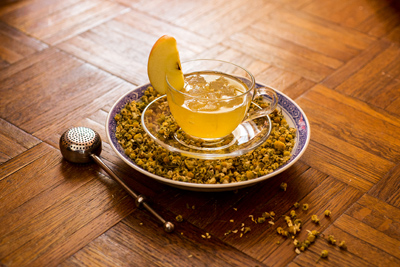
He spent the next 10 years experimenting with alternatives to strong medication. The result is a dozen anti-anxiety elixirs included in his book, including Tranquili-Tea, a drink that blends chamomile and Armagnac, a brandy from the region of the same name in southwest France.
“Chamomile relaxes the muscles in the body, particularly muscle spasms caused by stress,” Ott explains. “A main compound in chamomile is apigenin. In the central nervous system, apigenin reacts the same way a pharmaceutical tranquilizer such as Valium would, thus relaxing the mind and body without the side effects or risk of addiction. It also works as an excellent sleep aid.”
Chamomile flowers also contain an important compound called azulene, a blue crystalline substance used since early Roman times as a calming aid. Ott adds that chamomile also stimulates digestion.
“My grandmother suffered from severe migraines and stress — raising a ton of children, dealing with the war, and generally looking after everybody,” Ott explains. “My mother took after my grandmother and also suffered from migraines and stress from running her own business. Whenever they needed to calm down, they drank chamomile tea. I can still smell the scent and it calms me down today just thinking about it. This drink is dedicated to the strong women of my family.”
Tranquili-Tea
Serves 1
Courtesy of Alex Ott
Ingredients
8 ounces water
1 bag chamomile tea
3 teaspoons sugar
2 ounces Armagnac or Cognac
2 ounces apple cider (or apple juice)
Splash of fresh lemon juice
Slice of apple
Directions
- Boil the water in a small saucepan.
- Once the water boils, add the chamomile tea bag and sugar.
- Reduce heat and stir. Simmer for 10 minutes.
- Remove from heat and let cool.
- Combine 3½ ounces of the cooled tea and remaining ingredients in a cocktail shaker filled with ice.
- Shake vigorously and strain into an ice-filled rocks glass.
- Garnish with an apple slice.
Note: This cocktail can also be served hot. Instead of shaking, combine all ingredients in a small saucepan with a lid and heat slowly. Serve in a tea glass.
Photo: Tranquili-tea. Credit: Reprinted with permission from Dr. Cocktail ©2012 by Alex Ott, Running Press, a member of the Perseus Books Group.
Risotto de la “Visilia” is a typical Christmas Eve dinner preparation in Venice and is unusual for two reasons: It is not cooked according to the risotto method even though it’s called a risotto, and it combines cheese with fish.
Also from our contributors:
This risotto dish probably evolved from a simple fish pilaf, one using, perhaps, the small ugly fish of the lagoon called gò, then the eel was added and finally the beans. If you are unable to find eel, which is usually available fresh only around Christmastime, then striped bass, mahimahi, bluefish or mackerel might do to provide the rich taste associated with this dish.
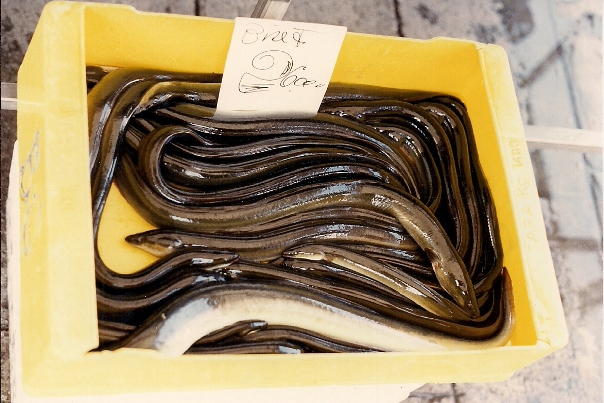
Eel is a traditional food for Christmas Eve in Venice. Grilled eel is popular, and it is said that the doge Andrea Gritti died at age 84 on Dec. 28, 1538, after eating too many grilled eels on Christmas Eve. The glass workers of Murano created a famous dish with eels, bisato scotà, a dish that can’t be replicated because it is prepared by the glass workers who dip the eel into molten glass until it is cooked, then break the glass away to eat it.
The borlotto bean used in this recipe is a kind of kidney bean in the genus Phaseolus with bright stripes of red or pink. Botanists now believe that the bean is a New World migrant. The Phaseolus mentioned by the classical Latin authors Virgil and Columella probably was another leguminous plant of the genus Dolichos, or hyacinth bean. The New World bean appeared in Europe in the 16th century, being first illustrated and described by the artist Hieronymous Tragus and the botanist Leonhard Fuchs (1501-1566) in 1542.
If borlotti are unavailable use pinto, Roman, cranberry (red speckled), or red kidney beans, with pinto being a first choice.
Risotto de la “Visilia”
Serves 6
Ingredients
⅔ cup (about 6 ounces) dried borlotti, pinto or Roman beans, picked over, soaked in water to cover for several hours, and drained
6 tablespoons ( ¾ stick) unsalted butter
1 onion, very finely chopped
1 celery stalk, very finely chopped
1 carrot, scraped and very finely chopped
2 garlic cloves, crushed
1 pound common eel (Anguilla anguilla), skinned and cut into 1-inch pieces (see above for substitutes)
¾ pound firm fish fillets (such as redfish, wolffish, red snapper, goby, whiting, perch, or scup)
6 cups water
Salt to taste
1½ cups short grain rice, such as Arborio
¼ cup freshly grated Parmigiano-Reggiano cheese
Directions
1. Put the drained beans in a medium-size saucepan and cover by several inches with lightly salted cold water. Cook the beans over a medium heat until soft but not breaking apart, about 1½ hours, but check before that time. Pass half the beans through a food mill or pulse in short bursts in a food processor in and reserve. Set aside the remaining beans.
2. In a large casserole or heavy saucepan, melt half the butter, then cook the onion, celery, and carrot over a medium heat for 6 minutes, stirring occasionally. Add the garlic, eel, fish, water, and salt and bring to a boil. Reduce the heat to medium and cook until the fish can flake easily, about 30 minutes (but don’t flake the fish; keep them whole).
3. Strain the broth through a fine-mesh strainer and return 1 quart of it to the casserole or saucepan. Stir in the puréed beans and mix well. Remove the fish and eel from the strainer and reserve, keeping warm, to serve as a second course.
4. Bring the broth to a boil over medium-high heat and add the rice. Cook, uncovered, until the rice is soft, about 20 minutes. Stir in the remaining butter, remaining beans, and the cheese and serve.
Eel sold at the Rialto fish market in Venice. Credit: Clifford A. Wright
If you’re thinking of serving beef this Christmas or New Year’s, you’re probably counting your quarters to see if you can afford a tenderloin or prime rib. Like many people looking for good beef cuts for holiday roasts, you might think that these are the only options. That’s certainly what anyone would assume after shopping the supermarket meat counter or reading the circulars.
Truth be told, there are many more succulent beef cuts for roasting. I discovered this while researching my cookbook “Pure Beef.” Through my recipe testing with an eye toward tenderness, flavor and value, I found many excellent roasts that are overlooked or undervalued, especially those from the sirloin (hip), round (upper leg) and even the chuck (shoulder).
Along with a variety of cuts to choose from, you can now also select the type of beef you buy and serve this holiday. The three main categories to know are natural, organic and grass-fed. Natural brands are generally hormone- and antibiotic-free. Organic meats are raised and processed in accordance with strict USDA organic standards, including feed and animal welfare. Grass-fed beef is growing in popularity due to its higher levels of Omega 3, CLA and other healthy fats and nutrients compared to beef from cattle raised in feedlots.
More stories from Zester Daily:
» Homegrown Wagyu brings the best Japanese beef to the U.S.
» How about Tuscan-style roast pork loin?
After you select your roast cut and type, the only tool you’ll need for stress-free roasting is a reliable instant-read thermometer. There are many styles on the market, and I recommend a digital one from the mid-price range. A modest investment in a good thermometer will safeguard overcooking your roast.
For each roast on my list, I’ve included a general time-frame for cooking, but this will vary depending on your oven, the size and shape of the roast, and other factors. So let the thermometer be your guide. Then let the roast rest (it will continue to rise in temperature from 5 to 10 degrees) while you finish your dinner preparations. To serve these roasts, slice them ¼-inch thick against the grain using a sharp carving knife to preserve all the meat juices.
The very best part of roasting is that once the meat is simply seasoned with salt and pepper and in the oven, you are free to mingle and enjoy the occasion. The roast itself is the centerpiece of your holiday table, and it will bring you the gift of leftovers to enjoy in the days to follow.
My cut list
The roasts on my holiday list are a fraction of the cost of the luxurious tenderloin and prime rib. They are also widely available, but you may need to put in a request to the butcher wherever you buy your beef.
Most tender roast (after tenderloin): top blade roast
This cut is the second most tender cut on the entire beef carcass, but it comes from the chuck (shoulder), which is one of the toughest parts. Request a whole top blade roast, which is suitable for high-heat roasting (450 to 500 F). Plan to roast if for about 8 to 10 minutes per pound until an instant-read thermometer reaches 120 F for rare, 125 F for medium-rare or 130 F for medium.
Most flavorful roast: top sirloin roast
Also known as American chateaubriand, this cut from the top sirloin butt muscle of the hip is renowned for its deep beef flavors, just like sirloin steaks are. Request a center cut portion to roast at high heat (450 to 500 F) for about 8 to 10 minutes per pound until an instant-read thermometer reaches 120 degrees F for rare, 125 F for medium-rare or 130 F for medium.
Most undervalued roast: top round roast
Butchers prize this cut from the round (leg) for its flavor and versatility. This ultra-lean cut is best cooked at medium heat (300 to 350 F) for maximum tenderness and juiciness. Roast it for roughly 18 to 20 minutes per pound until an instant-read thermometer reaches 120 degrees F for rare, 125 degrees F for medium-rare or 130 F for medium.
Most unfamiliar roast: sirloin tip roast
Not to be confused with tri-tip, sirloin tip roast is cut from where the sirloin (hip) and round (leg) meet. It is very lean with fairly tender. Roast it at medium heat (300 to 350 F) roughly 18 to 20 minutes per pound until an instant-read thermometer reaches 120 F for rare, 125 F for medium-rare or 130 F for medium.
Most unexpected roast: beef brisket
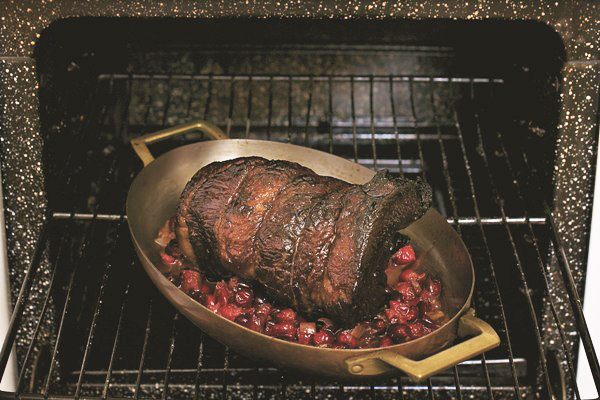
The wild card in this list, beef brisket is typically smoked but it can also be roasted at very low temperatures (200 to 250 F) for one to two hours per pound until it registers 185 degrees F on an instant-read thermometer or you can shred it easily with a fork. This versatile cut can also be made into a roast using a combination of high-heat roasting and braising, or pot roasting, as in the recipe for rolled cranberry-glazed beef brisket.
Rolled Cranberry-Glazed Beef Brisket
This recipe transforms a standard beef brisket into a festive garnet-glazed roast worthy of a holiday celebration. The flat cut is the leaner, thinner part of a whole brisket. The technique of rolling and tying allows you to serve handsome round slices of the brisket with sides of butternut squash and wild rice.
Serves 6 with leftovers
Ingredients
1 (3½- to 4-pound) flat cut brisket
Kosher salt
1 (12-ounce) bag fresh or frozen cranberries
1 medium onion, chopped
¾ cup packed light brown sugar
1 teaspoon ground ginger
½ teaspoon black pepper
¼ teaspoon ground cloves
1 cup low-sodium beef stock or water
1 cup orange juice
1 bay leaf
Directions
1. Preheat the oven to 500 F. Cut 5 (14-inch) strands of butcher’s twine on hand. Trim any fat from the underside of the brisket, pat it dry, and season it liberally on both sides with the kosher salt. Roll it up tightly the long way with the fat on the outside and tie it with the butcher’s twine. Put the roast in a Dutch oven or other deep and heavy pot just large enough to contain it. Roast it uncovered in the hot oven until dark walnut brown, about 20 minutes.
2. Meanwhile, mix the cranberries, onion, brown sugar, ginger, pepper, cloves, stock, orange juice and bay leaf in a medium saucepan and bring it to a boil over medium-high heat.
3. Reduce the oven temperature to 325 F and pour the cranberry mixture over the beef. Cover the pot and cook the beef until you can shred the meat easily with a fork, 2 to 2½ hours.
4. Raise the oven temperature to 400 F. Transfer the beef to a clean oven-safe serving dish and remove the twine or bands. Strain the sauce, reserving the cranberry mixture and pour the sauce over the beef.
5. Discard the bay leaf. Roast the beef uncovered in the oven until it forms a shiny glaze and the sauce is syrupy, 12 to 15 minutes. Slice the beef ½-inch thick and spoon the cranberries all around it before serving.
Recipe reprinted with permission from “Pure Beef: An Essential Guide to Artisan Meat with Recipes for Every Cut” © 2012 by Lynne Curry, Running Press, a member of the Perseus Book Group.
Holiday roast. Credit: David L. Reamer
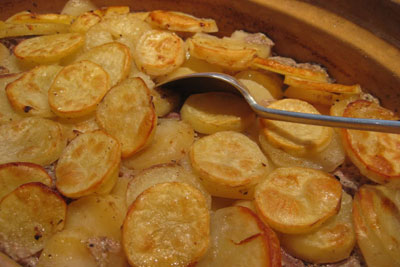
Alsace, on the eastern edge of France, has plenty of robust, rib-sticking, flavor-packed dishes that are just right for winter days. Uncomplicated to prepare and good-natured in the cooking, they provide the perfect rescue remedy for the harassed holiday cook. Baeckeoffe, a one-pot meal that combines pork, beef, lamb and vegetables marinated in the region’s famously fragrant white wine, is one of the best.
The name of this traditional Alsatian specialty refers to both the bakery (baecke) and the oven (offe). In former times, ovens in private homes were an undreamed-of luxury — not to mention an unwelcome fire hazard. Small, simple dishes were cooked in a pan on the top of the stove, but larger items requiring all-round heat were prepped at home, then taken round to the village baker’s to be cooked in the wood-fired oven after the bread had its turn.
Origins of Baeckeoffe up for debate
The story most commonly related is that Baeckeoffe was a Monday morning wash-day dish, outsourced to the village baker so the housewife-cook could get on with the household chores. But this seems an unlikely story. (Monday lunch would surely be an occasion for recycling the remains of a Sunday lunch feast — leftover choucroute and bacon or ham for a choucroute quiche, for example.)
More from Zester Daily on Alsatian cuisine:
Picture the scene, in a small, cozy, wood-paneled inn somewhere on the Route des Vins. The tables are decked with rich red-patterned tablecloths decorated with vine leaf motifs. On the sideboard is a collection of classic, decorated pottery terrines and Baeckeoffe dishes. Napkins are unfurled, orders are taken and a small jug of refreshing Sylvaner or Pinot Blanc is brought to sharpen the appetite and ease the pain of waiting.
In due course, the stout chef-patron, clad in his whites, emerges backward through the swinging doors, swirls around in a neat pirouette and sets the immense decorated pottery dish down on the table with a satisfying thud. Carefully he chips and pries away at the band of dough that seals the gap between lid and dish. The whole table leans forward in eager anticipation, the lid comes off and there’s a collective intake of breath as some of the finest flavors and fragrances of Alsace are released: pork, lamb, beef, root vegetables, juniper berries and Riesling, all marinated together for days and baked to a state of gentle perfection.
Baeckeoffe
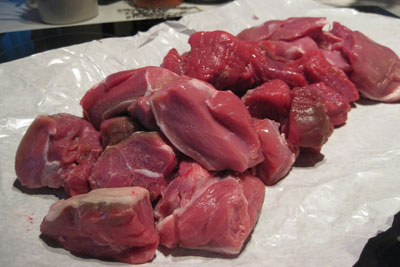
This is a perfect dish for the holidays, which you can time to your convenience. It benefits from 1 to 3 days’ marinating, and then it needs several hours left to its own devices in the oven. Choose a fatty cut of pork, like neck, which will stay nice and moist, and cut all the meat in quite large pieces so they don’t dry out in the long, slow cooking. Any Alsace Riesling will do as long as it’s a dry one and preferably not outrageously expensive — an entry-level wine from one of the grand domaines like Trimbach, Hugel or Beyer would be perfect. (Keep the expensive one for drinking with the meal.) The ideal container is a large, lidded ovenproof ceramic pot. When you’ve assembled the dish and put it in the oven, you can set out for a long walk to work up an appetite. On your return the kitchen will be filled with wondrous aromas of Alsace. Serve the Baeckeoffe with green salad and plenty of bread to mop up the (unthickened) juices. Any leftovers can be reheated.
Serves 6 hungry people
Ingredients
For the marinade:
1 clove garlic, finely chopped
1 large carrot, finely chopped
1 medium onion, finely chopped
1 tablespoon juniper berries
6 cloves
6 bay leaves, crumbled
2 generous pinches mixed dried herbs
1 bottle dry Alsace Riesling (or other dry white wine)
For the Baeckoffe:
1 pound (500 grams) boneless neck pork
1 pound (500 grams) boneless shoulder of lamb
1 pound (500 grams) boneless stewing beef (skirt, for example)
3 to 4 pounds (1½ to 2 kilograms) firm, waxy potatoes, peeled and thickly sliced
2 large carrots, diced
2 medium onions, finely chopped
4 cloves garlic, finely chopped
1 leek, finely diced
Salt and pepper
1 tablespoon butter, cut in small dice
Directions
1. Prepare the marinade by combining in a bowl the chopped garlic, carrot, onion, juniper berries, cloves, bay leaves, herbs and wine.
2. Cut the meat in fairly large pieces and put them in a bowl with the marinade.
3. Cover the bowl and refrigerate for at least 12 hours and up to three days.
4. Tip the meat into a colander placed over a second bowl, drain the meat and reserve the marinade.
5. Lightly butter a large, deep ovenproof dish with a well-fitting lid. [Mine is oval, measuring 14 inches by 9 inches by 4 inches deep (36 centimeters by 23 centimeters by 10 centimeters deep) with a 24-cup (6-liter) capacity.]
6. Place a thick layer of potatoes in the bottom of the dish, then follow with successive layers of meat and the remaining vegetables (carrots, onions, garlic and leek), seasoning with salt and pepper as you go and finishing with a thick layer of potatoes.
7. Pour on the reserved marinade. It should come about three-quarters of the way up the meat and vegetables. If not, add a little water.
8. Scatter the diced butter on top of the potatoes and cover the dish with a double thickness of foil and the lid.
9. Bake in an oven at 300 F (150 C) for about two hours or until the meat is fork tender. (Fish out a piece and taste it to check, then prolong the cooking if necessary.)
10. Remove the lid from the Baeckeoffe and bake uncovered for another 30 minutes or so, or until the potatoes on top are nicely browned
Photo: Alsatian Baeckeoffe ready for serving. Credit: Sue Style

The buzz and hustle of the holiday season sometimes make me feel as if I’m standing in the middle of a rushing river. The constant noise and music, the tide of guests, the gifts to wrap, meals to cook, the parties to attend can all feel like a crushing deluge. It’s only when I close my eyes that the accelerated motion around me pauses. Underneath the crush lies the soft lining of the holidays, the touch of North winds upon my cheek, owls chatting in the night, the glow of firelight in the eyes of my loved ones, and always, there is an aromatic undercurrent of pine.
Not only is pine is the scent of the season that locks warm memories in my head, it is also an edible treat. You might expect pine to taste of the cool damp woods. But it also sings with bright notes of citrus like grapefruit, tangerine and lemon, and can add an unexpected spark of cheer to your holiday meals.
Foraged pine tips
Pine are usually fairly easy to identify, as their needles emerge from the branch in bundles of two, three or five, rather than singly like spruce or fir (both of which can also be eaten). Conifers are almost all edible. However, make certain you’ve correctly identified your tree before eating it. A novice could confuse pine with yew, which is poisonous when eaten. Consult a local guidebook or a foraging friend, or use a search engine to find which species of pine grow in your area.
Once you are certain that you’ve found an edible pine, your next task is to taste it. There can be tremendous variation in flavor from tree to tree, so find one that tap dances across your taste buds. Spring is the ideal time to collect pine tips. At that time, they are so tender they may be munched raw. Don’t be discouraged from eating pine at other times of year, however. Mature pine needles, even though they are tough, still offer many possibilities in your kitchen.
Start with a simple tisane
When you are ready to harvest, simply snip buds away from a branch with a pair of scissors. Avoid over-harvesting or taking needles from the tips of branches, especially at the top of the tree, as it will be more susceptible to disease.
More from Zester Daily:
As charming as it might seem, don’t be tempted to eat your Christmas tree, unless you are absolutely certain it has not been sprayed with pesticides or other chemicals. Also, as a precaution, pine is not for pregnant women.
If you are new to consuming pine, I suggest making pine needle tisane. Simply brew a handful of pine needles in a cup of hot water, as you would a tea.
Another fantastically simple way to incorporate the flavor of pine into your cooking is to make either pine sugar or pine salt. All you have to do is buzz up a few tablespoons of either salt or sugar with a bunch of pine needles in your spice grinder, then sift out any large bits of remaining needles. Roasts and steaks are made exceptionally aromatic when rubbed with pine salt, and root vegetables have a special affinity for it. Pine sugar can be used as a garnish or ingredient in your favorite baking recipes. I’m particularly fond of using pine sugar in shortbread, and also using it to rim all of my holiday cocktails.
Whether enjoyed as a simply brewed cup of hot tisane, sprinkled into meals as a compound salt or sugar, or made into an intriguing gelée condiment, pine’s surprising citrus tones can add a kick to your kitchen this holiday season.
Once you’ve tried your hand at brewing pine tisane, and have played with adding pine salt and pine sugar to your recipes, you are ready to try something a little more advanced, like this pine gelée.
Pine Gelée
Ingredients
pine needles (enough to fill about half a Mason jar)
½ cup white wine vinegar
1½ teaspoon sugar
2 teaspoon powdered gelatin
Directions
1. Use scissors to snip pine needles into an 8-ounce Mason jar until it is approximately ½ to ¾ full.
2. In a small pan on the stove, heat ½ cup of white wine vinegar just until it is warm, but not simmering. Pour the warm vinegar over the pine needles in the Mason jar. Cover the jar with a plastic lid, and let the pine needles steep in the vinegar at least until it has reached room temperature, but ideally for a few days. Next, strain out the needles so that you are left with clear pine-infused vinegar.
3. Pour the pine vinegar into a small pan. Sprinkle in 1½ teaspoon of sugar and 2 teaspoons of powdered gelatin. Let the gelatin sit atop the cold vinegar for 5 to 10 minutes. Gently turn up the heat on your stove, and let the vinegar get warm enough to dissolve the sugar and gelatin. You should be able to see this happen. As soon as the vinegar has become clear, pour it back into the Mason jar. Cool to room temperature, then refrigerate.
4. As the pine vinegar gelée starts to set, rake a chopstick though it so that it resembles broken glass. Serve a spoonful of this unusual tangy condiment with your favorite meat, fish, or roasted vegetables.
Foraged pine cocktail. Credit: Wendy Petty